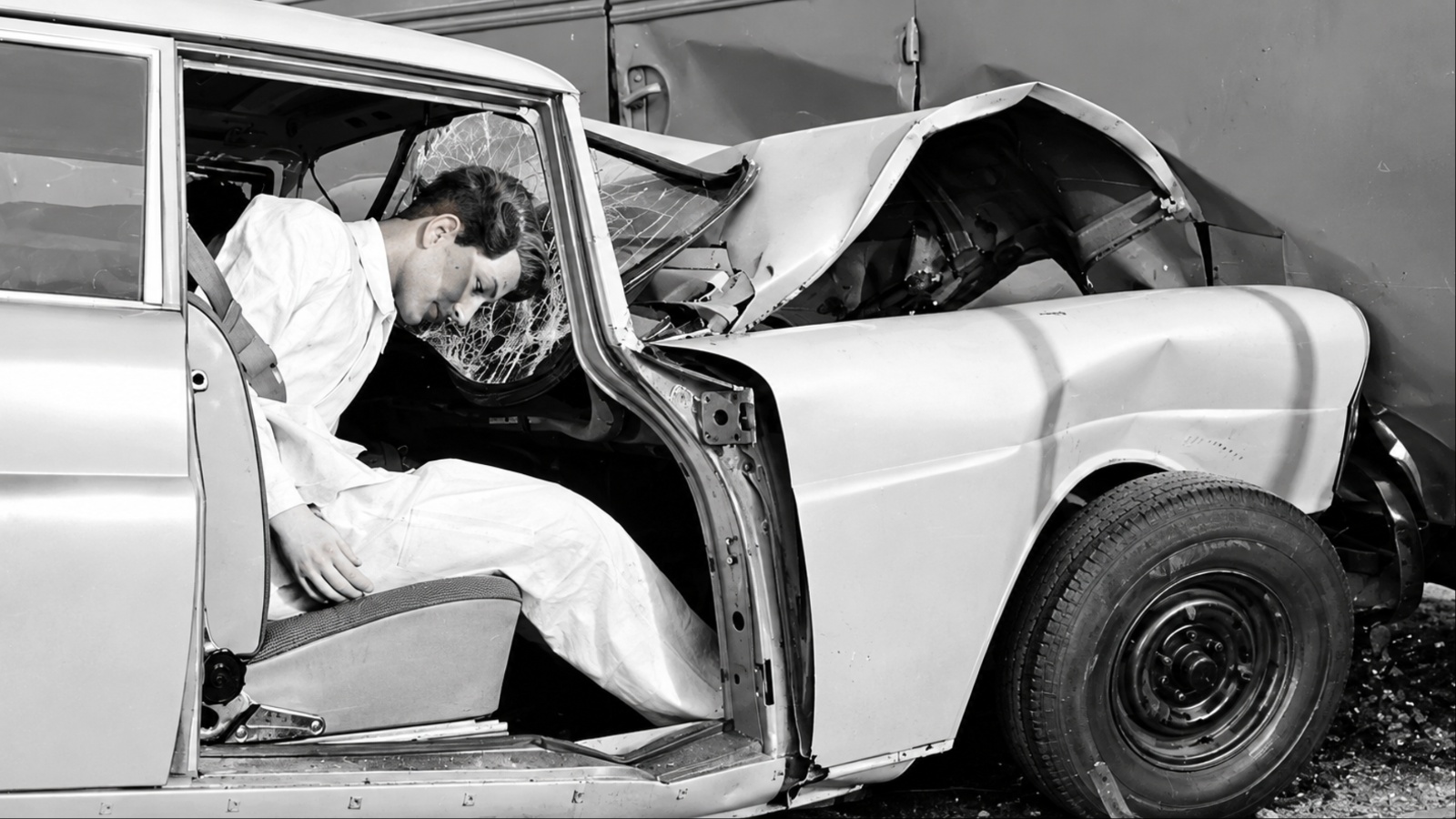
A car that crumples in a crash can look badly damaged, yet that damage may be evidence that the structure did its job. Long before airbags, electronic crash sensors, and modern crash testing became familiar parts of driving, Mercedes-Benz engineer Béla Barényi had a different idea about protecting people. Instead of making every part of a car as rigid as possible, he proposed giving different sections different jobs during a collision.
His work led to a patent in 1952 and, several years later, a production Mercedes that put the idea into practice. The story behind the crumple zone is a fascinating piece of engineering history because it shows how a simple change in thinking can reshape the way cars protect their occupants.
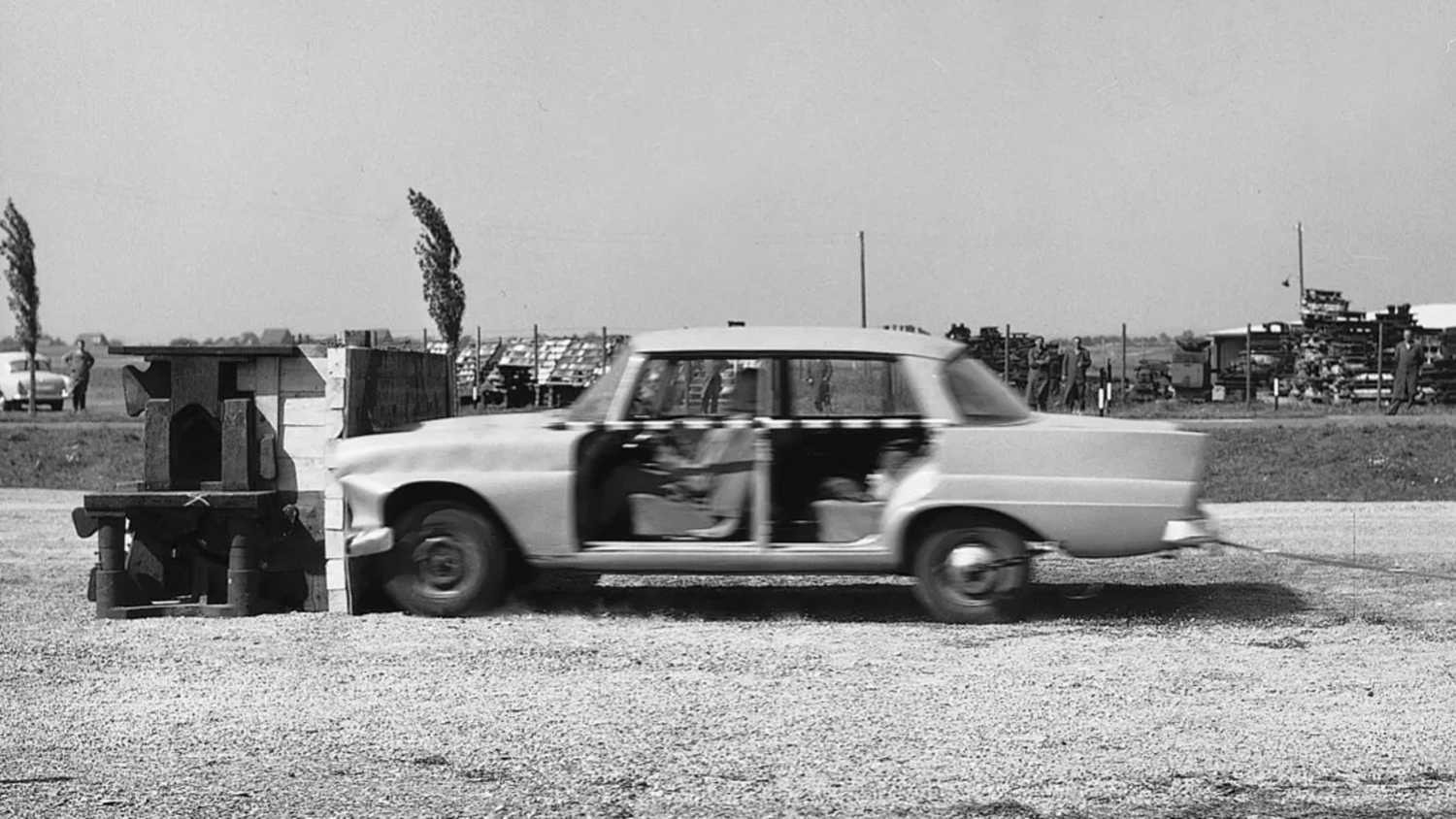
A Different Idea About Car Safety
For much of the early automotive era, strength was closely associated with safety. Barényi questioned that assumption. He recognized that a collision is not just a test of how well a vehicle resists damage.
It is also a problem of what happens to the enormous energy carried by a moving car. Mercedes-Benz describes Barényi’s safety body as a three-part design, with a strong passenger cell between deformable areas at the front and rear.
The patent application was filed on January 23, 1951, and German patent DE 854157 was granted in 1952. Picture the basic idea as a carefully planned buffer.
The outer portions are meant to deform in a controlled way, while the center is built to preserve space for occupants. It gives the vehicle a better way to manage what happens during those critical moments.
Barényi’s approach separated structural strength from energy absorption, assigning each part a specific role. Mercedes-Benz later described the safety body as a foundation for many passive safety developments that followed.
The result was a body designed around occupant protection, not simply resistance to visible damage. It made safety a design goal.
Béla Barényi and the 1952 Patent
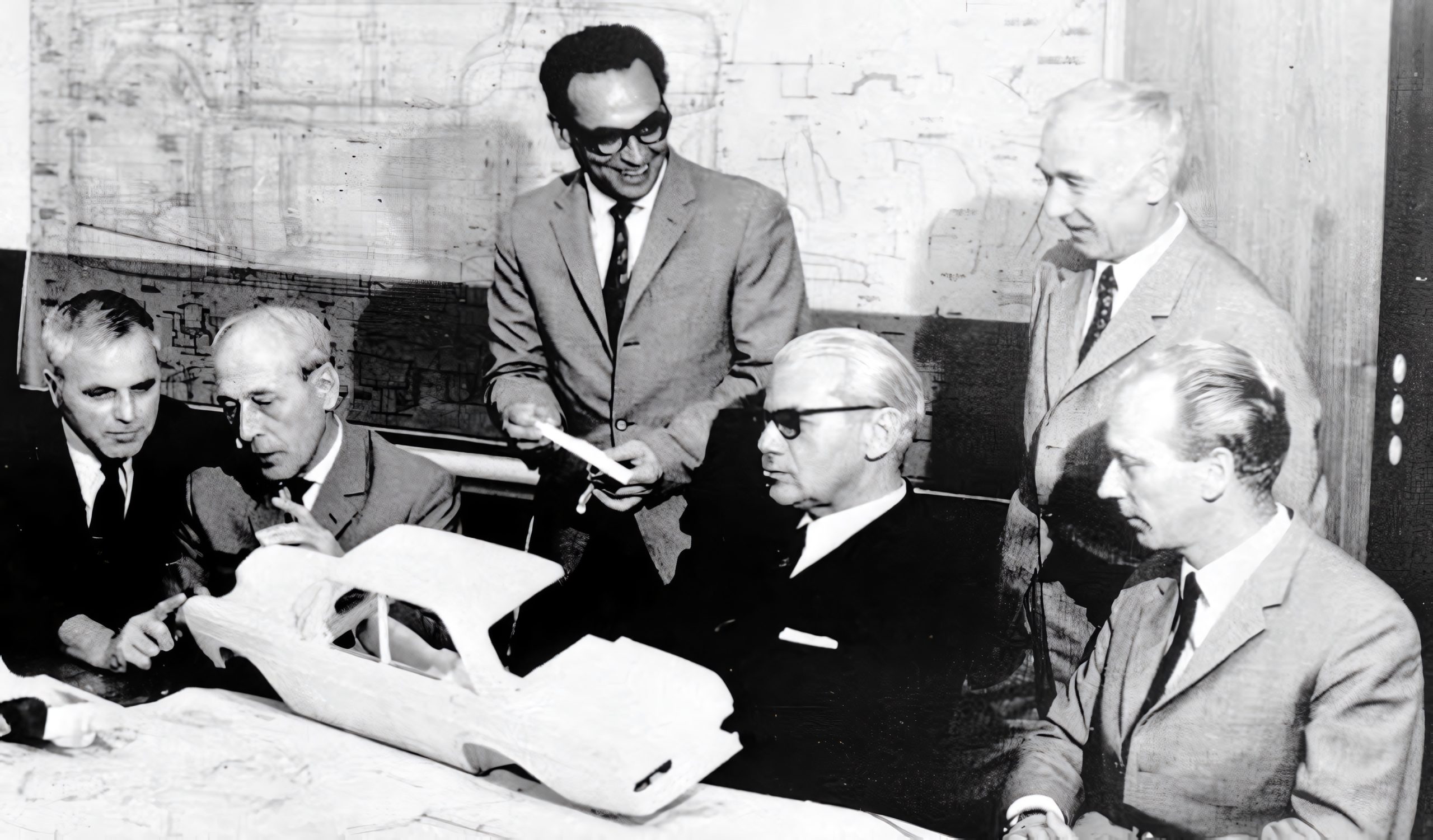
The name Béla Barényi deserves more attention than it often receives in everyday car history. Born in Austria-Hungary, Barényi became a pioneer in automotive safety and worked for Daimler-Benz.
His engineering work focused on reducing the harm caused by crashes rather than simply preventing body damage. A vehicle can be badly damaged while still doing a better job of protecting its occupants, provided deformation occurs where engineers intended it.
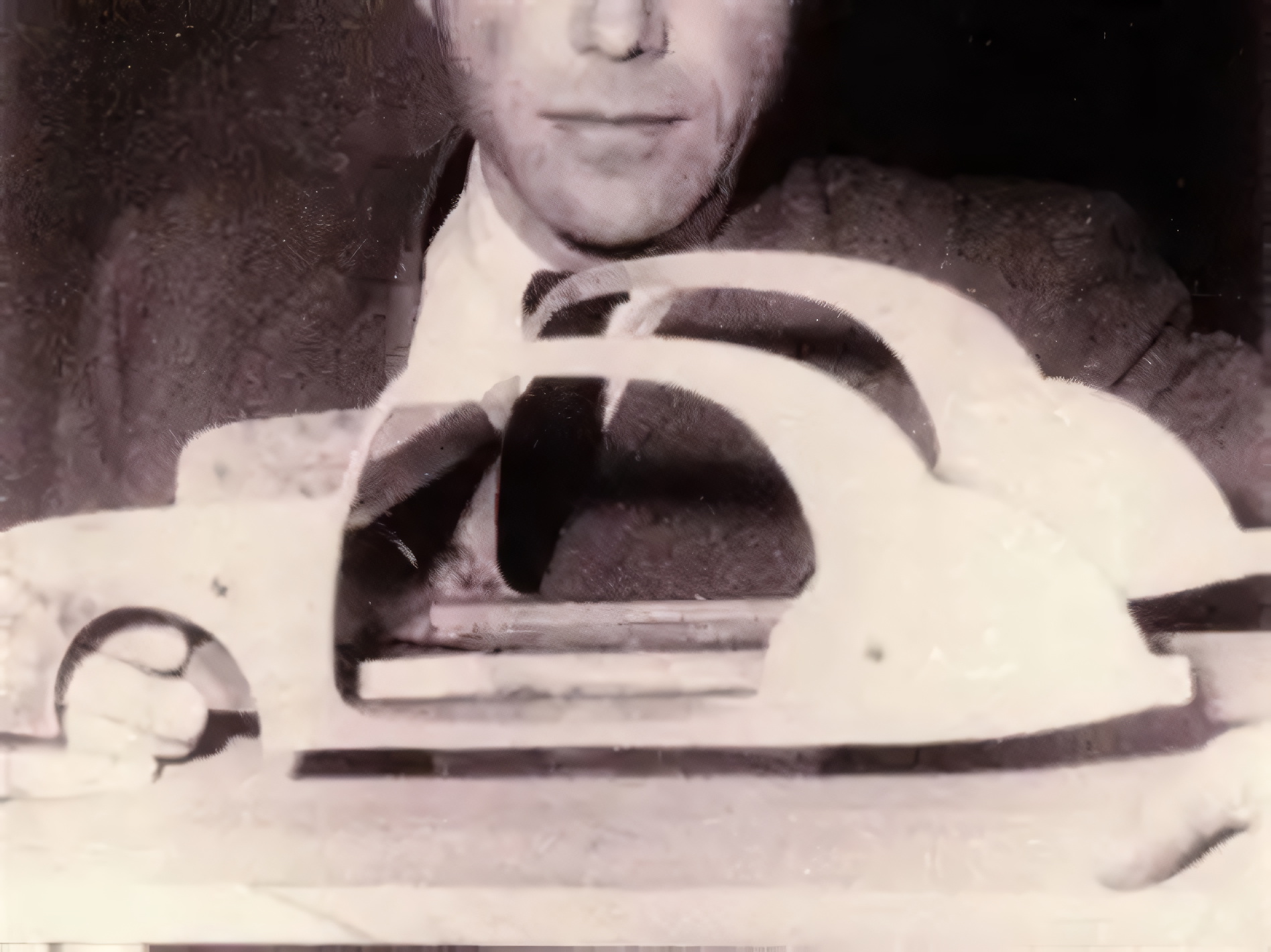
Barényi’s patent formalized this approach with a rigid passenger compartment surrounded by sections designed to absorb crash energy through controlled deformation. Mercedes-Benz records show that the patent was filed in 1951 and granted in January 1952.
There is an interesting detail in the dates. The idea is often described as the “1952 crumple zone invention,” because that is when the patent was granted. Technically, though, the patent application came first, in 1951.
The patent described a broader body concept, with a strong center section and deliberately deformable front and rear areas. That architecture provided a blueprint for putting crash energy to work inside the structure rather than allowing the cabin to absorb the full event. That made the patent useful beyond one model or one year in later safety work.
Why This Invention Still Matters
Modern vehicles look nothing like the boxy sedans of the 1950s, yet almost every car built today still relies on the basic principle Barényi patented more than seventy years ago.
Front and rear crumple zones remain standard across nearly the entire automotive market, from budget economy cars to luxury vehicles costing six figures.
Government safety agencies now require crash testing that directly measures how well a vehicle’s structure absorbs impact energy, standards that trace their intellectual roots straight back to Barényi’s original concept.
Ratings from organizations testing vehicle safety influence buying decisions worldwide, and crumple zone performance sits at the center of those evaluations.
Modern engineering has refined the idea considerably, adding computer-aided design, advanced materials, and multiple crumple zones targeting different types of impact, from head-on collisions to side impacts.
Barényi couldn’t have predicted every application, but the underlying physics he identified- controlled collapse to protect occupants- hasn’t changed even as the technology surrounding it has advanced dramatically.
What a Crumple Zone Actually Does
Here is where the physics becomes easier to understand. A moving vehicle carries kinetic energy, and a crash forces that motion to change rapidly. A crumple zone provides structures that can deform during the collision, using that deformation to absorb and dissipate part of the energy. It also helps extend the time during which the vehicle slows down.
A longer deceleration period can reduce the peak forces experienced by occupants. The crumple zone is not designed simply to “take the hit” by becoming crushed. Its job is to control how the vehicle responds to the hit.
Think about a cardboard box protecting a delicate object. If the box can compress in a controlled manner, it can absorb some energy before that energy reaches the object.
A vehicle uses a more sophisticated version of that principle, with carefully designed metal sections, load paths, joints, and materials. The passenger cell remains stronger because preserving usable space matters.
Seat belts and airbags then work with the body structure, managing occupant motion after the crash begins. The result is a safety system rather than one isolated part. This helps explain why visible damage can serve a purpose.
How Barényi’s Idea Lives On
Walk around a modern vehicle, and the crumple zone is easy to miss. No label announces where it begins. Yet beneath the body panels, engineers have designed sections meant to deform in controlled ways.
Computer modeling, crash testing, high-strength steel, aluminum, composites, airbags, seat-belt pretensioners, and electronic safety systems now work together in far more advanced ways than they did in the 1950s. The basic principle, however, remains familiar. Manage crash energy before it reaches the people inside.
Barényi’s contribution also changed how people can think about damage after a crash. A crushed hood, folded front structure, or damaged rear section does not automatically mean a vehicle failed to protect its occupants.
In many crashes, deformation is part of the intended response. The important question is where the structure deformed, how it absorbed energy, and whether the passenger cell retained its protective space.
From the 1952 patent to the 1959 W111, Barényi helped establish a principle that continues to shape vehicle engineering. The safest car is not always the one that refuses to bend. It is often the one designed to bend in the right places and in the right way. That lesson remains relevant today.