Boston winter parking is a different challenge from simply driving through snow. A suitable car has to fit into tight city spaces while dealing with snowbanks, icy streets, salted roads, and parking spots that may become narrower after a storm.
Ground clearance can prevent a vehicle from getting hung up in packed snow, while all-wheel drive can help when traction disappears. At the same time, excessive size can become a disadvantage on Boston’s older, tighter streets.
The vehicles below are selected for their combination of winter capability, manageable dimensions, visibility, traction, clearance, and everyday practicality in Boston’s demanding cold-weather conditions.
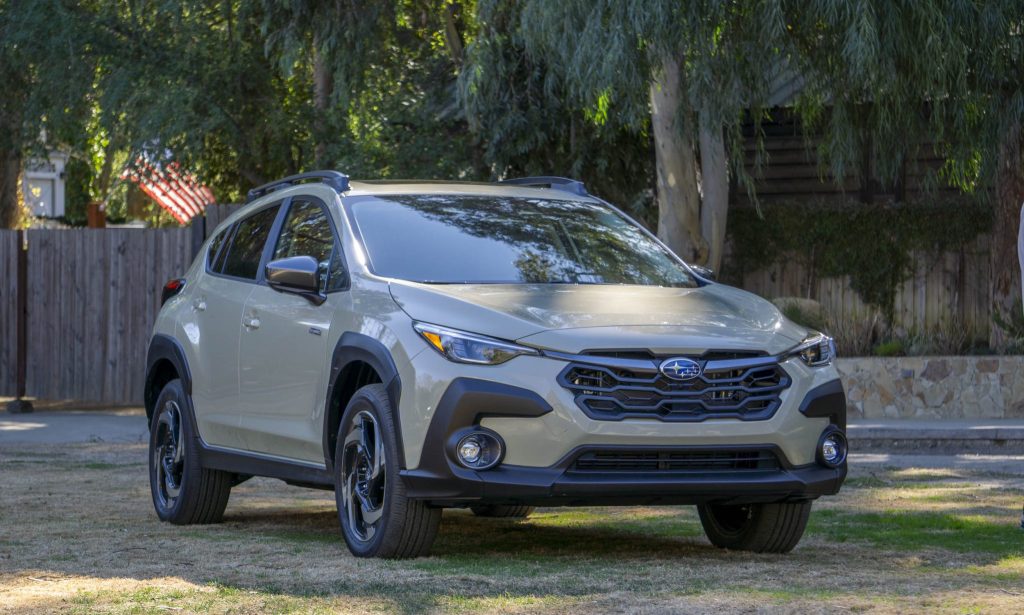
1. Subaru Crosstrek
The Subaru Crosstrek is particularly well suited to Boston because it combines winter-oriented hardware with a compact footprint. That combination matters when a driver needs to navigate snow-covered streets and then squeeze into a parking space surrounded by snowbanks.
Every 2025 Crosstrek comes with Subaru’s Symmetrical All-Wheel Drive, while standard models provide 8.7 inches of ground clearance. The Crosstrek Wilderness raises that figure to 9.3 inches and adds a dual-function X-MODE designed for conditions including deep snow, dirt, and mud.
The standard 2.0-liter Boxer four-cylinder produces 152 horsepower, while the available 2.5-liter version produces 182 horsepower. The 2.5-liter engine is the more attractive choice for Boston drivers who regularly deal with hills, heavy snow, or a vehicle loaded with passengers and winter equipment.
Size is one of the Crosstrek’s biggest advantages for urban parking. It measures only 176.4 inches long and 70.9 inches wide, allowing it to fit into spaces where a larger SUV may become frustrating. The compact dimensions also make it easier to judge the corners of the vehicle when parking between snowbanks.
Cargo space reaches 19.9 cubic feet behind the rear seats and 54.7 cubic feet with them folded. That is enough for winter tires, emergency equipment, groceries, or other gear without requiring a large vehicle.
For Boston, the Crosstrek’s appeal is simple: it has the clearance and AWD capability of a more rugged vehicle while retaining dimensions that make city parking far less intimidating.
2. Honda CR-V
The Honda CR-V takes a less rugged approach to Boston winters, but that does not make it poorly suited to the city. Instead, it combines available all-wheel drive with a comfortable cabin, useful clearance, and dimensions that remain manageable for an urban crossover.
The 2025 CR-V offers a 1.5-liter turbocharged four-cylinder producing 190 horsepower and 179 lb-ft of torque. Honda also offers a hybrid powertrain producing 204 horsepower, with Real Time AWD available on the gasoline model and offered on the hybrid lineup depending on trim.
The CR-V’s ground clearance is around 8 inches on applicable AWD configurations, providing useful separation from snow-covered pavement.
Its 184.8-inch length gives the CR-V noticeably more interior room than the Crosstrek, but it remains far smaller than a three-row SUV. That balance can be useful in Boston, where interior capacity is welcome but squeezing into a narrow parking space is part of daily life.
Cargo capacity is another reason to consider it. The CR-V provides approximately 39.3 cubic feet behind the rear seats in gasoline configurations and more than 76 cubic feet with the rear seats folded, depending on powertrain and measurement method. That gives drivers plenty of room for winter clothing, luggage, or bulky purchases.
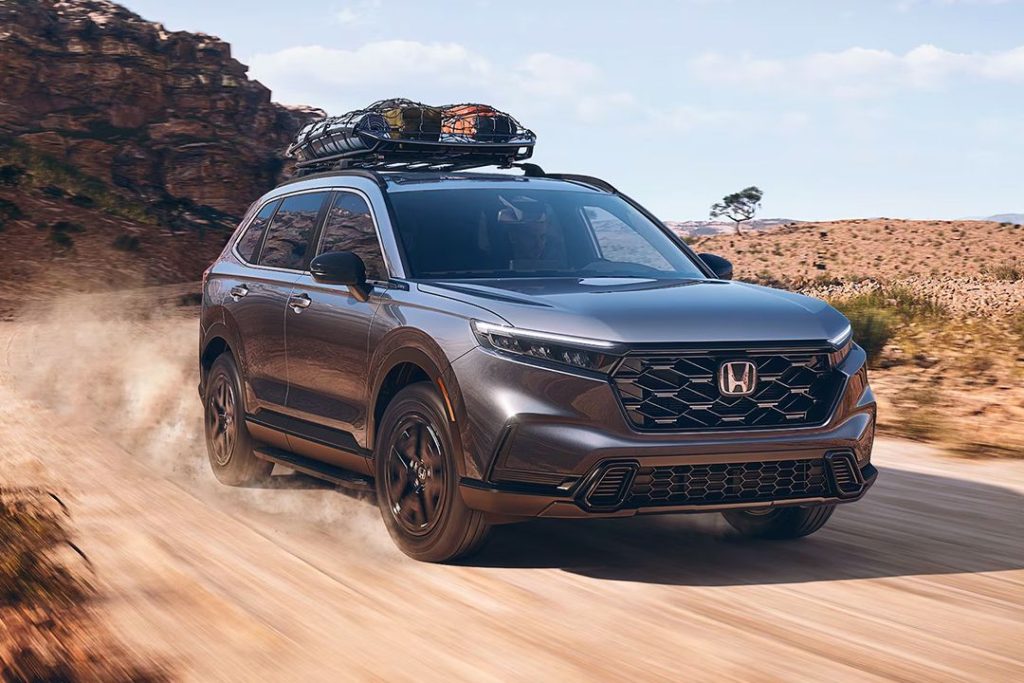
The hybrid version is especially interesting for drivers who spend considerable time in stop-and-go traffic. Its 204-horsepower system provides additional power while retaining the elevated seating position and utility of a crossover.
For Boston parking, the CR-V is not the smallest choice here, but its combination of available AWD, useful ground clearance, cargo capacity, and manageable exterior dimensions makes it a practical winter daily driver.
3. Subaru Forester
Boston winter parking is not just about finding a space. After a major storm, the space itself can be surrounded by packed snow, uneven surfaces, and narrowed lanes. The Subaru Forester is well suited to that environment because every 2025 model comes with Symmetrical All-Wheel Drive and 8.7 inches of ground clearance.
Subaru specifically positions the Forester around all-weather capability, while its standard EyeSight driver-assistance system can provide additional support in crowded urban conditions.
The 2025 Forester uses a 2.5-liter horizontally opposed four-cylinder producing 180 horsepower and 178 lb-ft of torque. Its EPA ratings reach 26 mpg city, 33 mpg highway, and 29 mpg combined for the standard models.
Its dimensions are also sensible for Boston. At 183.3 inches long and 72 inches wide, the Forester is substantially easier to place in a tight parking space than a three-row SUV. The 105.1-inch wheelbase contributes to its relatively manageable footprint, while the 8.7-inch clearance provides useful protection when snow accumulates at the edge of a parking spot.
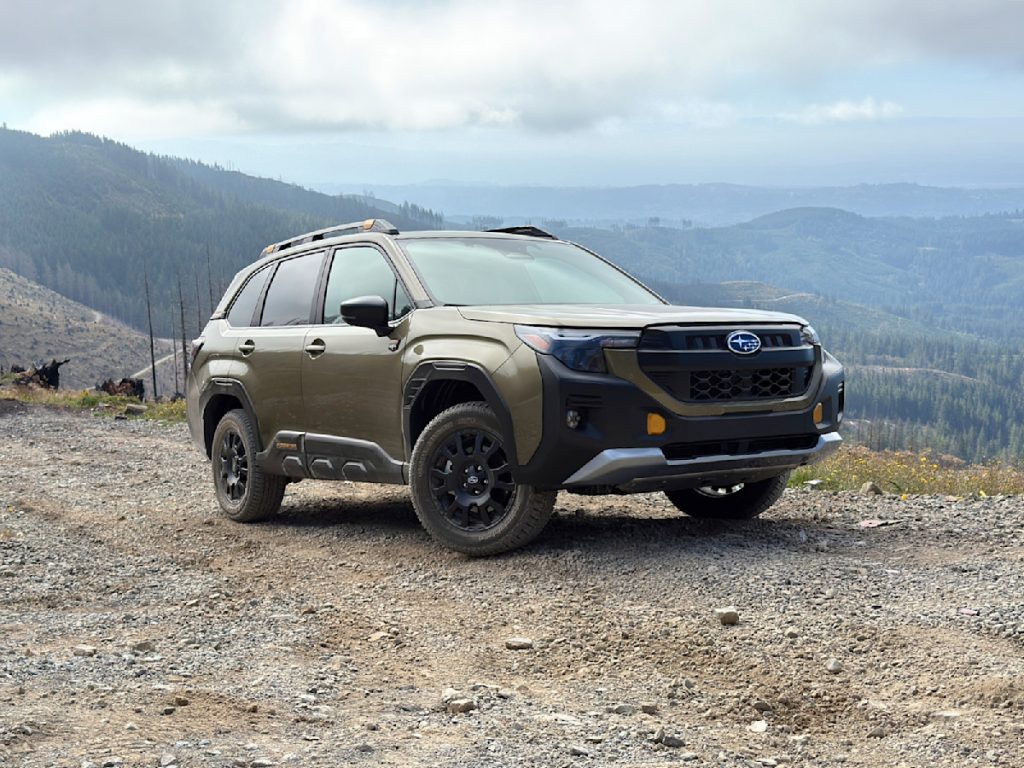
There is another feature worth considering when parking in cramped winter conditions: Subaru offers an available 360-degree Surround View Monitor on the redesigned Forester. Having additional camera visibility can be useful when snowbanks, parked cars, and narrow spaces make judging the vehicle’s corners difficult.
The Forester is therefore less about squeezing into the smallest possible space and more about giving the driver enough winter capability without becoming cumbersome. For someone who expects Boston’s snow to remain on the ground long after the storm has ended, that balance is valuable.
4. Toyota RAV4 Hybrid
A Boston winter car has to deal with two very different situations: slippery roads during a storm and limited parking space after it. The Toyota RAV4 Hybrid handles the first problem with standard all-wheel drive while keeping its exterior dimensions reasonable enough for city use.
The 2025 RAV4 Hybrid combines a 2.5-liter four-cylinder engine with electric drive motors and produces 219 net combined horsepower. Toyota lists up to 41 mpg city and 38 mpg highway for the hybrid, depending on configuration.
The electronic on-demand AWD system is standard, so drivers do not have to sacrifice hybrid powertrain efficiency simply to obtain additional traction.
Ground clearance reaches 8.1 inches, which is useful when a parking space has a layer of compacted snow at its entrance. The RAV4 measures 180.9 inches long and 73 inches wide in Toyota’s U.S. comparison specifications. Its 36.1-foot turning circle is also relatively manageable for a vehicle with this amount of interior space.
Parking practicality does not mean giving up cargo room. Toyota lists 37.6 cubic feet of cargo capacity behind the second row and 69.8 cubic feet with the rear seats folded for the compared RAV4 configuration.
That gives owners plenty of room for winter gear, groceries, emergency supplies, or a set of bulky items without turning the passenger compartment into a storage area.
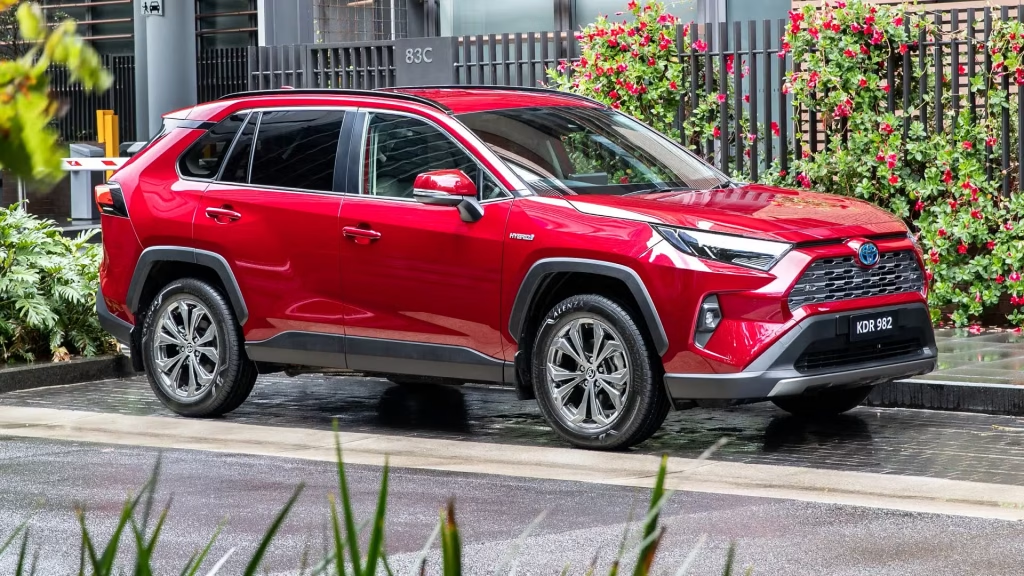
The hybrid powertrain can also be useful in Boston’s stop-and-go traffic. Frequent low-speed acceleration and deceleration are exactly the type of driving where a hybrid system can recover energy through regenerative braking.
For a driver who wants winter traction without moving into a large SUV, the RAV4 Hybrid offers a strong combination of AWD, 8.1 inches of clearance, compact-enough dimensions, and excellent fuel economy.
5. Mazda CX-50
Boston’s winter parking challenge is easier to manage when a vehicle has enough clearance to deal with snow without becoming so large that it dominates a narrow parking space.
The Mazda CX-50 takes that middle-ground approach. Its standard all-wheel drive gives it useful traction, while its relatively long but manageable body provides a stable platform on slippery roads.
For 2025, the CX-50 2.5 S uses a naturally aspirated 2.5-liter four-cylinder producing 187 horsepower and 185 lb-ft of torque. Mazda made i-ACTIV AWD standard across the CX-50 lineup, and the system works with Mi-Drive modes that include Off-Road. The CX-50 Hybrid adds a 219-horsepower hybrid system and returns an EPA-estimated 38 mpg combined.
The CX-50 measures 185.8 inches long and 75.6 inches wide, according to Mazda’s U.S. specifications. That width is greater than the Crosstrek or Forester, so it does not have the same advantage in exceptionally tight parking spaces. In return, the vehicle provides a substantial cabin and a planted feel that can be reassuring on snow-covered roads.
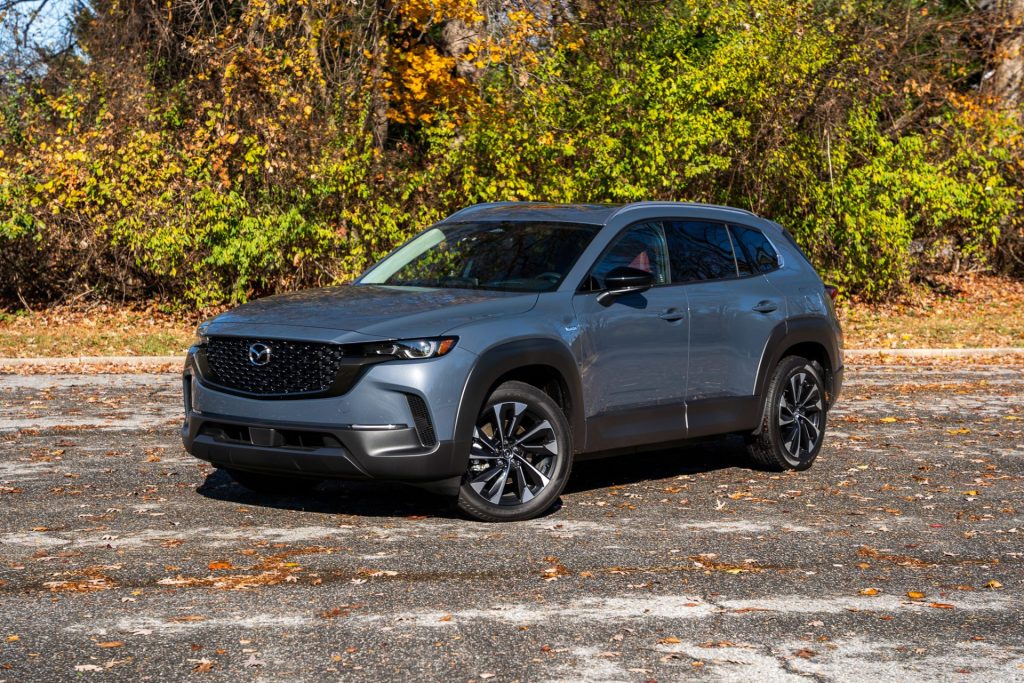
The standard CX-50 also offers an off-road drive mode, while the turbocharged version can produce as much as 256 horsepower and 320 lb-ft of torque when using premium fuel. That extra power is not essential for parking, but it can be useful when climbing snowy streets or carrying passengers and winter equipment.
For Boston drivers who want something more substantial than a subcompact crossover, the CX-50 provides a compelling combination of AWD, winter-oriented drive modes, useful power, and a manageable footprint.
6. Toyota Prius AWD
The Toyota Prius may not be the first vehicle that comes to mind when thinking about Boston snow, but the current AWD version makes the car considerably more interesting for winter city use. Its biggest advantage is that it combines all-wheel drive with an exceptionally compact footprint and very high fuel efficiency.
The 2025 Prius uses a 2.0-liter four-cylinder hybrid system producing 194 net combined horsepower with front-wheel drive and up to 196 horsepower with electronic all-wheel drive. Toyota estimates up to 57 mpg combined for the FWD version and 54 mpg combined for AWD models.
The AWD system is particularly suited to situations where extra traction is needed during takeoff. Toyota’s electronic on-demand setup uses a separate rear electric motor rather than a conventional mechanical driveshaft. Toyota says the system can assist when starting on slippery roads and when cornering.
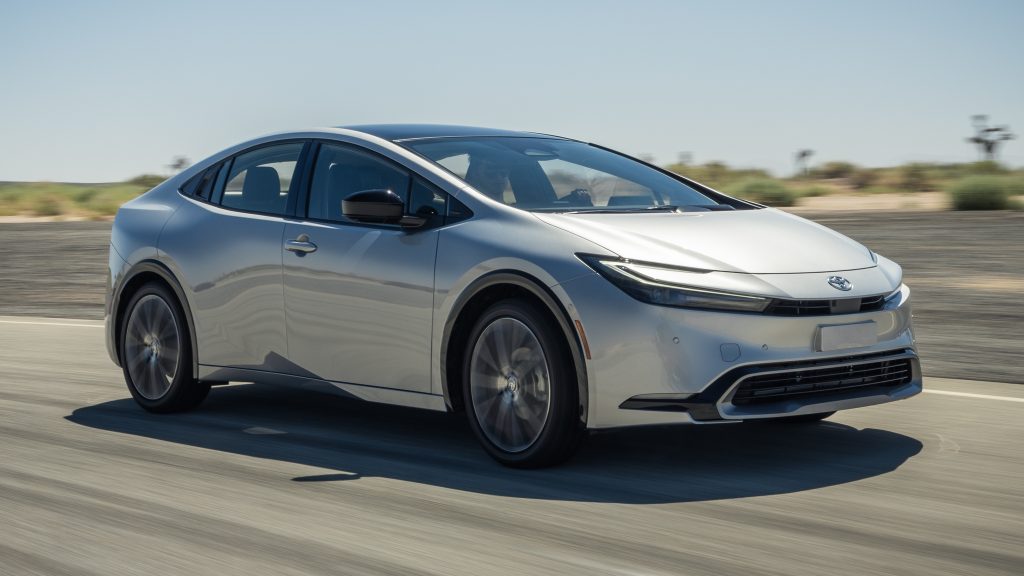
Then there is the Prius’s size. The car measures 181.1 inches long and 70.2 inches wide, making it noticeably narrower than many compact SUVs. Its 35.4-foot turning circle also helps when maneuvering through cramped streets and parking areas. Toyota lists 20.3 cubic feet of cargo capacity for the Prius in its comparison specifications.
Ground clearance is the compromise. The Prius sits considerably lower than the Crosstrek, Forester, and CX-50, so it is not the vehicle to choose when deep snow is regularly left uncleared.
For Boston streets that are plowed reasonably well, however, the AWD Prius offers something most winter-capable vehicles cannot match: excellent fuel economy combined with a genuinely compact footprint.
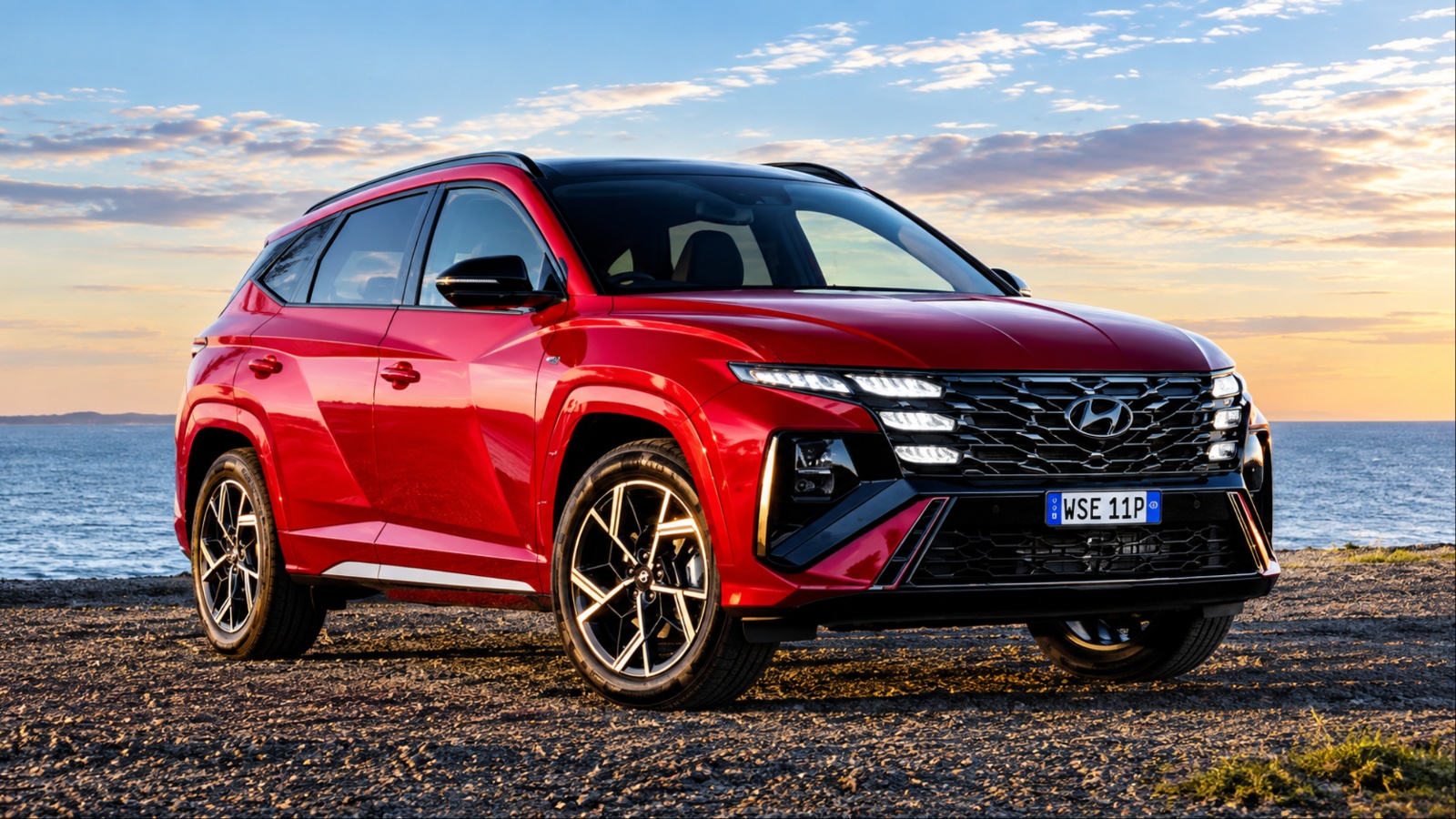
7. Hyundai Tucson Hybrid
The Hyundai Tucson Hybrid brings a useful combination to Boston’s winter streets: a relatively compact body, 8.3 inches of ground clearance, and strong hybrid power. It is large enough to handle snow-covered roads without feeling fragile, yet it remains considerably easier to park than a full-size SUV.
For 2025, the Tucson Hybrid uses a 1.6-liter turbocharged four-cylinder engine paired with an electric motor. The system produces 231 combined horsepower and 271 lb-ft of combined torque. Hyundai rates the most efficient version at 38 mpg city, 38 mpg highway, and 38 mpg combined, while other configurations are rated at 35 mpg combined.
Its dimensions make it a reasonable fit for urban parking. The Tucson Hybrid measures 182.7 inches long and 73.4 inches wide, with a 38.6-foot turning diameter. Those figures are manageable when navigating narrow Boston streets or maneuvering into a space bordered by snowbanks.
The 8.3-inch minimum ground clearance is another useful attribute after a storm. Packed snow can reduce the effective space beneath a vehicle, particularly at the entrance to an uncleared parking spot. The Tucson’s clearance provides more margin than a low-slung sedan.
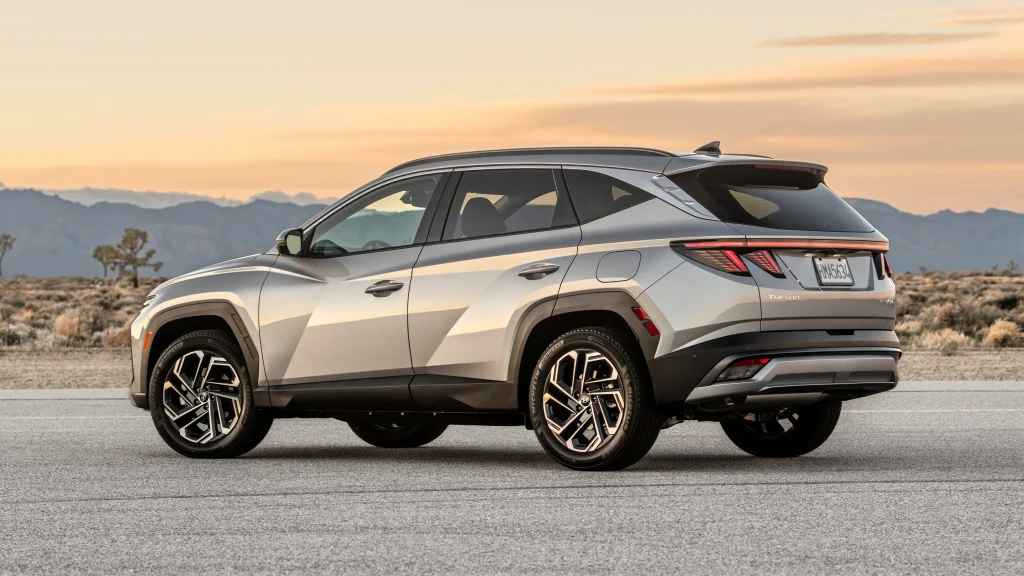
Inside, the vehicle offers 38.7 cubic feet of cargo capacity behind the rear seats and up to 74.5 cubic feet with them folded using Hyundai’s SAE measurement. That is plenty of room for winter equipment, groceries, and other bulky items.
The Tucson Hybrid therefore suits drivers who want winter capability without making city parking unnecessarily difficult. Its AWD-oriented configuration, useful clearance, and efficient powertrain make it a practical Boston winter vehicle.
8. Kia Sportage Hybrid
The Kia Sportage Hybrid is a strong choice for Boston drivers who want an SUV with enough clearance for winter conditions but still need reasonable dimensions for city parking. Its squared-off design also gives the driver a useful amount of interior and cargo space without requiring a three-row vehicle.
The 2025 Sportage Hybrid uses a 1.6-liter turbocharged four-cylinder paired with an electric motor, producing 227 combined horsepower and 258 lb-ft of combined torque.
Front-wheel drive and all-wheel drive are available, allowing buyers to choose the configuration that best fits their winter driving needs. The AWD version is particularly appealing when snow and ice are regular parts of the commute.
At 183.5 inches long and approximately 73.4 inches wide, the Sportage sits in a manageable size range for an urban SUV. It is not as compact as a Crosstrek, but its dimensions remain considerably easier to handle than those of a large SUV.
That difference becomes noticeable when a parking space is bordered by piled snow and the usable opening is narrower than normal.
The Sportage also has a practical advantage after a snowstorm: cargo flexibility. Kia lists 39.5 cubic feet of cargo capacity behind the second row and 74.1 cubic feet with the rear seats folded for the hybrid. That makes it easy to carry winter boots, emergency supplies, groceries, or other equipment without filling the passenger area.
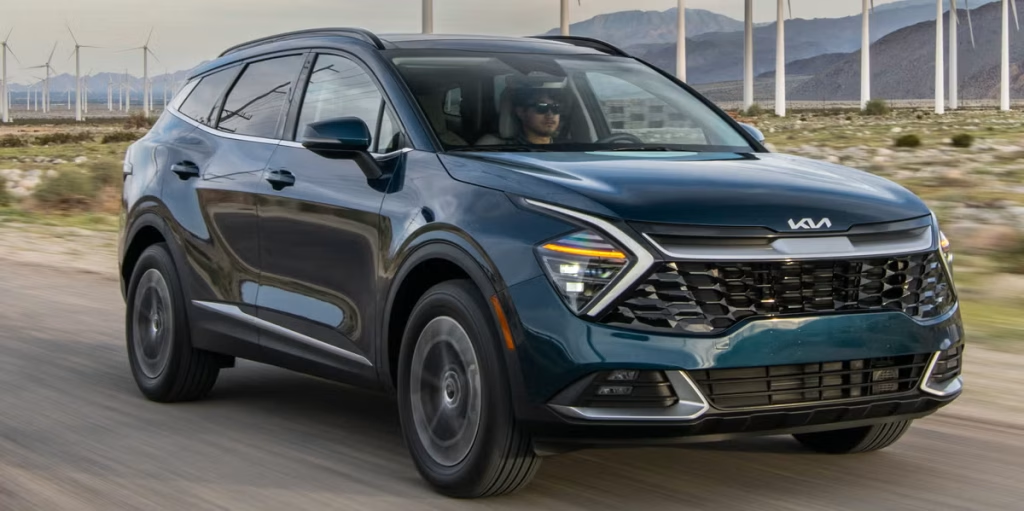
Fuel economy is another reason the hybrid version makes sense for city driving. The front-wheel-drive model can reach 42 mpg city, while AWD versions remain at 38 mpg city and 38 mpg highway.
For Boston, the Sportage Hybrid offers a useful compromise. It has the elevated seating position and available AWD expected from a winter crossover, but its footprint remains manageable enough for the realities of urban parking.
9. Mazda CX-5
The Mazda CX-5 earns a place on this list because it strikes a useful balance between winter clearance and urban maneuverability.
At 180.1 inches long and 72.6 inches wide, it has a smaller footprint than many midsize SUVs, making it easier to position in Boston parking spaces where snowbanks can reduce the usable width. Its 36-foot turning circle also helps when maneuvering in confined areas.
For 2025, the CX-5 is powered by a 2.5-liter naturally aspirated four-cylinder producing 187 horsepower and 186 lb-ft of torque.
Mazda offers its i-ACTIV all-wheel-drive system across the CX-5 lineup, giving buyers a straightforward winter-capable configuration without moving into a much larger vehicle. Fuel economy reaches 26 mpg city and 30 mpg highway on certain configurations.
Ground clearance is listed at about 8 inches, which gives the CX-5 considerably more room beneath the body than a conventional sedan. That matters when Boston streets have packed snow along the edges or when a parking space has not been completely cleared.
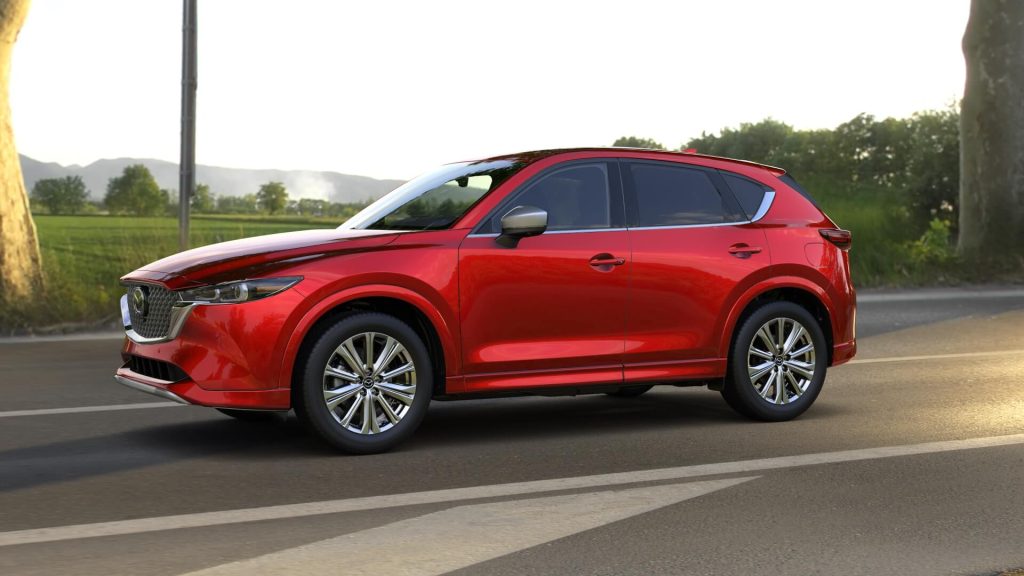
The vehicle also provides 29.1 cubic feet of cargo space behind the rear seats and 58.1 cubic feet with them folded.
There is also a practical advantage to the CX-5’s relatively conventional powertrain. Drivers who spend much of the winter making short city trips do not have to sacrifice the familiar feel of a gasoline SUV for a specialized winter setup. AWD, useful clearance, and compact dimensions do much of the work.
The CX-5 is particularly appealing for drivers who want more space and comfort than a subcompact crossover without stepping into a vehicle that becomes cumbersome in Boston’s tighter parking environments.
10. Honda HR-V
The Honda HR-V finishes the list with one of the more parking-friendly footprints among modern crossovers. At 179.8 inches long and 72.4 inches wide, it is substantially easier to place into tight urban spaces than many larger SUVs.
That becomes particularly valuable in Boston after snowfall, when a normal parking space can effectively become narrower because of accumulated snow.
The 2025 HR-V uses a 2.0-liter four-cylinder producing 158 horsepower and 138 lb-ft of torque. All-wheel drive is available, and the AWD version has 7.3 inches of ground clearance. That is not as much as the Crosstrek or several larger SUVs on this list, but it provides a useful buffer over many ordinary passenger cars.
Its compact dimensions are complemented by a 37.1-foot turning circle on the AWD configuration, helping the HR-V negotiate tight corners and constrained parking areas. Honda also gives it 24.4 cubic feet of cargo space behind the rear seats and 55.1 cubic feet with the rear seats folded.
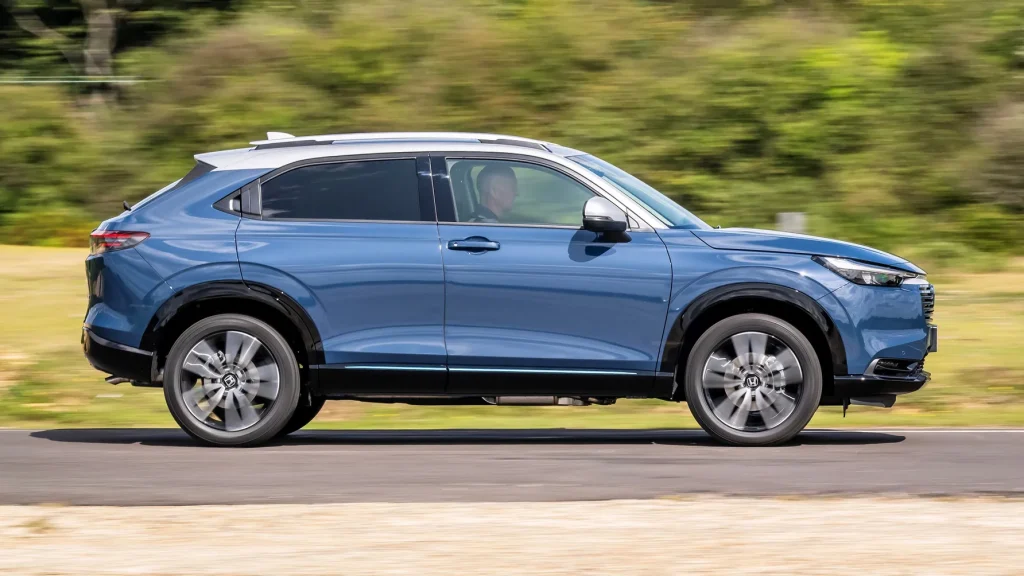
The HR-V’s modest power output means it is not designed to charge through deep snow. Its strengths are more practical: available real-time AWD, reasonable clearance, easy maneuverability, and a relatively small exterior footprint. In Boston, those characteristics can be more useful than sheer horsepower.
For drivers who spend most of their winter in the city rather than on unplowed rural roads, the HR-V makes sense as a compact daily vehicle that can handle winter conditions while remaining easy to park.