
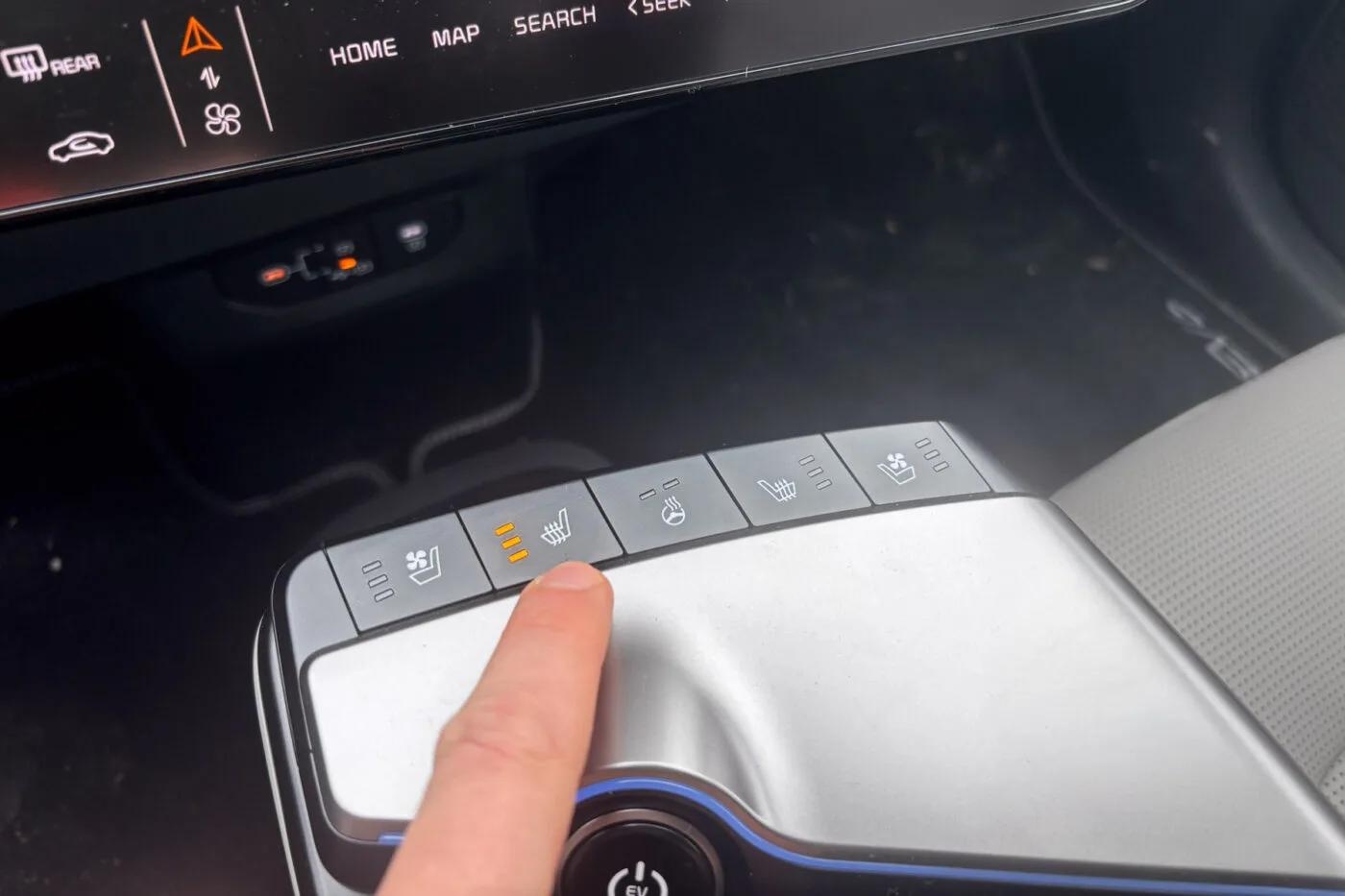
Winter driving raises a common question for EV owners. Do heated seats significantly reduce battery range? Many drivers assume that using any additional feature must come at the cost of valuable driving range.
The truth is more nuanced than it first appears. Heated seats and cabin heating are not the same thing at all. In a gas car, cabin heat is essentially free because it uses waste heat from the engine. An EV has no such luxury, so every bit of warmth must come from the battery.
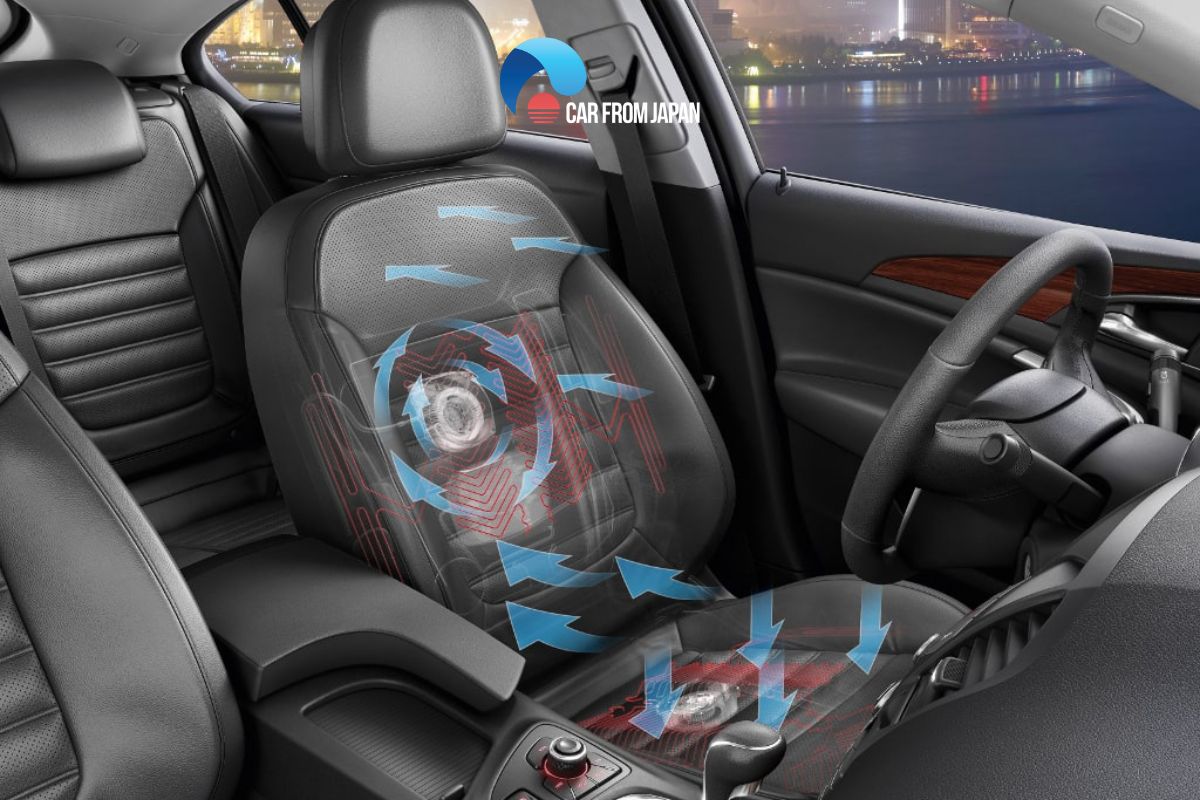
This is the main reason cold weather hits EV range so hard. But not every heating method draws the same amount of power. Heated seats work through direct conduction, warming your body rather than the entire cabin air volume. This makes them dramatically more efficient than blasting the heater.
Data from multiple sources shows heated seats use a tiny fraction of what cabin heating requires. This article breaks down the actual numbers, backed by real-world testing and manufacturer data.
We will look at wattage comparisons, range-loss percentages, and practical strategies. By the end, you will know exactly how much heated seats really cost your battery.
How Much Power Do Heated Seats Actually Use?
Heated seats are surprisingly low-power devices. Heating the cabin air can draw 3,000 to 5,000 watts, compared to around 75 watts for a heated seat and steering wheel.
That is roughly a 40 to 65 times difference in power draw. It is one of the largest efficiency gaps in any EV comfort feature. According to GM Volt data, heated seats typically need between 40 and 50 watts per seat to operate. That is barely more than a household light bulb.
If the cabin heater is drawing 5 kW, a single heated seat uses about 12 times less energy than that heater. This ratio holds across most EV models tested.
Other sources report similar figures with slight variation. Seat heaters consume just 50 to 100 watts, compared to 3,000 to 5,000 watts for full cabin heating.
That difference in energy consumption means drivers can preserve five to ten percent more range on winter journeys by favoring seat heaters. That’s a meaningful buffer on a cold commute.
Real-world owner data backs this up too. One MG5 owner measured cabin heating at 4 kW, while noting heated seats used maybe 1 amp, or roughly 400 watts, per seat.
That is still far below cabin heating draw, even at the higher end of seat-heater estimates. Even the most generous seat-heater figures stay under half a kilowatt.
To put this in battery terms, consider a typical 75 kWh pack. Resistive cabin heaters use 3 to 5 kW continuously, consuming 4 to 7 percent of that battery per hour of driving.
A heated seat running at 75 watts for the same hour uses roughly 0.1 percent of that battery. The gap between the two is enormous when measured honestly.
This is why range-loss myths around heated seats are largely unfounded. Heated seats consume a tiny fraction of the energy required to run full cabin heating.
Some owners report seeing no measurable range drop at all when heated seats are switched on. Cabin heating, by contrast, is immediately visible on the range estimate.
It is worth noting one online claim that heated seats alone can cut range by fifteen percent. That figure appears unsupported and contradicts wattage-based measurements from multiple independent sources. The physics simply does not support that number. Warming a small seat pad cannot approach the energy needed to heat an entire cabin of air.
Heated Seats vs Cabin Heating: The Real Data
The difference between resistive heaters and heat pumps matters just as much as seats versus cabin air. This changes how big the winter range hit actually is.
A resistive heater converts each unit of electricity directly into heat, while a heat pump can generate three to four units of heat per unit of electricity. That makes heat pumps three to four times more efficient.
Real-world testing shows this clearly in practice. Comparing a Tesla Model 3 with resistance heating against a Model Y with a heat pump at around 30°F, the Model 3 saw a 26 percent increase in energy consumption while the Model Y only rose 8 percent.
That’s more than triple the efficiency penalty for the resistive-heat vehicle. Heat pump technology alone can cut winter range loss dramatically.
Independent winter testing across many models paints a broader picture. With the heater running, highway range at freezing temperatures can drop 25 to 40 percent compared to the same drive in mild weather.
That drop isn’t only from the heater, though. Cold batteries and denser winter air also play a role, though climate control is often the single biggest factor a driver controls.
UK fleet data shows similar patterns with model-specific variation. Cold weather reduces electric car range by 15 to 20 percent on average, with the Tesla Model Y Long Range losing just 11.8 percent, while the Mercedes EQE lost 21 percent and the Tesla Model 3 Long Range lost 24.8 percent.
These gaps largely trace back to heat-pump availability and cabin insulation. Vehicles with heat pumps consistently outperform those without.
Fleet-focused research confirms the underlying wattage numbers too. Heating the cabin air can draw 3,000 to 5,000 watts, far more than the roughly 75 watts needed for a heated seat and steering wheel.
That same source notes a limit to how much this helps. In very cold conditions, minimizing cabin heat only goes so far, since the battery thermal management system still draws energy.
Academic research adds more precision to these figures. A PTC resistive heater directly withdraws electric energy from the battery, unlike a combustion engine’s recycled waste heat, which directly reduces EV range.
Researchers tested mitigation strategies with measurable results. Intelligent air recirculation and heat pump adoption increased EV range at minus 7°C by 7.1 to 7.9 percent, respectively.
Other engineering approaches showed further gains. A motor heat recycle system improved range by 7.9 percent, while active motor heat control added another 2.1 percent.
These numbers show cabin heating is genuinely the dominant range-loss factor. Heated seats, by comparison, barely register on these same scales.
One real owner data point illustrates the magnitude well. A Chevrolet Bolt owner reported cabin heating demand jumping power draw from 16 kW to 24 kW at 65 mph in cold weather.
That eight-kilowatt jump dwarfs anything a heated seat could ever draw. It reflects just how much energy full cabin warmth truly requires at highway speed.
Short trips suffer even more from this dynamic. Consumption can look terrible on a five-mile errand loop but reasonable on a sixty-mile highway run, because a cold-soaked battery and cabin need energy bursts on every short trip.
This means heated seats are especially valuable for quick errands. They warm you instantly without triggering the big energy spike cabin heat requires.
How to Maximize EV Range in Winter
Given this data, the smartest strategy blends heated seats with a lower cabin setpoint. This preserves comfort while minimizing total energy draw.
Using heated seats and a warm steering wheel lets you run a cooler cabin temperature while preserving winter range. This is the single most effective habit for cold-weather EV drivers.
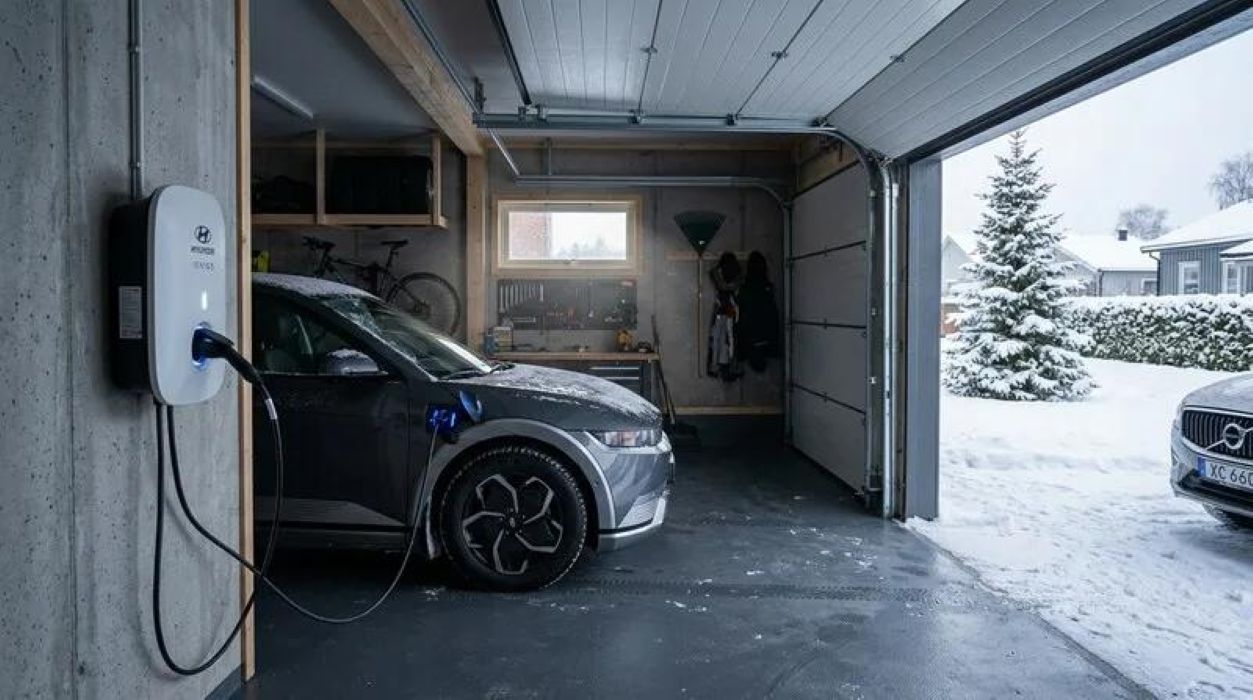
Preconditioning while still plugged in offers another major advantage. Scheduling preheating while plugged in means the cabin and battery are warm before you unplug, essentially free comfort from the grid instead of the battery.
Turning on heaters while still plugged in minimizes the auxiliary load that would otherwise hit the battery once you start driving. This single step can noticeably improve your first few miles of range.
Dressing appropriately also plays a bigger role than people expect. A light jacket, hat, and gloves let you comfortably keep the setpoint lower and lean on heated seats and the wheel instead.
Defrosting still requires full cabin heat briefly, and that is unavoidable. Use full defrost only long enough to clear the glass, then switch to a lower fan speed and targeted vents.
For those choosing between EV models, heat pump availability is now a genuine deciding factor. Most EVs from 2023 onward include heat pumps as standard, reducing heating-related range loss by 40 to 60 percent.
If you already own a resistive-heat EV, the same principles still apply. If you’re only doing five to ten-mile trips every morning, a heat pump would be largely redundant since the resistive heater handles most of the work regardless.
But on regular fifty-plus mile journeys, a heat pump extends range meaningfully by reducing demands on battery power, even if it rarely pays for itself financially.
Parking choices matter too, even without a garage upgrade. Even an unheated garage is ten to twenty degrees Fahrenheit warmer than outside, reducing battery cooling and preconditioning energy needed later.
Battery state of charge also affects cold-weather efficiency directly. Cold batteries are less efficient, so charging to 80 percent and staying above 20 percent keeps the battery in its optimal temperature and voltage range.
Speed adjustments offer a surprisingly large winter benefit as well. Dropping from 75 to 65 mph can increase range by 15 to 20 percent, costing only fifteen to twenty minutes on a 200-mile trip.
