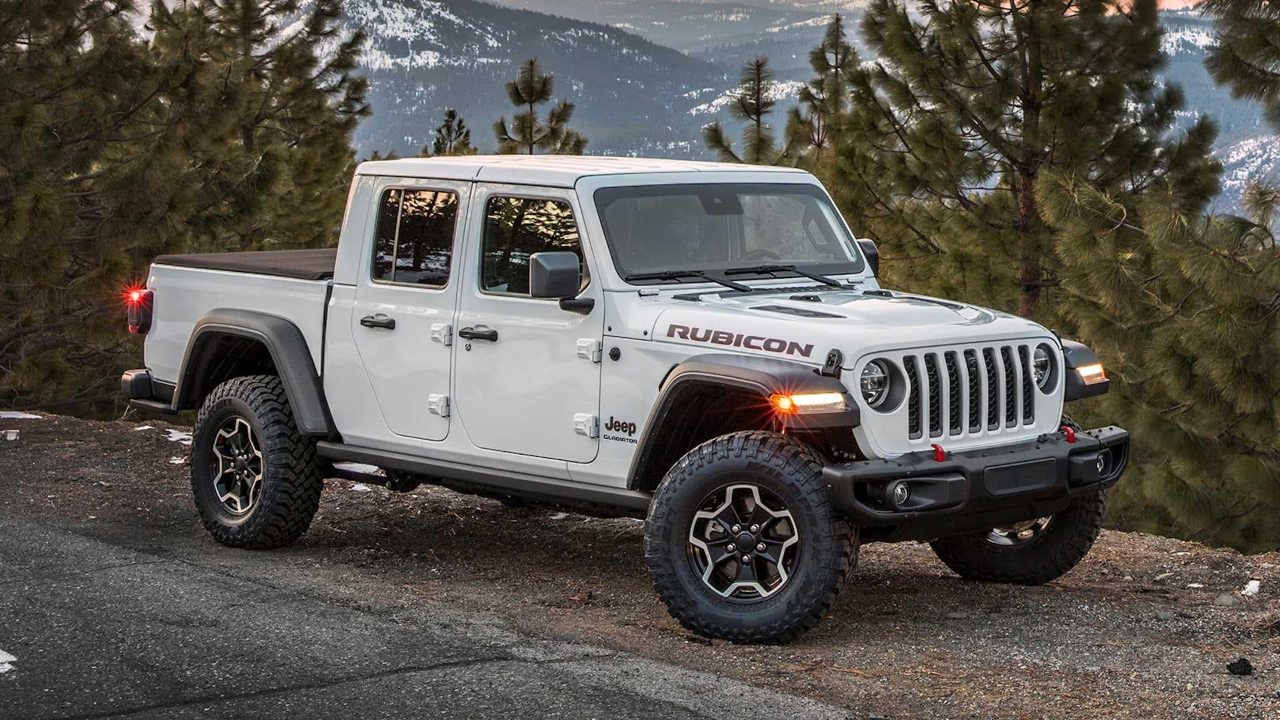
The 2026 Jeep Gladiator is one of the few new pickups that still puts genuine off-road hardware ahead of conventional pickup-truck refinement.
It comes standard with a 3.6-liter Pentastar V6, four-wheel drive, a five-foot bed, and the removable-roof-and-doors formula that separates it from ordinary midsize trucks. The bigger question is which version gives buyers the most capability without pushing the price unnecessarily high.
For 2026, Jeep’s Gladiator lineup starts with the Sport at $40,015, followed by the Sport S at $43,015, Willys at $46,445, Sahara at $48,115, Rubicon at $53,215, and Mojave at $53,215, according to Jeep’s current specifications. Jeep also offers higher-priced Rubicon X and Mojave X versions at $61,210.
Those prices make the choice particularly interesting. The Sport gives buyers the basic Gladiator formula for the least money, while the Rubicon and Mojave bring specialized hardware for serious off-road driving. But most buyers do not need the most extreme configuration.
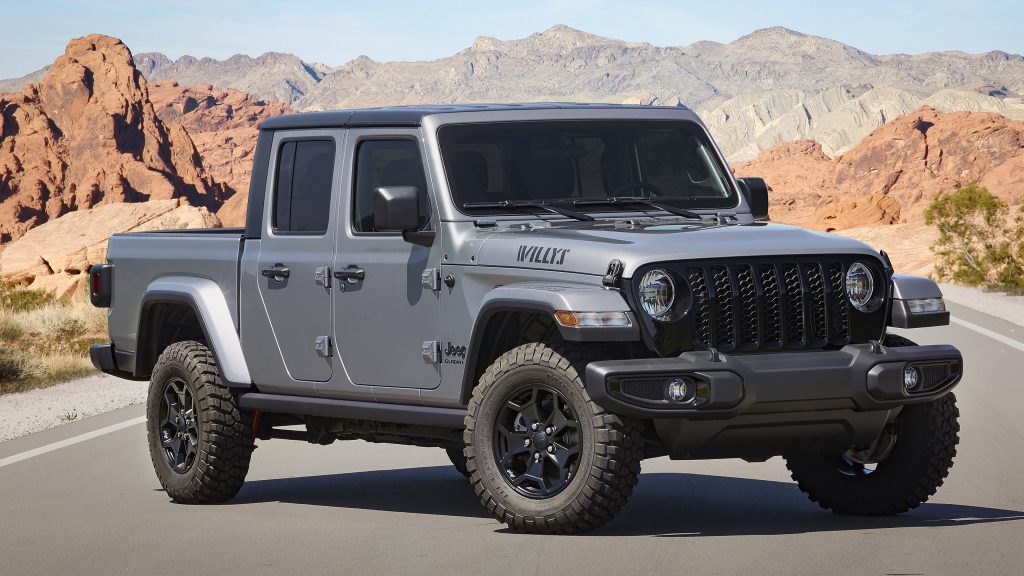
For the typical Gladiator customer, the Willys is the trim worth the money. It costs substantially less than a Rubicon or Mojave while adding meaningful off-road equipment beyond the entry-level versions.
It is capable enough for difficult trails without asking buyers to pay for hardware intended primarily for extreme rock crawling or high-speed desert driving.
The Sport S can also make a strong case for buyers who spend most of their time on pavement, while the Rubicon remains the better choice for serious rock crawlers. The important thing is understanding what each trim actually adds.
What You Get With Each Gladiator Trim
The Sport starts at $40,015, making it the least expensive way into the Gladiator. Jeep’s standard 3.6-liter Pentastar V6 produces 285 horsepower and 260 lb-ft of torque, and the truck comes with four-wheel drive. Jeep also gives the Sport the essential Gladiator hardware, including its five-foot cargo bed and removable body components.
The Sport is more capable than its price might suggest. It is not simply a stripped-down pickup with Jeep styling. However, buyers should remember that the lowest trim prioritizes the fundamentals over convenience features.
The Sport S starts at $43,015, adding equipment that makes the Gladiator easier to live with every day. It is the version to consider if the truck will spend more time commuting than crawling over rocks.
That distinction matters because the Gladiator’s capabilities can tempt buyers into spending money on hardware they may rarely use. If the truck is primarily a daily driver with occasional trips onto dirt roads, the Sport S can provide a more sensible balance.
The Willys starts at $46,445 and is where the Gladiator becomes particularly interesting from a value perspective. Jeep positions the Willys as an off-road-focused model, giving buyers more specialized equipment without requiring the $53,215 starting price of the Rubicon or Mojave.
The Willys is therefore a significant step beyond simply purchasing a Gladiator for its appearance. It is designed for owners who actually intend to use the truck away from pavement but do not necessarily need the most specialized hardware available.
The Sahara starts at $48,115. Rather than concentrating entirely on extreme trail capability, it provides a more comfort-oriented interpretation of the Gladiator. It makes sense for buyers who want the distinctive Jeep pickup experience but expect their truck to spend most of its time on roads.
At $53,215, the Rubicon sits much closer to the specialized end of the lineup. Jeep’s flagship off-road trim is built around difficult terrain, with hardware such as locking differentials, specialized suspension equipment, and other trail-focused upgrades. Jeep also lists 33-inch all-terrain tires as standard on Rubicon and Mojave models.
The Mojave also starts at $53,215, but it is engineered around a different kind of off-roading. Instead of concentrating primarily on slow-speed rock crawling, the Mojave is intended for high-speed desert and rough-terrain driving, with suspension tuning suited to absorbing repeated impacts.
Above them are the Rubicon X and Mojave X, both starting at $61,210 according to Jeep’s current specifications. These versions add premium equipment to the respective off-road formulas, but the substantial price increase makes them difficult to recommend purely on value.
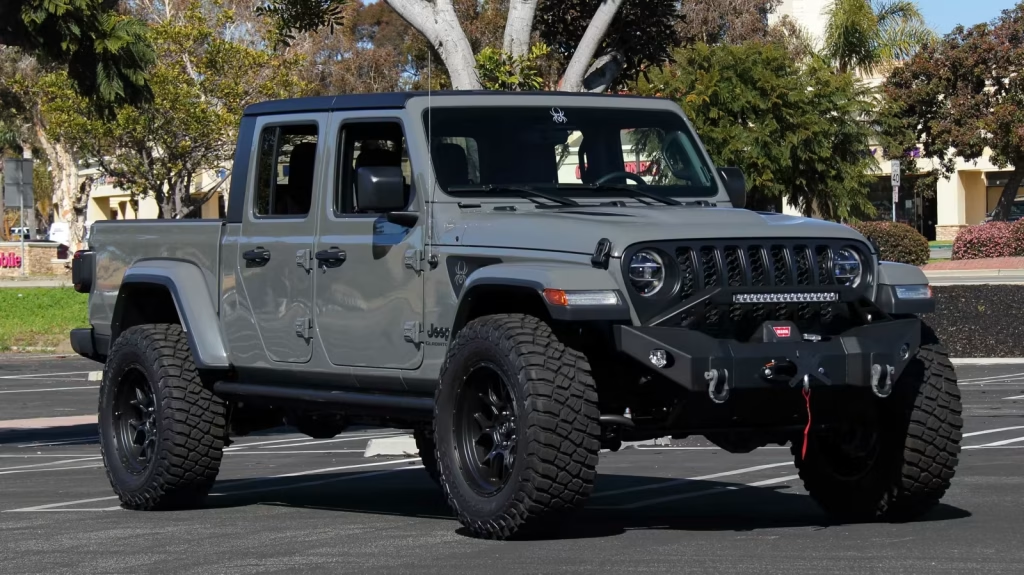
The difference between these trims is important because there is no single “best” Gladiator for every buyer. The Rubicon and Mojave are specialized tools. The Willys is the more balanced option.
Why the Willys Is the Sweet Spot
The biggest reason to choose the Willys is that it adds real off-road capability without moving into Rubicon money.
At $46,445, the Willys is roughly $6,770 more than the Sport but about $6,770 less than the Rubicon or Mojave. That leaves a substantial amount of room in the budget for useful options without immediately pushing the Gladiator beyond $50,000. That middle position is important.
The Gladiator already has a very specific purpose. Unlike a conventional midsize pickup, buyers are paying for removable doors, an available open-air experience, Jeep’s trail-oriented chassis, and four-wheel-drive capability. The question is whether spending another several thousand dollars produces enough additional capability to matter.
For serious off-road enthusiasts, it can. For everyone else, the Willys provides a better compromise.
The Rubicon is built for situations where its specialized equipment genuinely matters. Its locking differentials, trail-focused suspension, 33-inch tires, and other hardware can make a meaningful difference on difficult terrain. But those features are most valuable when the truck is being used in the environments for which they were designed.
Someone who occasionally explores forest trails, dirt roads, rocky terrain, or muddy tracks may not need the full Rubicon package.
The Mojave is even more specialized. Its suspension tuning is intended for aggressive desert driving and repeated high-speed impacts. If that is not part of your recreational life, paying Mojave money does not necessarily produce a better everyday truck.
The Willys, by contrast, is easier to justify. It gives the Gladiator a stronger off-road identity while retaining the fundamental practicality of the platform. It is also less expensive than the Rubicon and Mojave, which leaves buyers with a lower financial commitment to a vehicle that is already an unusual proposition for daily transportation.
There is another reason to consider the Willys. Much of the Gladiator’s core mechanical setup remains consistent as you move up through the lineup, so paying more does not necessarily mean getting a dramatically different mechanical package.
All 2026 Gladiators use the 3.6-liter V6, according to J.D. Power, so buying a more expensive trim does not get you a more powerful engine.
That makes the higher prices primarily about equipment, suspension tuning, off-road hardware, and comfort rather than a fundamentally different powertrain.
The Gladiator is also not particularly economical. CARFAX reports an EPA-estimated 19 mpg combined for the 2026 lineup.
That is another reason not to overspend on a trim whose capabilities you may rarely use. Buyers are already accepting the compromises that come with a body-on-frame, off-road-oriented pickup. The smart move is to spend extra only where the additional equipment will actually be used. The sport remains attractive for a different reason.
At around $40,000, it provides the core Gladiator experience for considerably less money. If you want a Jeep pickup primarily because you enjoy the open-air design and do not expect to tackle difficult trails, the Sport can be enough.
The Sport S is arguably the better choice for buyers who will use the truck as a daily driver. It adds convenience while keeping the price below the Willys.
That puts the Willys in a middle position within the lineup. It offers more off-road-focused equipment than the entry-level trims while avoiding the more specialized setup found on the Rubicon and Mojave.
MotorTrend’s 2026 Gladiator review reaches a different conclusion for serious off-roaders, recommending the Mojave or Rubicon because those trims provide the most specialized factory hardware and tuning. That assessment makes sense for buyers who intend to exploit the Gladiator’s extreme capabilities.
But “best off-road trim” and “best value trim” are not the same thing. For a buyer who wants genuine capability without spending more than necessary, the Willys is easier to recommend.
Which Gladiator Should You Buy?
The Sport is the budget choice. It gives you the core Gladiator formula and the 285-hp V6 without paying for specialized upgrades.
The Sport S is better for buyers who expect the Gladiator to function primarily as a daily driver. Its additional convenience equipment makes the extra money easier to justify if the truck spends most of its time on pavement.
The Willys is the best value for buyers who actually want to use their Gladiator off-road. At $46,445, it occupies the middle ground between basic transportation and serious trail equipment.
The Sahara is better suited to buyers who prioritize comfort and road use while still wanting the Gladiator’s distinctive design and open-air capability.
The Rubicon is the choice for serious rock crawling. Its specialized hardware makes the additional cost worthwhile when difficult trails are genuinely part of the plan.
The Mojave is built for a different kind of off-road driver. Its setup is geared more toward covering rough terrain at higher speeds than slowly navigating highly technical obstacles.
The Rubicon X and Mojave X are for buyers who want the corresponding off-road hardware combined with more premium equipment and are comfortable spending more than $60,000.
For most buyers, however, the answer is simpler. The 2026 Jeep Gladiator Willys is the trim worth the money.
It avoids the compromises of buying a purely basic workhorse while stopping well short of the price of the specialized Rubicon and Mojave. It gives buyers meaningful off-road capability, retains the Gladiator’s distinctive character, and leaves more money available for options or accessories.
If your Gladiator will spend nearly every weekend on difficult rock trails, buy the Rubicon. If desert terrain and high-speed off-roading are your priority, the Mojave is the better tool. If the truck will mainly be a commuter with occasional adventures, the Sport S may be the smarter financial decision.
But for the buyer who wants one Gladiator capable of handling everyday driving, weekend trails, and genuine off-road use without paying for the most extreme hardware, the Willys occupies the sweet spot.
It is not the cheapest Gladiator, and it is not the most capable. That is precisely why it makes the most sense.