
Hybrid vehicles are moving into more corners of the American market as automakers adjust to changing consumer demand. Honda plans a major expansion of next-generation hybrids in North America, while Hyundai says it intends to add 10 new hybrid models in the region by 2030.
Nissan is introducing its e-POWER system to the U.S., and other manufacturers are developing new hybrid trucks and SUVs. However, not every vehicle can accurately be called a “confirmed 2028 hybrid” yet.
Some have confirmed hybrid powertrains and launch windows, while others are expected around 2028 based on manufacturer plans and credible industry reporting. The list below separates confirmed details from projections.
1. Acura RDX
The next-generation Acura RDX is one of the clearest 2028 hybrid arrivals currently supported by published information. Car and Driver reports that the redesigned RDX is scheduled for the 2028 model year and will receive a new two-motor hybrid powertrain.
Acura has separately confirmed that its next generation of hybrid models will begin arriving within two years, using an improved two-motor system and a newly developed electric all-wheel-drive unit.
This will be a major change for the RDX because the current generation dates back to 2019. Acura has already teased the direction of its next hybrid SUVs, promising improvements in engine operating efficiency, hybrid-system efficiency, and driving performance.
Honda says the next-generation hybrid system is targeted to improve fuel economy by more than 10% while reducing system costs by 30%.
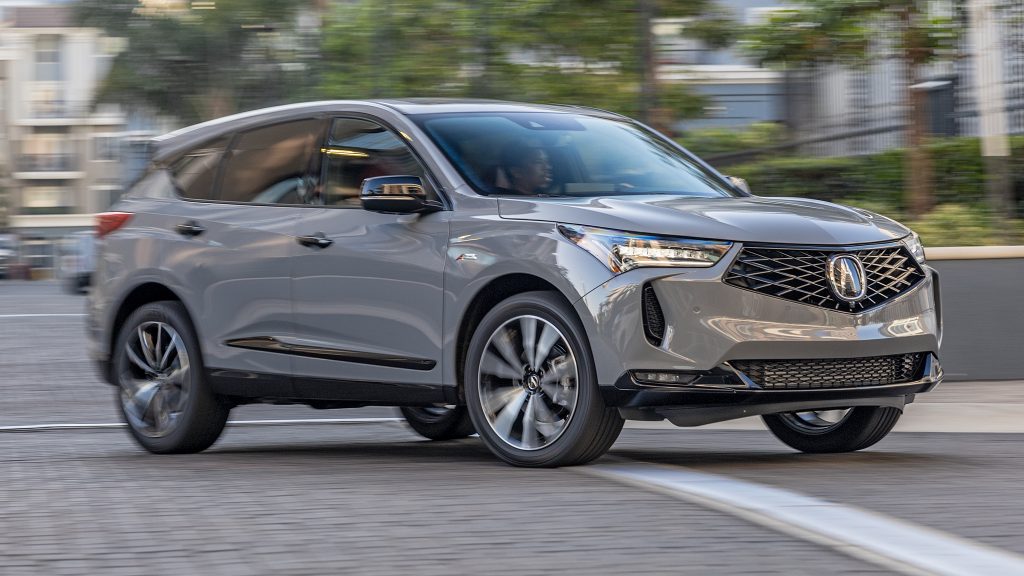
The future RDX is expected to grow in size and receive a substantially revised exterior, but Acura has not released final U.S. horsepower, torque, fuel economy, curb weight, or dimensional specifications. It would therefore be misleading to assign current RDX figures to the upcoming model.
What makes the new RDX particularly interesting is Acura’s move toward a more performance-focused hybrid setup. The new electric AWD system is designed to provide precise motor control, potentially giving Acura another way to differentiate its hybrid SUVs from conventional fuel-saving models.
2. Honda Ridgeline
Honda’s next Ridgeline is shaping up to be one of the most important hybrid pickups arriving around 2028. Honda has confirmed that a third-generation Ridgeline is in development, while current industry reporting points to a 2028 arrival after production of the existing truck pauses.
MotorTrend reports that Honda’s new larger-vehicle hybrid system is likely to reach the Ridgeline, with the automaker developing a hybrid powertrain specifically intended to handle increased loads such as towing.
The hybrid system itself is particularly significant. Honda has said its next-generation hybrid technology for larger vehicles is being developed with stronger driving and towing performance in mind.
The company also says its next-generation hybrid models are targeting more than a 10% improvement in fuel economy compared with existing systems.
The current Ridgeline uses a naturally aspirated 3.5-liter V6 producing 280 horsepower and 262 lb-ft of torque, with standard all-wheel drive and a 5,000-pound maximum towing capacity. Those numbers describe the outgoing truck, not the future hybrid.
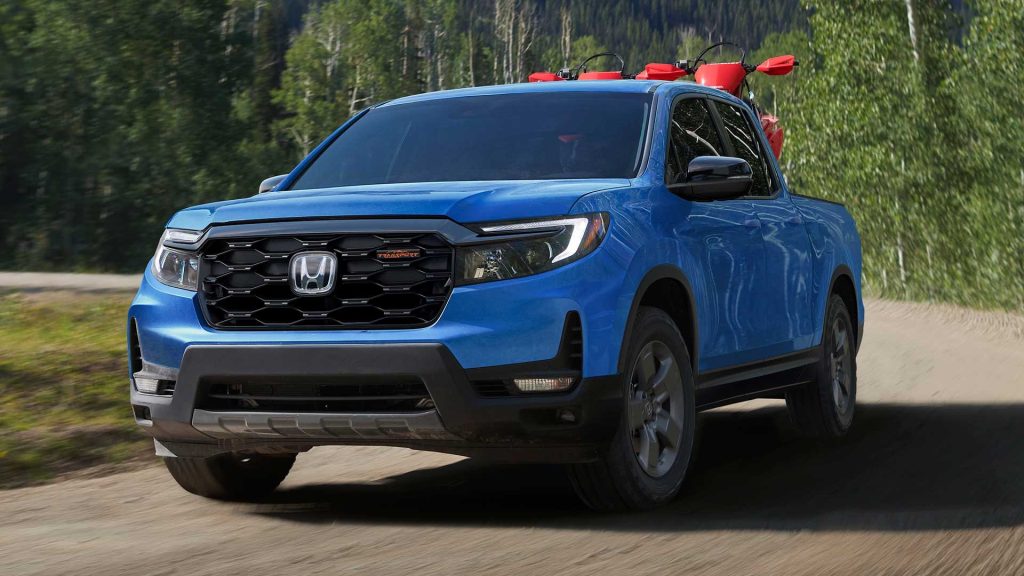
Honda has not officially published the 2028 model’s horsepower, torque, towing rating, or fuel economy, so predictions should not be presented as production specifications.
The redesign is expected to make the Ridgeline look more rugged while retaining its unibody construction and four-door configuration. That could allow Honda to improve capability without abandoning the comfortable road manners that distinguish the truck from body-on-frame competitors.
3. 2028 Jeep Compass Hybrid
Jeep is expanding hybrid technology into smaller SUVs, and the next-generation Compass is expected to play an important role in that strategy. The U.S. Compass already moved into a new generation for 2026, with Jeep offering hybrid technology in the lineup.
Industry reporting indicates that the same basic hybrid strategy could continue as the Compass develops toward the 2028 model year.
The timing is important because Stellantis has been broadening hybrid availability across its brands rather than treating electrification as an EV-only strategy.
The latest Compass is based on Stellantis’ STLA Medium platform, an architecture designed to support multiple powertrain types. That flexibility allows Jeep to offer combustion, hybrid, and electric versions from the same basic vehicle family.
The U.S. hybrid Compass uses a 1.6-liter turbocharged four-cylinder paired with a hybrid system, producing 145 horsepower in the current e-Hybrid configuration. However, buyers should not assume that this exact output will remain unchanged for 2028. Jeep has not released final U.S. specifications for a future 2028 Compass update.
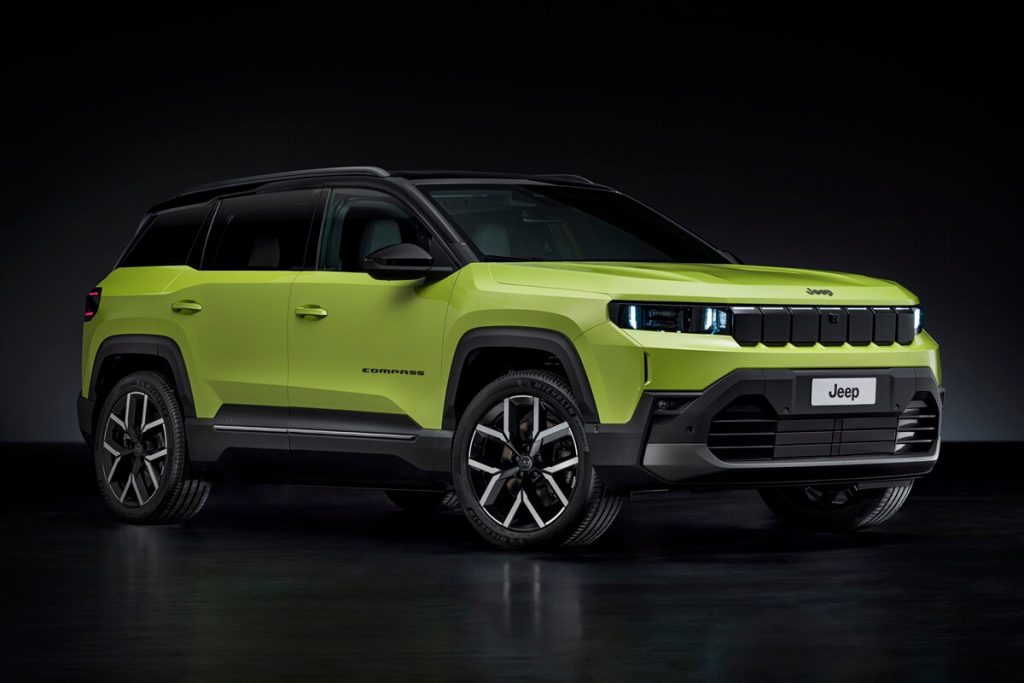
What makes the Compass particularly relevant is its position in the market. It is smaller and less expensive than Jeep’s larger SUVs, giving the company a way to put hybrid technology in front of buyers who may not want to step up to a three-row vehicle.
For consumers, the important question will be whether Jeep can combine the efficiency benefits of hybrid power with the all-weather capability expected from the brand.
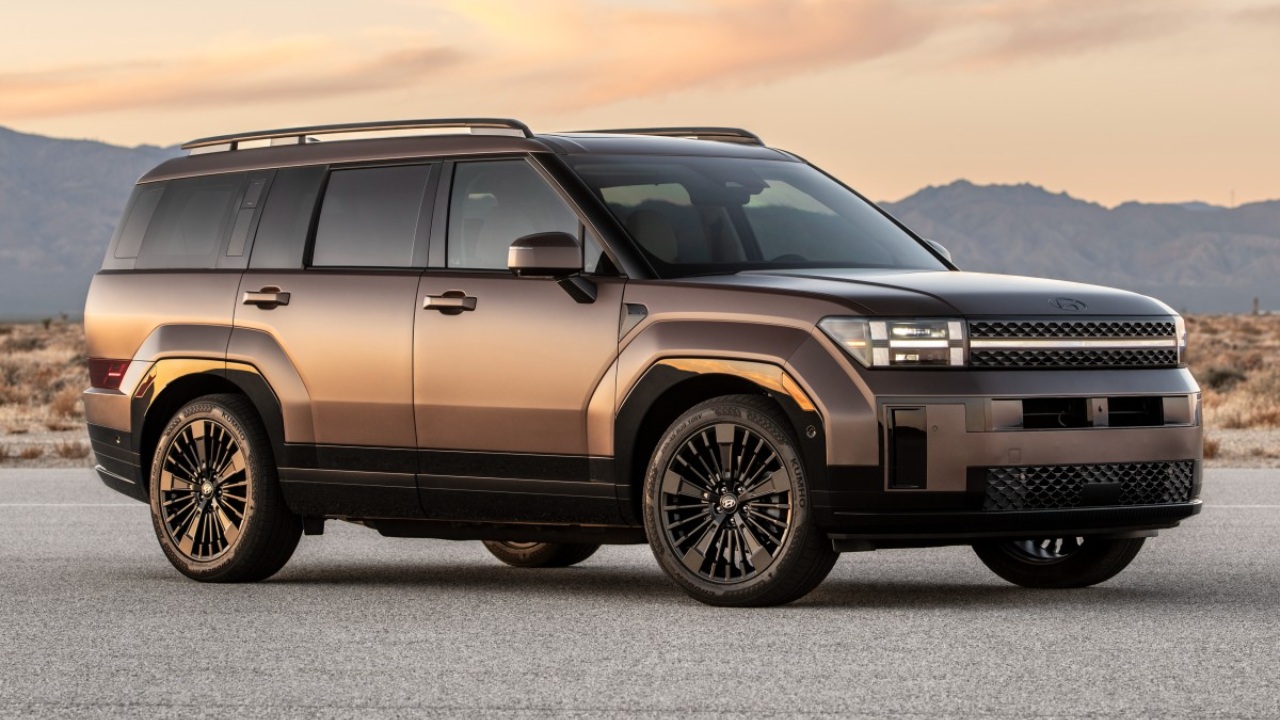
4. 2028 Hyundai Santa Fe Hybrid
Hyundai is preparing a much larger hybrid offensive in the U.S., and the Santa Fe is positioned to remain one of the company’s important hybrid nameplates.
Hyundai announced in August 2026 that it plans to introduce 10 new hybrid models in North America by 2030, while expecting hybrids to account for half of its regional sales by that time. That strategy makes continued development of established hybrid SUVs such as the Santa Fe especially significant.
The current U.S. Santa Fe Hybrid already demonstrates Hyundai’s approach. It uses a 1.6-liter turbocharged four-cylinder with an electric motor, producing 231 combined horsepower. The available hybrid system is paired with a six-speed automatic transmission rather than the dual-clutch transmission used by some of Hyundai’s gasoline models.
For 2028, Hyundai has not announced a completely new Santa Fe hybrid specification sheet. That means the current 231-horsepower figure should not automatically be presented as the output of the future model.
Instead, the more defensible conclusion is that the Santa Fe is part of a broader hybrid expansion that Hyundai has now publicly committed to.
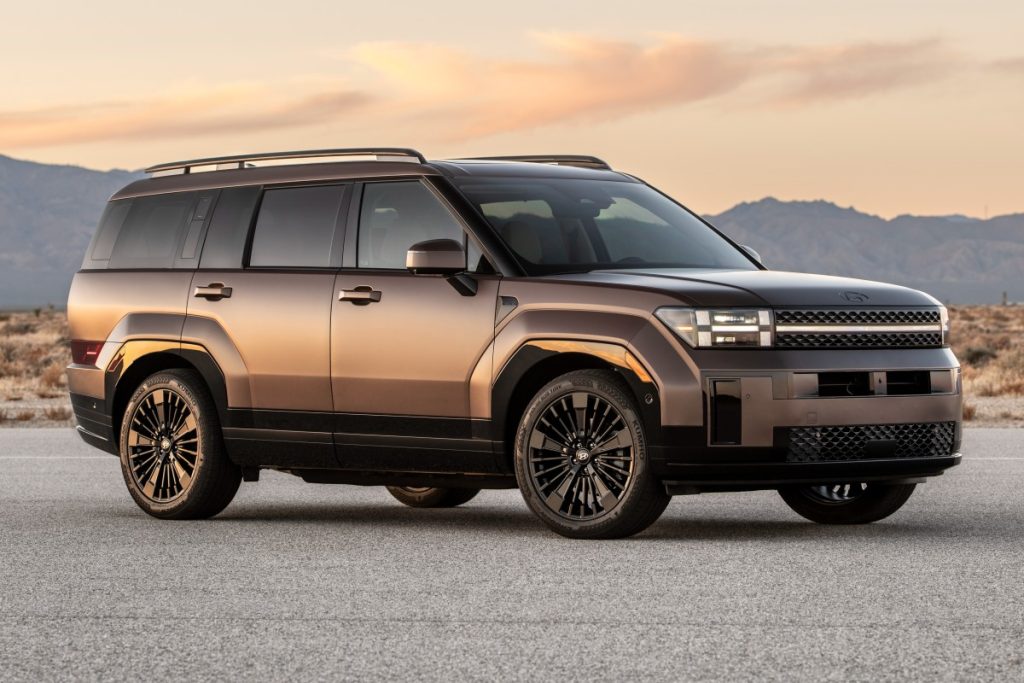
The company is also increasing hybrid production capacity in North America. Hyundai’s strategy calls for substantial growth in U.S. hybrid availability as consumer demand changes.
That makes the Santa Fe interesting beyond its powertrain alone. Its three-row configuration gives Hyundai a hybrid option for families who need considerably more space than a compact hybrid crossover can provide.
5. Honda Pilot Hybrid
Honda’s next-generation Pilot is another important candidate for the company’s expanding hybrid strategy. Honda has said its new V6-based hybrid system will begin appearing in larger vehicles, and industry reporting expects the Pilot to be among the first models to receive it.
The timing fits Honda’s broader plan to introduce a new generation of hybrid vehicles in North America beginning in 2027.
The future Pilot is expected to retain its three-row format, but the hybrid system could significantly change how the large SUV delivers power. Honda says its next-generation hybrid technology is being developed not merely for fuel savings but also for stronger acceleration and improved driving efficiency.
The company has targeted more than a 10% improvement in fuel economy for its next-generation hybrid models.
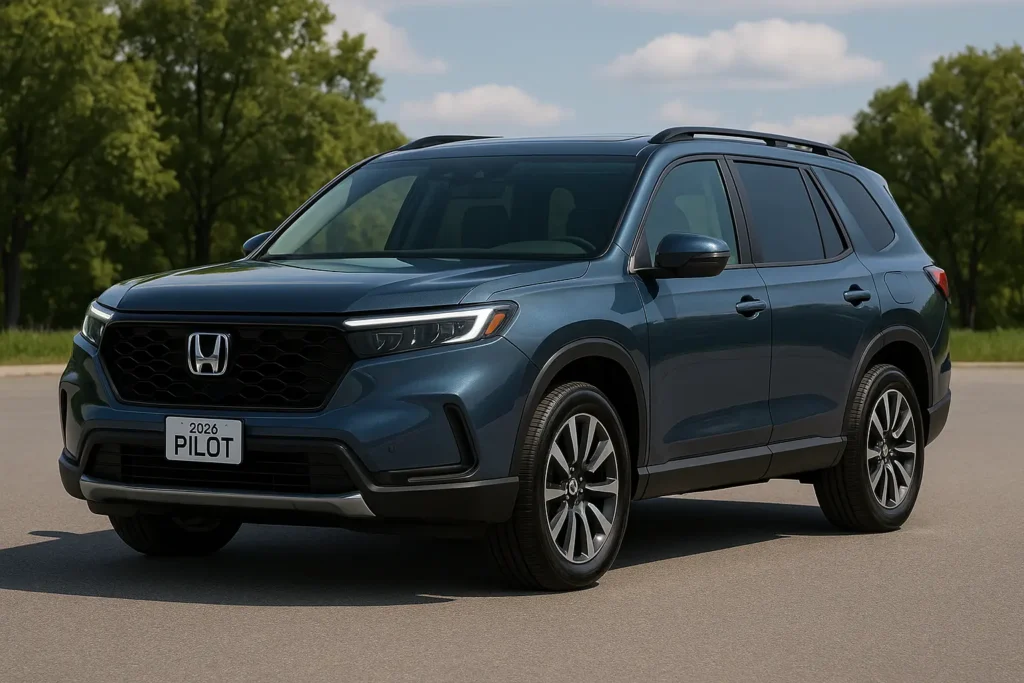
The current U.S. Pilot uses a 3.5-liter V6 producing 285 horsepower and 262 lb-ft of torque. Those numbers describe the current gasoline model and should not be treated as specifications for the upcoming hybrid. Honda has not released final horsepower, torque, EPA fuel economy, towing capacity, or dimensions for a future hybrid Pilot.
Its size makes the model particularly significant. A hybrid three-row SUV can deliver efficiency benefits without forcing families to give up seating capacity, cargo space, or long-distance usability. Honda’s new system is also expected to share technology with the upcoming Ridgeline and Passport.
6. Honda Passport Hybrid
The Honda Passport is expected to join the brand’s larger SUV hybrid expansion as Honda moves its new V6 hybrid system across more vehicles.
The current Passport was redesigned for 2026 and uses a naturally aspirated 3.5-liter V6, but Honda has confirmed that its next-generation hybrid technology is being developed for larger vehicles. Industry reporting identifies the Passport as one of the models expected to adopt the system.
The move could be particularly useful for the Passport because the latest generation already emphasizes ruggedness. Honda markets the TrailSport version toward buyers who want greater off-road capability, while the hybrid system is being designed to provide more efficient operation without abandoning the performance needed from a larger SUV.
Honda says its next-generation hybrid system can improve fuel economy by more than 10% while reducing system costs by 30%. The automaker is also developing a new electric all-wheel-drive unit for its next-generation hybrid models, although Honda has not confirmed exactly how that technology will be configured in the future Passport.
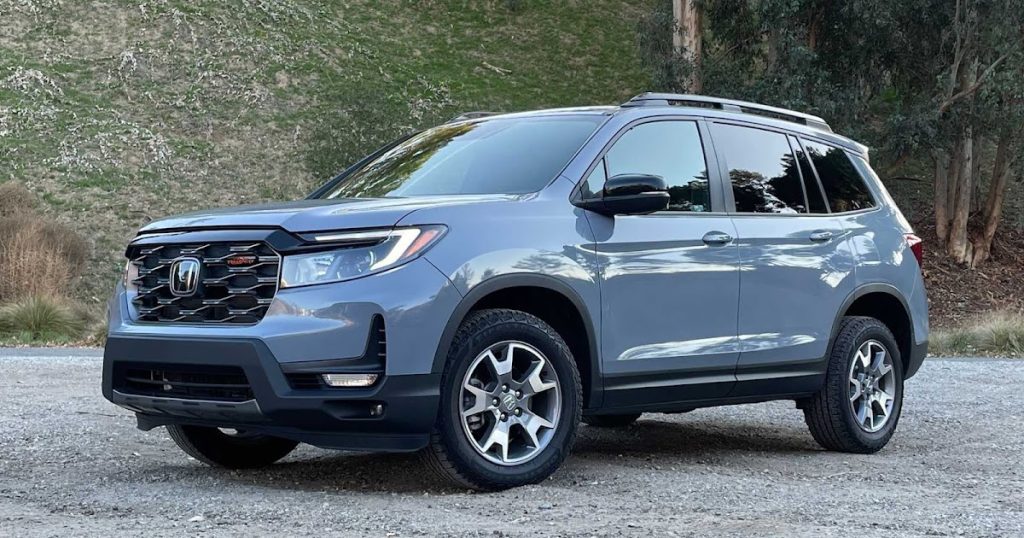
The current Passport’s 3.5-liter V6 produces 285 horsepower and 262 lb-ft of torque, but those figures should not be carried over to the future hybrid. Final output, fuel economy, towing capacity, curb weight, and dimensions remain unannounced.
For Honda, adding hybrid technology to the Passport would create a useful middle ground between traditional gasoline SUVs and fully electric vehicles.
7. Honda Odyssey Hybrid
Honda’s next-generation Odyssey is another vehicle that fits into the company’s larger hybrid expansion, although its exact launch timing needs a qualification. Honda has confirmed that it plans to introduce larger hybrid vehicles in North America beginning in 2029, specifically targeting vehicles in the D-segment and above with stronger driving and towing capability.
Industry reporting has identified the Odyssey as one of the vehicles expected to receive Honda’s new V6-based hybrid technology.
That would be a major change for the Odyssey, which currently relies on a gasoline V6. The current U.S. model uses a 3.5-liter V6 producing 280 horsepower and 262 lb-ft of torque, paired with a 10-speed automatic transmission. Those figures belong to the existing model and should not be treated as specifications for the future hybrid.
Honda’s new hybrid system is being developed specifically for larger vehicles. The company says the next-generation technology is intended to improve fuel economy by more than 10% while also providing stronger driving performance. Honda is also developing a new electric all-wheel-drive unit for its next-generation hybrid lineup.
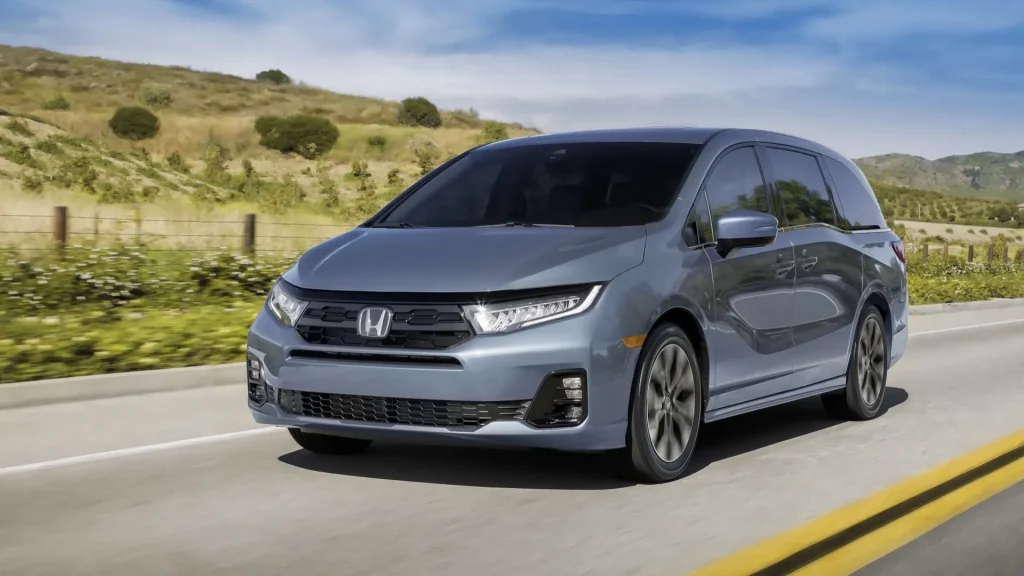
For a minivan, that combination could be particularly useful. Families routinely use the Odyssey for long-distance trips, school runs, and heavy passenger loads, so improved efficiency could have a practical impact rather than simply serving as a headline feature.
The important caveat is timing. A hybrid Odyssey is more accurately described as a future-planned hybrid around the 2028-2029 period, rather than a confirmed 2028 model.
8. Hyundai Palisade Hybrid
The Hyundai Palisade is already moving into the hybrid era, making it one of the strongest candidates for continued hybrid availability around 2028.
Hyundai’s U.S. lineup currently includes a Palisade Hybrid, and the automaker has announced plans to introduce 10 additional hybrid models in North America by 2030. Hyundai also expects hybrids to account for half of its regional sales by that point.
The 2027 Palisade Hybrid provides a useful indication of what Hyundai is doing with larger SUVs. It uses a hybrid powertrain producing 329 combined horsepower, while Hyundai estimates up to 34 mpg combined for front-wheel-drive versions.
All-wheel drive is also available. The vehicle can seat up to eight passengers, making it one of Hyundai’s largest hybrid offerings in the United States.
Those figures should not automatically be applied to the 2028 model because Hyundai has not released a separate 2028 Palisade Hybrid specification sheet. What is clear is the direction of the product line. Hyundai is expanding hybrid availability significantly rather than treating the technology as a short-term addition.
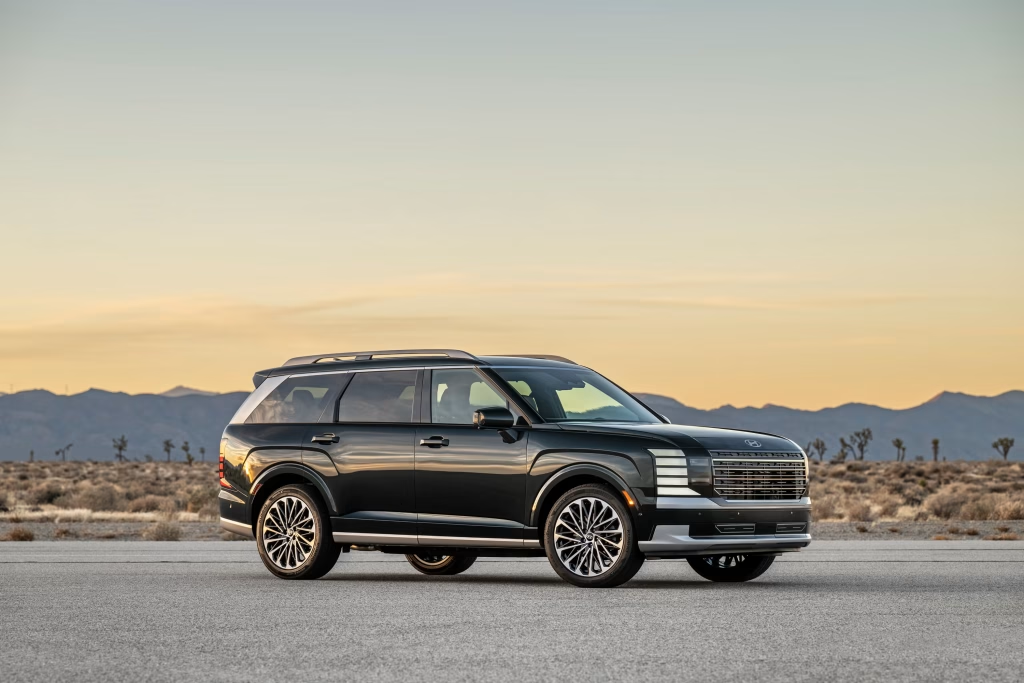
The Palisade is particularly important because its size gives the hybrid system a demanding job. Moving a three-row SUV and several passengers requires considerably more energy than powering a small sedan. Hyundai’s strategy therefore demonstrates that its hybrid plans extend well beyond traditional economy cars.
If the Palisade receives further updates before 2028, changes could involve software, battery management, styling, or powertrain calibration rather than an entirely new vehicle.
9. Nissan Xterra Hybrid
Nissan has now given the Xterra a much clearer future than many expected. The company says the legendary SUV is targeted for a late 2028 U.S. launch, and its official future-vehicle information confirms that it will be built in the United States on a new body-on-frame platform with either a V6 or V6 hybrid powertrain.
That makes the Xterra one of the few vehicles on this list with a specifically stated late-2028 launch target.
The hybrid version is particularly interesting because Nissan is not simply electrifying a conventional crossover. The new Xterra is being developed as a truck-based SUV, putting it into the same general category as vehicles such as the Toyota 4Runner and Ford Bronco.
Edmunds reports that Nissan’s hybrid strategy for the Xterra involves V6 power, although the company has not yet released the production engine’s horsepower or torque figures.
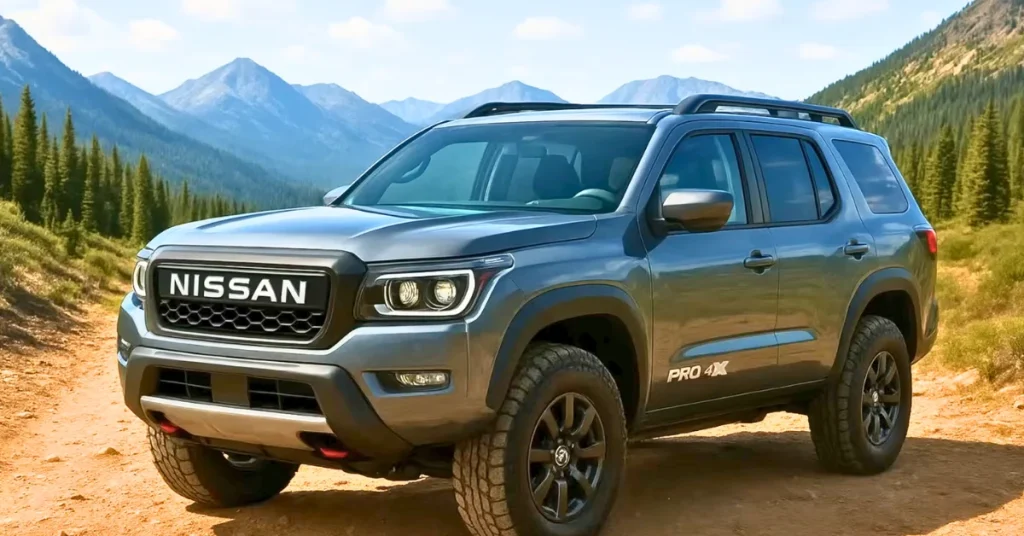
Nissan also says the Xterra will be produced at its Canton, Mississippi, facility. The company has not yet announced EPA fuel-economy figures, towing capacity, curb weight, dimensions, battery size, or final pricing. Those numbers should therefore not be guessed.
What separates this hybrid from many efficiency-focused SUVs is its intended mission. Nissan is targeting buyers who want a more traditional off-road vehicle while still gaining some of the efficiency and electric assistance available from hybrid propulsion.
10. Infiniti QX50 Hybrid
Infiniti is preparing to bring the QX50 name back for 2028, and this time the compact luxury SUV will return with Nissan’s e-POWER hybrid technology. Edmunds reports that Infiniti confirmed the new QX50 during an event in Japan and that it will use the same basic hybrid system being introduced on the 2027 Nissan Rogue.
The technology differs from a conventional parallel hybrid. Nissan’s e-POWER system uses a gasoline engine to generate electricity, while electric motors provide the driving force.
Nissan says the third-generation system coming to the U.S. Rogue uses dual electric motors and does not require the vehicle to be plugged in. That gives the system an EV-like drive feel while retaining a gasoline engine as the energy source.
For Infiniti, this could give the returning QX50 a very different identity from the previous model. Instead of relying on the turbocharged engine and conventional automatic transmission used by its predecessor, the new SUV will emphasize electric propulsion and hybrid efficiency.
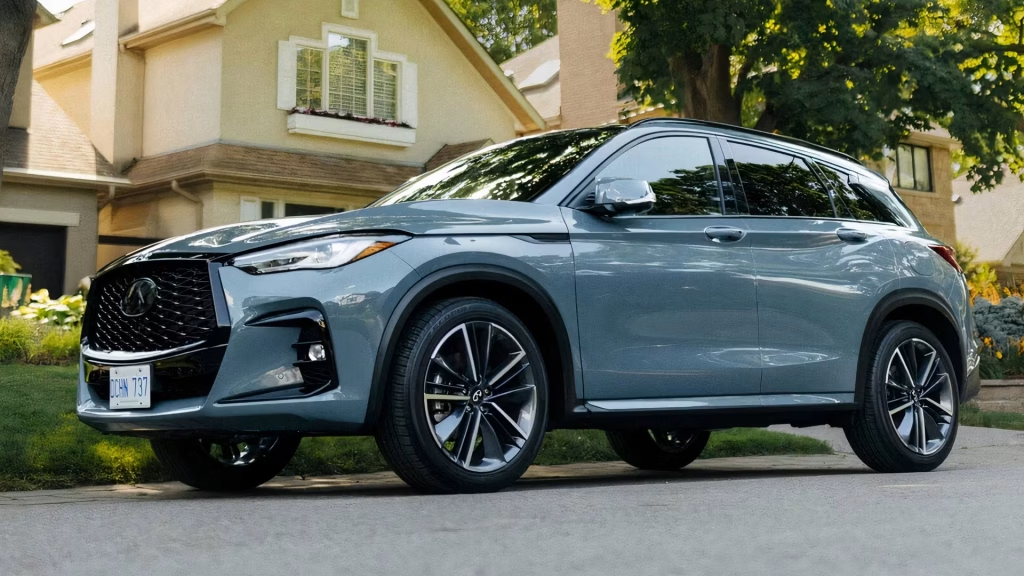
Final U.S. specifications remain unavailable. Infiniti has not published the QX50’s production horsepower, torque, EPA fuel economy, battery capacity, dimensions, or pricing. Nissan’s current Rogue e-POWER specifications also should not automatically be transferred to the Infiniti.
The 2028 timing is nevertheless unusually clear. Edmunds reports that Infiniti confirmed the return for 2028, while the company has positioned the model against established luxury compact SUVs such as the BMW X3, Mercedes-Benz GLC, and Audi Q5.
11. Volkswagen Tiguan Hybrid
Volkswagen is finally preparing to bring a full hybrid powertrain to its U.S. lineup, and the Tiguan is expected to be one of the first models to receive it.
Volkswagen of America CEO Kjell Gruner confirmed that a full-hybrid system is planned for the U.S.-market Tiguan, alongside future hybrid versions of the Atlas and Atlas Cross Sport.
Current industry reporting places the Tiguan Hybrid around the 2028 to 2029 timeframe, although Volkswagen has not yet announced a precise U.S. model-year launch date.
The significance goes beyond one SUV. Volkswagen currently has no conventional full-hybrid passenger vehicle in its U.S. lineup, leaving it without a direct hybrid alternative to models such as the Toyota RAV4 Hybrid and Honda CR-V Hybrid.
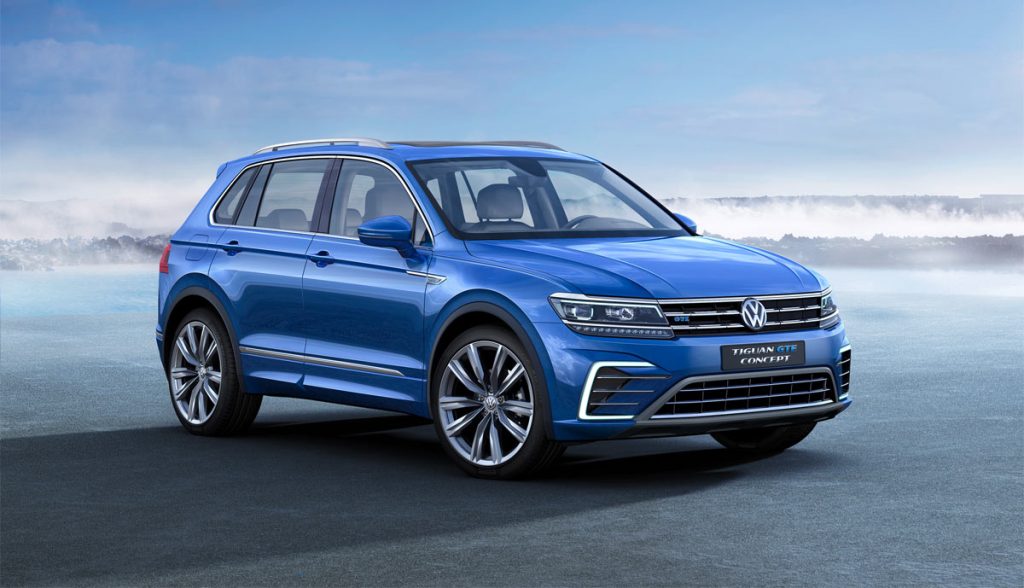
The new Tiguan system is expected to be a traditional full hybrid rather than a plug-in hybrid, meaning drivers would not need to connect the vehicle to an external charger.
The U.S. Tiguan was redesigned for 2025, so the hybrid version is expected to arrive as part of the model’s later product development rather than as an entirely separate vehicle. Volkswagen has not released the U.S. hybrid’s final engine, electric-motor output, combined horsepower, torque, EPA fuel economy, battery capacity, curb weight, or pricing.
That makes precise performance claims premature. What is confirmed is Volkswagen’s intention to put a full-hybrid powertrain into the Tiguan, giving the compact SUV a significantly different proposition from the gasoline model.
