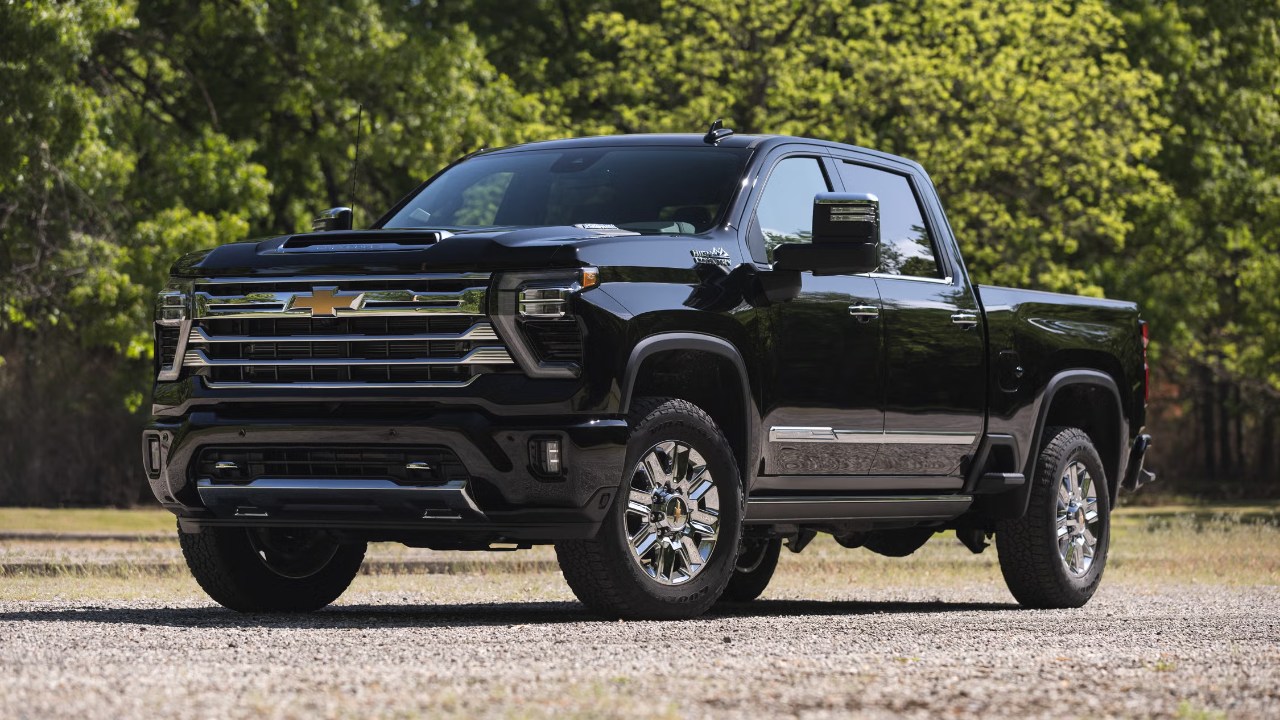
A truck reaching 200,000 miles is not unusual when it has been engineered well and maintained properly. The more interesting question is which pickups have the data to support that kind of longevity.
iSeeCars analyzed hundreds of millions of vehicle records and found several trucks with strong probabilities of reaching 200,000 and even 250,000 miles. This list focuses on U.S.-market pickups with documented long-term durability, not simply trucks with a reputation for being tough.
None can literally run without maintenance, but these are the trucks that give owners a credible shot at crossing the 200,000-mile mark without turning the ownership experience into a constant repair battle.
1. Toyota Tundra
The Toyota Tundra has one of the strongest data-backed cases for reaching extremely high mileage among full-size American-market pickups. In iSeeCars’ latest longevity analysis, the Tundra has a predicted 30.0 percent chance of reaching at least 250,000 miles, compared with a 13.0 percent average for trucks.
Another iSeeCars analysis puts its potential lifespan at 256,022 miles, giving the Tundra a particularly strong statistical foundation for a 200,000-mile ownership target.
That does not mean a Tundra can be ignored for 200,000 miles. Oil changes, fluids, brakes, tires, suspension components, and other wear items still matter. What the data suggests is that the underlying truck has a history of surviving well beyond the mileage at which many owners start thinking about replacing a pickup.
The current 2026 Tundra shows how Toyota has combined this long-running durability reputation with considerably more modern hardware.
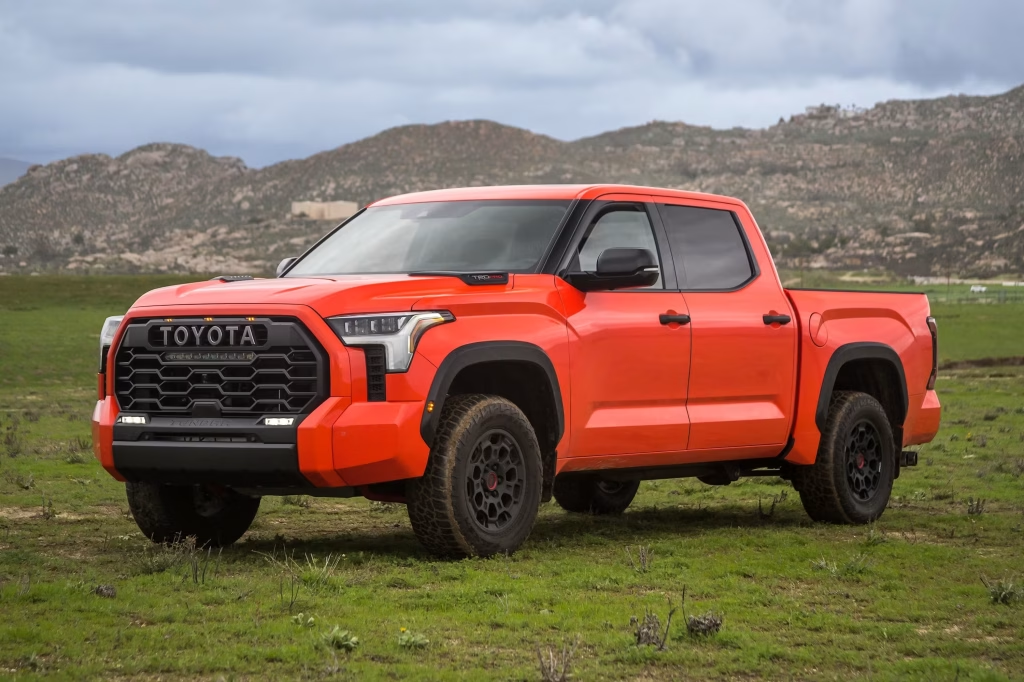
The standard i-FORCE twin-turbo V6 produces 389 horsepower and 479 lb-ft of torque, while the available i-FORCE MAX hybrid reaches 437 horsepower and 583 lb-ft. Toyota pairs both powertrains with a 10-speed automatic transmission. Maximum towing capacity reaches 12,000 pounds when properly equipped.
Another practical detail is important for long-term ownership. The Tundra uses a composite pickup bed designed to resist dents, impacts, and rust, with available bed lengths of 5.5, 6.5, and 8.1 feet. This can help reduce one source of long-term wear for owners who regularly use their trucks for work.
2. Ram 3500
When the goal is a truck that can accumulate enormous mileage while performing serious work, the Ram 3500 deserves attention for a very different reason than the Tundra. Its strongest argument is not simply reputation.
iSeeCars’ 2025 longest-lasting truck study placed the Ram 3500 first among the trucks analyzed for the probability of reaching 250,000 miles, with a predicted 39.7 percent chance. That figure is more than three times the 13.0 percent average for the truck segment.
The heavy-duty nature of the 3500 also changes the conversation around mileage. These trucks are designed for substantially greater workloads than ordinary half-ton pickups, so owners who accumulate miles while towing or hauling have a vehicle built around demanding operating conditions.
That does not eliminate maintenance, but it helps explain why heavy-duty pickups occupy so many positions near the top of long-life truck studies.
For 2026, Ram offers the 3500 with the high-output 6.7-liter Cummins turbo-diesel inline-six. It produces 430 horsepower and a massive 1,075 lb-ft of torque and works with a TorqueFlite HD eight-speed automatic transmission.
Properly equipped, the truck can tow as much as 36,610 pounds, although exact capability depends heavily on configuration and towing equipment.
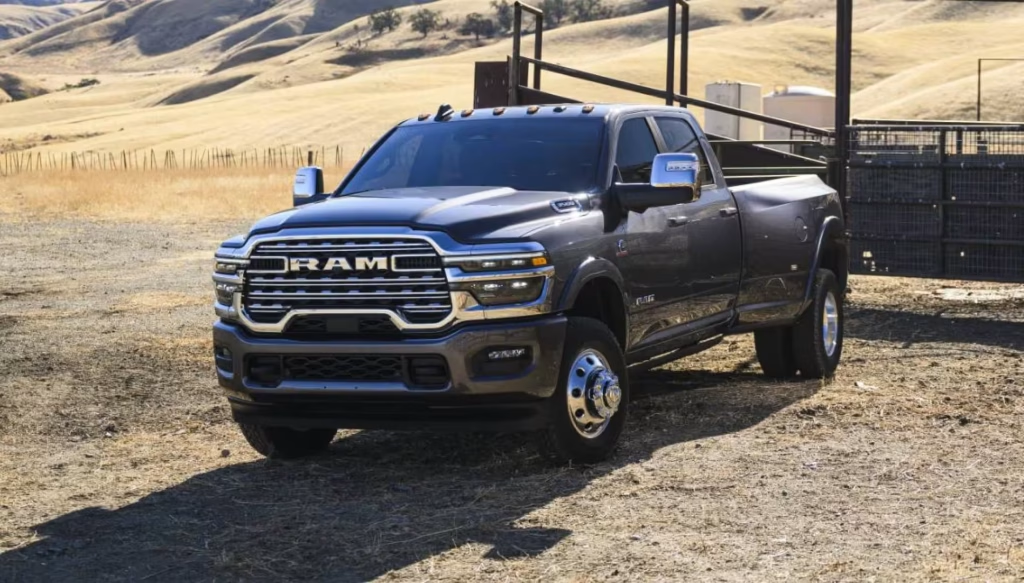
The 3500 is therefore not merely a truck that can survive a high odometer reading. It is designed around the kind of commercial and recreational workload that can rack up mileage quickly.
For an owner who follows the maintenance schedule, watches fluid condition, and treats the diesel emissions system properly, 200,000 miles is a meaningful milestone rather than an automatic endpoint.
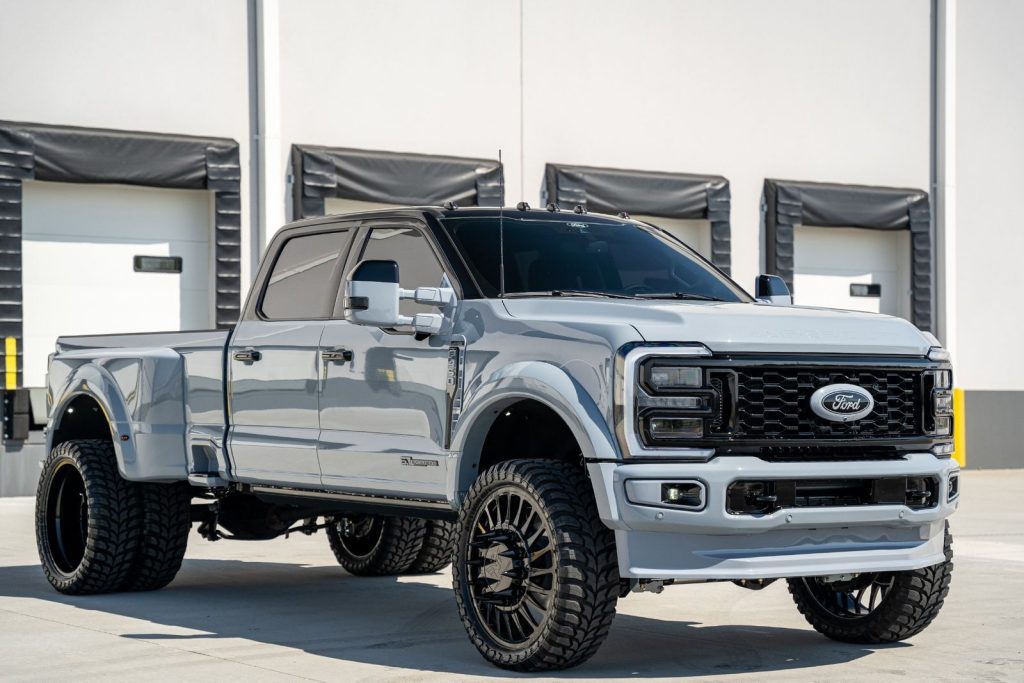
3. Ford F-450 Super Duty
The Ford F-450 Super Duty earns its place here because it was designed for workloads that would be excessive for an ordinary half-ton pickup. iSeeCars’ 2025 longevity study found that the F-450 has a 28.5 percent predicted chance of reaching at least 250,000 miles. That is more than double the 13.0 percent average for trucks in the same study.
That figure is particularly notable because the F-450 is not being evaluated as a lightly used commuter vehicle. Heavy-duty pickups commonly accumulate mileage while towing, hauling equipment, traveling between job sites, and performing other demanding work.
The fact that the F-450 appears so high in a large-scale mileage analysis gives it a stronger statistical case for long-term use than a simple reputation-based recommendation.
Ford’s current Super Duty lineup also provides substantial mechanical capacity. The available 6.7-liter high-output Power Stroke diesel produces 500 horsepower and 1,200 lb-ft of torque.
That enormous torque figure is intended for pulling heavy loads rather than simply producing impressive acceleration numbers. Ford rates the F-450 for a maximum conventional towing capacity of 30,000 pounds and a maximum gooseneck towing capacity of 40,000 pounds when properly equipped. Exact ratings vary according to configuration.
There is an important distinction, however. A truck capable of reaching 200,000 miles still needs regular service. Diesel oil changes, fuel-system maintenance, cooling-system care, transmission service, brakes, tires, and suspension components cannot simply be ignored. The longevity data indicates durability potential, not a maintenance-free ownership experience.
For buyers who need a serious workhorse and intend to keep it for many years, the F-450’s combination of heavy-duty engineering and documented high-mileage potential makes 200,000 miles a realistic long-term target.
4. Toyota Tacoma
Few midsize pickups have built as strong a high-mileage reputation as the Toyota Tacoma, and the numbers provide evidence that the reputation is not based entirely on owner anecdotes.
iSeeCars’ 2025 analysis gives the Tacoma a 25.3 percent predicted chance of reaching 250,000 miles. That puts it well above the 13.0 percent truck average and makes it one of the strongest light-duty entries in the study.
The Tacoma’s appeal at high mileage comes partly from its history as a relatively compact pickup that has been used for commuting, off-road driving, recreation, and work.
That versatility means owners can accumulate substantial mileage without necessarily subjecting the truck to the continuous heavy loads associated with larger commercial pickups.
The current U.S. Tacoma has moved into a newer generation with a turbocharged 2.4-liter four-cylinder engine as its foundation.
Depending on configuration, Toyota offers different outputs, with the available i-FORCE MAX hybrid powertrain producing up to 326 horsepower and 465 lb-ft of torque. Toyota also offers a six-speed manual transmission on select configurations, while automatic-equipped versions use an eight-speed transmission.
The important point for a 200,000-mile owner is that modern equipment adds complexity, so maintenance remains essential. Turbocharged engines require proper oil servicing, while four-wheel-drive models bring additional drivetrain components that need attention.
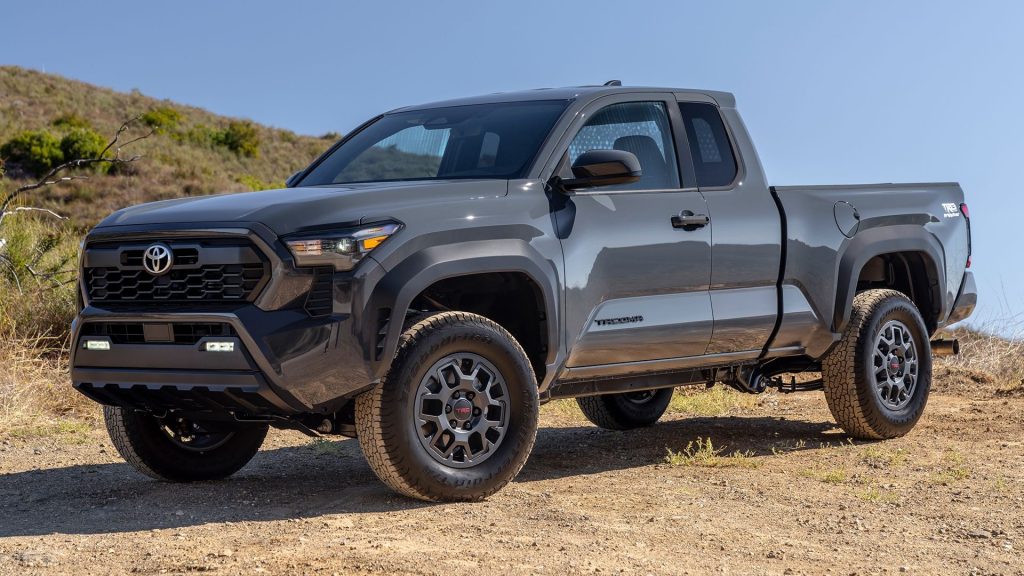
Owners who tow or regularly drive off-road also need to account for greater wear on suspension, brakes, tires, and drivetrain components.
Still, the Tacoma’s statistical performance stands out. A 25.3 percent predicted chance of reaching 250,000 miles means the 200,000-mile milestone sits well within the range that its historical data supports.
For someone wanting a smaller pickup that can remain in service for a very long time, the Tacoma has one of the strongest documented cases in its class.
5. GMC Sierra 2500HD
The GMC Sierra 2500HD has one of the clearest data-backed cases for a truck intended to stay on the road far beyond the 200,000-mile mark. In iSeeCars’ 2025 longevity study, the Sierra 2500HD had a 22.0 percent predicted chance of reaching at least 250,000 miles. That puts it substantially above the 13.0 percent average for trucks in the study.
That statistic is important because 200,000 miles is not the end of the range being measured. The study is specifically looking at the probability of reaching another 50,000 miles beyond that milestone.
In other words, a truck with a meaningful probability of reaching 250,000 miles has a substantial documented history of surviving well past the mileage that many buyers consider the beginning of high-mileage ownership.
The Sierra 2500HD is also built around heavy-duty hardware. For 2026, GMC offers the 6.6-liter Duramax turbo-diesel V8, which produces 470 horsepower and 975 lb-ft of torque. The diesel works with a 10-speed Allison automatic transmission, while the available gasoline 6.6-liter V8 produces 401 horsepower and 464 lb-ft of torque.
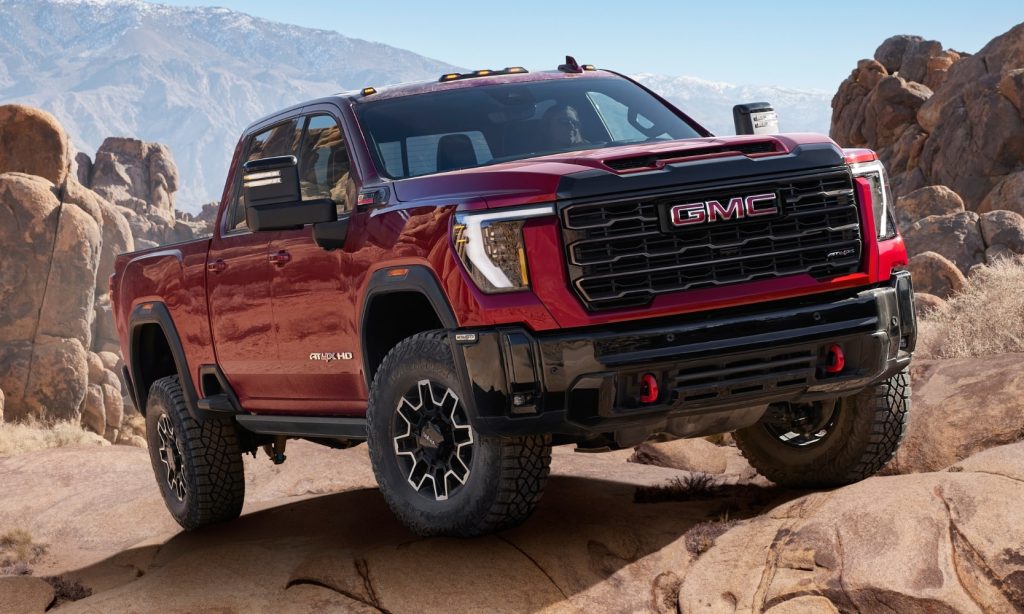
The truck’s capability illustrates why it can accumulate serious mileage in demanding environments. Properly configured, the related Silverado HD can tow up to 36,000 pounds with the diesel powertrain, although the exact figure depends on configuration.
None of this means the Sierra is maintenance-free. Brakes, suspension components, tires, and drivetrain fluids can all experience significant wear, particularly when the truck is used for towing. However, its longevity statistics give buyers more than anecdotal evidence. They provide a measurable track record of vehicles reaching exceptionally high mileage.
6. Ford F-250 Super Duty
The Ford F-250 Super Duty occupies an interesting position in long-term truck ownership because it combines a heavy-duty chassis with a huge population of trucks that have spent years working in the real world.
iSeeCars’ 2025 analysis gives the F-250 an 18.6 percent predicted chance of reaching at least 250,000 miles. That is considerably higher than the 13.0 percent truck-segment average.
For an owner targeting 200,000 miles, that distinction matters. The study does not merely identify trucks that happen to have high average odometer readings.
Its model uses large-scale vehicle data to estimate the likelihood of vehicles reaching the 250,000-mile threshold. The F-250’s position therefore provides statistical support for keeping one deep into its second hundred thousand miles.
Ford gives buyers several powertrain choices, allowing the truck to be configured according to how it will be used. The available 6.7-liter Power Stroke diesel is particularly suited to owners who regularly tow heavy loads, while gasoline options provide an alternative for buyers whose work does not require maximum diesel capability.
The heavy-duty architecture is another reason the F-250 is different from a conventional half-ton pickup. It is designed around higher payload and towing demands, and that means components such as the frame, axles, suspension, and braking system are engineered for substantially greater loads.
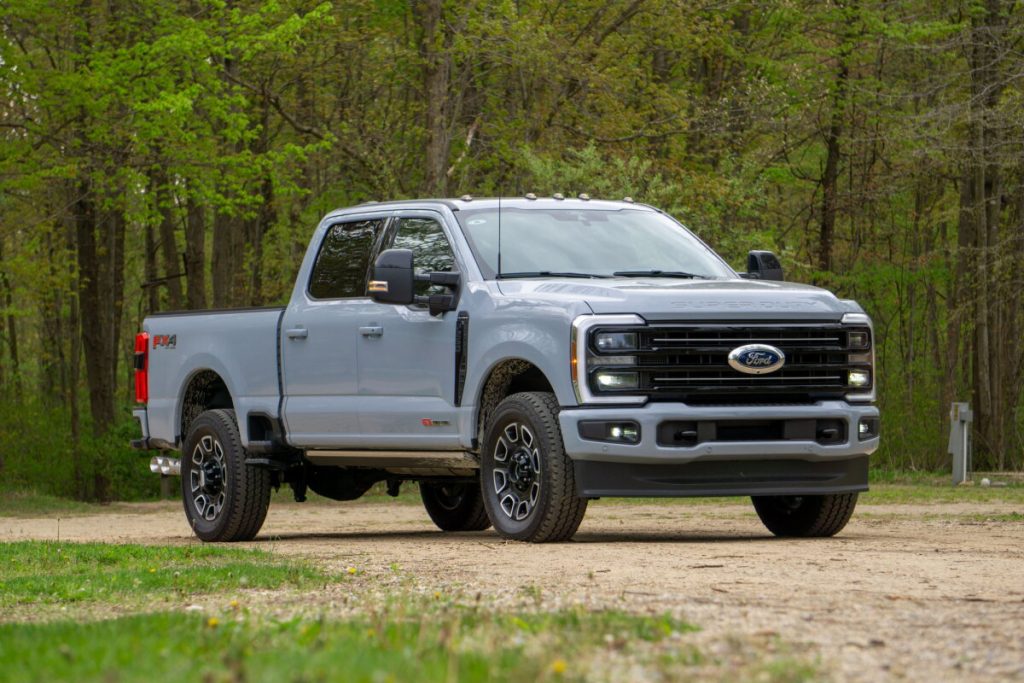
Yet longevity still depends on how the truck is treated. A fleet truck that spends years overloaded, idling excessively, or towing at its maximum capacity will experience a different type of wear than a privately owned F-250 used primarily for commuting.
Regular fluid changes, inspection of the cooling system, proper tire maintenance, and attention to drivetrain service remain essential.
The data simply shows that the F-250 has a documented ability to keep going when those responsibilities are handled correctly.
7. Ford F-350 Super Duty
The Ford F-350 Super Duty sits in a sweet spot for buyers who need more capability than an F-250 without stepping into the extreme configuration possibilities of the F-450. Its long-term mileage record is also supported by large-scale data.
iSeeCars’ 2025 longevity study gives the F-350 an 18.3 percent predicted chance of reaching at least 250,000 miles, compared with a 13.0 percent average for trucks.
That makes the F-350 particularly interesting for owners planning to keep a truck for a decade or longer. Reaching 200,000 miles is not guaranteed, of course, but the statistical evidence shows that a meaningful share of these trucks continue operating far beyond the mileage where many pickups begin to face major age-related expenses.
Ford’s Super Duty formula is built around heavy-duty work. The available 6.7-liter High Output Power Stroke V8 produces 500 horsepower and 1,200 lb-ft of torque, giving the F-350 enormous pulling capacity.
Depending on configuration, Ford rates the Super Duty lineup for towing figures that can reach well beyond 30,000 pounds. The exact rating depends on cab style, axle ratio, drivetrain, bed, and towing equipment.
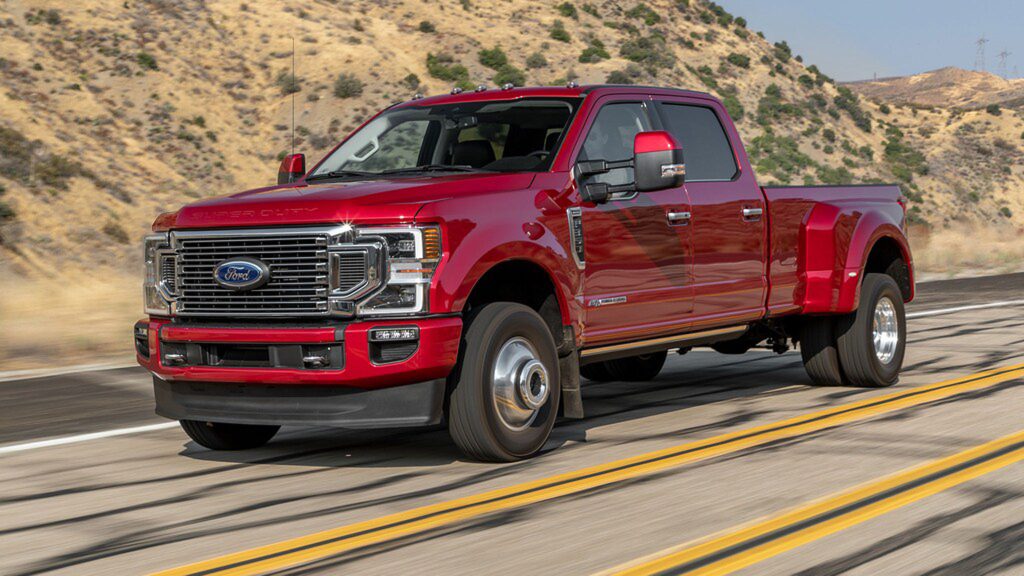
For high-mileage owners, the truck’s intended workload is significant. A pickup designed for frequent towing and hauling has a different engineering brief from a light-duty commuter truck. That does not mean components will never wear out. In fact, heavy use can accelerate replacement of brakes, tires, suspension parts, and other consumables.
The real advantage is that the F-350’s underlying platform is designed to handle demanding loads repeatedly. Combine that with the model’s documented probability of reaching 250,000 miles, and the 200,000-mile mark becomes a reasonable long-term ownership goal for properly maintained examples.
8. Chevrolet Silverado 3500HD
The Chevrolet Silverado 3500HD brings another heavy-duty platform into the 200,000-mile conversation, and its longevity numbers are stronger than many casual buyers might expect. According to iSeeCars’ 2025 study, the Silverado 3500HD has a 17.4 percent predicted chance of reaching 250,000 miles. The truck average in the same analysis is 13.0 percent.
The distinction is useful because the 250,000-mile measurement gives us a tougher benchmark than the 200,000-mile target used for this article. A pickup does not need to reach 250,000 miles to qualify as a successful 200,000-mile vehicle, but a documented probability of making it substantially farther provides useful evidence when evaluating long-term durability.
Chevrolet offers the Silverado HD with a 6.6-liter gasoline V8 and an available 6.6-liter Duramax turbo-diesel V8. The Duramax produces 470 horsepower and 975 lb-ft of torque and is paired with a 10-speed Allison automatic transmission. That combination gives the truck the kind of low-speed pulling force expected from a modern heavy-duty pickup.
The Silverado 3500HD can also be configured for extremely serious towing. Chevrolet’s published figures reach up to 36,000 pounds in properly equipped configurations, though buyers must check the specific truck’s certification because towing capability changes with drivetrain, cab, axle ratio, and equipment.
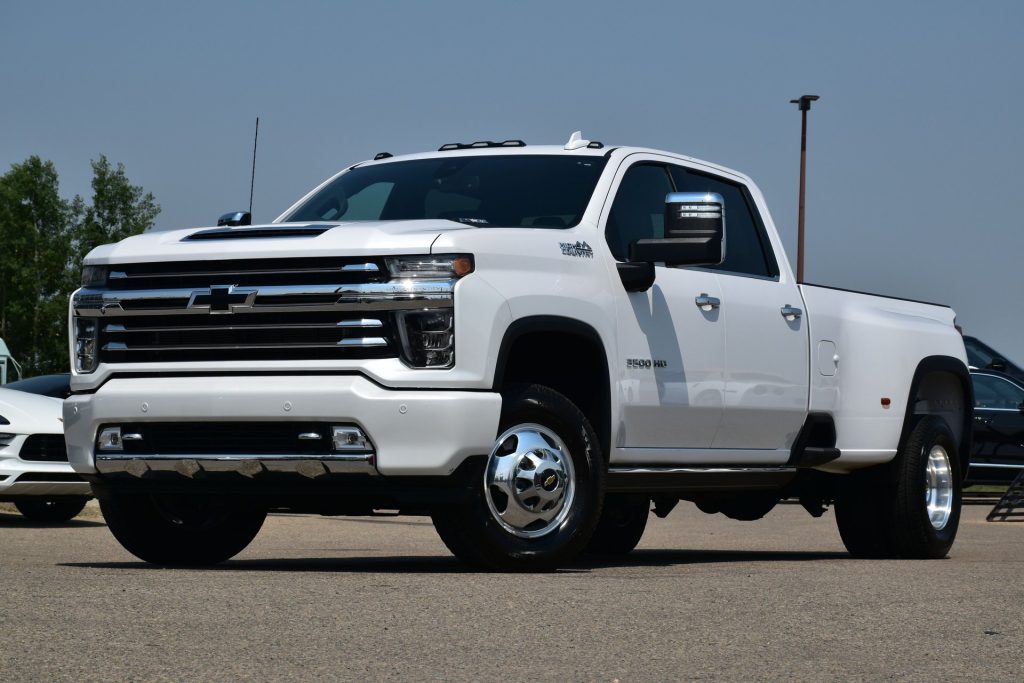
Another reason this truck suits long-term ownership is its intended purpose. The 3500HD is designed for owners who regularly tow trailers, carry equipment, and handle heavy payloads. Its frame, suspension, and braking systems are therefore engineered to manage loads far beyond what a typical family pickup encounters.
Reaching 200,000 miles still requires discipline. Diesel maintenance, transmission service, cooling-system checks, and suspension inspections become increasingly important as mileage climbs. The Silverado 3500HD’s data simply shows that the platform has a measurable history of reaching the next major mileage threshold.
9. Ram 2500
The Ram 2500 has a particularly interesting long-term case because it sits between the lighter-duty pickup market and the much larger 3500 class.
iSeeCars’ 2025 study gives the Ram 2500 a 17.3 percent predicted chance of reaching at least 250,000 miles, compared with 13.0 percent for the truck category as a whole. That gives the heavy-duty Ram a measurable advantage when the target is 200,000 miles and beyond.
A 250,000-mile prediction should not be interpreted as a promise that every Ram 2500 will reach that number. The study is based on large-scale vehicle data and estimates the likelihood of reaching the threshold. Maintenance history, operating conditions, towing habits, and previous ownership can make a major difference with an individual truck.
The 2500 is offered with gasoline and diesel powertrains, with the available 6.7-liter Cummins turbo-diesel inline-six providing the kind of low-speed torque expected from a heavy-duty pickup. Its chassis is designed around substantial towing and payload demands, giving the truck a fundamentally different operating envelope from a half-ton pickup.
That distinction becomes especially relevant once the odometer passes six figures. A truck that has spent years pulling trailers will have experienced more stress than an example primarily used for highway commuting.
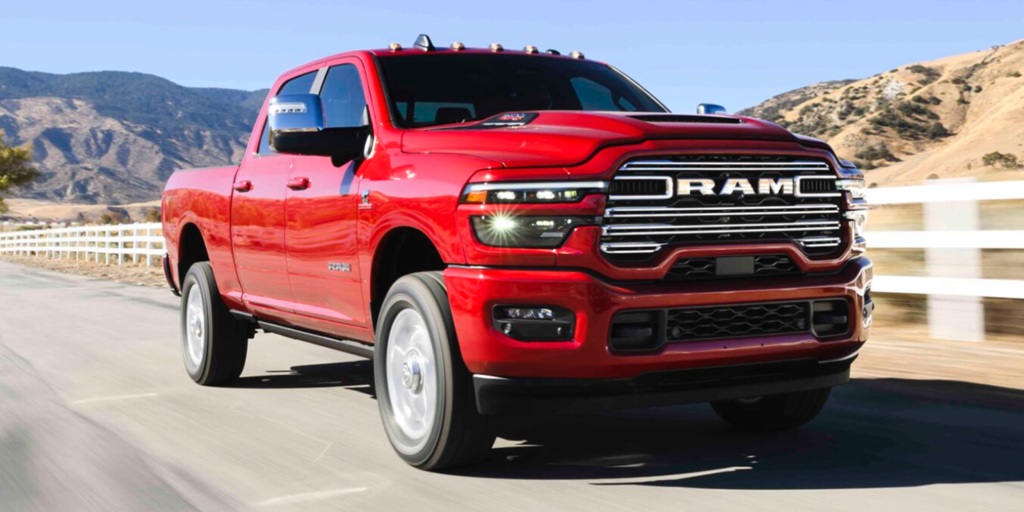
At 200,000 miles, components such as ball joints, steering parts, wheel bearings, brakes, shocks, and suspension hardware deserve particular attention regardless of how strong the engine remains.
The Ram 2500’s position in the iSeeCars data makes it a credible candidate for buyers who want to keep a heavy-duty pickup for the long haul. Its durability case is not based on the idea that nothing will ever need replacement.
Rather, the data indicates that the platform has a meaningful probability of continuing toward a quarter-million miles when it receives the service required by a working truck.
10. Chevrolet Silverado 2500HD
The Chevrolet Silverado 2500HD completes the list with another heavy-duty pickup that has demonstrated a meaningful ability to reach extremely high mileage. iSeeCars’ 2025 longest-lasting truck study gives the Silverado 2500HD a 16.0 percent predicted chance of reaching at least 250,000 miles. That is above the 13.0 percent average for trucks in the study.
The number becomes more useful when placed against the article’s 200,000-mile target. The study is measuring a substantially higher threshold, so the Silverado 2500HD has documented evidence of surviving into territory well beyond 200,000 miles.
It does not mean every truck will achieve that mileage, but it does distinguish the model from pickups whose historical data show a lower probability of reaching extreme odometer readings.
For 2026, Chevrolet offers the Silverado 2500HD with a 6.6-liter gasoline V8 producing 401 horsepower and 464 lb-ft of torque, while the available Duramax diesel generates 470 horsepower and 975 lb-ft. The diesel is paired with a 10-speed Allison automatic transmission.
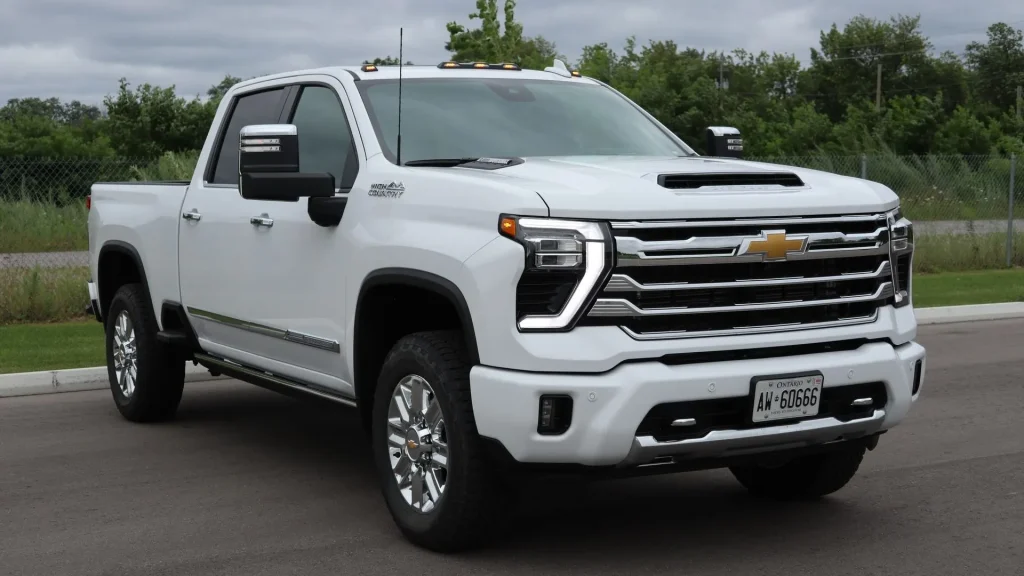
The truck’s heavy-duty construction also makes it suitable for owners who need to tow and haul regularly. Those capabilities come with a responsibility, though. A 2500HD that spends its life pulling heavy trailers will place considerably more stress on its brakes, tires, suspension, and drivetrain than one used mainly as transportation.
That is why the phrase “needs nothing until 200,000 miles” should be understood as a durability concept rather than a literal maintenance claim. No modern pickup can reasonably be expected to require no service for 200,000 miles. Fluids, filters, brakes, tires, and wear components will need attention long before then.
What the Silverado 2500HD brings to this list is evidence that the truck itself has the durability potential to keep working long after the 200,000-mile milestone.