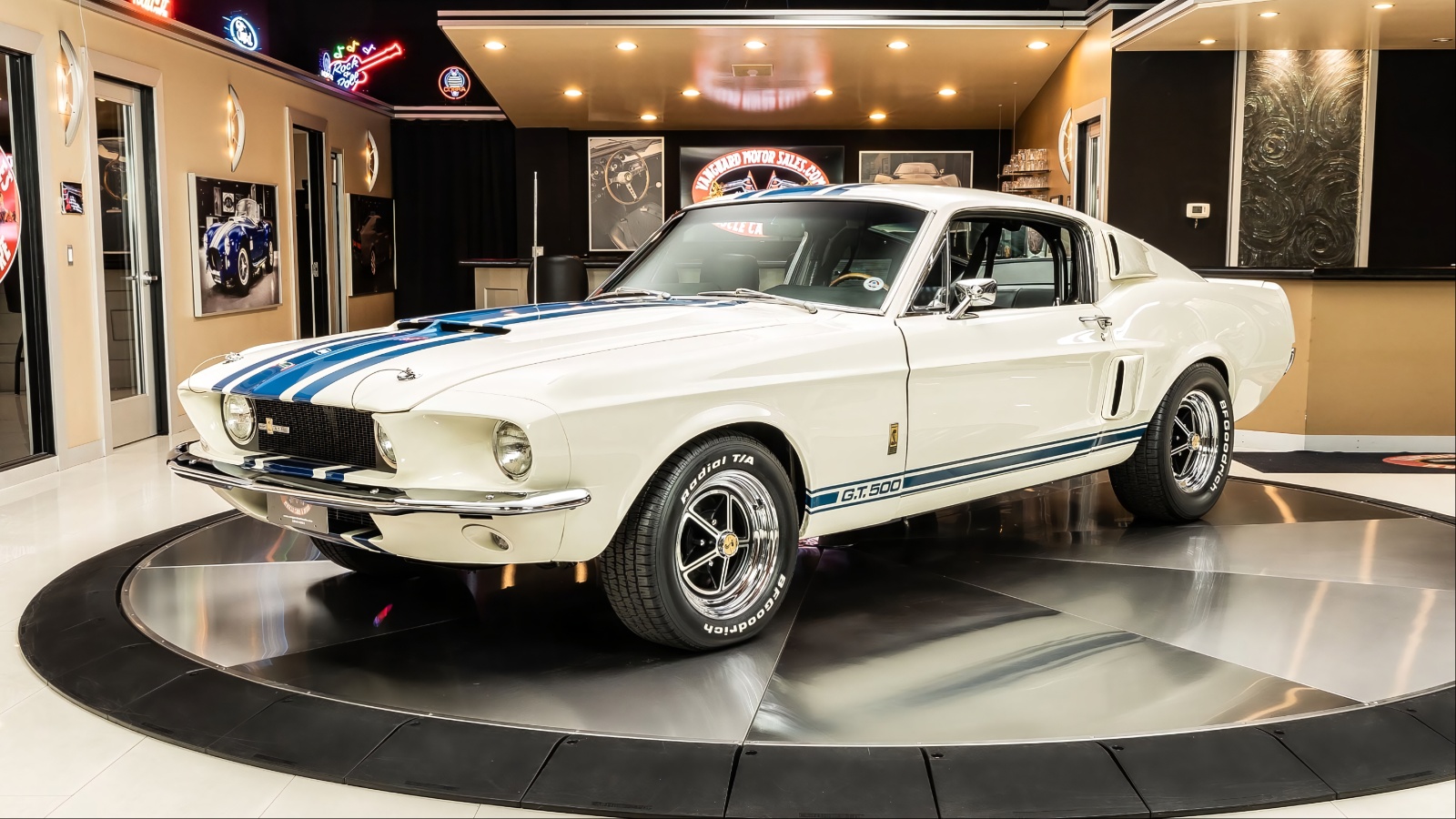
Muscle cars are a distinctly American story, and a short one. Nothing built between 1900 and the early 1960s qualifies, because the golden age ran only from about 1964 to 1974, when big-block V8s were stuffed into mid-size and pony-car bodies. Modern machines like the Challenger Hellcat are astonishingly fast but never approach these values, so every car below dates from 1965 to 1971.
The rankings are based on what buyers actually paid at public auctions, using buyer fees when they were reported, rather than the cars’ original sticker prices. Each model is represented by its highest documented auction result, so the list reflects peak collector demand rather than the price a typical example might command.
Auction values can also vary significantly. One Hemi Superbird, for example, sold for just $418,000 in 2025 after bringing in $1.65 million three years earlier. Shelby Mustangs are included as muscle cars, while Corvettes and Cobras are excluded because they are classified as sports cars. The figures cover publicly reported auction sales through mid-2026.
1. 1965 Shelby GT350R Prototype – $4.07 million
The most valuable Mustang ever sold is also the most debatable entry here, because it is a racing prototype rather than a street muscle car. Serial number 5R002 was the first competition GT350R that Shelby American built, and it changed hands at Mecum’s Kissimmee auction in January 2022 for $4,070,000, including the buyer’s commission.
That was $220,000 more than the same car brought in 2020, when it sold for $3.85 million and became the priciest Mustang of its day.
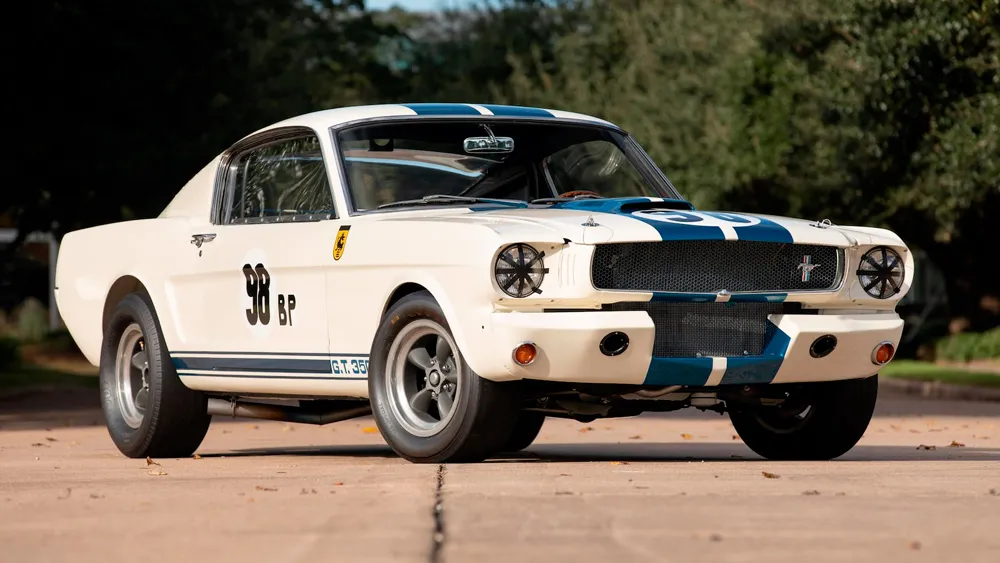
Its value comes from history rather than horsepower. Ken Miles tested and raced it, and Bob Bondurant, Peter Brock, Jerry Titus, and Chuck Cantwell also drove it. It won ten SCCA Production-B races, then was sold in 1966 to a Ford engineer for $4,000. Later it sat in a Monterrey, Mexico yard for nearly twenty years before a Texas buyer found it in 1989.
Mecum’s president described it as the car that gave the Mustang its performance credentials, and as the ancestor of both the Super Snake and the Bullitt car. Hagerty’s Colin Comer said the price was justified, adding he would not have been surprised by another million dollars.
Buyers here are paying for the origin of Shelby’s racing program, not a weekend cruiser, which explains why no other Mustang has matched it. Purists may argue about whether a competition prototype counts as a muscle car, but the auction record is beyond dispute, and as far as I can find, it remains the top price ever paid for a Mustang.
2. 1971 Plymouth Hemi ‘Cuda Convertible – about $3.8 million
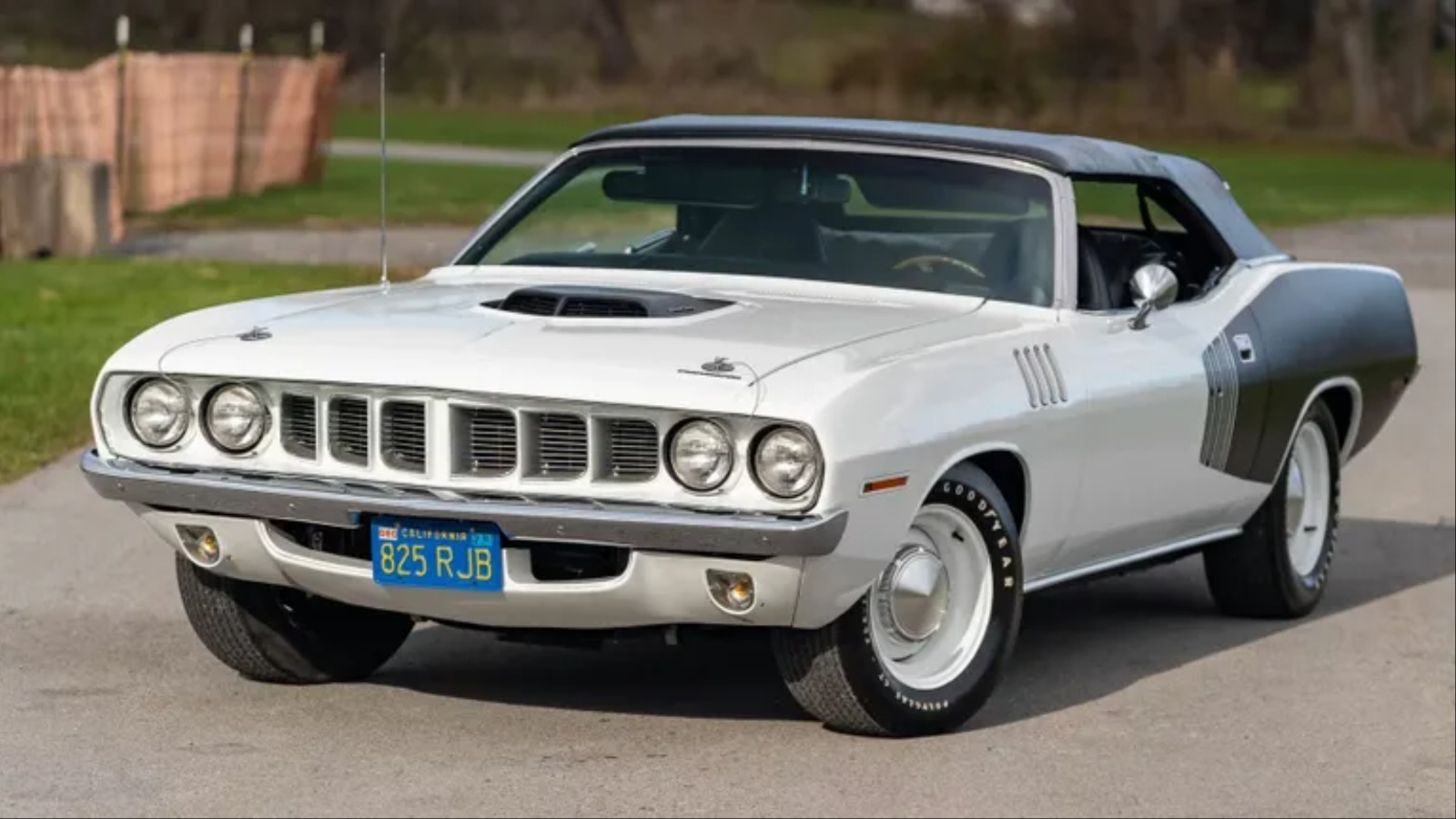
For over a decade, the 1971 Plymouth Hemi ‘Cuda convertible has been treated as the holy grail of American muscle, and its numbers explain why. Plymouth built only about a dozen with the 426 Hemi in 1971, the engine’s final year.
The benchmark sale came at Mecum’s Seattle auction in 2014, when a bright blue four-speed car hammered at $3.5 million, about $3.8 million once fees were added. It was documented as the only numbers-matching four-speed convertible still in existence.
The market has not been a straight line upward, though. In 2021, a French-export four-speed convertible drew a $4.8 million high bid at Mecum Indianapolis, yet the seller’s reserve was never met despite an estimate of up to $6.5 million.
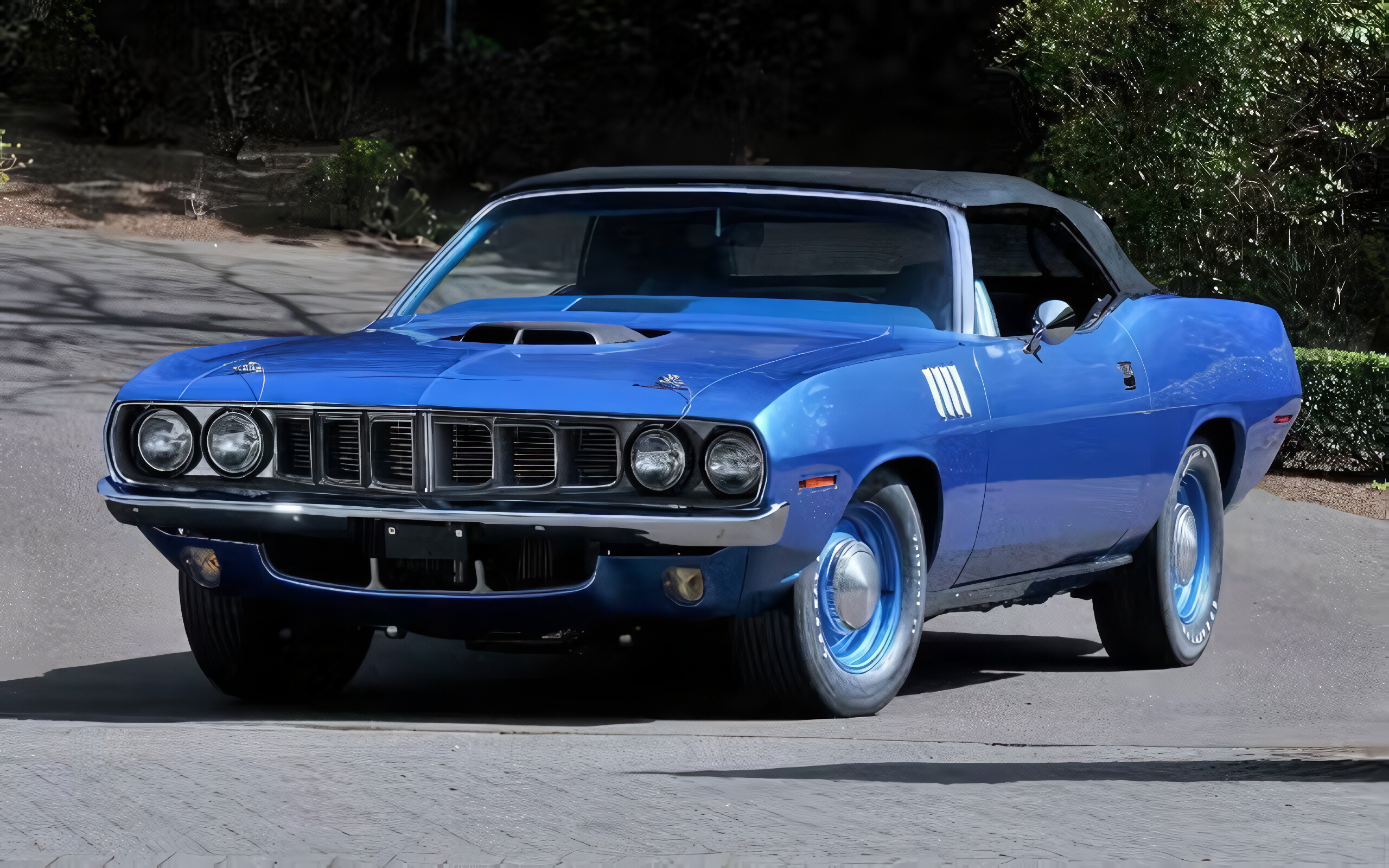
Then, in January 2026, a white automatic example with about 31,000 miles sold at Kissimmee for $3.3 million including premium, above its $2.75 million low estimate. That makes it the second most expensive example ever auctioned.
A car that cost roughly $4,500 new in 1971 now sells for millions, and buyers are not paying for practicality. They are paying for the last Hemi Plymouth ever offered in a convertible, dramatic E-body styling, and a production run so tiny that a genuine four-speed car appears only once in a blue moon.
It ranks second here only because the Shelby prototype edged it on all-in price. Many collectors would still name it the ultimate American muscle car, and its 2026 result suggests demand remains strong twelve years after the record.
3. 1968 Ford Mustang GT 390 “Bullitt” – $3.74 million
No muscle car sells on celebrity quite like the Highland Green 1968 Mustang GT that Steve McQueen threw around San Francisco in the film Bullitt. At Mecum’s Kissimmee auction in January 2020, it hammered at $3.4 million, and with fees the final price reached $3.74 million, the most anyone had ever paid for a Mustang at that point. It smashed the previous record, the $2.2 million paid for the Shelby GT500 Super Snake a year earlier.
The story behind the sale is half the value. The film’s hero car, the one McQueen drove for close-ups, sold for just $3,500 on each of its first two sales. A New Jersey family, the Kiernans, bought it in 1974 after spotting an ad in Road & Track and used it as a daily driver until the clutch failed in 1980.
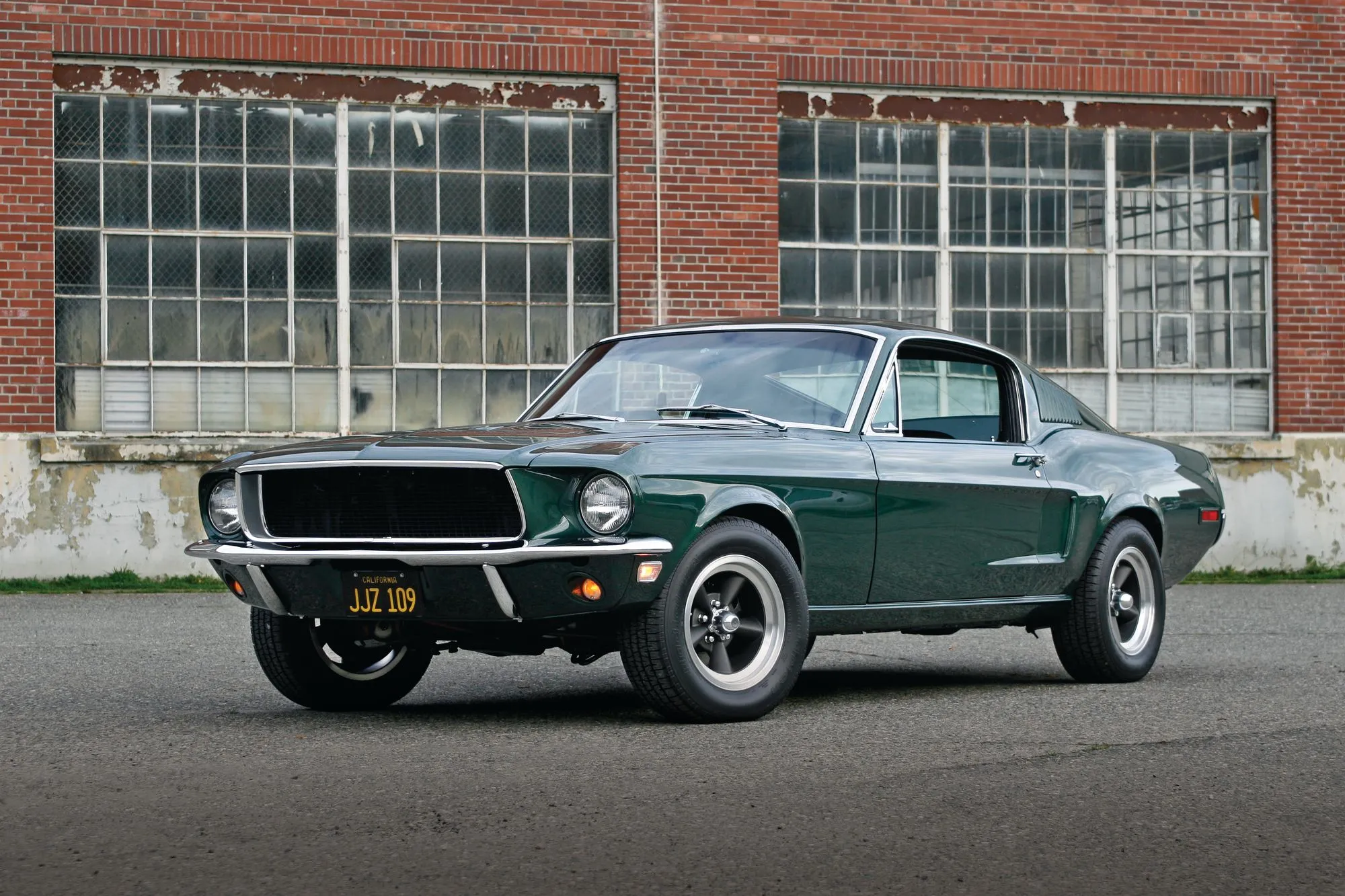
McQueen himself later asked to reclaim it, but the family declined. The car then sat for decades, and Sean Kiernan revealed it at the 2018 Detroit auto show beside Ford’s Bullitt tribute Mustang. Bidding opened at a symbolic $3,500.
Hagerty marketplace expert Colin Comer judged the result about right for the car, while Hagerty’s CEO noted that movie cars are worth exactly what someone will pay. Note that the price reflects an unrestored, unrepeatable Hollywood artifact, not the value of an ordinary 1968 GT 390, which sells for a small fraction.
Another Shelby prototype passed it within months, yet for sheer cultural pull the Bullitt car remains arguably the most famous Mustang on earth.
4. 1969 Dodge Hemi Charger Daytona – $3.3 million
The Charger Daytona was a showroom disappointment and a hero on the racetrack, and collectors now reward it accordingly. Dodge built 503 street versions in 1969 purely to homologate its pointed nose cone and towering rear wing for NASCAR, and buyers largely ignored them at first. Only 70 received the 426 Hemi, and just 22 of those paired it with a four-speed manual.
In August 2024, a dark green example, numbers-matching and one of those 22, sold at Mecum Monterey for $3.3 million with fees. It was the first Daytona to pass both $2 million and $3 million, and it more than doubled the previous record, a $1.43 million sale in January 2023.
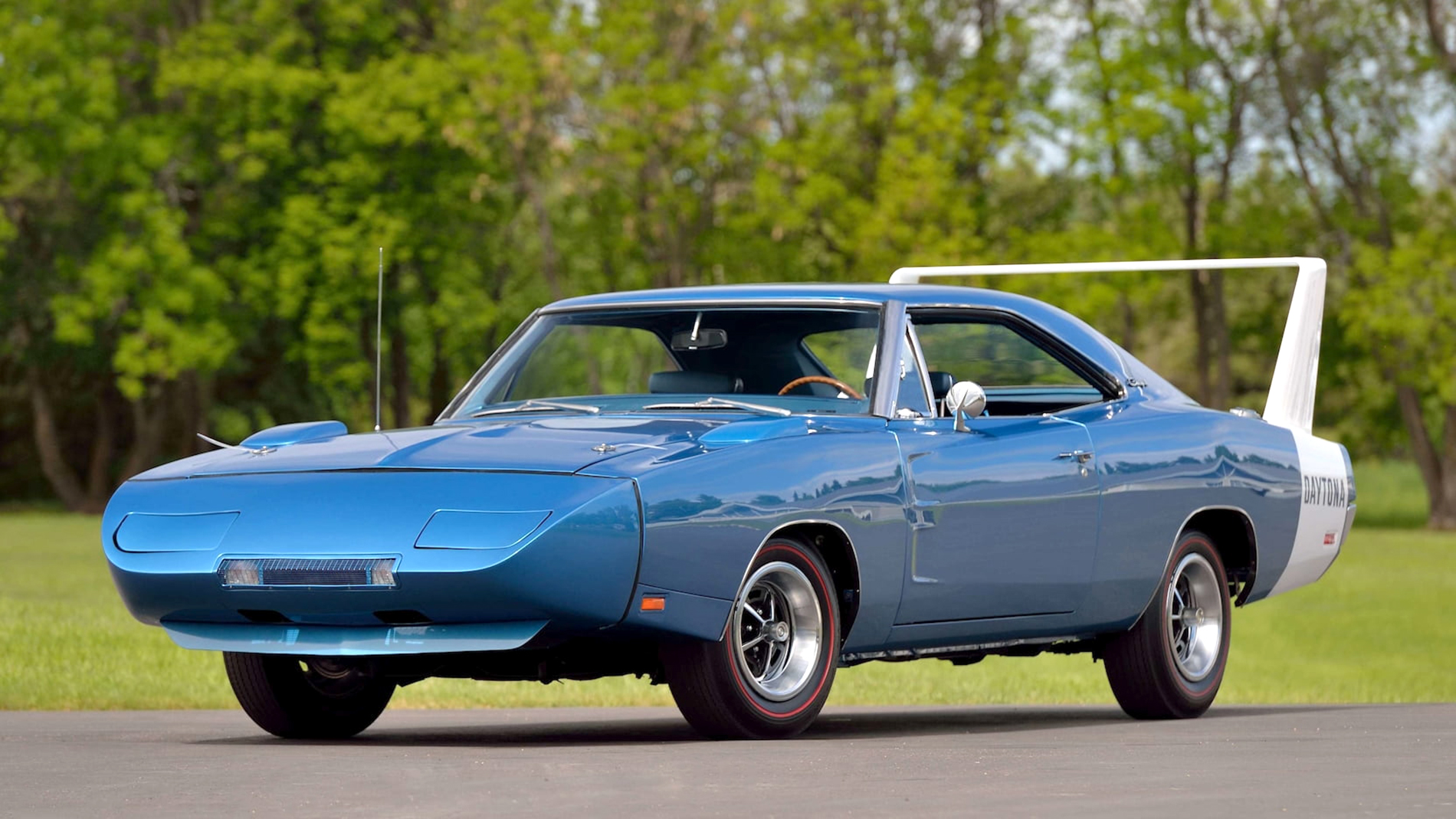
That 2023 record car, a copper-colored four-speed with just 6,490 miles, once belonged to actor David Spade, whose character drove a battered Daytona in Joe Dirt. Until May 2022, the record had stood at just $900,000, so the climb has been dramatic.
Hemi Daytonas now regularly sell for more than $500,000, with at least three examples surpassing the $1 million mark. Even race-spec cars have reached that level, including Bobby Allison’s NASCAR Daytona, which sold for $1.32 million in 2025. NASCAR eventually banned the winged designs because of their extreme speed, adding another chapter to their legend.
Compared with the Hemi ‘Cuda, the Daytona is less of a beautiful road car and more of a piece of racing engineering that could legally be driven on public roads. That unusual combination, along with the tiny number of four-speed Hemi examples, helps explain why these cars command such high prices at auction.
5. 1970 Plymouth Hemi ‘Cuda Convertible – $2.5 to $2.9 million
The 1970 Hemi ‘Cuda convertible is a touch less rare than its 1971 successor, with 14 built against seven sold in the U.S. a year later, yet it commands almost as much. In August 2024, a Lemon Twist yellow example, one of only three originally built for the Canadian market, sold at Mecum Monterey for $2,530,000. It was a numbers-matching, rotisserie-restored car with a three-speed automatic, one of nine 1970 convertibles ordered that way.
That car has climbed quickly. It sold for $1.98 million in 2019, then $2.145 million in January 2024, and finally $2.53 million seven months later. It is not necessarily the top result for a 1970 convertible, though. A four-speed car, one of only five built that way, hammered at $2.675 million at Kissimmee in 2016, which works out to roughly $2.9 million once the standard 10 percent buyer’s premium is added.
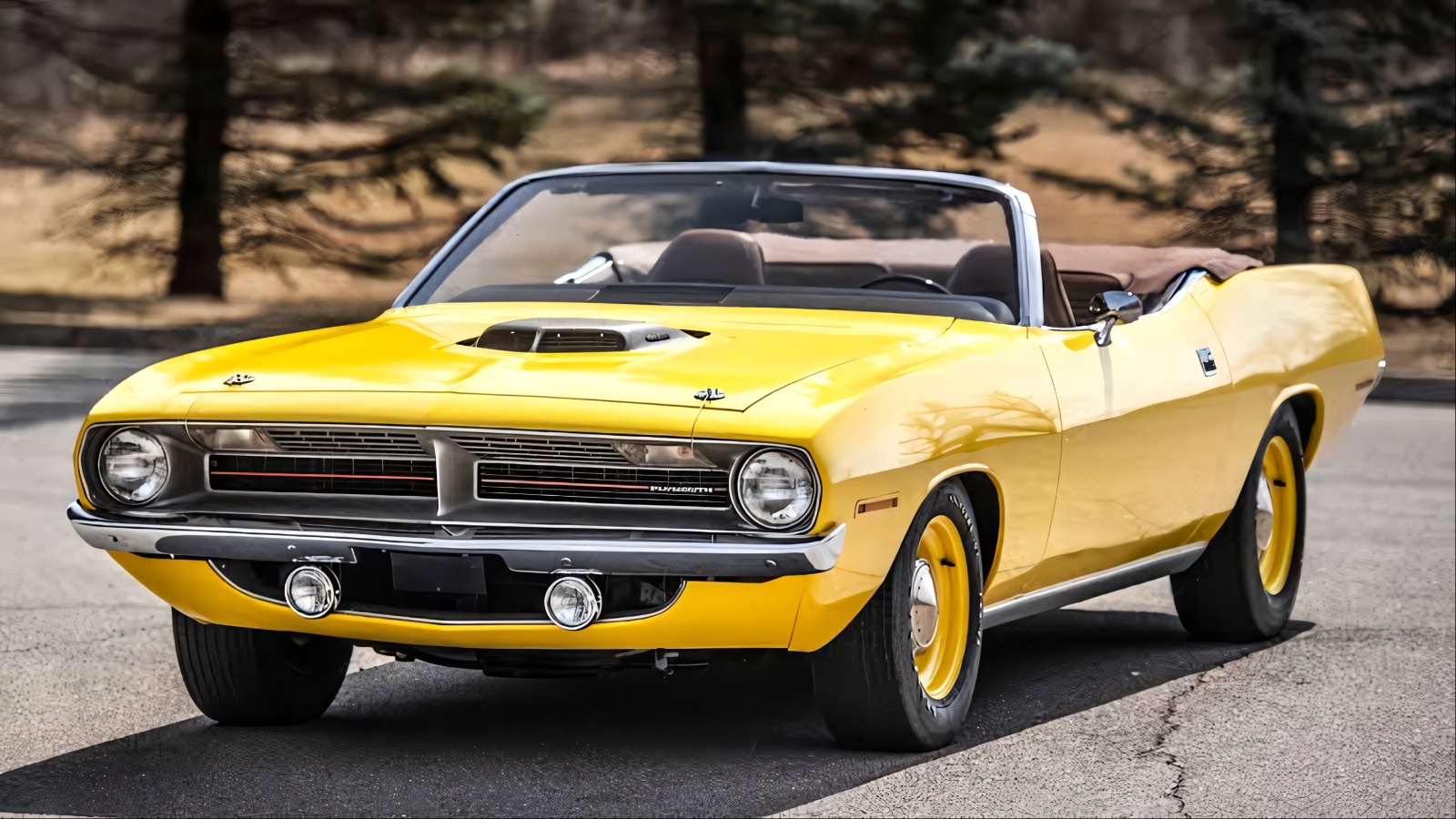
Values for these cars hinge on transmission, originality, and paperwork. Broadcast sheets, an Elite Report from Chrysler expert Dave Wise, and documented ownership history are featured in the biggest sales. By comparison, a 1970 hardtop Hemi ‘Cuda has usually brought $200,000 to $300,000 at auction, so the drop-top carries roughly a ten-fold premium.
For a car Plymouth sold in tiny numbers for a single model year, that gap is simply what scarcity looks like. It ranks fifth on the strength of results between roughly $2.5 million and $2.9 million, comfortably behind the Daytona but ahead of every remaining car.
6. 1967 Shelby GT500 Super Snake – $2.2 million
The Super Snake was Carroll Shelby’s answer to an unusual question: what would happen if a street Mustang were fitted with a Le Mans race engine? Shelby American built just one 1967 GT500 Super Snake as a test car for Goodyear’s new Thunderbolt tires.
The car received a 427 race engine from the GT40, tuned to produce about 520 horsepower. In Shelby’s hands, it reached more than 170 mph and averaged 142 mph during a 500-mile endurance run in Texas.
A planned production run of 50 cars never happened because the Super Snake would have cost double a standard GT500. So one car remained, and it sold in 2013 at Mecum Indianapolis for $1.3 million. In January 2019 at Kissimmee, it brought $2.2 million, roughly double the pre-sale estimate, and became the most expensive Mustang ever sold until the Bullitt car took the title a year later.
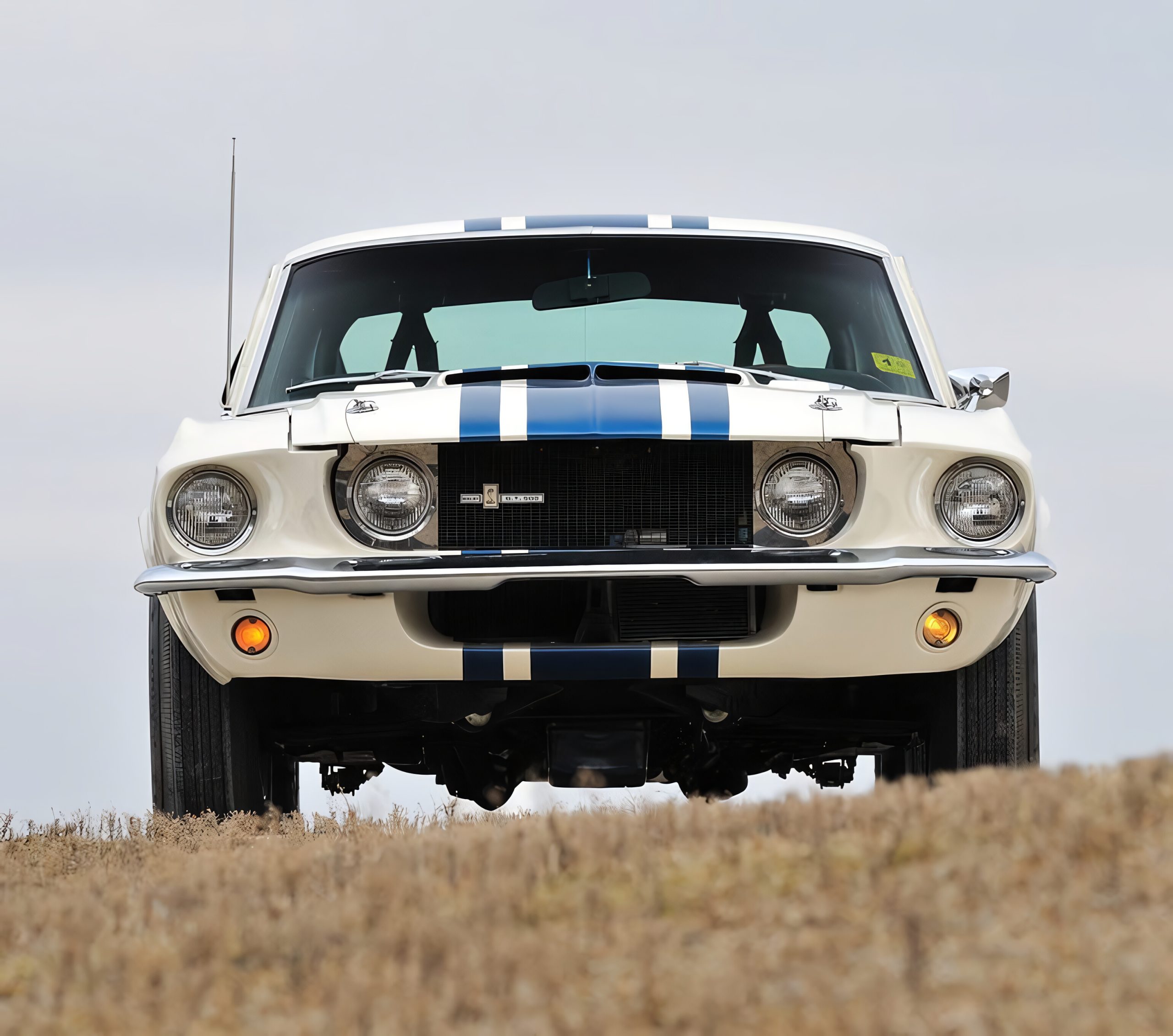
The car lived a hard life. After Goodyear’s test, it was sold for just $5,000, drag raced, and piled up about 26,000 miles across several owners. It has since been restored close to its original configuration and even carries what may be the last surviving set of Thunderbolt tires, found in an Ohio warehouse.
Shelby later announced ten continuation cars at $249,995 each, which underlines how different the original is from any copy. Because it is a true one-off with racing provenance, its price reflects a unique artifact rather than a model, so treat it as a ceiling for Shelby Mustangs, not a benchmark for the whole breed.
7. 1969 Yenko Camaro Prototype – $1.815 million
Until January 2026, the Camaro price ceiling belonged to the ultra-rare ZL1, and then the first 1969 Yenko Camaro ever built crossed the block at Mecum Kissimmee. Finished in Olympic Gold and offered from the Cliff Ernst collection, it hammered at $1.65 million and sold for $1,815,000 with fees, the most ever paid for a Camaro. The previous record was $1,094,500, set by a ZL1 in 2020.
Don Yenko, a Chevrolet dealer in Canonsburg, Pennsylvania, sidestepped General Motors’ 400-cubic-inch limit for Camaros by using the COPO ordering system to fit a 427. Yenko built it first, as a pilot to get the package sorted before the rest followed. This pilot car carries the L72 427/425 hp V8, a four-speed manual, and Doug Thorley headers.
Ernst acquired it from its original owner in 1987 and restored it to original condition. A total of 201 Yenko Camaros were sold in 1969, and they usually change hands between $250,000 and $450,000, so the pilot car commanded a multiple of that range simply because it was first.
The same auction also featured a 1969 Yenko Nova, one of roughly ten known survivors, which sold for $852,500, more than twice its expected value. That result suggests growing interest in the Yenko name. Its position on this list comes down to a tie-break because the Challenger convertible below also sold for $1.815 million.
The more recent result carries more weight than a comparable sale from a decade earlier. A ZL1 followed in May 2026 with a $1.43 million sale, providing another recent indication of strong Camaro values.
8. 1970 Dodge Challenger R/T Hemi Convertible – $1.815 million
Only nine buyers of the 1970 Challenger R/T convertible ticked the box for the 426 Hemi. That makes it one of the rarest E-body configurations ever built, scarcer even than Plymouth’s Hemi ‘Cuda convertibles.
The auction record came at Mecum Kissimmee in January 2016, where a Sublime Green automatic car estimated at $2 million to $2.5 million hammered at $1.65 million. Adding the 10 percent commission brought the final price to $1,815,000.
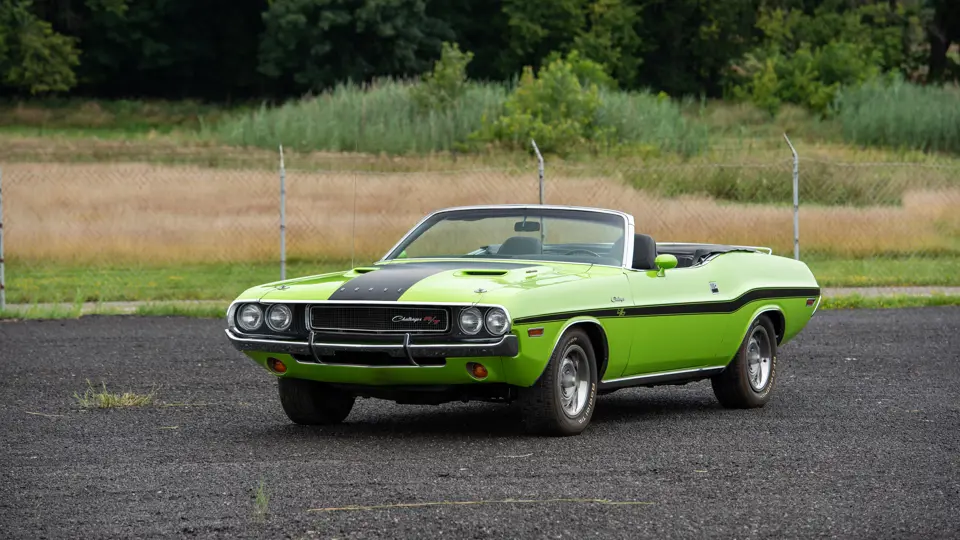
Values have remained strong since then, although none have surpassed that result. A Plum Crazy Purple four-speed example, one of only five built, sold for $1.43 million at Mecum Phoenix in 2019. The car had been exported to the U.K. in 1976 before returning to the United States for a complete restoration.
The coupe market tells a similar story. The “Black Ghost” R/T SE, a former street racer once owned by a Detroit motorcycle officer, sold for $1.07 million including fees in 2023, setting a record for a first-generation Challenger coupe.
A decade later, the 2016 result still has not been surpassed, showing how long an auction record can stand when supply is extremely limited. With only nine cars, the market is too small to develop much depth, meaning a single determined bidder can shift prices by hundreds of thousands of dollars.
That scarcity works both ways. Collectors know that a desirable example may not appear again for years, which can encourage them to pay a premium when one does become available. Based on the latest evidence, the Challenger ranks just behind the Yenko and ahead of the Superbird, whose headline sale has proven less durable.
9. 1970 Plymouth Hemi Superbird – $1.65 million
The Superbird is the Daytona’s Plymouth twin, built to homologate the same nose-and-wing aerodynamics for NASCAR. Plymouth produced about 1,935 of them, nearly four times as many as Dodge’s Daytona, and only 135 carried the 426 Hemi.
Richard Petty’s blue Superbirds became so iconic that Petty’s character in the animated film Cars is one. In July 2022, a Tor Red Hemi Superbird with its original engine sold at Barrett-Jackson Las Vegas for a then-record $1.65 million including fees, after one bidder jumped from $1 million straight to $1.5 million, clearly determined not to lose.
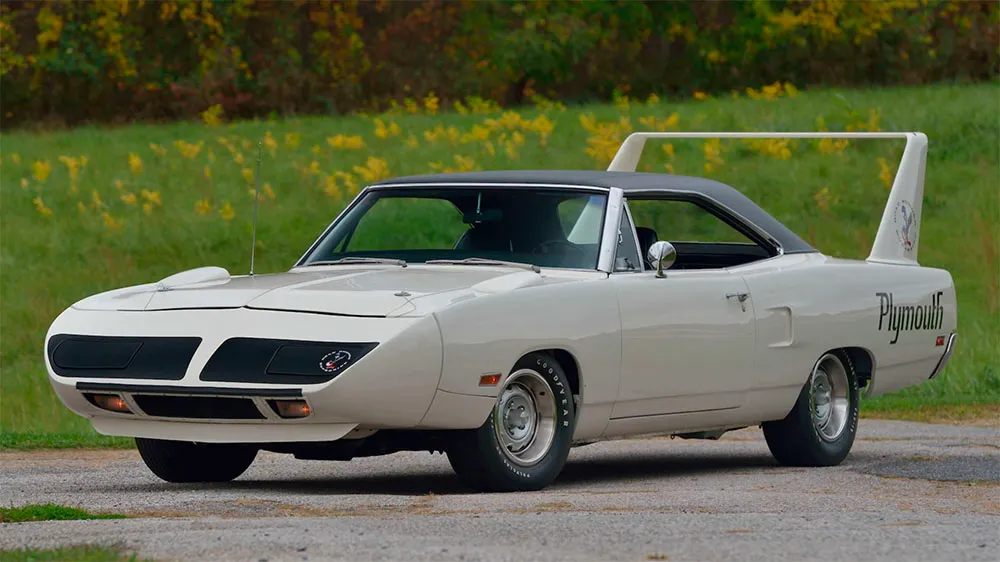
Then came a reality check. In May 2025, the very same car crossed the block at Mecum Indianapolis and sold for just $418,000, a loss of about $1.2 million in three years. Hagerty observed that this was close to what its price guide says such a car is worth, which made the 2022 sale the outlier rather than the trend.
Even so, the $1.65 million figure remains the highest paid for a Superbird. Other Hemi Superbirds have recently changed hands around $600,000, and one auction-tracking site puts the average Hemi Superbird sale near $555,000.
That is why the Superbird is ninth here on a peak-price basis but would rank far lower on average value. It is the clearest example on this list of what happens when one determined bidder falls for one car on one afternoon. If you wanted a real one today, you would generally be looking at mid-six figures, not seven, unless a pristine, numbers-matching example rewrites the story.
10. 1969 Chevrolet Camaro ZL1 – $1.43 million
If the Yenko prototype holds the Camaro crown for now, the ZL1 remains the car collectors truly covet. Chevrolet built just 69 examples in 1969 through the COPO 9560 order, which began when Illinois dealer Fred Gibb wanted a Camaro for NHRA Super Stock drag racing. Its heart was an all-aluminum 427 V8 derived from a Can-Am racing engine, making well over 500 horsepower and shedding roughly 150 pounds from the nose.
It was outrageously expensive when new. A base 1969 Camaro cost roughly $2,700, while the ZL1 engine option alone added $4,160, pushing the total above $7,200, more than a fully optioned Corvette.
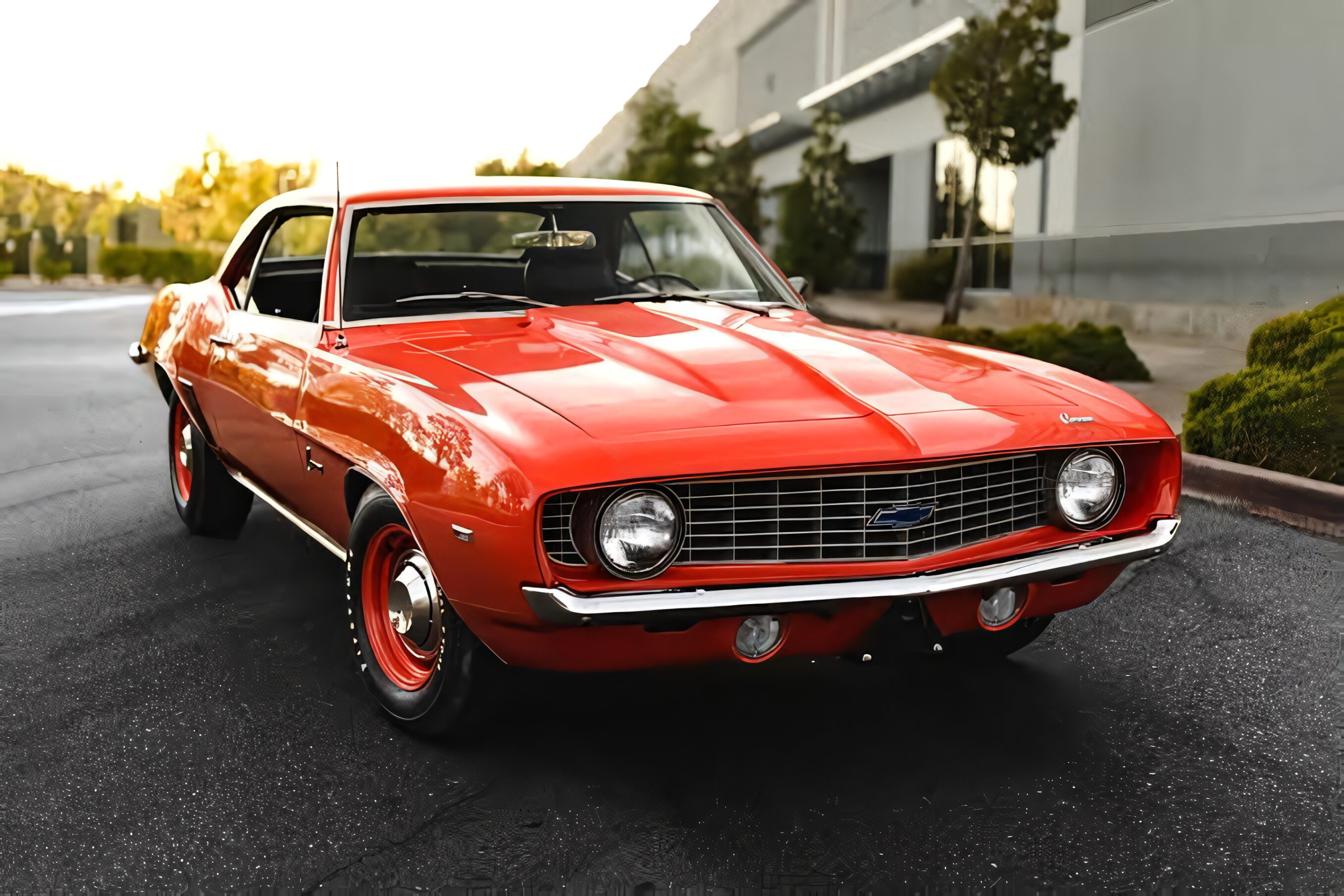
In May 2026 at Mecum Indianapolis, a ZL1 with its original, refreshed 427, an automatic transmission, and time in Floyd Garrett’s Muscle Car Museum sold for $1.43 million including fees, the highest ZL1 price ever, beating the roughly $1.09 million paid at Barrett-Jackson in 2020. The 2020 record car, number 59 of 69 in Hugger Orange, had been reunited with its original engine block.
Two notable cars just missed this list. The 1970 Chevelle SS 454 LS6 convertible that sold for $1.2 million in 2006 resold for only $264,000 in 2009 and failed to sell at a $450,000 bid in 2024, so it reads as an outlier rather than a market benchmark. The Boss 429 Mustang, meanwhile, has topped out around $660,000. The ZL1, by contrast, has climbed roughly 30 percent since 2020, and its record keeps moving up as the muscle market matures.