
A new vehicle can feel trouble-free during its first year, but the real test often comes after several years of ownership. J.D. Power’s 2026 U.S. Vehicle Dependability The study measures problems reported by owners of three-year-old vehicles, providing a look at what happens after the initial ownership period.
The study covers 33,268 original owners of 2023 model-year vehicles and measures 184 problem areas across nine categories.
The industry average reached 204 problems per 100 vehicles (PP100), the highest level since the current study methodology began in 2022. Here are the 11 highest-ranked eligible brands in the latest U.S. study.
1. Lexus
Lexus sits at the top of J.D. Power’s 2026 U.S. Vehicle Dependability Study with 151 problems per 100 vehicles (PP100). That makes it the highest-ranked premium brand and puts it 53 PP100 below the 204 PP100 industry average. J.D. Power also notes that Lexus has held the highest position in the study for the fourth consecutive year.
The number does not mean that 151 out of every 100 Lexus vehicles developed a major mechanical failure. PP100 measures the number of problems reported per 100 vehicles, so multiple problems can be reported by the same owner. The study also covers a much broader range of issues than engine or transmission failures.
J.D. Power evaluates nine categories, including infotainment, powertrain, climate, exterior, interior, seats, driving assistance, driving experience, and features, controls, and displays. This is increasingly important because modern vehicle dependability involves software and electronic functions as well as traditional mechanical components.
Lexus’s result is particularly notable because premium brands collectively recorded a higher problem rate than mass-market brands in the latest study. Lexus therefore sits well ahead of both the premium-brand average and the broader industry result.
The vehicles examined were 2023 model-year examples, with owners reporting problems encountered during the previous 12 months. J.D. Power conducted the study between December 2024 and November 2025. That means the result provides a three-year ownership measurement rather than an assessment of brand-new 2026 vehicles.
For buyers interested in keeping a vehicle for several years, Lexus provides the strongest brand-level dependability result in this particular study. Individual models can still vary, but the 151 PP100 figure gives the brand a clear data-backed position at the top of the latest U.S. rankings.
2. Buick
Buick follows Lexus with 160 problems per 100 vehicles, giving the brand the second-lowest problem rate in the complete ranking and the highest position among mass-market manufacturers. Buick’s score is 44 PP100 below the 204 PP100 industry average.
The result is significant because Buick’s position is not based on an opinion poll about styling, comfort, or brand image. Owners were specifically asked about problems they experienced with their three-year-old vehicles. That creates a different type of measurement from surveys that focus primarily on satisfaction or purchase experience.
Buick’s 160 PP100 score also continues a recent pattern. J.D. Power identifies Buick as the highest-ranked mass-market brand for the second consecutive year. The brand’s position is therefore not simply the result of being marginally ahead of another manufacturer in one isolated measurement.
The study’s broad definition of a problem is important when interpreting Buick’s result. Infotainment remained the industry’s most frequently reported category, while problems involving exterior components, driving assistance, and other electronic features also contributed to the industry total.
The 2026 study recorded 204 problems per 100 vehicles across the industry, its highest figure under the current methodology.
Buick’s result should not be interpreted as saying every model from the brand will experience exactly 160 problems per 100 vehicles. Brand scores combine experiences across different vehicles, trims, and powertrains.
There is also a time limitation. The study examined 2023 model-year vehicles, so it does not directly measure every change made to Buick’s newer products. Still, for anyone looking at three-year ownership data, the 160 PP100 result puts Buick firmly near the top of J.D. Power’s latest U.S. dependability measurement.
3. MINI
MINI records 168 problems per 100 vehicles, placing it third in J.D. Power’s complete 2026 brand ranking. It is also the second-highest mass-market brand in the study, behind Buick. MINI’s score is 36 PP100, lower than the 204 PP100 industry average.
That placement is noteworthy because MINI operates in a segment where vehicles can carry substantial amounts of electronic equipment and connectivity technology.
J.D. Power’s study found that infotainment remained the biggest source of reported problems across the industry, making the brand’s 168 PP100 result particularly relevant when looking beyond traditional mechanical reliability.
The study measures 184 individual problem areas. Owners can report issues involving powertrain components, climate systems, exterior equipment, interior components, seats, driver-assistance features, and infotainment.
Problems with features, controls, and displays are also included, meaning the study attempts to capture the ownership experience as vehicles age rather than simply counting major repairs.
MINI’s ranking comes from vehicles that were already three years old when owners participated. J.D. Power surveyed original owners of 2023 model-year vehicles and asked about problems experienced during the previous 12 months. The fieldwork took place from December 2024 through November 2025.
That distinction is important when using the ranking to judge a vehicle being sold today. A 2026 MINI can contain different software, components, or engineering changes from the 2023 vehicles represented in the study.
The data therefore provides a historical three-year dependability benchmark rather than a guarantee about future models.
Still, the numerical gap is substantial. MINI’s 168 PP100 result sits 36 points below the industry average and gives the brand the third-lowest reported problem rate among eligible brands in the 2026 study.
4. Cadillac
Cadillac records 175 problems per 100 vehicles, making it the fourth-ranked brand in the 2026 J.D. Power U.S. Vehicle Dependability Study. The result also makes Cadillac the second-highest premium brand behind Lexus. Its score is 29 PP100, below the 204 PP100 industry average.
Cadillac’s position is particularly interesting because premium vehicles often contain more technology and electronic equipment than simpler mass-market vehicles. J.D. Power reports that premium brands as a group averaged 217 PP100, meaning Cadillac’s 175 PP100 result sits well below the premium-category figure.
The study’s findings illustrate why dependability cannot simply be reduced to whether an engine or transmission breaks.
J.D. Power measures 184 specific problem areas across nine categories, including infotainment, driving assistance, climate, powertrain, and various interior and exterior systems. Modern luxury vehicles therefore face a much broader definition of long-term dependability.
Cadillac’s score comes from the experiences of owners of three-year-old vehicles. The 2026 VDS examined 2023 model-year vehicles and asked original owners about problems experienced during the previous 12 months. J.D. Power gathered responses from 33,268 owners during its December 2024 through November 2025 field period.
The result should not be applied identically to every Cadillac model. Different vehicles use different powertrains, infotainment systems, and electronic architectures, so model-level results can differ from the brand figure.
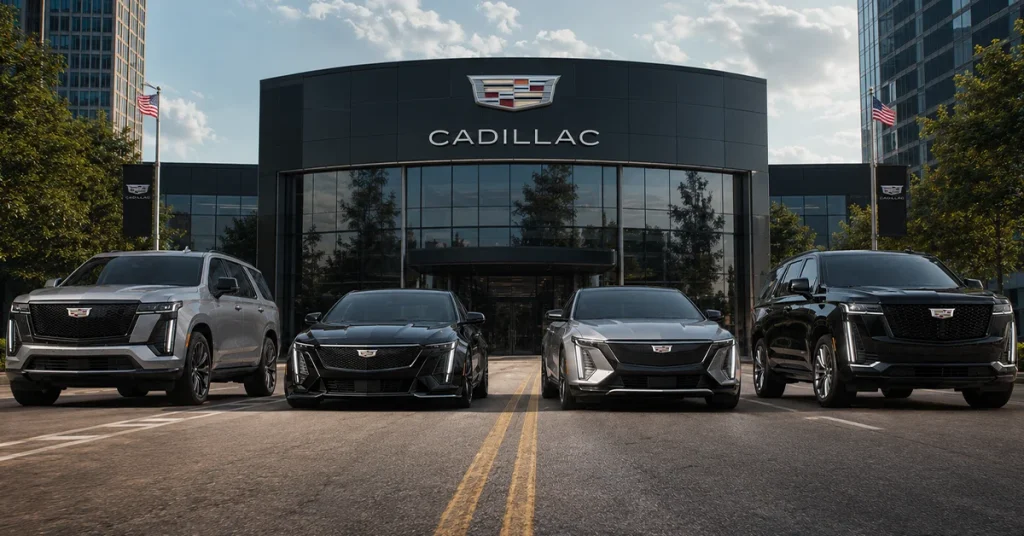
Even with that qualification, Cadillac’s 175 PP100 result represents a substantial margin against the 204 PP100 industry average. It also puts the brand ahead of every premium manufacturer in the ranking except Lexus and Porsche.
For shoppers examining three-year dependability data, Cadillac’s latest position provides a measurable indication of where the brand stood among its competitors.
5. Chevrolet
Chevrolet posts 178 problems per 100 vehicles, giving it the fifth position in J.D. Power’s 2026 U.S. Vehicle Dependability Study. The brand is the third-highest mass-market manufacturer in the ranking, behind Buick and MINI, and its score is 26 PP100 below the 204 PP100 industry average.
Chevrolet’s broad lineup makes this result particularly interesting. The brand sells compact cars, crossovers, full-size SUVs, pickup trucks, and performance vehicles, so its brand-level number represents a wide mixture of vehicle types. It is not simply the result of one particularly strong model.
J.D. Power’s methodology also means the score covers considerably more than mechanical failures. The study tracks 184 individual problem areas in nine categories.
Infotainment was the industry’s largest problem category in the latest study, followed by exterior-related issues. Powertrain problems are included, but they represent only one portion of the final measurement.
Chevrolet also had individual vehicles recognized in the study. J.D. Power identifies the Chevrolet Equinox as the highest-ranked model in its segment and the Chevrolet Tahoe as another segment award winner. General Motors received four model-level awards across its brands.
Those model awards should be kept separate from the brand ranking. A strong result from an individual Chevrolet does not automatically mean every Chevrolet has identical dependability, just as a problem reported on one model does not represent the entire company.
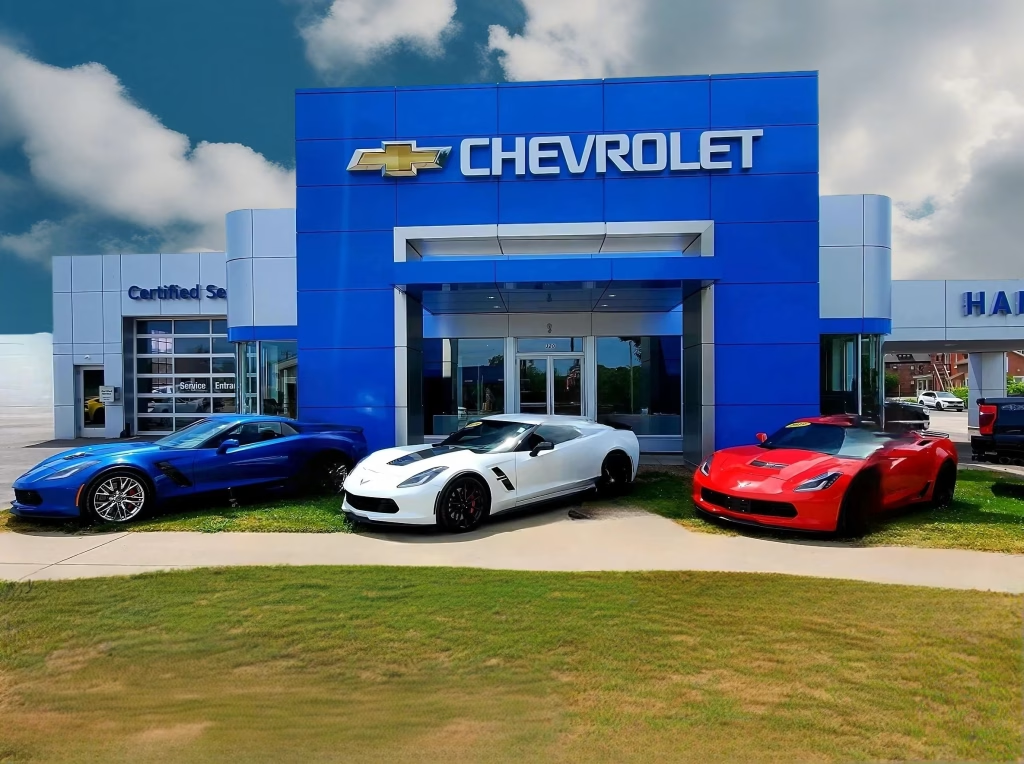
The vehicles behind the 2026 study were 2023 model-year vehicles, and owners had reached approximately three years of ownership when surveyed. Therefore, the result is most useful as evidence about the long-term performance of that model-year generation.
With 178 PP100, Chevrolet remains well below the industry average and occupies a strong position among mass-market brands in the latest U.S. three-year dependability measurement.
6. Subaru
Subaru comes in at 181 problems per 100 vehicles, placing the brand sixth overall in the J.D. Power 2026 U.S. Vehicle Dependability Study. Its score is 23 PP100, below the industry average of 204, keeping Subaru comfortably on the lower-problem side of the table.
The significance of the figure becomes clearer when considering how J.D. Power collects its data. Rather than asking new-car buyers about their expectations, the organization surveys owners who have already lived with their vehicles for several years.
The 2026 study focuses on 2023 model-year vehicles and problems experienced during the preceding 12 months.
That makes the study particularly useful for examining problems that may take time to appear. A vehicle can perform well during its first few months and still develop electronic, interior, climate, or mechanical issues later. The VDS is designed to capture that longer ownership period.
Subaru’s result also arrives during a year in which the industry’s problem rate reached 204 PP100, the highest level since J.D. Power introduced its current VDS methodology in 2022. Infotainment remained the leading source of reported problems, with Apple CarPlay and Android Auto connectivity among the most frequently reported individual issues.
The brand-level score covers Subaru’s broader lineup rather than one specific model. Vehicles such as the Impreza, Crosstrek, Forester, and other Subaru products can have different equipment and engineering, so an individual owner’s experience may differ from the 181 PP100 brand measurement.
Still, the number provides a useful benchmark. Subaru recorded 23 fewer reported problems per 100 vehicles than the industry average, giving it the sixth-lowest score among the eligible brands in the 2026 study.
For buyers concerned about what ownership may look like several years after purchase, that three-year owner data provides more relevant information than a survey conducted immediately after delivery.
7. Porsche
Porsche records 182 problems per 100 vehicles, placing it seventh among the eligible brands in J.D. Power’s 2026 U.S. Vehicle Dependability Study. Its score is 22 PP100 below the industry average and makes Porsche the third-highest premium brand behind Lexus and Cadillac.
The result stands out because Porsche’s vehicles combine performance engineering with increasingly complex electronic systems. The study does not distinguish dependability simply by counting major mechanical breakdowns. Infotainment, controls, displays, driving assistance, and other electronic features are all included.
J.D. Power’s research covers 184 problem areas divided across nine categories. That broad approach is especially relevant to premium vehicles, where owners interact with sophisticated technology on a daily basis.
A connectivity problem or malfunctioning display can therefore contribute to the PP100 figure just as a more traditional vehicle issue can.
Porsche’s 182 PP100 result also compares favorably with the premium segment’s 217 PP100 average. J.D. Power says premium brands collectively experienced a higher problem rate than mass-market brands in the latest study. Porsche therefore sits 35 PP100 below its premium-category average.
The study should not be confused with an assessment of every current Porsche. Its data comes from owners of 2023 model-year vehicles, while the survey itself was conducted from December 2024 through November 2025. Newer vehicles may incorporate different software and hardware.
There is also considerable variation between Porsche models. A 911, Cayenne, Macan, or another vehicle can have different mechanical and electronic systems, so the brand score should not be interpreted as a prediction for a particular model.
Nevertheless, the 182 PP100 figure gives Porsche a clear place near the top of the latest three-year dependability rankings. It is substantially below the 204 PP100 industry figure and places the brand ahead of most manufacturers measured by J.D. Power.
8. Toyota
Toyota records 185 problems per 100 vehicles, ranking eighth in J.D. Power’s 2026 U.S. Vehicle Dependability Study. The brand’s score is 19 PP100 below the industry average, giving Toyota another position below the 204 PP100 benchmark.
Toyota’s result becomes more interesting when the study’s model-level awards are considered. J.D. Power says Toyota Motor Corporation received eight model-level awards, the highest number of awards among automakers in the 2026 study.
Recognized Toyota models include the Corolla, Camry, Tacoma, Sienna, and 4Runner, while three Lexus models also received segment awards.
The distinction between brand and model performance matters. Toyota’s 185 PP100 score represents the brand’s aggregate result, while the model awards identify vehicles that performed strongly within their individual segments.
A buyer considering a specific Toyota should therefore look at model-level information where available instead of relying exclusively on the company-wide figure.
The VDS measures 184 problem areas across nine categories. These include traditional areas such as powertrain and climate systems, along with newer technology-focused categories such as infotainment and driving assistance.
The latest study also shows why long-term ownership can produce different results from an initial quality survey. J.D. Power examined 2023 model-year vehicles after three years of ownership, rather than surveying buyers immediately after purchasing a new vehicle. Owners reported problems experienced during the preceding 12 months.
Toyota’s 185 PP100 result is consequently a three-year ownership measurement, not a prediction for every current Toyota. Model redesigns, software updates, and equipment changes can affect future results.
Even with those limitations, the combination of an 185 PP100 brand score and eight model-level awards makes Toyota one of the most prominent manufacturers in the latest J.D. Power dependability research.
9. Kia
Kia records 193 problems per 100 vehicles, placing the brand ninth in the 2026 J.D. Power U.S. Vehicle Dependability Study. Its result is 11 PP100 below the 204 PP100 industry average, putting Kia among the brands that recorded fewer reported problems than the typical vehicle in the study.
Kia’s position is useful because it shows how dependability measurements can differ from a brand’s reputation or market image. J.D. Power is not asking owners to give Kia a general reliability score. Instead, the organization records specific problems that owners encountered with their three-year-old vehicles.
Those problems can involve much more than mechanical components. The study measures 184 problem areas across nine categories, including infotainment, features and controls, exterior, driving assistance, interior, seats, powertrain, driving experience, and climate.
Infotainment is especially relevant to the latest results. J.D. Power reports that infotainment generated 56.7 PP100, making it the most frequently reported category in the 2026 study. Apple CarPlay and Android Auto connectivity were among the most frequently reported individual problems.
Kia’s 193 PP100 figure was generated from 2023 model-year vehicles. Owners were asked about problems they experienced during the previous 12 months, with the study fielded from December 2024 through November 2025.
That means the data gives buyers a look at vehicles after substantial use rather than simply reflecting the experience of someone who has owned a car for a few months. At the same time, the score should not be treated as a guarantee for a new Kia, because newer models can receive hardware and software changes.
Individual Kia vehicles can also perform differently. A compact sedan, three-row SUV, and electric vehicle may use very different systems, meaning a brand-level PP100 number cannot predict the exact experience of one particular model.
Still, Kia’s 193 PP100 score places it below the industry benchmark and gives the brand the ninth position in the latest eligible-brand ranking.
10. Nissan
Nissan posts 194 problems per 100 vehicles, putting the brand tenth in the 2026 J.D. Power U.S. Vehicle Dependability Study. Its score is 10 PP100 below the 204 PP100 industry average, leaving Nissan just inside the group of brands that performed better than the industry benchmark.
The relatively small gap between Nissan and the industry average is worth noting. Nissan’s 194 PP100 score is only 10 points lower than 204, so the difference is considerably narrower than the margins recorded by Lexus, Buick, or MINI. Still, the numerical ranking places Nissan ahead of brands that recorded higher problem rates.
J.D. Power’s measurement covers a wide spectrum of ownership issues. It examines 184 specific problem areas across nine categories, ranging from powertrain and climate systems to infotainment and driver-assistance technology. That means the ranking reflects the entire vehicle experience rather than only major mechanical failures.
The study’s technology component has become increasingly important. Infotainment was the largest problem category in the 2026 results, and connectivity between smartphones and vehicle systems remained a leading individual complaint.
This helps explain why modern dependability surveys can produce different results from older studies that focused more heavily on engines, transmissions, and other mechanical components.
Nissan’s result is based on 2023 model-year vehicles and original owners who had reached the three-year ownership period. J.D. Power surveyed from December 2024 through November 2025.
As with the other brands, the result should not be applied directly to every Nissan currently sold. Newer vehicles may use revised software, powertrains, and electronic systems.
Nevertheless, 194 PP100 places Nissan tenth among the first 11 eligible brands in the 2026 ranking. It also gives shoppers a measurable reference point when comparing three-year owner-reported dependability rather than relying solely on general perceptions of reliability.
11. BMW
BMW rounds out the 11 highest-ranked eligible brands with 198 problems per 100 vehicles in J.D. Power’s 2026 U.S. Vehicle Dependability Study. That puts BMW 11th in the brand table and 6 PP100 below the 204 PP100 industry average.
BMW’s position is particularly interesting because it represents the premium market, where J.D. Power recorded an average of 217 PP100. BMW’s 198 PP100 result therefore sits 19 points below the premium-brand average, despite the industry’s premium category reporting more problems than the mass-market category.
The study measures 184 individual problem areas, so BMW’s result encompasses everything from traditional powertrain and climate issues to infotainment, driving assistance, and electronic controls. That broader approach is increasingly relevant as luxury vehicles add more screens, connectivity features, and software-dependent functions.
BMW’s 198 PP100 score is tied with Hyundai, which also recorded 198 PP100. However, because this article is limited to the 11 highest-ranked brands, BMW is the final brand included. Genesis, Mitsubishi, and Mazda follow at 208, 208, and 210 PP100, respectively.
J.D. Power’s research is based on owners of 2023 model-year vehicles who reported problems encountered during the previous 12 months. The study therefore measures what ownership looked like after approximately three years, rather than what buyers experienced during their first few weeks with a vehicle.
That distinction is important for anyone using the ranking to evaluate a new BMW. Changes made after the 2023 model year are not necessarily represented, and individual BMW models can produce different results.
Still, the latest data places BMW below the 204 PP100 industry average and considerably below the 217 PP100 premium-brand average. Its 198 PP100 result completes the 11-brand group from the 2026 J.D. Power U.S. Vehicle Dependability Study.
