Apple CarPlay has become a familiar part of the modern driving experience, putting iPhone navigation, music, calls, and messages on the vehicle’s screen. General Motors has taken a different approach with several newer electric vehicles, removing CarPlay and Android Auto in favor of software built directly into the vehicle.
GM says its native system can integrate navigation, charging information, vehicle controls, and connected services more deeply than phone mirroring. The change also gives the automaker greater control over the software environment and connected services.
These nine GM electric vehicles illustrate how quickly that transition is changing the U.S. infotainment landscape.
1. Cadillac Lyriq
The Cadillac Lyriq was one of the clearest examples of General Motors’ decision to move away from smartphone mirroring. Unlike many traditional GM vehicles, the Lyriq’s infotainment system does not provide Apple CarPlay or Android Auto.
Instead, Cadillac relies on its Google-based native infotainment environment, which puts services such as Google Maps and Google Assistant directly into the vehicle.
That changes the driver’s relationship with the screen. With CarPlay, the phone effectively becomes the source of many familiar applications and services. In the Lyriq, Cadillac wants those functions to originate inside the vehicle itself.
Google Maps can use the vehicle’s built-in connectivity and navigation system, while the native software can interact with vehicle functions rather than simply displaying a phone interface.
The approach also gives GM greater control over the digital experience. Cadillac can update vehicle software over the air and add or modify connected functions without depending entirely on Apple’s interface.
GM has also expanded the software ecosystem for its Google-built-in vehicles, announcing access to more than 200 additional apps through Google Play in 2026.
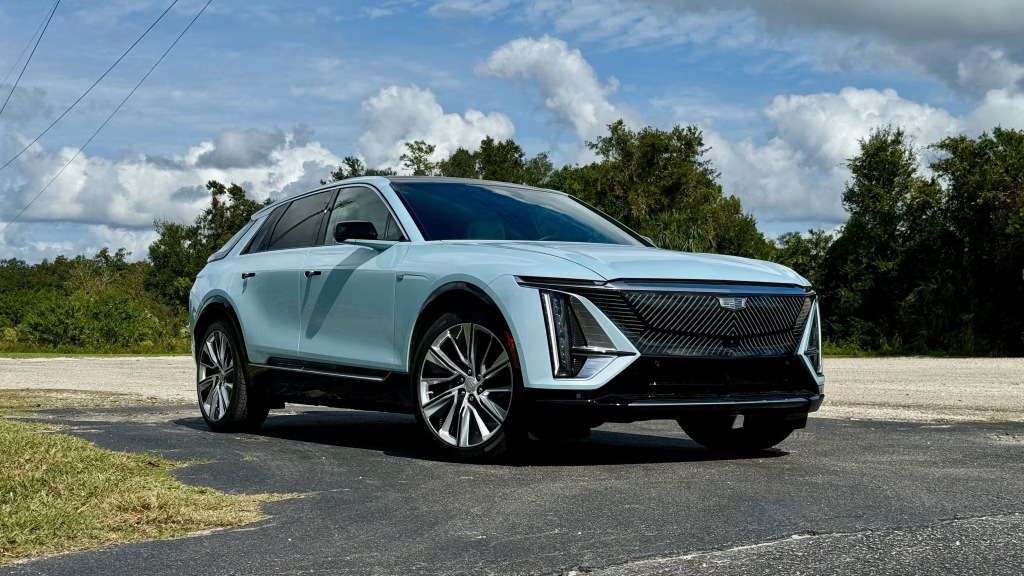
For Lyriq owners, the tradeoff is straightforward. The vehicle gains a deeply integrated native system, but an iPhone user cannot simply plug in and reproduce the familiar CarPlay environment. That can mean learning a different navigation and media workflow, particularly for drivers who have used CarPlay for years.
2. Chevrolet Blazer EV
The Chevrolet Blazer EV represents another major step in GM’s software strategy. The electric crossover uses GM’s Google-built-in infotainment platform rather than Apple CarPlay or Android Auto. Chevrolet’s decision means the vehicle’s central screen is designed around its own software environment, with Google services integrated directly into the vehicle.
That distinction becomes especially important for electric-vehicle owners. A native system can connect navigation with information about the vehicle’s battery and charging needs.
Instead of treating navigation as a separate phone application, the vehicle can use its own battery state and charging information as part of the driving experience. GM has specifically argued that this type of integration is one reason it moved away from smartphone mirroring in its EV lineup.
The Blazer EV also benefits from GM’s broader connected-software ecosystem. Google’s built-in provides access to applications through the vehicle’s Google Play environment, while GM’s connected services can deliver additional functions through over-the-air updates.
In 2026, GM said vehicles equipped with Google built-in were gaining access to more than 200 additional apps.
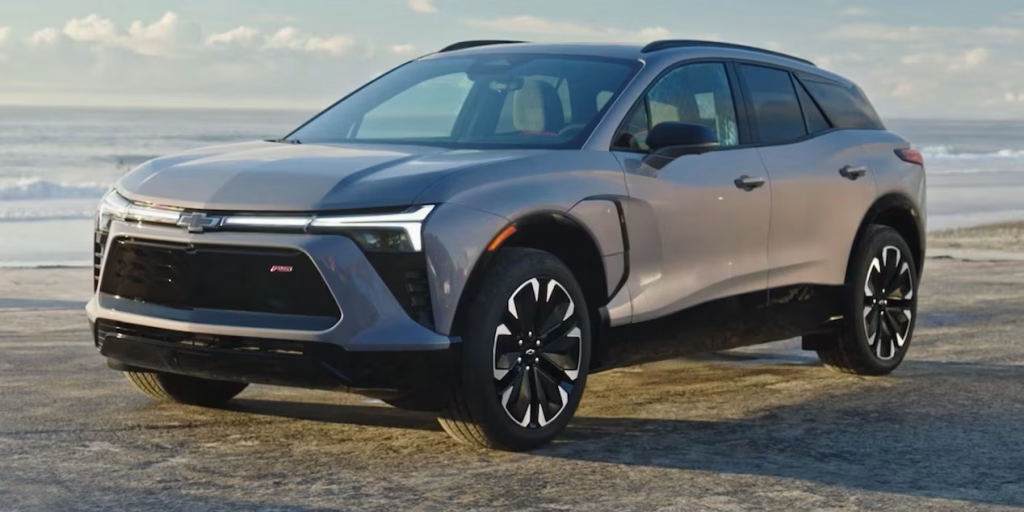
The missing CarPlay function remains noticeable for iPhone owners, however. There is no simple way to mirror the familiar Apple interface onto the Blazer EV’s main display. Drivers instead have to become comfortable with the built-in system and its supported applications.
The Blazer EV reflects GM’s broader approach to in-car technology. Instead of relying heavily on phone mirroring, the system places more emphasis on software built specifically for the vehicle. Whether that approach is more convenient will depend largely on how each driver uses a smartphone while driving.
3. 2026 Chevrolet Equinox EV
The Equinox EV is one of the clearest examples of what drivers lose when a familiar phone interface disappears. Chevrolet explicitly confirms that the 2026 Equinox EV does not support Apple CarPlay or Android Auto. Instead, the SUV uses Google built-in, with Google Maps and other native services integrated directly into the vehicle.
For an iPhone owner, that means the familiar CarPlay dashboard is gone. Navigation, music, and other functions have to be handled through the vehicle’s own software or supported native applications. The benefit is deeper integration.
Google Maps can work with EV-specific information, including charging-related functions, while the built-in system can communicate with vehicle features in ways a simple phone projection interface cannot. Chevrolet’s Google built-in documentation specifically highlights integrated EV routing and charging information.
Chevrolet has also continued expanding the native software environment. GM said in June 2026 that eligible 2024-and-newer vehicles with Google built-in could access more than 200 additional apps through Google Play, although availability varies by vehicle and application.
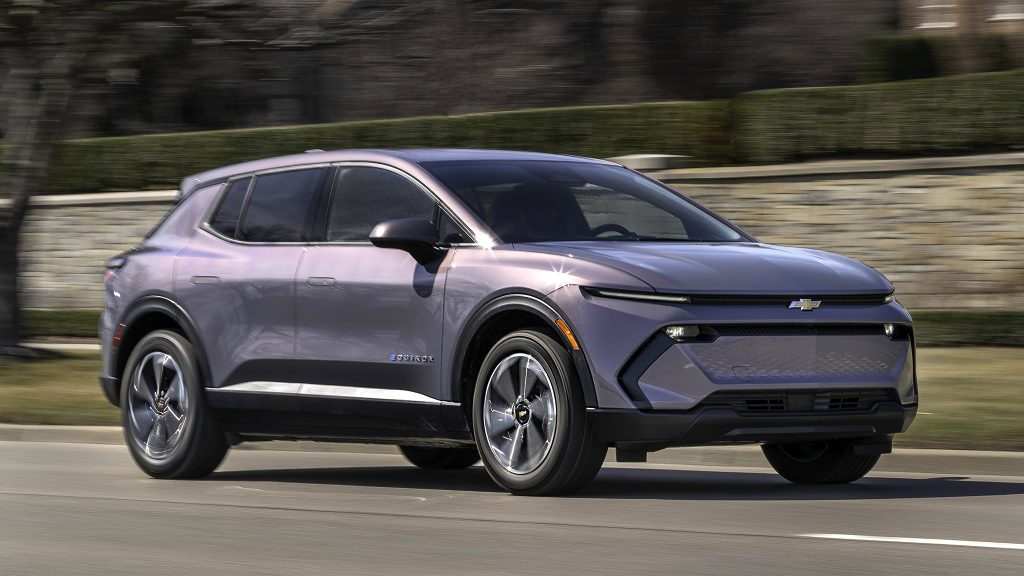
There is an interesting middle ground for Apple users. GM added native Apple Music to the 2025 and 2026 Equinox EV, allowing subscribers to access their music without CarPlay. That helps replace one of CarPlay’s most frequently used functions, but it does not reproduce the complete Apple interface.
The Equinox EV reflects GM’s approach to in-car technology. Rather than relying on the smartphone for connected features, the manufacturer is moving more smartphone-like services directly into the vehicle’s built-in system.
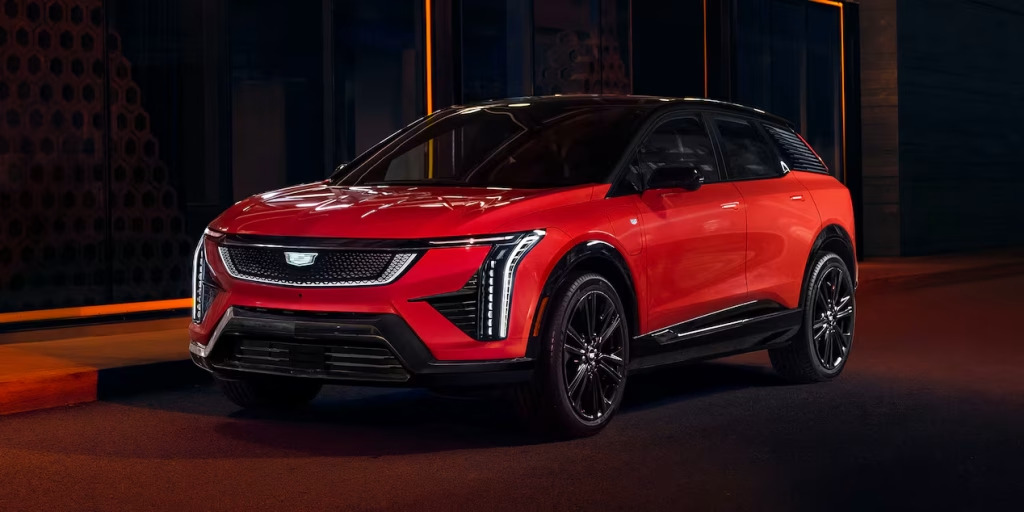
4. 2026 Cadillac Optiq
The Cadillac Optiq takes GM’s no-CarPlay strategy into the luxury compact SUV segment. The 2026 model uses Cadillac’s Google-based infotainment system and does not offer Apple CarPlay. Recent testing of the 2026 Optiq also confirms that the large curved display is built around Cadillac’s native software rather than Apple’s phone-projection system.
That changes more than the appearance of the dashboard. With CarPlay, an iPhone essentially supplies a familiar interface for navigation, music, messages, and compatible applications.
In the Optiq, Cadillac controls the environment and determines which services are integrated into the vehicle. Google Maps and Google Assistant are built into the system, while additional applications can be obtained through Google Play.
Google’s built-in platform can also operate without requiring the driver’s phone to provide the primary infotainment interface.
Cadillac’s approach can be particularly useful for EV drivers. Native Google Maps can incorporate charging locations and energy-conscious routing, giving the navigation system access to vehicle-related information. That is different from simply displaying a phone’s navigation application.
GM has also begun adding Apple services directly rather than restoring CarPlay. Apple Music became available natively on eligible Cadillac models, including the 2025 and 2026 Optiq, through GM’s software rollout. This gives iPhone users access to their Apple Music libraries, but it remains a Cadillac application rather than an Apple CarPlay environment.
The Optiq illustrates the larger shift taking place inside GM’s cabins. Apple still has a presence, but individual Apple services are being integrated into the automaker’s software instead of allowing the iPhone to take over the display.
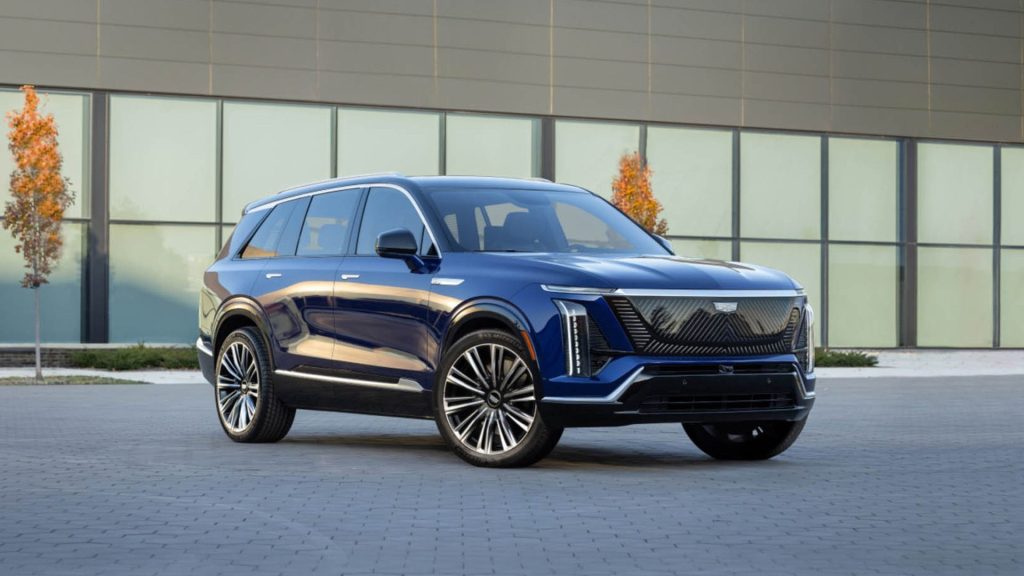
5. 2026 Cadillac VISTIQ
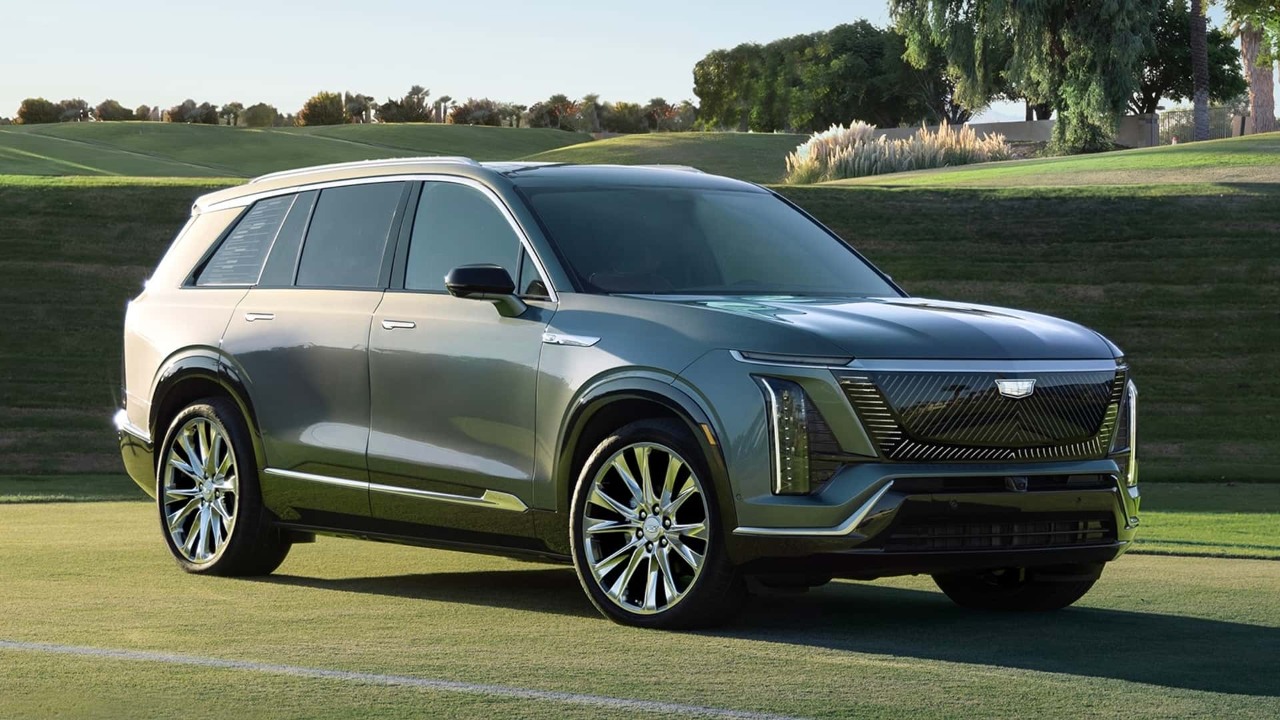
The Cadillac Vistiq takes GM’s no-CarPlay strategy into the three-row luxury SUV market. Unlike the Lyriq, which is an important exception in Cadillac’s EV lineup, the VISTIQ does not offer Apple CarPlay or Android Auto.
Cadillac instead centers the cabin around its 33-inch Horizon Display and Google-built-in software. Cadillac says Google built-in provides access to Google Maps, Google Assistant, and compatible media applications without requiring a smartphone to supply the primary interface.
That distinction becomes particularly noticeable for iPhone owners. A driver accustomed to connecting an iPhone and immediately seeing familiar CarPlay icons has to adapt to Cadillac’s own software.
Navigation is handled through Google Maps, while voice commands can control functions such as climate settings and route planning. The system can also use the vehicle’s connectivity rather than depending on a phone connection for its basic operation.
GM is simultaneously expanding what its native platform can do. In 2026, the company announced access to more than 200 additional compatible apps through Google Play for eligible vehicles with Google built-in.
GM also introduced native Apple Music for selected Cadillac models, meaning an iPhone user can still access Apple Music directly from the vehicle without CarPlay.
The VISTIQ shows why the CarPlay decision is more complicated than simply removing a feature. Cadillac gains greater control over the interface, applications, connectivity, and software updates. The company can continue changing the system through over-the-air updates instead of waiting for drivers to replace their phones.
For drivers who prefer Apple’s familiar interface, however, the change means giving up a system they already know. The VISTIQ replaces phone projection with a vehicle-controlled digital environment.
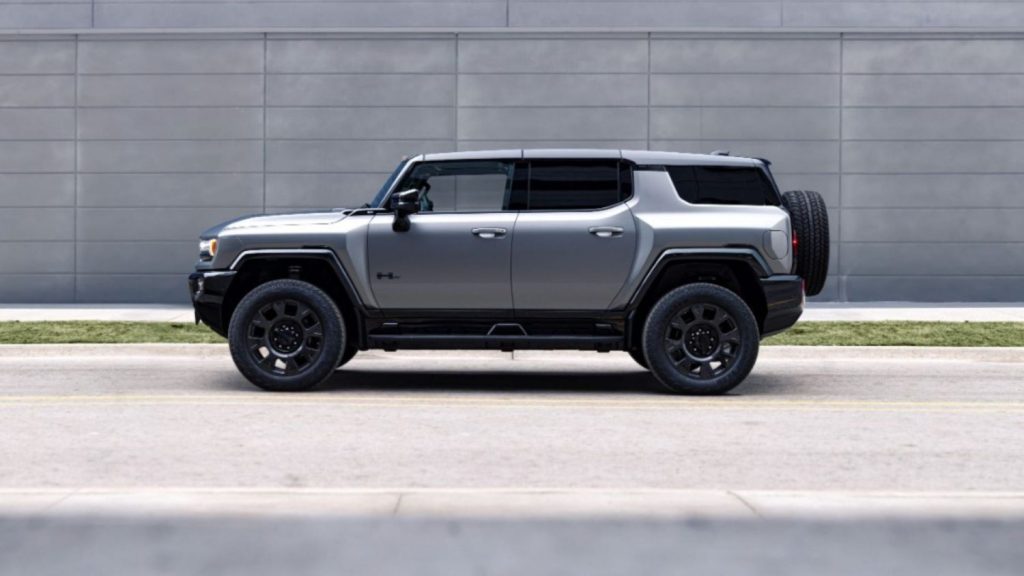
6. 2026 GMC Hummer EV
The GMC Hummer EV is an especially interesting case because it once offered Apple CarPlay and Android Auto, but the latest version moved in the opposite direction.
For 2026, GMC dropped both smartphone projection systems and shifted the electric truck and SUV toward GM’s Google-based infotainment platform. Contemporary reporting identified the 2026 Hummer EV as one of the GM electric vehicles that no longer provides either CarPlay or Android Auto.
For Hummer owners, the replacement is not simply one application. The vehicle’s native system combines Google Maps, Google Assistant, Google Play applications, and GM’s own connected services.
That approach allows the infotainment software to communicate more directly with vehicle systems. Navigation, charging information, and other EV-related functions can be incorporated into the vehicle’s own interface instead of relying on a smartphone projection layer.
GM is also adding more software after vehicles leave the dealership. Its 2026 Google Play expansion brought more than 200 additional applications to eligible vehicles, while GM’s planned Gemini integration is designed to bring a more conversational AI assistant to millions of compatible vehicles.
GM says the Gemini rollout is coming to eligible 2022-and-newer Cadillac, Chevrolet, Buick, and GMC vehicles with Google built-in, with availability depending on the vehicle and software configuration.
There is an important privacy and control consideration here as well. With CarPlay, Apple’s interface sits between the phone’s applications and the vehicle display. GM’s native approach puts much more of the digital experience inside GM’s own software environment.
That gives the automaker more control over which applications are available, how information is presented, and which connected services operate through the vehicle.
The Hummer EV reflects a broader change in GM’s infotainment strategy. Instead of making the smartphone the main source of connected features, the vehicle places greater emphasis on its own built-in software.
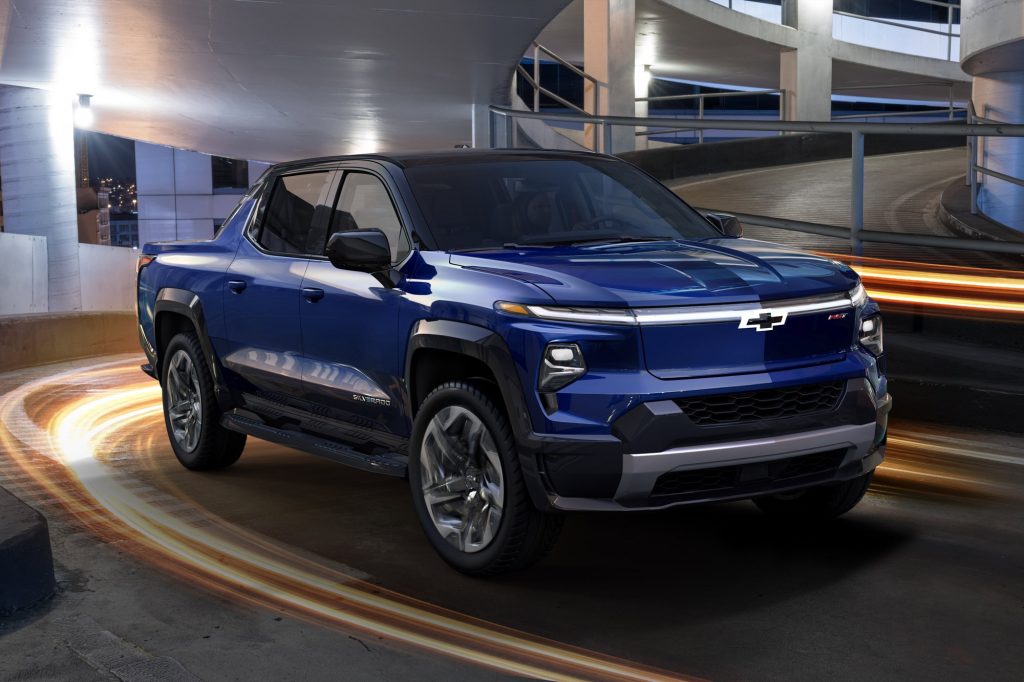
7. 2026 Chevrolet Silverado EV
The 2026 Chevrolet Silverado EV shows how GM’s approach to CarPlay is extending into the full-size pickup segment. Newer configurations of the electric truck use GM’s Google built-in infotainment system instead of Apple CarPlay and Android Auto.
The 2026 Work Truck, for example, moves to a 17.7-inch center touchscreen with Google built-in, replacing the smaller system previously used on that trim.
GM’s reasoning becomes particularly relevant in an EV. A traditional smartphone projection system can display navigation, but GM wants the vehicle itself to understand battery state, charging locations, route requirements, and energy consumption.
Its native software can use that information when planning journeys. Chevrolet’s Google built-in system also provides Google Maps, Google Play applications, and voice functions directly through the vehicle.
The Silverado EV also demonstrates how much GM wants the center display to become a software platform rather than simply a screen for a connected phone.
Chevrolet says the 2026 truck can receive new applications and features through software updates, while GM’s 2026 Google Play expansion brought more than 200 additional applications to eligible vehicles.
For iPhone owners, there is a clear tradeoff. Apple CarPlay is absent, but Apple Music is available natively on eligible 2025 and 2026 Silverado EVs. That gives drivers access to Apple’s music service without restoring the broader CarPlay interface.
8. 2026 GMC Sierra EV
The 2026 GMC Sierra EV follows a similar software philosophy but places it inside a more premium full-size electric pickup. GMC’s current Sierra EV lineup includes Elevation, AT4, and Denali trims, with a 16.8-inch interior screen and Google-built-in services.
The native platform replaces the traditional phone-projection approach on the relevant EV configurations, putting navigation, applications, and vehicle information directly into the truck’s infotainment environment.
That setup matters because the Sierra EV has capabilities that extend far beyond ordinary commuting. Depending on configuration, it can provide substantial towing capacity, bidirectional charging, and off-board power functions.
Native software allows GMC to connect these vehicle-specific features to the digital interface instead of treating the phone as the center of the experience.
Google Maps is particularly important here. GM says its Google-built-in system can incorporate live traffic and charging locations, while EV-specific routing can account for charging requirements. Google Play also gives drivers access to applications directly from the vehicle’s screen.
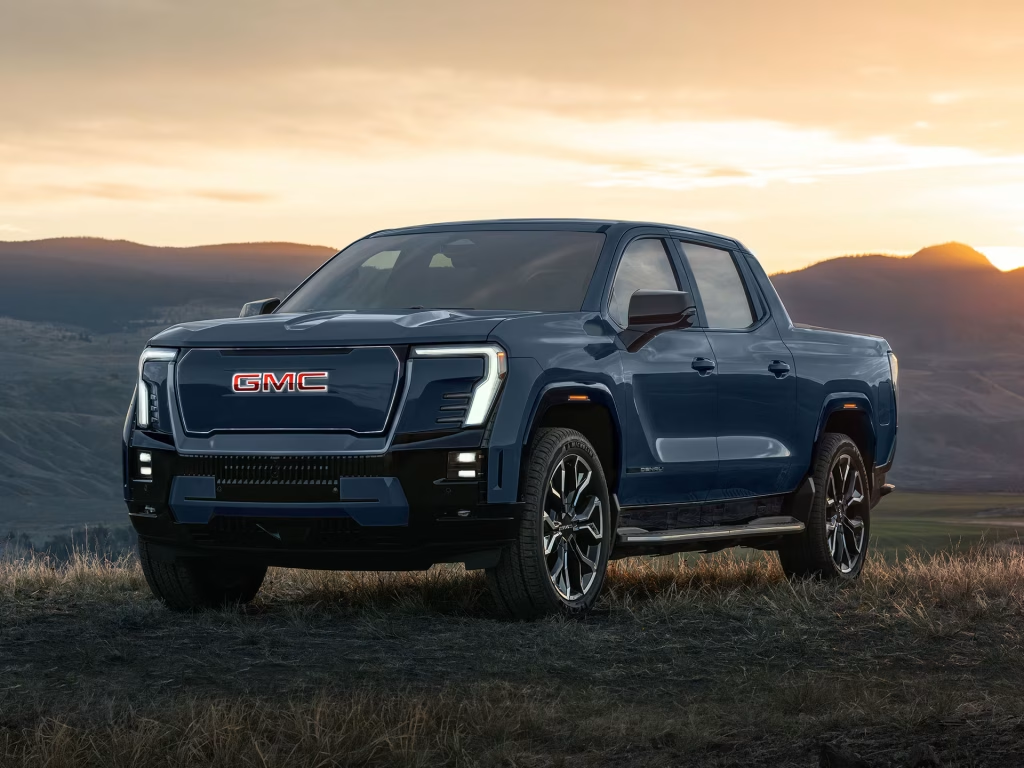
GMC is also not simply replacing CarPlay with a frozen software package. GM’s June 2026 update expanded Google Play availability to more than 200 additional apps on eligible vehicles, while native Apple Music was added to eligible 2025 and 2026 Sierra EV models.
For someone deeply invested in the Apple ecosystem, however, Apple Music is not equivalent to CarPlay. Messages, navigation, and compatible iPhone applications do not appear through Apple’s familiar dashboard interface.
The Sierra EV reflects GM’s broader shift in infotainment strategy. The manufacturer is placing more emphasis on the truck’s built-in software, with the goal of making the smartphone a secondary tool rather than the main source of infotainment features.
9. 2026 Cadillac Escalade IQ
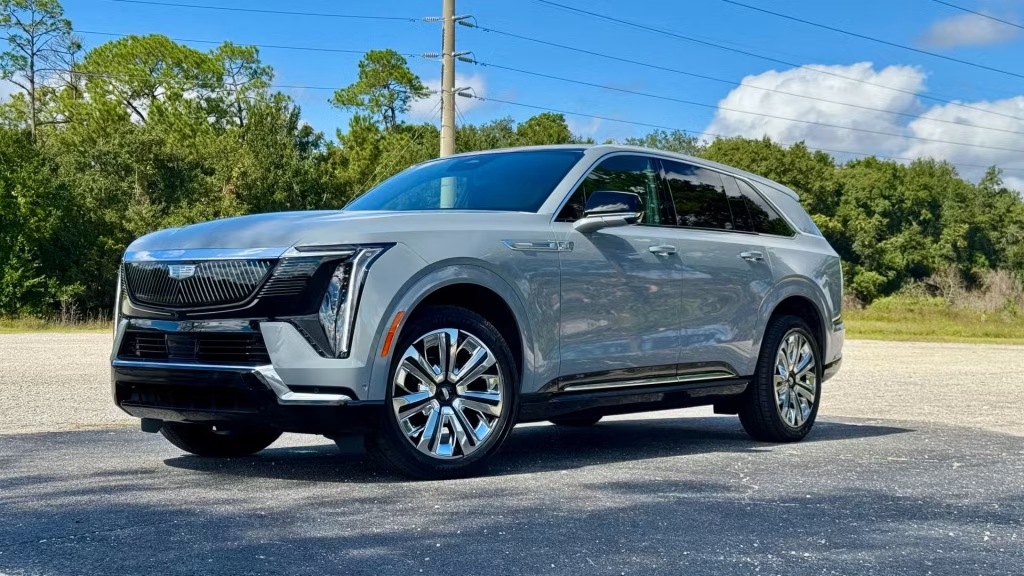
The Cadillac Escalade IQ brings GM’s software-first strategy into one of the company’s most technology-heavy vehicles. Unlike the traditional Escalade, the all-electric Escalade IQ does not provide Apple CarPlay or Android Auto.
Instead, Cadillac uses Google built-in, combining Google Maps, Google Assistant, and compatible applications with the vehicle’s own connected services. GM has also added native Apple Music to the Escalade IQ, giving iPhone users access to one familiar Apple service without restoring the broader CarPlay interface.
That difference is significant because the Escalade IQ has an enormous amount of digital real estate inside the cabin. Rather than allowing an iPhone to project its interface onto the screen, Cadillac controls the software environment and can update it through its connected vehicle architecture.
GM says eligible vehicles with Google built-in can now access more than 200 additional applications through Google Play, expanding what the center display can do beyond navigation and vehicle controls.
The company is also moving toward more conversational software. GM announced that Google Gemini is being rolled out to eligible 2022-and-newer Cadillac, Chevrolet, Buick, and GMC vehicles with Google built-in in the United States.
The system is intended to handle more natural conversations and vehicle-related requests than the previous Google Assistant experience.
For an iPhone owner, however, none of this recreates CarPlay completely. Apple Music can handle music, but messages, phone apps, and other compatible iPhone functions no longer appear through Apple’s familiar dashboard. The driver instead interacts with Cadillac’s own interface and the services it supports.
The Escalade IQ highlights the key tradeoff in GM’s approach to infotainment. The automaker has greater control over the vehicle’s digital ecosystem, while drivers have fewer options to use their preferred smartphone interface directly on the vehicle’s display.