Fuel costs can quietly become one of the largest recurring expenses of owning a car, especially for drivers covering thousands of miles every year. The EPA’s FuelEconomy.gov database provides a standardized way to compare those expenses by estimating annual fuel costs using 15,000 miles of driving and its reference fuel prices.
The cars below all come in under $1,500 in estimated annual fuel expense, based on specific U.S.-market configurations. Most rely on hybrid powertrains, but their approaches are surprisingly different.
Some prioritize city mileage, others perform strongly on the highway, while a few deliver impressive efficiency without sacrificing the practicality expected from a daily driver.
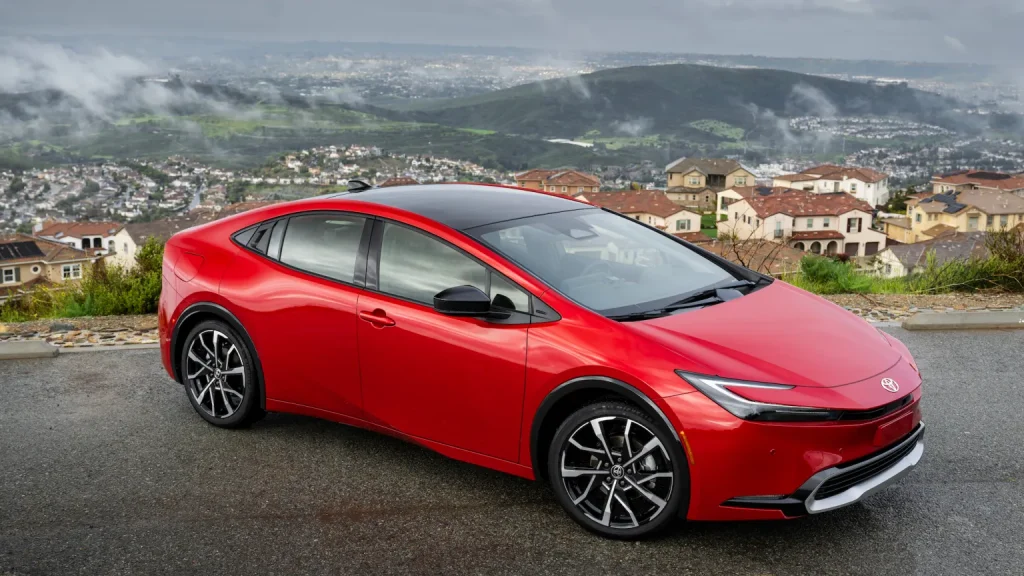
1. Toyota Prius
The Toyota Prius remains one of the clearest examples of how far gasoline-electric technology has progressed. For the 2025 model year, the most efficient front-wheel-drive Prius is rated at 57 MPG combined, with 57 MPG in city driving and 56 MPG on the highway.
The EPA’s estimated annual fuel cost is $1,100, based on 15,000 miles of annual driving under its standardized assumptions.
That figure means the Prius stays comfortably below the $1,500 threshold while offering a useful combination of efficiency and everyday practicality.
Its fuel economy is not dependent on a tiny engine alone. Toyota pairs a 2.0-liter four-cylinder gasoline engine with its fifth-generation hybrid system, allowing the electric motors to assist the gasoline engine and recover energy during deceleration.
The U.S.-market 2025 Prius produces 194 net combined horsepower in front-wheel-drive form, while available all-wheel-drive versions increase output to 196 horsepower. Toyota also gives the Prius an electronically controlled continuously variable transmission.
The Prius also has an advantage when it comes to fuel efficiency across different types of driving. Its city and highway ratings are relatively close, while many traditional gasoline vehicles see a larger drop in efficiency during stop-and-go traffic. The hybrid system helps the Prius recover energy during braking and use electric power during repeated acceleration, helping it maintain strong efficiency in urban conditions.
The $1,100 EPA estimate is not a promise of what every owner will spend. Fuel prices, annual mileage, traffic, weather, and driving style can all change the actual bill. Still, using the same EPA assumptions makes the Prius easy to compare with the other vehicles on this list.
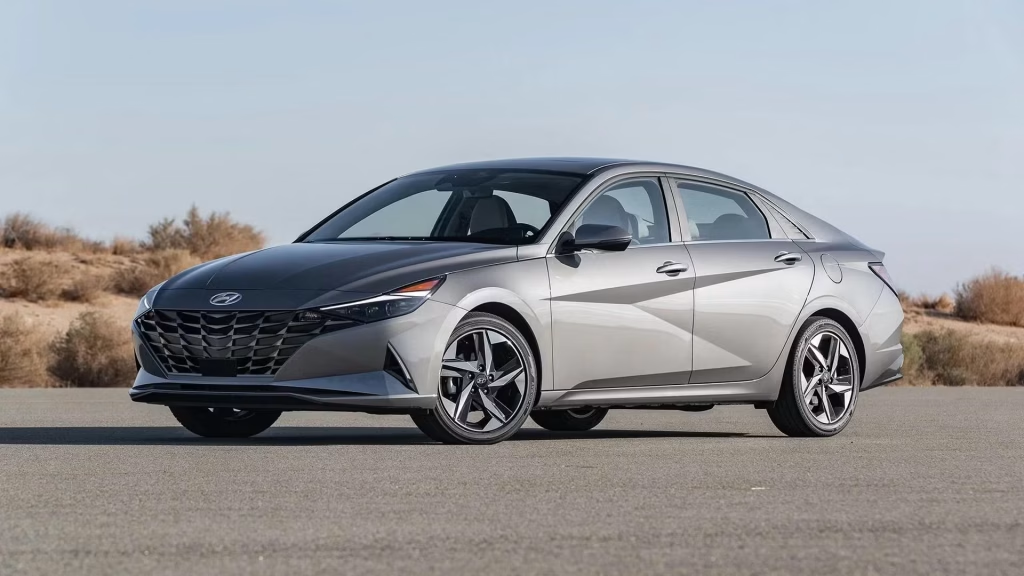
2. Hyundai Elantra Hybrid
The Hyundai Elantra Hybrid takes a different route to keeping annual fuel expenses low. Its Blue configuration is rated at 51 MPG city, 58 MPG highway, and 54 MPG combined, while the EPA annual fuel-cost estimate is approximately $1,200. That places it well below the $1,500 ceiling while giving it an especially strong highway rating.
The 58 MPG highway figure is particularly interesting because the Elantra Hybrid does not sacrifice its efficiency to a small two-seat body or an ultra-light construction strategy.
It remains a conventional five-passenger sedan with a 14.2-cubic-foot trunk and 99.4 cubic feet of passenger volume. Hyundai lists its exterior dimensions at 185.4 inches long and 71.9 inches wide.
Under the hood is a 1.6-liter four-cylinder hybrid powertrain working with an electric motor and a six-speed dual-clutch transmission. Hyundai rates the combined hybrid system at 139 horsepower, while the gasoline engine itself produces 104 horsepower and 109 lb-ft of torque.
The electric motor adds 43 horsepower and 125 lb-ft, with Hyundai listing combined system torque at 195 lb-ft.
This gives the Elantra a slightly different personality from the Prius. The Prius emphasizes exceptional city and highway efficiency in nearly equal measure, while the Elantra Hybrid Blue’s 58 MPG highway figure makes it particularly interesting for drivers who spend substantial time on faster roads.
Its 11-gallon fuel tank also works well with the car’s high MPG rating, reducing how frequently drivers need to stop for gasoline. Actual expenses will vary, but the EPA estimate demonstrates why the Elantra Hybrid can keep annual fuel spending comfortably below the target.
3. Toyota Camry Hybrid
The Toyota Camry proves that low fuel costs do not require stepping down into a compact car. For 2025, the most efficient Camry configuration, the LE front-wheel-drive hybrid, is rated at 53 MPG city, 50 MPG highway, and 51 MPG combined by the EPA. Its estimated annual fuel cost is about $1,200, keeping this midsize sedan comfortably below the $1,500 target.
That efficiency is particularly impressive considering the Camry’s size. Toyota redesigned the model around a fifth-generation hybrid system, combining a 2.5-liter four-cylinder gasoline engine with electric motors.
The powertrain is designed to recover energy during deceleration and use electric assistance during acceleration, reducing the amount of work required from the gasoline engine.
The 2025 Camry is also hybrid-only in the U.S. market. Depending on configuration, Toyota offers front-wheel drive or all-wheel drive. The FWD LE is the efficiency leader, while AWD versions are rated at 50 MPG combined.
For someone who drives substantial annual mileage, the distinction between 51 MPG and a typical gasoline sedan can become meaningful. At the EPA’s standardized 15,000-mile annual driving assumption, the Camry’s high fuel economy limits how frequently the owner needs to purchase gasoline.
The car also avoids the compromises sometimes associated with highly efficient vehicles. It remains a five-passenger midsize sedan with a conventional driving position, useful trunk space, and enough power for highway travel.
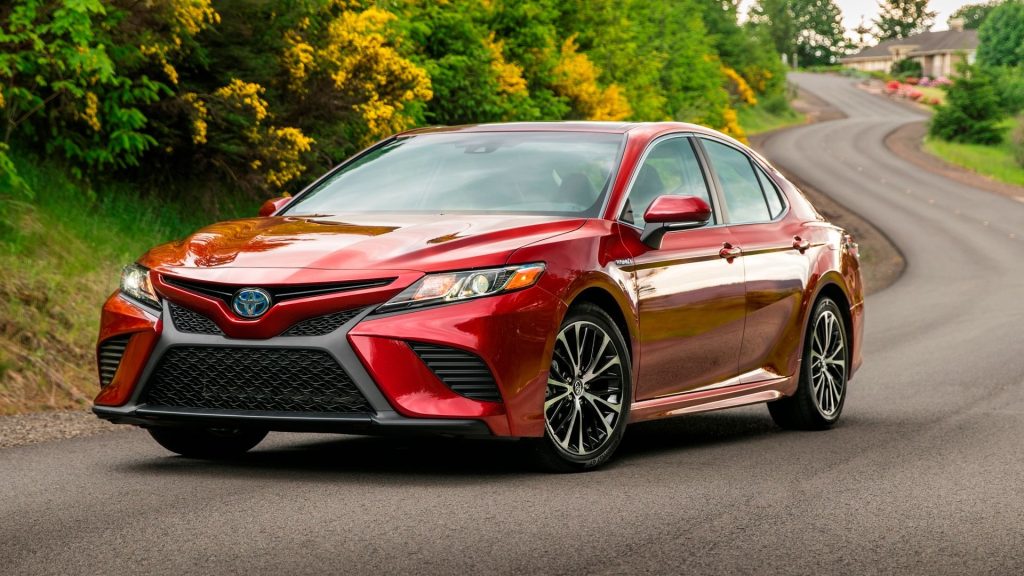
Toyota rates the hybrid system at up to 232 horsepower with front-wheel drive, giving the Camry substantially more output than many economy-focused hybrids.
Actual fuel spending will change with gasoline prices, driving habits, weather, and traffic. Still, the EPA rating provides a consistent benchmark, and the Camry’s combination of size, power, and roughly $1,200 annual fuel expense makes it one of the more interesting choices for drivers trying to keep gasoline costs below $1,500.
4. Honda Civic Hybrid
The Honda Civic Hybrid brings near-50-MPG efficiency into one of America’s best-known compact car nameplates. For 2025, Honda rates the Civic Hybrid sedan at 50 MPG city, 47 MPG highway, and 49 MPG combined. The EPA-based annual fuel-cost estimate is about $1,250, depending on the specific configuration and fuel-price assumptions.
What makes the Civic particularly interesting is that its fuel economy comes with considerably more power than many economy-oriented hybrids. Honda’s two-motor hybrid system produces 200 horsepower, making the Civic Hybrid the most powerful version of the regular Civic lineup apart from the high-performance Type R.
The hybrid system uses a 2.0-liter four-cylinder engine alongside electric motors. Rather than relying on a traditional transmission arrangement, Honda’s system can use the gasoline engine as a generator and mechanically connect it to the wheels under conditions where that is more efficient.
This allows the powertrain to shift between different operating modes depending on speed and load. Honda also offers the hybrid system in the Civic hatchback. That version is rated at 50 MPG city, 45 MPG highway, and 48 MPG combined, slightly below the sedan’s combined rating.
For drivers focused strictly on fuel cost, the sedan is therefore the more efficient choice. The Civic Hybrid also has a relatively small 10.6-gallon fuel tank, yet its EPA fuel-economy figures allow it to cover substantial distances between fill-ups.
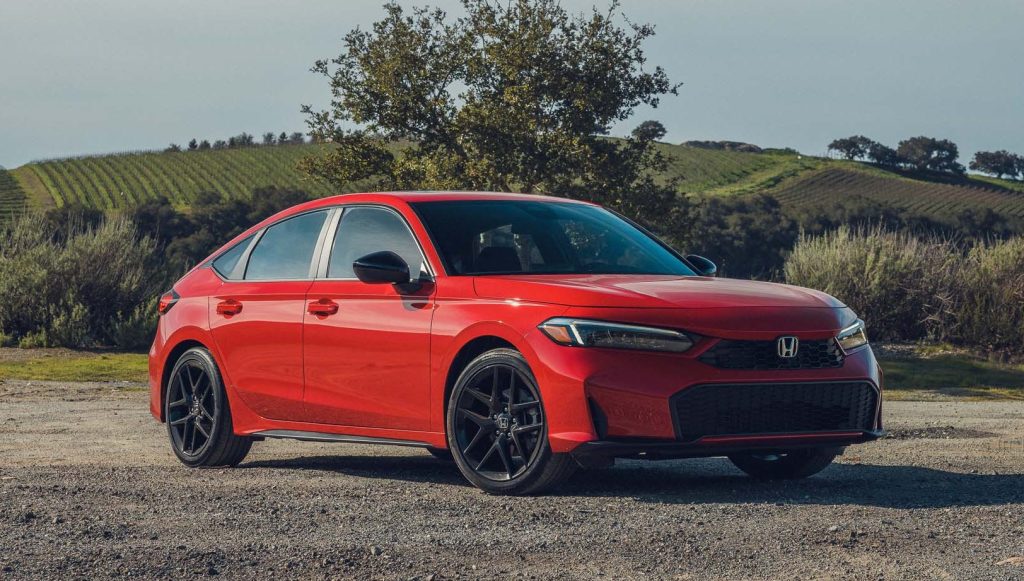
The result is a car that does not feel like a specialized fuel-saving machine. It offers the familiar Civic shape, five-passenger seating, and strong acceleration while still keeping estimated annual gasoline spending well below $1,500 under EPA assumptions.
5. Toyota Corolla Hybrid
The Toyota Corolla Hybrid shows how little fuel a conventional compact sedan can use without requiring a plug. For 2025, the front-wheel-drive Corolla Hybrid LE is EPA-rated at 53 MPG city, 46 MPG highway, and 50 MPG combined. Toyota also lists the model at up to 50 MPG combined, making it one of the most efficient gasoline-powered cars in its class.
Using the EPA-style annual driving assumption of 15,000 miles, the fuel requirement works out to roughly 300 gallons per year at the 50 MPG combined rating.
At a representative $3.50-per-gallon gasoline price, that would equal about $1,050 in fuel spending. Actual fuel prices and individual driving patterns can push the figure higher or lower, but it remains comfortably below the $1,500 threshold.
The Corolla’s efficiency comes from a 1.8-liter four-cylinder hybrid powertrain paired with Toyota’s fifth-generation hybrid system. Toyota lists 138 net combined horsepower and 105 lb-ft of engine torque. A planetary-type continuously variable transmission manages the power delivery, while available electronic all-wheel drive adds a separate rear electric motor.
The FWD version is the one to focus on when fuel economy is the priority. AWD versions give drivers additional traction but have lower EPA ratings, with the LE AWD listed at 51 city, 44 highway, and 48 combined MPG.
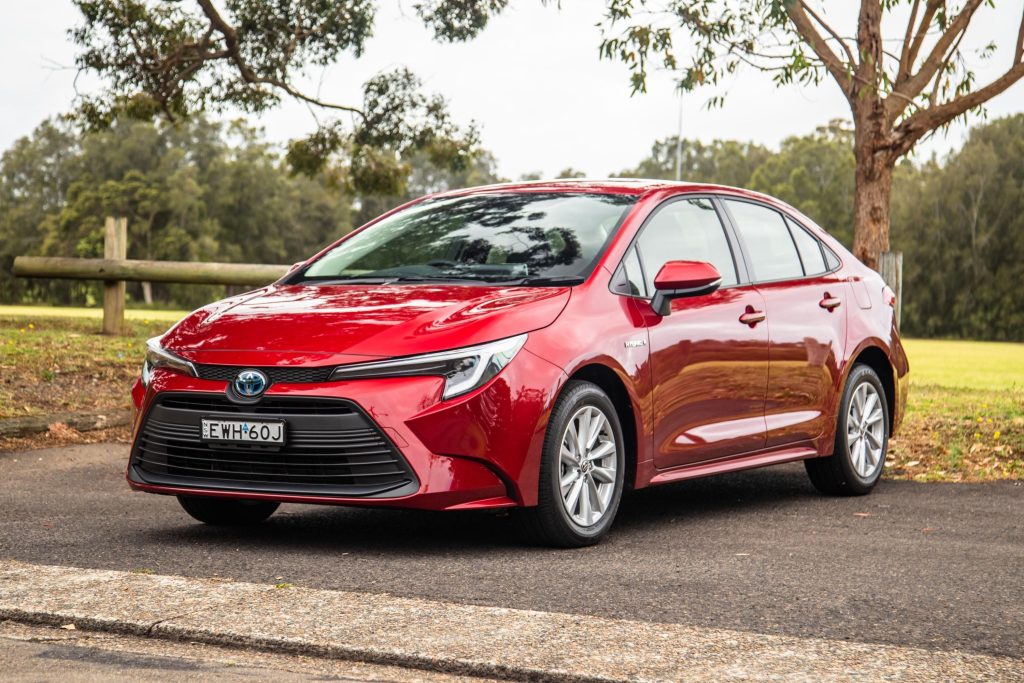
Despite its efficiency focus, the Corolla remains a conventional five-passenger sedan with a 13.1-cubic-foot trunk. Its relatively compact footprint also makes it easy to use as a commuter car, particularly in crowded urban areas.
6. Kia Niro
The Kia Niro takes the low-fuel-cost formula and puts it into a small crossover body. For 2025, the most efficient Niro Hybrid configurations are EPA-rated at 53 MPG city and 54 MPG highway, giving them a 53 MPG combined rating. That highway number is particularly impressive for a vehicle with SUV-like proportions.
At 15,000 miles per year, 53 MPG translates to approximately 283 gallons of gasoline annually. Using $3.50 per gallon as a simple reference price puts the fuel expense at roughly $991 per year, leaving substantial room beneath the $1,500 target. The actual amount paid by an owner will depend on local gasoline prices, mileage, and driving conditions.
Unlike a sedan such as the Corolla Hybrid, the Niro gives efficiency-minded drivers a taller body and useful cargo flexibility. The U.S.-market Niro is a front-wheel-drive hybrid crossover, and its 2025 LX, EX, and SX trims achieve the 53 MPG combined rating. Touring versions drop to 49 MPG combined because of their different equipment and wheel configuration.
Its powertrain uses a 1.6-liter four-cylinder gasoline engine and electric motor, paired with a six-speed dual-clutch automatic transmission. The hybrid system produces 139 horsepower and 195 lb-ft of combined torque.
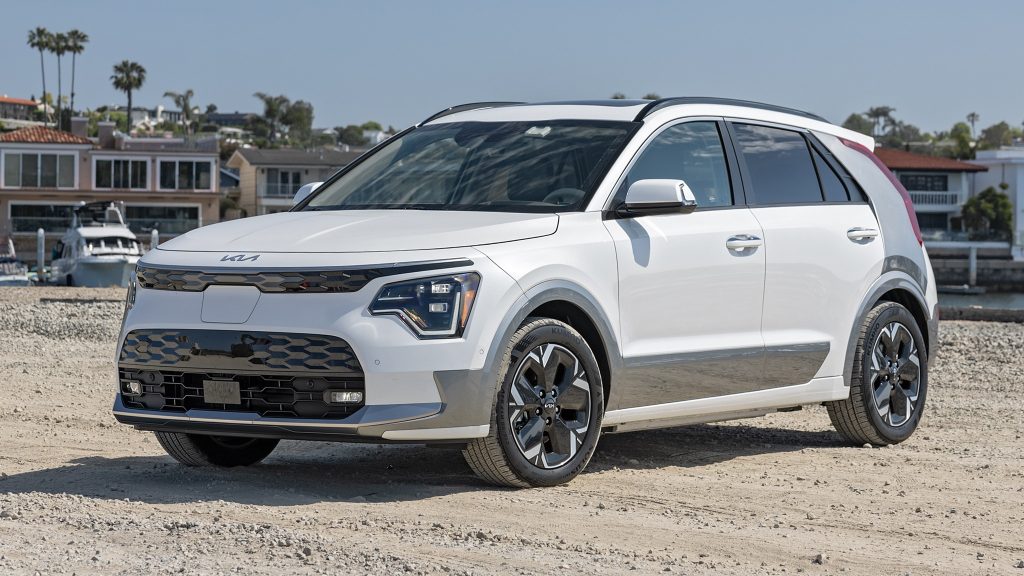
That combination gives the Niro an interesting advantage for drivers who want lower fuel consumption without moving into a traditional sedan. It also demonstrates why EPA fuel economy should always be checked by trim rather than simply by model name. A more heavily equipped version can have a different rating.
For someone driving long distances each year, the Niro’s 54 MPG highway rating can be especially useful. The car does not need to be driven slowly to achieve its efficiency rating, although real-world results will naturally vary.
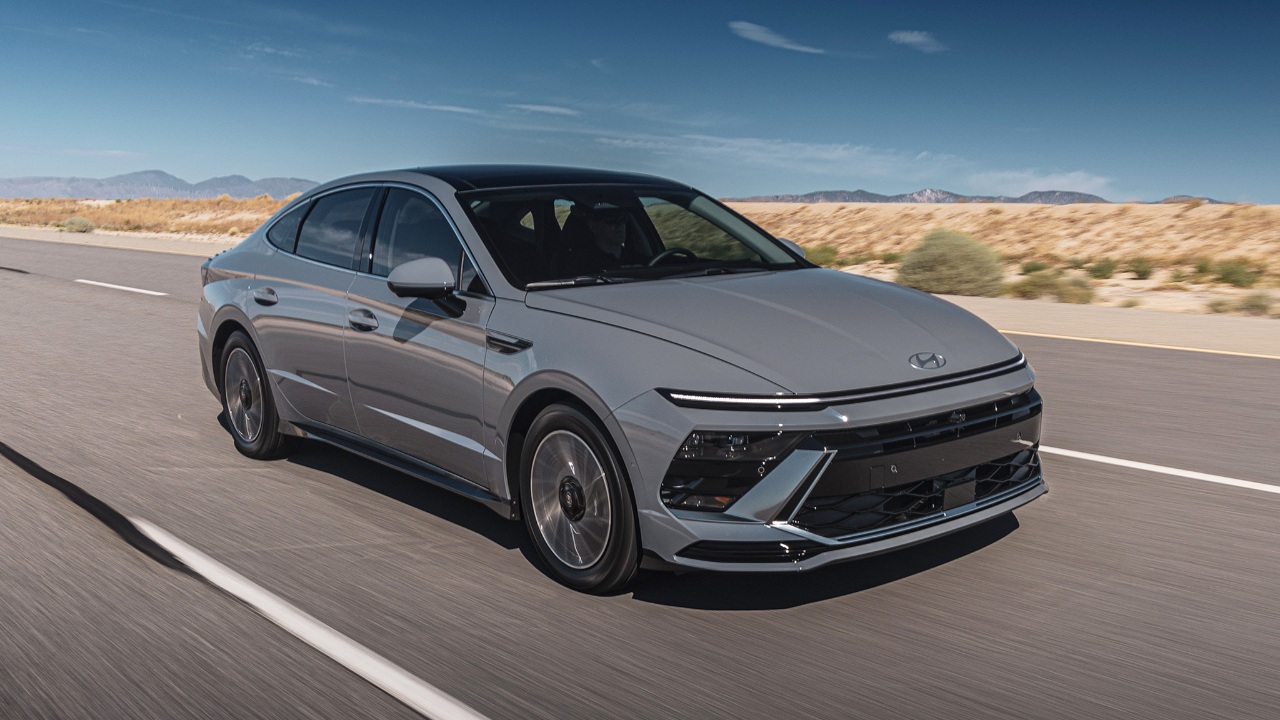
7. Hyundai Sonata Hybrid
The Hyundai Sonata Hybrid keeps fuel spending low while remaining a midsize sedan rather than shrinking into a compact economy car. For the 2025 U.S. market, the Sonata Hybrid is rated at approximately 47 MPG combined, depending on configuration.
That level of efficiency puts its estimated annual gasoline expense comfortably below the $1,500 threshold under typical EPA fuel-cost assumptions.
At 15,000 miles per year, a 47 MPG combined rating works out to roughly 319 gallons of gasoline annually. At $3.50 per gallon, that would equal about $1,117 in fuel spending. The actual amount will change with gasoline prices and driving habits, but the calculation shows why the Sonata Hybrid fits this category.
Hyundai pairs a 2.0-liter four-cylinder gasoline engine with an electric motor and a six-speed automatic transmission. The hybrid system produces 192 horsepower, giving the Sonata enough power for normal highway driving while retaining a strong efficiency advantage over conventional midsize sedans.
The car’s size is another reason it stands out. Drivers do not have to accept the smaller cabin and trunk of a compact car simply to reduce fuel consumption. The Sonata provides a conventional five-passenger sedan layout and a long wheelbase designed around passenger space.
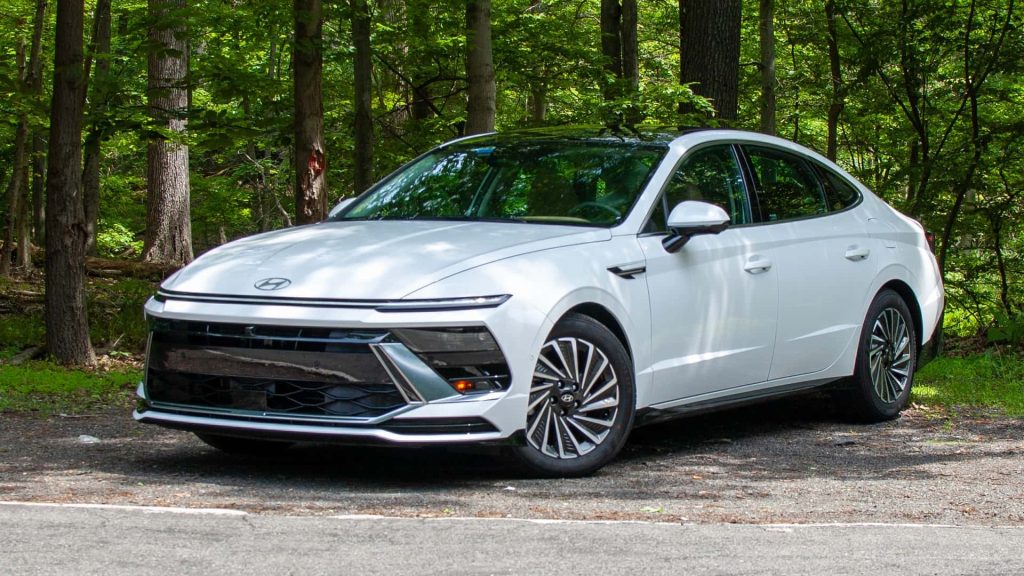
Its hybrid system also benefits from regenerative braking. Instead of allowing all the vehicle’s kinetic energy during deceleration to become heat through the brakes, the system can recover some of that energy and store it in the hybrid battery for later use.
EPA estimates are standardized rather than personalized, so drivers who spend most of their time in heavy traffic, drive aggressively, or regularly use climate control may see different results. Even so, the Sonata Hybrid demonstrates that a larger family sedan can keep annual gasoline costs well below $1,500.
8. Toyota Crown
The Toyota Crown takes a more upscale approach to fuel efficiency. Rather than being built strictly as an economy car, the Crown combines hybrid technology with a larger sedan body and available all-wheel drive. Depending on configuration, the U.S.-market Crown achieves up to 41 MPG combined, with the most efficient XLE grade leading the lineup.
At 15,000 miles annually, 41 MPG translates to approximately 366 gallons of gasoline. At $3.50 per gallon, that would amount to about $1,280 per year. That calculation keeps the Crown beneath the $1,500 target while showing how a relatively large vehicle can still deliver reasonable fuel expenses.
The Crown XLE uses Toyota’s 2.5-liter four-cylinder hybrid system, while higher grades can use Toyota’s Hybrid MAX powertrain. The standard hybrid system produces 236 net combined horsepower, giving the Crown considerably more output than many efficiency-focused cars.
Toyota also equips the U.S. Crown with all-wheel drive as standard. The rear axle receives electric assistance, allowing the system to send power to the rear wheels without requiring a conventional mechanical driveshaft running the length of the vehicle.
This makes the Crown particularly unusual on a low-fuel-cost list. It is not a tiny hatchback or a lightweight commuter sedan. Its elevated ride height, spacious cabin, and standard all-wheel-drive system give it a different mission from cars such as the Corolla Hybrid.
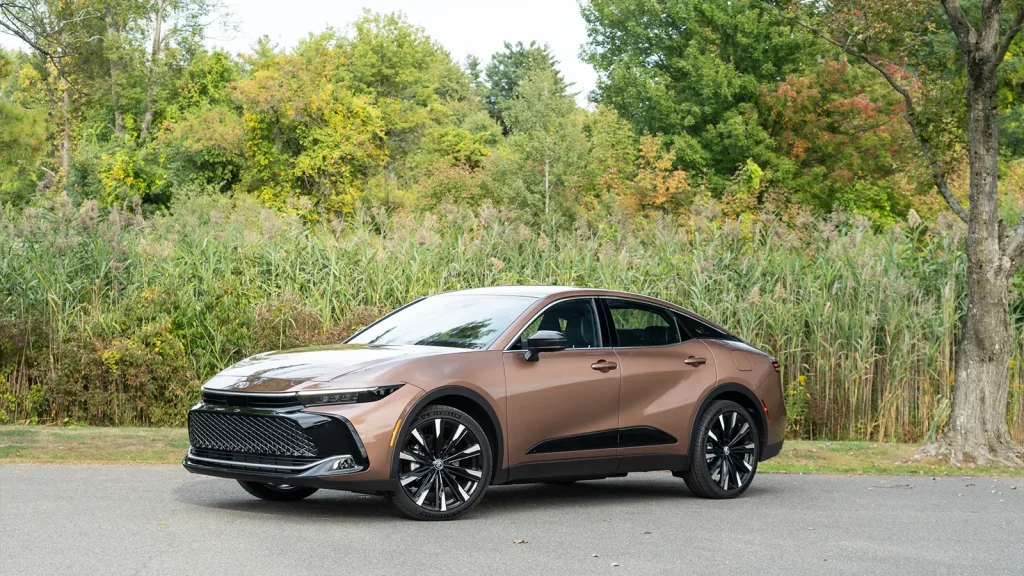
The tradeoff is clear in the EPA numbers. A 41 MPG combined rating is not as impressive as the figures achieved by the Prius, Corolla Hybrid, or Niro. However, the Crown provides substantially more size and power while still keeping estimated annual gasoline consumption below the level required to spend $1,500 at a $3.50-per-gallon reference price.
9. Honda Accord Hybrid
The Honda Accord Hybrid shows that a car does not need to be small to keep annual gasoline spending below $1,500. For 2025, Honda lists the hybrid Accord at 48 MPG combined, with the EX-L Hybrid reaching 51 MPG city and 44 MPG highway.
The EPA’s estimated annual fuel cost for the 48-MPG configuration is approximately $1,300, assuming the EPA’s standardized annual driving conditions and fuel-price assumptions.
At 15,000 miles per year, 48 MPG works out to about 313 gallons of gasoline. The figure is particularly useful for commuters because it provides a consistent benchmark against smaller cars. Someone choosing an Accord Hybrid is getting a midsize sedan without accepting the much higher fuel consumption normally associated with a larger vehicle.
Honda’s two-motor hybrid system uses a 2.0-liter Atkinson-cycle four-cylinder engine and electric motors. For the 2025 model year, Honda lists 204 horsepower of total system output, while the traction motor produces 247 lb-ft of torque. The system uses a direct-drive arrangement rather than a conventional multi-speed automatic transmission.
The Accord also has a useful advantage for drivers who spend time carrying passengers. Honda lists 16.7 cubic feet of cargo volume, while the sedan measures 195.7 inches long and 73.3 inches wide. That makes it substantially larger than compact hybrids such as the Corolla while still maintaining impressive fuel economy.
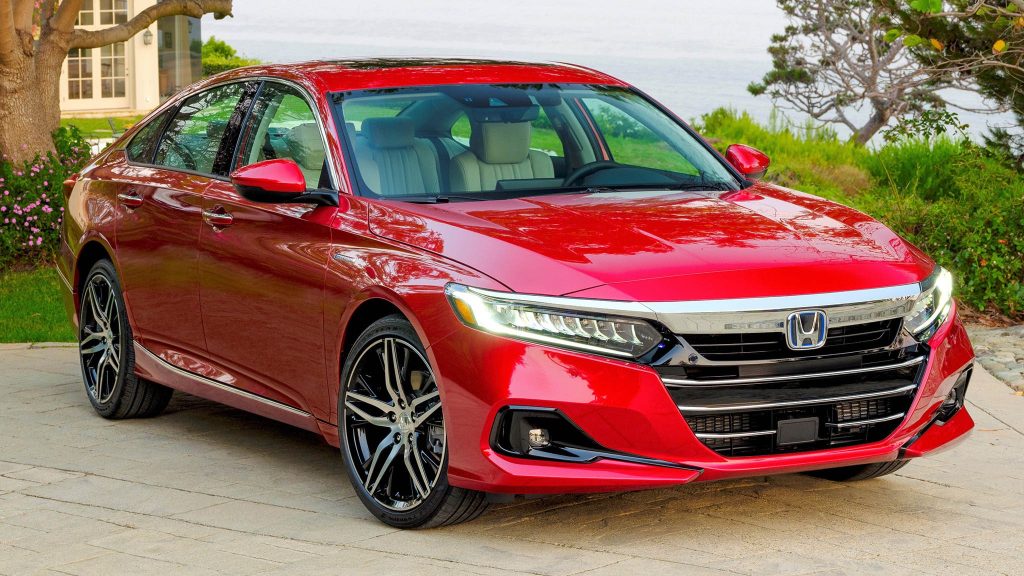
Actual fuel expenses can differ because gasoline prices, weather, traffic, and driving style all influence consumption. The EPA figure should therefore be treated as a standardized comparison rather than a guarantee of what an individual owner will spend.
For someone who wants a roomy daily driver and does not want fuel costs to dominate the ownership budget, the Accord Hybrid demonstrates how efficient a modern midsize sedan can be.
10. Lexus ES 300h
Luxury and low fuel consumption rarely appear together in the same sentence, but the Lexus ES 300h makes the combination possible. The 2025 ES 300h is EPA-rated at 43 MPG city, 44 MPG highway, and 44 MPG combined.
Fuel-economy data based on the EPA rating puts its estimated annual fuel cost at about $1,400, keeping the luxury sedan just inside the $1,500 ceiling.
At 15,000 miles annually, 44 MPG requires approximately 341 gallons of gasoline. That is more fuel than the smaller hybrids earlier in the list would consume under identical conditions, but the ES 300h offers a substantially different ownership proposition.
It is a premium midsize sedan designed around comfort, quietness, and equipment rather than simply minimizing fuel consumption.
Lexus uses a 2.5-liter four-cylinder gasoline engine combined with Lexus Hybrid Drive. The system produces 215 net combined horsepower and sends power through an electronically controlled continuously variable transmission to the front wheels. Lexus lists the ES 300h at 195.9 inches long and 73.4 inches wide.
The powertrain’s 44 MPG combined rating is notable considering the vehicle’s size. It also demonstrates why fuel economy should be judged within the context of what a vehicle provides. The ES 300h is considerably larger and more luxurious than a Corolla Hybrid, yet its annual fuel estimate remains below the $1,500 threshold.
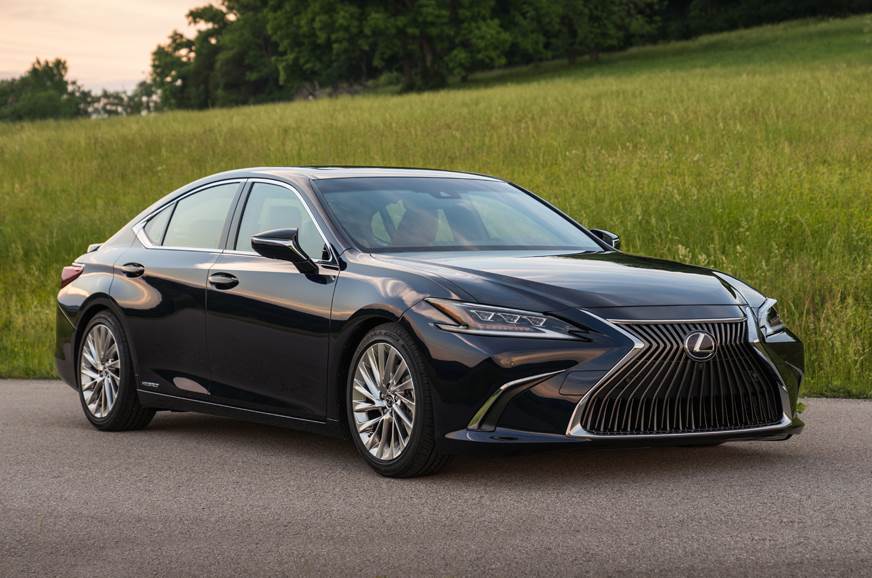
One important distinction is that the $1,400 figure is an EPA-based estimate, not a fixed ownership bill. Fuel prices vary from state to state, while individual mileage can differ dramatically from the EPA’s 15,000-mile assumption. Highway speeds, cold weather, and aggressive acceleration can also reduce real-world fuel economy.
Still, for buyers who want a premium sedan without accepting the fuel consumption of a conventional luxury car, the ES 300h demonstrates that hybrid technology can substantially reduce gasoline requirements.