
Some cars gain collector status only after years have passed, while others attract attention almost from the moment production ends. Limited numbers, distinctive engineering, strong enthusiast interest, and a confirmed end to production can quickly turn a special model into a sought-after car. Once the factory stops building it, every surviving example becomes part of a fixed supply.
That does not guarantee rising prices, but it can change how enthusiasts view the model. The eight cars below illustrate different versions of that phenomenon in the U.S. market.
Some were already performance icons, while others became interesting because their cancellation ended a combination of features that became increasingly difficult to find in new cars.
1. 2017 Dodge Viper ACR
The Dodge Viper ACR is one of the clearest examples of a car whose final production status immediately changed its place in the enthusiast world. Dodge ended Viper production in 2017, bringing an end to a sports car that had always been unusually uncompromising.
The final Viper ACR combined a naturally aspirated 8.4-liter V10 with 645 horsepower, a six-speed manual transmission, and extensive aerodynamic hardware designed to generate serious downforce. Dodge confirms that the Viper was discontinued in 2017.
The collector market has since given the final cars considerable attention. Hagerty’s July 2026 valuation for a 2017 Viper ACR lists a #3 good-condition range of approximately $331,667 to $381,667, compared with $209,000 in September 2021.
That represents substantial appreciation, although the exact percentage depends on which point in the current valuation range is used.
Recent transactions show that exceptional examples can command much more. A 2017 Viper ACR sold for $598,500 in August 2026, while another 2017 Viper sold for $556,388 that same month. These transactions demonstrate how mileage, specification, condition, and provenance can move an individual car far beyond a guidebook benchmark.
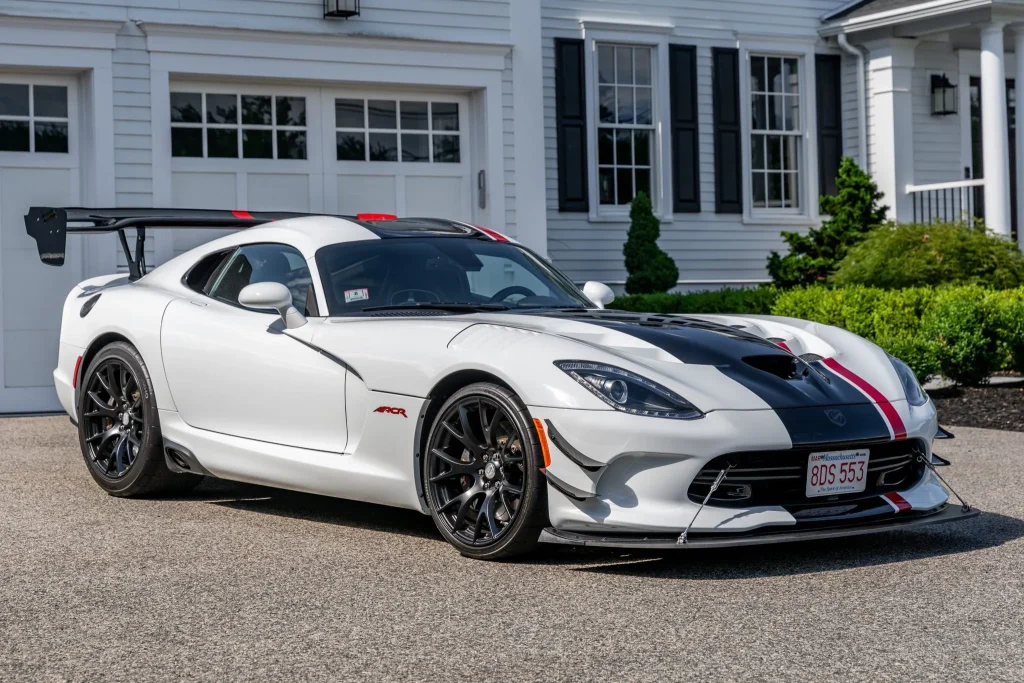
What makes the Viper particularly significant is what disappeared with it. The car offered huge displacement, rear-wheel drive, a manual transmission, and relatively little concern for the comfort-focused direction taken by many modern performance cars. Once production ended, there was no direct new Viper replacement.
That combination made the final cars immediately interesting to collectors. They were not merely discontinued vehicles. They represented the closing chapter of one of America’s most distinctive performance-car stories.
2. 2009 Pontiac Solstice GXP Coupe
The Pontiac Solstice GXP Coupe had barely reached American showrooms when its future disappeared. Pontiac’s shutdown meant that the unusual two-seat coupe would have an extremely short production life, and only 1,266 Solstice coupes were built.
That number included both regular and GXP versions, making the turbocharged GXP coupe especially scarce. Hagerty Marketplace describes the coupe as a rare model whose production was accelerated toward the end of Pontiac.
The car was already unusual before Pontiac disappeared. Instead of adapting a conventional front-wheel-drive sedan into a sporty coupe, GM developed the Solstice around its rear-wheel-drive Kappa platform.
The GXP added a turbocharged 2.0-liter Ecotec four-cylinder producing 260 horsepower, and buyers could choose a five-speed manual or automatic transmission.
The production number becomes more impressive when compared with the entire Solstice family. More than 65,000 Solstices were produced, but only 1,266 were coupes. That means the fixed-roof version represents a tiny fraction of total Solstice production.
The GXP coupe also has a distinctive body design that separates it from the much more common roadster. Its removable roof panel created a targa-style driving experience, while the rear glass and hatch gave the car a practicality that the open roadster did not provide.
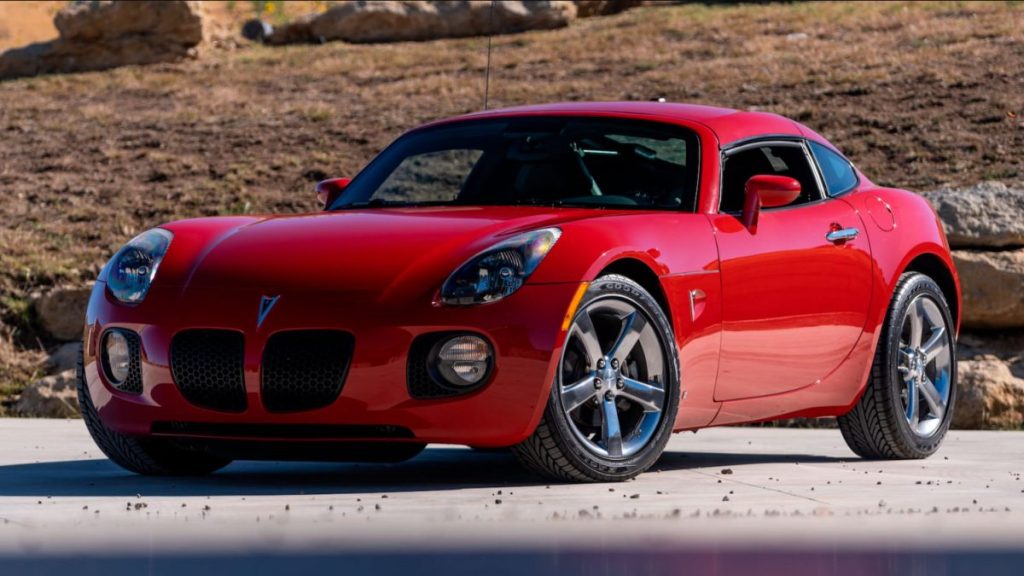
Pontiac’s cancellation transformed those characteristics from simple product decisions into permanent historical features. There would be no second-generation Solstice coupe to replace it, no later redesign to make the original feel less special, and no growing production run to dilute its rarity.
That is why the GXP Coupe became a collector candidate almost immediately. Its combination of a discontinued brand, tiny production number, rear-wheel drive, turbocharged engine, and unusual body style gives it a strong identity that is difficult to reproduce today.
3. 2006 Ford GT
The Ford GT was already an extraordinary car when it arrived, but the announcement that Ford would end production gave its modern supercar status an additional layer of significance.
The 2005 and 2006 GTs were created as a modern interpretation of the GT40, but it was engineered as a genuine high-performance road car rather than simply a retro-styled tribute.
Ford produced only 4,038 GTs for the 2005 and 2006 model years, according to Ford’s historical production information. That limited volume meant that the GT was never going to be a common sight on American roads.
Its aluminium construction, supercharged V8, and manual transmission also gave it a mechanical identity that became increasingly unusual as the performance-car market moved toward automated transmissions and smaller turbocharged engines.
The numbers were serious. The supercharged 5.4-liter V8 produced 550 horsepower and 500 lb-ft of torque, while power was sent through a six-speed manual transmission. Car and Driver recorded a 0 to 60 mph time of 3.9 seconds during testing.
The end of production changed how enthusiasts viewed the car because there would be no conventional successor wearing the same first-generation design. Ford eventually returned to the GT name with a radically different mid-engine car, but that only reinforced the historical importance of the 2005-2006 model.
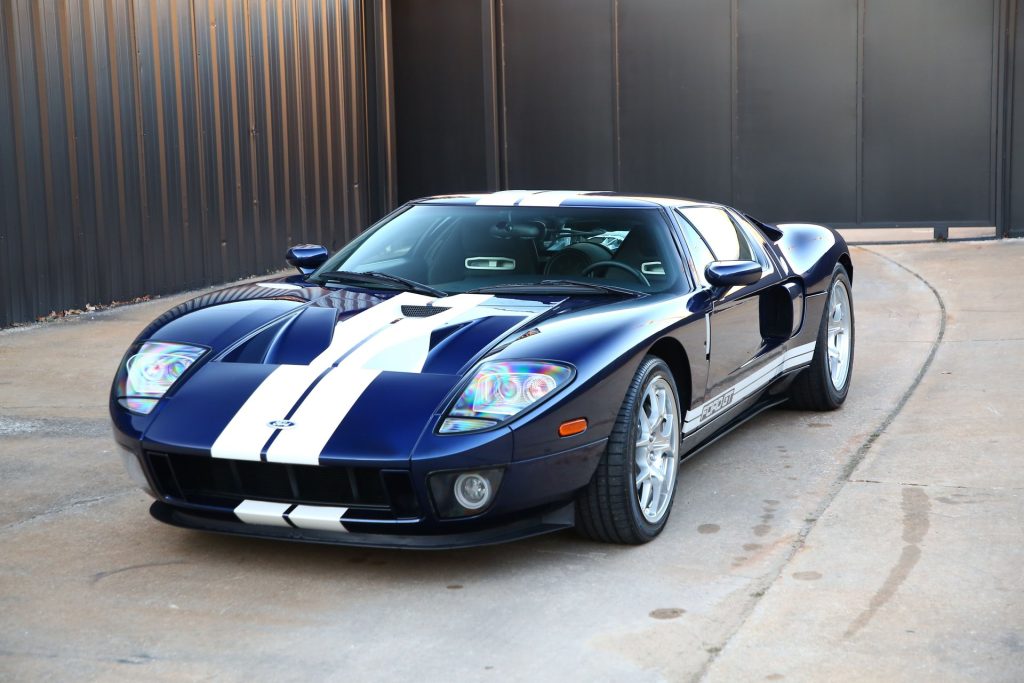
The GT’s collector appeal also comes from its connection to Ford’s racing history. The original GT40 defeated Ferrari at Le Mans in the 1960s, and the modern GT deliberately carried that visual and engineering heritage into the 21st century.
A GT therefore became collectible for more than its low production number. It combined a famous name, a supercharged V8, a manual gearbox, aluminum construction, and a direct link to one of America’s most important endurance-racing stories.
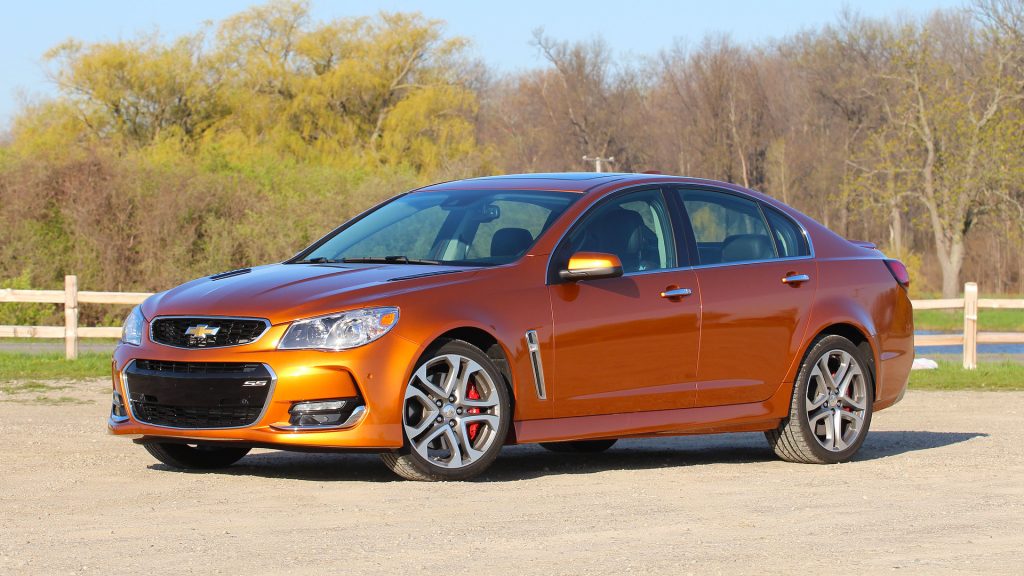
4. 2017 Chevrolet SS
The Chevrolet SS is a very different kind of cancelled car. It did not arrive with supercar styling or a legendary racing name. Instead, Chevrolet quietly sold a high-performance rear-wheel-drive sedan in the United States while the market was increasingly moving toward crossovers and SUVs.
Production ended after the 2017 model year, making the SS the final rear-wheel-drive performance sedan sold by Chevrolet in the United States for several years. Its combination of a naturally aspirated V8, six-speed manual transmission availability, and four-door practicality became increasingly unusual as manufacturers moved away from this formula.
The engine was a 6.2-liter LS3 V8 producing 415 horsepower and 415 lb-ft of torque. Chevrolet offered both a six-speed automatic and a six-speed manual, and the car used a rear-wheel-drive chassis derived from the Australian Holden Commodore. Car and Driver recorded a 0 to 60 mph time of 4.7 seconds for a manual-transmission SS.
The SS’s rarity is another part of its appeal. Chevrolet sold relatively few examples in the U.S. compared with mainstream performance sedans, and production was limited to the 2014 through 2017 model years. Chevrolet also made the 2017 model year particularly interesting by offering a manual transmission and Magnetic Ride Control.
The cancellation therefore removed something increasingly difficult to find: an American-market sedan with a large naturally aspirated V8, rear-wheel drive, and a manual gearbox.
That does not automatically make every Chevrolet SS a high-value collectible. Market prices depend heavily on mileage, condition, modifications, and documentation. But its discontinued status gives the car a permanent place in Chevrolet’s performance history.
It is also the kind of car whose significance can become clearer with time. When new, it was easy to overlook beside more dramatic sports cars. Once production stopped, the unusual combination of features became much harder to replace.
5. 2010 Chevrolet Corvette ZR1
The 2010 Chevrolet Corvette ZR1 became historically important the moment the C6 generation moved toward the end of its production run.
Chevrolet had taken the familiar Corvette formula and pushed it into supercar territory with a hand-built, supercharged V8, carbon-fiber body components, and serious track-focused hardware. The ZR1 was not simply another trim level. It was the technological flagship of the C6 family.
Its 6.2-liter supercharged LS9 V8 produced 638 horsepower and 604 lb-ft of torque, making it the most powerful production Corvette of its era. Power went exclusively through a six-speed manual transmission.
Chevrolet also equipped the ZR1 with carbon-ceramic brakes and magnetic ride control, giving the car hardware intended for repeated high-performance driving.
Production numbers help explain why collectors pay particular attention to the ZR1. Chevrolet built only 4,684 C6 ZR1s during its production run, making it considerably scarcer than ordinary C6 Corvettes. That limited supply became permanent once the C6 generation ended.
The ZR1 also marked an important point in Corvette history. It demonstrated that Chevrolet could build an American front-engine sports car capable of competing with much more expensive European machinery without abandoning a traditional manual gearbox or large-displacement V8.
Its cancellation therefore did more than end another model year. It closed the book on a specific combination of Corvette engineering: supercharged V8 power, a manual transmission, and the C6’s relatively compact dimensions. Later Corvettes moved to the mid-engine layout, fundamentally changing the architecture.
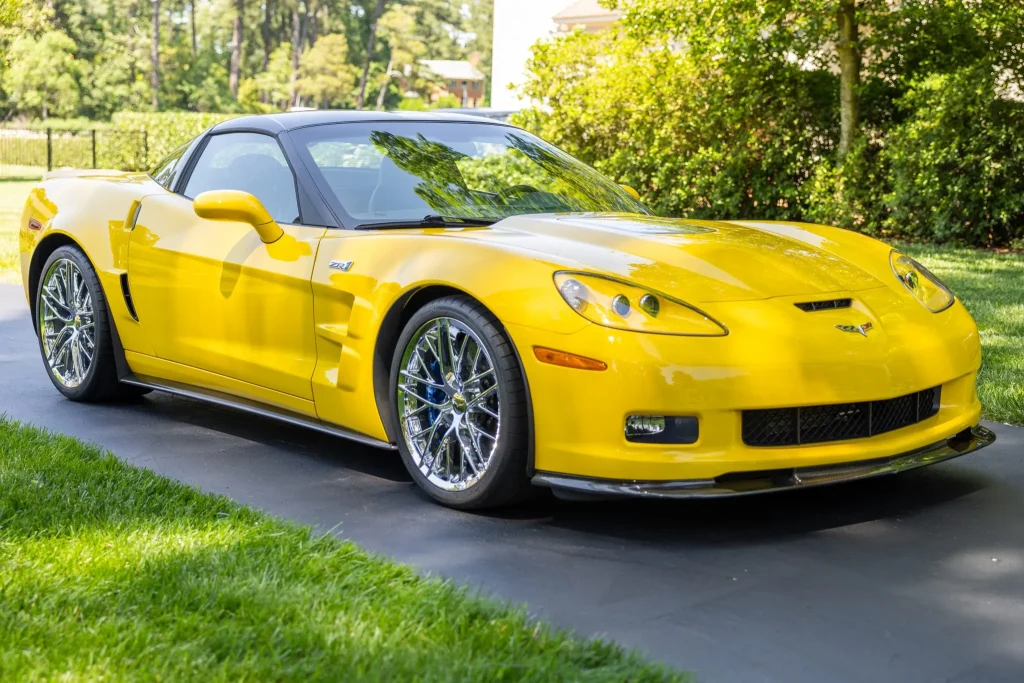
For collectors, that makes the C6 ZR1 historically significant even when compared with newer and faster Corvettes. A modern Corvette may deliver superior acceleration and technology, but it cannot recreate the exact mechanical formula of the final high-performance C6.
The ZR1’s rarity, LS9 engine, and position at the top of the C6 range give it the characteristics collectors generally seek in a discontinued performance car.
6. 2013 Lexus LFA
The Lexus LFA is one of the strongest examples of a car becoming historically important because production was always destined to be extremely limited.
Lexus built the LFA as a technology showcase rather than a high-volume sports car, and only 500 examples were produced worldwide between 2010 and 2012. The car’s limited production and unusual engineering made it collectible while it was still relatively new.
At the heart of the LFA is a 4.8-liter naturally aspirated V10 producing 552 horsepower and 354 lb-ft of torque. The engine was developed with Yamaha, and Lexus designed it to rev to 9,000 rpm. The powertrain was connected to a six-speed automated manual transmission.
The carbon-fiber construction was equally significant. Lexus used carbon-fiber-reinforced polymer extensively in the vehicle’s structure, helping reduce weight while creating a platform capable of handling the V10’s performance.
Production ended after the 500-car run, meaning the LFA was never intended to become a common sight. That limited supply is especially important because Lexus has not produced another road car with the same naturally aspirated V10 configuration.
The LFA also occupies an unusual position among Japanese performance cars. It was extraordinarily expensive when new, yet Lexus deliberately developed components specifically for the car rather than adapting a mass-production sports-car platform. The engine’s high-revving character and distinctive exhaust note became central parts of its identity.
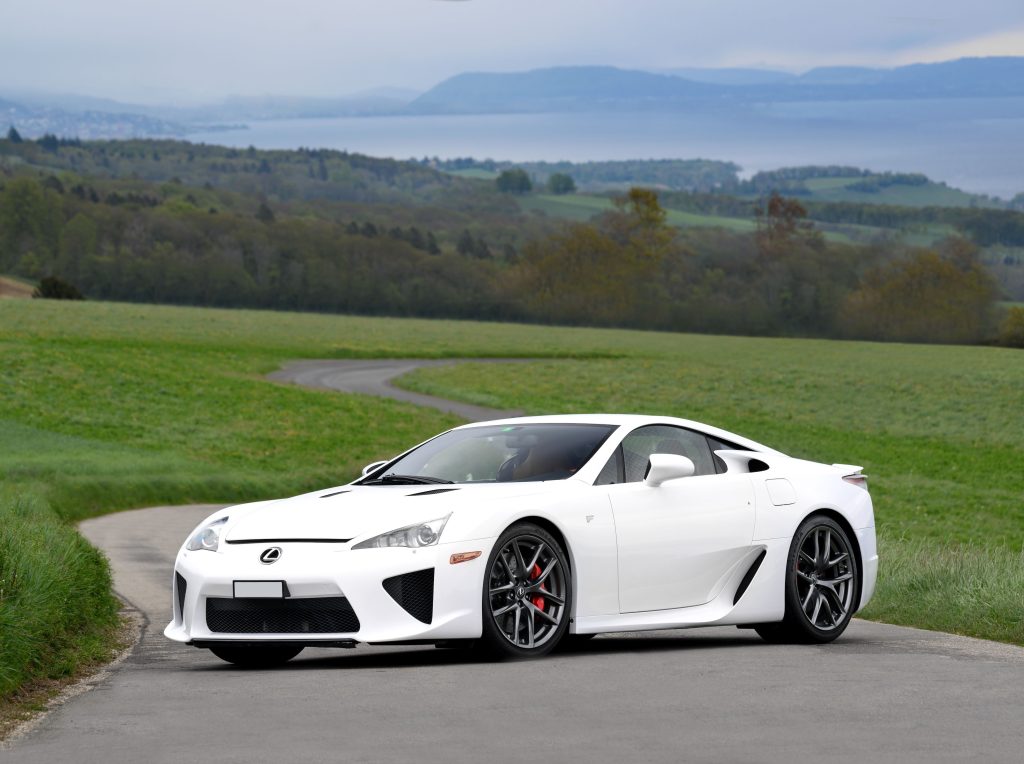
That engineering approach gives the LFA significance beyond its production number. Modern performance cars increasingly rely on turbocharging, hybrid assistance, and automated gearboxes. The LFA represents a very different philosophy, centered on a naturally aspirated V10 and an exceptionally high redline.
Its cancellation therefore permanently ended a combination of technology and engineering that Lexus has not repeated. For collectors, that makes the LFA less like a discontinued trim and more like a completed engineering experiment that exists in only 500 examples.
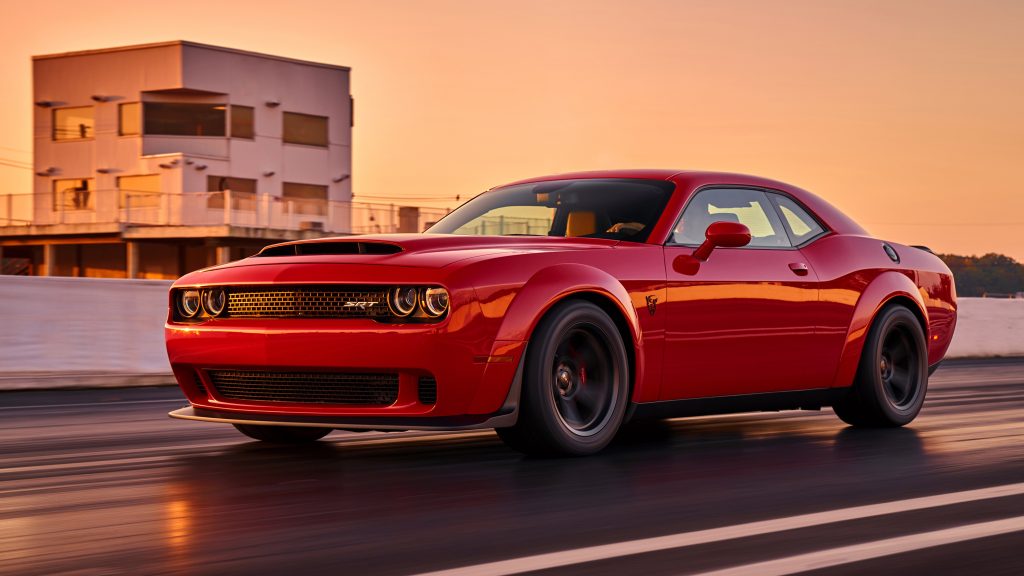
7. 2018 Dodge Challenger SRT Demon
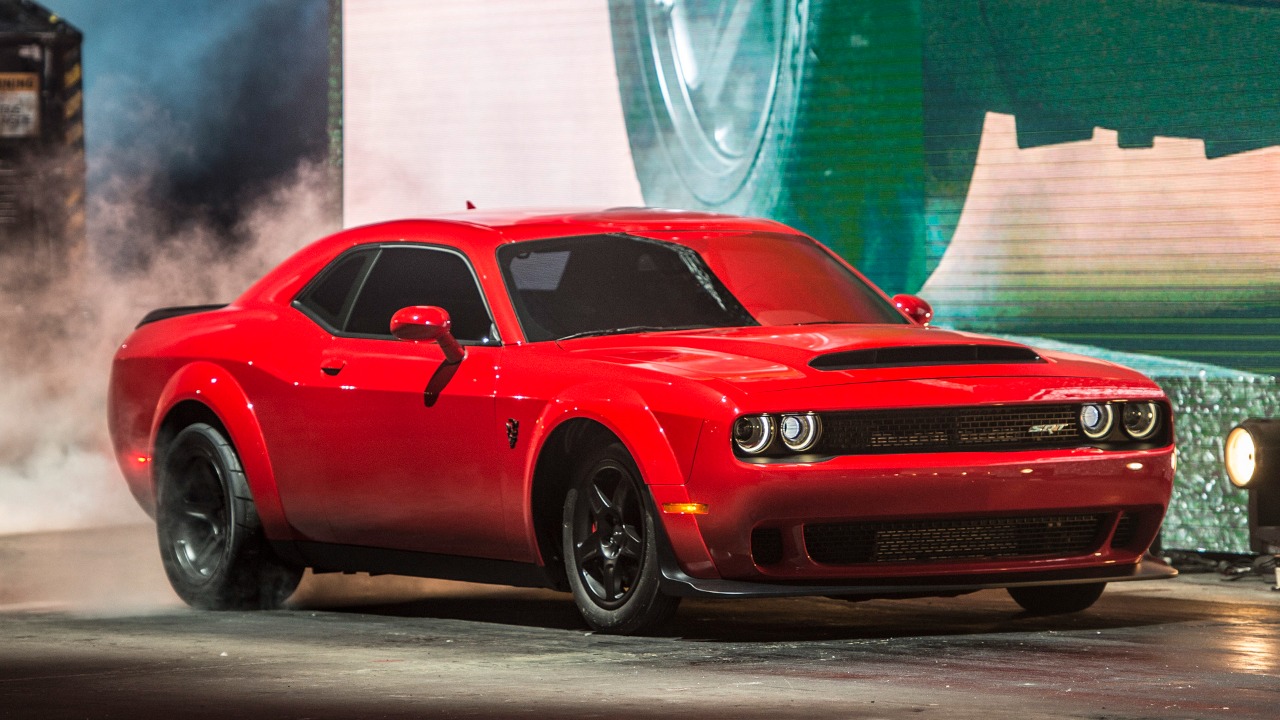
The Dodge Challenger SRT Demon was collectible almost from the beginning because Dodge deliberately built it as a limited-production machine. Unlike a normal Challenger variant that could remain in production for years, the Demon was announced with a strict production limit, turning every example into a finite piece of Dodge performance history.
Dodge built 3,300 Demons for the United States and Canada, with 3,000 allocated to the U.S. market and 300 to Canada. Production ended after the 2018 model year. That limited run is one of the central reasons the Demon remains significant among modern American performance cars.
Its mechanical specifications were equally extraordinary. The supercharged 6.2-liter HEMI V8 produced 840 horsepower when running on 100-octane fuel with the appropriate calibration, while the standard rating on 91-octane fuel was lower. Dodge listed 770 lb-ft of torque. The car used an eight-speed automatic transmission and rear-wheel drive.
The Demon also became famous for its drag-racing equipment. Dodge offered features such as a TransBrake, launch control, and specialized tires, while the car’s factory configuration was engineered around straight-line acceleration rather than traditional road-course handling.
That purpose made the Demon unusual even inside Dodge’s muscle-car range. It was not simply the most powerful Challenger at the time. It was built around a specific objective and given hardware designed to achieve it.
The cancellation added another layer of significance. Dodge later introduced other high-output Challenger variants, but the original Demon remained a one-year model. Once production stopped, no additional ordinary examples could dilute the limited 3,300-car supply.
That does not mean every Demon automatically appreciates. Mileage, modifications, accident history, and documentation remain important in the collector market. A heavily modified example can be viewed very differently from a low-mileage, factory-correct car.
Still, the combination of limited production, enormous factory output, and a single-model-year run gave the Demon collectible characteristics almost immediately.
8. 2019 Fiat 500 Abarth
The Fiat 500 Abarth demonstrates that a cancelled car does not have to be a supercar or a 700-horsepower muscle machine to develop collector interest. Fiat ended its U.S. passenger-car operation after the 2019 model year, leaving the 500 and its performance-oriented Abarth variant as products that would no longer receive new generations in the American market.
The Abarth was especially distinctive because it combined a tiny footprint with a turbocharged engine and aggressive chassis tuning. Its 1.4-liter MultiAir turbocharged four-cylinder produced 160 horsepower and 170 lb-ft of torque, with a five-speed manual transmission available.
Fiat positioned the Abarth as a performance version of the 500, adding sport suspension tuning, larger brakes, and aggressive exterior details.
The car’s importance in the U.S. market comes from how different it was from the typical American performance car. Rather than relying on displacement, the Abarth used a small turbocharged engine and a lightweight body. Its short wheelbase and compact dimensions made it feel completely different from larger sports cars.
Fiat’s decision to withdraw from the U.S. market made the American-market Abarth a finite product. There would be no direct U.S. successor carrying the same combination of Italian styling, tiny dimensions, and turbocharged four-cylinder power.
That alone does not make every Abarth a valuable collectible. Production numbers were far higher than those of genuinely rare supercars, and many examples were sold as affordable enthusiast cars. However, discontinued status can become meaningful when combined with a distinctive mechanical package.
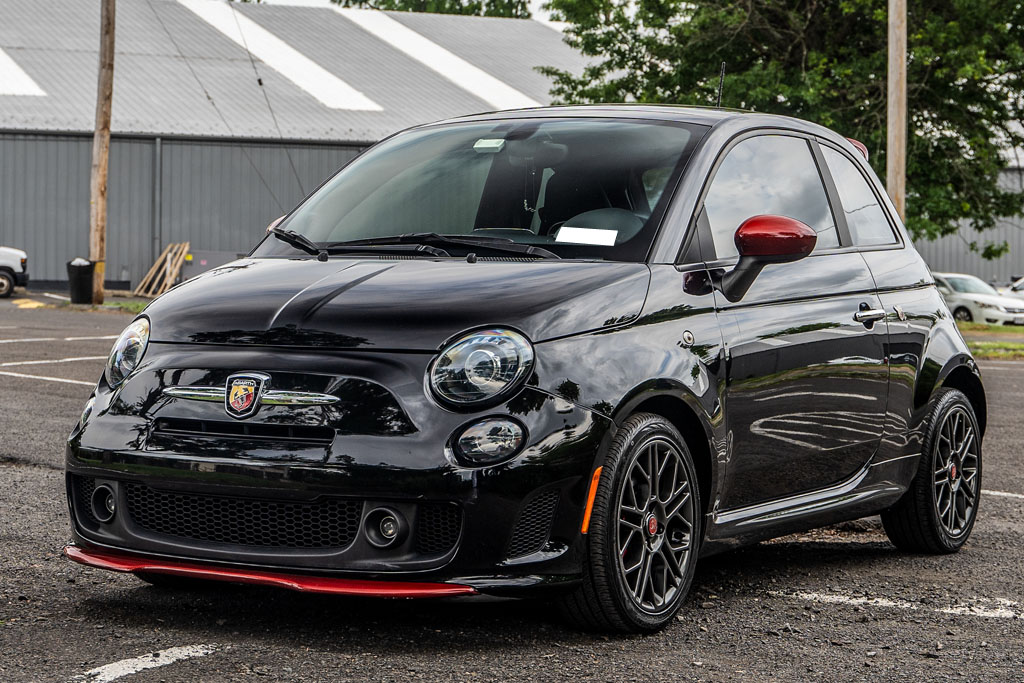
The Abarth also represents a particular period in the U.S. market when small European performance cars had a stronger presence. Today, finding a new American-market car with this exact formula is considerably more difficult.
Its potential collector appeal therefore comes from identity rather than extraordinary rarity. It is a record of a specific Fiat product strategy in the United States, and the end of that strategy ensured that the original U.S.-market Abarth could never be replaced by another identical generation.
