Family vehicles are designed to carry passengers, but newer crash tests have exposed an important safety gap. The second row has not always received the same advanced restraint technology found in the front seats.
IIHS added a rear dummy to its moderate-overlap front crash test because research showed that rear-seat occupants can face greater fatal-injury risk than belted front occupants in newer vehicles.
The issue is usually not a weak cabin. Instead, belt forces, belt positioning, occupant movement, and limited rear-seat restraint technology can increase injury risk. These 11 family vehicles illustrate that problem through documented U.S. crash-test results.
1. Honda Odyssey
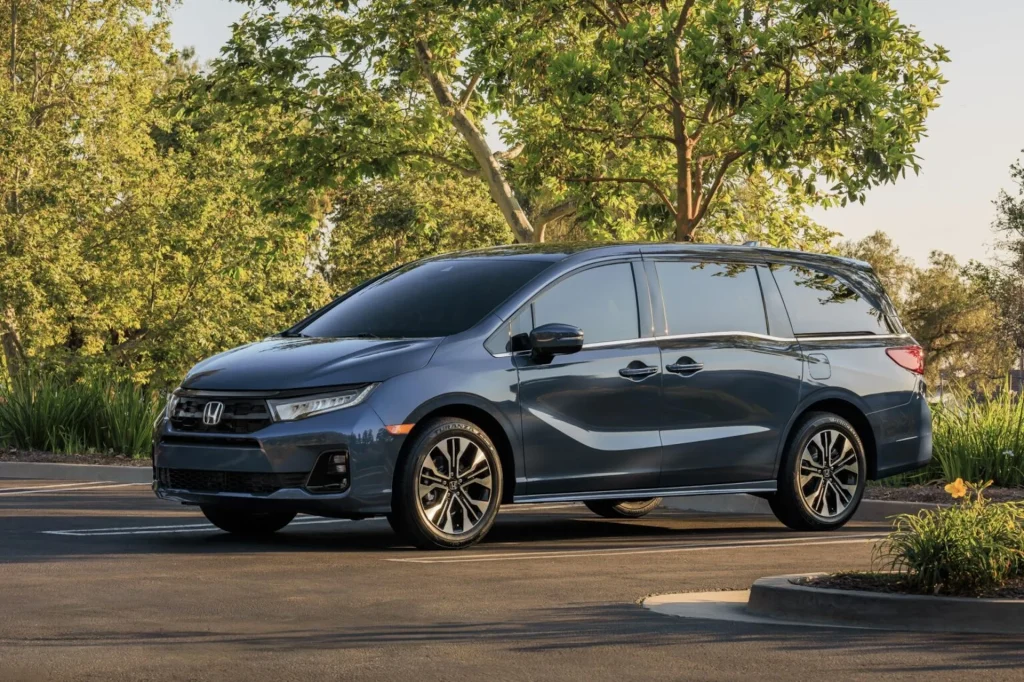
The Honda Odyssey is designed almost entirely around family transportation, which makes its rear-seat crash-test result particularly noteworthy. In IIHS’s updated moderate-overlap front test, the 2023 Odyssey received a poor rating, despite providing strong protection to the driver.
The structure and safety cage earned a Good rating, while the driver’s head and neck, chest, knee and thigh, leg and foot, and restraint performance were all rated Good.
The second row was a different story. IIHS rated the rear passenger’s head and neck protection as poor, while chest protection was marginal. The rear passenger’s thigh measurement was good, but the restraint and dummy-kinematics category received an acceptable rating.
IIHS noted that the rear dummy’s head came too close to the front seatback during the crash, increasing the potential for head injury.
The finding is significant because the Odyssey’s second row is one of the vehicle’s most important passenger areas. Families routinely use its removable or configurable seating for children and adults, making rear restraint performance more than a theoretical concern.
The test also demonstrates why an excellent driver-focused crash result does not automatically translate into equally strong protection behind the driver. IIHS specifically developed this evaluation to expose that difference.
For the tested generation, Honda’s 3.5-liter V6 produced 280 horsepower and 262 lb-ft of torque.
2. Kia Carnival
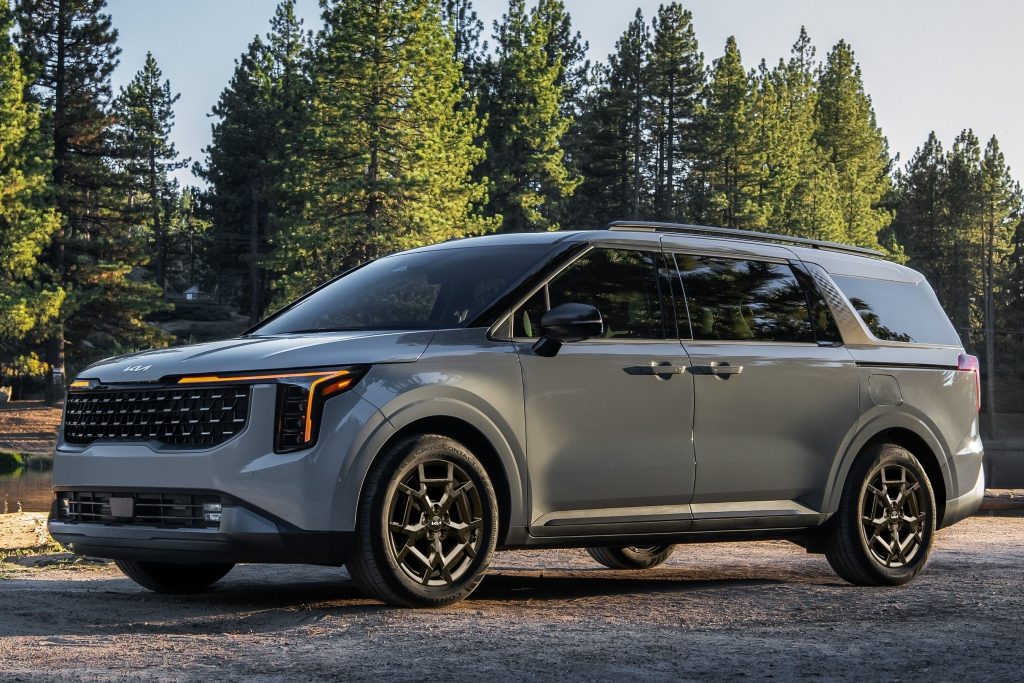
The Kia Carnival looks like a minivan alternative, but its family-focused cabin did not translate into a strong second-row result in IIHS testing. The 2023 Carnival earned a marginal rating in the updated moderate-overlap front crash test.
Protection for the front occupant was considerably stronger. The structure and safety cage earned Good ratings, along with the driver’s head and neck, chest, knee and thigh, leg and foot, and the vehicle’s restraint performance.
The rear passenger’s results reveal where the vehicle struggled. Head and neck protection was rated Marginal, while chest protection was also Marginal. The rear thigh measurement was good, but the rear restraints and dummy kinematics received an acceptable rating.
IIHS specifically identified elevated forces on the rear dummy’s neck as a concern. The organization also noted excessive seat-belt forces on the rear occupant’s chest. Those measurements help explain why the Carnival did not achieve an acceptable or good rear-seat result despite its strong structural performance.
That distinction is worth emphasizing for family buyers. The Carnival’s cabin was not collapsing around the occupants, and its front-seat crash performance was strong. The issue centered on how the restraint system managed the rear occupant during the collision.
The U.S.-market Carnival used a 3.5-liter V6 producing 290 horsepower and 262 lb-ft of torque, paired with an eight-speed automatic transmission.
3. Chrysler Pacifica
The Chrysler Pacifica is another family-focused vehicle where the second row exposed limitations that were not apparent from the driver’s side of the crash test.
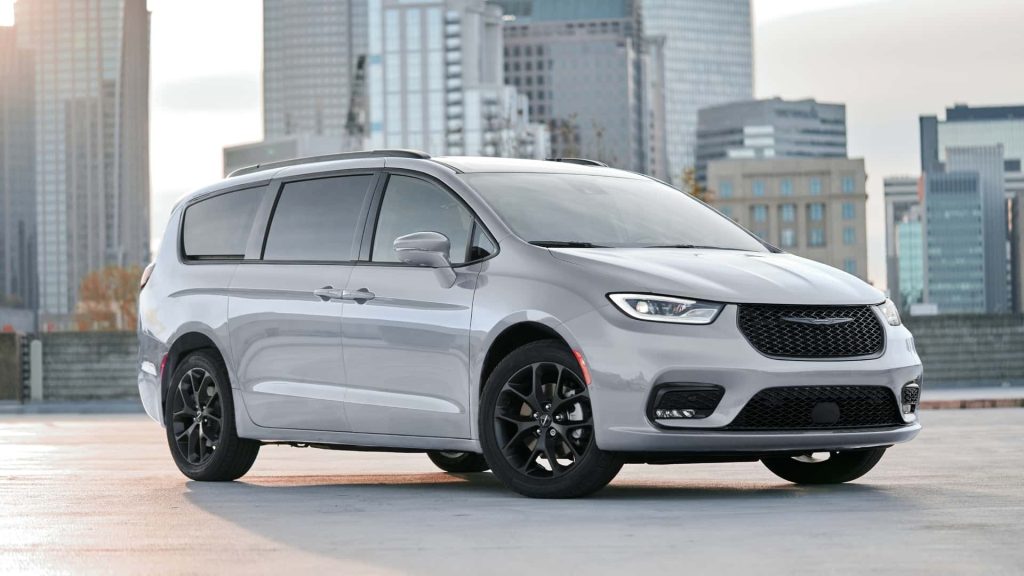
In IIHS’s updated moderate-overlap front evaluation, the 2023 Pacifica received a marginal rating. Its structure and safety cage were rated good, and the driver received good ratings for head and neck, chest, thigh and hip, leg and foot protection, as well as restraints and dummy movement.
The rear passenger was the concern. Head and neck protection was rated acceptable, while chest protection was marginal. The rear thigh measurement was good, and the rear restraints and dummy kinematics received an acceptable rating.
IIHS identified excessive belt forces on the rear dummy’s chest as one of the reasons the Pacifica fell short of a stronger rear-seat result.
There was also a separate issue during the test involving the Pacifica’s side curtain airbag, which did not deploy. That did not change the updated moderate-overlap rating itself, but it illustrates why individual crash-test observations can matter beyond the headline grade.
The Pacifica’s result is especially relevant because its second row is frequently occupied by children and adults. IIHS has emphasized that the updated test was developed after research found that front-seat safety improvements had advanced faster than rear-seat restraint technology.
For the 2023 U.S. model, Chrysler’s standard powertrain was a 3.6-liter Pentastar V6 producing 287 horsepower and 262 lb-ft of torque.
4. Toyota Sienna
The Toyota Sienna produced the strongest rear-seat result among the four minivans evaluated by IIHS in 2023, but it still did not receive a Good rating. The 2023 Sienna was rated marginal in the updated moderate-overlap front test.
Its driver-side performance was much stronger, with good ratings for structure and safety cage, driver head and neck, chest, thigh and hip, and driver restraints and dummy movement. Leg and foot protection was rated acceptable.
The rear passenger’s head and neck protection was actually good, and the thigh measurement was also good. The weakness appeared in chest protection, which was marginal, while rear restraints and dummy kinematics were rated poor.
The rear dummy submarined beneath the lap belt, and the shoulder belt moved away from its ideal position toward the dummy’s neck.
That result is particularly notable because the Sienna was the only minivan in the original group equipped with rear-seat belt pretensioners and force limiters. Those systems are designed to manage belt forces more effectively, yet the dummy’s movement still produced a concerning result.
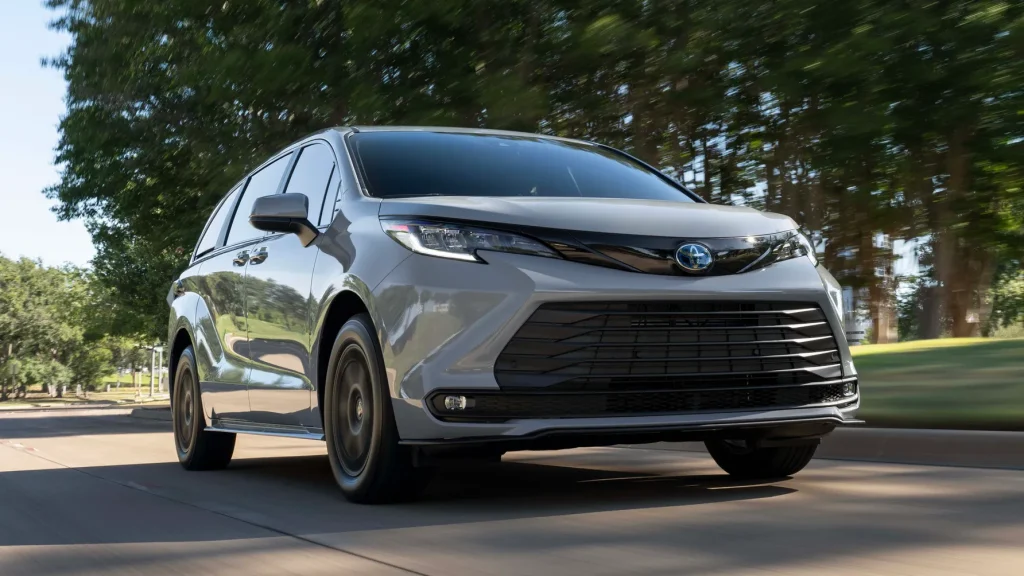
There is also a current-rating caveat. IIHS adjusted its evaluation criteria in 2024, and Sienna’s chest injury component changed from marginal to acceptable under the revised methodology.
The historical test remains useful for understanding the weaknesses found in the original evaluation. Unlike the other minivans in this group, the Sienna uses a hybrid-only powertrain in the U.S.
5. Volkswagen Atlas
The Volkswagen Atlas is one of the more revealing examples because its driver protection remained strong while several rear-seat measurements fell short. IIHS tested a 2022 Atlas SEL R-Line 4WD, with the result applying to 2022 through 2025 models.
The structure and safety cage received a Good rating, and the driver’s head and neck, chest, thigh, and hip measurements were also Good. Leg and foot protection, however, was marginal.
The second row presented another set of concerns. Rear head and neck protection was acceptable, chest protection was marginal, and rear restraints and dummy kinematics were acceptable.
IIHS measured 6.2 kN of shoulder-belt tension and a chest index of 40 for the rear dummy. The Institute also noted that the rear dummy’s head came close to the front seatback during the crash.
That combination explains why the Atlas received a marginal result under the updated test. The problem was not a collapsing passenger compartment. Instead, the restraint system and rear occupant movement created measurable concerns despite a structurally strong cabin.
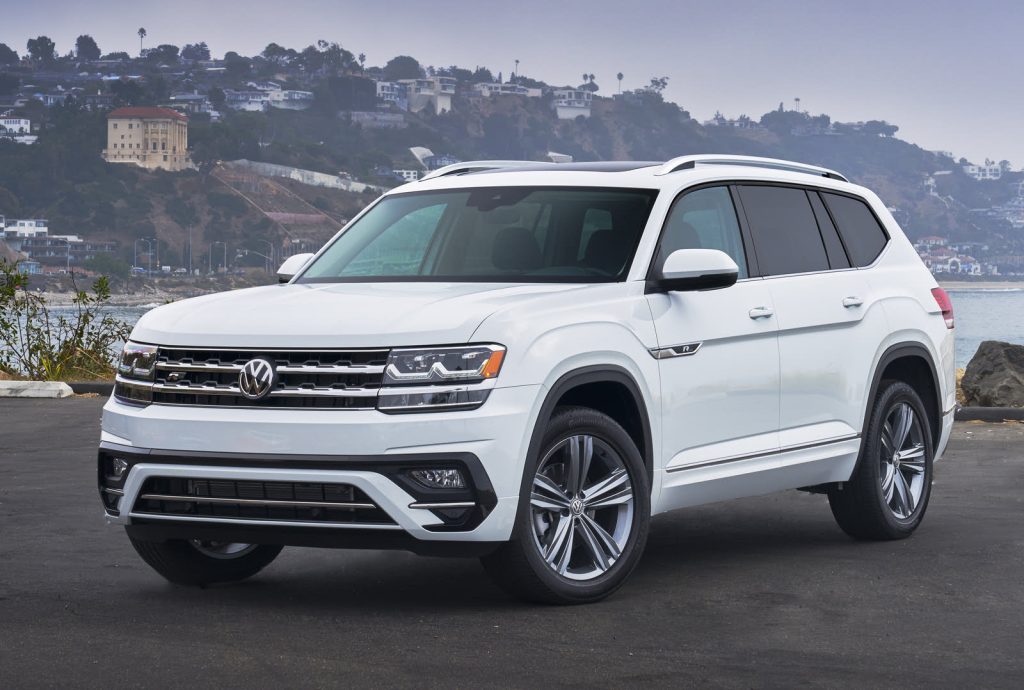
For a three-row family SUV, the distinction matters. The Atlas offers substantial passenger space, but the IIHS test shows that available room and crash protection are separate considerations. Parents looking at a used Atlas should pay attention to the specific model years covered by the test rather than assuming the result applies to every Atlas generation.
The tested U.S. Atlas used Volkswagen’s 3.6-liter VR6, producing 276 horsepower and 266 lb-ft of torque.
6. Ford Explorer
The Ford Explorer gives this list a useful contrast because it was one of only four midsize SUVs in IIHS’s original 13-vehicle evaluation to earn a Good rating in the updated moderate-overlap front test. The tested Explorer covered 2022 through 2023 models, and the strong result extended beyond the front occupant.
The rear passenger received good ratings for head and neck, chest, and thigh protection. The restraint and dummy-kinematics category was acceptable, preventing a completely clean rear-seat assessment.
IIHS noted that the rear dummy’s head approached the front seatback, which creates some additional head-injury concern even though the measured injury values remained within good limits.
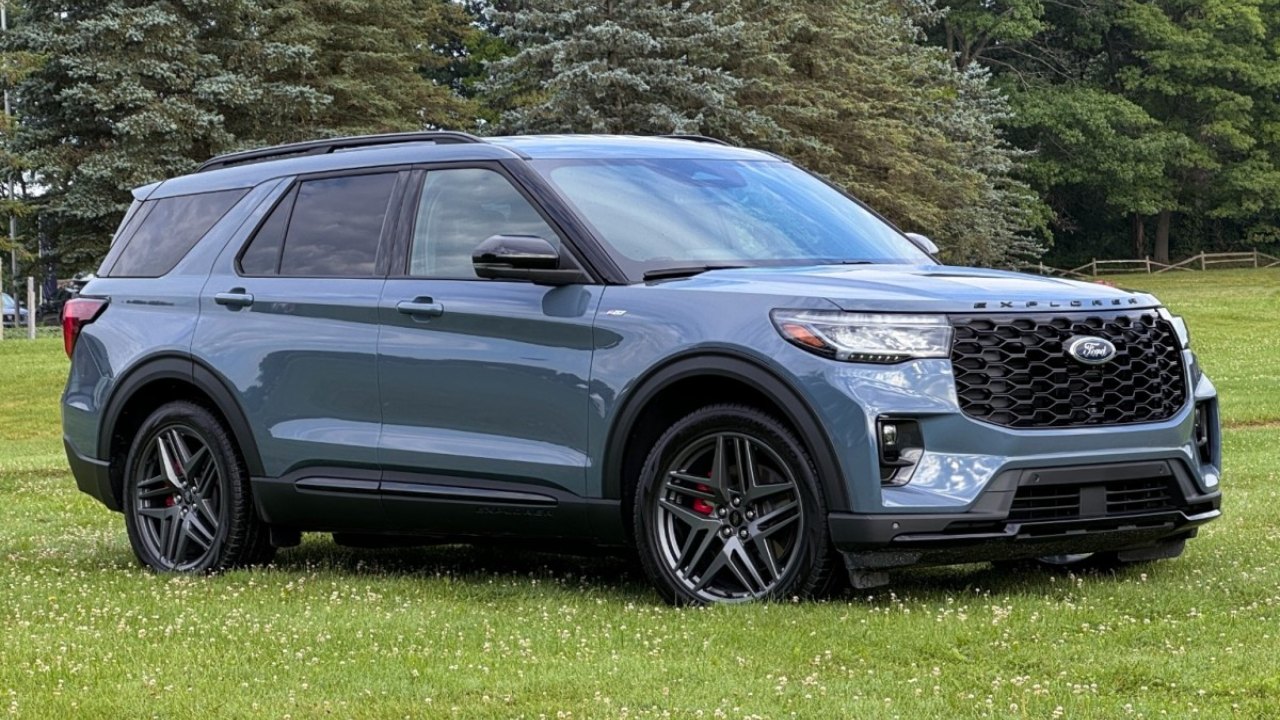
The driver’s side performed even better. The structure and safety cage, driver injury measurements, and driver restraints all received Good ratings. The Explorer illustrates what the updated test is designed to uncover. A vehicle can provide strong protection for occupants in both rows while still showing room for improvement in how occupants move during a crash.
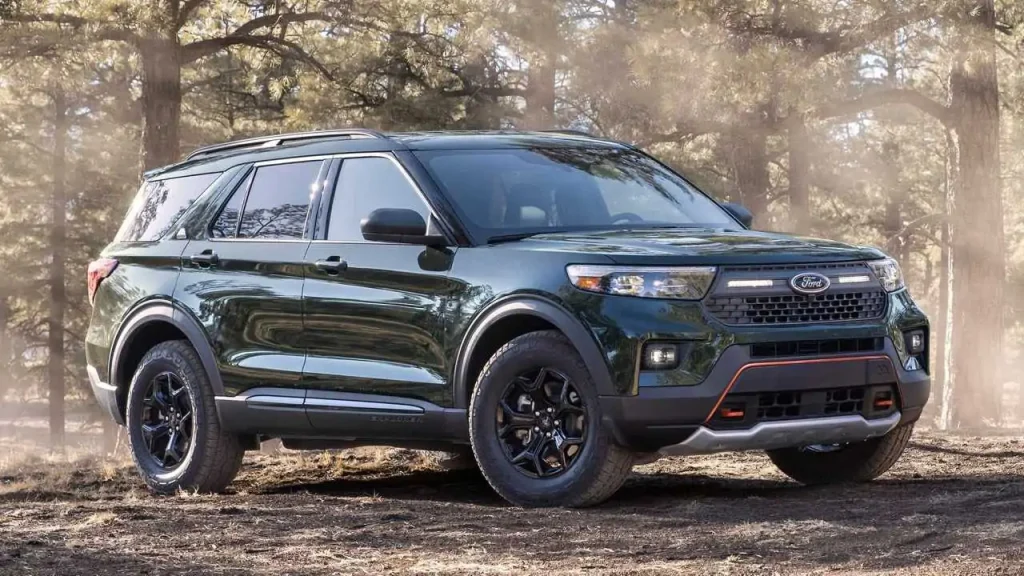
The Explorer is also a genuine family-oriented three-row SUV rather than a compact crossover. Ford’s 2.3-liter EcoBoost four-cylinder was rated at 300 horsepower and 310 lb-ft of torque in the relevant U.S. model years, giving the vehicle substantial power without requiring the V6 available in higher trims.
7. Chevrolet Traverse
The Chevrolet Traverse demonstrates why a roomy family cabin does not automatically mean equally strong protection in every seating position. In IIHS testing of the 2022 to 2023 Traverse, the vehicle earned a marginal rating in the updated moderate-overlap front crash test.
Its structure and safety cage were rated Good, and most of the driver’s injury measurements were also Good. However, the driver’s head and neck and restraint performance were acceptable.
The second row revealed a different set of concerns. Rear head and neck protection was marginal, while chest protection was also marginal.
The rear passenger’s thigh measurement was good, and rear restraints and dummy movement were rated good. IIHS also reported that the driver’s head struck the steering wheel hard through the airbag, an issue separate from the rear-seat measurements.
For a three-row crossover, the result matters because the second row is likely to carry adults, older children, and child seats on a regular basis. The test does not mean that every real-world crash will produce the same injuries, but it does identify measurable weaknesses under a standardized 40-mph frontal collision.
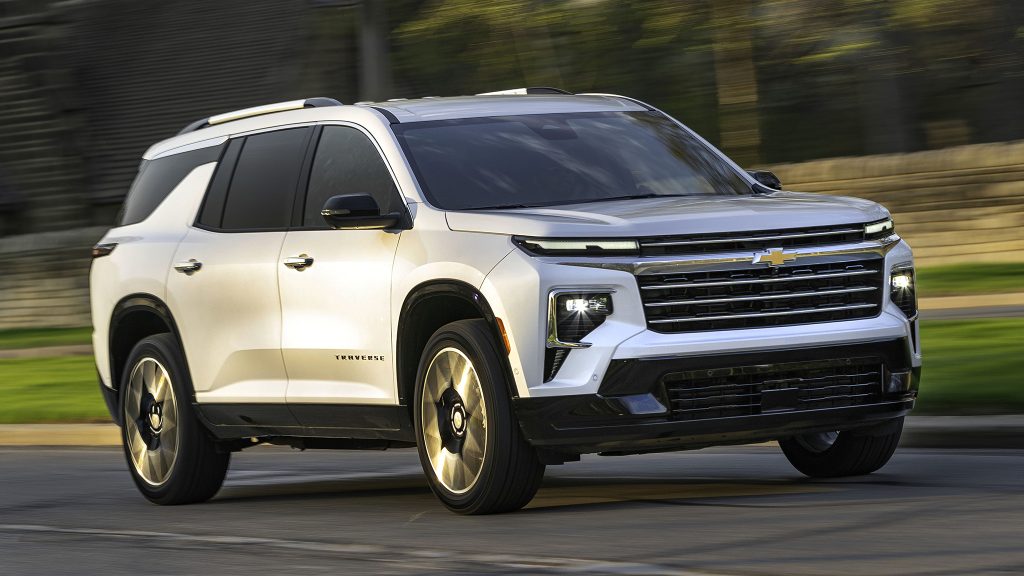
The 2023 Traverse used GM’s 3.6-liter V6, producing 310 horsepower and 266 lb-ft of torque. Its substantial 205.9-inch length also reflects the vehicle’s family-oriented packaging.
8. Toyota Highlander
The Toyota Highlander presents a particularly interesting second-row issue because its actual rear injury measurements were largely favorable.
In IIHS’s updated moderate-overlap test covering 2022 to 2023 Highlander models, the structure and safety cage earned Good ratings, while the driver’s head and neck, chest, thigh and hip, leg and foot, and restraints were all rated Good.
Behind the driver, head and neck, chest, and thigh protection were also good. The problem was the rear restraint system and dummy movement, which received a poor rating. During the crash, the rear dummy’s lap belt moved away from its intended position and allowed the dummy to move in a way that raised concerns about abdominal injury.
That makes the Highlander different from vehicles where poor rear protection comes from high measured injury values. Here, the injury measurements were comparatively strong, but the way the occupant moved during the collision prevented a stronger assessment.
The finding is particularly relevant to the Highlander because Toyota positions it as a family-oriented three-row SUV. The vehicle’s second row can be used with child restraints or adult passengers, so restraint behavior is an important part of the safety equation.
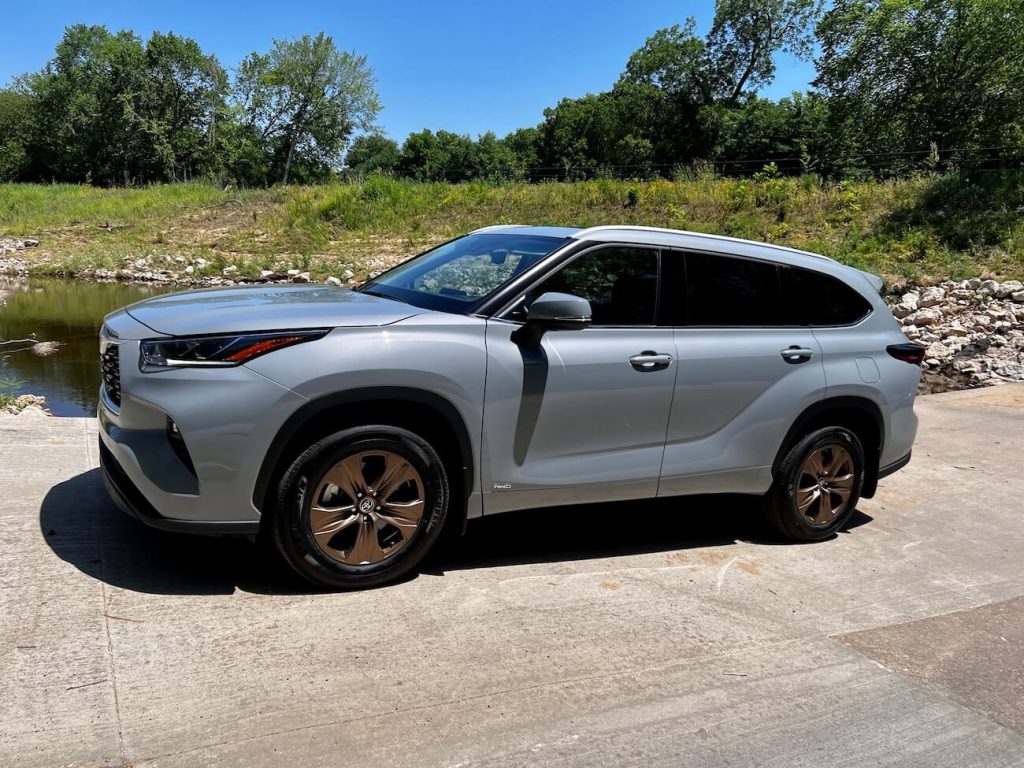
For the relevant U.S. model year, the gasoline Highlander used a 3.5-liter V6 producing 295 horsepower and 263 lb-ft of torque. The later Highlander lineup moved increasingly toward hybrid powertrains, so buyers should match specifications to the exact model year.
9. Subaru Ascent
The Subaru Ascent is an important exception in this group because its original IIHS result was Good, placing it among the small number of midsize SUVs that demonstrated strong protection for both seating positions.
The updated moderate-overlap test gave the Ascent Good ratings for structure and safety cage, driver injury measurements, and rear passenger injury measurements. Rear head and neck, chest, and thigh protection were all rated good.
There was still one qualification. Rear passenger restraints and dummy kinematics received an acceptable rating, meaning occupant movement was not quite as controlled as the strongest possible result.
IIHS revised its scoring methodology in 2024, and the Ascent’s rating changed from Good to Acceptable under the updated criteria. This change highlights why both the model year and testing methodology matter when comparing the safety performance of family vehicles.
The Ascent’s strong rear injury measurements remain significant. Unlike several SUVs in this test group, it avoided the major rear chest and head injury concerns that caused poor ratings elsewhere.
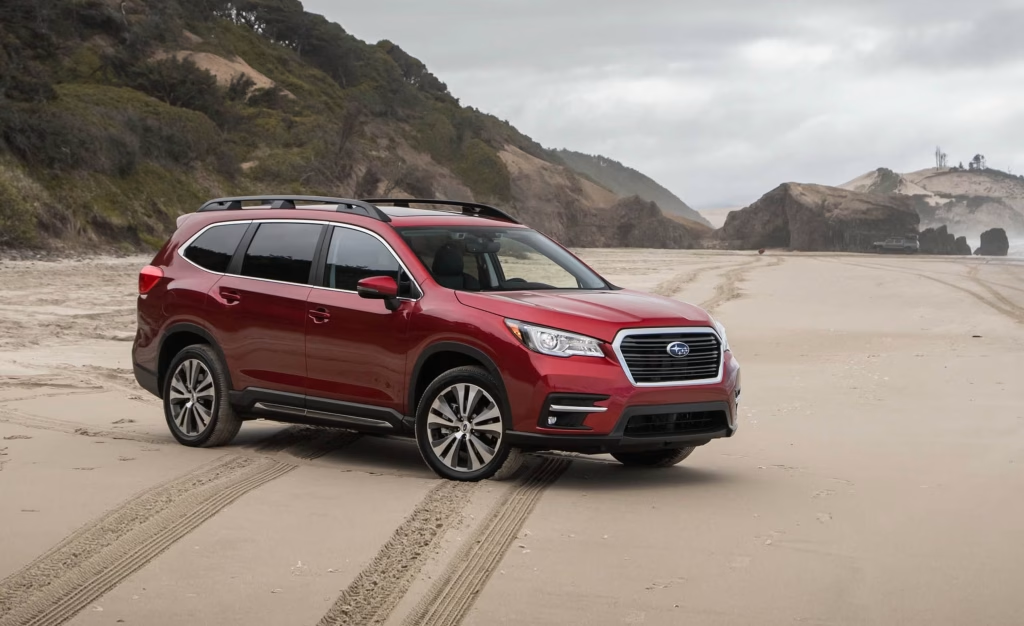
As a three-row SUV with standard all-wheel drive, the Ascent was designed specifically for families needing additional passenger capacity without moving to a full-size vehicle.
The relevant U.S. powertrain uses Subaru’s turbocharged 2.4-liter boxer four-cylinder.
10. Tesla Model Y
The Tesla Model Y is another unusual entry because it earned a Good rating in IIHS’s original updated moderate-overlap test despite being a two-row crossover rather than a traditional three-row family vehicle.
Both the driver and rear passenger performed well across the major injury measurements. IIHS rated the rear passenger’s head and neck, chest, and thigh protection as good.
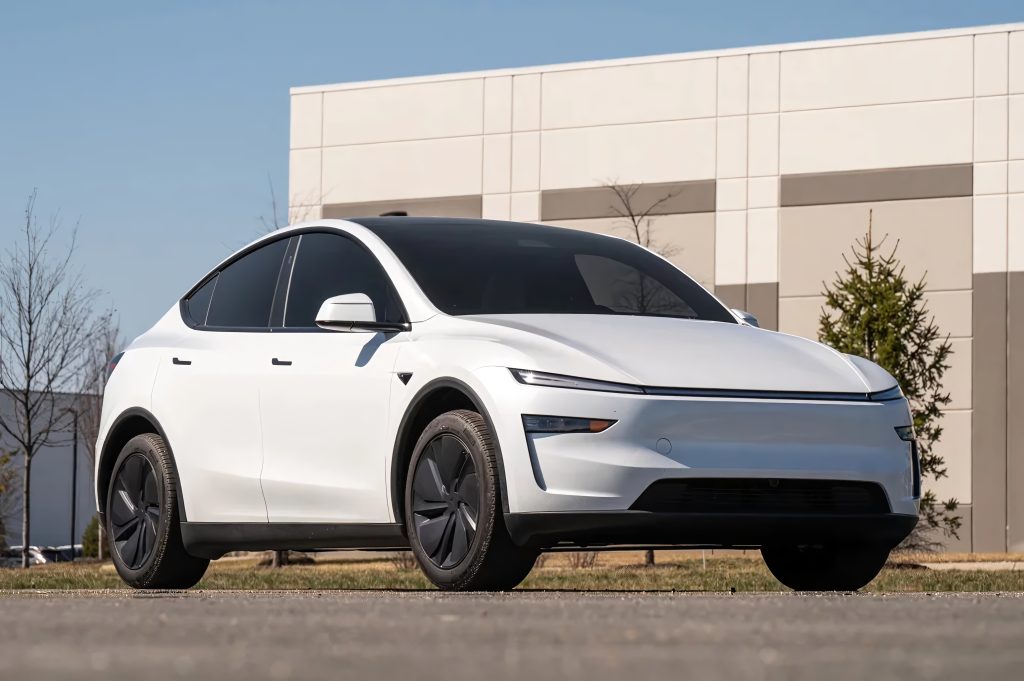
The rear restraint and dummy-kinematics category received an acceptable rating, however. IIHS noted that the rear dummy’s head approached the front seatback during the crash. That prevented the Model Y from receiving the strongest possible assessment for every rear-seat category, even though the measured injury values were favorable.
What makes the Model Y particularly interesting is its packaging. The vehicle has no conventional gasoline engine under the hood, allowing Tesla to create a relatively open passenger compartment while keeping the battery pack low in the vehicle. But the IIHS test focuses on measured occupant protection, not simply the amount of interior space.
The Model Y’s exact power figures vary by version, and Tesla does not publish official U.S. horsepower and torque figures for every configuration. For that reason, those figures should not be presented as precise factory specifications.
11. Mazda CX-9
The Mazda CX-9 provides another clear example of a family SUV where second-row protection fell behind that of the driver’s seat. In IIHS’s updated moderate-overlap front crash test, the 2021 to 2023 CX-9 received a Poor rating despite the occupant compartment performing strongly.
The structure and safety cage earned Good ratings, and the driver’s head and neck, chest, thigh and hip, leg and foot, and restraint performance were all rated Good.
The rear passenger measurements explain the downgrade. IIHS rated rear head and neck protection. Poor, while chest protection was marginal.
The rear thigh measurement was good, and the rear restraint and dummy-kinematics category was good. The Institute also reported high rear shoulder-belt tension, which contributed to elevated chest injury measurements.
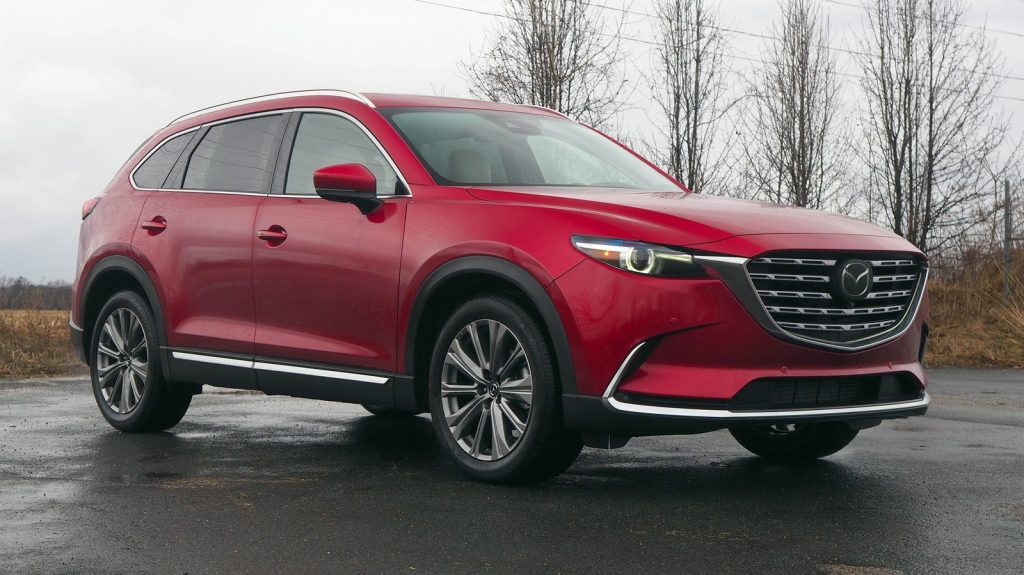
The CX-9’s result is especially significant because its rear restraint system did not fail in every category. Instead, the biggest problem was the combination of high belt forces and elevated head and neck injury risk. IIHS’s test is designed to expose these differences between front and rear seating positions.
For a three-row family SUV, that distinction matters. The CX-9 offers substantial passenger space, but its crash-test results show that interior room and occupant protection are not interchangeable.
The result applies to the tested generation, so it should not automatically be transferred to Mazda’s newer CX-90. The U.S. CX-9 used a turbocharged 2.5-liter four-cylinder engine.