
Installing a child safety seat should not require digging through thick seat cushions or guessing which metal loop is the correct anchor. The Insurance Institute for Highway Safety evaluates LATCH, short for Lower Anchors and Tethers for Children, specifically to determine how easy the hardware is to find, reach, and use.
The evaluation examines lower-anchor depth, clearance, attachment force, tether-anchor location, and the presence of confusing nearby hardware. Vehicles can earn a Good or Good+ rating, with Good+ recognizing additional easy-to-use LATCH positions. These 10 vehicles stand out for making child-seat installation less complicated.
1. Toyota Corolla
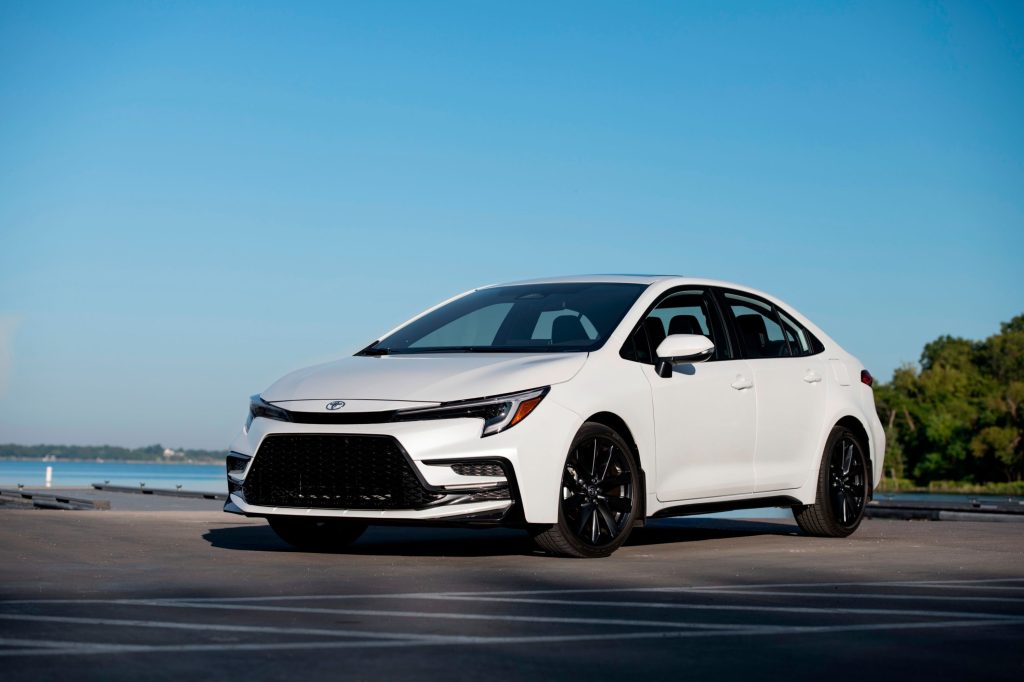
The Toyota Corolla earns a Good+ LATCH ease-of-use rating from IIHS, and its rating applies to the 2020 through 2026 model years. That places the compact sedan among the vehicles whose child-seat attachment hardware meets IIHS requirements while also offering additional flexibility for families.
For the tested configuration, IIHS identifies two rear seating positions with complete LATCH hardware. The third rear position has a tether anchor and can borrow lower anchors from the neighboring positions.
This arrangement gives parents more possibilities when deciding where to install a child restraint, although borrowing anchors means those anchors cannot simultaneously be used in their original designated positions.
The IIHS evaluation examines several physical characteristics rather than simply checking whether the vehicle has metal attachment points. Lower anchors must not be buried too deeply in the seat, must provide sufficient clearance for the child-seat connector, and must not require excessive force to attach.
The tether anchor must also be reasonably accessible and positioned where it can be identified without confusion.
That distinction matters because a vehicle can technically have LATCH hardware while still making installation frustrating. IIHS specifically developed these evaluations after research found that difficult-to-access anchors can contribute to installation problems.
The Corolla’s Good+ rating also reflects the extra LATCH flexibility beyond the two positions required for a basic Good rating. For parents regularly moving a child seat between seating positions, that additional usability can be particularly useful.
2. Toyota Prius
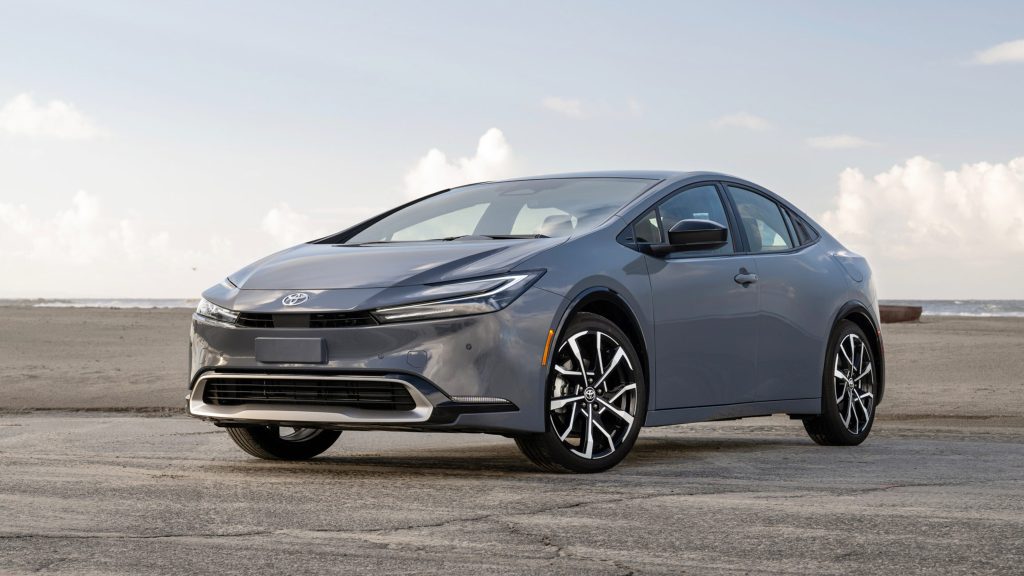
The Toyota Prius takes the practical side of child-seat installation seriously, earning a Good+ rating for LATCH ease of use from IIHS for the current generation.
The 2026 Prius provides two rear seating positions with complete LATCH attachment hardware, while the center position has a tether anchor and the ability to borrow lower anchors from the adjacent positions.
IIHS records several specific characteristics at each rated position. For the Prius, the evaluated lower anchors are described as not too deep in the seat, requiring not too much force to attach, and providing enough room to maneuver the connector around the anchor.
The tether anchors are also identified as being in easy-to-find locations without other hardware that could be mistaken for the correct attachment point.
The center position deserves particular attention. The Prius can use borrowed lower anchors for that seating location, giving parents another possible arrangement when the child restraint needs to sit in the middle.
However, IIHS notes that borrowed anchors cannot be used in their designated positions at the same time, so the arrangement has practical limitations.
The Good+ designation is not simply a statement that the Prius has LATCH. IIHS awards the rating when a vehicle meets the requirements for Good and provides additional qualifying LATCH capability. In a two-row vehicle, that extra flexibility can include a usable center position.
For families, the benefit is simple. The attachment points are designed to be easy to access rather than buried deep between the seat cushion and seatback. This can make it easier to align the child-seat connectors properly without excessive searching or force.
3. Nissan Sentra
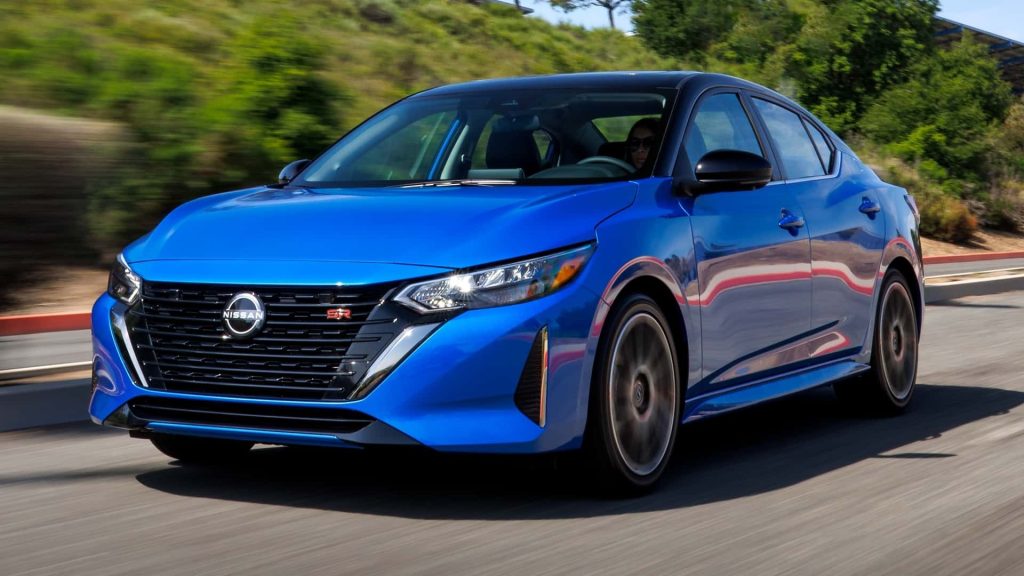
The Nissan Sentra is one of the more interesting entries because its compact dimensions do not prevent it from offering a Good+ LATCH ease-of-use rating from IIHS.
The current Sentra has two rear seating positions with complete LATCH hardware, plus a third position with a tether anchor and the ability to borrow lower anchors from the neighboring positions. That gives parents additional installation flexibility, although borrowed anchors cannot be used simultaneously in their original positions.
IIHS examines the hardware itself rather than simply awarding credit because anchors exist. On the Sentra, the lower anchors are positioned so they are not too deep within the seat, the attachment process does not require excessive force, and there is enough room to maneuver a child-seat connector around the anchor.
The tether anchors are also evaluated for visibility and accessibility. IIHS records whether each tether anchor is easy to find and whether nearby hardware could be mistaken for it.
That distinction can make a real difference during installation. A parent dealing with a tightly packed rear seat does not want to push fingers deep between the cushion and seatback while trying to locate a metal anchor. The Sentra’s arrangement is designed to make that process more straightforward.
The center seating position is particularly useful for families who want a child restraint positioned between two passengers. However, the borrowed-anchor arrangement has to be understood correctly. Using those anchors for the center position means they are unavailable for their designated seating positions at the same time.
The Sentra therefore combines a relatively compact cabin with the extra LATCH flexibility that IIHS recognizes with its Good+ designation.
4. Hyundai Palisade
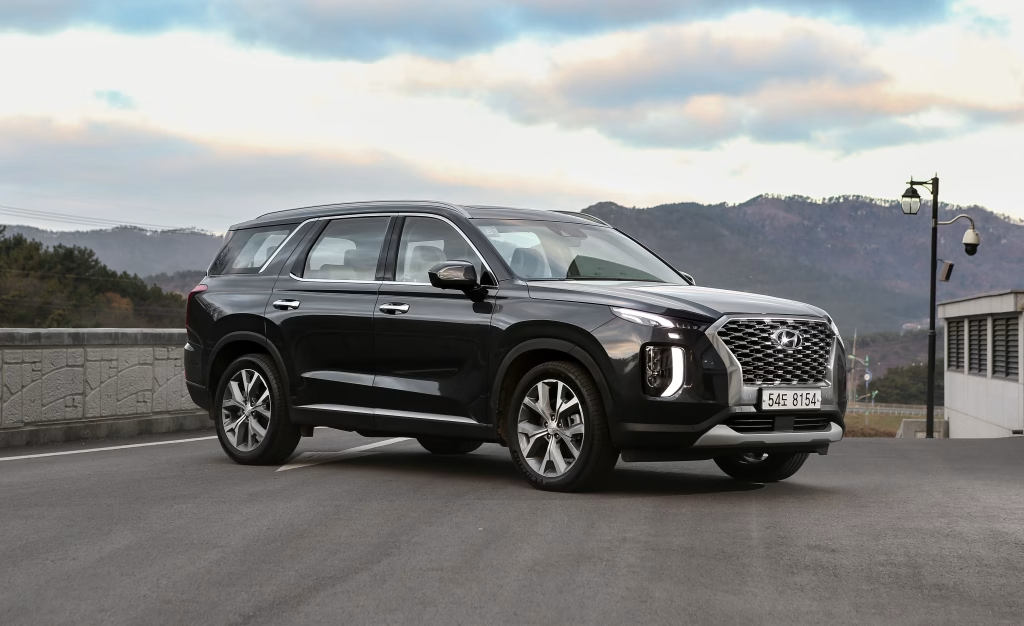
A completely different approach comes from the Hyundai Palisade. Rather than relying on borrowed anchors to add flexibility, the three-row SUV provides four rear seating positions with complete LATCH hardware, according to the IIHS evaluation.
It also has another seating position with a tether anchor only. The 2026 Palisade earns a Good+ LATCH ease-of-use rating.
That hardware count is significant for a three-row family SUV. Parents can have more than one child restraint installed without immediately running into the limitations found in vehicles with only two complete LATCH positions.
The IIHS evaluation also records the physical usability of the anchors, including whether lower anchors are buried too deeply, whether too much force is required to attach the child-seat connector, and whether there is sufficient room to maneuver around the anchor.
Tether-anchor placement is another part of the evaluation. IIHS records whether the tether is easy to locate and whether other nearby hardware could confuse.
This matters because the lower anchor and top tether perform different functions, and a clearly identifiable attachment point makes the installation process less prone to mistakes.
The Palisade’s three-row layout also gives it an unusual advantage in practical family use. Its additional seating positions mean parents have more choices when arranging multiple passengers and child restraints.
Not every seating position receives a separate rating if it relies only on a tether anchor, but the positions equipped with complete LATCH hardware are evaluated individually.
For a large family SUV, the combination of multiple complete LATCH positions and accessible attachment hardware is precisely the kind of arrangement IIHS rewards with its Good+ classification.
5. Mazda3
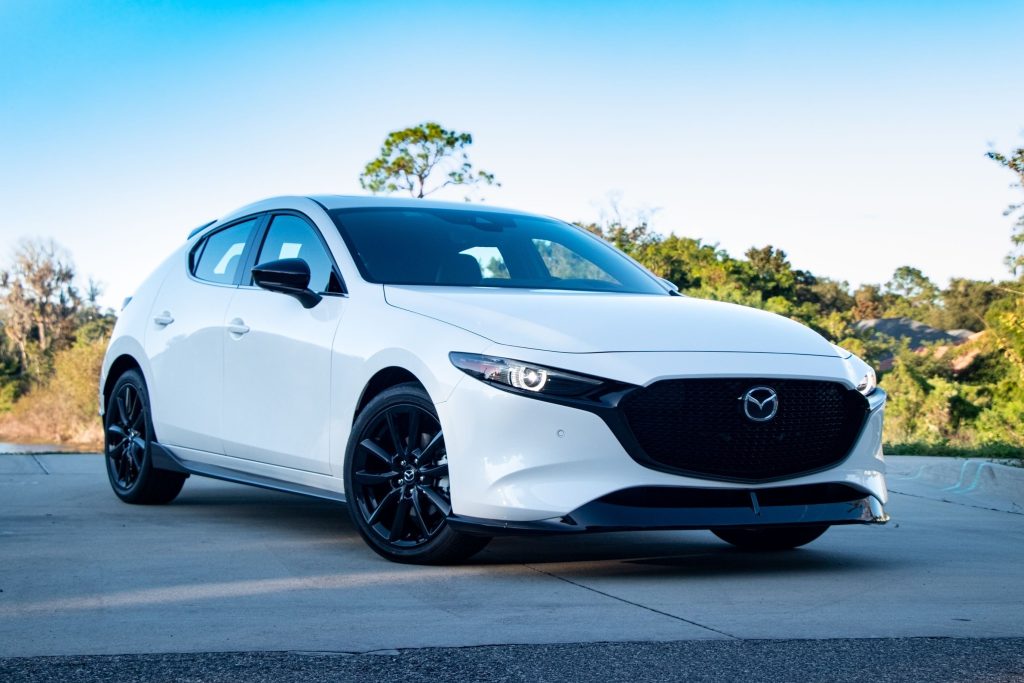
The Mazda3 earns a Good+ LATCH ease-of-use rating from IIHS, and its appeal comes from how the attachment hardware is positioned rather than from having an unusually large number of seating positions. The rating applies to the current generation, including the sedan and hatchback configurations evaluated by IIHS.
For the sedan, IIHS identifies two rear seating positions with complete LATCH hardware. There is also a third rear position with a tether anchor and the ability to borrow the lower anchors from the adjacent seating positions.
That creates an additional installation option, although the borrowed anchors cannot be used for their original positions at the same time.
The physical measurements help explain the Good+ result. IIHS checks whether the lower anchors are buried more than 0.79 inches below the seat surface, whether the attachment area provides enough clearance for the child-restraint connector, and whether the force needed to attach the connector remains below the testing threshold.
The Institute also checks tether-anchor placement and whether surrounding hardware could be mistaken for the tether.
The Mazda3’s evaluated anchors meet the relevant ease-of-use criteria. That means parents are not simply getting LATCH because the hardware exists. The anchors have to be physically accessible enough to make installation practical.
One useful detail is the center seating position. Its borrowed-anchor arrangement can provide another option for families, but parents need to understand the limitation before installing multiple child restraints. The system does not create additional lower anchors.
With its compact footprint and straightforward anchor arrangement, the Mazda3 shows how a smaller sedan can still provide the type of child-seat hardware accessibility that IIHS rewards with its highest LATCH rating.
6. Honda Pilot
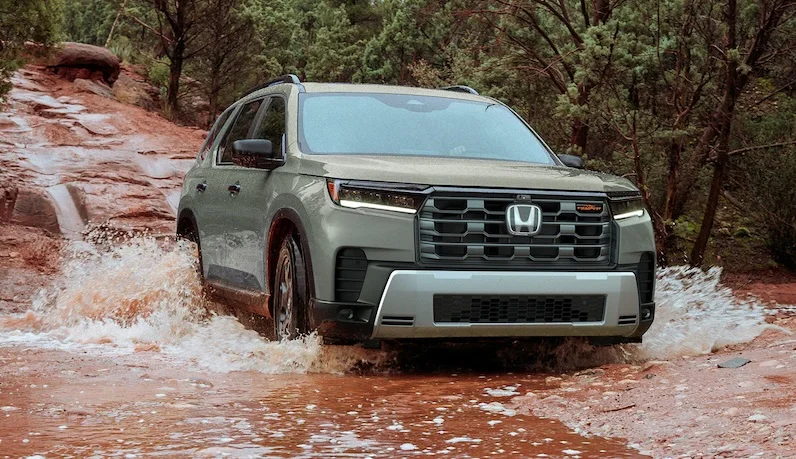
The Honda Pilot approaches LATCH usability from a family-focused angle, with four rear seating positions equipped with complete LATCH hardware in the configuration evaluated by IIHS.
Two additional positions have tether anchors, giving the three-row SUV a particularly broad range of child-restraint attachment points. IIHS gives the 2023-2026 Pilot a Good+ LATCH ease-of-use rating.
The numbers become more interesting when the individual positions are examined. IIHS found that the lower anchors in the tested positions were not too deeply recessed and did not require excessive attachment force. The anchor openings also provided sufficient clearance for the child-seat connectors.
The pilot does have one noteworthy difference from a vehicle where every tether location is equally straightforward. IIHS identifies the tether anchors as being in the middle portion of the seatbacks, and some positions have nearby hardware that could potentially be confused with the tether.
Honda addresses this by providing contrasting labels near those anchors. That labeling is part of the IIHS evaluation, which specifically considers whether confusing nearby hardware is clearly distinguished.
The Pilot’s strongest practical feature is its quantity of usable positions. A family with several children can configure multiple child restraints without being restricted to only two complete LATCH positions. IIHS’s Good+ methodology specifically recognizes additional usable LATCH capacity in three-row vehicles.
That makes the Pilot an interesting example because its rating is not based solely on anchor accessibility. The combination of accessible lower anchors, usable tether locations, and multiple complete LATCH positions contributes to its highest ease-of-use classification.
7. Nissan Rogue
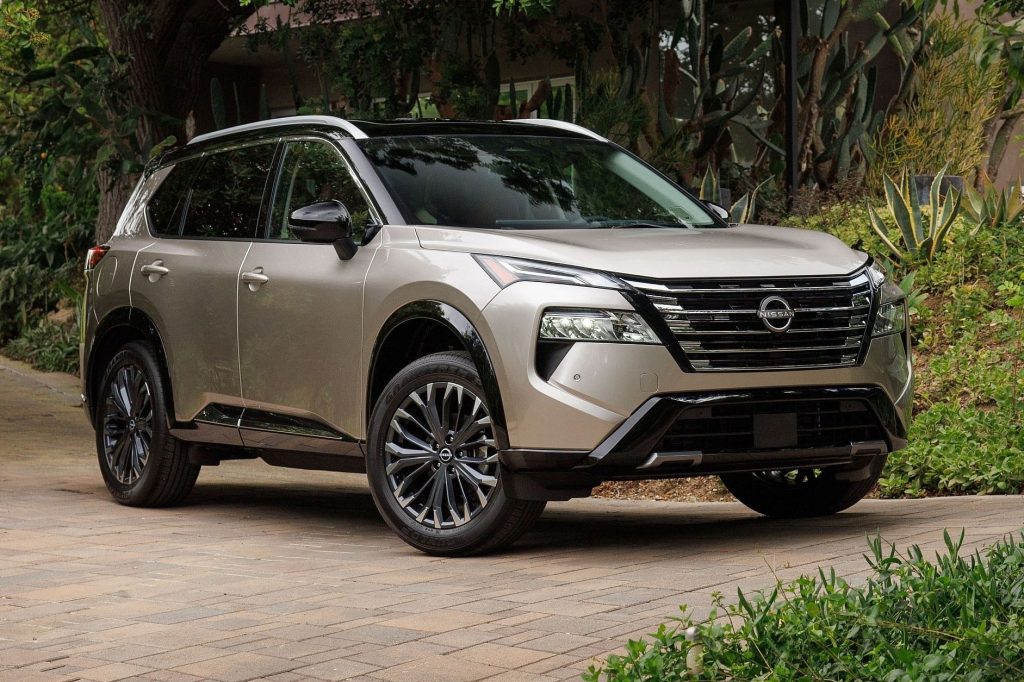
The Nissan Rogue earns a Good+ LATCH ease-of-use rating from IIHS, with the evaluation applying to the 2021 through 2026 models. Its design is especially interesting because the center rear position uses a combination of dedicated and borrowed hardware rather than receiving two completely independent lower anchors.
IIHS identifies two rear seating positions with complete LATCH hardware. The additional center position has a tether anchor, one lower anchor of its own, and the ability to borrow the second lower anchor from another seating position.
IIHS does not rate seating positions that rely on borrowed hardware separately, but this arrangement contributes to the vehicle’s additional LATCH flexibility. When an anchor is borrowed, it cannot simultaneously serve its original seating position.
The measured details show why the Rogue receives its Good+ designation. In the tested outer positions, the lower anchors are visible, require 0 pounds of attachment force, and provide clearance angles of 72 to 87 degrees depending on the individual anchor.
The IIHS evaluation also records the tether anchors as easy to find, with no confusing nearby hardware.
That level of detail is important because LATCH usability is not simply about counting metal loops. IIHS considers how accessible those loops are, how much force is required to attach a child-seat connector, and whether there is enough room to maneuver the connector into place.
For parents, the Rogue’s arrangement offers useful flexibility without requiring them to search through heavily buried seat hardware. The center position does require an understanding of Nissan’s shared-anchor arrangement, but the two primary LATCH positions provide straightforward attachment points.
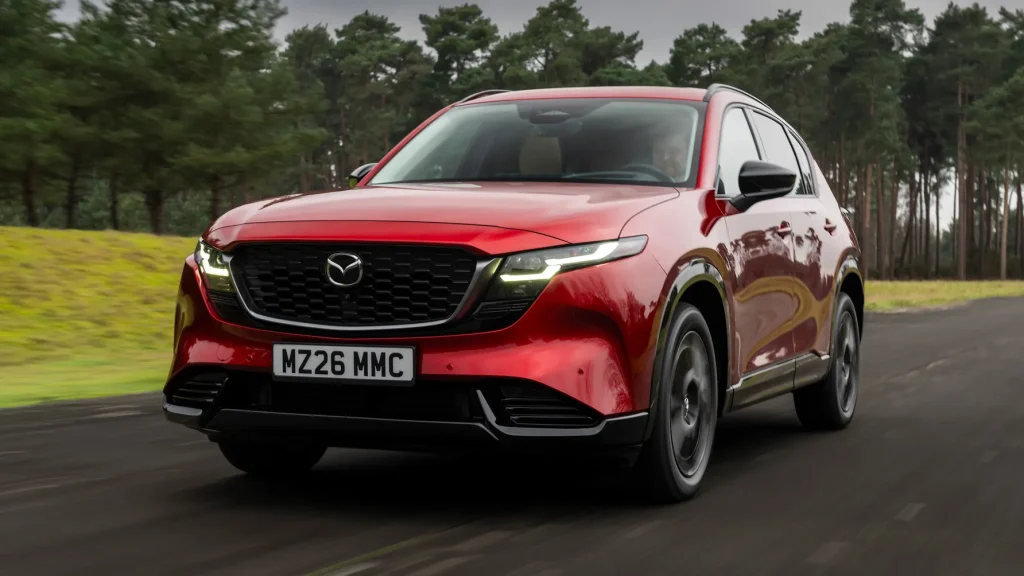
8. Mazda CX-5
The 2026 Mazda CX-5 earns a Good+ LATCH ease-of-use rating from IIHS, giving the redesigned compact SUV a strong result in an area that can matter enormously to families with young children. Unlike a rating based simply on the number of anchors, IIHS examines the physical characteristics of the attachment points themselves.
The CX-5 has two rear seating positions with complete LATCH hardware. A third seating position includes a tether anchor and can borrow lower anchors from the neighboring positions. IIHS notes that borrowed anchors cannot be used in their designated positions at the same time.
The measurements are particularly revealing. IIHS records the lower anchors as having open access, meaning they are directly visible rather than deeply buried in the seat.
The attachment force measurements range from 0 to 2 pounds across the tested anchors, while the clearance angles range from 62 to 68 degrees. The tether anchors are located in the middle of the seatbacks, and although potentially confusing, nearby hardware is present, contrasting labels are provided.
Those details explain why the CX-5 is more than just another vehicle with LATCH hardware. A parent installing a child seat has to locate the anchor, position the connector correctly, and apply enough pressure to secure it. Visible anchors and very low attachment forces can make those physical steps less demanding.
The center position still requires attention because it relies on borrowed lower anchors. That arrangement should not be interpreted as three independent sets of lower anchors. Still, for the two dedicated LATCH positions, the hardware is accessible and easy to maneuver around, which is exactly the type of usability IIHS measures.
The result is a family-oriented compact SUV with clearly accessible lower anchors and a useful additional seating option.
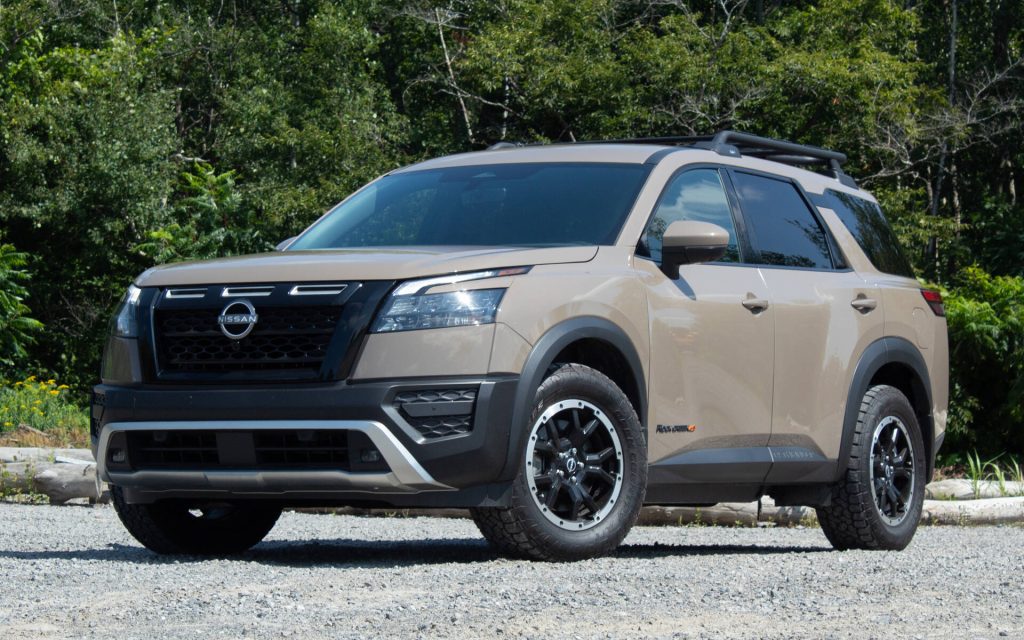
9. Nissan Pathfinder
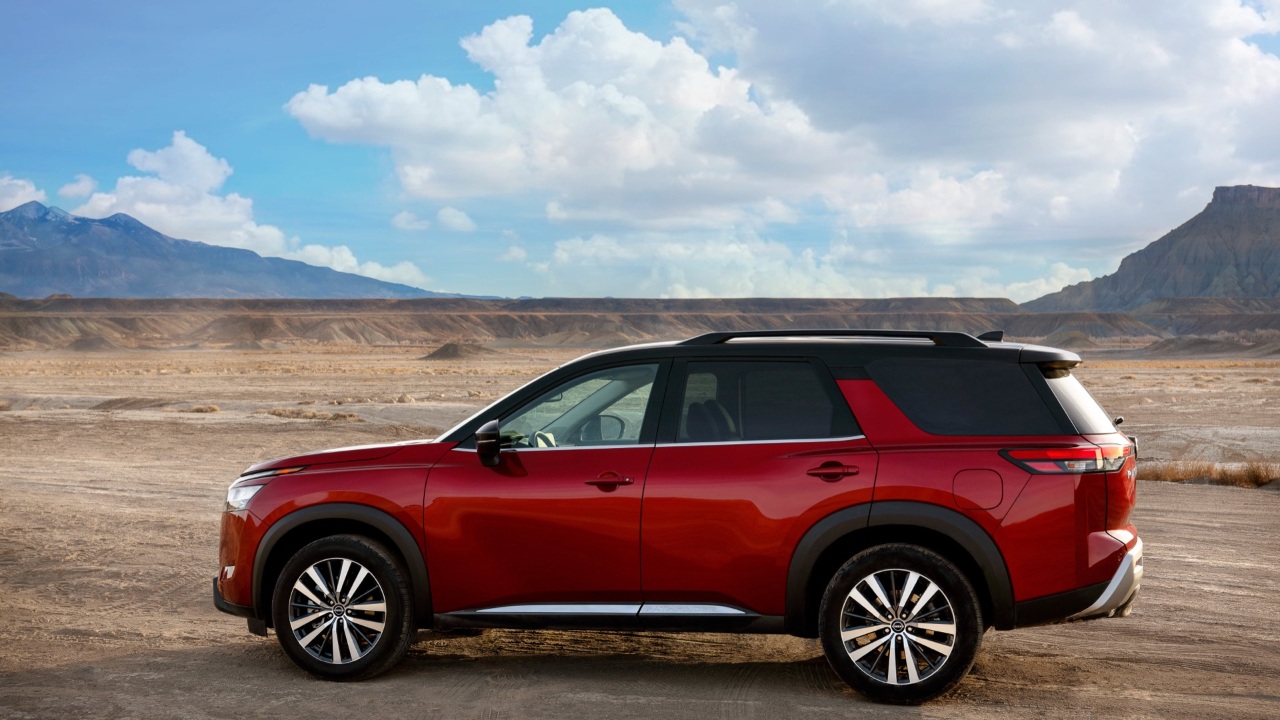
The Nissan Pathfinder is one of the clearest examples of how a three-row SUV can make child-seat installation easier by providing more than the minimum number of usable attachment points.
IIHS gives the 2022 through 2026 Pathfinder a Good+ rating for LATCH ease of use. The evaluation identifies three rear seating positions with complete LATCH hardware, while two additional positions have tether anchors only.
That configuration gives families considerably more flexibility than a vehicle with only two complete LATCH positions. It also means parents can place multiple child restraints across the second and third rows without depending exclusively on seat belts.
IIHS evaluates the hardware position by position. Its criteria include whether the lower anchors are too deeply recessed, whether excessive force is needed to connect the child-seat hardware, and whether there is enough space to maneuver around the anchors.
The Pathfinder’s evaluated lower anchors meet the requirements for a good rating. Its tether anchors are also described as being in easy-to-find locations without other nearby hardware that could confuse.
The Pathfinder’s Good+ designation goes beyond simply having accessible anchors. IIHS explains that the plus rating recognizes vehicles with an additional usable LATCH seating position. For three-row vehicles, the rating also considers whether tether anchors are available in all seating positions.
For parents who regularly install rear-facing and forward-facing seats, the Pathfinder’s arrangement provides several practical choices. The third-row capability is particularly useful when the second row is occupied by other passengers or child restraints.
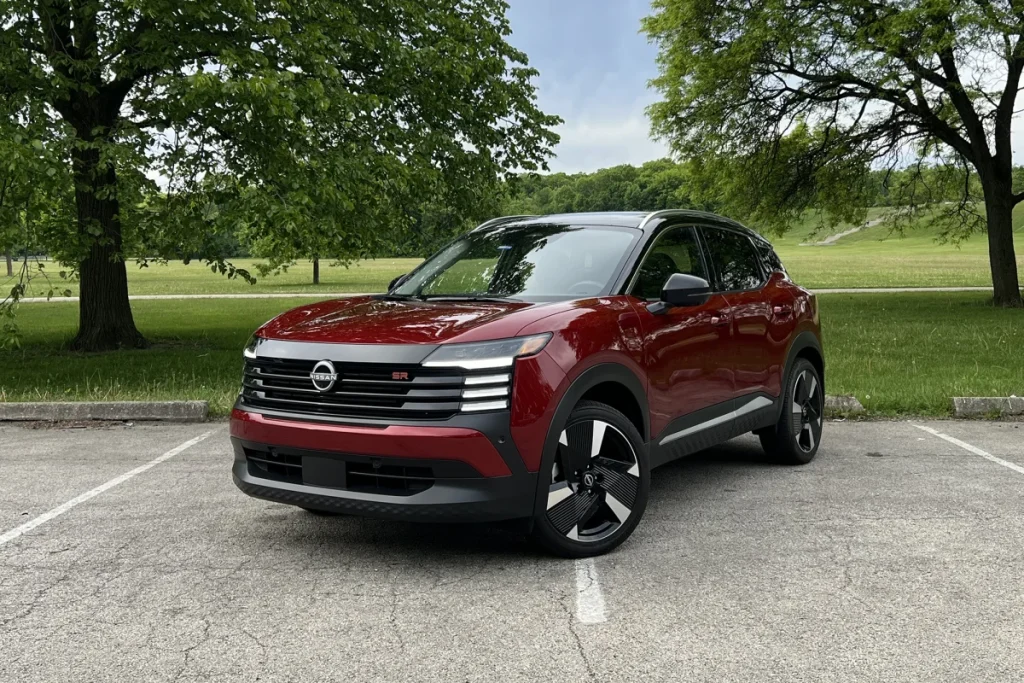
10. Nissan Kicks
The Nissan Kicks earns a Good+ LATCH ease-of-use rating from IIHS for the 2025 and 2026 model years, giving this small SUV a place among vehicles with particularly accessible child-seat attachment hardware. The rating applies to the evaluated SV trim with cloth seating.
Its rear seat provides two complete LATCH positions, while an additional seating position has a tether anchor and the ability to borrow lower anchors from the other positions. IIHS specifically notes that borrowed anchors cannot be used in their original designated positions at the same time.
The physical design of the anchors is where the Kicks becomes more interesting. IIHS checks whether lower anchors are buried too deeply into the seat cushion, whether the connector requires too much force, and whether the available space allows the child-seat connector to be maneuvered into place. The Kicks meets the applicable requirements for its complete LATCH positions.
The tether-anchor assessment is similarly specific. IIHS records whether the tether is easy to locate and whether surrounding hardware could be mistaken for it. On the evaluated Kicks, the tether location is identified as easy to find without confusing nearby hardware.
That matters because LATCH usability is fundamentally about reducing unnecessary difficulty during installation. A vehicle can have the correct hardware and still make parents search through the seat for it. IIHS therefore treats accessibility as an important part of the rating rather than simply checking whether anchors exist.
The Kicks also demonstrates why a Good+ result should not be interpreted as meaning every rear seating position has an independent pair of lower anchors. Its third position relies on borrowed hardware, so families using multiple child restraints need to understand which anchors are being shared.
