
Pedestrian automatic emergency braking has become an important part of modern vehicle safety, but not every system performs equally well when tested by the Insurance Institute for Highway Safety.
IIHS evaluates vehicles against pedestrians in different situations, including children crossing the road, adults crossing during the day, and adults walking parallel to the vehicle at night. The tests measure whether the vehicle avoids the pedestrian, reduces its speed before impact, or fails to react sufficiently.
Some newer vehicles still receive Marginal or Poor ratings, while a few do not offer pedestrian crash prevention at all. Here are 11 vehicles that fall short in these IIHS evaluations.
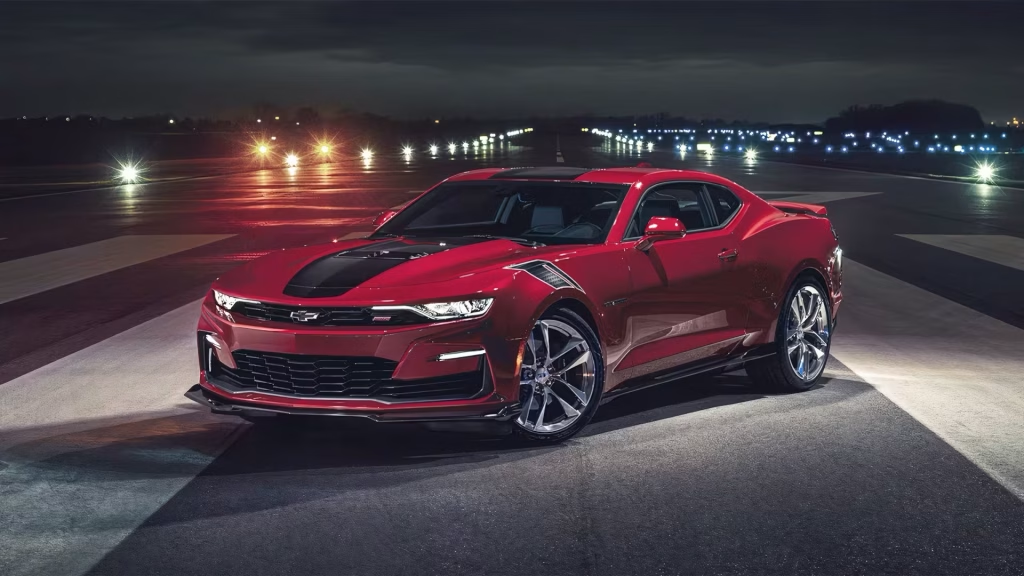
1. Chevrolet Camaro
The Chevrolet Camaro is one of the clearest examples of a vehicle falling short in IIHS pedestrian crash prevention because the problem is not weak performance from an existing system.
The 2024 and 2025 Camaros have no pedestrian front crash prevention system available, so IIHS assigns the model a poor rating. The rating applies to all 2024-25 models.
That distinction matters. IIHS’s pedestrian evaluation measures how effectively an automatic emergency braking system detects pedestrians and reduces speed or prevents a collision.
The Camaro cannot demonstrate that capability because it does not offer the required pedestrian front crash prevention technology. IIHS therefore lists the system as “Not available” rather than recording failed braking runs.
The Camaro’s absence of this technology stands out because other safety assistance features were available. IIHS lists optional blind spot detection and lane departure warning for the model, showing that the car was not devoid of electronic driver assistance. The missing pedestrian system is specifically what produces the poor rating in this category.
There is also some historical context. Chevrolet ended production of the sixth-generation Camaro after the 2024 model year, making the 2024 model the final production year for that generation.
The final Camaro lineup included LT, LT1, SS, and ZL1 versions, with different engines ranging from the 3.6-liter V6 to the supercharged 6.2-liter V8.
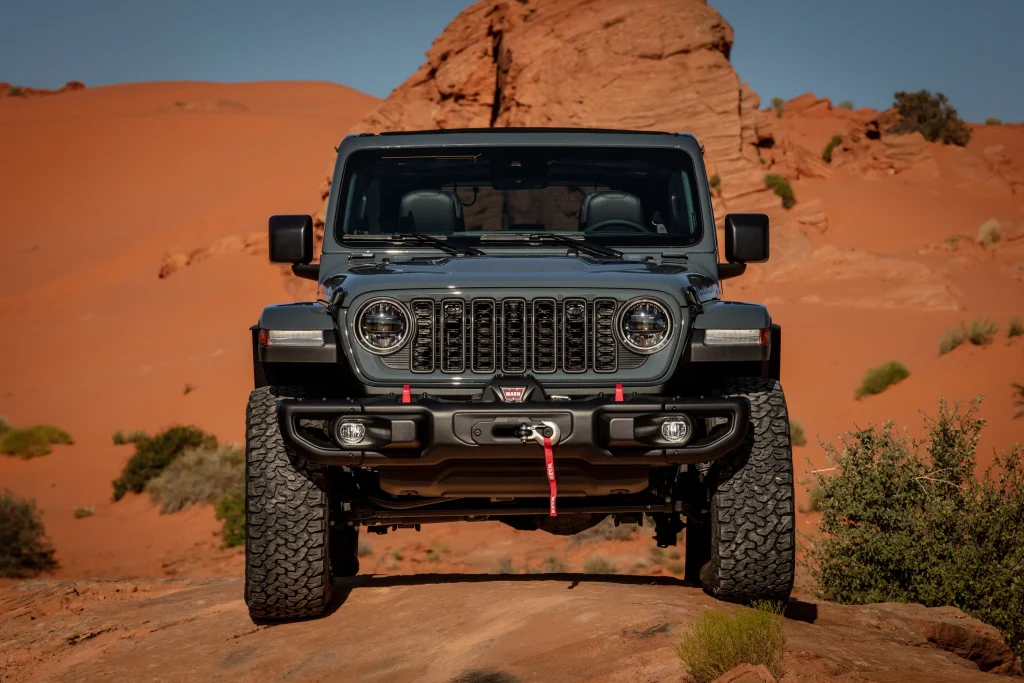
2. Jeep Wrangler
The Jeep Wrangler takes a similar route to a Poor IIHS pedestrian crash prevention rating, but its story is especially notable because the Wrangler remains one of the best-known off-road SUVs in the U.S.
For 2024-2025 Wrangler models, IIHS lists pedestrian front crash prevention as not available, resulting in a poor rating. The same absence applies to the 2025 Wrangler 4xe plug-in hybrid.
Because no qualifying pedestrian automatic emergency braking system is available, IIHS does not provide speed-reduction results for the Wrangler’s pedestrian scenarios. That means there are no child-crossing or adult-pedestrian braking figures to compare with vehicles that have an active system.
The poor rating specifically communicates that the technology was unavailable rather than that a particular emergency braking system failed a series of pedestrian impacts.
This is worth separating from the Wrangler’s other safety technology. IIHS lists optional blind spot detection, but pedestrian front crash prevention is a separate evaluation. Having one driver-assistance feature does not provide credit for another.
The Wrangler’s rugged construction, four-wheel-drive systems, and off-road equipment likewise have no bearing on this particular rating.
The 2025 Wrangler was available with several powertrains. Jeep lists the 3.6-liter Pentastar V6 at 285 horsepower and 260 lb-ft of torque, while the 2.0-liter turbocharged four-cylinder produces 270 horsepower and 295 lb-ft. The 4xe plug-in hybrid reaches 375 horsepower and 470 lb-ft.
The Wrangler’s dimensions also vary by body style. The 2025 two-door measures 166.8 inches long, while the four-door stretches to 188.4 inches. Both are 73.9 inches wide, excluding certain wider package configurations.
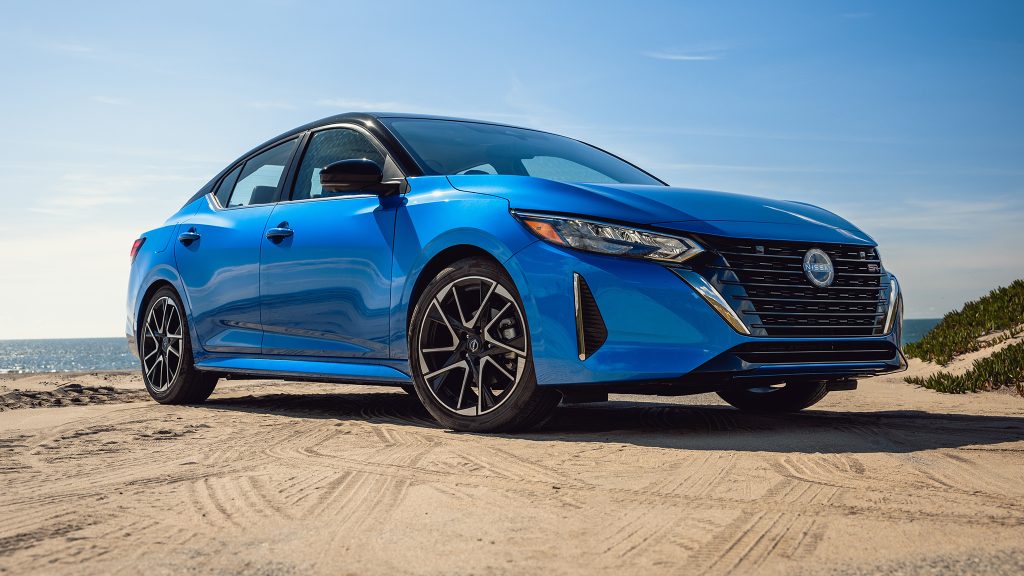
3. Nissan Sentra
The Nissan Sentra has a more nuanced result than the Camaro and Wrangler because it actually offers pedestrian crash prevention, but the system does not perform strongly enough in every IIHS scenario.
The 2025 Sentra received a marginal rating for pedestrian front crash prevention. IIHS tested the vehicle in daytime conditions involving an adult pedestrian crossing the road and found that its performance varied depending on the scenario and vehicle speed.
The purpose of the IIHS test is not simply to determine whether a vehicle can recognize a person. The system must detect the pedestrian early enough to either prevent the collision or substantially reduce the vehicle’s speed before impact.
The Sentra’s available system can provide forward collision warning and automatic emergency braking, but the IIHS results demonstrate that detection and intervention have limitations in certain situations.
Nighttime performance is particularly important because pedestrian crashes frequently occur when visibility is reduced. IIHS expanded its pedestrian prevention evaluation to include a nighttime scenario involving an adult pedestrian walking along the right side of the roadway.
Systems that depend heavily on visual recognition can face greater challenges when contrast, illumination, and background conditions change.
The Sentra is equipped with Nissan Safety Shield 360 on U.S. models, which includes automatic emergency braking with pedestrian detection. The system is designed to warn the driver and apply the brakes when a frontal collision with a vehicle or pedestrian appears imminent. However, the presence of the technology does not guarantee a Good IIHS rating.
The Sentra’s result therefore illustrates an important distinction for buyers. A vehicle can have pedestrian detection as standard equipment and still receive less than a strong IIHS rating when tested against demanding real-world scenarios.
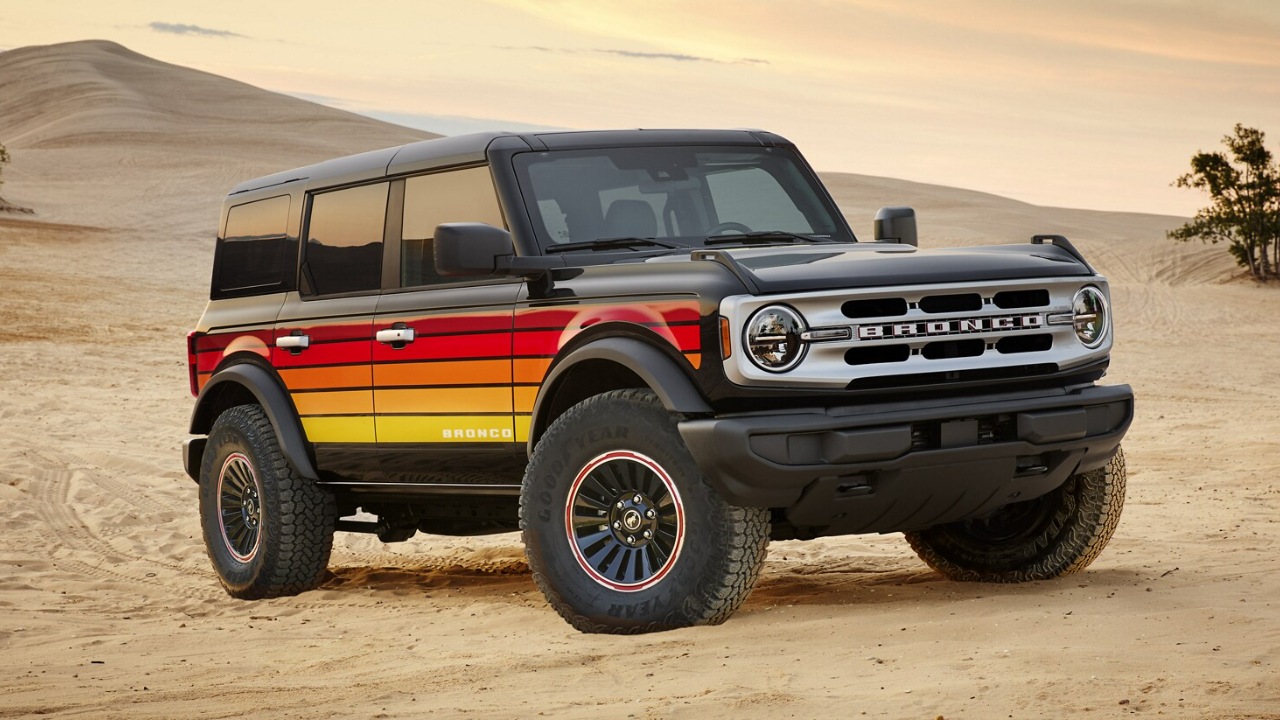
4. Ford Bronco
The Ford Bronco is another vehicle that demonstrates why having automatic emergency braking is not enough to guarantee a strong pedestrian crash prevention result. The 2025 Bronco received a marginal rating from IIHS for pedestrian front crash prevention.
Ford equips the Bronco with Pre-Collision Assist with Automatic Emergency Braking, and the system can detect pedestrians as well as other potential obstacles ahead.
The IIHS evaluation examines several different pedestrian scenarios rather than relying on a single emergency-braking demonstration.
A vehicle can perform well when an adult suddenly crosses directly in front of it but struggles when the pedestrian is moving along the roadway or when the available reaction time becomes shorter. These differences are reflected in the Bronco’s marginal result.
Ford’s system combines forward-facing sensors and camera-based technology to identify potential collisions. When the system determines that an impact may be imminent, it can provide an alert and apply braking assistance.
The technology is designed as a driver-assistance system, so Ford still emphasizes that the driver remains responsible for controlling the vehicle.
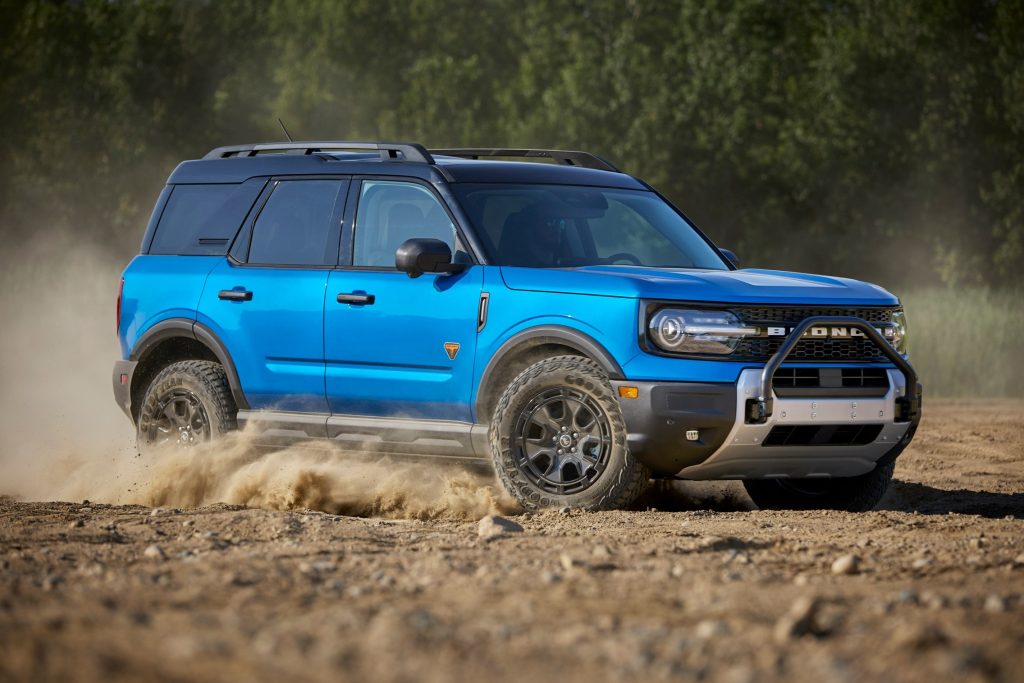
The Bronco’s high ride height and upright body design also make pedestrian detection an important consideration. Its physical characteristics are part of the vehicle’s design, but IIHS evaluates the electronic prevention system separately from crashworthiness.
The marginal rating should not be confused with a finding that the Bronco has no pedestrian protection technology. It has the equipment, but the IIHS test results place its performance below the Institute’s higher rating categories. That distinction is important when comparing vehicles equipped with automatic emergency braking.
5. Volkswagen Taos
The Volkswagen Taos shows why pedestrian crash prevention performance cannot be judged simply by checking whether automatic emergency braking is included in the equipment list. The 2025 Taos received a marginal rating for pedestrian front crash prevention in IIHS testing.
Volkswagen equips the Taos with Front Assist, which can warn the driver about an impending frontal collision and provide automatic braking assistance when the system determines that a crash is likely.
IIHS evaluates pedestrian detection under several demanding conditions. These include situations involving an adult pedestrian crossing the vehicle’s path and scenarios designed to test the system when a pedestrian is moving along the road.
The system must recognize the pedestrian and respond quickly enough to prevent the collision or reduce the vehicle’s speed substantially.
The Taos’s marginal result means its pedestrian prevention capability did not consistently meet the performance level required for a higher rating. That does not mean the system is useless or that the vehicle cannot respond to a pedestrian. Instead, the testing demonstrates that its performance has limitations under particular test conditions.
Volkswagen’s Front Assist technology uses forward-looking sensors and camera information to monitor the road ahead. Depending on the situation, the system can issue visual and audible warnings before applying emergency braking. Volkswagen also cautions drivers that its assistance systems have limitations and are not substitutes for attentive driving.
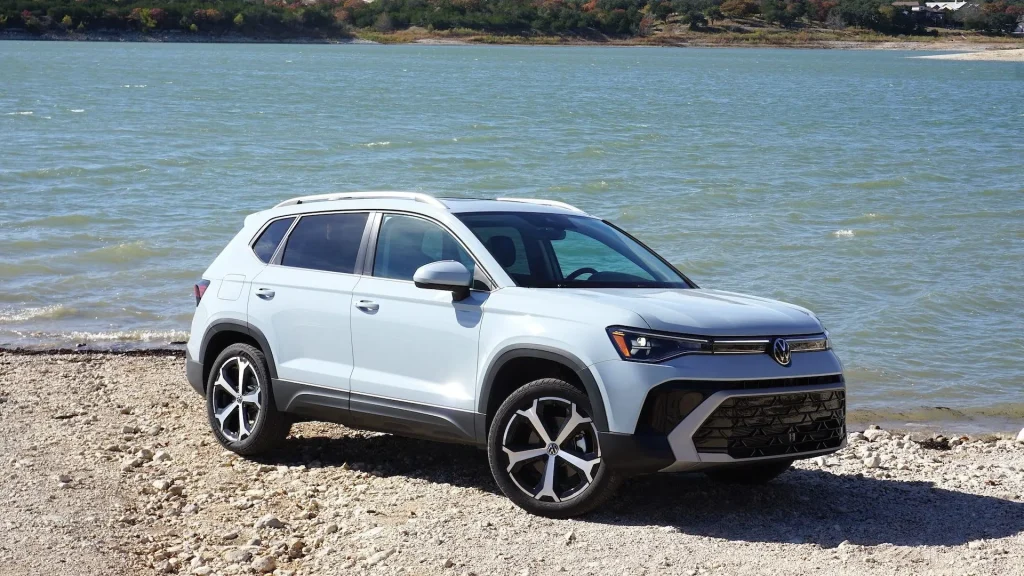
For buyers, this is an important distinction. The Taos does have technology designed to help prevent pedestrian collisions, but its IIHS rating provides a more demanding assessment of how that technology performs under standardized testing.
6. Hyundai Venue
The Hyundai Venue is another compact SUV where pedestrian crash prevention technology does not translate into a top IIHS rating. The 2025 Venue received a marginal rating in the institute’s pedestrian front crash prevention evaluation.
Hyundai equips the Venue with Forward Collision-Avoidance Assist with pedestrian detection, giving the small SUV an electronic system specifically designed to recognize potential frontal collisions.
The technology monitors the road ahead and can warn the driver when a collision appears imminent. If the driver does not respond appropriately, the system can apply braking in certain circumstances.
Hyundai describes the feature as driver assistance rather than autonomous driving, meaning the person behind the wheel remains responsible for avoiding hazards.
IIHS’s testing is more demanding than simply determining whether the warning system activates. Its pedestrian evaluation considers different pedestrian positions, speeds, and lighting conditions.
This matters because a system that works well in one scenario may not provide the same level of intervention when the pedestrian appears differently relative to the vehicle.
The venue’s marginal rating therefore identifies a measurable limitation rather than an absence of technology. A buyer looking at the vehicle should understand that its pedestrian detection system provides an additional layer of assistance, but it cannot be treated as a guarantee that every pedestrian collision will be avoided.
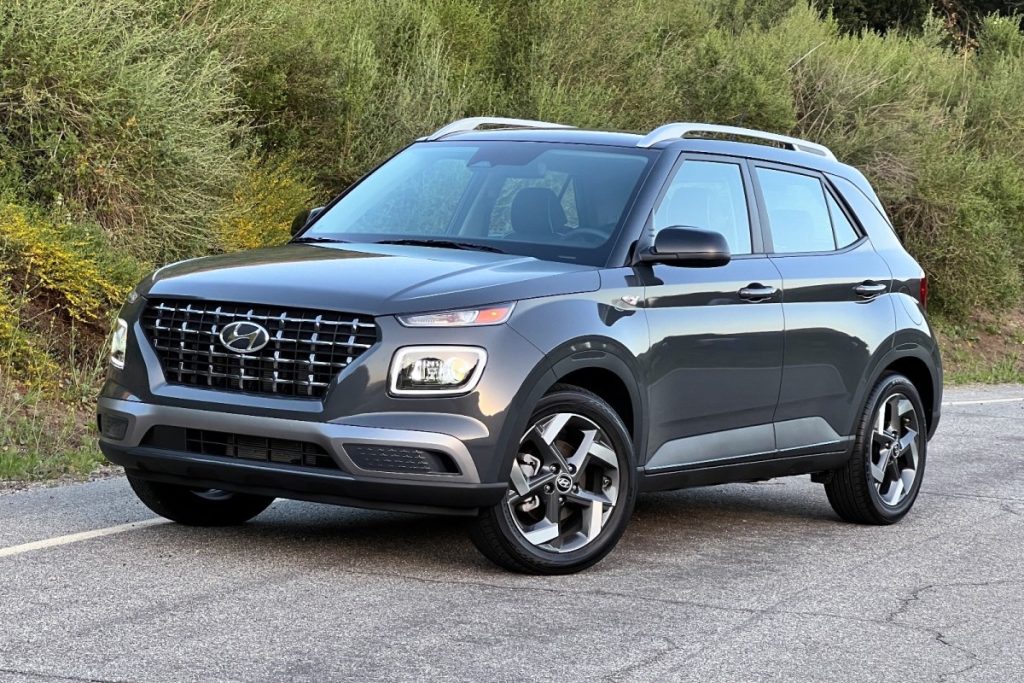
This is particularly relevant in urban environments, where compact SUVs frequently encounter people crossing streets, walking near traffic lanes, or emerging between parked vehicles. Drivers still need to maintain attention and control even when Forward Collision-Avoidance Assist is active.
7. Kia Soul
The Kia Soul is another vehicle that shows the gap between having pedestrian detection technology and achieving a strong result in IIHS testing. The 2025 Kia Soul received a marginal rating for pedestrian front crash prevention.
Kia equips the Soul with Forward Collision-Avoidance Assist with Pedestrian Detection, which is designed to identify people and warn the driver when a frontal collision appears possible.
The system can also apply the brakes when the vehicle determines that an impact is imminent. However, IIHS testing is designed to determine how consistently the technology responds across different pedestrian scenarios. The evaluation is not simply a check for whether automatic braking exists.
That distinction is important because pedestrian movements can be unpredictable. A person may cross directly into the vehicle’s path, move alongside the road, or appear under conditions where the vehicle has less time to react.
IIHS uses standardized test scenarios to measure whether the vehicle can detect the pedestrian and either prevent the collision or substantially reduce the impact speed.
The Soul’s Marginal result means its tested system did not provide the level of performance required for a higher rating. It does not mean the vehicle lacks pedestrian protection technology. Instead, it indicates measurable limitations in the system’s ability to respond across the demanding IIHS test conditions.
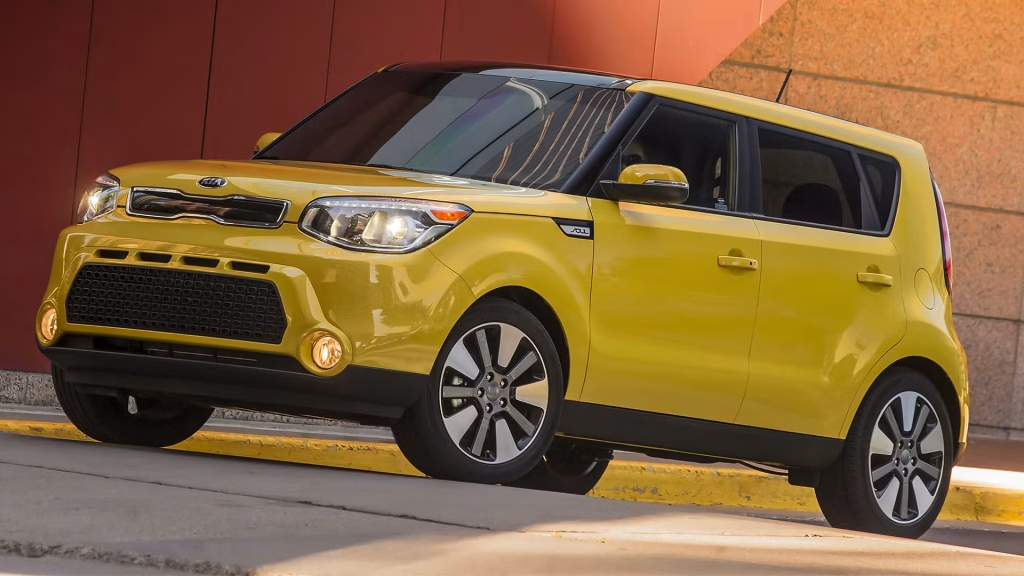
Kia also makes clear that driver-assistance systems have limitations and should not replace attentive driving. The driver must continue watching the road and be prepared to brake manually.
The Soul’s compact dimensions and upright body make it popular for urban driving, where pedestrian interaction is common. Its IIHS result gives buyers another useful piece of information when comparing small vehicles equipped with automatic emergency braking.
8. Mitsubishi Outlander Sport
The Mitsubishi Outlander Sport provides a different perspective on pedestrian crash prevention because the availability and performance of its safety technology have varied by model year and equipment.
Recent U.S. versions have been offered with Forward Collision Mitigation, a system designed to detect potential frontal collisions and provide warnings and braking assistance when appropriate.
In IIHS testing, pedestrian front crash prevention performance can expose limitations that are not obvious from a vehicle’s equipment list.
A system may recognize a pedestrian in one situation but respond later or less effectively when the person’s position, movement, or available stopping distance changes. Those differences are exactly what standardized IIHS testing is designed to identify.
The Outlander Sport’s safety technology is intended to assist the driver rather than operate as an autonomous pedestrian avoidance system. Mitsubishi describes Forward Collision Mitigation as a driver-assistance feature, meaning the driver remains responsible for steering, braking, and monitoring traffic.
For pedestrians, the most challenging situations can occur when a person suddenly enters the vehicle’s path. Reaction time becomes critical because even a small delay can significantly affect the distance available for braking. Vehicle speed also matters because stopping distance increases as speed rises.
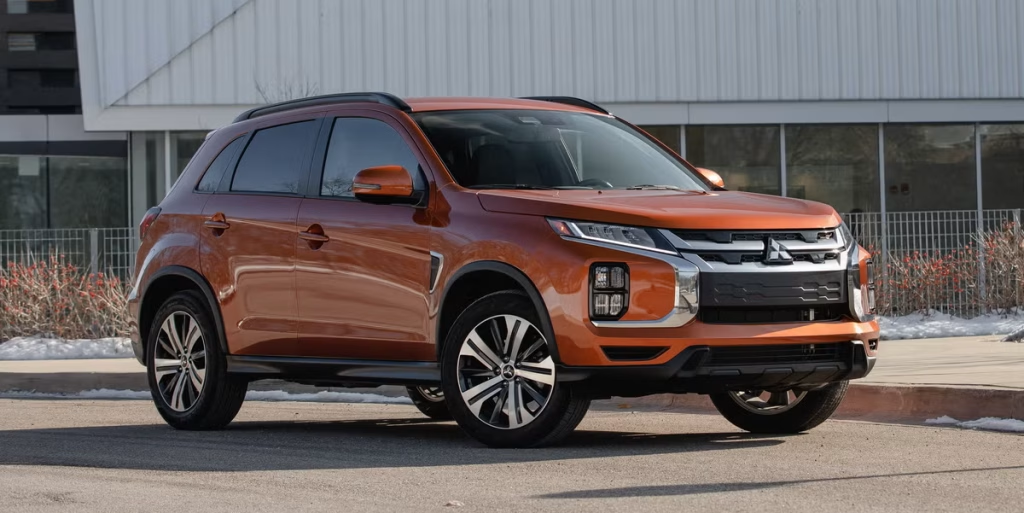
The Outlander Sport therefore belongs in discussions about pedestrian prevention because its available technology should not be interpreted as a guarantee against a collision. Buyers should check the exact model year and equipment because Mitsubishi has changed its driver-assistance packages over time.
For an older compact SUV, the presence, operation, and limitations of forward collision mitigation should be verified before purchase rather than assumed from the vehicle’s name alone.
9. Nissan Altima
The Nissan Altima provides one of the clearest examples of how pedestrian crash prevention can perform differently depending on speed and lighting conditions. The 2025 Altima received a marginal rating from the Insurance Institute for Highway Safety for pedestrian front crash prevention.
Nissan equips the sedan with Automatic Emergency Braking with Pedestrian Detection, but IIHS testing showed that the system did not consistently prevent or substantially reduce impacts in every scenario.
During the daytime child-crossing test at 12 mph, the Altima avoided the pedestrian. At 25 mph, however, it reduced the impact speed by 11 mph rather than preventing the collision. The nighttime adult-crossing tests produced mixed results.
At 12 mph, impact speed was reduced by 5 mph with high beams and 1 mph with low beams. At 25 mph, the reductions were 7 mph with high beams and 5 mph with low beams.
The nighttime parallel-adult test was more revealing. At 25 mph, the system reduced impact speed by 11 mph using high beams and 5 mph using low beams. At 37 mph, the reductions were 9 mph with high beams and 5 mph with low beams.
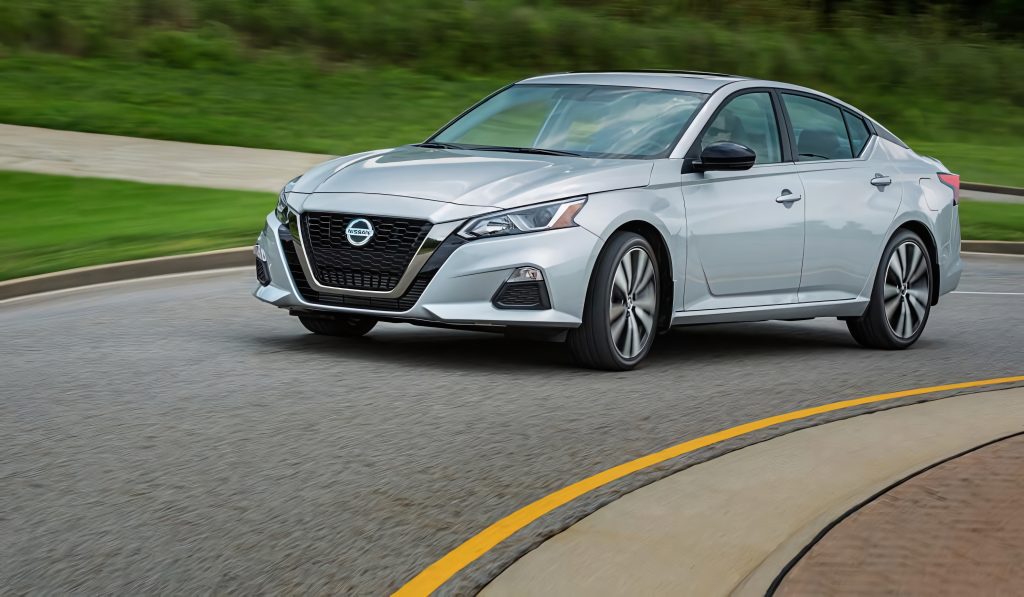
These results show why the existence of pedestrian detection does not automatically translate into a top IIHS rating. Speed, pedestrian position, and available lighting can all affect the system’s response.
10. Chevrolet Trailblazer
The Chevrolet Trailblazer also received a marginal rating for pedestrian front crash prevention in IIHS testing, even though Chevrolet provides front pedestrian braking as standard equipment. Its test results demonstrate that having automatic braking technology does not mean the vehicle will prevent every pedestrian collision.
In the daytime child-crossing test at 12 mph, the Trailblazer avoided the pedestrian completely. At 25 mph, it reduced the impact speed by 22 mph. Nighttime adult-crossing performance changed depending on the lighting.
At 12 mph, the system reduced impact speed by 10 mph with high beams and 7 mph with low beams. At 25 mph, the reductions were 18 mph with high beams and only 3 mph with low beams.
The parallel-adult scenario produced stronger results. At 25 mph, the Trailblazer reduced impact speed by 23 mph with high beams, while the low-beam test avoided the collision. At 37 mph, impact speed was reduced by 12 mph with high beams and 9 mph with low beams.
The variation between these tests is important because pedestrian crashes do not occur under one predictable set of circumstances. The system’s response can change with vehicle speed, pedestrian movement, and lighting conditions.
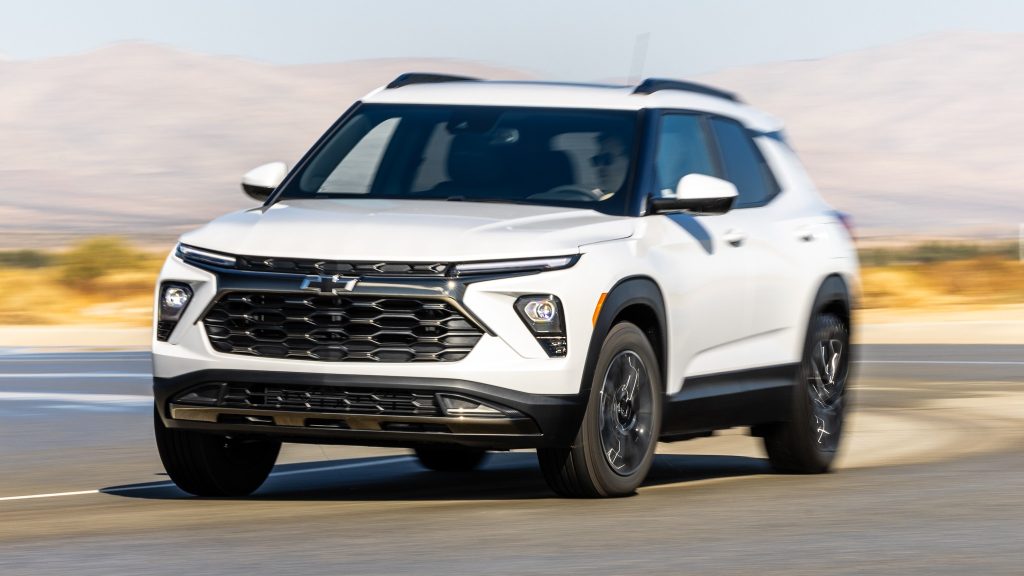
The marginal rating therefore reflects the complete test performance rather than simply whether the vehicle has automatic emergency braking.
11. Toyota Corolla
The Toyota Corolla demonstrates another important limitation of pedestrian crash prevention technology. The 2025 Corolla received a marginal rating in IIHS pedestrian front crash prevention testing.
Toyota equips the sedan with Toyota Safety Sense, including a Pre-Collision System with Pedestrian Detection, but the IIHS evaluation showed that the system’s performance varied depending on the test scenario.
The daytime testing produced stronger results in the lower-speed scenario than at higher speeds. At 12 mph, the Corolla’s system was able to prevent the tested pedestrian collision. When the test speed increased to 25 mph, the system reduced the vehicle’s impact speed rather than consistently stopping before the pedestrian.
Nighttime testing introduced another variable. Headlight conditions can influence how far ahead the vehicle’s cameras can identify a pedestrian, particularly when the person is moving alongside the roadway. IIHS evaluates these conditions separately because a pedestrian who is difficult to distinguish from the background can leave the vehicle with less time to react.
The Corolla’s driver-assistance technology is designed to provide warnings and automatic braking when the system determines that a frontal collision with a pedestrian or another obstacle is possible. Toyota emphasizes that the technology has operational limitations and does not replace an attentive driver.
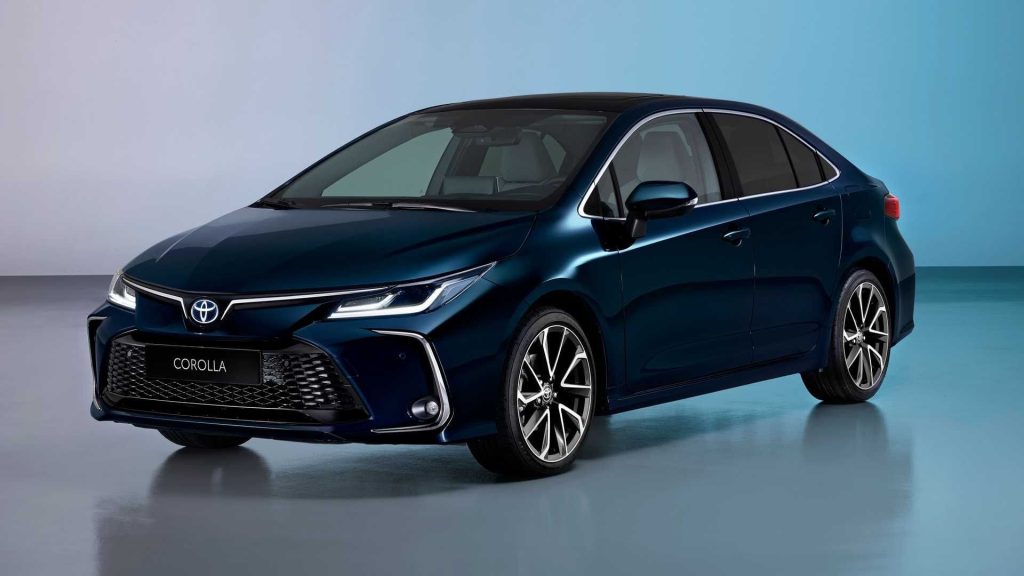
The Marginal IIHS result, therefore, does not mean that the Corolla lacks useful pedestrian protection. It means the system did not demonstrate the consistency required for a higher rating across the institute’s demanding test scenarios.
For buyers, this is a useful distinction. A vehicle can have pedestrian detection, automatic emergency braking, and other modern safety technology while still showing measurable limitations when tested at different speeds and under different lighting conditions.
