
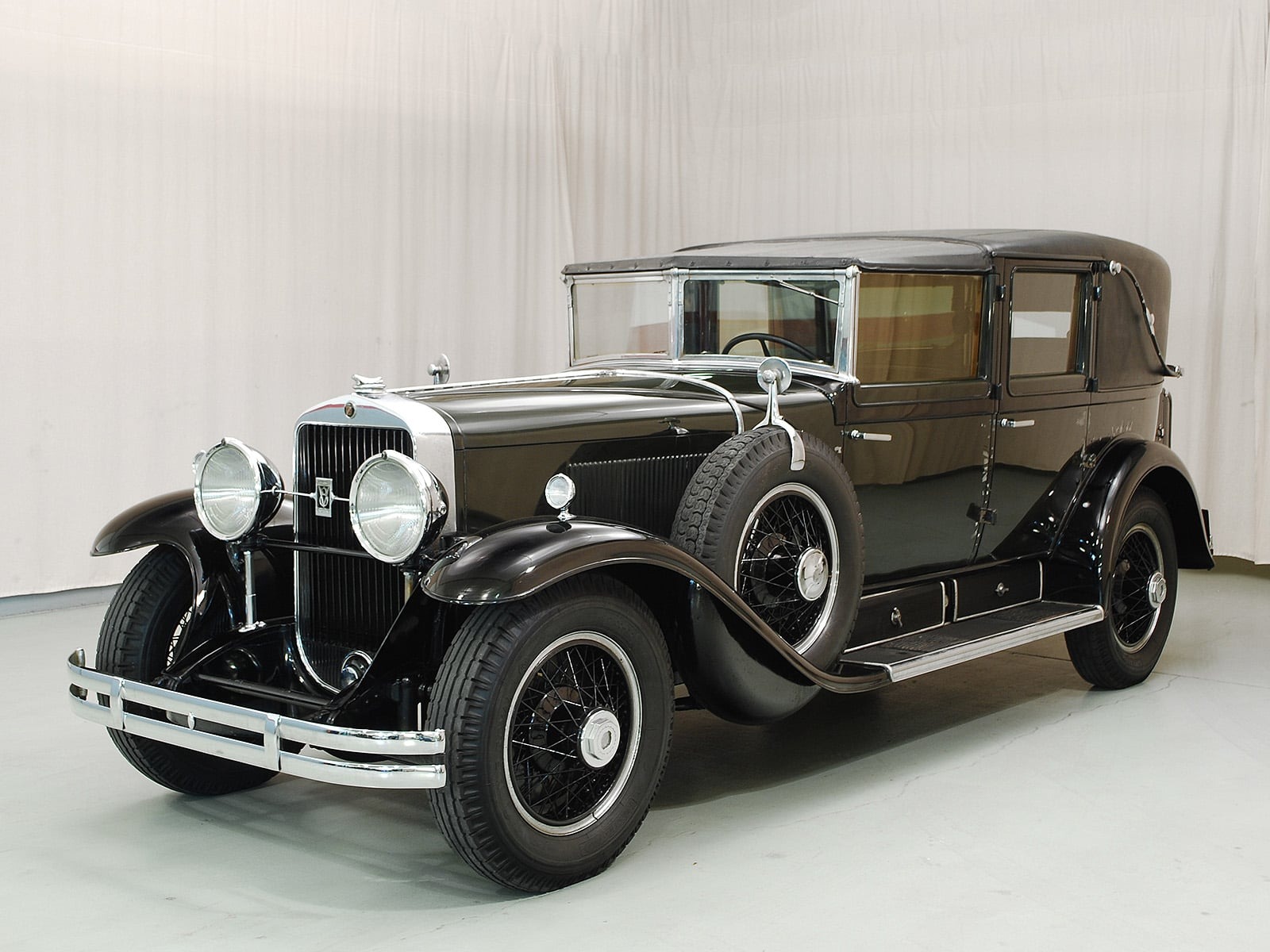
Some cars are remembered for their design, performance, or driving experience. Others stand out because they introduced features and technologies that eventually became standard across the industry. From early speedometers and turbochargers to power steering, touchscreen controls, and automatic climate control, these vehicles helped reshape what drivers came to expect from their cars.
Some were built by American manufacturers, while two entries included here are international examples that are worth mentioning because of their technological firsts. The stories behind these cars show how quickly a clever idea can move from an unusual experiment to equipment that seems completely ordinary. Here are 10 fascinating examples that helped push automotive technology forward.
1. Oldsmobile Curved Dash (1901)
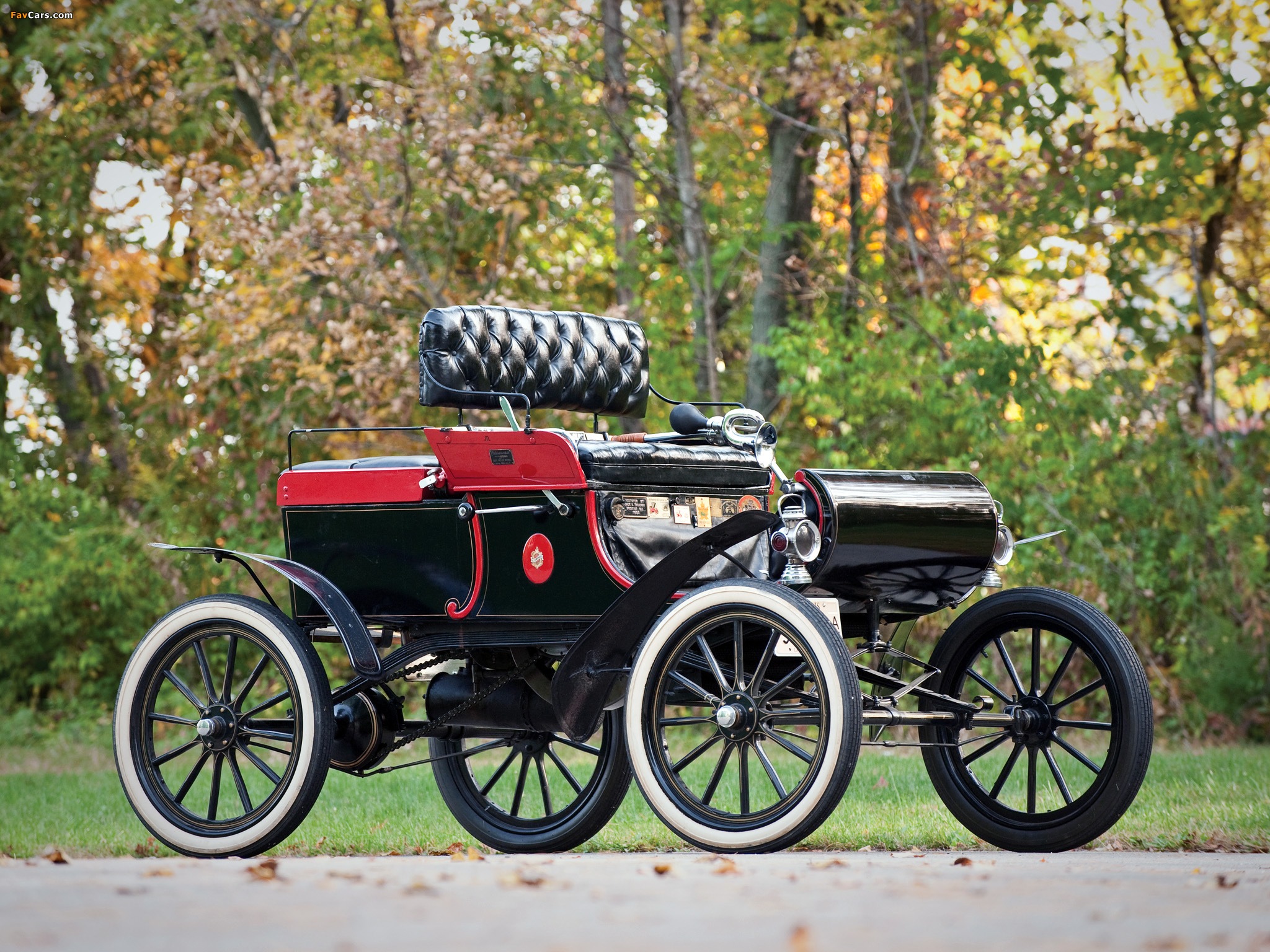
Before speed limits and radar guns became part of everyday driving, the 1901 Oldsmobile Curved Dash introduced a feature that was unusual for its time. It gave drivers a way to determine how fast their vehicle was traveling.
This little curved-dash runabout is widely credited as the first production automobile fitted with a speedometer, a small addition that quietly changed the relationship between driver and machine.
Before this, speed was mostly guesswork based on wind in your face and how nervous your passengers looked. What makes the Curved Dash special isn’t just the gauge itself.
Oldsmobile built these cars in genuinely high numbers for the era, turning out thousands during its production run, which meant the speedometer wasn’t some rare curiosity confined to a single prototype. It reached real customers, in real numbers, at a real price point.
Historians are careful with the phrasing here, and rightly so. Nobody can say with total certainty that this was the very first speedometer ever bolted to any vehicle anywhere.
What can be said with confidence is that it was the first production car offered with one, which is a meaningful distinction. A one-off experiment doesn’t change an industry. A car built by the thousands does.
That single dial on the dashboard eventually became something every driver takes for granted. Try imagining a modern commute without knowing your speed, and you start to appreciate just how much this small, curved little car quietly set in motion.
2. Cadillac Series 341-B (1929)
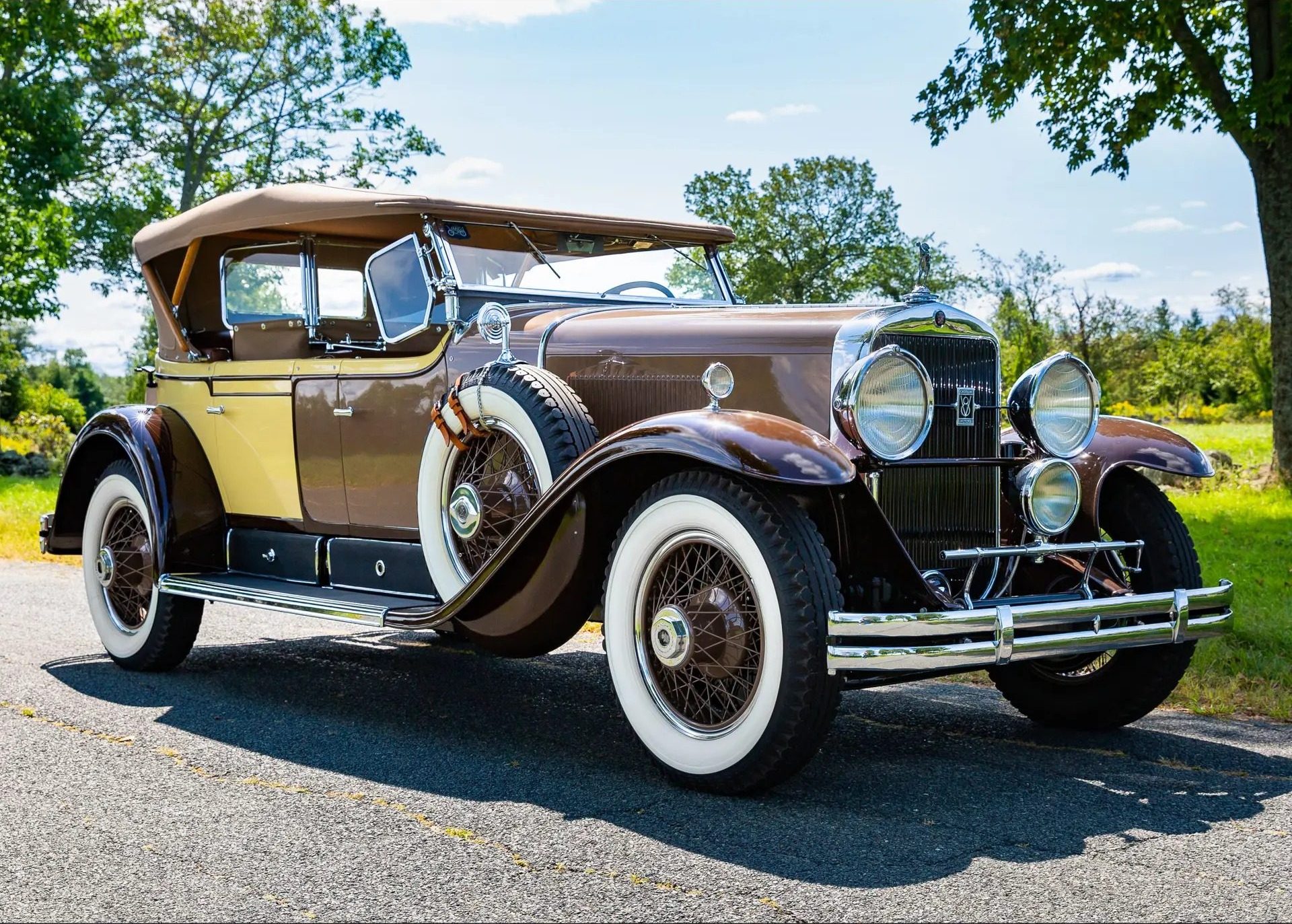
Some automotive inventions are easy to appreciate only after experiencing the problem they solved. Manual transmissions once required considerably more care from drivers, especially when changing gears. Cadillac’s 1929 Series 341-B addressed that issue with Synchro-Mesh.
The system came from the work of Earl A. Thompson, whose synchronizing mechanism helped match the rotational speeds of gears during certain gear changes. When the speeds were brought closer together, the gears could engage more smoothly.
That was a major convenience for drivers accustomed to techniques such as double-clutching. Without synchronization, a poorly timed gear change could produce the familiar grinding sound associated with manual transmissions. Synchro-Mesh reduced that problem.
Cadillac and LaSalle began putting the technology into production for the 1929 model year. From there, synchronized manual transmissions became an important part of the development of easier-to-use automobiles.
The significance of this achievement was not in making the car faster or more powerful. Instead, it focused on making the vehicle simpler and more convenient to operate. This distinction matters because many technologies that changed driving followed the same principle by eliminating small but recurring challenges from everyday use.
Synchro-Mesh helped establish a transmission design that would influence manual gearboxes for decades.
3. Volvo PV544 (1959 – American import context)
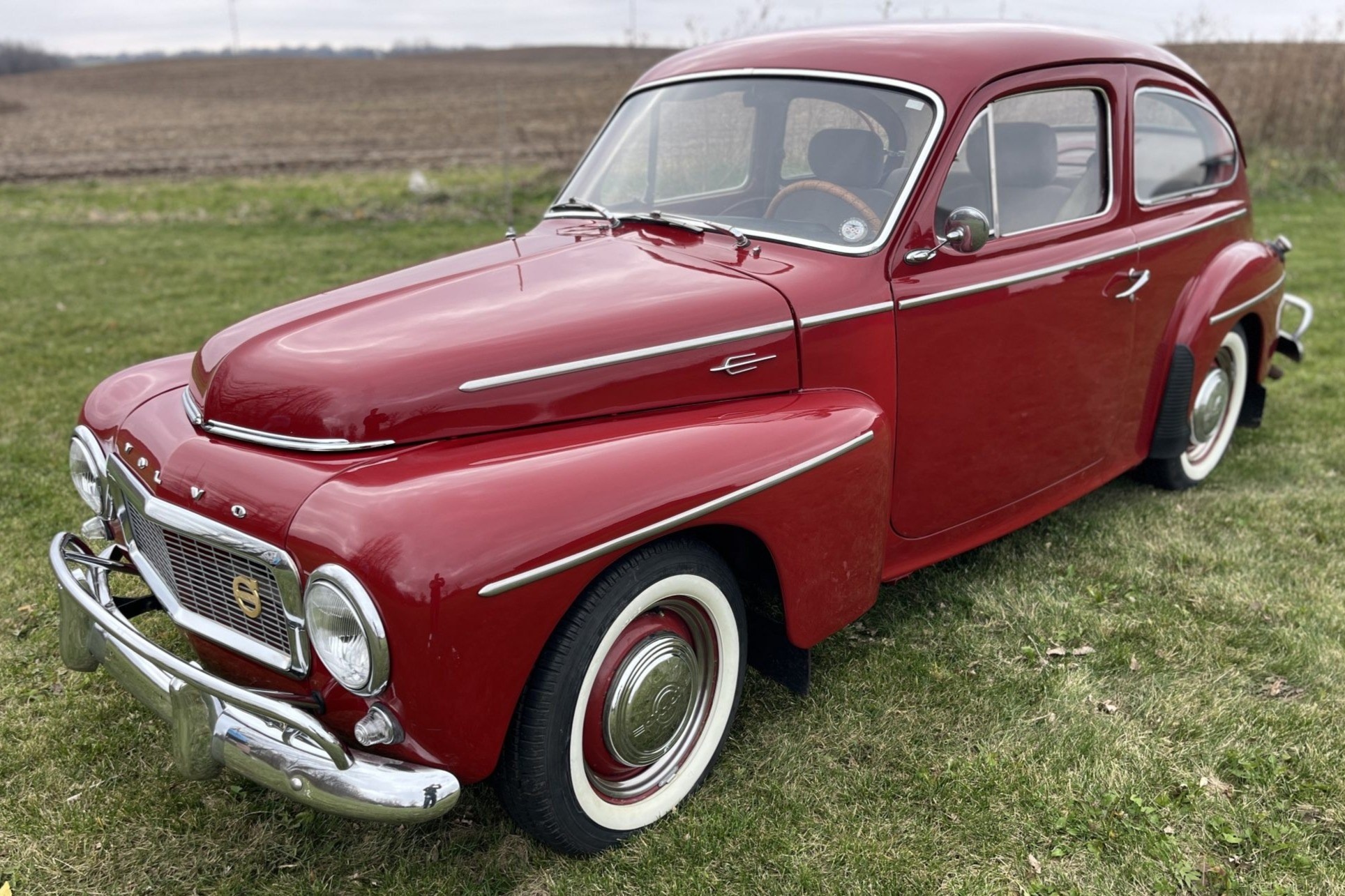
Before getting into the details, one clarification is important. The Volvo PV544 is not an American car, and it should not be presented as one. It is included here because the technology it introduced became widely adopted in American vehicles. Leaving the PV544 out would therefore leave an important part of the story incomplete.
In 1959, Volvo made the three-point seat belt standard equipment on the PV544 and the closely related Volvo Amazon. Engineer Nils Bohlin, working for Volvo, developed the modern three-point design that anchors a belt across both the lap and the chest in a single, secure motion.
Earlier belt designs only crossed the lap, which could actually cause serious injury during a hard stop or crash by concentrating force on the abdomen.
What Volvo did next says a lot about the company’s priorities. Rather than locking the design behind a wall of patents to squeeze out competitors, Volvo made the three-point belt patent freely available to other manufacturers, essentially giving away a safety breakthrough for the good of every driver on the road, regardless of what badge sat on their hood.
The belt reached Swedish customers first, delivered standard in August 1959, before eventually making its way into the American market. Every driver and passenger who has buckled a seat belt since owes something to this decision.
A single piece of hardware rarely saves this many lives, and rarer still that the company behind it chose openness over profit.
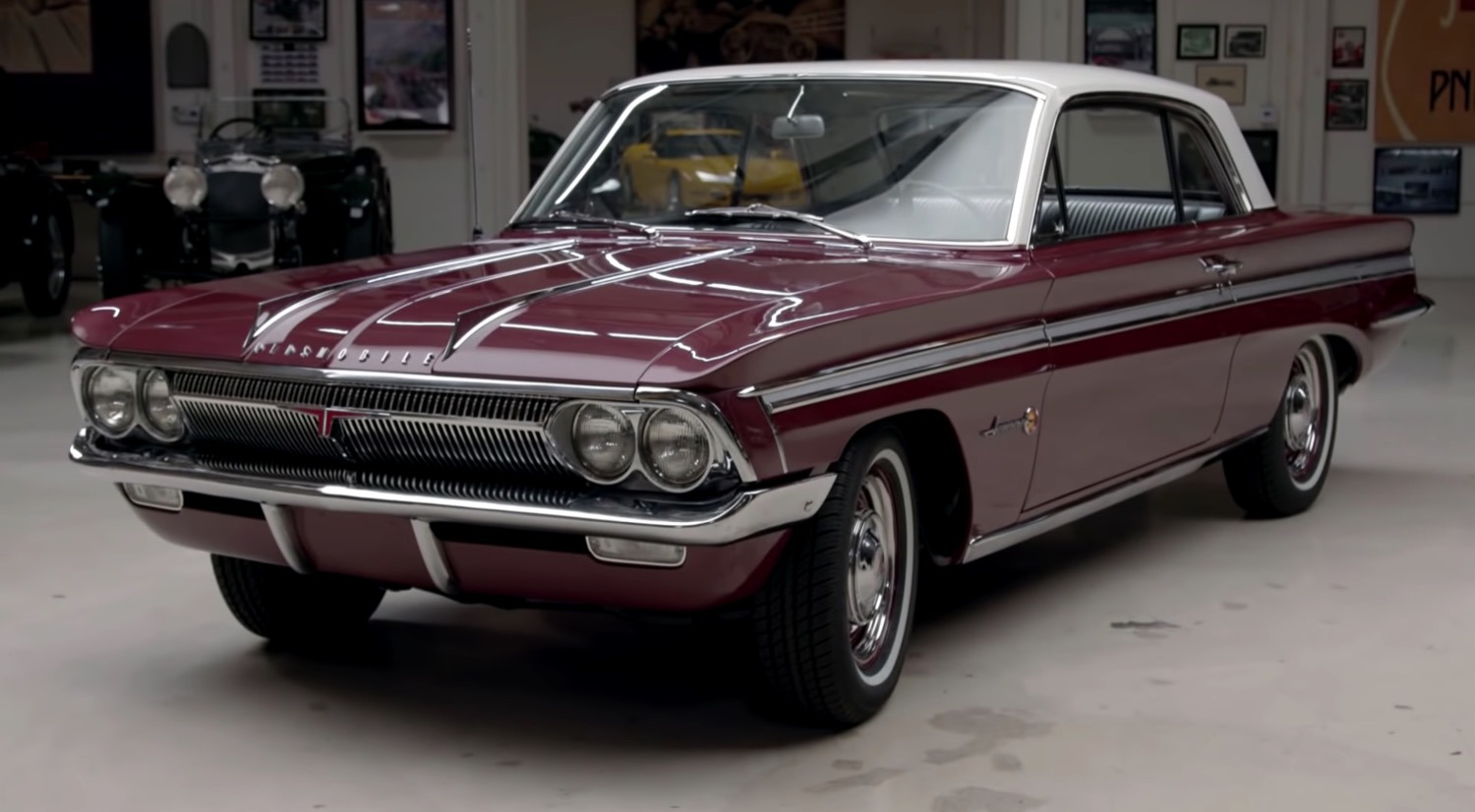
4. Oldsmobile Jetfire (1962)
Turbocharging feels like a modern trick, something you’d associate with a sporty hatchback or a performance sedan built last year. But Oldsmobile got there first, way back in 1962, with the Jetfire.
This compact coupe is widely recognized as the first production turbocharged passenger car, and the engineering behind it was genuinely ambitious for its time.
Under the hood sat a 215-cubic-inch aluminum V8, paired with a Garrett AiResearch turbocharger. Boosting a small aluminum engine wasn’t a simple bolt-on job in 1962, so Oldsmobile engineers also developed something called Turbo-Rocket Fluid, a water-and-alcohol injection system designed to prevent the engine from knocking under boost pressure.
It was a clever workaround for a problem that hadn’t really existed in cars before this one. Oldsmobile wasn’t alone in this race for long.
Chevrolet followed almost immediately with its own turbocharged offering, the Corvair Monza Spyder, and for a brief stretch, two American models were pushing forced induction technology at the same time.
The Jetfire debuted in April 1962 and stuck around for the 1962 and 1963 model years before quietly disappearing. Turbocharging as a mainstream technology took decades to fully mature and become the reliable, everyday feature it is now.
But the Jetfire proved the concept could work in a production passenger car, planting a seed that eventually grew into something found under the hood of countless vehicles built today.
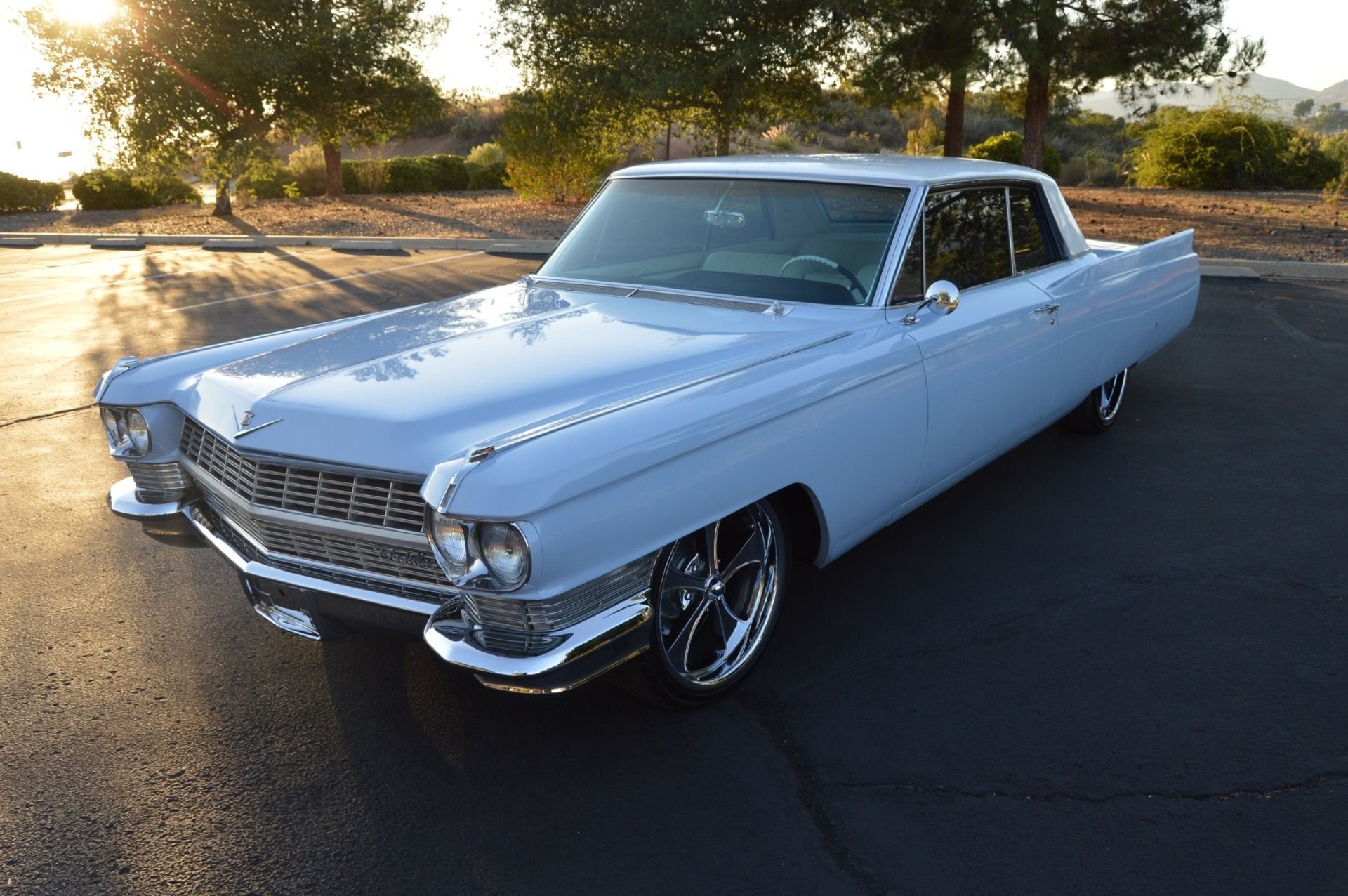
5. Cadillac Coupe DeVille (1964)
Getting the temperature inside a car just right sounds simple today. In 1964, Cadillac made the process far more automatic with its Comfort Control system.
The system is widely credited as the first fully automatic climate-control system in a production automobile. Instead of requiring the driver to continually adjust heating or air-conditioning controls, Comfort Control allowed the desired temperature to be selected while the system handled the necessary adjustments.
That concept may seem commonplace today, but it marked a significant shift in how automotive comfort was approached. Instead of simply heating or cooling the cabin, the vehicle could maintain the temperature selected by the driver.
Cadillac introduced the technology during a period when luxury cars were becoming showcases for new convenience features. The idea fit naturally into that setting because it reduced the amount of attention required from the person behind the wheel.
The system also introduced an idea that is still common in modern vehicles. Today’s digital climate controls may look very different from those found in cars from the 1960s, but the underlying concept remains much the same. Drivers select a desired temperature, and the vehicle automatically adjusts the cabin to maintain it.
For drivers accustomed to modern automatic climate control, the Cadillac system provides a reminder that many everyday conveniences once represented major automotive advances.
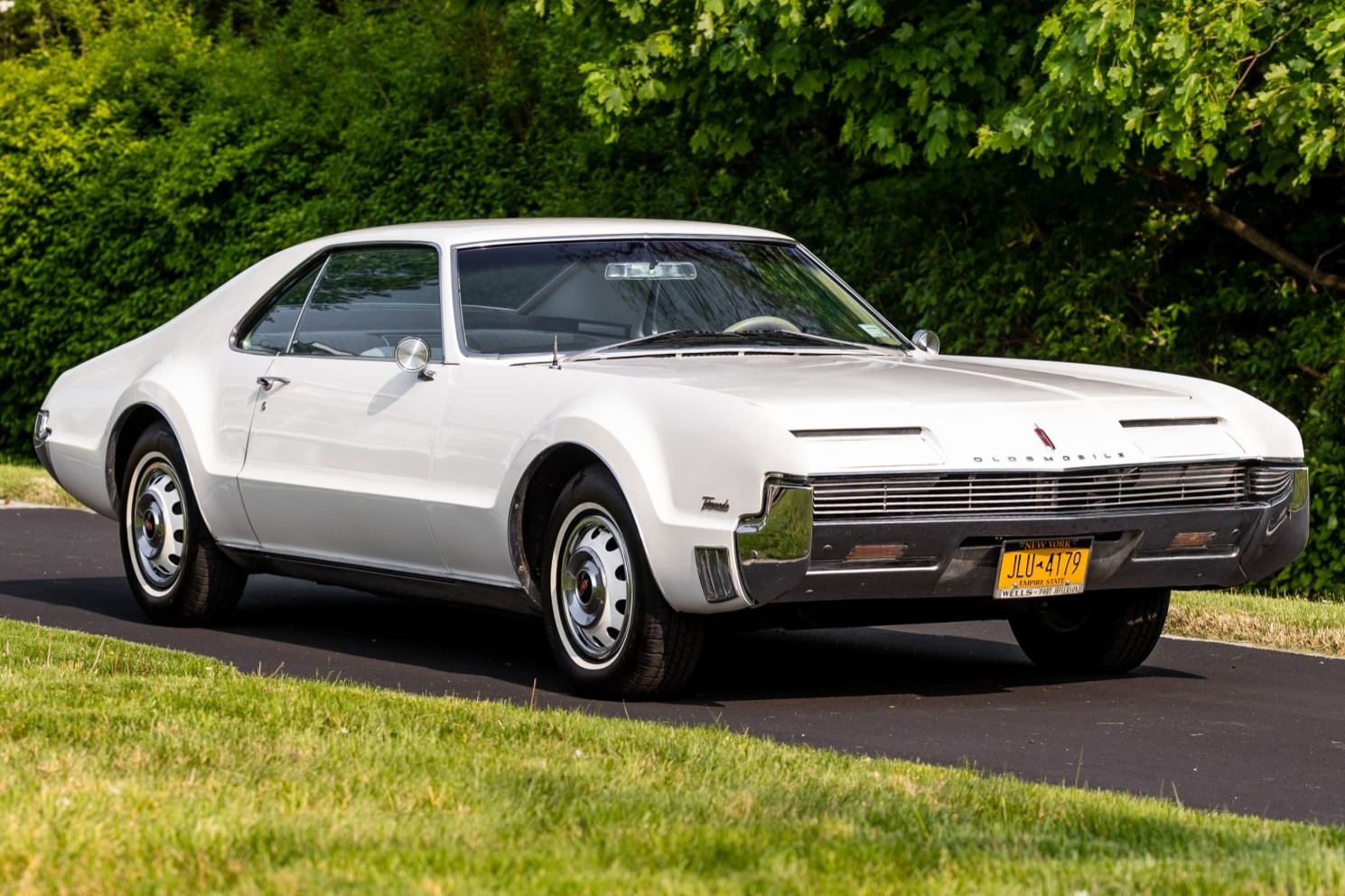
6. Oldsmobile Toronado (1966)
Front-wheel drive gets described as a modern invention sometimes, but that’s not quite accurate, and the 1966 Oldsmobile Toronado deserves a more precise introduction than that.
American manufacturers had actually experimented with front-wheel drive decades earlier, most famously with the Cord 810 and 812 models built in the 1930s.
So what makes the Toronado worth including? It was the first American production car with front-wheel drive since that Cord lineage disappeared, bringing the layout back into the American market after a long absence, and doing it in a large, full-size passenger car rather than a small experimental model.
Packaging a big V8 engine and transmission up front while still driving the front wheels was no small engineering task. Most manufacturers at the time considered front-wheel drive impractical for anything beyond a compact car, given the space and mechanical demands of routing power through the front axle.
Oldsmobile proved otherwise, fitting a genuinely large, comfortable American automobile with a drivetrain layout most engineers assumed belonged only in smaller cars.
The Toronado’s reintroduction of front-wheel drive didn’t cause an instant industry change, but it kept the concept alive in the American market at a time when it easily could have faded away entirely.
Decades later, front-wheel drive became one of the most common layouts on the road, found in everything from economy sedans to minivans. That resurgence traces back, at least in part, to one bold Oldsmobile refusing to let the idea die.
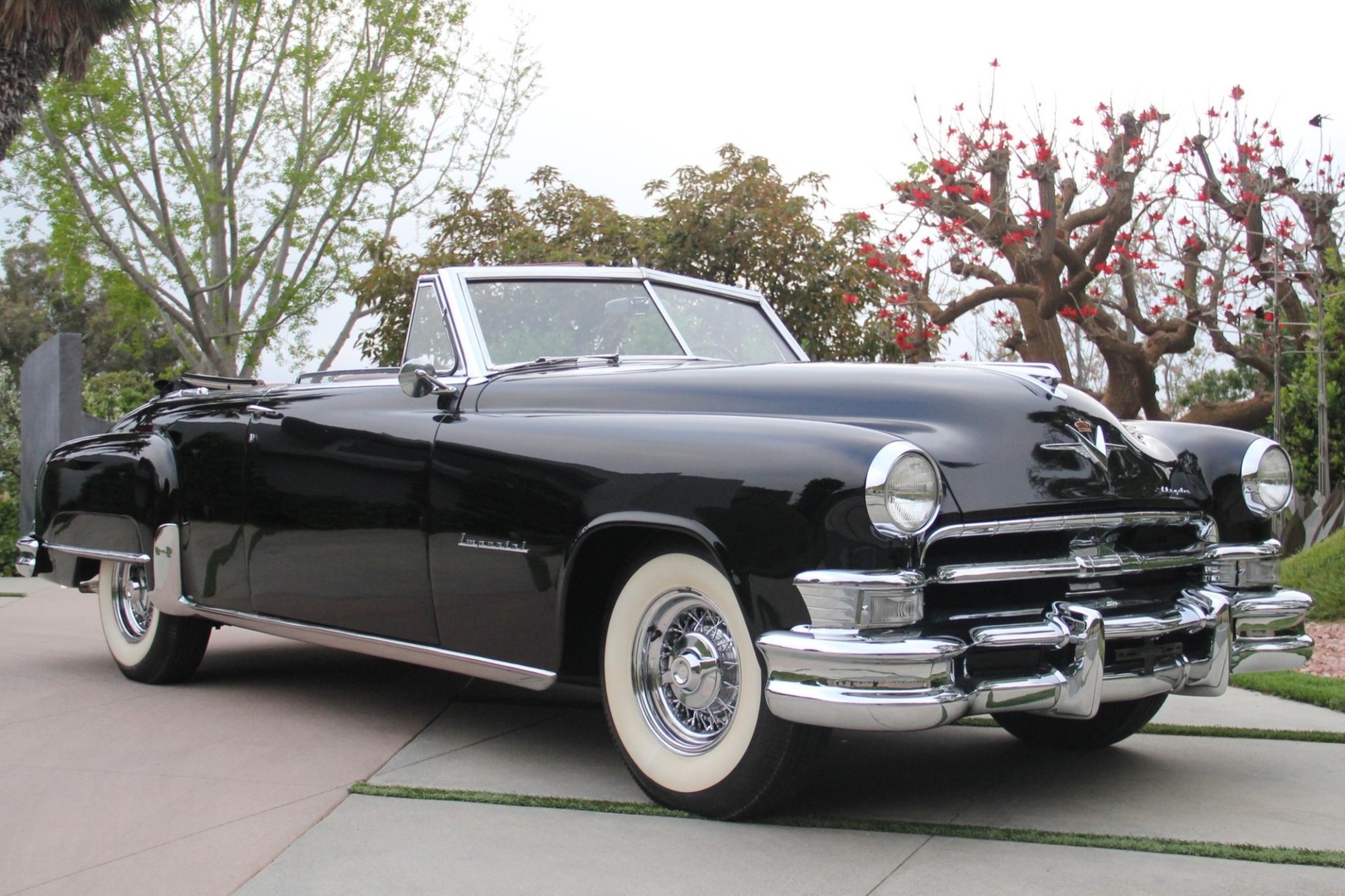
7. Chrysler Crown Imperial (1951)
Steering a heavy car at low speed used to be genuine physical work, the kind that left drivers with tired arms after a long parking session.
Chrysler addressed this directly in 1951 with the Imperial, introducing a system called Hydraguide, recognized as the first commercially available power steering system offered on a passenger car.
Buyers could option Hydraguide onto the standard Imperial, while it came included as standard equipment on the Imperial Crown, the brand’s top trim level at the time.
The hydraulic system used pressure to assist the driver’s steering input, dramatically cutting down on the effort needed to turn the wheel, especially while parking or maneuvering at slow speeds where manual steering felt heaviest.
Chrysler’s engineers weren’t just solving a comfort problem here. They were addressing a genuine barrier to who could comfortably operate a large automobile, since heavy manual steering made bigger cars physically difficult for many drivers to manage confidently.
Hydraguide opened the door for a broader range of people to drive substantial vehicles without feeling like they were wrestling the wheel at every turn.
Once Chrysler proved the concept worked reliably in real-world conditions, other manufacturers moved quickly to develop their own versions.
Power steering spread across the industry at a rapid pace, and within a relatively short stretch of years, it became something close to standard equipment rather than a luxury upgrade.
Nearly every car built today includes some form of power-assisted steering, a direct descendant of the system Chrysler introduced on this one full-size sedan.
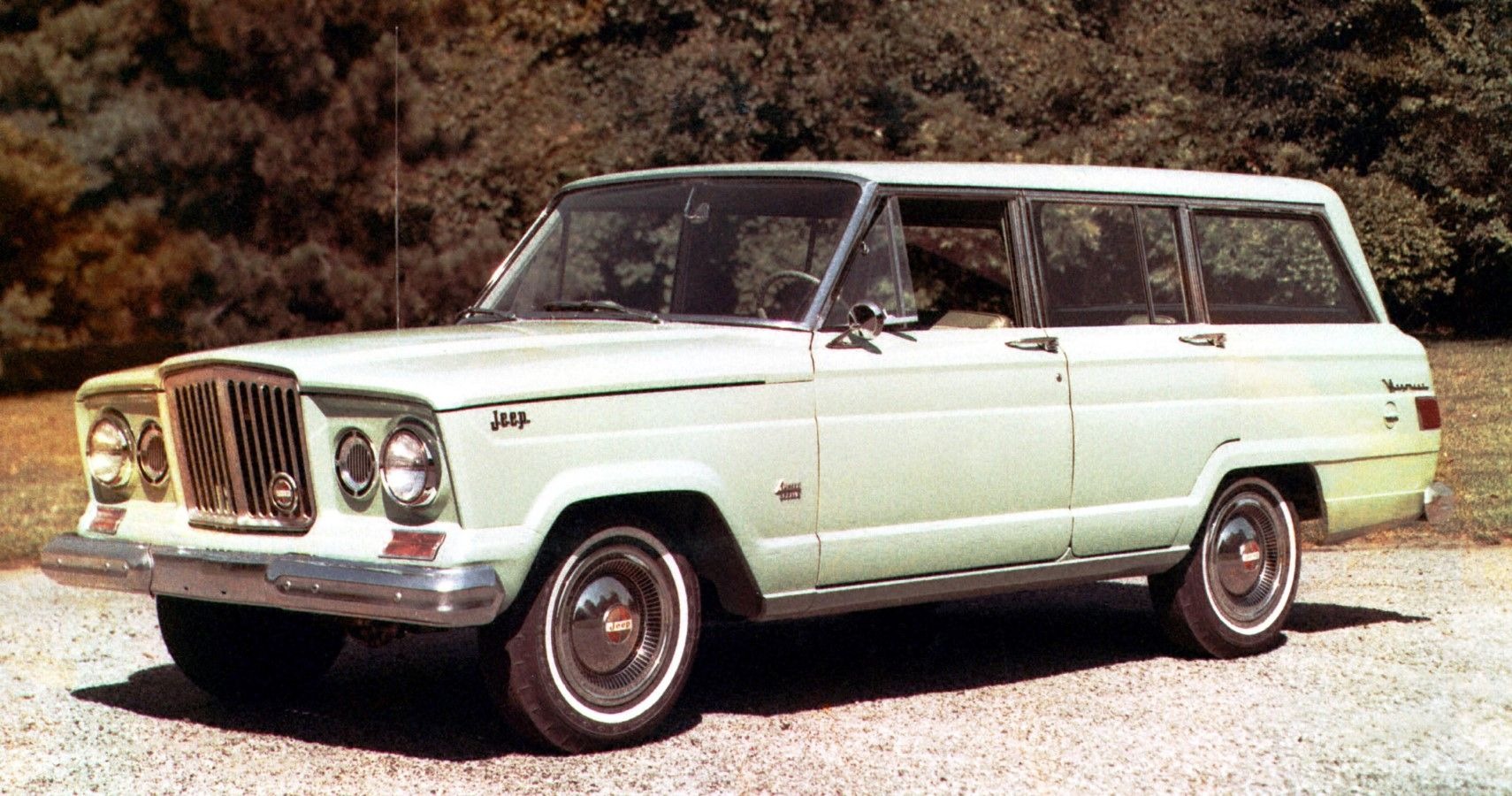
8. Jeep Wagoneer (1963)
The Jeep Wagoneer debuted for the 1963 model year with a distinctive mix of features. It combined four-wheel-drive capability with passenger-car comfort and a level of convenience that went beyond what buyers typically expected from a utility vehicle.
Jeep identifies the Wagoneer as the first 4×4 vehicle with independent front suspension and the first 4×4 vehicle offered with an automatic transmission. Those features helped separate it from rugged four-wheel-drive vehicles that were primarily designed around utility.
The automatic transmission was especially useful because it brought a familiar passenger-car convenience to a vehicle built for four-wheel-drive use. Independent front suspension also represented a different engineering approach to ride and handling.
The Wagoneer was offered with a more comfortable interior and passenger-focused design, giving buyers a vehicle that could serve practical duties without feeling like a stripped-down work machine.
This combination helped shape the formula that would later define luxury SUVs. It brought together capable four-wheel-drive hardware with the comfort, interior space, and everyday practicality expected from a passenger vehicle.
The Wagoneer therefore belongs in a technology-focused history not because of one single gadget, but because several engineering and convenience features came together in one vehicle.
Its approach helped define what a four-wheel-drive family vehicle could be, long before the modern SUV became a common sight on American roads.
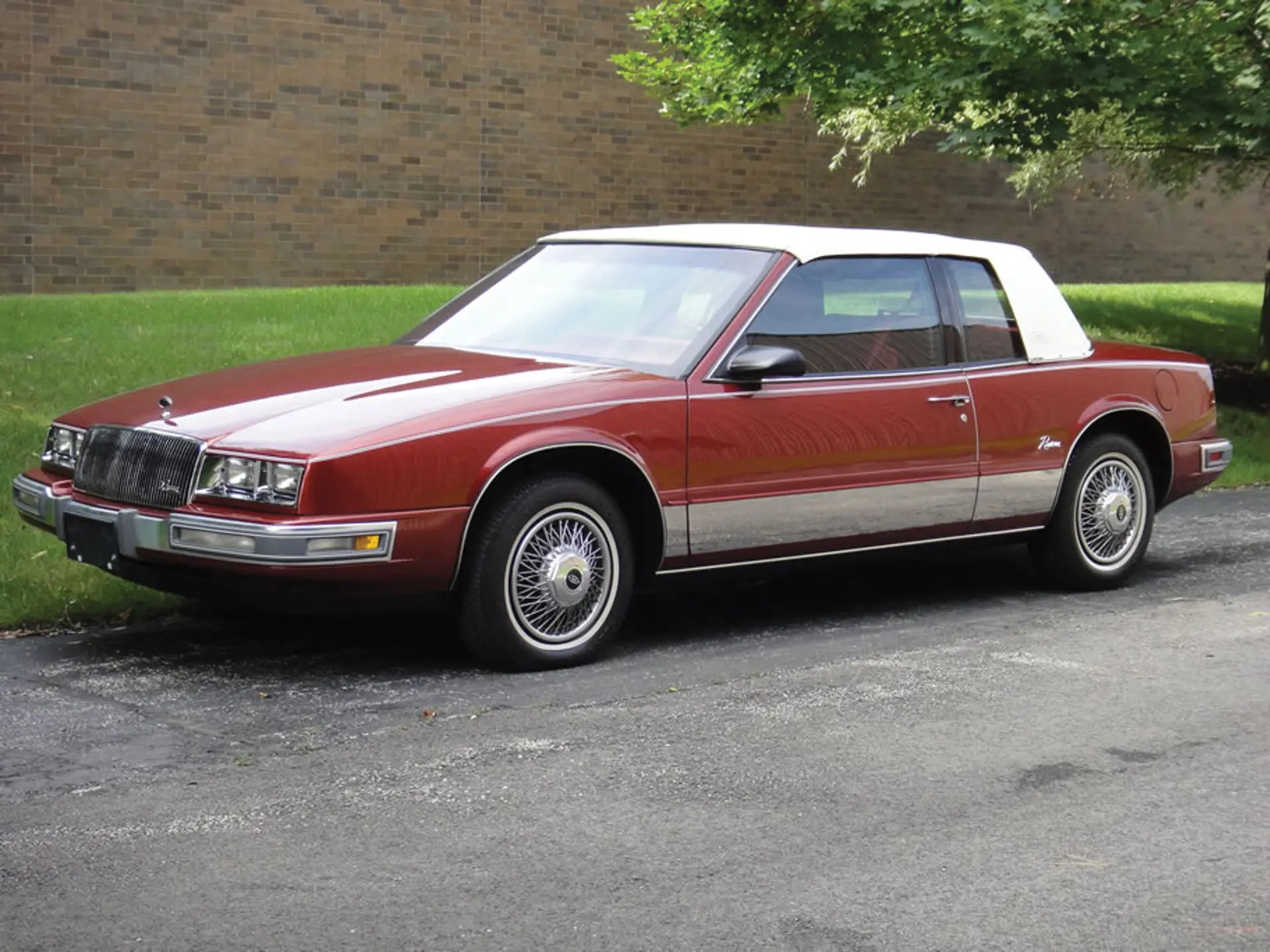
9. Buick Riviera (1986)
Touching a screen to control your car sounds like something out of the last fifteen years, not the mid-1980s. Yet the 1986 Buick Riviera beat modern automakers to this idea by decades, introducing what’s widely recognized as the first production-car touchscreen interface anywhere in the industry.
Buick called the system the Graphic Control Center, and it used a touch-sensitive CRT display to operate functions that had previously required physical buttons and knobs, including the radio and climate settings.
The same screen also displayed vehicle information and diagnostic readouts, putting a surprising amount of digital control into a single panel mounted right on the dashboard.
Given the limits of display technology at the time, the screen itself was small and monochrome, a far cry from the crisp, colorful touchscreens found in cars today.
Reliability issues and the technical constraints of 1980s electronics eventually led to the system’s discontinuation, and it didn’t stick around in later Riviera model years the way its creators probably hoped.
Still, the ambition here deserves real credit. General Motors has acknowledged the 1986 Riviera as an early touchscreen pioneer, specifically pointing to the Graphic Control Center as proof that the idea existed decades before it became practical and reliable enough for mass adoption.
Every modern infotainment screen, in every car built since, owes something to this early, flawed, but genuinely groundbreaking attempt.
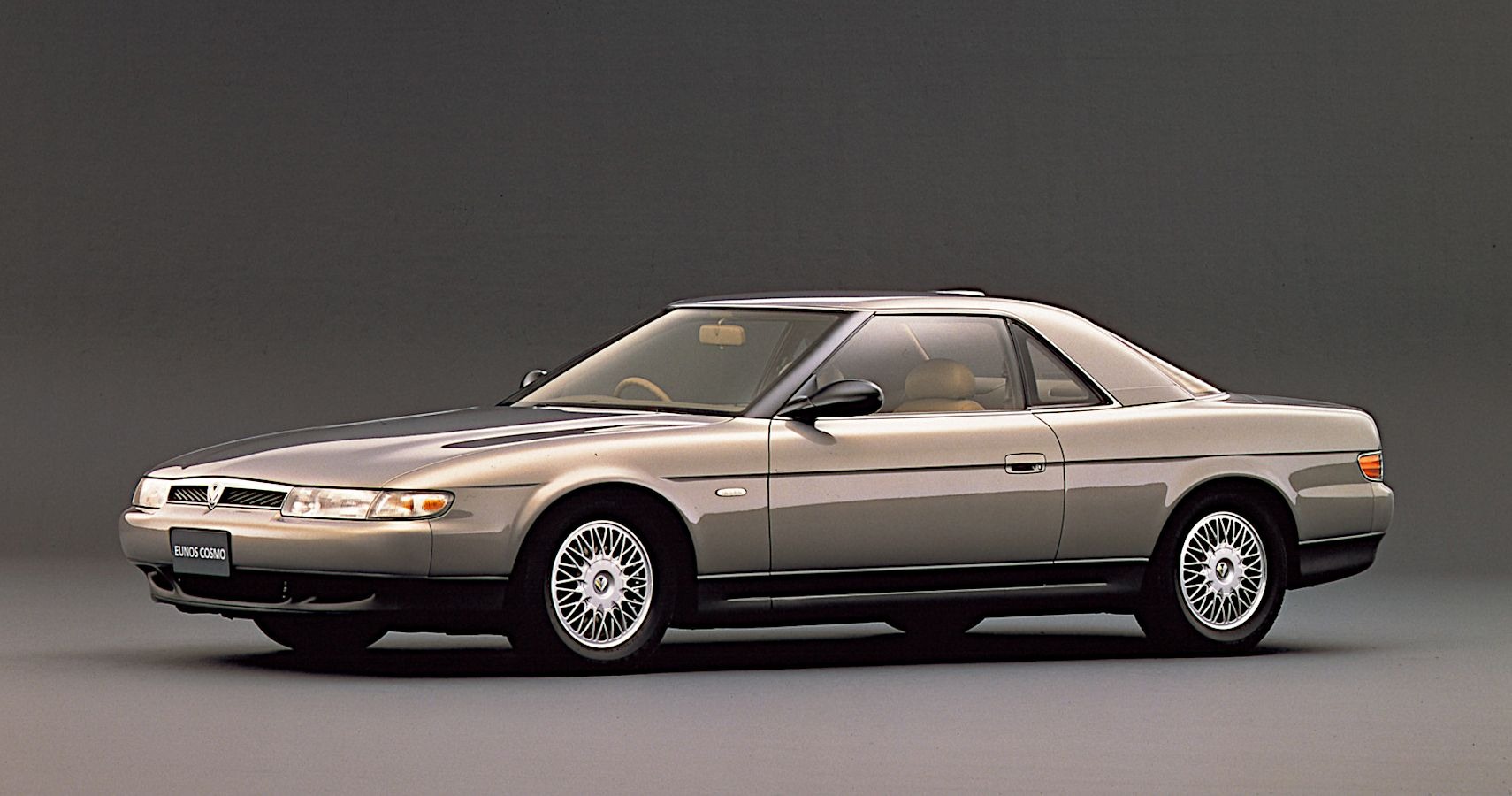
10. Mazda Eunos Cosmo (1990, American market import)
One final clarification is worth noting. The Eunos Cosmo is not an American car, so it is better viewed here as an international example rather than a direct entry on this list. Even so, its technology played an important role and is significant enough to include.
Mazda introduced the Eunos Cosmo in 1990, and the company describes it as featuring the world’s first satellite-navigation system built into a production car.
At a time when most drivers were still relying on paper maps and memorized routes, the Cosmo offered something that felt almost impossibly futuristic, guiding drivers using signals from orbit rather than printed directions folded up in a glove box.
That wasn’t even the car’s only claim to fame. The Eunos Cosmo also holds the distinction of being the world’s first mass-production vehicle equipped with a three-rotor rotary engine, paired with sequential twin turbochargers for good measure.
Two genuinely rare engineering achievements landed in a single model, which is an unusual amount of innovation to pack into one car.
Satellite navigation eventually became something nearly every driver relies on, whether through a built-in system or a smartphone mounted on the dashboard.
The Cosmo’s early attempt at solving the “how do I get there” problem looks primitive by today’s standards, but the basic idea, using satellites to guide a driver in real time, proved so useful that it became one of the most widely adopted pieces of automotive technology ever developed.
