Automotive history is filled with companies that reached a dangerous crossroads and needed one successful vehicle to change their direction. Sometimes the turnaround came from a family sedan that attracted hundreds of thousands of buyers.
In other cases, an unexpected SUV or sports car opened an entirely new market and transformed the manufacturer’s finances. These vehicles did more than generate strong sales. They helped reshape product strategies, manufacturing plans, and customer perceptions at moments when their companies needed momentum.
The eight examples below are tied to documented financial or business turning points, rather than simply being popular models from successful automakers.
1. 1949 Ford
The 1949 Ford arrived when Ford Motor Company was trying to establish itself in a radically changing postwar market.
Rather than simply updating the prewar formula, Ford introduced a substantially redesigned car with integrated front fenders, a lower body, and a more modern appearance. The change was significant enough to help move Ford away from its prewar design philosophy.
The sales response was substantial. Ford produced 1,118,762 examples of the 1949 model, and Ford’s own historical account identifies the car as a crucial vehicle in the company’s recovery from the financial difficulties of the immediate postwar period. Ford says the 1949 model helped put the company on a path toward stronger profits during the 1950s.
That makes the car more than an important design milestone. It arrived at a moment when Ford needed to demonstrate that it could compete effectively in the new postwar American market.
The company’s transition from wartime production back to consumer automobiles had created significant challenges, and the 1949 Ford gave dealers a genuinely new product to sell.
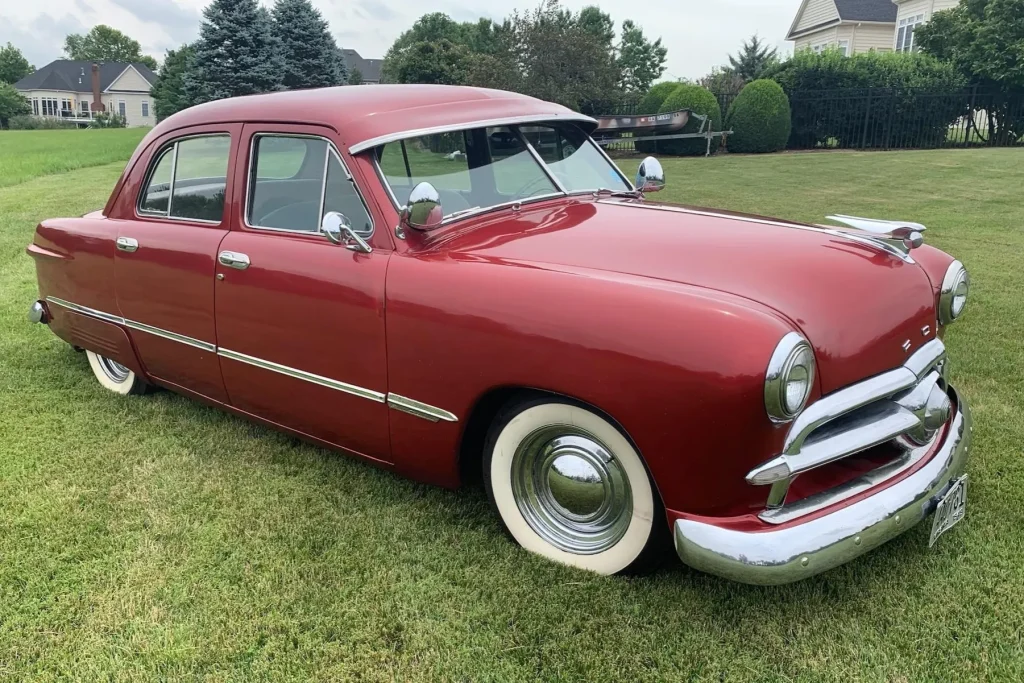
The model’s importance also came from its range. Ford offered several body styles, including sedans, a coupe, a convertible, and a station wagon, allowing the new design language to reach different types of American buyers.
The exact mechanical specifications varied by body style and equipment, but the standard 1949 Ford used Ford’s flathead V8.
2. Porsche Cayenne
When Porsche introduced the Cayenne in 2002, the idea of a Porsche SUV was controversial enough to seem like a gamble. The company, however, had a serious financial reason to broaden its product range.
Porsche says it had suffered a 240 million Deutsche Mark loss in 1992, while deliveries fell dramatically during the early 1990s. In the 1991/92 financial year, Porsche delivered only 23,060 vehicles.
The Boxster helped begin the recovery in the 1990s, but Porsche’s management concluded that relying on the 911 and Boxster alone would not provide a sufficiently broad foundation for long-term growth.
The company therefore developed the Cayenne through the “Colorado” project with Volkswagen, creating a luxury SUV that could appeal to customers outside the traditional sports-car market.
The gamble paid off on a much larger scale than Porsche initially expected. The company originally projected roughly 25,000 Cayennes per year, but the first generation produced 276,652 vehicles across eight model years, averaging nearly 35,000 annually.
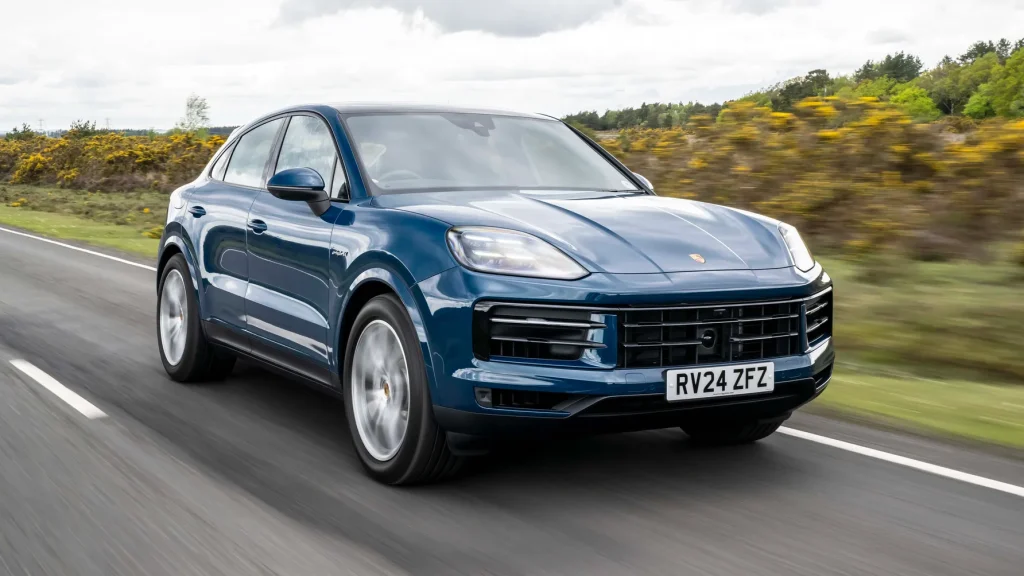
Porsche later said the Cayenne became an economic foundation for sustainable growth and significantly expanded its customer base.
The first-generation U.S. Cayenne offered V6 and V8 engines. The entry model used a 3.2-liter V6, giving Porsche buyers a less expensive route into the brand, while the Cayenne S and Turbo provided substantially more performance.
3. Nissan Altima
The Nissan Altima did not rescue Nissan from the severe financial crisis of the late 1990s by itself, so it is important to frame its role accurately. Nissan’s actual turnaround came through the Nissan Revival Plan, launched after Renault took a major stake in the company in 1999.
The plan targeted debt reduction, cost cuts, and a stronger product lineup. Nissan’s own history identifies that period as the company’s revival from financial distress.
Within that product offensive, the Altima became one of Nissan’s most important U.S. nameplates. The third-generation Altima, introduced for 2002, was substantially larger and more powerful than the model it replaced.
Its available 3.5-liter V6 produced 240 horsepower, giving Nissan a credible alternative to established American and Japanese midsize sedans.
The timing was important. Nissan was trying to rebuild its reputation and increase sales while simultaneously reducing costs. The Altima became a major part of that effort in the United States, where midsize sedans represented a large and highly competitive market.
Nissan’s financial recovery became substantial. By fiscal 2003, the company reported that its Nissan Revival Plan had been completed ahead of schedule, while operating performance had improved significantly from the late-1990s crisis.
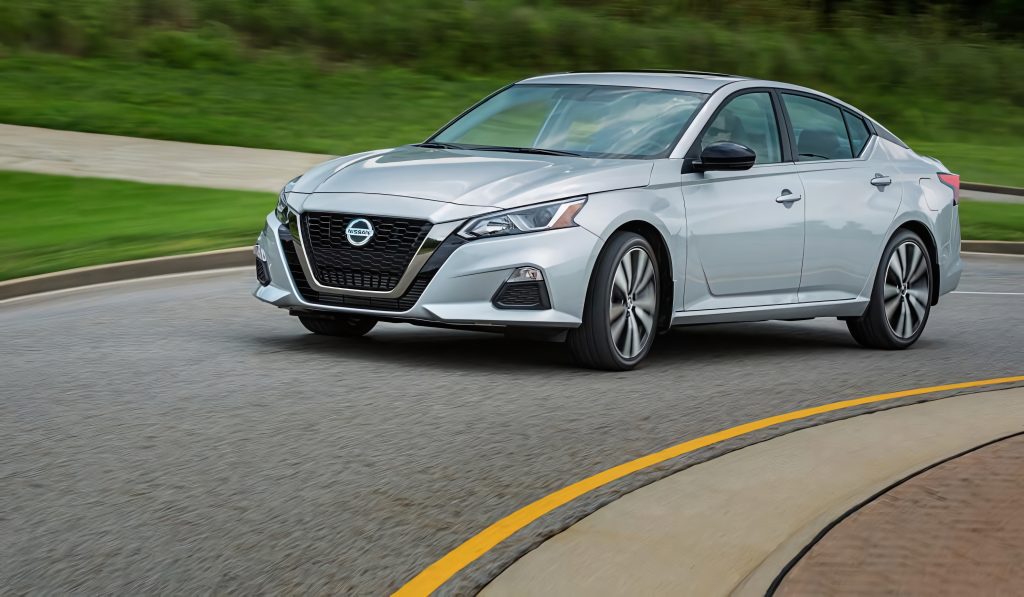
The Altima was one contributor to the broader product-led recovery rather than a single vehicle that independently saved the corporation.
Its importance continued through subsequent generations, with the Altima becoming one of Nissan’s longest-running U.S. volume models.
4. Chrysler PT Cruiser
The Chrysler PT Cruiser arrived at exactly the kind of moment when a distinctive product could make a major difference to a struggling automaker.
Introduced for the 2001 model year, the retro-styled compact combined a tall wagon-like body with design cues inspired by classic American vehicles. It was unusual enough to stand apart from conventional compact cars, and that became a major part of its appeal.
Chrysler had been through major corporate changes during the 1990s, including its merger with Daimler-Benz in 1998. The PT Cruiser became one of the most recognizable products of the Chrysler era that followed. It generated strong initial demand and quickly became an important volume model for the brand.
Chrysler eventually built more than 1.35 million PT Cruisers worldwide during the model’s production run. Its U.S. popularity was especially strong during the early years, when the distinctive styling helped Chrysler attract customers who might otherwise have chosen a conventional compact car.
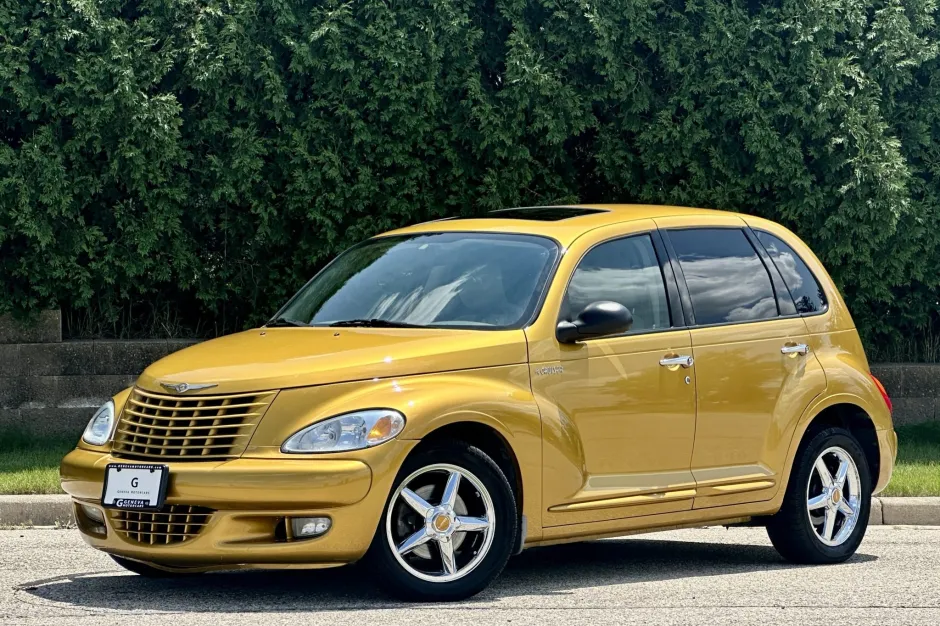
The PT Cruiser also demonstrated that a relatively inexpensive vehicle could carry considerable design identity. Instead of competing solely on price, fuel economy, or equipment, Chrysler gave buyers a shape that looked unlike the other compact vehicles filling American dealer lots.
It would be an exaggeration to call the PT Cruiser solely responsible for saving Chrysler. The company was part of DaimlerChrysler and later went through another restructuring before ultimately entering bankruptcy proceedings during the 2008-09 financial crisis.
Still, the PT Cruiser was an important commercial success and a major contributor to Chrysler’s product momentum during the early 2000s.
5. Tesla Model S
The Tesla Model S is one of the clearest examples of a vehicle that changed the financial trajectory of a young automaker. Tesla had already survived the difficult Roadster development period, but it still had to prove that it could build an electric vehicle at substantially higher volume. The Model S was designed for that exact purpose.
Tesla began customer deliveries in June 2012, moving from a low-volume sports car to a five-passenger sedan intended for a much larger market.
By the end of 2012, Tesla had produced more than 3,100 Model S vehicles and reached an annualized production rate of 20,000 cars. The company also had more than 15,000 remaining customer reservations at the end of that year.
The financial impact became much clearer in 2013. Tesla delivered 22,477 Model S vehicles, compared with roughly 2,650 in 2012. Automotive sales revenue rose from $385.7 million in 2012 to about $2.0 billion in 2013.
Tesla also reported its first quarterly profit in early 2013, an important milestone for a company that was still establishing itself as a serious automaker.
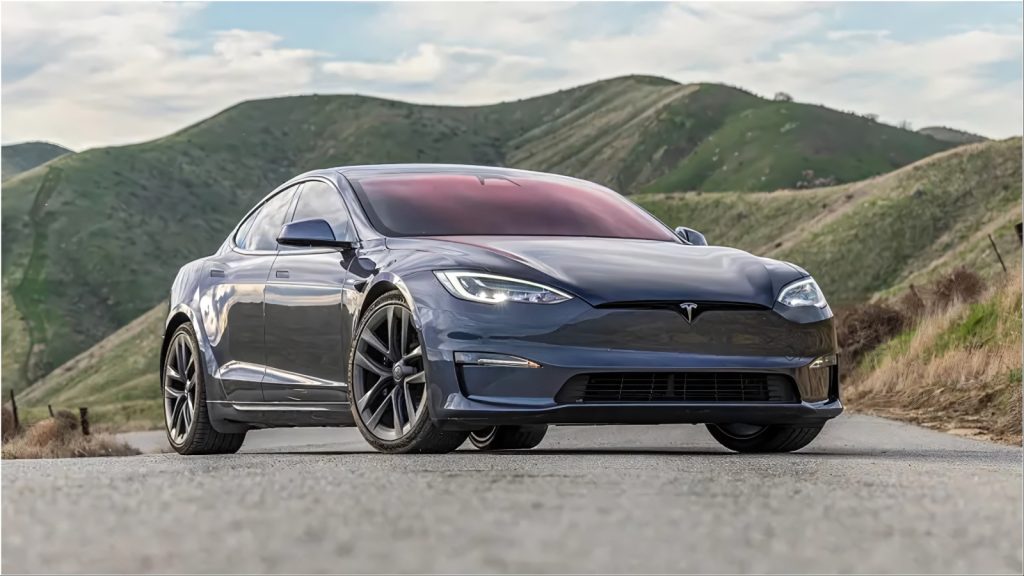
That does not mean the Model S single-handedly rescued Tesla from imminent bankruptcy. The company also benefited from financing, regulatory-credit revenue, government-backed lending, and its broader technology business.
But the Model S gave Tesla a scalable product and demonstrated that its electric powertrain could support a premium vehicle with substantially greater production volume than the Roadster.
6. Ford Mustang
The original Ford Mustang did something very different from the Model S. It did not pull Ford out of a near-bankruptcy situation. Instead, it created an enormous new source of demand at a time when Ford wanted a relatively inexpensive, youthful performance-oriented car that could attract buyers beyond its conventional lineup.
Introduced in April 1964, the Mustang was based heavily on existing Ford components, helping the company control development and manufacturing costs. Its compact dimensions, long hood, short rear deck, and wide range of engines gave customers a combination of style and affordability that was unusual for the period.
Demand quickly overwhelmed Ford’s expectations. By April 17, 1965, Ford had sold nearly 419,000 Mustangs, approximately four times the original sales target established by Lee Iacocca and his team.
The success went beyond the initial sales burst. The Mustang reached one million sales in roughly 18 months, making it one of Ford’s fastest-selling new nameplates. The car also created the pony-car category, encouraging competitors to develop their own compact, sporty coupes.
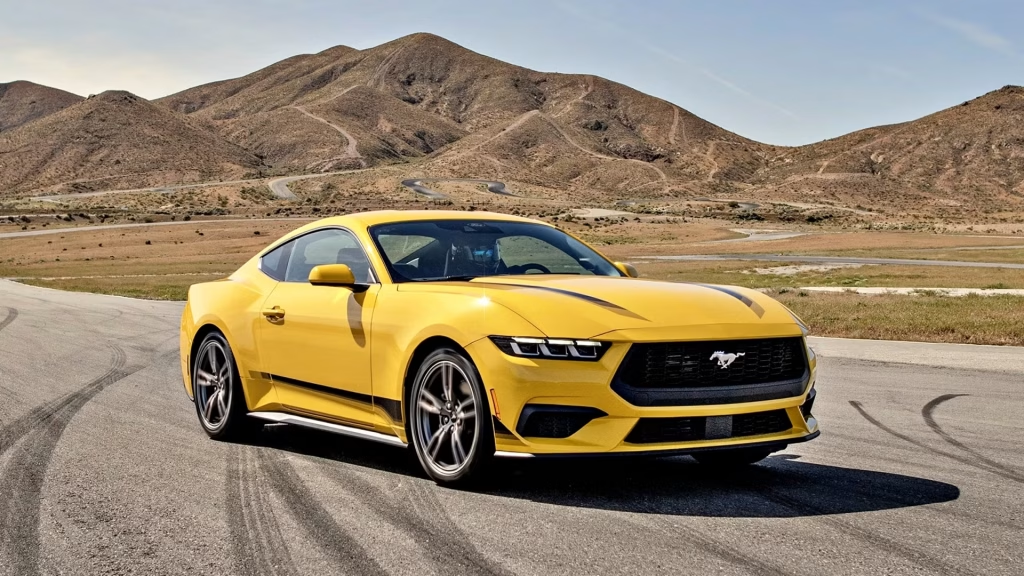
Calling the Mustang the vehicle that “saved” Ford requires some qualification. Ford was not in the same financial crisis it had faced before the 1949 Ford, and the company had many successful products.
The Mustang’s documented contribution was instead its extraordinary sales performance and its ability to create an entirely new, highly profitable market segment.
The launch version used engines related to Ford’s compact Falcon, including a 260-cubic-inch V8.
7. Plymouth Voyager
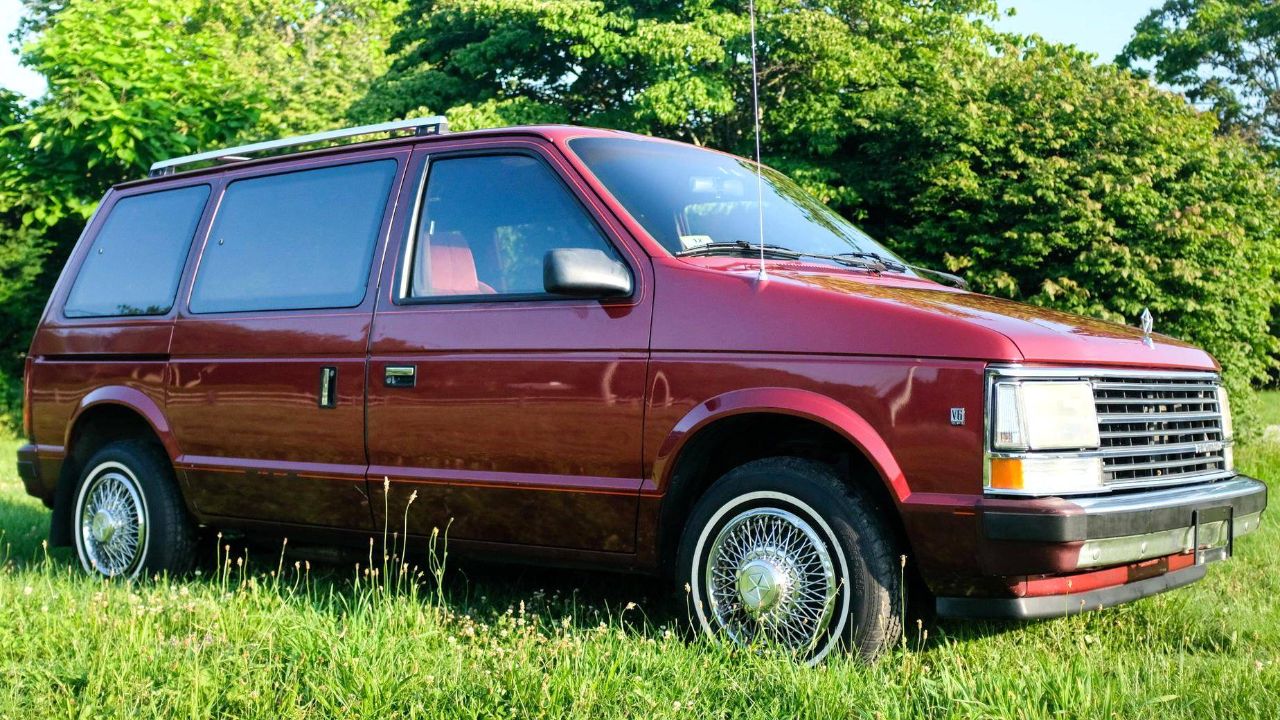
The Plymouth Voyager is one of the strongest examples of a vehicle that genuinely changed its company’s fortunes. When Chrysler was struggling badly in the late 1970s, the company needed more than cost cutting and government assistance. It needed a product that could create an entirely new market.
The answer arrived in 1983 with the front-wheel-drive Voyager, developed alongside the Dodge Caravan.
The minivan concept was a major departure from Chrysler’s traditional cars. It offered carlike driving characteristics, a relatively compact footprint, and substantially more usable passenger space than a conventional station wagon.
Chrysler’s strategy worked quickly. The new minivans attracted families who wanted three-row practicality without moving to a full-size van.
The Voyager and its Dodge counterpart became central to Chrysler’s turnaround during the 1980s. Stellantis’ historical material describes the minivan as a product that helped revive Chrysler’s fortunes, while the company credits the broader turnaround with taking Chrysler from severe financial trouble toward profitability.
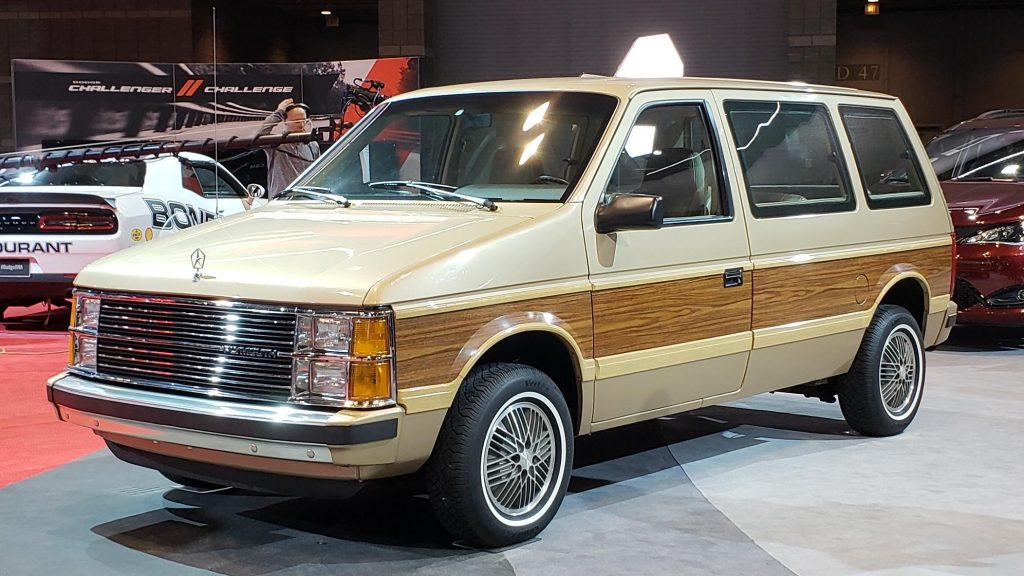
The importance of the Voyager went beyond its sales figures. Chrysler effectively created the modern American minivan market and established a product category that would become one of the company’s defining businesses for decades.
The minivan also generated licensing, manufacturing, and platform opportunities that extended well beyond the original Plymouth model.
The early Voyager used Chrysler’s compact four-cylinder engines, with V6 power becoming available as the range expanded.
8. Toyota Prius
The Toyota Prius deserves a place on this list, but with an important distinction. Its introduction did not save Toyota from bankruptcy or an impending corporate collapse. Toyota was already a large and financially stable automaker when the Prius was launched. Instead, the Prius helped introduce a new technological and business direction that later became an important part of the company’s strategy.
The first-generation Prius launched in Japan in 1997 and reached North America in 2000. Toyota initially expected only about 12,000 U.S. sales per year, but demand gradually accelerated. By 2007, U.S.
Prius sales had passed 500,000 units, and worldwide Prius sales exceeded 1 million by 2008. Toyota reported more than 2 million global Prius sales by September 2010.
That scale mattered because the Prius became the foundation for Toyota’s broader hybrid strategy. Toyota used the technology developed through the Prius program across additional models, eventually turning hybrid power into a major component of its global product strategy.
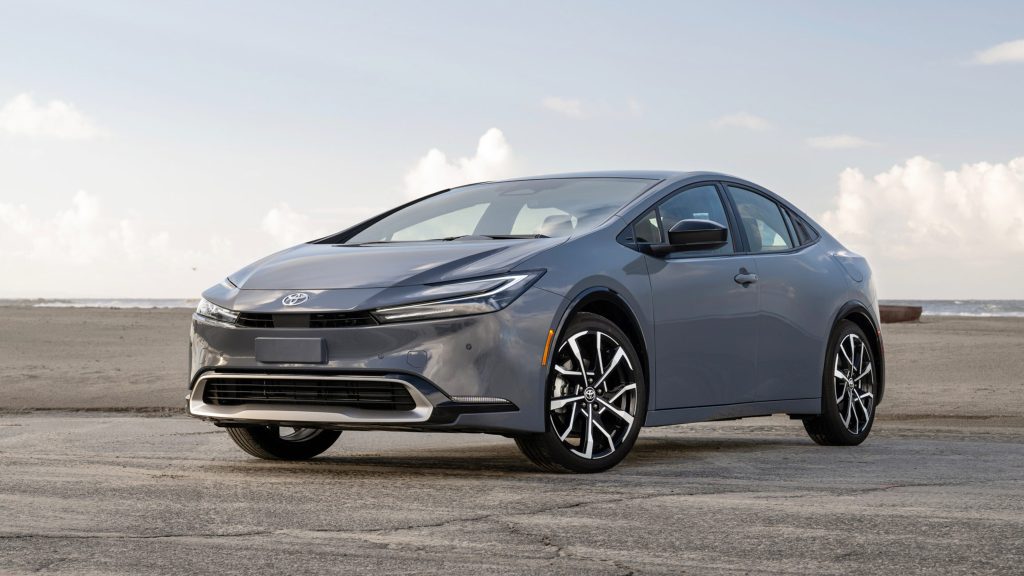
The company has said the Prius helped establish hybrid technology as a practical mass-market proposition.
The second-generation Prius, introduced for 2004 in the United States, was particularly important. Its distinctive hatchback shape, improved efficiency, and larger cabin helped transform the Prius from an engineering experiment into a recognizable mainstream product.
So the Prius is better described as a vehicle that helped reshape Toyota’s long-term strategy, rather than one that literally saved the company from collapse.