
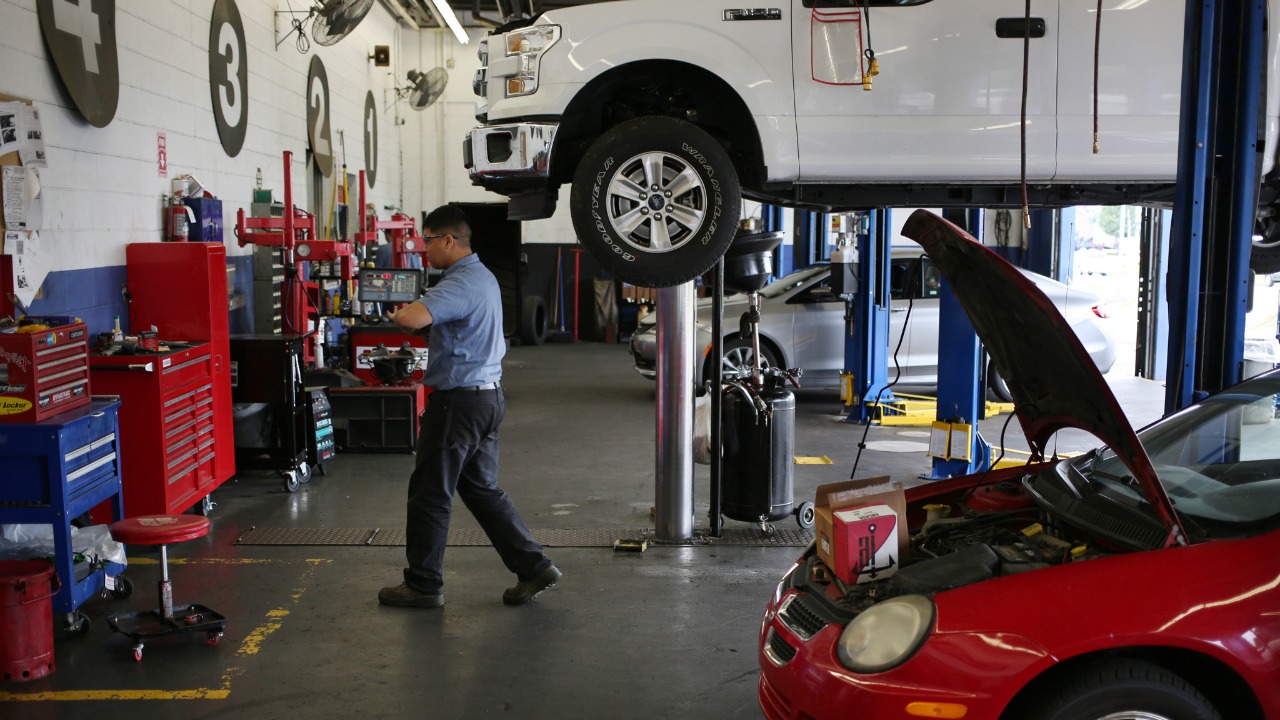
A repair bill can become surprisingly expensive when the component itself is not the biggest expense. The real cost often comes from the time required to reach, remove, inspect, and reinstall the failed part.
RepairPal’s current U.S. estimates show just how dramatic that difference can be. A head gasket, for example, may have parts costing roughly $903 to $937, yet labor can reach $2,449. A timing belt follows the same pattern, with parts estimated at $315 to $453, while labor can run as high as $885.
These repairs demonstrate why two bills for seemingly similar components can look completely different once technician time enters the equation.
1. Head Gasket Replacement
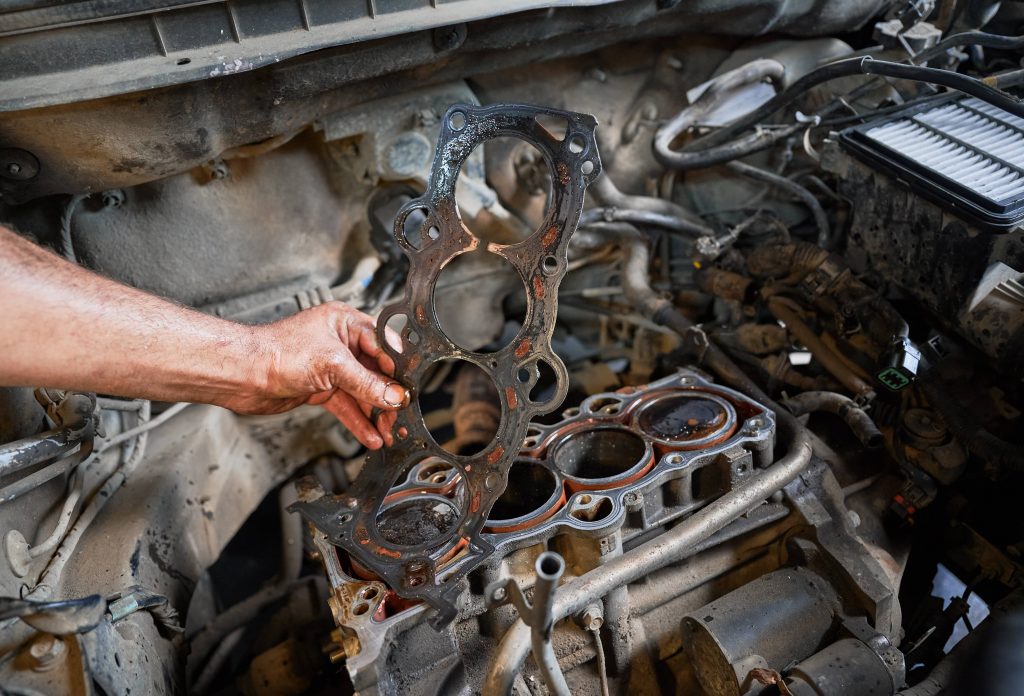
Few repairs demonstrate the labor-versus-parts gap better than a head gasket. RepairPal’s current U.S. estimate puts a typical head gasket replacement at $2,572 to $3,386, but the gasket itself accounts for only about $903 to $937 of that figure. Labor is estimated at $1,669 to $2,449. That means labor can cost more than twice the price of the replacement gasket.
The reason is not that the gasket is unusually expensive. Its location is the problem. A head gasket seals the joint between the engine block and cylinder head, preventing oil, coolant, and combustion gases from crossing into areas where they do not belong. Reaching it requires substantial engine disassembly.
RepairPal says the technician must remove numerous components before reaching the cylinder head. Once the engine is opened, the mating surfaces have to be inspected and cleaned before the new gasket can be installed.
The engine then has to be carefully reassembled. The process can take several days depending on the vehicle and the extent of the work.
The financial difference becomes even clearer with specific vehicles. RepairPal estimates a Toyota Camry head gasket replacement at $2,800 to $3,773, including approximately $1,866 to $2,738 in labor and about $934 in parts. A Ford F-150 can reach $3,474 to $4,603.
A cheap gasket therefore does not mean a cheap repair. Most of the bill pays for the difficult work required to reach it and correctly put the engine back together.
2. Timing Belt Replacement
A timing belt can be relatively inexpensive to purchase, yet replacing it is a very different story. RepairPal currently estimates a U.S. timing belt replacement at $918 to $1,338. The parts are estimated at only $315 to $453, while labor ranges from $603 to $885.
That makes labor the dominant expense.
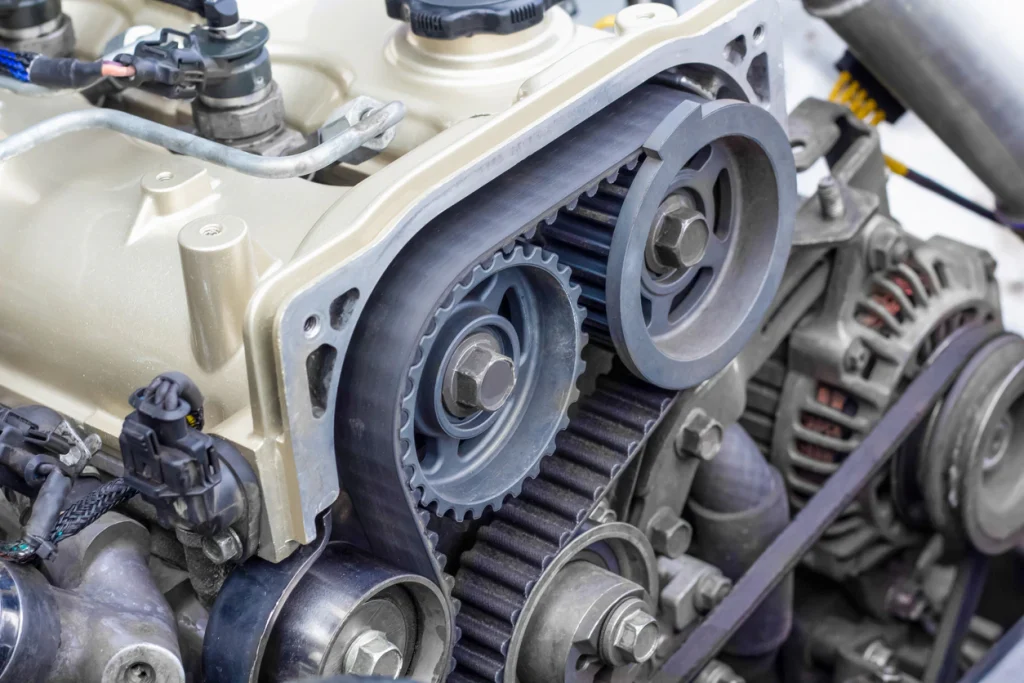
The timing belt synchronizes the crankshaft and camshaft so the engine’s valves and pistons operate at precisely the right moments. It is not simply a belt that can be pulled off and replaced in a few minutes.
RepairPal says technicians may need to remove the timing belt cover, tensioner, belt, and pulleys. Depending on the vehicle, engine mounts, cooling fans, radiator, and other accessories may also have to come out of the way.
The vehicle itself can make the difference substantial. RepairPal lists the Toyota Corolla at $452 to $766, while the Toyota Camry is estimated at $633 to $1,081. A Ford F-150 can be dramatically more expensive, with an estimated $2,272 to $3,270.
There is also a reason many technicians recommend replacing related timing components at the same time. Once access has already been created, replacing worn components can prevent paying for similar labor again later.
The key takeaway is straightforward. When a repair requires reaching a component hidden beneath several layers in the engine bay, the part itself may account for only a small portion of the total bill. In the case of timing belts, labor costs can easily surpass the price of the belt.
3. Water Pump Replacement
A water pump may sound like a relatively straightforward mechanical component, but its replacement cost can lean heavily toward labor. RepairPal’s current U.S. estimate puts the average replacement at $891 to $1,135. Parts account for approximately $525 to $598, while labor runs between $366 and $536.
In other words, labor does not dominate every water pump repair by the same margin, but it can still represent a major portion of the bill.
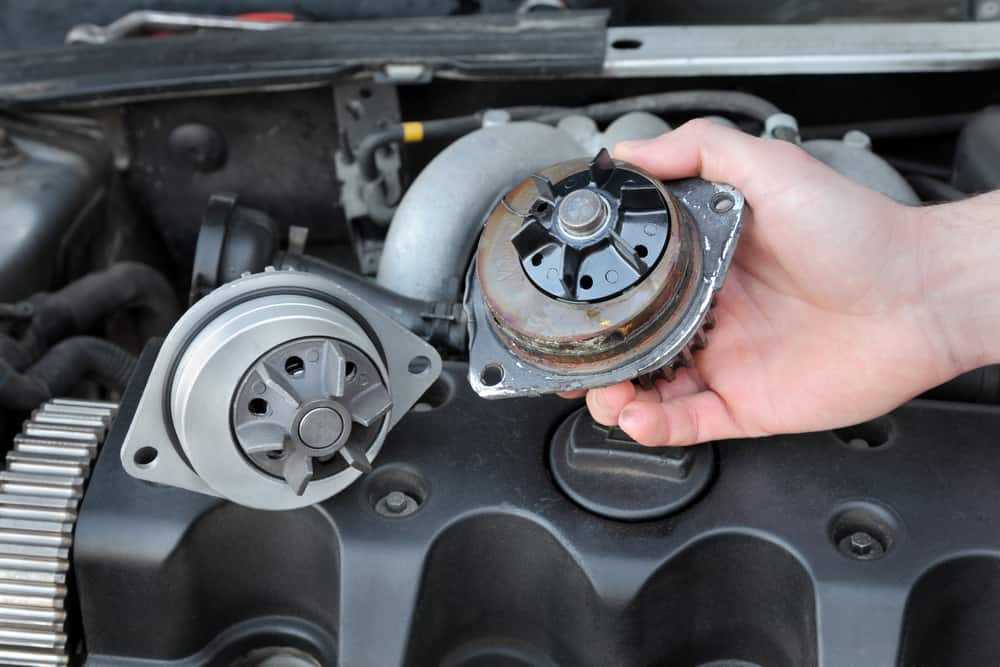
The pump circulates coolant through the engine’s cooling system. If it leaks, becomes noisy, or stops circulating coolant properly, the engine can overheat. RepairPal notes that replacing the pump can require draining the cooling system and removing a fan belt, timing belt, or other components depending on the design.
Vehicle design makes a considerable difference. RepairPal estimates a Toyota Corolla water pump replacement at just $476 to $612, with parts around $252 and labor around $224 to $328. A Chevrolet Silverado 1500 is listed at $1,082 to $1,442, while the Ford F-150 is estimated at $979 to $1,150.
The timing of the repair can also affect the financial decision. If a water pump is driven by the timing belt, RepairPal says it is customary to replace the pump when the timing belt is being replaced. That can make sense because much of the labor required to reach both components overlaps.
A water pump demonstrates an important principle of repair costs. The same component can be relatively inexpensive to replace on one vehicle but much more expensive on another because its accessibility and the engine layout can significantly affect the labor required.
4. Alternator Replacement
The alternator is another component where labor can consume a significant share of the repair bill. RepairPal estimates a typical U.S. alternator replacement at $809 to $1,088. Parts are priced at approximately $613 to $800, while labor is estimated at $196 to $288.
Unlike a head gasket or timing belt, the alternator usually does not create a situation where labor costs twice as much as the component. However, the labor can still become a meaningful expense when access is difficult.
RepairPal notes that technicians must disconnect the battery cables, remove the accessory or serpentine belt, disconnect electrical connections, and remove mounting bolts. Some vehicles make this straightforward. Others place the alternator in a difficult location where additional components must be moved or removed.
The vehicle-specific numbers demonstrate how widely costs can vary. A Toyota Corolla is estimated at $527 to $814, while a Honda CR-V can reach $1,093 to $1,439. A Honda Accord is listed at $720 to $1,071.
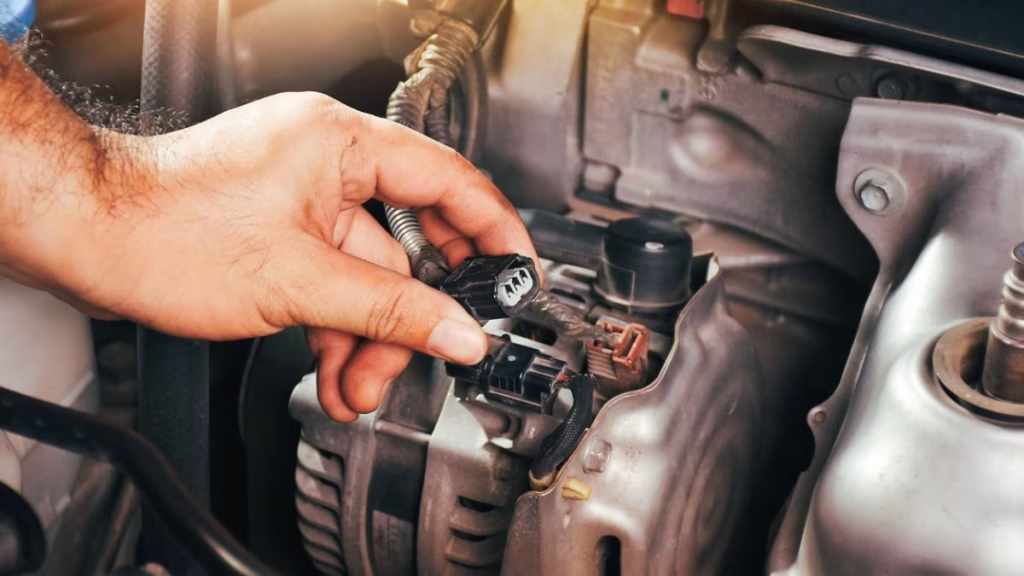
Labor becomes particularly important when the alternator is buried behind other mechanical components. RepairPal specifically notes that suspension components, drive axles, cooling fans, and even bumpers may need to be removed on some vehicles to gain access.
That is why consumers should not compare alternator prices alone. A lower-priced replacement unit does not necessarily produce a lower final bill if the vehicle requires substantially more disassembly.
5. Catalytic Converter Replacement
The catalytic converter presents an almost opposite situation. RepairPal’s current U.S. estimate is $2,280 to $2,480, but labor accounts for only $236 to $347. Parts are estimated at a much larger $2,044 to $2,133.
So why include it in a list focused on labor? Because the converter demonstrates just how unusual labor-heavy repairs are. It provides a useful comparison against repairs where labor dominates the bill.
A catalytic converter cleans harmful exhaust gases before they leave the vehicle. Its internal structure uses precious metals, including platinum, palladium, and rhodium, which contribute heavily to replacement-part costs.
RepairPal says most converters are bolted into the exhaust system, although some are welded or clamped. Removing a welded converter can require cutting equipment, while corrosion can complicate removal.
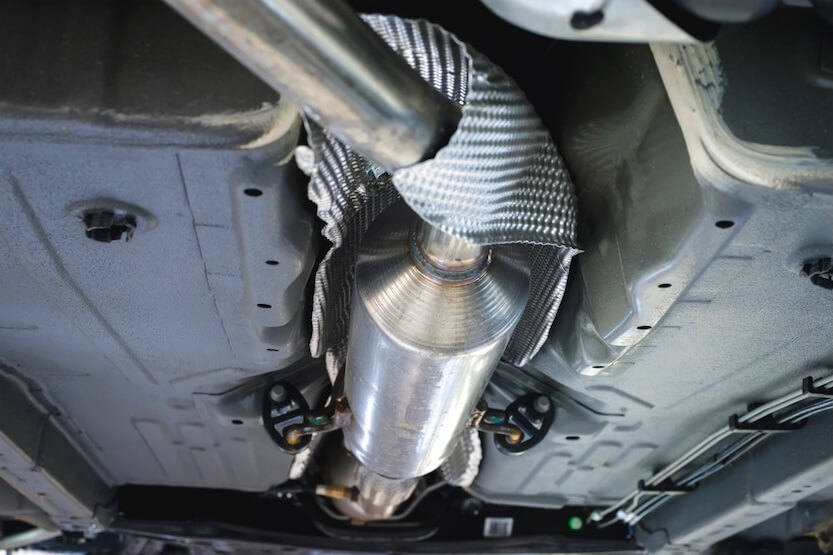
Vehicle differences are substantial. RepairPal estimates a Toyota Camry replacement at $1,872 to $1,950, with labor of $166 to $244 and parts around $1,706. A Honda Civic can reach $2,591 to $3,673, with parts estimated at $2,396 to $3,387.
The key distinction is that an expensive repair does not always require extensive labor. With a catalytic converter, the component itself is typically the largest expense. That makes it a useful point of comparison for repairs such as head gaskets and timing belts, where labor can account for a much larger share of the final cost.
6. Fuel Pump Replacement
Fuel pump replacement is another repair where the part generally costs more than labor, but the difference is worth understanding. RepairPal estimates a U.S. replacement at $1,344 to $1,513, with parts costing approximately $1,104 to $1,160 and labor between $241 and $353.
The fuel pump delivers gasoline from the tank toward the engine. Diagnosing a failure is not simply a matter of hearing a noise and replacing the component. RepairPal says technicians should check fuel pressure and the pump’s electrical circuit because a clogged filter, wiring problem, or other issue can produce similar symptoms.
The actual cost changes from vehicle to vehicle. RepairPal lists a Honda Accord at $1,112 to $1,496, while a Toyota Camry is estimated at $1,532 to $1,654. A Honda CR-V is considerably lower at $1,153 to $1,228.
Labor can increase if accessing the pump requires substantial work around the fuel tank. Safety also matters because technicians are working around gasoline, making this a repair that RepairPal recommends leaving to professionals unless the person performing the work has significant experience.
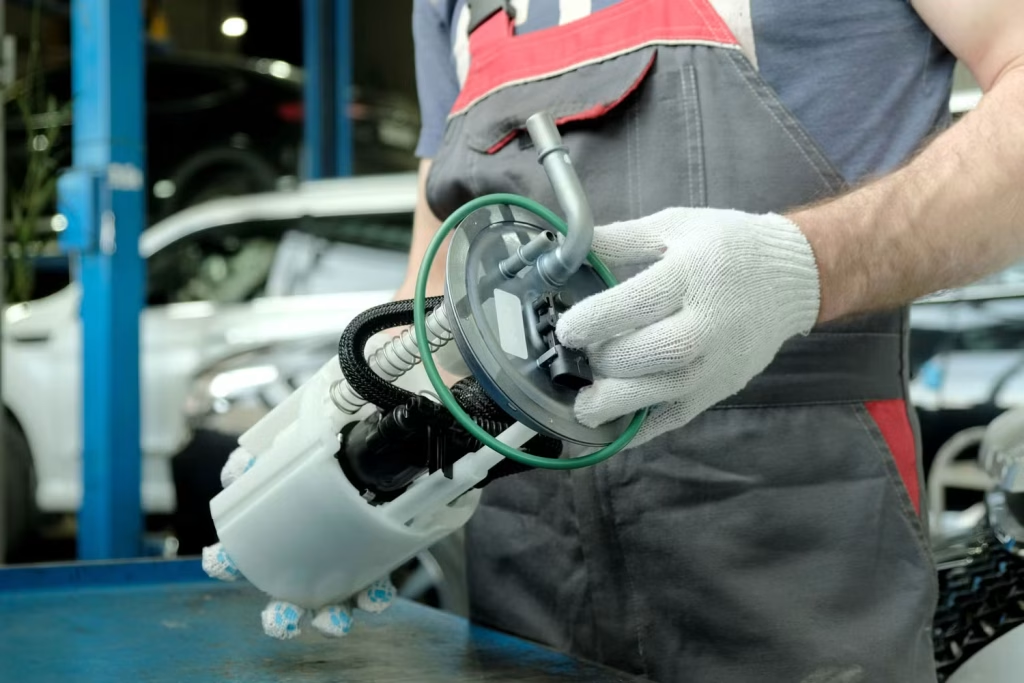
The numbers show why diagnosis is crucial. Spending more than $1,000 on a new pump will not solve the problem if the actual fault is electrical or related to fuel delivery elsewhere.
For buyers estimating future maintenance costs, the key point is that fuel-pump bills are generally parts-heavy rather than labor-heavy.
7. Brake Caliper Replacement
Brake calipers are comparatively simple compared with an engine teardown, but labor can still represent a substantial portion of the repair. RepairPal estimates a typical U.S. caliper replacement at $898 to $968, with parts around $749 and labor between $150 and $219.
The caliper squeezes the brake pads against the rotor to slow the vehicle. When it develops a problem, the technician must remove the wheel, disconnect the brake line, and remove the caliper. After installation, the braking system needs to be bled so trapped air does not compromise hydraulic performance.
The repair itself can become more involved because replacing one side may not be the end of the job. RepairPal recommends replacing pads on the opposite side as well for even braking, with rotors replaced when necessary.
Vehicle-specific costs show the variation. A Toyota Camry is estimated at $521 to $589, while a Honda Accord reaches $663 to $734. A Nissan Altima is substantially higher at $1,461 to $1,530.
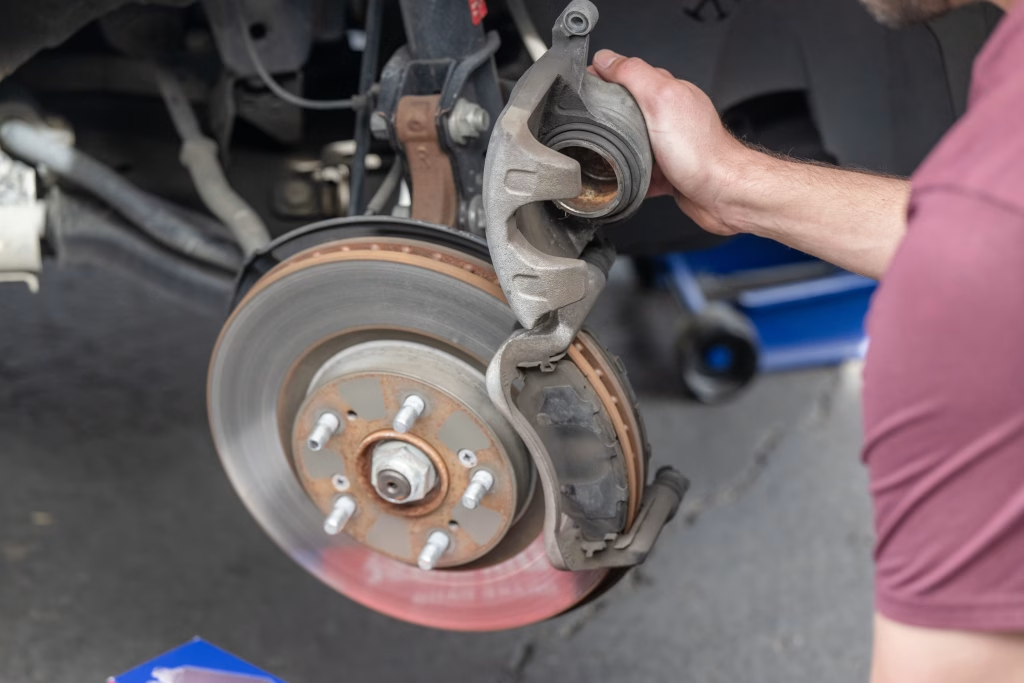
Here, labor is not the largest part of the standard estimate, but it can still become more significant when additional brake components require attention.
The bigger lesson is that a quote should be examined as a complete repair rather than judged solely by the price of the replacement caliper. A technician is charging for safe removal, installation, hydraulic bleeding, and inspection, not simply the physical component.
8. CV Joint Replacement
A failing CV joint can turn into a surprisingly expensive repair because the replacement assembly itself is costly. RepairPal’s U.S. estimate places CV joint replacement at $1,309 to $1,414, with labor estimated at $227 to $333 and parts around $1,082.
The CV axle transfers power from the transmission to the wheel and is particularly common in front-wheel-drive vehicles. When its protective boot cracks, grease can escape and contaminants can enter, accelerating wear inside the joint. RepairPal recommends replacing the complete axle assembly in many situations rather than simply replacing the boot.
The vehicle can dramatically change the final figure. RepairPal estimates a Honda Civic at $1,404 to $1,493, while a Honda Accord reaches $1,923 to $2,020. A Ford F-150, by comparison, is listed at $803 to $926.
That spread shows why generic repair averages should be treated as starting points rather than guaranteed prices.
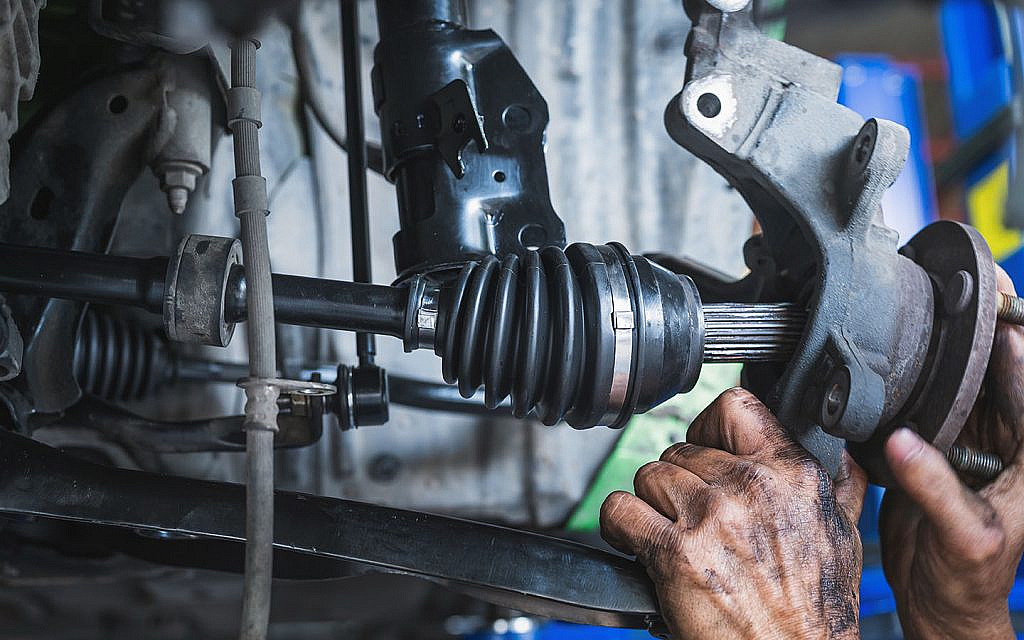
Interestingly, this repair is another example where parts remain the larger expense. The labor required to remove the axle and reinstall the suspension and steering components is significant, but the replacement assembly itself accounts for most of the standard estimate.
For owners, delaying the repair can also make matters worse. A damaged CV joint can eventually fail to transmit power correctly, potentially leaving the vehicle undriveable.
9. Shock or Strut Replacement
Suspension repairs can become labor-heavy because the technician is dealing with components buried within the vehicle’s steering and suspension assembly. RepairPal estimates a typical U.S. shock or strut replacement at $1,144 to $1,348, with labor of $332 to $487 and parts costing $812 to $862.
The cost can rise considerably depending on the vehicle. A Toyota Camry is estimated at $831 to $998, including approximately $357 to $524 in labor and about $474 in parts. A Chevrolet Silverado 1500 reaches $1,838 to $2,171, with parts estimated at $1,513 to $1,695 and labor at $325 to $477.
Replacing a strut can require removing the wheel, brake components, and sway-bar link before disconnecting the strut from the steering knuckle and upper mounting area. If the spring is being transferred from the old assembly, it must be compressed and handled carefully.
RepairPal recommends replacing shocks or struts in pairs and advises a four-wheel alignment after strut replacement because suspension geometry can change.
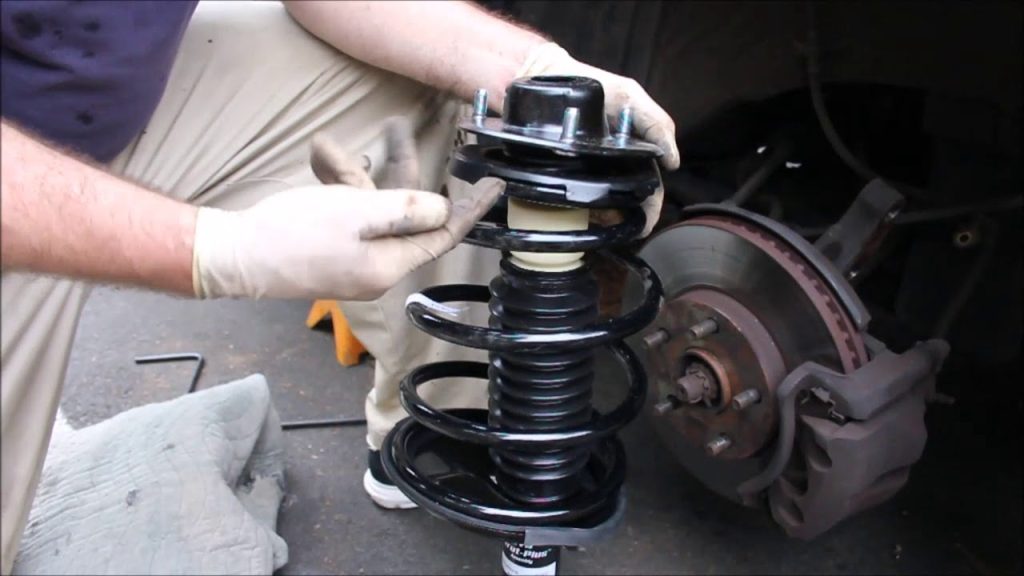
That additional work explains why a seemingly modest suspension component can generate a sizeable shop bill.
In this case, parts usually remain the larger expense, but labor can still represent hundreds of dollars. More importantly, the repair should not be judged purely by the component price because proper installation and alignment are essential to restoring the vehicle’s handling.
10. Timing Belt Tensioner Replacement
The timing belt tensioner is a small component that can produce a surprisingly labor-heavy repair. RepairPal currently estimates replacement at $493 to $709, with parts priced at only $108 to $143. Labor is estimated at $385 to $565.
That means labor can cost roughly four times the price of the tensioner itself at the low end of the parts range.
The tensioner keeps the timing belt properly tensioned so the belt can maintain the correct relationship between the crankshaft and camshaft. Reaching it usually means gaining access to the timing system, which is where the labor becomes important.
RepairPal’s figures make the economics easy to understand. Even if the replacement tensioner costs barely more than $100, the technician may need to spend several hours accessing and replacing it correctly.
This is also why replacing related timing components at the same time can make financial sense. Once the timing system has been opened, paying additional parts costs may prevent another substantial labor charge later.
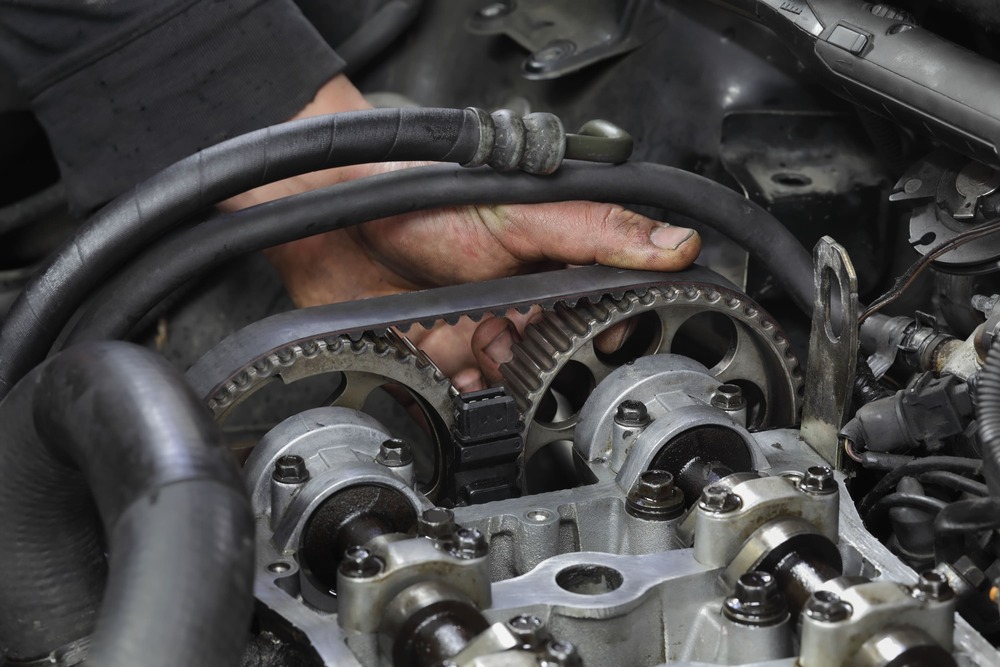
The tensioner is a perfect example of why motorists should never judge a repair by the price printed on the component’s box. A $100 part can produce a much larger invoice when it sits in an area that requires extensive disassembly.
For consumers, the most useful question when receiving a repair estimate is therefore not simply, “How much does the part cost?” It is, “How much of this bill is the part, and how much is the work required to reach and replace it?” RepairPal’s current estimates show that the answer can vary enormously from one repair to another.
