Modern vehicles can have enormous touchscreens, smartphone integration, and sophisticated driver-assistance systems, but automotive technology did not suddenly become clever in the 2020s. Several older cars introduced ideas that were remarkably ambitious for their era.
Some used thermal cameras, others displayed navigation information on dedicated screens, while a few experimented with radar cruise control, computer-controlled suspension, and tire-pressure monitoring long before such equipment became familiar.
What makes these systems particularly interesting is not simply how early they appeared. Many were designed to address challenges that engineers continue to tackle today, including keeping drivers informed, improving visibility, reducing fatigue, and helping vehicles respond intelligently to changing conditions.
1. 1988 Oldsmobile Cutlass Supreme: Head-Up Display
Long before windshield-projected information became a feature of expensive luxury cars, General Motors was already putting a head-up display into a production vehicle. The 1988 Oldsmobile Cutlass Supreme Indianapolis 500 Pace Car replica introduced a production-configured automotive HUD in the United States.
SAE documentation from the period describes a system that projected a digital speedometer and selected warning information into the driver’s forward field of vision, using the windshield as part of the optical system.
The idea was straightforward but significant. Instead of forcing the driver to look down at the instrument cluster, the system placed essential information near the driver’s normal sightline. That basic philosophy is still used by modern HUDs, even though today’s versions can display considerably more information.
What makes the Cutlass Supreme particularly interesting is the timing. In 1988, digital automotive displays were still relatively specialized, and smartphones, large center screens, and connected navigation systems were decades away.
Yet GM engineers were already considering the human-factors problem of reducing the time required for a driver to read information.
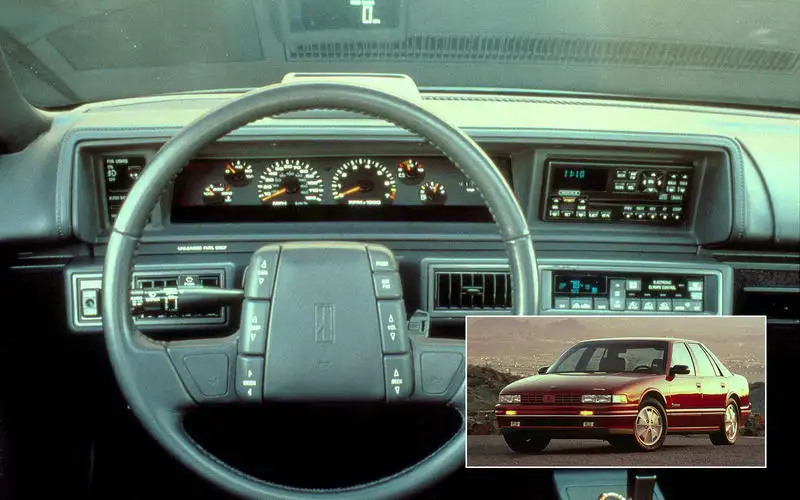
The system was not as visually sophisticated as a modern augmented-reality HUD, but its purpose was remarkably familiar. Speed and warnings could remain visible without requiring a substantial shift in eye position.
SAE researchers were already studying HUD readability and driver attention during this period, showing that the concept was being treated as a serious interface technology rather than a novelty.
2. 1992 Oldsmobile Toronado Trofeo: Touchscreen Navigation
A 1992 Oldsmobile Toronado could make a modern driver do a double take because of what sat in its dashboard. Through the TravTek program, selected Toronados received a color CRT touchscreen system combining navigation, vehicle information, and other functions.
The Federal Highway Administration documented the system as an operational field test vehicle, with the touchscreen positioned where a conventional radio would normally sit.
The technology went beyond simply displaying a map. TravTek combined an onboard computer, digital mapping, synthesized spoken instructions, and a touchscreen interface. Steering-wheel controls were also incorporated, while the system could provide information beyond basic route guidance.
That approach looks surprisingly familiar today. Modern infotainment systems routinely combine navigation, vehicle information, audio, and other functions on a central display. The Toronado was attempting essentially the same integration when most cars still relied on separate physical controls and paper maps.
The hardware was obviously primitive compared with a modern high-resolution display. The screen was a CRT rather than a thin LCD, and the computer processing available at the time was extremely limited by today’s standards. Yet the underlying interaction model was advanced.
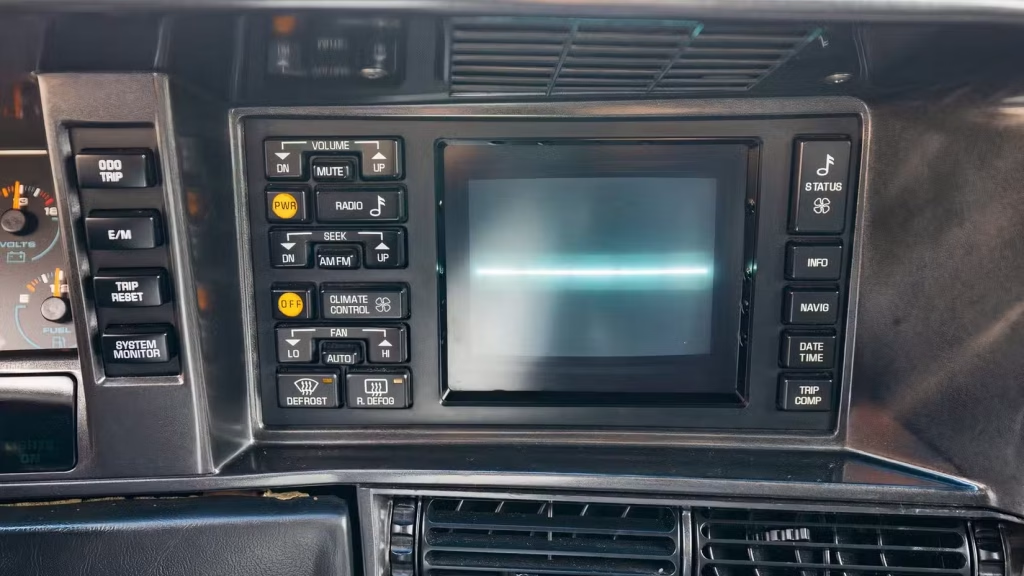
The Federal Highway Administration’s documentation is particularly important because it confirms that this was not merely a concept-car experiment.
The Toronado was selected for real-world testing involving drivers and transportation agencies. The project demonstrated that electronic navigation, touchscreen controls, and synthesized voice instructions could coexist in an everyday vehicle.
3. 1995 Oldsmobile Eighty-Eight: Built-In GPS Navigation
The 1995 Oldsmobile Eighty-Eight was another example of technology arriving in a mainstream American sedan years before consumers expected it.
Oldsmobile’s Guidestar navigation system was offered as a factory option and used vehicle-location information to provide electronic navigation. Contemporary automotive history records it as the first U.S. production-car navigation system offered by Oldsmobile.
The significance becomes clearer when the technology is compared with the equipment available to drivers at the time. There were no smartphones providing instant Google Maps directions. Portable navigation devices were not yet commonplace. Digital mapping databases were limited, and processing power was expensive.
Guidestar therefore represented a major shift in how a driver could find a destination. Instead of depending entirely on road signs, printed maps, or a passenger giving directions, the car itself could provide navigational assistance.
The system had its limitations. Its mapping and interface were basic by modern standards, and the display was less integrated than today’s factory navigation systems. Even so, the core idea was already familiar, combining electronic positioning with digital maps to help guide the driver.
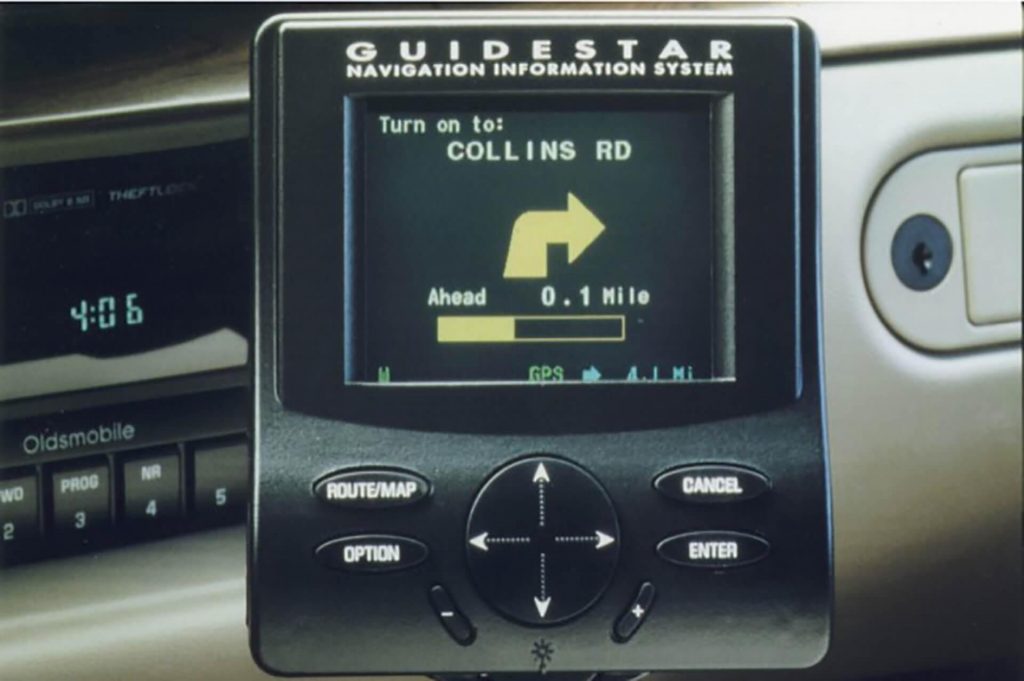
This is a good example of why some older cars deserve more credit than their age suggests. The technology did not have today’s speed or graphical sophistication, but it anticipated a feature that eventually became almost routine.
The 1990s were the period when navigation moved from experimental automotive electronics toward something consumers could actually purchase with a production vehicle.
4. 1996 Chevrolet Corvette: Tire-Pressure Monitoring
The 1996 Chevrolet Corvette featured technology that seems commonplace today but was considered advanced at the time. Its electronic tire-pressure monitoring system, called the Low Tire Pressure Warning System, used sensors linked to the road wheels to send tire-pressure information to a receiver inside the vehicle.
The system was designed to monitor tire pressure while the car was being driven. According to the owner’s documentation, the warning system could illuminate a low-pressure indicator when pressure dropped below approximately 25 psi, subject to the operating conditions specified by Chevrolet.
That sounds mundane now because tire-pressure monitoring is expected equipment on modern U.S. vehicles. At the time, however, the idea of individual wheel sensors communicating electronically with a vehicle was far from universal.
The Corvette system also illustrates an important development in automotive electronics. Rather than simply measuring something at the engine or transmission, the car was collecting information from individual wheels and using that information to alert the driver.
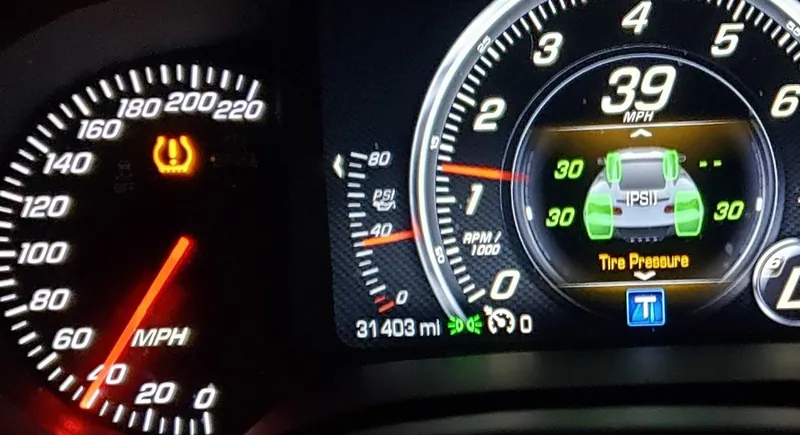
It was not perfect. The system had operating limitations and did not provide the sophisticated pressure displays available in many newer vehicles. Still, the fundamental concept was remarkably close to what drivers use today.
The technology also became increasingly important as tire-pressure monitoring developed into a mainstream safety feature. The 1996 Corvette therefore sits in an interesting part of automotive history: a sports car using electronics to monitor a condition that drivers had traditionally been expected to check manually with a pressure gauge.
5. 1990 Infiniti Q45: Computer-Controlled Active Suspension
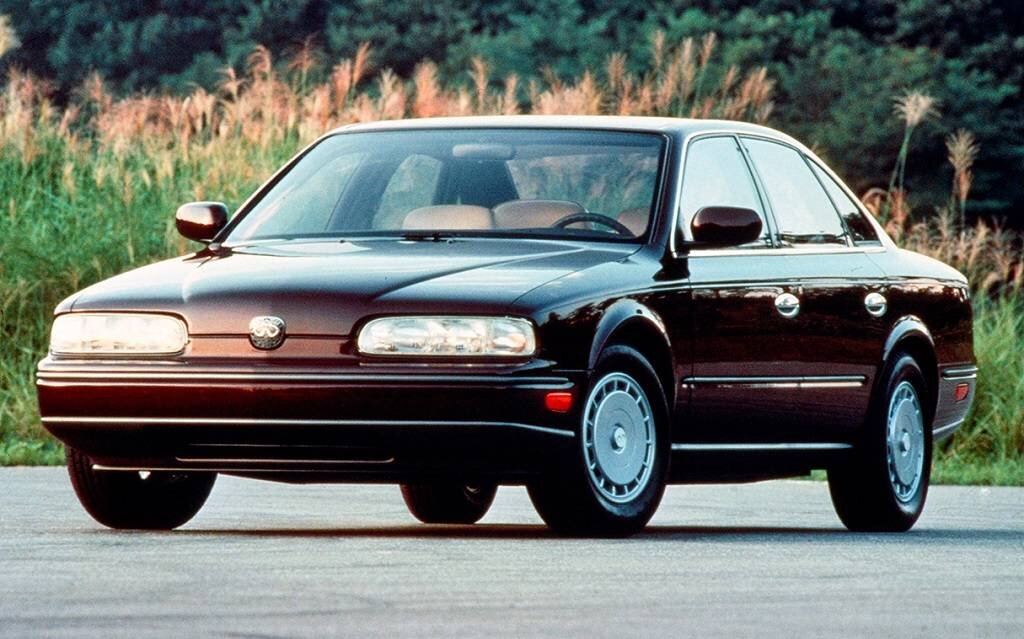
The 1990 Infiniti Q45 was already an unusually sophisticated luxury sedan, but its later Full-Active Suspension option pushed the concept much further.
For the 1991 model year, Infiniti introduced what contemporary sources describe as the world’s first production full-active suspension system. It used computer-controlled hydraulic actuators at each wheel and information from 10 sensors to counter body movements.
This was not simply an electronically adjustable shock absorber. The system was designed to respond to body lean, nose dive, nose lift, and fore-and-aft pitching caused by road inputs and vehicle movements.
That distinction matters. Modern adaptive suspension is increasingly sophisticated, but many systems still focus on varying damping characteristics or adjusting air-spring settings. The Q45’s active system was attempting to make the suspension itself an active participant in controlling body motion.
For passengers, the goal was a smoother and more controlled ride. For engineers, the challenge was much more complicated because the vehicle needed sensors, hydraulic hardware, control electronics, and software capable of reacting quickly.
It was an expensive and complex solution, which helps explain why fully active suspension did not become universal. Nevertheless, the Q45 demonstrated that a production sedan could use computer processing to influence suspension behavior in real time.
More than three decades later, the basic engineering ambition remains relevant. Automakers continue developing increasingly intelligent suspension systems because controlling body movement can improve comfort, handling, and stability simultaneously.
The Q45 was therefore not merely a luxurious old sedan. It was an early experiment in software-defined chassis control.
6. 1990 Mitsubishi Diamante: Intelligent Traction and Cornering Control
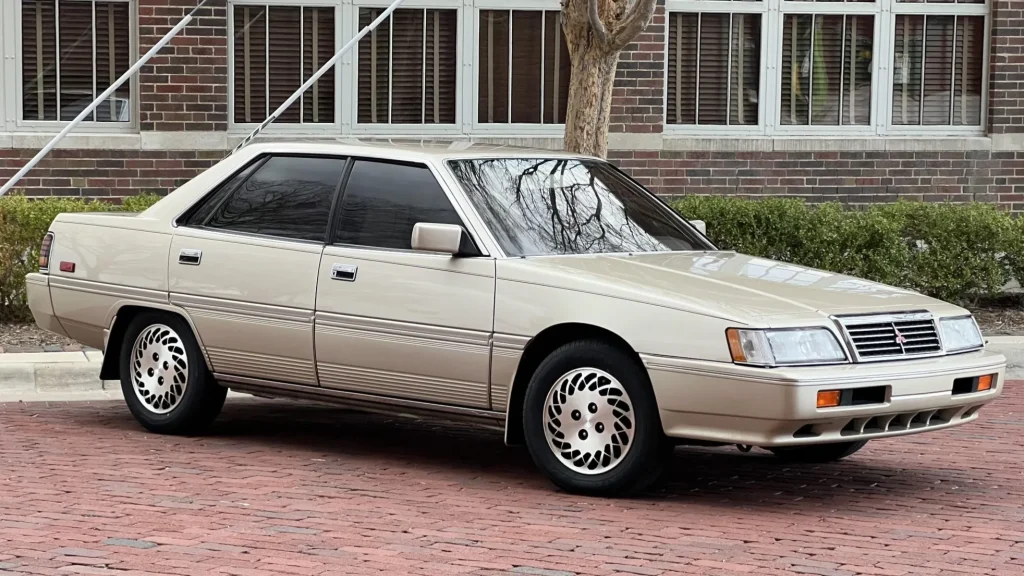
The Mitsubishi Diamante demonstrated another form of early computerized vehicle control. Its electronically controlled traction and trace-control system monitored several operating parameters and could regulate engine output and braking when the system detected conditions that could compromise the intended path through a corner.
That makes the system particularly interesting because conventional traction control at the time primarily focused on wheel slip during acceleration. Mitsubishi’s approach attempted to do more by considering the vehicle’s behavior while cornering.
The system monitored steering angle, throttle position and individual wheel speeds. When the computer detected excessive throttle application during cornering, it could reduce engine output and intervene through the brakes. Mitsubishi described the technology as a preventive safety function rather than merely a conventional wheel-slip system.
The Diamante could pair this technology with an electronically controlled suspension and four-wheel steering. These electronic and mechanical systems worked together toward a common goal, helping the vehicle remain stable and predictable when driving conditions became challenging.
Modern stability-control systems have become dramatically more capable, with sophisticated yaw-rate sensing and much faster processing. So it would be inaccurate to suggest the Diamante’s system was equivalent to today’s electronic stability control.
Its importance lies elsewhere. Engineers were already using multiple sensors and electronic intervention to influence how a car behaved during a corner. The idea of a computer continuously interpreting driver inputs and vehicle movement is now fundamental to modern chassis electronics. The Diamante was an early production example of that philosophy.
7. 1998 Mercedes-Benz S-Class: Radar-Based Adaptive Cruise Control
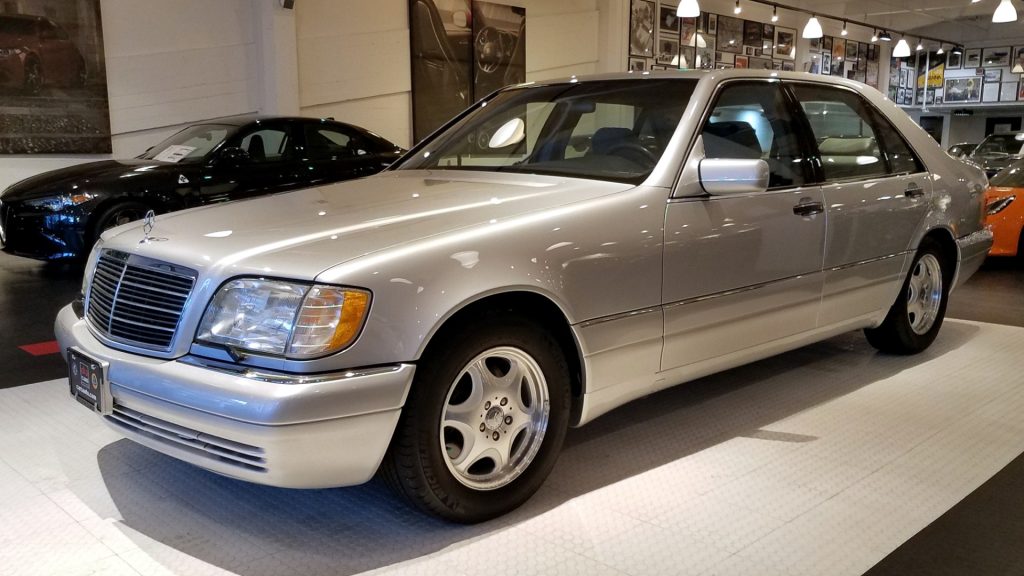
The 1998 Mercedes-Benz S-Class introduced a feature that is now common in family cars but was considered highly advanced at the time, radar-based adaptive cruise control. Mercedes named the system DISTRONIC, and it became one of the signature technologies of the W220-generation S-Class.
Traditional cruise control could maintain a selected speed, but it could not understand traffic ahead. DISTRONIC added radar sensing so the vehicle could monitor the distance to the car in front and adjust its speed accordingly.
Contemporary information about the S-Class described the system as intelligent cruise control that maintained a safe distance from traffic ahead.
This is remarkably close to the fundamental operation of today’s adaptive cruise-control systems. Modern versions are more capable, often combining radar with cameras and other sensors, but the central idea remains the same.
The S-Class was also packed with other technologies that were unusual for the period. Airmatic electronically controlled air suspension, COMAND, Keyless-Go, and other systems made the sedan a rolling showcase for Mercedes-Benz engineering.
Mercedes itself identifies the W220 generation as the point at which Airmatic and DISTRONIC appeared alongside other advanced electronic systems.
The important lesson is that adaptive cruise control did not begin as a mainstream driver-assistance feature. It started as an expensive luxury-car technology that required radar hardware, computing capability, and carefully calibrated control software.
Today, buyers can find adaptive cruise control in relatively affordable vehicles. The S-Class shows how long that technology’s journey from high-end engineering experiment to common equipment actually took.
8. 2000 Cadillac DeVille: Thermal Night Vision
The 2000 Cadillac DeVille may have one of the most futuristic technologies ever fitted to an American production sedan of its era. Cadillac offered a thermal night-vision system that used an infrared camera to detect heat-producing objects beyond the normal reach of the headlights.
The system combined a thermal-imaging camera, electronic processing, and a head-up display. Warmer objects such as pedestrians, animals, and other vehicles appeared brighter in the displayed image. The system was designed to help the driver recognize potential hazards before they became visible through ordinary headlights.
Contemporary reports stated that the system could provide visibility three to five times farther than low-beam headlights under suitable conditions. The technology was particularly useful for identifying warm objects against dark surroundings.
What makes the DeVille unusual is how closely its hardware resembles the concept behind modern automotive thermal-imaging systems. The implementation was obviously less refined, and the display was monochrome rather than a modern graphical interface.
Cadillac eventually discontinued the system after several years, showing that technological sophistication alone does not guarantee widespread adoption. Cost, customer demand, and the difficulty of integrating unusual systems into everyday driving all matter.
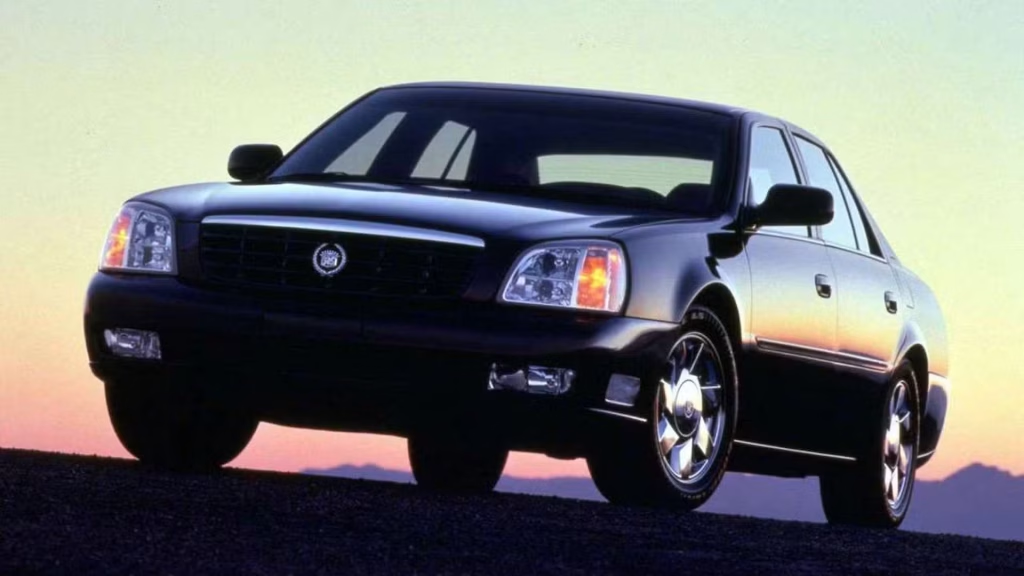
Still, a luxury sedan from 2000 could literally give its driver a thermal view of the road ahead. That remains an impressive reminder of how much engineering experimentation was taking place in the automotive industry before today’s sensor-heavy vehicles became common.
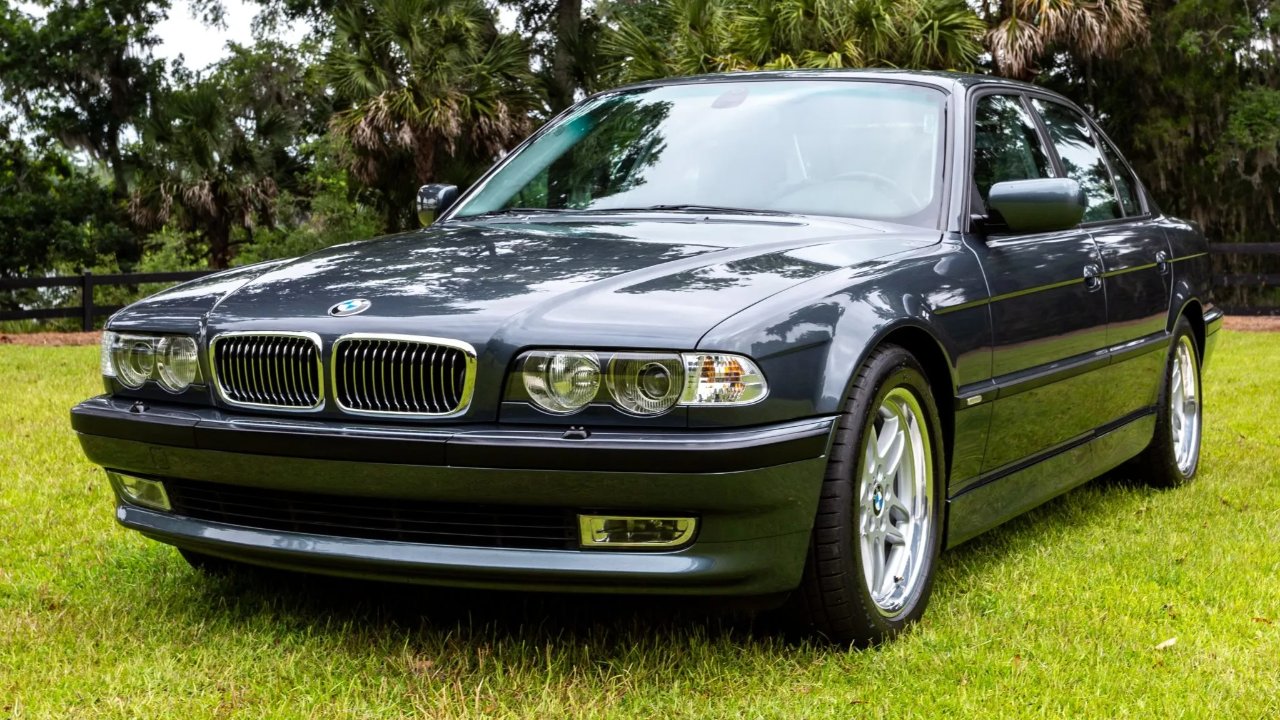
9. 2001 BMW 7 Series: iDrive and Voice Control
The 2001 BMW 7 Series introduced the first-generation iDrive system, replacing a large collection of conventional dashboard controls with a central controller and color display. BMW’s own history of the system describes it as a major change in how drivers interacted with vehicle functions.
The concept was ambitious. A driver could use a central push-and-turn controller to access entertainment, navigation, and other functions through one interface. BMW also notes that the 7 Series became the first model to offer voice control for selected functions as part of this system.
The original iDrive became famous for its learning curve, but that criticism should not obscure what BMW was attempting. Instead of adding more buttons as the car gained more features, engineers tried to consolidate functions into a digital interface.
That is almost exactly the challenge faced by modern vehicles. Today’s cars may have even more functions than the early 7 Series, but designers still have to determine how drivers can access them without creating an overwhelming dashboard.
The hardware has aged dramatically. The display is tiny by today’s standards, processing power is limited, and the interface looks primitive beside modern connected infotainment systems. Yet the architecture was forward-looking.
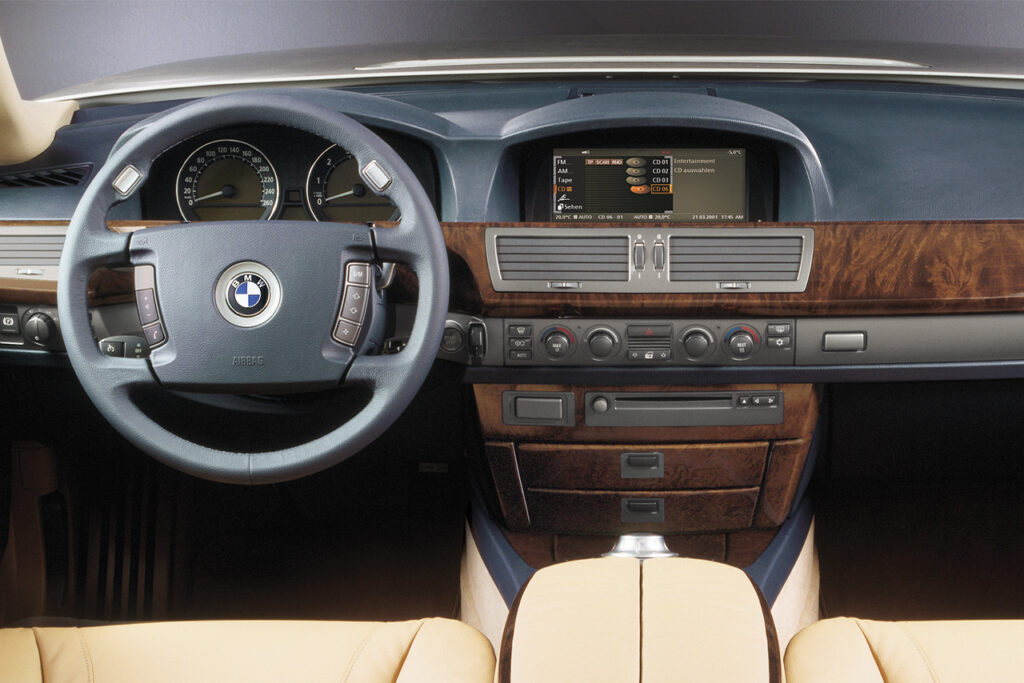
BMW was effectively treating the dashboard as software rather than simply a collection of switches. That philosophy became increasingly important as cars gained navigation, communication, entertainment, and vehicle-control functions.
The first-generation system was imperfect, but it helped establish a design direction that has influenced BMW for more than two decades.
10. 2000 Acura 3.5RL: DVD Navigation and Verbal Directions
The 2000 Acura 3.5RL featured another technology that was considered highly advanced for its era, a DVD-based navigation system with coverage across the continental United States. The system paired a larger color screen with a single DVD containing its mapping data.
The important part was not simply having a map on a screen. The navigation system could provide verbal instructions, allowing the driver to receive route guidance without constantly looking at the display. Edmunds specifically noted this feature as an advantage because it helped drivers keep their eyes on the road.
DVD-based navigation now sounds ancient, but the engineering challenge was substantial. A single disc had to contain a huge amount of geographic information, while the vehicle’s computer had to interpret the data and generate usable routing instructions.
The system also demonstrates how quickly navigation technology was progressing around the turn of the century. Just a few years earlier, factory navigation systems were expensive curiosities. By 2000, Acura was putting a continental U.S. mapping database into a luxury sedan.
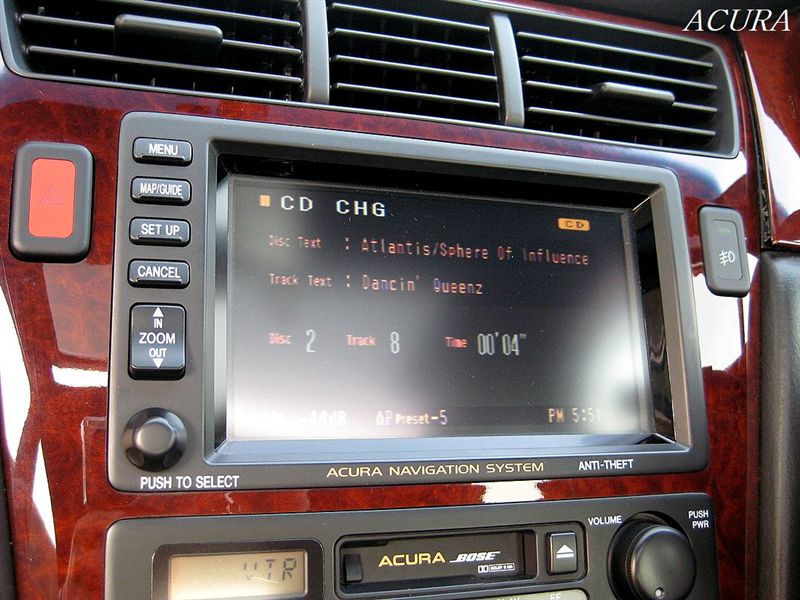
Later versions of the Acura system became even more sophisticated, with voice recognition and expanded points of interest. By 2004, Acura’s navigation and voice-recognition technology had become standard equipment on the 3.5RL.
The technology cannot match the capabilities of a modern smartphone. Even so, the basic idea has remained unchanged. The system calculates a route, displays it electronically, and provides spoken directions, allowing the driver to follow the journey without constantly checking a physical map.
11. 2002 Honda Accord: Lane and Distance Assistance
The 2002 Honda Accord sold in Japan with technology that sounds surprisingly close to today’s driver-assistance systems. Honda’s HIDS, or Honda Intelligent Driver Support System, was designed to provide lane-maintenance assistance and vehicle distance and speed control on freeways. The system was paired with voice-recognition navigation.
This is significant because the modern automotive market often presents lane-centering and adaptive cruise control as recent developments. Their current implementations are much more sophisticated, but the underlying objectives have been around for decades.
Honda’s system attempted to reduce driver workload by helping maintain lane position while also managing vehicle speed and following distance. That combination represents an early step toward the integrated driver-assistance packages now found across the industry.
The 2002 Accord also offered a voice-recognition navigation system, demonstrating how several forms of electronic assistance were beginning to converge. Instead of treating navigation, driver assistance, and vehicle control as completely separate technologies, automakers were increasingly connecting them.
There is an important distinction between this early HIDS system and modern semi-automated driving. It would be misleading to suggest that the Accord could perform the same functions as a current vehicle equipped with sophisticated camera and radar systems.
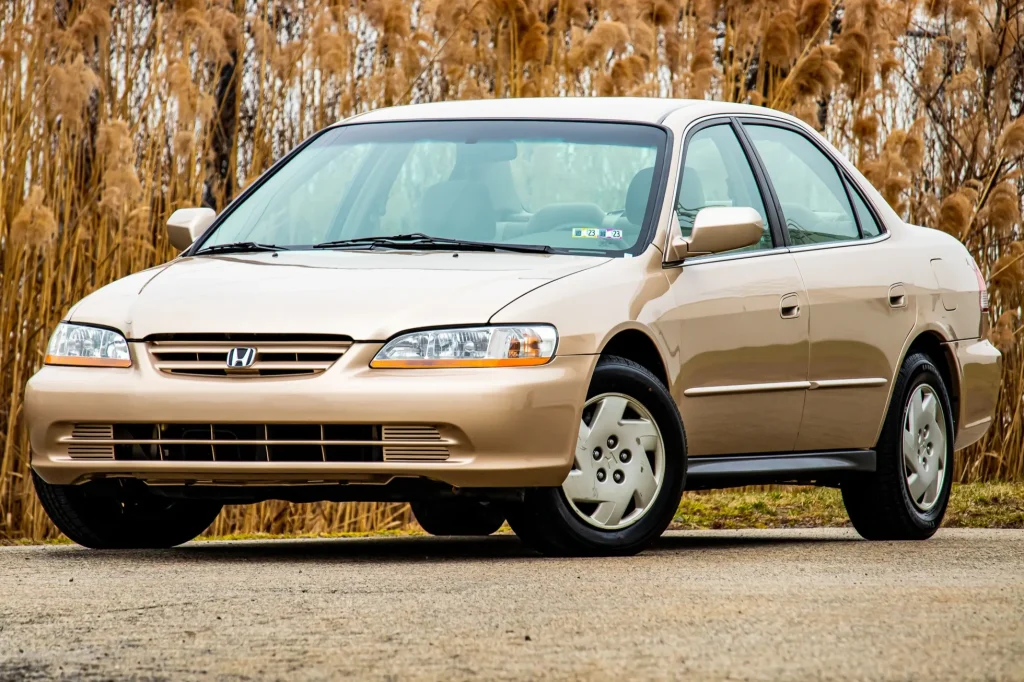
Nevertheless, the direction was remarkably similar. Honda engineers were already considering how sensors, electronic control, and driver-interface technology could work together to reduce the burden of highway driving.
That makes the early-2000s Accord a fascinating example of a conventional family sedan carrying technology that anticipated a major direction of the modern automotive industry.
12. 1995-2000 Lexus LS 400: Electronic Air Suspension and Automatic Load Leveling
The Lexus LS 400 became famous for refinement, but its available electronic air suspension shows just how much technology was hidden underneath some luxury cars of the 1990s. Consumer Guide records an electronic air-suspension option for the 1995-2000 LS 400 that included ride control and automatic load leveling.
Automatic load leveling addressed a practical problem that remains relevant today. When passengers or luggage change the load on a vehicle, suspension height can change. A system capable of automatically compensating for that load can help preserve the intended ride height.
The LS 400 was also available with advanced navigation technology during this period, while Lexus and Toyota continued developing sophisticated electronic systems for the model. The result was a sedan that combined traditional luxury with a substantial amount of computer-managed hardware.
What makes the LS 400 interesting today is the contrast between its understated appearance and its engineering complexity. It does not look like a futuristic concept vehicle. Yet beneath its conservative styling were electronic systems responsible for controlling aspects of suspension behavior and vehicle comfort.
Modern vehicles have taken this concept considerably further. Air suspension can now automatically change ride height, adjust damping, and integrate with cameras, navigation data, and drive modes. Some systems can even anticipate road conditions.

The old LS 400 obviously lacked that level of intelligence. Still, its electronically controlled suspension demonstrates that luxury-car engineers were already using computers to make chassis systems adapt to changing loads and driving conditions.
That is perhaps the strongest theme running through all these vehicles. Their displays, processors and sensors now look dated, but the problems they were trying to solve have not disappeared.
In many cases, modern automotive technology is less a completely new invention than a much faster, smaller and more capable continuation of ideas that these older cars introduced decades ago.