A modern badge does not automatically mean a modern safety result. Euro NCAP testing has repeatedly shown that vehicles can fall behind their rivals when manufacturers provide fewer driver-assistance systems or when crash protection exposes weaknesses in the restraint system.
Several vehicles sold in the United States have received three stars or fewer when their European-market counterparts were tested by Euro NCAP.
The results need context because Euro NCAP protocols have become substantially tougher over time, and equipment can differ between Europe and America. The ratings below therefore apply specifically to the European versions tested, not automatically to every U.S.-specification vehicle.
1. 2018 Jeep Wrangler JL | 2 Stars
The 2018 Jeep Wrangler JL produced one of the most surprising Euro NCAP results of its generation. The new Wrangler received just one star, despite being a completely redesigned model rather than an aging carryover.
Euro NCAP said the vehicle had a seatbelt reminder and a simple driver-set speed limiter but lacked other driver-assistance systems that could earn points under the assessment protocol. Its adult occupant protection score was 50 percent, while Safety Assist reached only 32 percent.
The crash itself revealed why the rating was so low. During the frontal offset test, the connection between the A-pillar and the transverse beam suffered structural damage, while deformation of the footwell indicated that the structure had reached the limit of its integrity.
Although the dummy readings showed good protection for the knees and femurs, Euro NCAP rated driver chest protection as weak after considering the unstable bodyshell and dummy measurements.
The full-width rigid barrier test exposed additional concerns. The driver’s chest showed marginal protection, while the rear passenger dummy recorded weak neck protection and poor chest protection.
These results were particularly damaging because Euro NCAP’s rating system considers several different crash scenarios rather than relying on a single frontal impact.
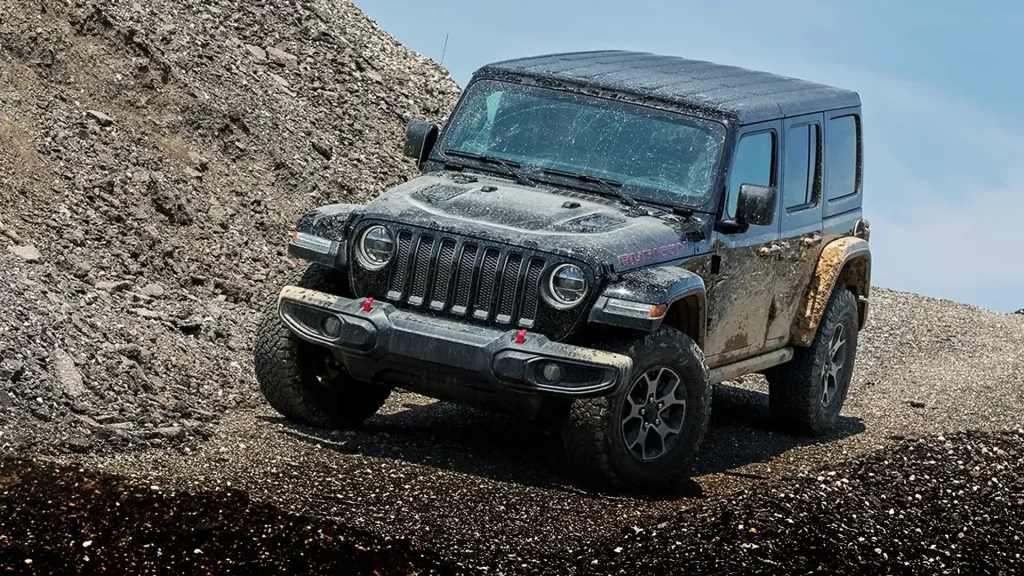
There is an important U.S. qualification. The Euro NCAP result was for European-market versions, and U.S.-market Wranglers could be equipped differently. Consequently, the one-star rating should not be presented as a direct rating for every Wrangler sold in America.
It remains significant, however, because the model was sold in the United States, and the European test exposed substantial gaps in crash protection and standard driver-assistance equipment.
2. 2017 Ford Mustang | 2 stars, raised to 3 stars
The sixth-generation Ford Mustang delivered another unexpectedly weak Euro NCAP result in 2017. Its initial assessment produced only two stars, making it one of the lowest-rated cars tested by Euro NCAP at that time.
The result was especially notable because the Mustang was not an inexpensive economy car, yet its standard safety equipment and restraint performance lagged behind several contemporary vehicles.
The frontal test exposed one of the most important problems. Euro NCAP found that the driver’s head effectively bottomed out the airbag because there was insufficient pressure to prevent contact with the steering wheel through the deflated airbag material.
The passenger dummy experienced a similar problem, with the passenger airbag also providing insufficient restraint. The curtain airbag presented another issue during the test.
The Mustang also lacked several advanced safety systems that had become increasingly important in Euro NCAP’s scoring structure.
The original tested version had a front-seat seatbelt reminder but no autonomous emergency braking system or other qualifying safety-assistance technologies. Euro NCAP therefore gave the car little credit in that area.
Ford responded rather than simply accepting the result. Cars ordered from July 2017 onward received Pre-Collision Assist with pedestrian detection, forward collision warning, and autonomous emergency braking, along with Lane Keeping Aid.
Ford also revised the restraint system to prevent the airbag from bottoming out and improved automatic passenger-airbag deactivation. Those changes resulted in a reassessment that raised the Mustang to three stars.
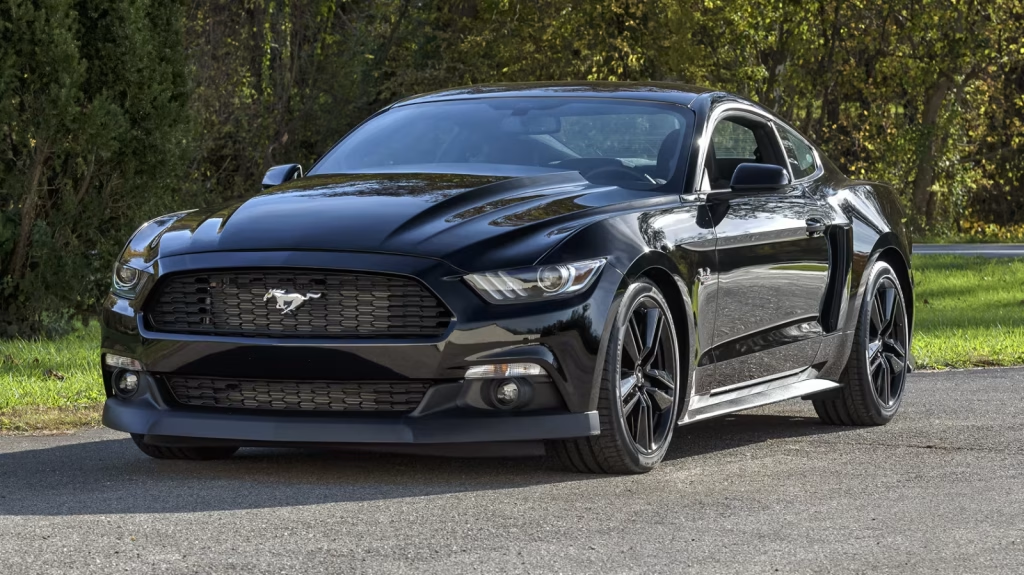
That distinction is essential when discussing the Mustang. Calling it simply a two-star car ignores Ford’s subsequent improvements.
The initial 2017 assessment was two stars, while the updated version reached three stars after safety equipment and restraint-system changes. Both versions were sold during the Mustang’s U.S. market life, but the Euro NCAP scores specifically describe the European vehicles tested.
3. Fiat 500 (2017) | 3 Stars
The Fiat 500 is a particularly interesting case because the car had already demonstrated that its basic structure could perform well under an earlier generation of Euro NCAP testing. The original 500 received a five-star result in 2007, but a decade later the updated version was assessed under substantially tougher requirements and received only three stars.
Euro NCAP recorded 66% for adult occupant protection and 49% for child occupant protection, showing that the decline was not simply about one isolated crash-test weakness. The changing test regime had become much more demanding, especially regarding active safety technology and assistance systems.
That distinction matters when judging an older vehicle. A three-star rating in 2017 did not necessarily mean the Fiat 500 suddenly became structurally unsafe compared with its 2007 predecessor. Instead, the benchmark had moved forward.
Modern ratings increasingly considered whether a vehicle could help prevent a crash in the first place, rather than concentrating primarily on what happened after an impact.
The 500’s result therefore illustrates how quickly a long-running model can fall behind when manufacturers rely on incremental updates instead of a clean-sheet redesign.
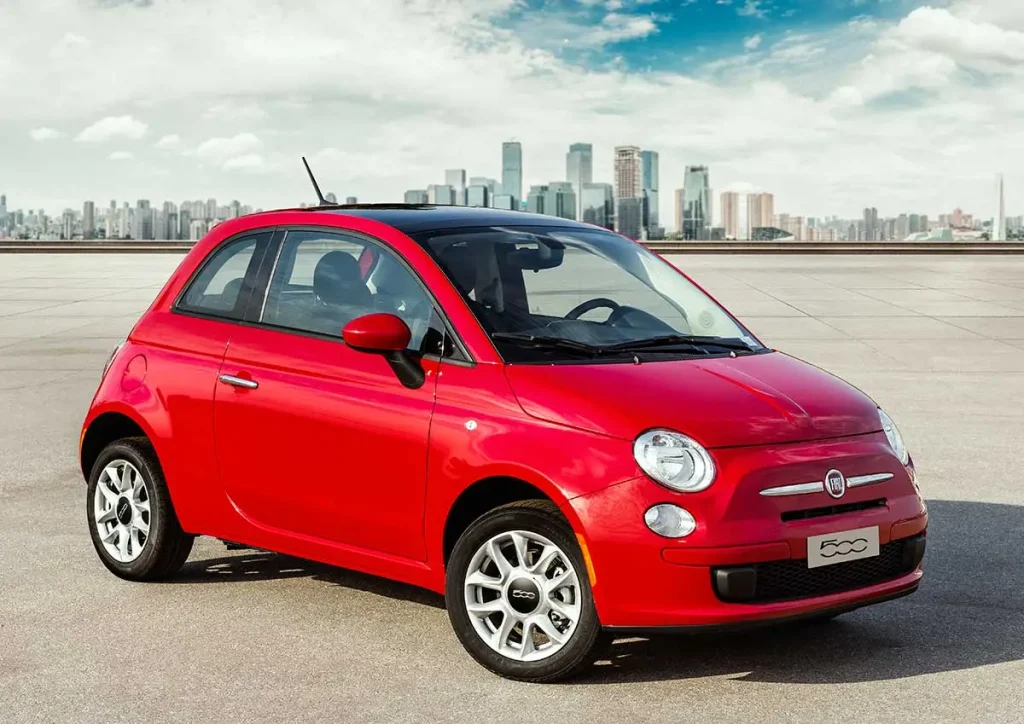
Euro NCAP’s 2017 results specifically identified the Fiat 500 among models whose ratings suffered as protocols became more demanding. The organization described this trend as evidence of the rapid pace of safety innovation.
For American readers, one additional distinction is worth noting. The vehicle tested by Euro NCAP was built to European-market specifications, and equipment and safety features can vary between European and U.S. models. As a result, the three-star European rating should not be assumed to apply identically to every U.S.-specification 500.
4. Jeep Renegade (2019) | 3 Stars
The 2019 Jeep Renegade highlights an even more important issue. A vehicle can keep its familiar name and maintain a strong crash structure, yet still fall behind when its safety-assistance technology fails to advance at the same pace.
Euro NCAP gave the updated Renegade three stars under its 2018-2019 testing protocol. The organization noted that the passenger compartment remained stable during the frontal offset crash, while protection in several important body areas was good. The Renegade also achieved maximum points in the side-barrier test.
So why did the rating stop at three stars? One major factor was the availability of autonomous emergency braking. Euro NCAP specifically stated that the AEB system was an option and was not included in the standard assessment.
Its safety-assistance score was 58%, with the vehicle earning points for speed assistance, seatbelt reminders, and lane support but receiving zero points for interurban AEB.
The pedestrian assessment also exposed weaknesses. Euro NCAP found good protection across much of the bonnet and good bumper protection for pedestrians’ legs, but the windscreen pillars produced poor results in some areas, and pelvic protection was mixed.
Inside the cabin, the rear passenger’s chest and the driver’s neck received marginal assessments in the full-width barrier test.
This is why the Renegade’s three-star result should not be interpreted as saying the SUV was simply poor at crash protection. It was a broader assessment of crashworthiness and accident-avoidance technology.
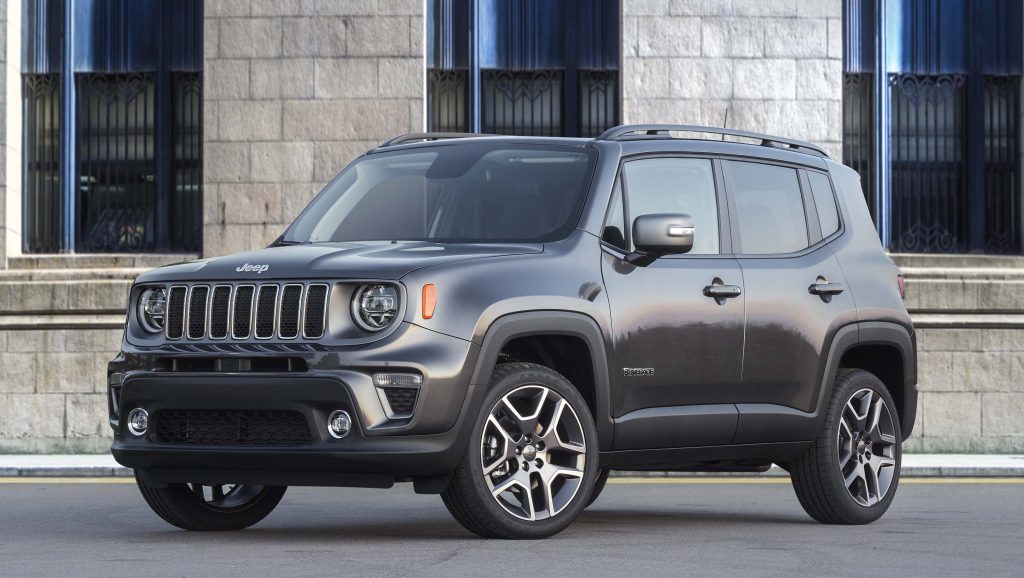
Euro NCAP itself highlighted the contrast in its 2019 results, noting that the facelifted Renegade was the only vehicle in that release to fall below four stars because AEB remained optional.
For U.S. buyers, the European rating requires additional caution because American-market equipment could differ from the tested European configuration.
5. Ford C-MAX (2017) | 3 Stars
The Ford C-MAX shows how a vehicle can remain structurally competent in several areas while still falling short of a four-star Euro NCAP result. The 2017 assessment gave the C-MAX three stars, with 76% for adult occupant protection, 60% for child occupant protection, 59% for vulnerable road users, and only 29% for safety assist.
The most notable weakness appeared in the full-width rigid-barrier test. Euro NCAP reported that the driver’s pelvis slipped beneath the lap portion of the seatbelt, producing a poor rating for that body region.
Chest protection for the driver was rated marginal, while the rear passenger also recorded poor chest protection and marginal neck protection.
Those results mattered because Euro NCAP’s assessment was not based simply on whether the passenger compartment survived the crash. The way occupants were restrained, and the loads transferred to their bodies, were equally important.
There was a much more positive side to the C-MAX’s performance. Its passenger compartment remained stable in the frontal offset test, and the driver and passenger received good protection for the knees and femurs.
The vehicle also achieved maximum points in the side-barrier test, demonstrating that its performance was not uniformly weak.
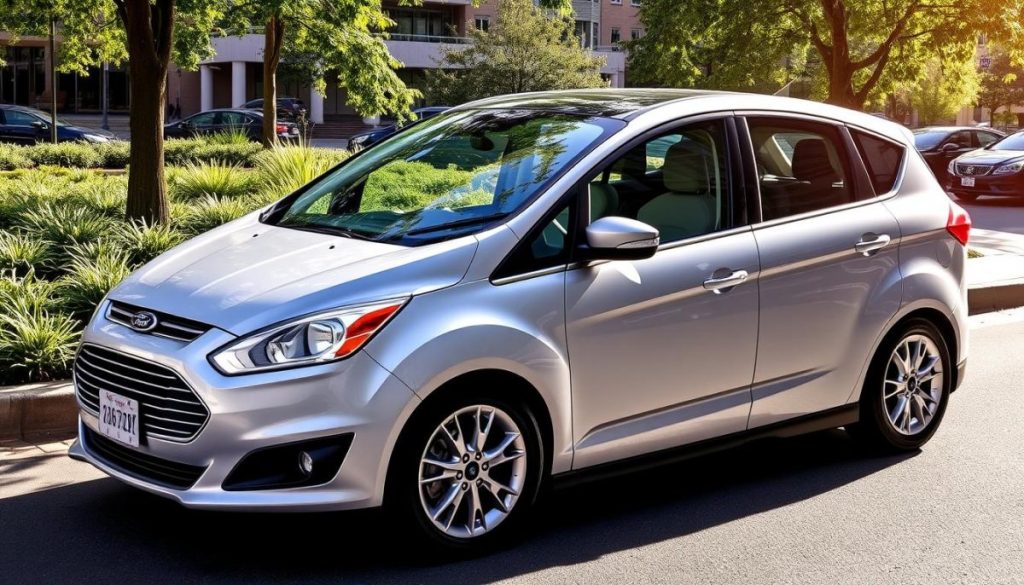
The major problem was safety assistance. The C-MAX scored just 29%, reflecting the limited level of driver-assistance technology fitted to the tested specification. Euro NCAP’s increasingly demanding protocols made that deficiency increasingly costly.
For American buyers, the result should be read as a European-market test result rather than a direct substitute for a U.S. crash rating. Equipment and specifications could differ between markets.
6. Opel Karl / Chevrolet Spark (2017) | 3 Stars
The Opel Karl provides another clear example of how Euro NCAP’s changing standards could expose weaknesses that were not necessarily obvious from the vehicle’s basic construction.
Tested again in 2017, the Karl received three stars, recording 61% for adult occupant protection, 60% for child occupant protection, 58% for vulnerable road users and only 25% for safety assist.
One reason this result deserves attention is that Euro NCAP was not simply testing the Karl’s structure for the first time. The organization explained that the car had originally been assessed in 2015, but most of the tests were repeated because the protocols had changed during the intervening two years.
Results from unchanged areas could be carried forward, while revised testing exposed the vehicle to a tougher standard.
The frontal crash results revealed a specific restraint problem. During the full-width rigid-barrier test, the rear passenger dummy’s pelvis slipped beneath the lap portion of the seatbelt. Euro NCAP rated protection for that body area as poor.
The same test produced marginal chest protection for the rear passenger, based on chest-compression readings. By comparison, the driver dummy received good protection for all critical body areas in that test.
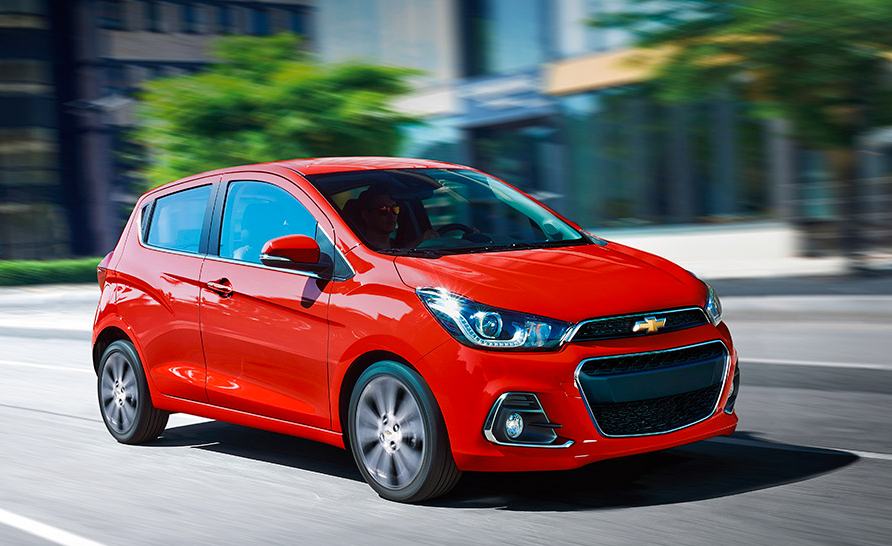
The Karl’s side-impact performance was considerably stronger, while its frontal offset test showed a stable passenger compartment and good protection for the knees and femurs of both front occupants. The weak point was therefore not simply the crash structure.
Its safety-assistance score was only 25%, and it earned zero points for AEB City in the 2017 reassessment.
The model is also relevant to U.S. readers because the Chevrolet Spark was sold in America, although the European Opel Karl and U.S.-market Spark were not identical vehicles in every respect. The three-star Euro NCAP result therefore should not be presented as a direct U.S. safety rating.