
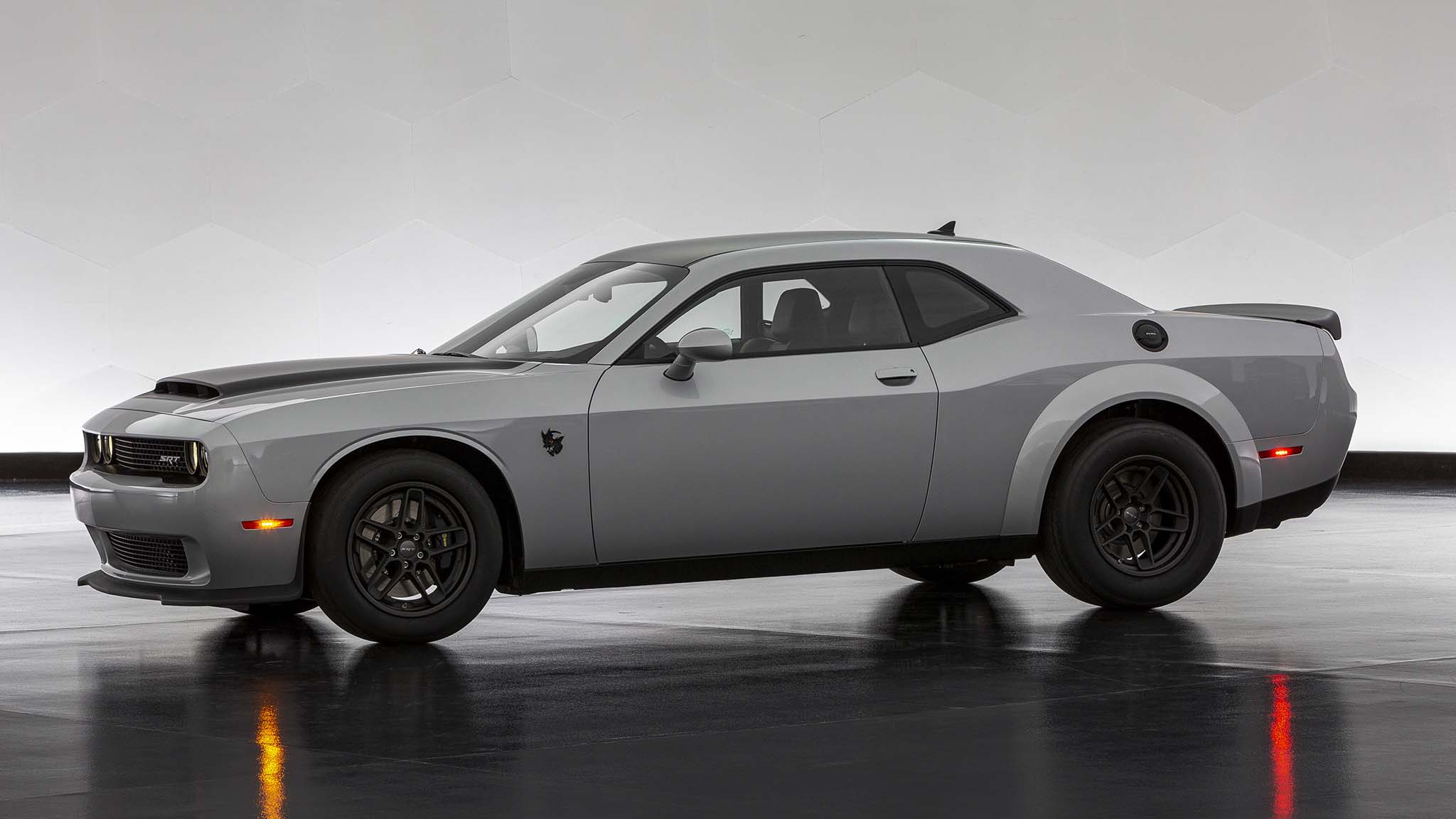
Euro NCAP has become one of the best-known names in vehicle safety testing, but its database does not contain a crash result for every famous car sold around the world. The organization independently assesses selected vehicles, with its program concentrating heavily on models available in European markets.
Its assessment system has also changed substantially since Euro NCAP began testing in 1997, with the 2026 protocol introducing another major overhaul.
A missing Euro NCAP rating therefore does not mean a vehicle failed a crash test or was considered unsafe. It simply means Euro NCAP did not publish an assessment for that model. The following six American icons fall into that category.
1. Chevrolet Corvette
The Chevrolet Corvette is one of the most recognizable American sports cars ever produced, making its absence from the Euro NCAP crash-test database particularly surprising.
Euro NCAP’s public assessment database contains ratings for numerous Chevrolet models, but there is no published Corvette crash assessment. Consequently, there is no legitimate Euro NCAP star rating for the Corvette that can be quoted.
That point needs to be made carefully. Saying the Corvette was “never crash tested by Euro NCAP” does not mean Chevrolet never conducted safety testing on the car.
Manufacturers perform extensive development and regulatory testing, while U.S. vehicles must meet applicable Federal Motor Vehicle Safety Standards. Euro NCAP is an independent consumer-testing organization, so its absence from a model’s history does not create a safety verdict by itself.
The Corvette is also an unusual candidate for Euro NCAP because it has traditionally been a specialized, relatively low-volume sports car rather than a mainstream European family vehicle. The C8 generation introduced another major change by moving the engine behind the occupants, giving the Corvette a mid-engine architecture.
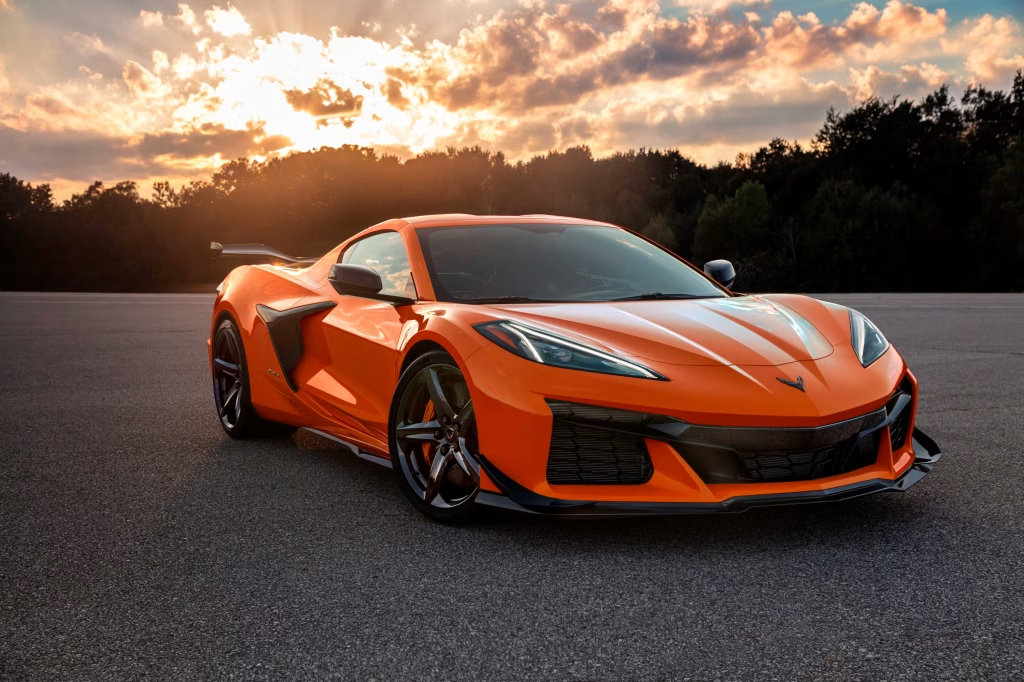
For U.S. buyers, the current Stingray’s mechanical specification remains a major part of its identity. Chevrolet’s 6.2-liter LT2 V8 produces 490 horsepower and 465 lb-ft of torque in standard form.
That performance figure has nothing to do with crash-test performance, but it helps explain why the Corvette occupies a very different category from the ordinary vehicles that dominate Euro NCAP’s testing schedule.
2. Chevrolet Camaro
The Chevrolet Camaro is another famous American nameplate without a published Euro NCAP crash-test assessment. Euro NCAP’s database demonstrates that the organization has tested Chevrolet vehicles, but it does not list a Camaro assessment. Therefore, there is no Euro NCAP star rating that can accurately be assigned to the Camaro.
This is especially interesting because the Camaro was sold in Europe during parts of its modern history and became one of the world’s most recognizable muscle cars.
Yet international availability alone did not guarantee a Euro NCAP assessment. Euro NCAP selects vehicles for independent testing, and the absence of a published result should not be interpreted as a failed assessment.
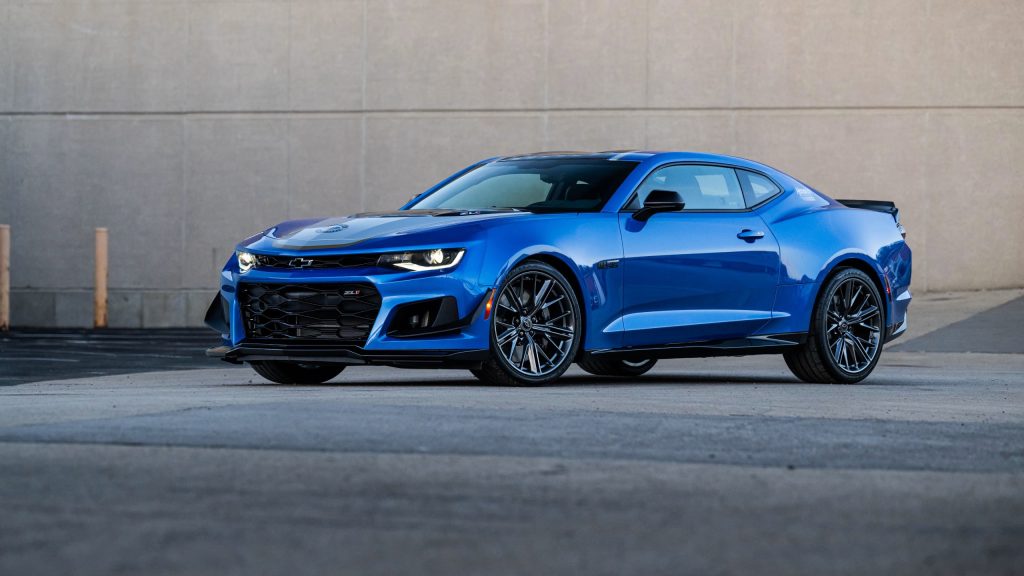
The sixth-generation Camaro was introduced for the 2016 model year and remained in production through the 2024 model year. During that period, American buyers could choose from several engines, including turbocharged four-cylinder and V6 powerplants, while the SS and other performance versions used Chevrolet’s 6.2-liter V8.
The final-generation Camaro’s U.S. safety story therefore has to be separated from Euro NCAP’s European consumer-testing system. A vehicle can comply with U.S. federal safety regulations without ever receiving a Euro NCAP rating.
That distinction becomes particularly important when people compare star ratings from different organizations. Euro NCAP evaluates crash protection and safety-assistance technologies according to its own protocols, which have become increasingly demanding.
For the U.S.-market Camaro SS, the familiar naturally aspirated V8 remained the defining powertrain.
3. Dodge Challenger
The Dodge Challenger became one of the defining American muscle cars of the 21st century, yet it never received a published Euro NCAP crash-test rating. This is worth emphasizing because Dodge itself has appeared in Euro NCAP material.
The existence of other Dodge assessments does not mean every Dodge model was tested, and the Challenger has no Euro NCAP crash result in the organization’s public assessment database.
The Challenger’s absence is understandable when its history is considered. The modern car was developed around the traditional American muscle-car formula, with a long body, rear-wheel drive, and a broad engine range that included V6 and V8 options. Its final production year was 2023, closing a modern chapter of the Challenger nameplate.
There is also an important difference between Euro NCAP and U.S. regulatory testing. Euro NCAP is an independent consumer program that publishes comparative ratings.
A manufacturer can meet mandatory U.S. safety requirements without having its vehicle independently assessed by Euro NCAP. Consequently, the Challenger’s missing Euro NCAP score cannot be converted into a positive or negative safety judgment.
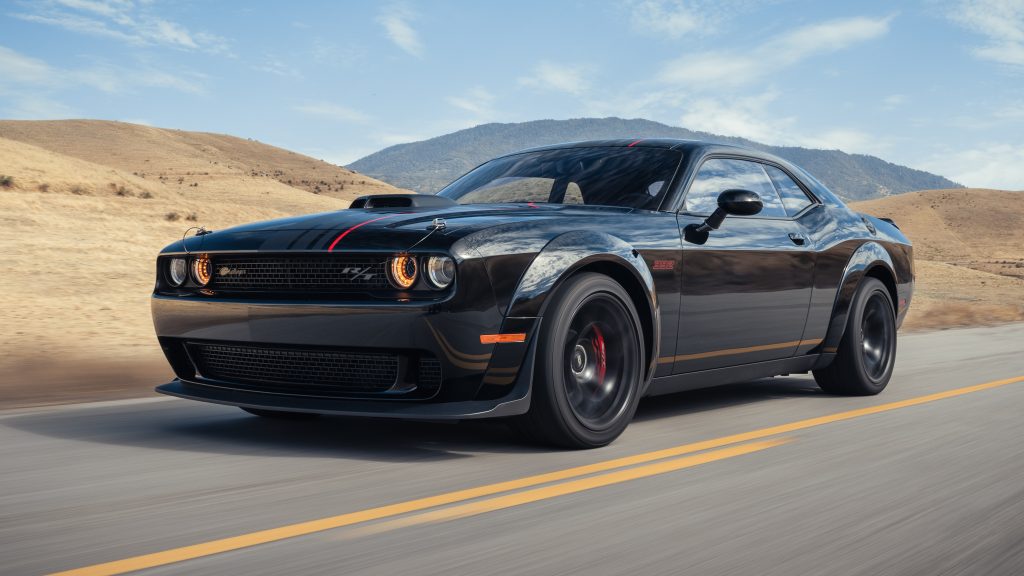
The model’s reputation was built primarily around performance, with the V8-powered versions becoming especially famous. The R/T’s 5.7-liter HEMI V8 produced 375 horsepower and 410 lb-ft of torque in its final U.S. specification.
Those numbers describe the powertrain, not the vehicle’s crashworthiness. Without an actual Euro NCAP test, it would be misleading to assign the Challenger a star rating or speculate about how it would have performed under a particular testing protocol.
4. Ford GT
The Ford GT is arguably an even more unusual omission from the Euro NCAP database because it was developed as a halo supercar and became one of Ford’s most technically ambitious road cars. Despite its international profile, there is no published Euro NCAP crash-test assessment for the modern Ford GT in Euro NCAP’s public database.
That absence should not be confused with a lack of engineering validation. A vehicle such as the GT undergoes extensive manufacturer and regulatory development testing. Euro NCAP’s independent assessments are a separate matter.
The organization chooses vehicles for its consumer testing program, and the GT’s limited-production supercar status makes it very different from the high-volume cars that regularly appear in Euro NCAP results.
The third-generation Ford GT arrived for the 2017 model year and used an advanced carbon-fiber-intensive structure combined with a mid-engine layout. Instead of the large naturally aspirated V8 used by the original GT40-inspired road cars, the modern GT employed Ford’s 3.5-liter twin-turbocharged EcoBoost V6.
Ford rated the U.S.-market car at 647 horsepower, while peak torque was 550 lb-ft. Its aerodynamic bodywork, lightweight construction, and extremely limited production made it a specialized machine rather than a conventional family vehicle.
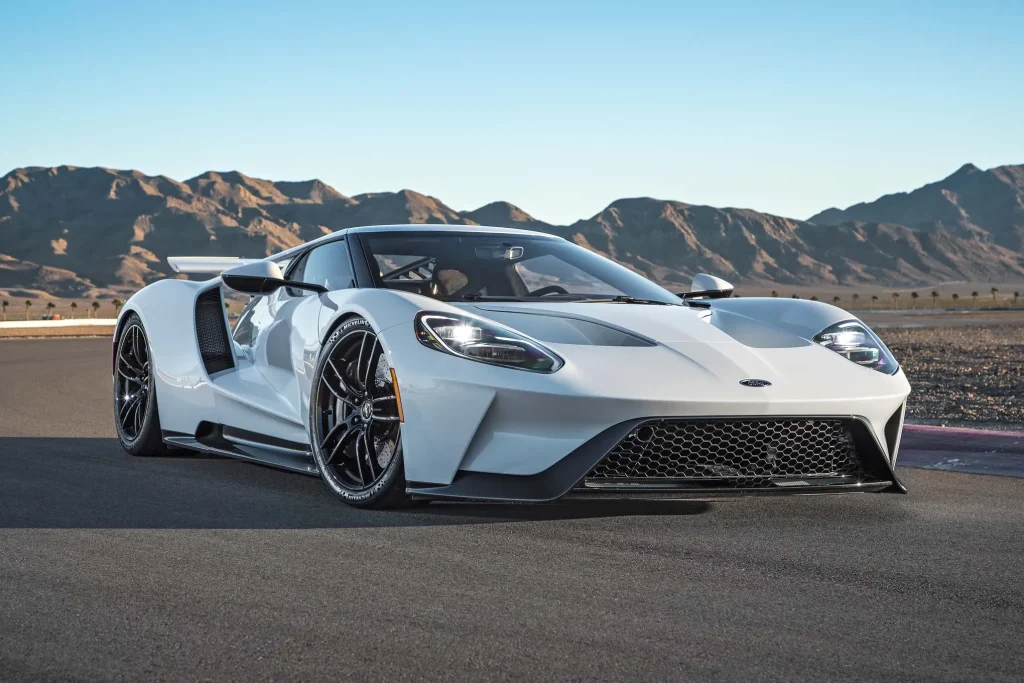
There is therefore no Euro NCAP adult occupant, child occupant, vulnerable-road-user, or safety-assistance score to quote for the GT. Any article claiming that the Ford GT earned a particular number of Euro NCAP stars would be unsupported.
Its place on this list is interesting precisely because it shows that fame and technical sophistication do not automatically result in a Euro NCAP assessment.
5. Dodge Viper
The Dodge Viper represents a completely different era of American performance-car engineering.
Production began before Euro NCAP was established, and although the organization has published European safety information involving the Viper, including an electronic-stability-control assessment, there is no published Euro NCAP crash-test rating for the Viper. The existence of an ESC assessment should not be mistaken for a full crash test.
That distinction is essential for this article. Euro NCAP’s modern star ratings combine several areas of safety assessment, while the historical Viper information found in Euro NCAP material does not constitute a complete crash-test rating.
The Viper was never an ordinary sports car. Its enormous naturally aspirated V10, rear-wheel-drive layout, and minimalist performance philosophy made it one of America’s most uncompromising performance machines. The final-generation car continued that tradition with an 8.4-liter V10 producing 645 horsepower and 600 lb-ft of torque.
Because the Viper changed considerably during its long production run, specifications varied substantially between generations. Using the final U.S.-market specification provides a consistent reference point without implying that every Viper used the same engine or dimensions.
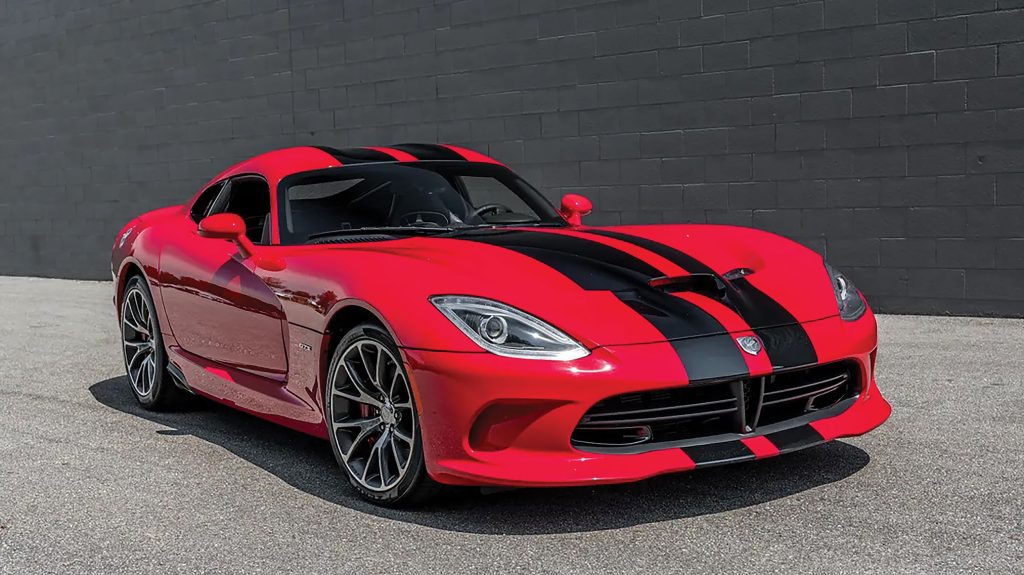
Its lack of a Euro NCAP crash rating therefore cannot be interpreted as evidence of poor crashworthiness. There simply is not a Euro NCAP star result from which such a conclusion could be drawn.
The Viper is a useful reminder that a vehicle can have safety-related assessments or regulatory testing without receiving the full Euro NCAP consumer-rating treatment.
6. Cadillac Escalade
The Cadillac Escalade is perhaps the most surprising vehicle on this list because it occupies the opposite end of the automotive spectrum from the Ford GT and Dodge Viper. It is a huge luxury SUV designed to carry families, yet there is no published Euro NCAP crash-test rating for the Escalade in Euro NCAP’s assessment database.
That does not mean Cadillac ignored safety engineering. The Escalade is sold in the United States under the country’s federal vehicle-safety requirements, while Cadillac offers a substantial collection of active and passive safety technologies.
The absence of Euro NCAP testing simply means European consumers do not have a Euro NCAP star score for the model with which to compare it.
The Escalade’s size also makes it a fascinating contrast with the sports cars elsewhere on this list. The current standard-length Escalade measures 211.9 inches long and 85 inches wide with the mirrors folded, according to Cadillac. Its standard 6.2-liter V8 produces 420 horsepower and 460 lb-ft of torque.
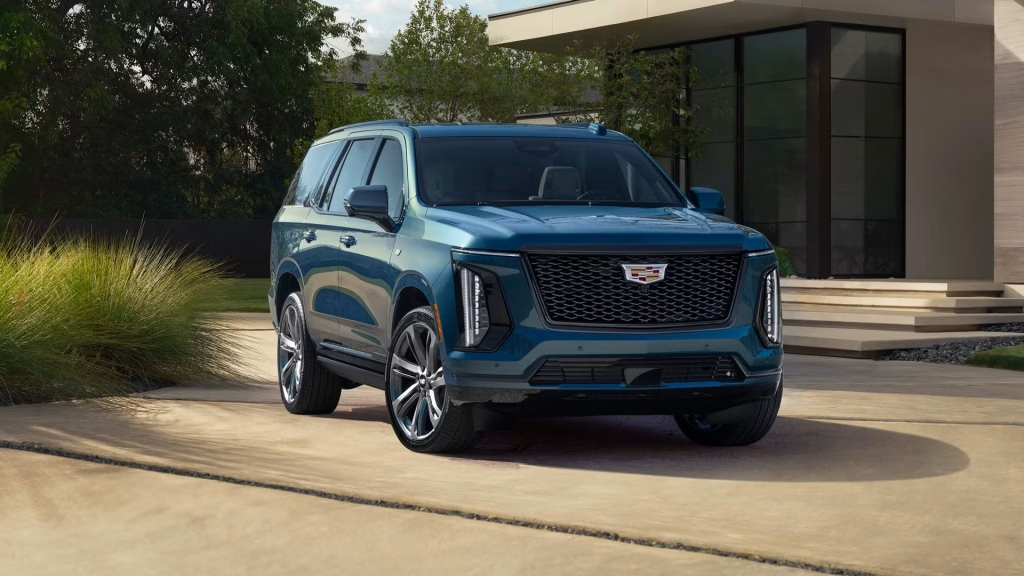
The SUV’s sheer dimensions are not themselves a measure of crash protection. Euro NCAP evaluates specific crash scenarios, occupant protection, and safety technologies rather than simply awarding extra credit for being large.
The Escalade should also be distinguished from the all-electric Escalade IQ, which uses a different architecture and powertrain. Cadillac rates the IQ at as much as 750 horsepower and 785 lb-ft of torque with Velocity Max engaged. It also measures 224.3 inches in length, giving it a distinct size and performance profile within the Escalade lineup.
