
A car can be perfectly legal in one country and completely unacceptable in another. The reasons range from legitimate crash and emissions requirements to unusual licensing rules that can leave even highly capable cars on a banned list.
Some restrictions apply to a specific model, while others affect particular versions, production years, or categories of drivers. This list focuses on documented cases where governments or regulators actually prevented a vehicle from being sold, imported, or driven under certain conditions.
Each example also looks at whether the reason was sensible, questionable, or simply strange. The goal is to separate genuine bans from internet myths.
1. Nissan Skyline GT-R R34 – United States
For years, the Nissan Skyline GT-R R34 became one of the most famous cars that Americans could see everywhere in magazines and movies but could not legally import as an ordinary used vehicle.
The restriction was not based on the R34 being considered inherently dangerous, nor was it intended to prevent Americans from owning a powerful Japanese sports car. The issue was primarily technical. The Japanese-market car had not been certified to meet U.S. federal safety and emissions standards.
The R34 was never officially sold new in America. Its Japanese-market specifications did not have the federal certification required for ordinary importation. Under U.S. law, a vehicle less than 25 years old that did not comply with applicable Federal Motor Vehicle Safety Standards generally could not simply be imported and registered for normal road use.
NHTSA’s regulations provide an important age-based exemption, allowing qualifying vehicles at least 25 years old to be imported without having to meet the same federal safety requirements that apply to newer vehicles.
That rule created the strange situation enthusiasts remember. A 1999 R34 GT-R could be legally imported once it reached 25 years of age, while essentially the same model only a few years younger could face major federal restrictions.
The R34 finally began crossing that threshold in 2024, when the earliest January 1999 production cars became eligible. Subsequent production months and model years have followed as they reach the 25-year mark.
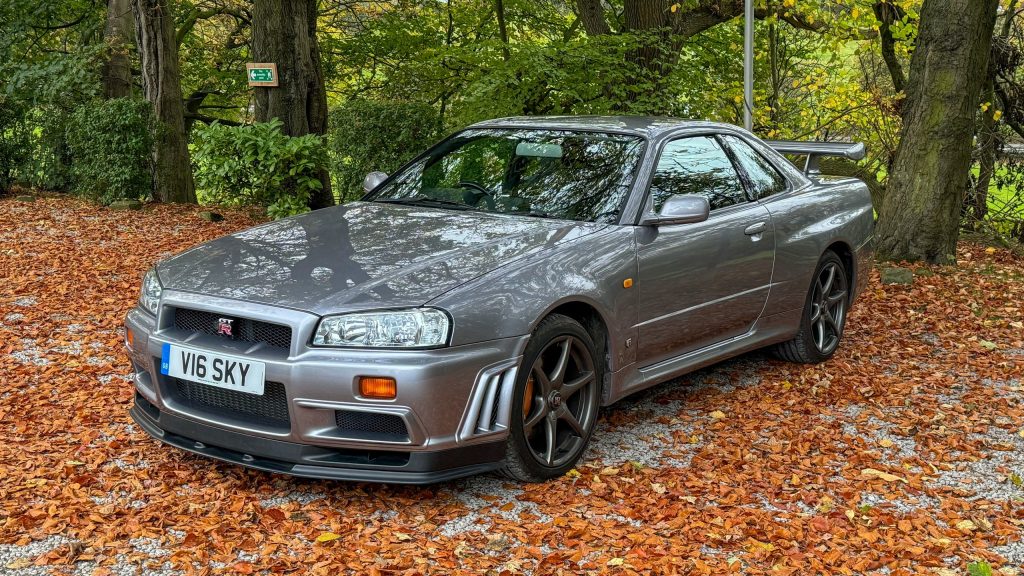
The reason was certainly unusual, but it was not really a matter of the restriction being foolish. The issue was regulatory compliance rather than the R34’s performance or capabilities.
The irony is that the restriction helped make the R34 more famous among American enthusiasts, who could not legally own one when the car was new. Today, the same federal rule that once kept the R34 out of the United States is allowing more examples to enter the country legally as they become eligible for import.
2. Volkswagen Gol – Argentina
The Volkswagen Gol provides a very different kind of ban. This time, the vehicle was already an established and extremely popular model in its market, but Argentina’s safety regulations eventually made it impossible for Volkswagen to continue selling it in its existing form.
The issue was electronic stability control, or ESC. Argentina introduced regulations requiring new vehicles to have ESC, and the Volkswagen Gol did not receive the equipment necessary to satisfy the new requirement.
As a result, Volkswagen stopped marketing the model in Argentina from January 2022. The Gol had been the country’s third-best-selling passenger vehicle in 2021, making the regulatory change particularly significant.
This was not a government declaration that the Gol itself was universally unsafe. Instead, the model could no longer be sold as a new vehicle because its equipment did not satisfy the country’s updated safety requirements.
There was a reasonable safety argument behind the regulation. ESC can help a driver maintain directional control during certain emergency maneuvers by detecting differences between the vehicle’s intended path and its actual movement and applying braking intervention when necessary. Argentina was therefore raising the minimum technology required on new vehicles.
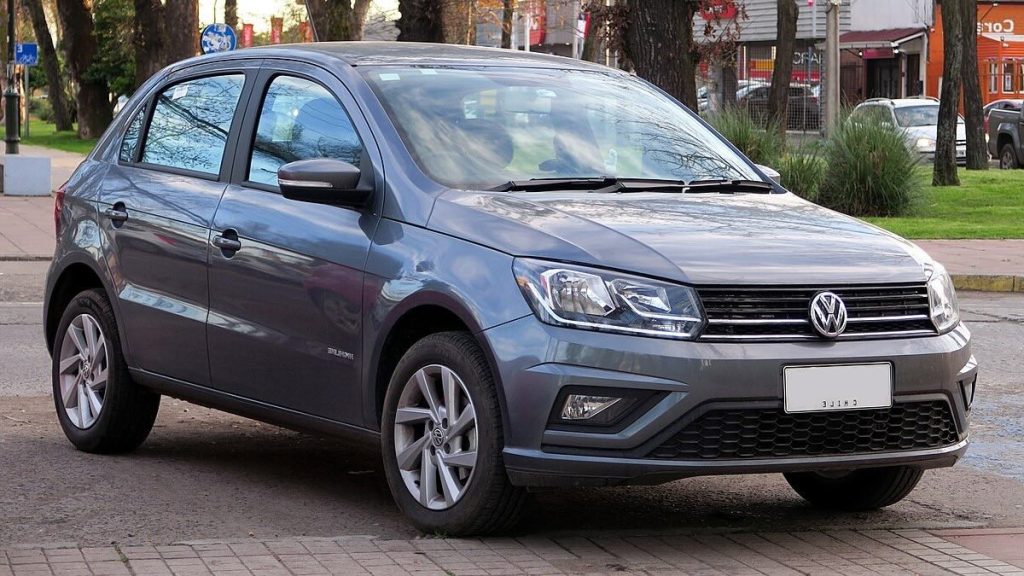
Yet the outcome looked strange from a consumer perspective. The Gol had been an inexpensive, familiar car with a huge presence in the market. Rather than redesigning the model around the new requirement, Volkswagen allowed its Argentine sales to end.
The model’s history also adds another layer. Latin NCAP testing had already exposed serious safety limitations in some Gol configurations, including a version without airbags that received just one star for adult occupant protection and two stars for child protection in the 2009-based assessment.
The reason was not really stupid, but it was certainly unusual because a hugely popular car effectively disappeared from the market instead of being upgraded to meet the new requirements. The restriction was essentially the result of a safety standard that the existing Gol could not meet.
3. Porsche 911 GT2 – Australia
The Porsche 911 GT2 is a good example of why the word “banned” needs to be used carefully. The car itself was not prohibited throughout Australia. Instead, certain versions of the 911, including GT2 variants, faced restrictions for probationary drivers in several Australian states because of their performance characteristics.
Australian vehicle listings show the 2003 Porsche 911 GT2 as banned for probationary-plate drivers in New South Wales, Victoria, Queensland, and South Australia, while it was listed as approved in the Australian Capital Territory, Western Australia, Northern Territory, and Tasmania.
That difference demonstrates that the restriction was not a nationwide ban on owning the Porsche. It concerned whether certain newly licensed drivers could legally drive it under state-level probationary licensing rules.
The reason was essentially performance. Australia’s provisional-driver systems have historically restricted access to vehicles considered unsuitable for inexperienced motorists, particularly cars with high power-to-weight ratios or other performance characteristics.
That can sound strange when viewed from outside Australia. A professional driver could race or test an extremely powerful sports car, while a young licensed driver could be prohibited from driving a road-legal version simply because of its performance category.
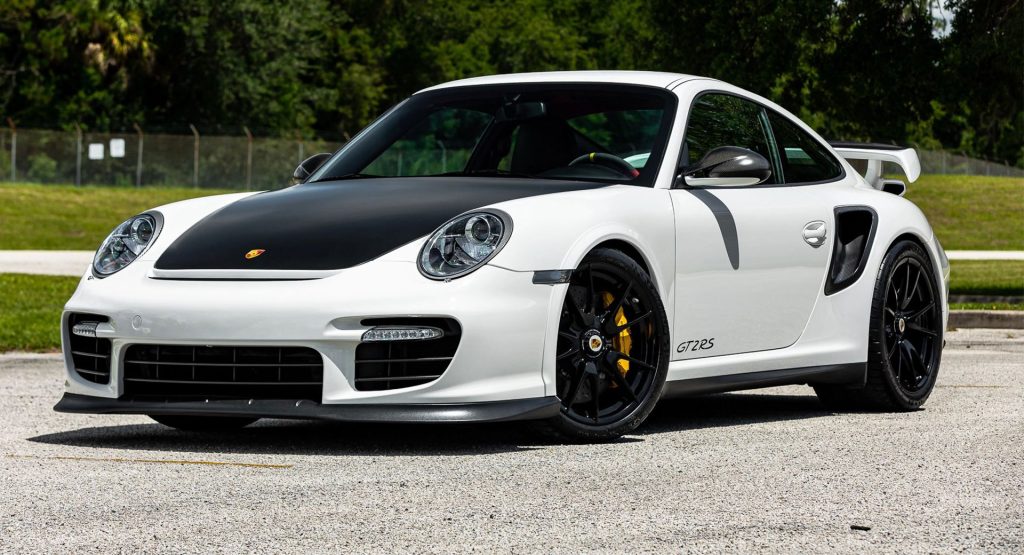
There is also an important distinction between this case and an import ban. The Porsche was not declared illegal because Porsche had produced a defective vehicle. It was restricted because governments considered certain high-performance cars inappropriate for drivers with limited experience.
The reason was strict rather than stupid, although the regional inconsistency made it unusual. A driver could potentially face a prohibition in one Australian state while the same vehicle remained acceptable under another state’s licensing rules. The GT2 therefore shows how a headline about a “banned car” can sometimes describe a much narrower restriction.
4. Smart Fortwo – Canada
The Smart Fortwo presents a less dramatic but genuinely unusual case of a car becoming unavailable in a national market for reasons tied to regulatory requirements rather than performance.
Canada did not simply declare the tiny Fortwo illegal, but certain foreign-market versions could not be imported because they did not meet Canadian vehicle safety requirements.
Transport Canada explicitly states that most vehicles manufactured for markets outside the United States and Mexico cannot be imported into Canada because they do not comply with Canada’s Motor Vehicle Safety Act. The agency says an inadmissible vehicle can be denied entry and detained. There are specific exceptions, including certain older vehicles.
The Fortwo also had a complicated history in Canada because different generations and specifications were sold there. Mercedes-Benz Canada confirms that the Smart Fortwo stopped being sold as a new vehicle in Canada after model year 2019, although existing owners continued to receive service and parts support.
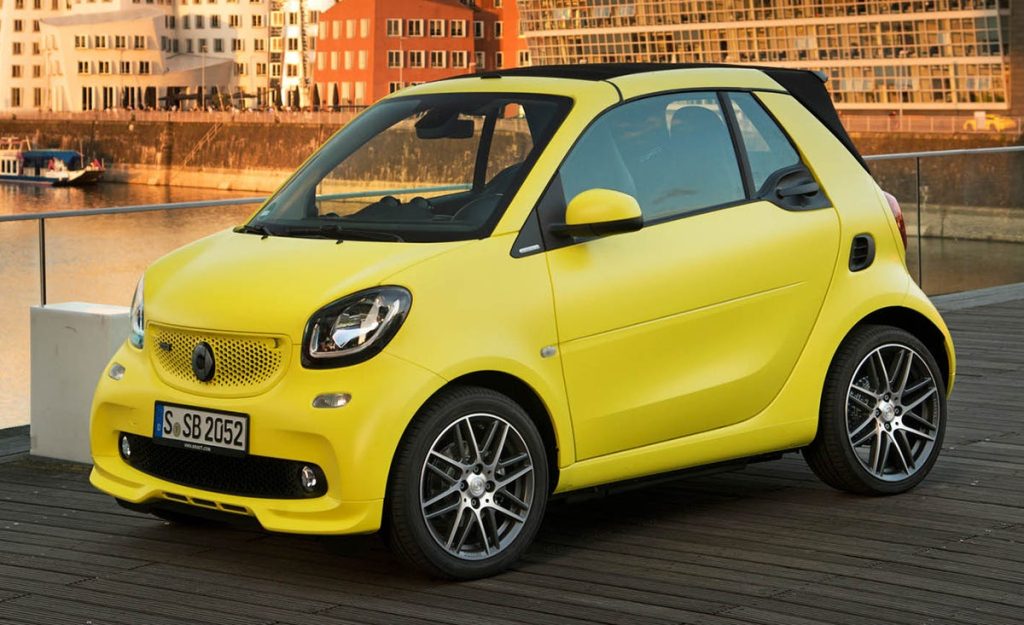
That distinction is important. The Fortwo was not banned from Canadian roads. Rather, particular foreign-market examples could not simply be imported and registered without satisfying Canada’s rules.
There were also real compliance issues involving Fortwo vehicles already sold in Canada. Transport Canada’s recall database records examples involving lighting requirements, steering components, parking brakes, and other equipment.
The reason was unusual, but not really stupid. The odd part was that such a small, low-powered city car could face complicated import barriers despite being designed specifically for urban driving. The issue was not that Canada considered the Fortwo inherently dangerous. Instead, the foreign-market vehicle had to meet Canada’s specific certification requirements before it could legally enter the Canadian market.
5. TVR Cerbera Speed 12 – United Kingdom
The TVR Cerbera Speed 12 became one of Britain’s most infamous examples of a car that effectively failed to make the transition from an outrageous prototype to a normal road-going production model.
The story is often described online as the car being “banned,” but that is not technically accurate. TVR itself decided not to put the final road-going version into normal production after concluding that it was simply too extreme for ordinary road use.
TVR developed the Speed 12 during the late 1990s as a road and racing project. Its enormous performance ambitions were reflected in the car’s naturally aspirated V12, created by combining two TVR Speed Six-derived engines. Early claims suggested power in the region of 800 horsepower, although specifications varied during development.
The crucial moment came when TVR founder Peter Wheeler reportedly drove a completed road-going prototype. Contemporary accounts state that Wheeler concluded the car was excessively difficult to control and unsuitable for normal customers. TVR subsequently cancelled plans for full production.
The car, therefore, was not prohibited by Britain’s government. There was no law declaring the Speed 12 illegal simply because it was powerful. Instead, the manufacturer itself effectively killed the production program after recognizing the practical consequences of putting such a machine into customers’ hands.
Only a tiny number of examples were completed, making the Speed 12 exceptionally rare.
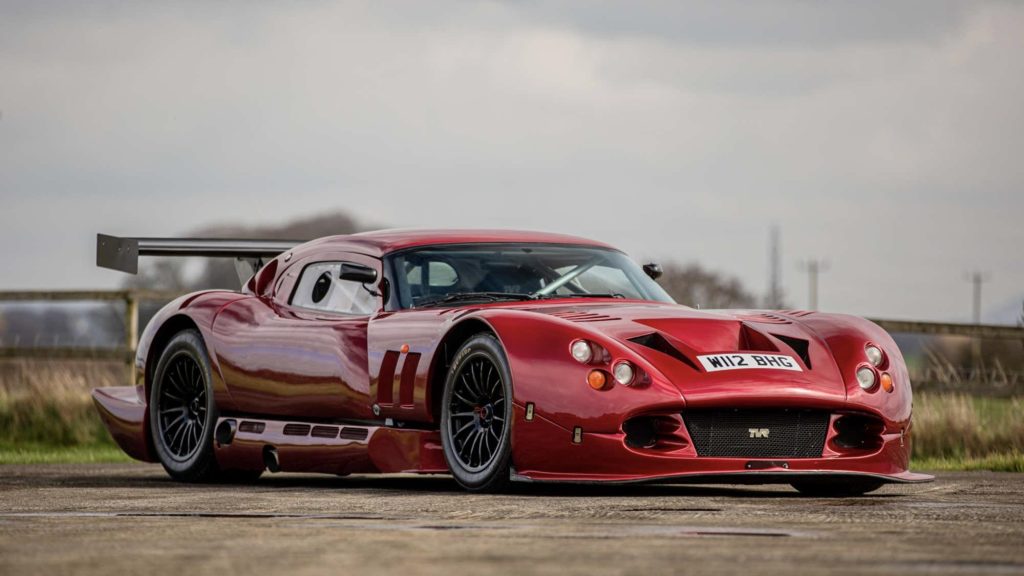
The reason was neither stupid nor particularly strange. It was an unusually practical decision involving an unusually extreme car. The irony was that TVR had spent years developing a vehicle intended to be one of the world’s fastest road cars, only to conclude that its own creation was too demanding for normal road use.
6. Mercedes-Benz G63 AMG 6×6 – Australia
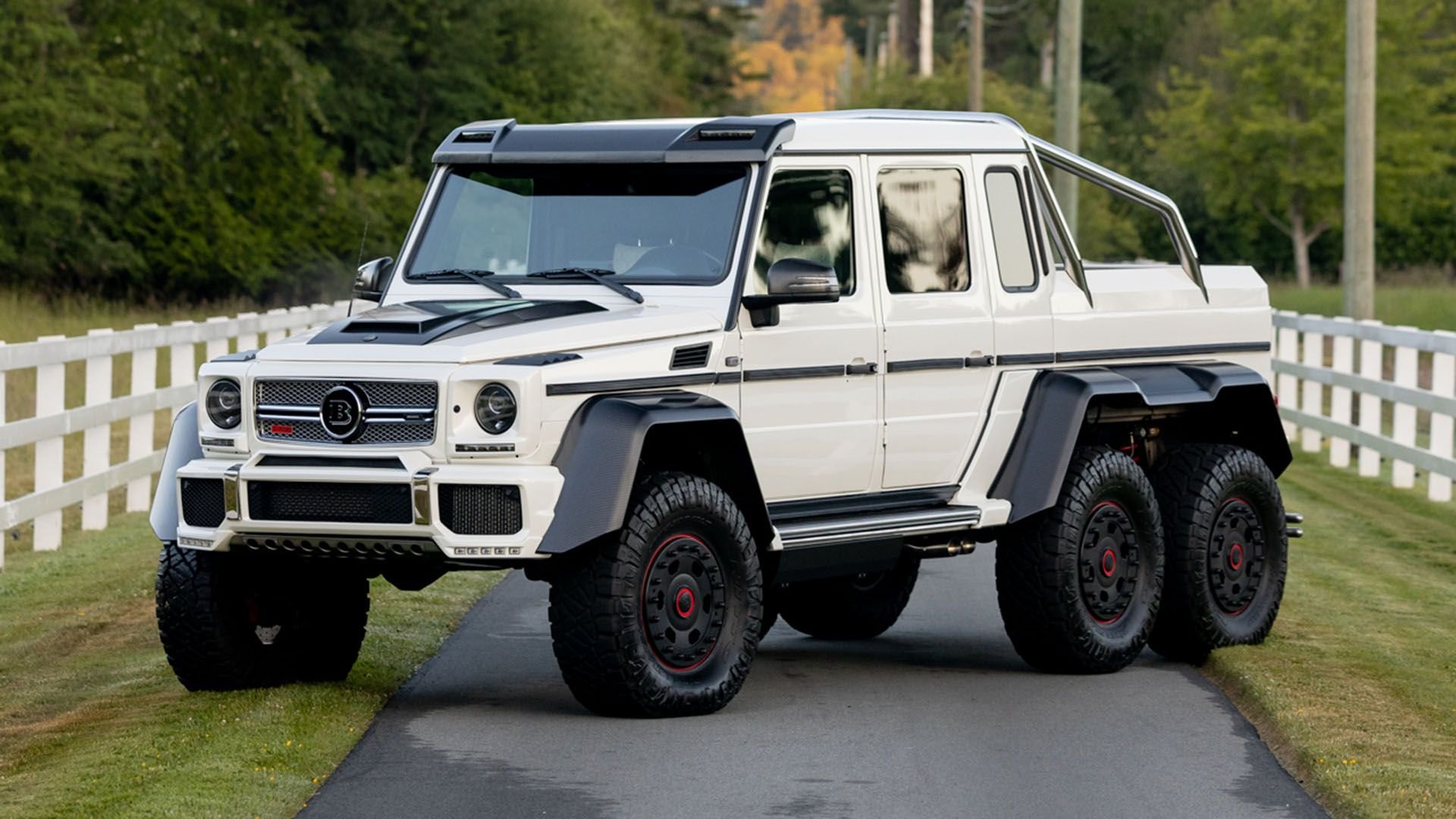
The Mercedes-Benz G63 AMG 6×6 became a famous example of a vehicle whose enormous size and unusual configuration created regulatory complications in Australia. The six-wheeled luxury pickup was not simply another G-Class. It was substantially wider, longer and heavier than the conventional four-wheel-drive models that Australian buyers were accustomed to.
Australia’s vehicle certification requirements can be particularly important for unusual imports. The G63 AMG 6×6 was not sold through Mercedes-Benz Australia’s normal passenger-car range, meaning individual vehicles could require special approval or compliance arrangements before being legally registered.
The six-wheel configuration itself was not illegal. Australia has plenty of six-wheel commercial and specialist vehicles. The issue with the Mercedes was whether a specific imported example met the applicable Australian Design Rules and other registration requirements.
This distinction is important because internet articles have sometimes described the 6×6 as “banned in Australia,” implying that the government specifically outlawed the vehicle. That overstates the situation. Individual imported examples could face registration and compliance hurdles, but that is not the same thing as a nationwide prohibition on ownership.
The G63 6×6 was also produced in very limited numbers, with reports generally placing production at around 100 examples, adding to its rarity and making regulatory-compliant examples particularly unusual.
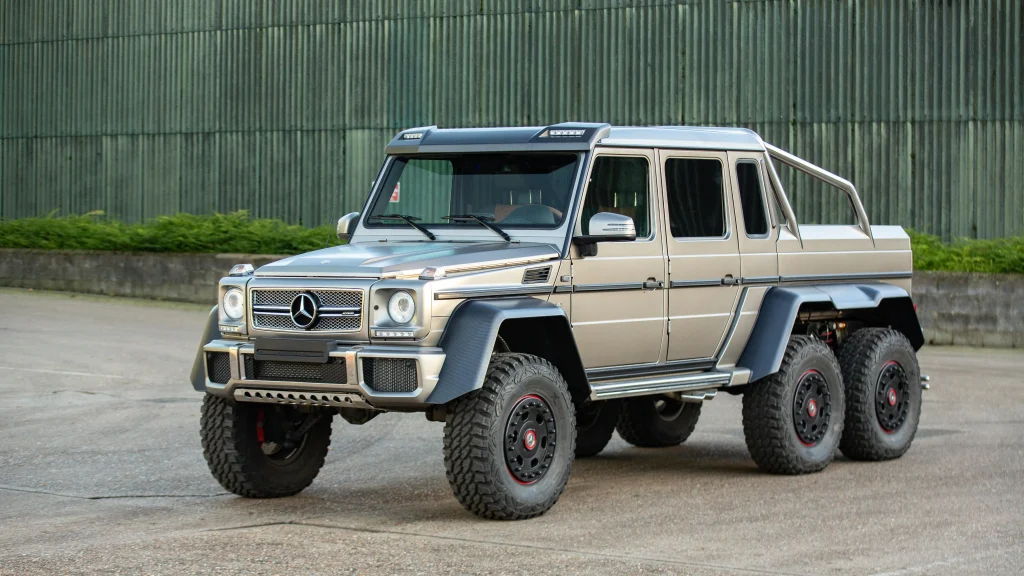
The reason was unusual, largely because the vehicle itself was so unconventional. Australia did not simply prohibit six-wheel vehicles. Instead, the G63 AMG 6×6 faced additional complications because of its unusual dimensions, configuration, and certification requirements. Its story shows how import regulations can make an exotic vehicle difficult to register without the vehicle being formally “banned” in the conventional sense.
7. Mitsubishi Pajero Evolution – United States
The Mitsubishi Pajero Evolution was difficult for American enthusiasts to legally import for a straightforward reason. It was never certified for regular U.S. sale, and most examples were too new to qualify for the 25-year import exemption when interest in the model was at its peak.
Mitsubishi developed the Pajero Evolution as a high-performance version of its four-wheel-drive SUV, primarily to compete in the Dakar Rally. The road-going model was produced in Japan from 1997 through 1999, with Mitsubishi building roughly 2,500 examples to satisfy homologation requirements for motorsport competition.
The unusual part was that the vehicle was legal in its home market but unavailable through American Mitsubishi dealers. Importing one into the United States therefore required compliance with federal safety and emissions requirements, which a Japanese-market example had not been certified to meet.
Under U.S. law, vehicles at least 25 years old can generally be imported without having to comply with the same Federal Motor Vehicle Safety Standards applicable to newer vehicles. That means the restriction was temporary for each Pajero Evolution rather than permanent.
The earliest 1997 examples reached the 25-year threshold in 2022, opening the door to legal importation under the federal exemption.
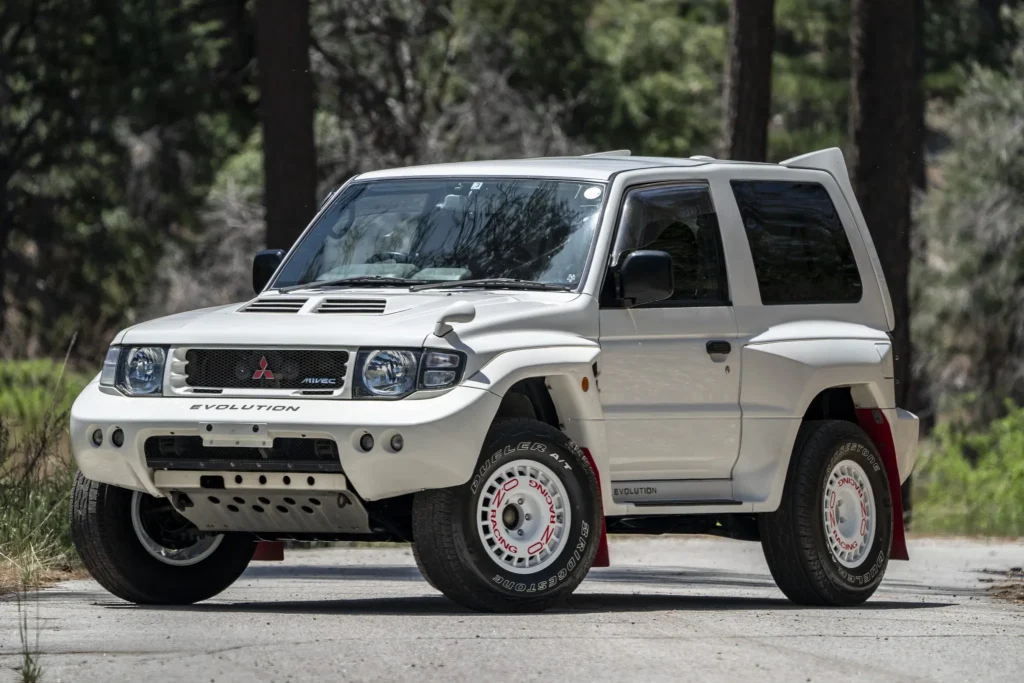
The reason was unusual for enthusiasts but understandable from a regulatory standpoint. The strange part was that an SUV engineered specifically for one of the world’s toughest motorsport events became difficult to obtain in the United States because it lacked U.S. certification. Its rally pedigree did not make it illegal. The issue was its status as a foreign-market vehicle that had not been certified for sale in the United States.
8. TVR Tuscan – United States
The TVR Tuscan is another case where the phrase “banned in America” can be misleading. The British sports car was not specifically outlawed by the U.S. government. Instead, it was never federally certified for normal American road use, meaning ordinary new-car importation was not possible.
TVR designed the Tuscan for the British and European markets, and its construction and equipment reflected those markets’ regulations. It used a distinctive fiberglass body and a powerful straight-six engine developed by TVR.
The car also lacked several pieces of equipment that American federal regulations required on vehicles sold new in the United States.
For an enthusiast wanting to import a newer Tuscan, federal safety compliance therefore became the obstacle. Under the United States’ 25-year rule, however, qualifying vehicles become eligible for importation once they reach 25 years of age.
The earliest Tuscans began reaching that threshold during the 2020s, gradually changing their status for American collectors.
This is why calling the Tuscan “banned” requires an important qualification. There was no specific U.S. law declaring the TVR Tuscan prohibited because it was British, too fast or unsafe. It simply did not satisfy the regulatory certification necessary for ordinary new-car importation.
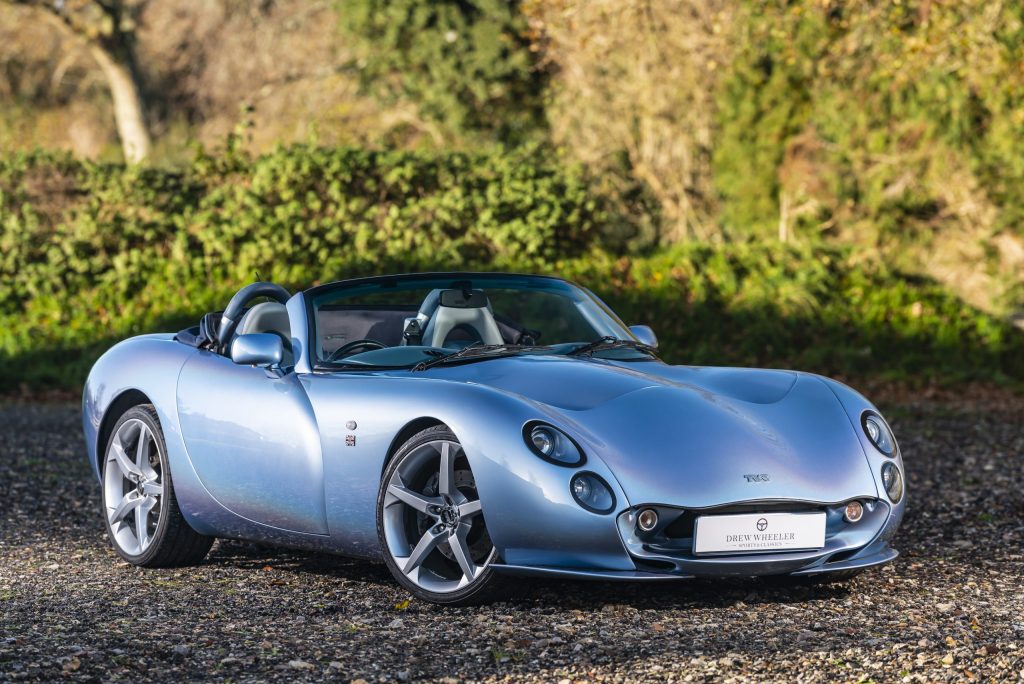
The reason was unusual rather than stupid. For American enthusiasts, it was frustrating that a road-legal sports car could be driven normally in Britain but could not simply be shipped to the United States and registered.
However, the same federal framework that restricted newer examples eventually created a straightforward path for older ones. The Tuscan is therefore more accurately described as a car that was restricted from ordinary importation rather than permanently banned.
9. Nissan Skyline GT-R R32 – United States
The Nissan Skyline GT-R R32 is another Japanese performance car that became effectively unavailable to American buyers when it was new because it was never federally certified for sale in the United States.
Unlike a conventional recall or safety ban, the problem was regulatory compliance. Nissan developed the R32 primarily for Japan and other markets, and Nissan did not sell the GT-R through American dealers during the model’s production period.
For an imported vehicle to be legally sold or normally imported into the United States while it is newer than 25 years old, it generally has to meet applicable Federal Motor Vehicle Safety Standards and emissions requirements.
Vehicles that are at least 25 years old can qualify for the federal age exemption from the safety standards. That is why R32 GT-Rs began becoming much easier to import legally in the United States during the 2010s. The earliest examples reached 25 years old in 2014.
The situation became especially confusing because the R32 was perfectly legal in Japan and developed an enormous international reputation.
Its success in Group A touring-car racing made it even more desirable to American enthusiasts, yet buying a Japanese-market example and simply shipping it across the Pacific was not enough to make it legal for normal U.S. road use.
The federal rule eventually changed the situation. Once individual cars reached 25 years of age, they could qualify for the exemption without meeting every U.S. safety requirement applicable to newer vehicles.
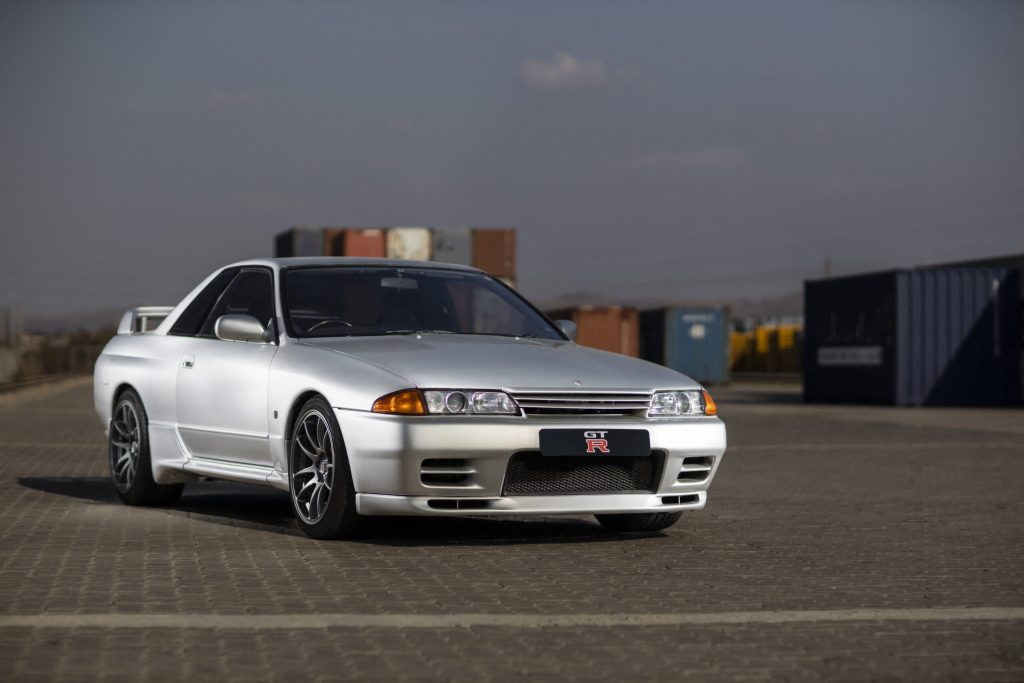
The reason was unusual, but it was based on a genuine regulatory requirement. The strange part was that an internationally famous sports car could be perfectly legal in its home country while an American enthusiast could not simply import and register one. The R32’s so-called “ban” was therefore more accurately a certification and import restriction rather than a determination that the GT-R itself was inherently illegal.
10. Lamborghini Countach – United States
The Lamborghini Countach has a more complicated American history because certain versions were affected by U.S. safety and emissions regulations, while Lamborghini subsequently developed federalized versions specifically for the American market.
That makes claims that the Countach was simply “banned in America” misleading, but its early U.S. history shows how dramatically regulations could alter an exotic car.
When the Countach first appeared in the 1970s, its European specification did not automatically satisfy American federal requirements. Lamborghini had to make substantial changes to cars destined for the United States, including modifications related to emissions and safety equipment.
The resulting U.S.-specification cars gained distinctive equipment and were visually different from the original European versions.
One particularly famous change was the use of large rubber impact bumpers on U.S.-market Countachs. They were added to meet American bumper regulations, fundamentally changing the appearance of the wedge-shaped supercar. U.S. emissions requirements also required modifications to the engine and exhaust system.
The situation was therefore not a permanent government prohibition. Lamborghini worked around the rules by producing cars configured for the American market. The Countach subsequently became one of the most recognizable exotic cars sold to American buyers.
The reason was unusual rather than stupid. The regulations served legitimate safety and emissions purposes, but the strange part was their visual impact. A dramatically styled Italian supercar designed around a clean wedge shape suddenly required bulky safety equipment that significantly altered its appearance and was widely regarded by enthusiasts as unattractive.
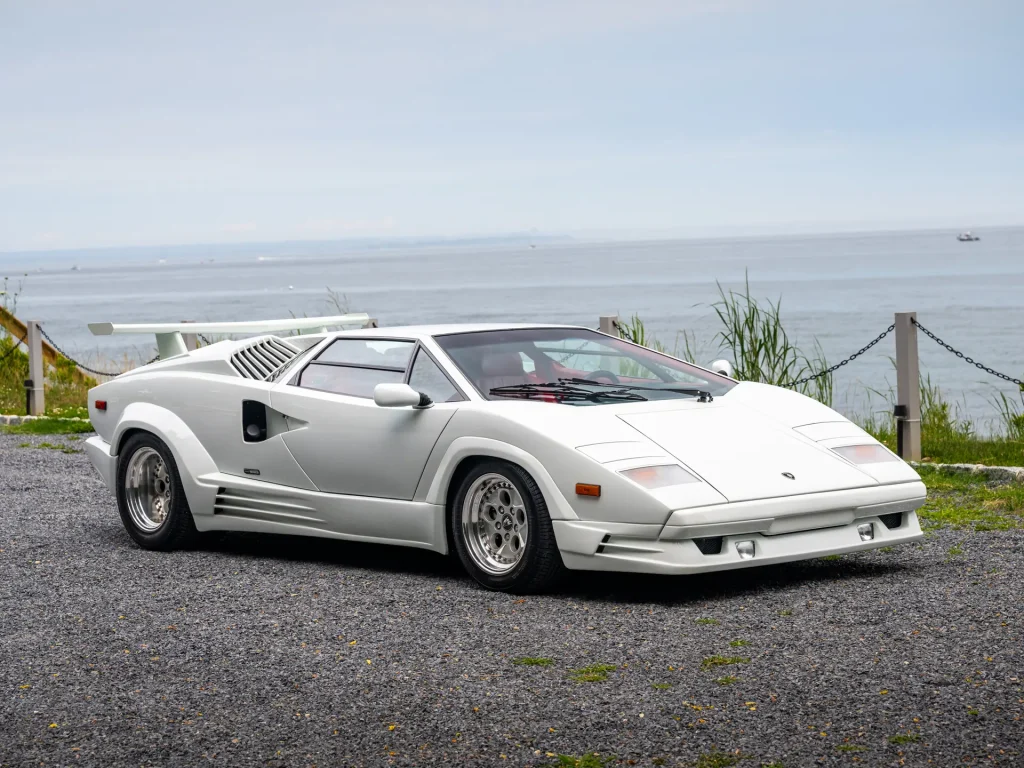
The Countach demonstrates why “banned” can sometimes be an inaccurate description. The original specification could face regulatory obstacles, but the manufacturer could modify the vehicle to comply. The result was an American-market Countach that looked noticeably different from its European counterpart.
That regulatory history also explains why collectors today distinguish carefully between U.S.-specification cars and examples originally built for other markets.
