Car companies normally spend months testing potential names, checking trademarks, and studying how a word sounds in different markets. But some automakers have taken a different approach and handed the decision to the public.
The results have produced names that later became closely associated with entire generations of drivers. From millions of handwritten suggestions for a Datsun to a Malaysian national-car competition with more than 100,000 entries, these contests were more than publicity exercises.
They gave ordinary people a direct role in automotive history. Here are six cars whose names were selected through public participation, including the stories behind the winning choices.
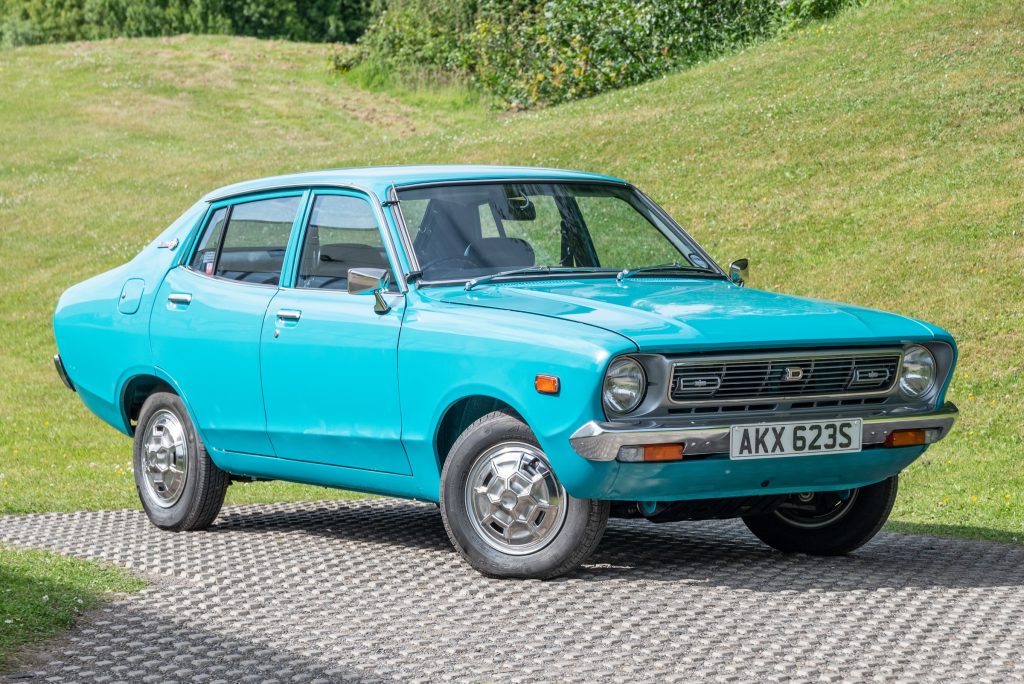
1. Datsun Sunny
Few automotive naming contests have attracted a response as enormous as the campaign that produced the Datsun Sunny name. Nissan launched a nationwide public campaign in Japan in 1965 to find a name for its upcoming small passenger car.
Rather than simply asking a marketing department to invent a suitable word, Nissan invited ordinary people to submit suggestions by mail.
The response was extraordinary. Nissan’s own Heritage Collection records that the company received approximately 8.5 million entries, while Nissan’s historical material specifically identifies 8.48 million entries for the Sunny name campaign.
The winning name was announced on February 19, 1966, ahead of the car’s April launch.
The name “Sunny” was chosen to convey the image Nissan wanted for the new car. It suggested something bright, cheerful, and youthful, qualities that matched the company’s vision for the model.
Japan was entering a period when personal car ownership was expanding rapidly, and Nissan positioned the small Datsun as an affordable vehicle for younger families and first-time buyers.
The first-generation Datsun Sunny 1000 became an important Nissan product. Nissan says it helped open the door to Japan’s era of private-car ownership and sold 30,000 units within its first five months.
There is an interesting twist to the story. “Sunny” was not merely a one-generation marketing name. It became a long-running Nissan nameplate used across multiple generations and body styles.
Millions of people therefore had a chance to influence the name of a car that became one of Nissan’s best-known compact models.
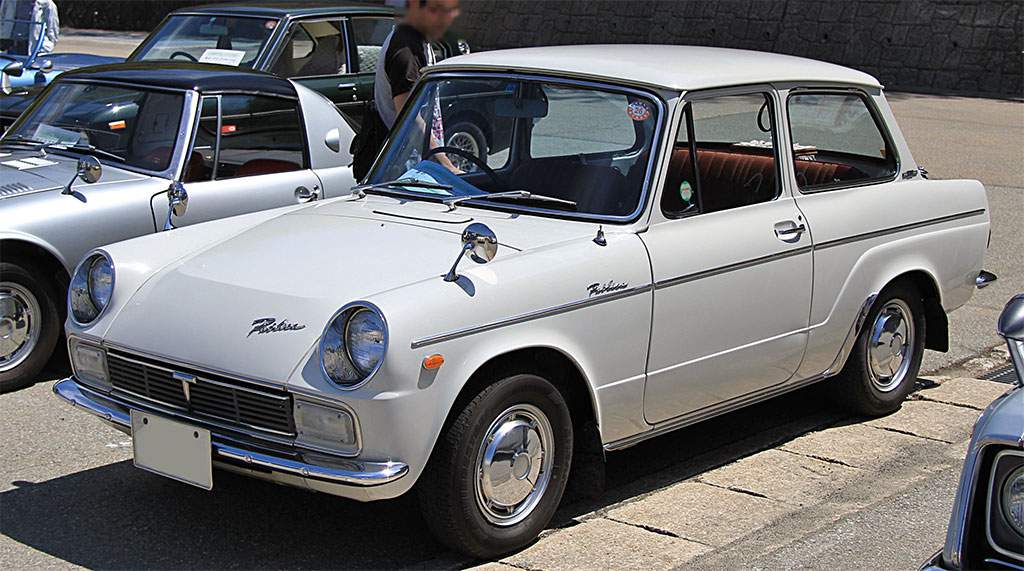
2. Toyota Publica
The Toyota Publica was named through a public suggestion process that reflected Toyota’s desire to create a car specifically for ordinary Japanese consumers. Toyota was developing an affordable small automobile aimed at expanding private ownership, and the company wanted the public involved before the vehicle reached showrooms.
In October 1960, Toyota announced a public contest to select a nickname for the upcoming Publica. Toyota’s official history records that the campaign attracted approximately 1.08 million entries.
The name Publica was a fitting choice because it was formed from the idea of a public car, emphasizing Toyota’s ambition to make automobile ownership accessible to a much broader section of Japanese society. Toyota’s history describes the Publica as its first car specifically aimed at the masses.
The car itself arrived in 1961, with the production model designated UP10. Its development reflected the changing Japanese economy. As household incomes increased, Toyota saw an opportunity for a smaller and more economical car positioned below models such as the Crown and Corona.
Toyota’s official historical timeline also confirms that Publica was selected through a public suggestion process for the 800cc car under development for the general population.
That makes the contest particularly appropriate. Toyota was not simply asking people to name an expensive specialty model. It was asking the public to help name a car intended to bring personal transportation to more people.
The Publica eventually became an important part of Toyota’s small-car history, and its name remains an interesting example of an automaker turning a mass-market philosophy into a mass-participation naming exercise.
3. Proton Saga
The Proton Saga has one of the most memorable public naming stories because the contest was tied directly to Malaysia’s first national car project.
Proton launched a nationwide Name the National Car Contest in 1984, inviting Malaysians to suggest a name for the country’s first domestically produced national vehicle. The response exceeded 100,000 entries, according to Proton’s historical account.
The winning suggestion came from Staff Sergeant Ismail Jaafar of Penang. His idea was “Saga,” a name that had a surprisingly personal origin.
According to the account published in Proton’s history, Ismail had been playing Scrabble with colleagues when he encountered the words “safety,” “achievement,” “greatness,” and “ability.” He connected their first letters to create SAGA.
The judges also liked the name for a more practical reason. “Saga” was short, easy to pronounce, and did not carry an obvious negative meaning in either Malay or English. It also had a specifically Malaysian connection because the saga is the name of a red seed associated with the saga tree found in the country.
The timing gave the winning entry enormous significance. Proton’s first car was officially launched on July 9, 1985, becoming Malaysia’s first national car.
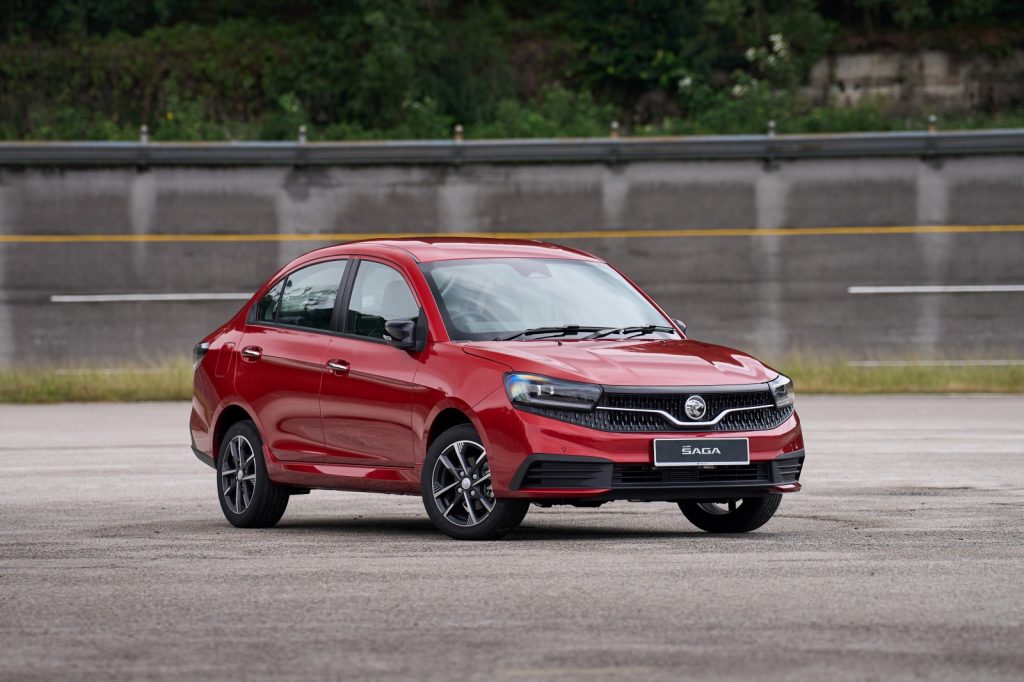
What started as a public naming competition became part of national automotive history. Four decades later, the Saga remains Proton’s longest-running nameplate, and Proton reported in 2025 that more than two million units had been sold worldwide.
The remarkable part is that the name was not created by a branding agency. A Malaysian serviceman came up with it during a casual Scrabble game, submitted it to a nationwide competition, and ended up naming one of the country’s most recognizable cars.
4. Toyopet
Toyopet needs a little clarification because it was not the name of one particular Toyota model. It became a nickname and brand designation used for several Toyota vehicles, and its origins can be traced to a public contest held after World War II.
Toyota announced the contest in September 1946, asking the public to suggest a nickname for its compact vehicles. The company appointed judges, including poet Yaso Saijo, writer Hachiro Sato, and advertising specialist Keizo Horiuchi. Toyota’s historical records state that “Toyopet” was selected as the winner in October 1947.
The timing was significant. Japan was emerging from wartime restrictions, and Toyota was trying to establish a stronger presence in the civilian automobile market. The company needed to reconnect with consumers after years in which industrial production had been dominated by wartime requirements.
“Toyopet” subsequently appeared on several Toyota products. Toyota’s historical material specifically notes that the name was applied to the Model SB truck, while the Model SA passenger car was also associated with the Toyopet name.
The name later became much more prominent. Toyota used Toyopet as a sales and product identity in Japan, particularly during the company’s postwar expansion. The name even appeared on vehicles such as the Toyopet Crown, which became important to Toyota’s early international ambitions.
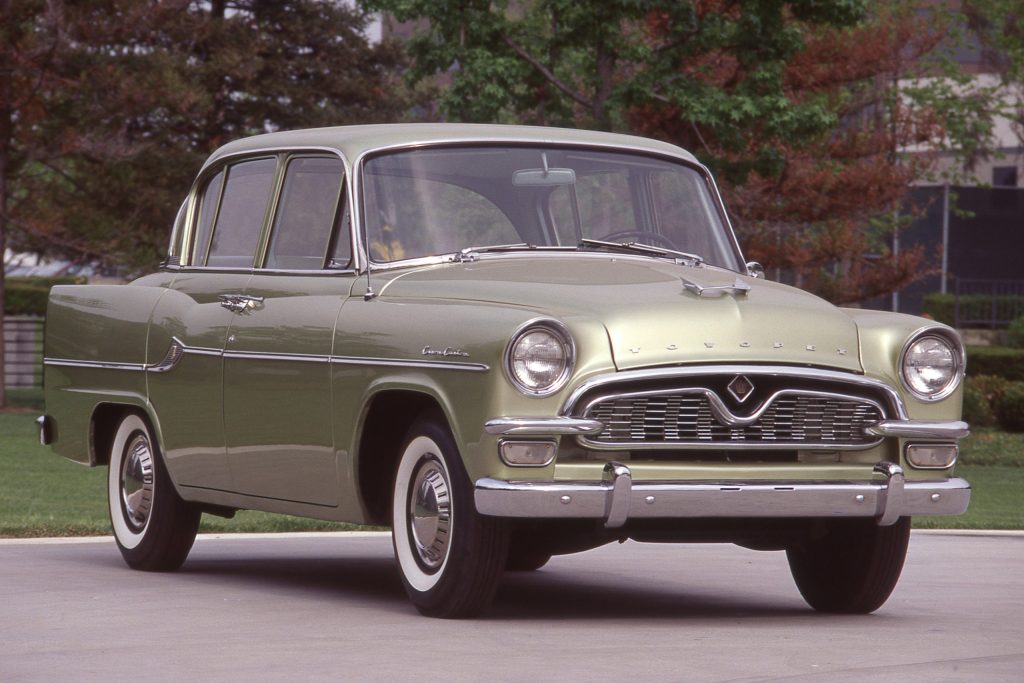
That makes Toyopet different from the other examples in this list. The public did not name a single model in the modern sense. Instead, the winning suggestion became a nickname that Toyota applied across part of its vehicle range.
The important fact is therefore not that someone named a specific car “Toyopet.” The public contest created a name that Toyota subsequently used as a broader automotive identity, making it one of the earliest examples of Japanese consumers directly influencing Toyota’s postwar branding.
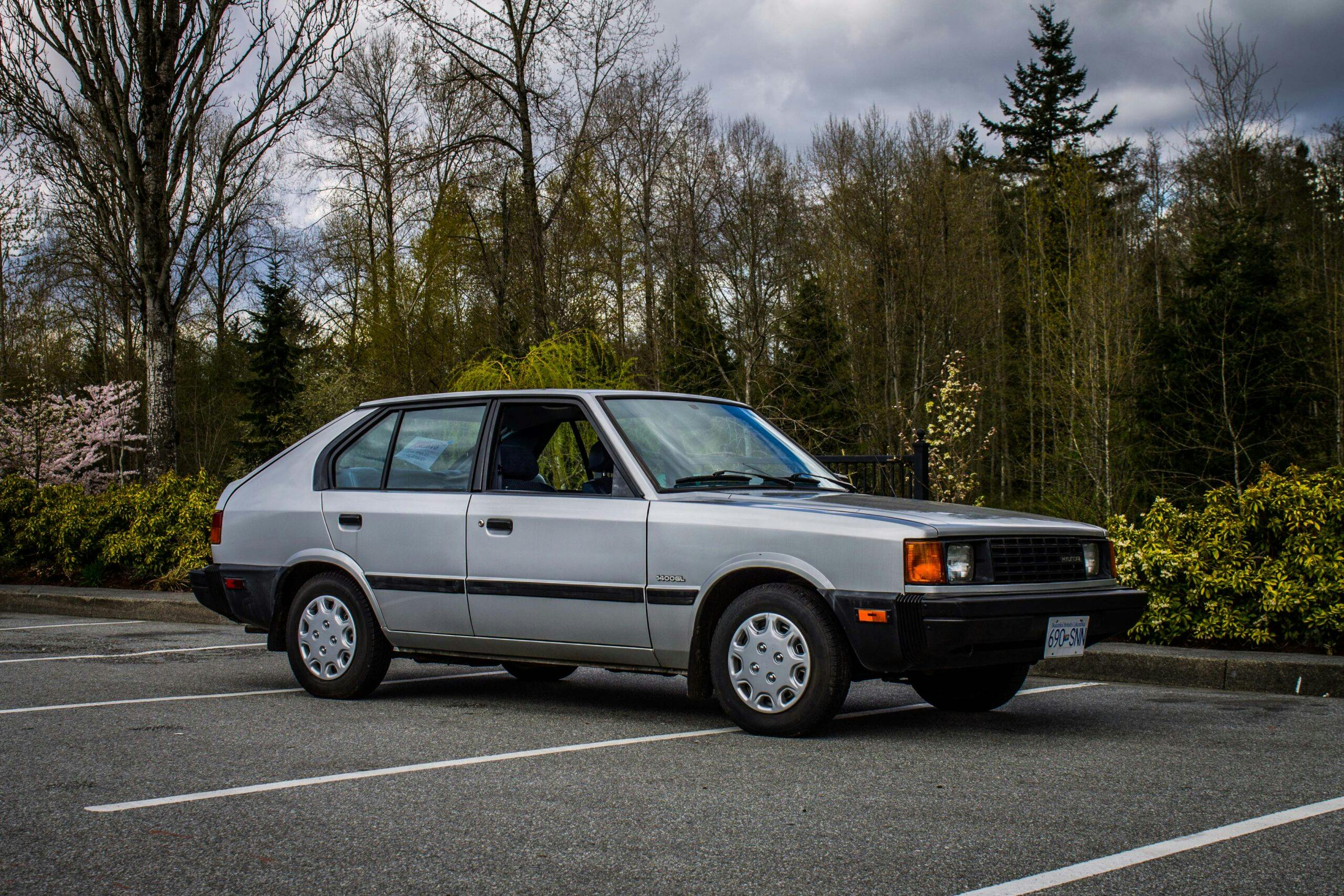
5. Hyundai Pony
The Hyundai Pony earned its name through a public contest held before Hyundai’s first independently developed passenger car entered production. Hyundai’s official heritage material says the company advertised the five-week contest in newspapers and received nearly 60,000 submissions. A car was offered as the prize for the winning entry.
The name “Pony” was submitted by roughly 100 participants, but Hyundai ultimately selected it because the word appealed particularly strongly to female university students.
The company also liked what the name represented. Hyundai’s heritage team describes “Pony” as symbolizing a beginning and reflecting the possibilities associated with the company’s first major step into automobile manufacturing.
The timing made the contest significant. Hyundai had been founded only in 1967 and could not initially independently design and develop a complete automobile. The company had assembled Ford Cortina models under license before deciding to develop a vehicle carrying its own name.
Hyundai then commissioned Italian designer Giorgetto Giugiaro to create the car’s exterior and worked with Mitsubishi for key engineering components.
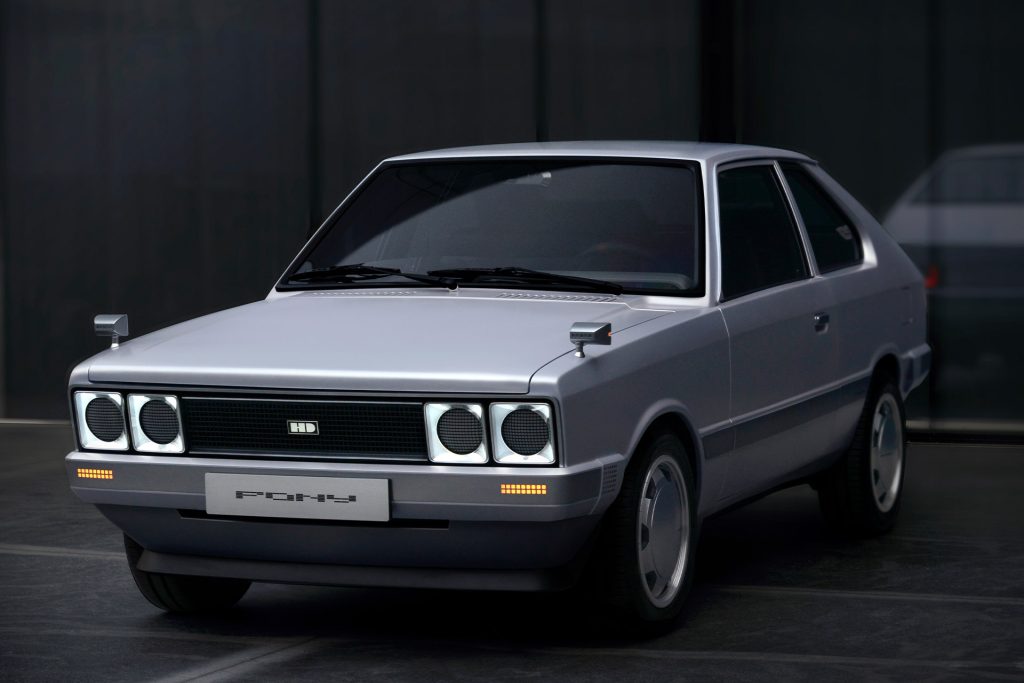
The Pony debuted as a concept at the 1974 Turin Motor Show and entered Korean production in 1975. Hyundai’s history records that the model became an important foundation for the company’s development as an international automaker.
The fascinating part is that the name came from ordinary members of the Korean public before Hyundai had become the global automotive giant it is today.
“Pony” was simple, memorable, and easy to pronounce internationally, helping give Hyundai’s first homegrown passenger car an identity that eventually became one of the most recognizable names in Korean automotive history.
6. Škoda Kylaq
The Škoda Kylaq is one of the newest examples of a production car receiving its name through a public contest. Škoda Auto India launched a naming campaign for its new compact SUV in 2024, asking the public to suggest a name that followed the company’s established SUV naming pattern.
The rules were deliberately restrictive. The proposed name had to begin with K and end with Q, matching the naming structure used by Škoda’s other SUV models. The campaign attracted more than 24,000 entries, according to Škoda’s own company publication.
The winning name was Kylaq, inspired by Mount Kailash and the Sanskrit word associated with crystal. That connection gave Škoda a name with a specifically Indian cultural reference while still fitting the company’s global naming strategy.
The contest was more than a naming exercise. Škoda was preparing a vehicle specifically for the Indian market and used public participation to generate attention before its launch. The eventual winner also received the opportunity to take delivery of the first Kylaq when production began, while the other top entrants were offered a trip to Prague.
The Kylaq was subsequently presented as Škoda’s new compact SUV for India, giving the winning public-submitted name a permanent place in the company’s product range.
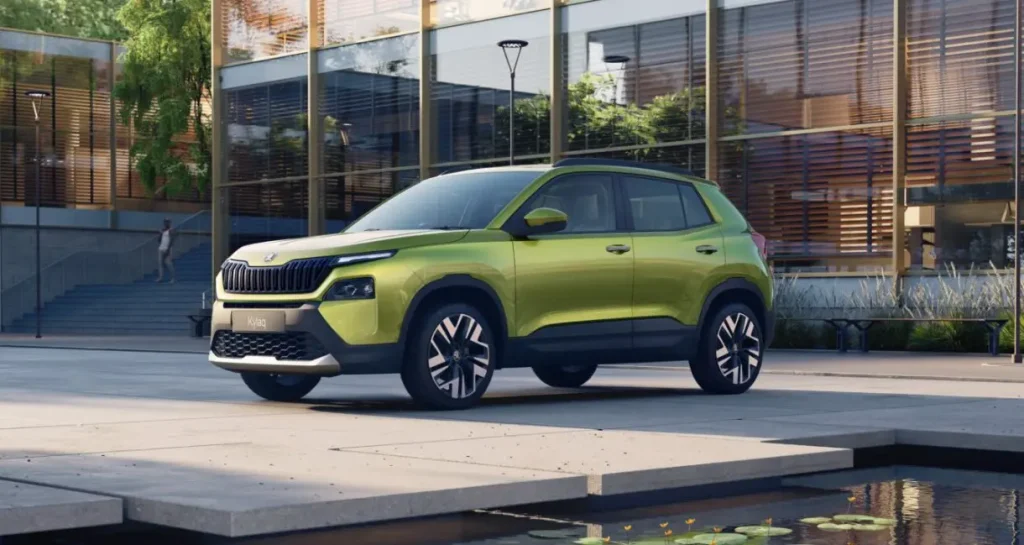
What makes this example particularly interesting is how different it is from the older contests involving names such as Sunny and Publica. Those campaigns were conducted through newspapers, letters, and traditional publicity.
The Kylaq competition used digital participation to pursue a similar goal. It gave potential customers an opportunity to help shape the identity of a new car.