
Some cars become memorable because of their performance, design, or racing history, while a select few gain lasting attention through extreme production rarity.
Cars produced in fewer than 100 units occupy a special place in automotive history because their limited numbers make them difficult to encounter and highly desirable among collectors. These machines often combine advanced engineering, unusual styling, motorsport technology, and powerful engines with production plans aimed at a very small audience.
From Ferrari and McLaren to Aston Martin, Porsche, Mercedes-Benz, Lamborghini, and Alfa Romeo, several manufacturers have created exceptionally rare cars that remain significant decades after their production ended.
1. Aston Martin One-77
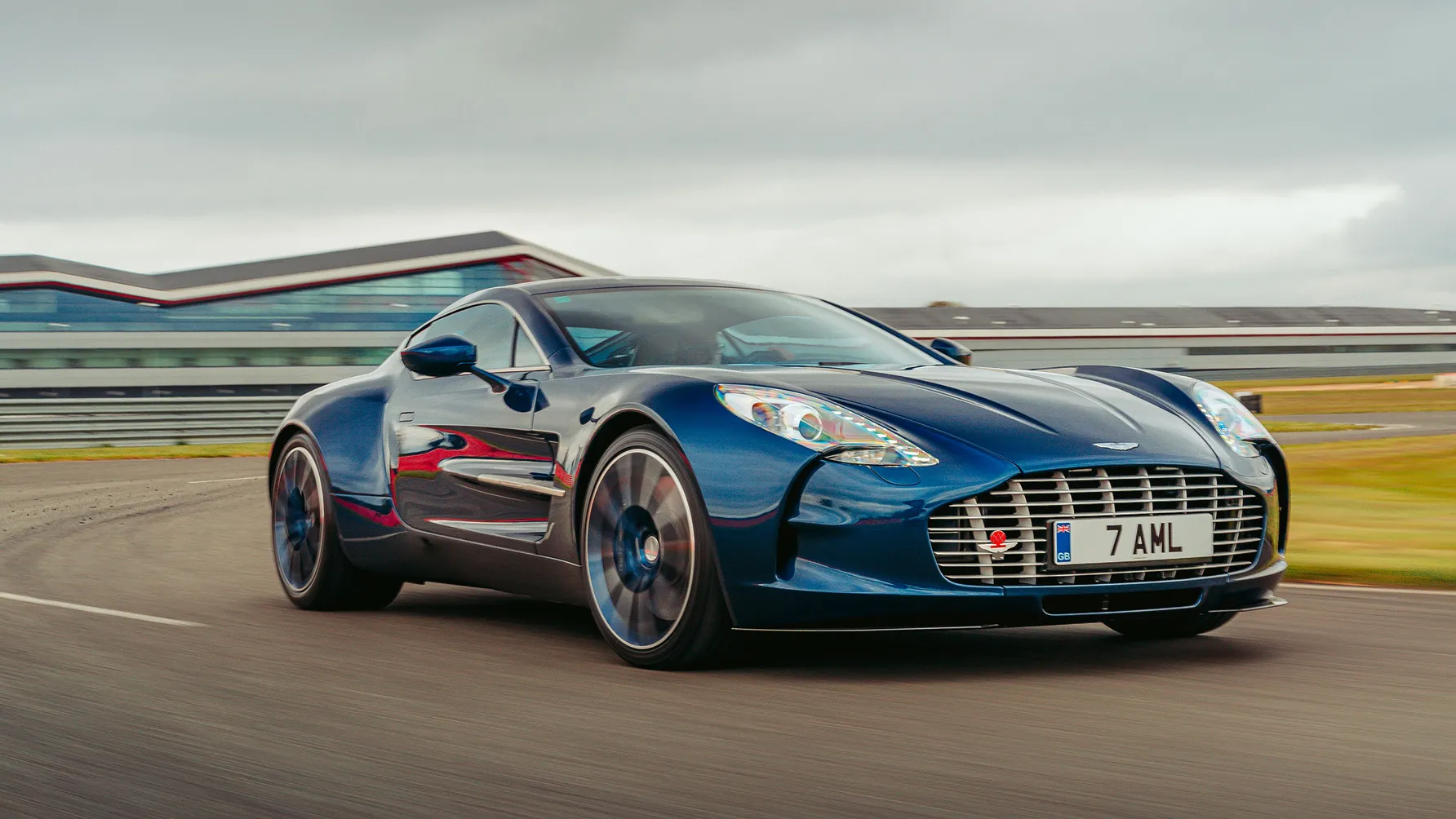
The Aston Martin One-77 is among the rarest modern Aston Martin models ever produced, with production limited to 77 examples. Its name directly refers to this production figure, making the car’s exclusivity part of its identity.
Introduced as an ultra-limited flagship, the One-77 combined Aston Martin’s traditional emphasis on handcrafted luxury with a more aggressive interpretation of performance.
Its long bonnet, low roofline, broad stance, and sculpted bodywork gave it a distinctive appearance that separated it from the company’s regular production cars. The model was created for buyers seeking something far more exclusive than a conventional grand touring car.
Power came from a naturally aspirated 7.3-liter V12 engine developed specifically for the One-77. The engine was derived from Aston Martin’s existing V12 architecture but extensively reworked, producing around 750 horsepower.
At the time of its introduction, that figure made the One-77 the most powerful naturally aspirated production car from the British manufacturer. The engine was paired with a six-speed automated manual transmission, while the car used a carbon fiber monocoque chassis to reduce weight and improve structural rigidity.
Its engineering demonstrated how Aston Martin could combine high-end materials with traditional craftsmanship.
The bodywork was particularly important to the character of the One-77. Each car featured extensive hand-finished construction, and the carbon fiber structure allowed designers greater freedom with the exterior shape. The suspension system used adjustable components, giving the car a more focused setup than Aston Martin’s traditional touring models.
Inside, buyers received a highly personalized cabin with premium materials and extensive opportunities for individual specification. This bespoke approach meant that the 77 cars were not simply identical examples moving through an ordinary assembly line. Personalization formed a significant part of the ownership experience.
The One-77 also represented a period when luxury manufacturers were experimenting with extremely limited flagship models. Rather than developing a car intended to sell thousands of units, Aston Martin created a machine designed to showcase engineering ability, design expertise, and craftsmanship.
Its limited production made it difficult for ordinary enthusiasts to see one in person. The car was also expensive when new, placing it firmly in the collector-oriented segment of the market. Its rarity has remained an important part of its appeal, particularly as collectors increasingly focus on historically significant low-production vehicles.
Today, the Aston Martin One-77 is remembered for its combination of rarity, naturally aspirated V12 power, carbon fiber construction, and bespoke design. The production figure of 77 cars makes it easy to identify among limited-production performance cars, while its engineering gives it importance beyond simple scarcity.
It represents Aston Martin’s willingness to create a highly specialized automobile without relying on large production numbers. For enthusiasts interested in cars produced in fewer than 100 units, the One-77 provides a clear example of how a manufacturer can turn a limited production run into a complete automotive statement.

2. Ferrari FXX
The Ferrari FXX was created as an extreme track-focused machine based on the Ferrari Enzo, but it was never intended to function like a normal road car. Ferrari produced approximately 30 examples for a highly selected group of clients.
The FXX formed part of Ferrari’s XX program, which allowed owners to experience technology and performance derived from the company’s racing activities. Rather than simply selling a faster version of an existing Ferrari, the company created a car intended to be driven on closed circuits under Ferrari’s supervision and support. That unusual purpose helped make the FXX particularly significant.
At the heart of the FXX was a 6.3-liter naturally aspirated V12 engine producing roughly 800 horsepower. The engine was developed to deliver strong performance at high engine speeds, reflecting Ferrari’s experience with motorsport and high-performance road cars.
The FXX also featured a six-speed sequential transmission capable of extremely rapid gear changes. Aerodynamics played a major role in its design, with large front and rear aerodynamic elements helping generate downforce. The car’s proportions, exposed aerodynamic components, and race-inspired details made its track-only purpose immediately obvious.
The FXX was also significant because Ferrari treated the program as a technical development platform. Owners could participate in events where Ferrari gathered information from the cars and their drivers. This created a relationship between the manufacturer and customers that was very different from normal sports car ownership.
The company could observe how the vehicles performed under demanding conditions while owners received access to a specialized driving environment. Such an arrangement helped bridge the gap between a customer car and a factory-supported racing program.
Production rarity was central to the FXX’s identity. With only around 30 examples built, encountering one is extremely unusual even at major automotive events. The cars were not intended for mass-market ownership, and their track-only status made them different from limited road-going supercars.
Ferrari’s approach demonstrated that exclusivity could be built around an entire ownership program rather than simply restricting production. The FXX became a symbol of Ferrari’s ability to take technology from its highest-performance road and racing activities and package it into a machine intended for a very small audience.
The Ferrari FXX remains an important name among ultra-rare performance cars. Its limited production, naturally aspirated V12, racing-inspired technology, and track-only purpose distinguish it from many other Ferrari models.
It also established a formula that Ferrari would continue with later XX cars, creating specialized machines for experienced customers who wanted access to extreme circuit performance. For collectors and enthusiasts, the FXX demonstrates how a car can become historically important through a combination of engineering ambition, factory involvement, and extremely limited availability.

3. McLaren P1 GTR
The McLaren P1 GTR was developed as the track-focused evolution of the McLaren P1. Production was limited to fewer than 50 cars, with widely cited figures placing the total at 45 examples. Unlike the standard P1, which was designed as a road-going hypercar, the P1 GTR was created specifically for circuit use.
Its design was influenced heavily by McLaren’s racing heritage, and its development focused on aerodynamic performance, power delivery, weight reduction, and track capability. The result was a car that looked substantially more aggressive than its road-going counterpart.
The P1 GTR retained the P1’s 3.8-liter twin-turbocharged V8 engine and hybrid powertrain, but the system was tuned for greater track performance. Combined output was around 986 horsepower, giving the car extraordinary acceleration potential.
The hybrid system was particularly important because it could provide additional electric assistance while supporting performance under hard acceleration. The transmission was a seven-speed dual-clutch unit, while extensive use of carbon fiber helped control weight. The engineering philosophy was clearly focused on extracting maximum performance from the underlying P1 platform.
Aerodynamics separated the P1 GTR from many other high-performance cars. The vehicle featured a large fixed rear wing, redesigned bodywork, a more aggressive front section, and other aerodynamic modifications intended to increase downforce. The car’s low ride height and wide stance reinforced its racing character.
The interior was stripped down compared with the road car, with racing-oriented equipment and materials used throughout. These changes showed that McLaren was not simply producing a cosmetic special edition. The P1 GTR was substantially reworked around the demands of circuit driving.
Ownership of a P1 GTR also involved a specialized customer experience. The car was offered to selected P1 customers and formed part of a broader track-focused program.
McLaren could provide technical support and opportunities for owners to drive their cars at circuits. This approach reflected the growing interest among luxury manufacturers in creating limited-run track cars for collectors. Instead of building a road car and adding performance equipment, McLaren designed the P1 GTR around closed-course performance from the beginning.
With roughly 45 examples produced, the McLaren P1 GTR remains exceptionally rare. Its combination of hybrid power, nearly 1,000 horsepower, dramatic aerodynamics, and track-only construction gives it a distinct place in McLaren’s history. It also illustrates how modern technology changed the idea of a limited-production performance car.
Hybrid systems were no longer restricted to improving fuel efficiency. In the P1 GTR, electrical assistance formed part of an aggressive performance package. For enthusiasts researching cars produced in fewer than 100 units, the P1 GTR is a compelling example of modern hypercar engineering.

4. Mercedes-Benz CLK GTR
The Mercedes-Benz CLK GTR began life as a racing car created for the FIA GT Championship, and its road-going version became famous for its extremely limited production.
Mercedes-Benz produced just a small number of road cars to meet homologation requirements, with commonly cited figures placing the road-going production at 25 coupes and a handful of roadsters.
This makes the CLK GTR far rarer than most high-performance Mercedes-Benz models. Its appearance also reflected its racing origins, with a low body, enormous rear wing, central driving position characteristics, and highly developed aerodynamic design.
The racing version was powered by a naturally aspirated V12 engine, while the road car used a 6.9-liter V12 derived from Mercedes-Benz motorsport engineering. Power output was reported at roughly 600 horsepower for the road-going version. The car used a sequential-style racing transmission and a lightweight construction philosophy.
Its proportions were radically different from those of normal Mercedes-Benz road cars because the platform was fundamentally shaped by the requirements of GT racing. The CLK GTR therefore represented a rare case where a competition car was adapted for limited road use rather than a road car being converted into a racer.
The interior was more restrained than the exterior, yet the car still retained the unusual character of a racing machine. The driving position, controls, and visibility reflected the demands of a car developed around competition.
The extensive aerodynamic bodywork was not merely decorative. It was designed to manage airflow and generate stability at high speed. The huge rear wing became perhaps the most recognizable visual element, giving the CLK GTR a silhouette that remains unmistakable among 1990s supercars.
The CLK GTR appeared during a period when manufacturers were investing heavily in GT racing. Regulations required manufacturers to produce road-going examples related closely enough to their racing machinery to qualify for competition.
This created some extraordinary homologation specials. Mercedes-Benz took that concept to an extreme with the CLK GTR, producing a road car that retained much of the racing machine’s visual and engineering character. The resulting vehicle was expensive, difficult to build, and available only to a tiny number of customers.
The Mercedes-Benz CLK GTR has since become an important part of the history of homologation specials. Its connection to GT racing gives it significance beyond its small production figure, while its V12 engine and extreme design make it highly recognizable.
With fewer than 100 road-going examples, it sits comfortably within the category of ultra-rare performance cars. The CLK GTR demonstrates how racing regulations can sometimes lead manufacturers to build road cars that would never make economic sense as conventional mass-production products.
5. Lamborghini Reventón
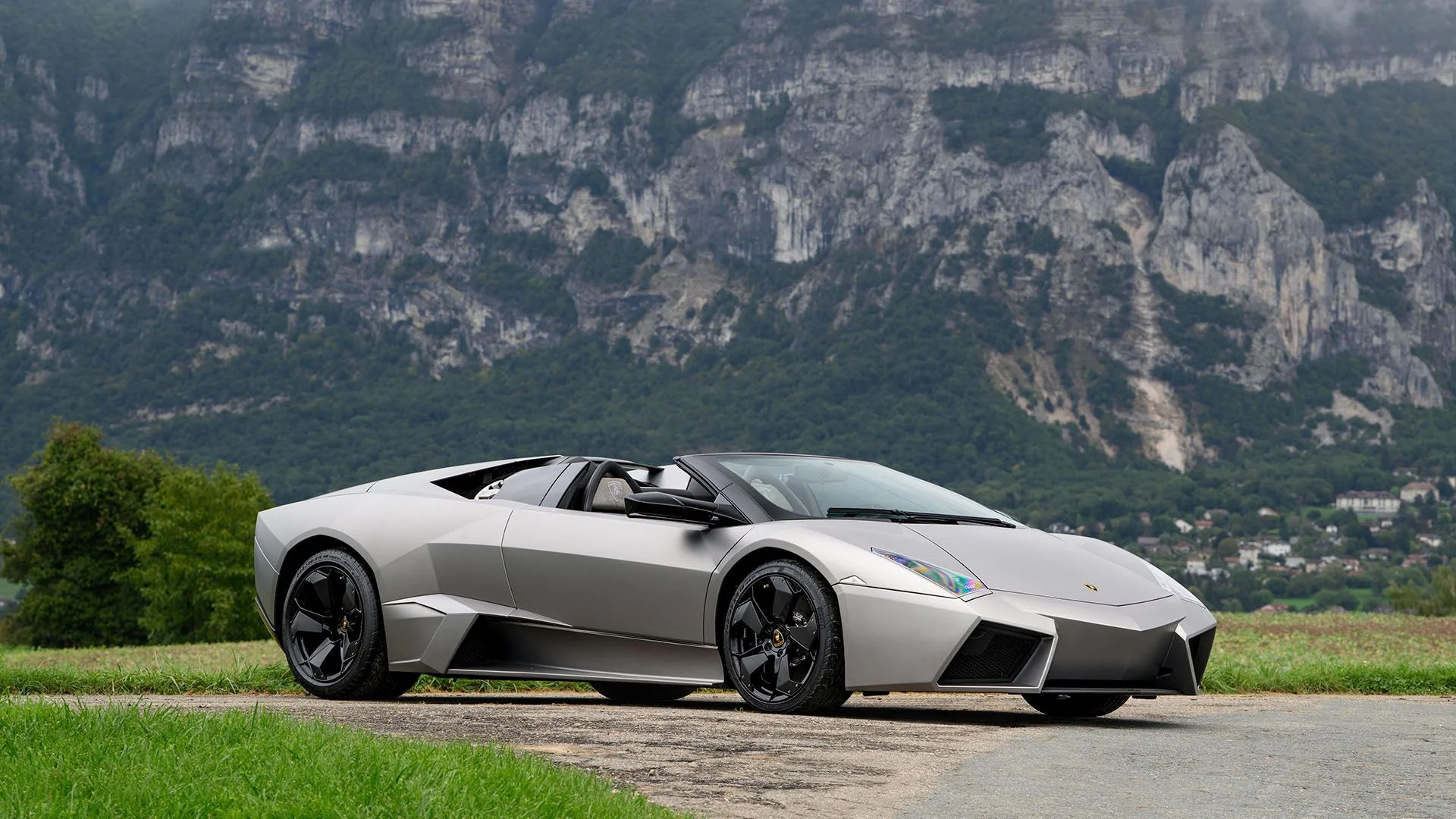
The Lamborghini Reventón was introduced as a highly limited model based mechanically on the Lamborghini Murciélago. Lamborghini announced production of just 20 coupes, followed later by a limited number of Reventón Roadsters. The coupe’s low production figure immediately placed it among the company’s rarest modern road cars.
Its name and design were inspired by the dramatic visual language of military aircraft, with sharp surfaces, angular bodywork, and a dark, technical appearance. Lamborghini used the Reventón to demonstrate a more restrained and geometric direction for its design philosophy.
The Reventón used a 6.5-liter naturally aspirated V12 producing around 650 horsepower. Power was sent through Lamborghini’s all-wheel-drive system, giving the car strong traction under acceleration. The mechanical foundation came from the Murciélago LP640, but the Reventón received unique exterior styling and interior details.
Its performance was impressive for its era, with a claimed top speed of more than 200 mph. The naturally aspirated V12 also provided the character associated with Lamborghini’s flagship cars before turbocharging became common in the segment.
Its design was perhaps the most memorable aspect of the Reventón. Instead of the smooth curves associated with many earlier Lamborghini models, the body used sharply defined planes and angular transitions. The influence of fighter aircraft could be seen in the nose, side surfaces, rear section, and cockpit-inspired interior.
The instrument display also adopted a more technological appearance, reinforcing the aircraft theme. This design direction later influenced other Lamborghini models and helped establish a visual language that became important for the brand.
The Reventón also showed how manufacturers could use a very small production run to test styling ideas and create demand around exclusivity. With only 20 coupes built, Lamborghini could give each example a level of rarity that ordinary production models could not match.
The limited availability helped transform a mechanically related car into something with a separate identity. Collectors were not simply buying a Murciélago with different body panels. They were buying a model with its own production number, styling concept, and place within Lamborghini’s design history.
The Lamborghini Reventón remains significant because it combined a proven V12 platform with a highly distinctive design and exceptionally limited production. Its 20-car coupe run makes it much rarer than mainstream Lamborghini models from the same era.
The car also represents an important stage in the evolution of Lamborghini’s design language, moving toward sharper and more technical shapes. For anyone interested in rare supercars, the Reventón provides an excellent example of how styling, mechanical performance, and production scarcity can combine to create a memorable collector car.
6. Porsche 911 GT1 Straßenversion
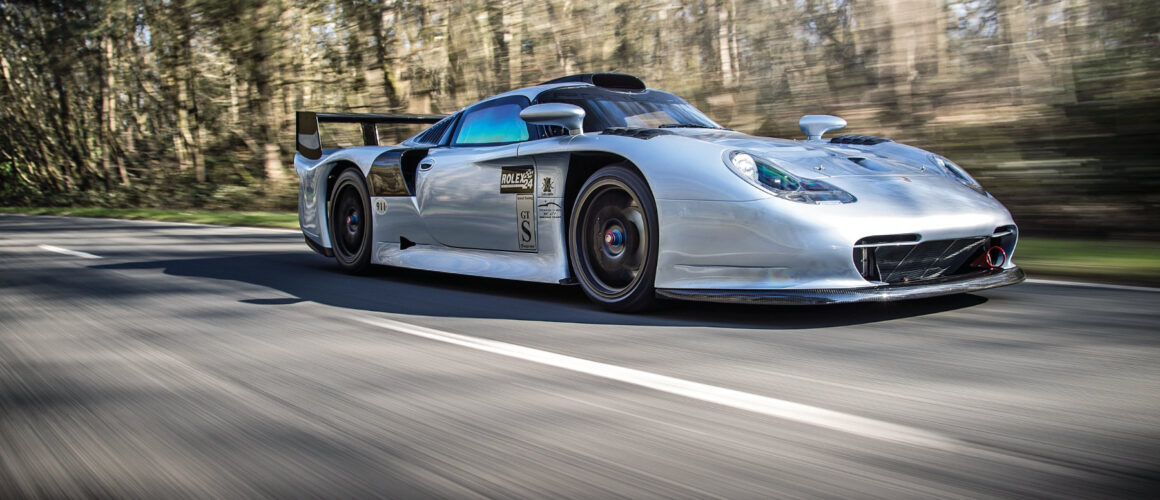
The Porsche 911 GT1 Straßenversion was created as the road-going version of Porsche’s GT1 racing machine. The FIA regulations of the period required manufacturers to produce road-legal cars connected to their competition models, and Porsche built a very small number for that purpose.
Production figures are generally cited at fewer than 30 examples, making the car considerably rarer than conventional Porsche 911 models. Its name includes the German term “Straßenversion,” meaning road version, which clearly distinguishes it from the competition machine.
The exterior also revealed its racing origins. The car featured a long, low nose, large air intakes, a substantial rear wing, and bodywork designed to manage airflow at high speed. Yet Porsche had to adapt the machine to road use, adding equipment and features necessary for legal operation.
This created a fascinating contrast between a vehicle designed for endurance racing and a vehicle that could technically be driven on public roads. The result was far removed from the comfort-oriented image associated with many grand touring cars.
The 911 GT1 became particularly significant because it belonged to the era of homologation specials that produced some of the most extreme road cars of the 1990s. Manufacturers such as Porsche, Mercedes-Benz, and Nissan developed racing programs that influenced their limited-production road models.
These cars were expensive and difficult to build, but they offered collectors access to technology closely connected to professional motorsport. The Porsche also benefited from the reputation of the 911 name while being mechanically distinct from standard versions.
With fewer than 100 examples produced, the Porsche 911 GT1 Straßenversion is firmly within the ultra-rare category. Its racing history, unusual chassis layout, turbocharged engine, and limited production have made it a particularly important collector car.
It captures a specific period in motorsport when racing regulations encouraged manufacturers to create road cars based closely on competition machinery. For automotive enthusiasts, the 911 GT1 illustrates how regulatory requirements could result in road cars that were far more extreme than anything intended for ordinary production.

7. Alfa Romeo 33 Stradale
The original Alfa Romeo 33 Stradale is among the most historically significant examples of an ultra-limited Italian sports car. Produced in the late 1960s, the road-going 33 Stradale was based closely on Alfa Romeo’s Tipo 33 racing technology. Only a very small number were built, with production generally cited at around 18 examples.
That figure makes the original 33 Stradale considerably rarer than most famous Italian sports cars from its era. Its importance comes from the combination of racing engineering, lightweight construction, limited production, and exceptional design.
The car used a mid-mounted 2.0-liter V8 engine derived from Alfa Romeo’s racing program. The engine was built around advanced technology for its time and featured a high-revving character associated with competition machinery.
Power output was in the region of 230 horsepower in road specification. While that figure may appear modest compared with modern supercars, the 33 Stradale was extremely light, allowing the available power to produce strong performance. The car’s lightweight construction was fundamental to its driving character.
The body design was created by Franco Scaglione and remains highly regarded among enthusiasts and designers. The compact proportions, curved fenders, low roofline, and carefully shaped glasshouse gave the 33 Stradale a distinctive appearance. The car also featured unusual vertically opening doors on some versions, contributing to its visual identity.
Every surface served a purpose, yet the design remained elegant rather than excessively aggressive. This balance between racing functionality and Italian styling helped establish the 33 Stradale as a landmark in automotive design.
The relationship between the 33 Stradale and Alfa Romeo’s racing program makes the car particularly important. The Tipo 33 was developed for international sports car competition, and the road-going model allowed customers to experience a version of that engineering.
The car was not produced as a mainstream luxury vehicle. Its small production run reflected the complexity of the project and the limited audience for such a specialized machine. As a result, very few people ever had the opportunity to own or even encounter one.
The Alfa Romeo 33 Stradale demonstrates that automotive rarity is not exclusively a modern phenomenon. Its production of roughly 18 examples places it among the rarest road-going sports cars of its generation. More importantly, the model connected competition technology with lightweight road-car engineering and sophisticated Italian design.
Its historical importance has continued to grow as collectors and automotive historians recognize the significance of Alfa Romeo’s Tipo 33 racing program. The original 33 Stradale remains a remarkable example of what can happen when a manufacturer builds a road car around racing principles rather than conventional production requirements.