
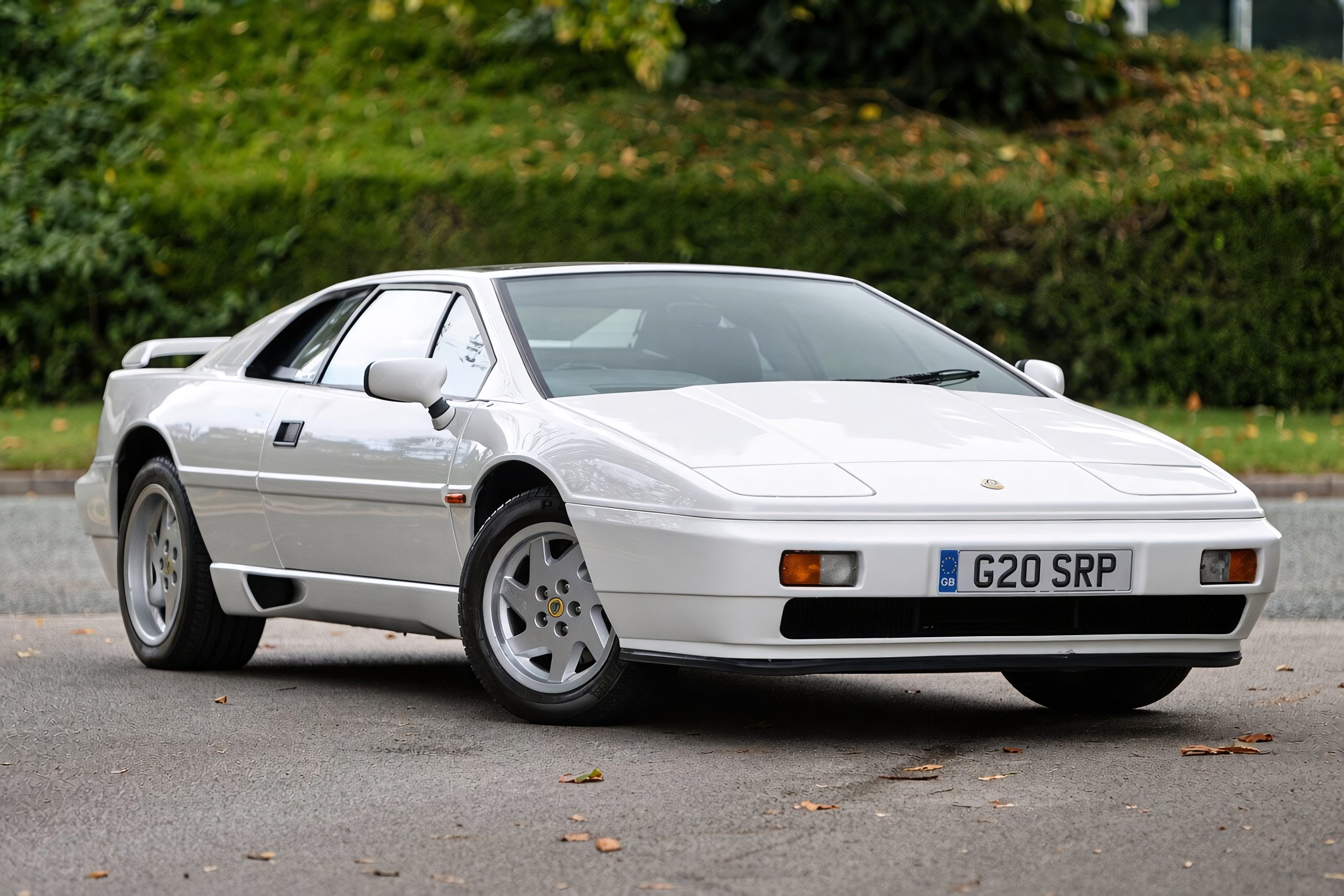
Pop-up headlights gave some of the most memorable cars in automotive history a distinctive disappearing act. When switched off, the lamps folded into the bodywork, allowing designers to create smoother noses and, in some cases, dramatically lower front profiles.
But these systems were not limited to exotic supercars. They appeared on affordable sports cars, American muscle machines, and even a pioneering 1930s luxury automobile.
To rank the seven examples here, production volume is used as the primary measure, rather than fame or rarity. The figures come from manufacturer histories, museum records, and established production data, with disputed numbers identified where necessary.
1. Mazda RX-7
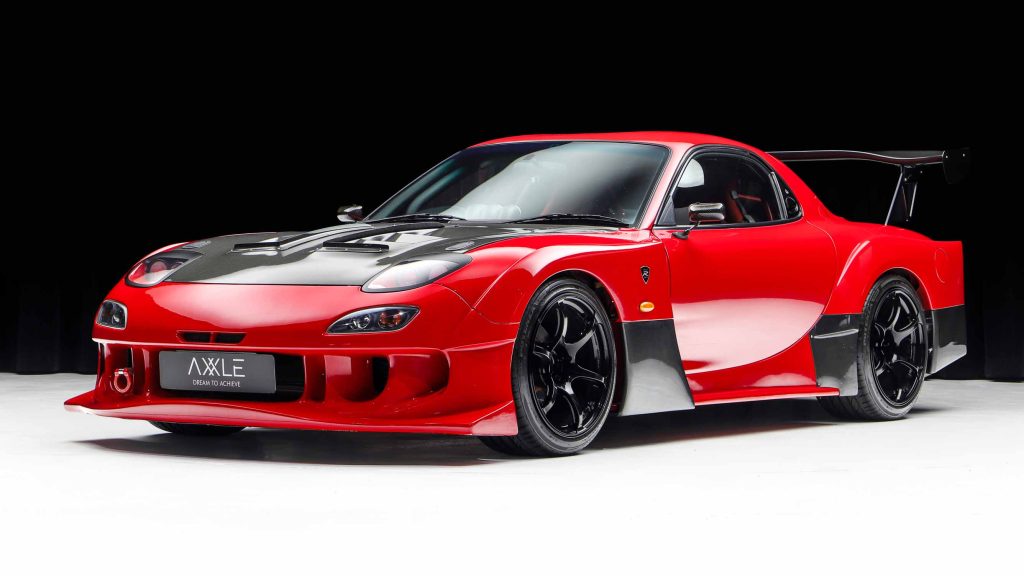
The Mazda RX-7 is comfortably the volume leader among the seven cars on this list, with 811,634 examples produced between 1978 and 2002. Mazda’s own historical material confirms that the RX-7 became the company’s most successful rotary-powered production car, with more than 811,000 built during its three-generation run.
Its retractable headlights were not simply a styling gimmick. When Mazda was developing the RX-7, designers wanted a low, aerodynamic sports car that could accommodate the compact rotary engine while maintaining an appealing front-end profile.
With the lamps hidden, the nose could remain smooth and relatively uncluttered. Raising them at night restored the lighting required for road use.
The first-generation SA/FB RX-7 arrived in 1978, using Mazda’s compact rotary engine and a front-mid-engine, rear-wheel-drive layout. The formula was unusual because Mazda concentrated on keeping the sports car relatively light while exploiting the small physical dimensions of the rotary powerplant.
The hidden headlights remained part of the RX-7’s visual identity through its first two generations and continued into the third-generation FD model. That means the feature survived as Mazda transformed the RX-7 from a relatively simple sports coupe into a sophisticated twin-turbocharged performance car.
The production figure is particularly impressive because the RX-7 was never a mass-market family car. More than 800,000 units of a specialized rotary-powered sports car is a remarkable result.
Its headlights therefore became more than a design detail. They helped give the RX-7 a recognizable face across nearly a quarter-century of production.
2. Chevrolet Corvette C4
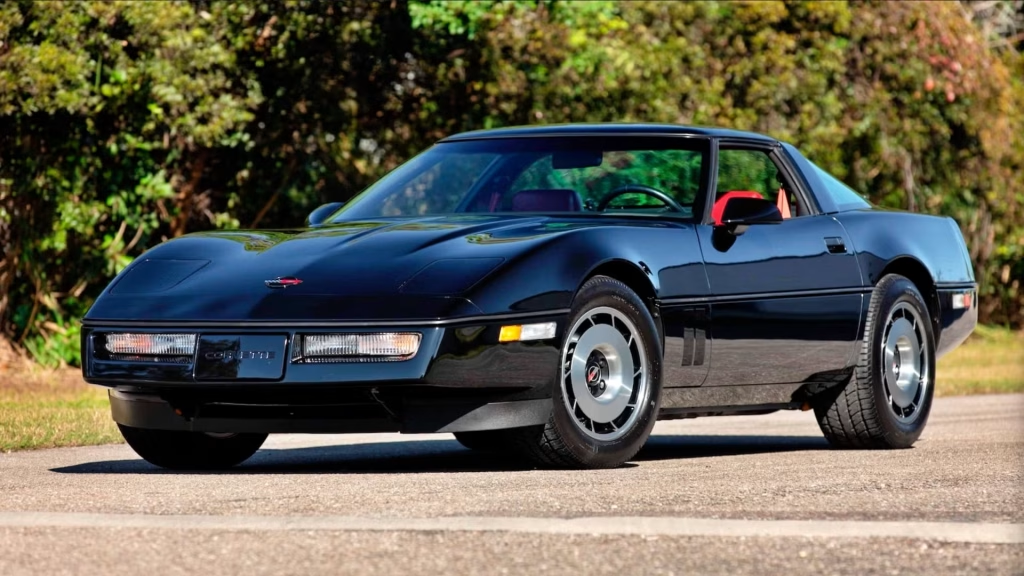
The C4 Chevrolet Corvette takes second place with 358,180 cars produced for the 1984 through 1996 model years. The generation represented a major technical reset for America’s longest-running sports-car nameplate, and the familiar retractable headlights became one of its defining visual characteristics.
The C4 arrived for 1984, after Chevrolet skipped a conventional 1983 retail model year. The new Corvette featured a completely redesigned platform and a much sharper body than the outgoing C3. Its wedge-shaped front end was ideally suited to concealed lamps because fixed headlights would have disrupted the clean, low appearance Chevrolet’s designers wanted.
The headlamps sat flush with the hood when closed. When activated, the assemblies rotated upward, exposing the lighting units. That arrangement allowed Chevrolet to meet lighting requirements without placing conventional headlamp housings high on the nose.
Production was particularly strong during the generation’s early years. The 1984 model alone accounted for 51,547 cars, according to production records, making it the highest-volume model year of the C4 run.
The C4 also evolved considerably during its life. Chevrolet added the ZR-1 in 1990, introduced the LT1 engine in 1992, and finished the generation with the Grand Sport and Collector Edition in 1996. The hidden headlights remained visually consistent even as the mechanical package changed dramatically.
That longevity matters when considering its ranking. Unlike some exotic cars that used pop-up lamps for only a few hundred or a few thousand examples, Chevrolet built hundreds of thousands of C4 Corvettes.
The result is a rare combination of volume and unmistakable design. For many American enthusiasts, the sight of a C4 Corvette raising its headlights remains inseparable from the sports-car culture of the 1980s and 1990s.
3. Lotus Esprit
The Lotus Esprit ranks third with 10,675 examples produced from 1976 through 2004, giving it a much longer production life than most cars that used retractable headlights. Lotus production records document the total across the Esprit’s many variants.
The Esprit’s hidden headlights were closely tied to the car’s original design philosophy. Italian designer Giorgetto Giugiaro created the dramatic wedge-shaped body, and fixed headlamps would have interrupted the extremely low, sharp front profile. Concealing the lights allowed the nose to retain its clean geometric appearance when the lamps were not needed.
The production Esprit appeared in 1976, and the pop-up headlights remained part of its identity through numerous updates. The car changed substantially during its 28-year lifespan, gaining turbocharged versions, revised bodies, and eventually a twin-turbocharged V8, but its basic retractable-headlamp arrangement survived.
That longevity is particularly significant. The Esprit remained in production until February 20, 2004, when the final car was completed and shipped to Chicago. It was one of the last production automobiles to retain retractable headlights.
Production was never high. Lotus built an average of only about 381 Esprits per year across the entire 28-year run, according to the detailed production records. Some individual years produced fewer than 150 cars.
That makes the Esprit unusual in this ranking. Its 10,675-unit total is enough to put it ahead of the rarer cars below, yet it remains extremely uncommon compared with mainstream sports cars.
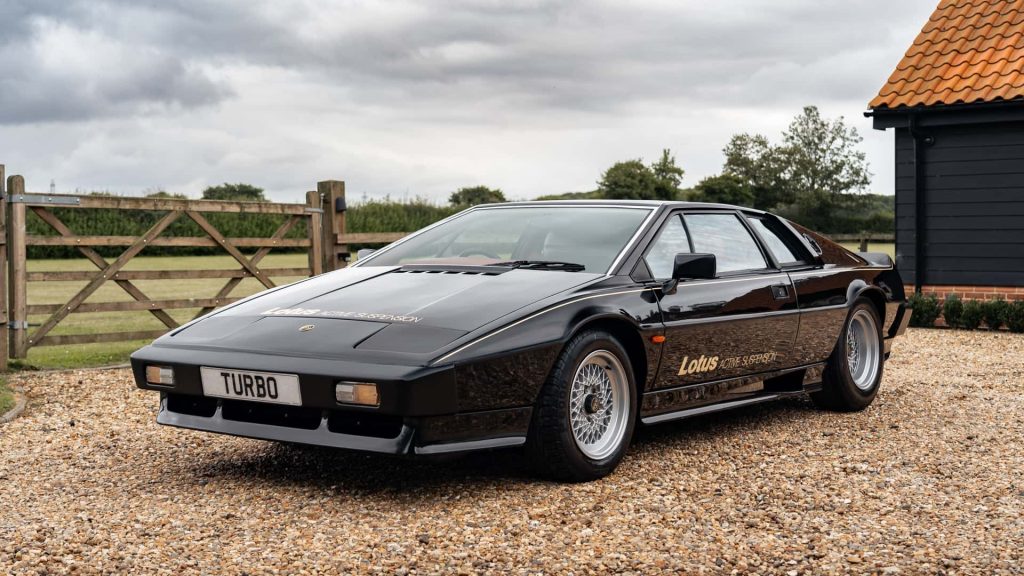
The headlights also played a major role in the Esprit’s visual character. When closed, they preserved the clean, uninterrupted lines of the wedge-shaped nose. When raised, they transformed the front of the car into the instantly recognizable face that became synonymous with classic Lotus design.
4. Lamborghini Countach
The Lamborghini Countach takes fourth place with 2,042 examples produced between 1974 and 1990, according to commonly accepted production records covering all variants.
Few cars used pop-up headlights more effectively. When Lamborghini unveiled the Countach, its wedge-shaped body appeared almost impossibly low and angular. Conventional headlamp housings would have disturbed the sharp front profile, so retractable units offered an elegant solution.
The arrangement also reflected the Countach’s complicated evolution. Early versions used retractable headlights positioned within the front bodywork, while later U.S.-market cars incorporated additional lighting equipment to satisfy American regulations.
Lamborghini therefore had to balance the dramatic European design with the requirements of one of its most important export markets.
The Countach became one of Lamborghini’s defining products, but production remained tiny compared with even relatively low-volume sports cars. Its entire 16-year run produced only a little more than 2,000 cars.
That scarcity was partly a consequence of Lamborghini’s manufacturing scale. The Countach was hand-built and expensive, and every version required specialized production. It was never intended to become a high-volume vehicle.
The hidden headlights nevertheless became an essential part of its visual identity. With the lamps lowered, the nose appeared cleaner and more aggressive. Raising them produced one of the most recognizable front-end transformations in automotive history.
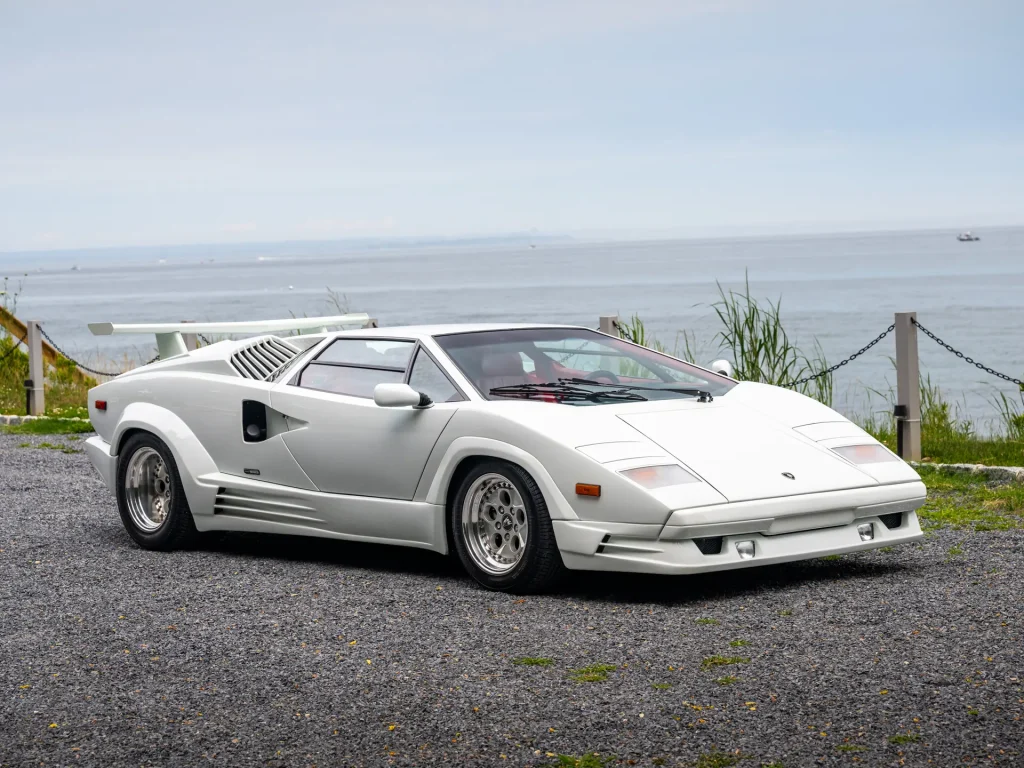
The feature was particularly effective because the Countach was already designed around visual drama. The scissor doors, enormous air intakes, and sharply folded body panels created an appearance unlike conventional sports cars. The disappearing headlights completed that effect without adding another permanent visual element to the nose.
For a car that sold only 2,042 examples, its influence was enormous. The Countach helped define what an exotic Italian supercar was supposed to look like during the 1970s and 1980s, and its retractable headlights remain among the design details enthusiasts immediately associate with the name.
5. Plymouth Superbird
The Plymouth Superbird ranks fifth by production volume, with 1,920 examples built for the 1970 model year. That number makes it considerably rarer than the Lamborghini Countach, yet its hidden headlights gave it an appearance that remains instantly recognizable.
Unlike most pop-up-headlight sports cars, the Superbird’s retractable lamps were closely tied to its aerodynamic purpose. Plymouth developed the car as a homologation special for NASCAR, where manufacturers had to produce road-going versions of their competition machines.
The standard Road Runner was transformed with a dramatically extended nose, a massive rear wing, and aerodynamic bodywork.
The long nose created an obvious styling challenge. Conventional headlights would have disrupted the smooth shape of the front end, so Plymouth concealed them behind a pointed nose cone. When closed, the headlamps were hidden behind doors that followed the aerodynamic contours of the front bodywork.
The arrangement also produced an unusually long front profile. The Superbird was approximately 19 inches longer than the standard Road Runner, with much of the additional length coming from its aerodynamic nose and related bodywork.
Plymouth’s NASCAR ambitions were central to the car’s existence. The manufacturer needed enough street versions to satisfy homologation requirements, resulting in a production run of only 1,920 cars. That small number has helped make the Superbird one of the most collectible American muscle cars.
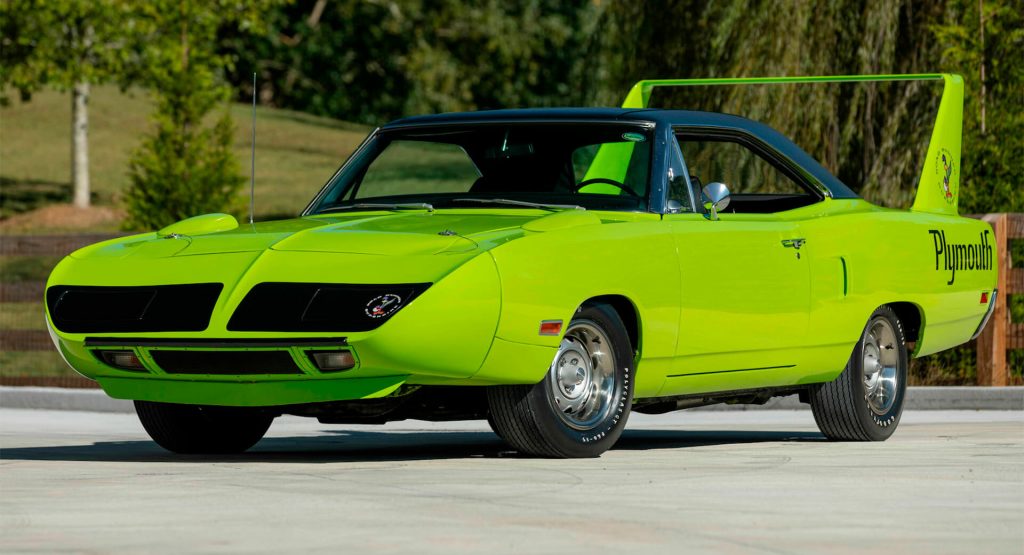
Its hidden headlights therefore served a very specific purpose. They were not merely there to make the car look futuristic. They allowed Plymouth’s engineers and designers to maintain the shape of the aerodynamic nose while still providing road-legal lighting.
The result was an unusual combination of a NASCAR-inspired aerodynamic weapon beneath the body, a street-legal muscle car built to satisfy homologation rules, and a pair of headlights that disappeared completely into the nose.
6. Cord 810
The Cord 810 ranks sixth with approximately 2,995 cars produced, depending on whether production figures are counted by the broader 810/812 family. It is nevertheless the most historically important car on this list when discussing the origins of retractable headlights.
The Cord 810 debuted for the 1936 model year, and its front end was revolutionary. Designer Gordon Buehrig gave the car a smooth, coffin-shaped nose without conventional exposed headlamp pods. Instead, the headlights were mounted inside the front fenders and could be manually retracted when not required.
The design was more than a styling trick. Buehrig was trying to create a streamlined automobile with a clean front profile. Concealing the headlights made it possible to avoid the large exposed lamps that characterized many cars of the period.
The Cord also incorporated several other unusual engineering ideas. It was front-wheel drive, used a unitized body structure and offered a four-speed electrically selected transmission. Its combination of advanced engineering and dramatic styling made it unlike most American cars of the mid-1930s.
The retractable headlights were operated manually by levers inside the cabin, rather than by the electric mechanisms that became common decades later. Their operation required deliberate effort, but the basic concept was remarkably forward-looking.
Production was short-lived. The original 810 was followed by the 812, but the Cord automobile business collapsed after a brief production period. The surviving cars subsequently became highly prized by collectors and historians.
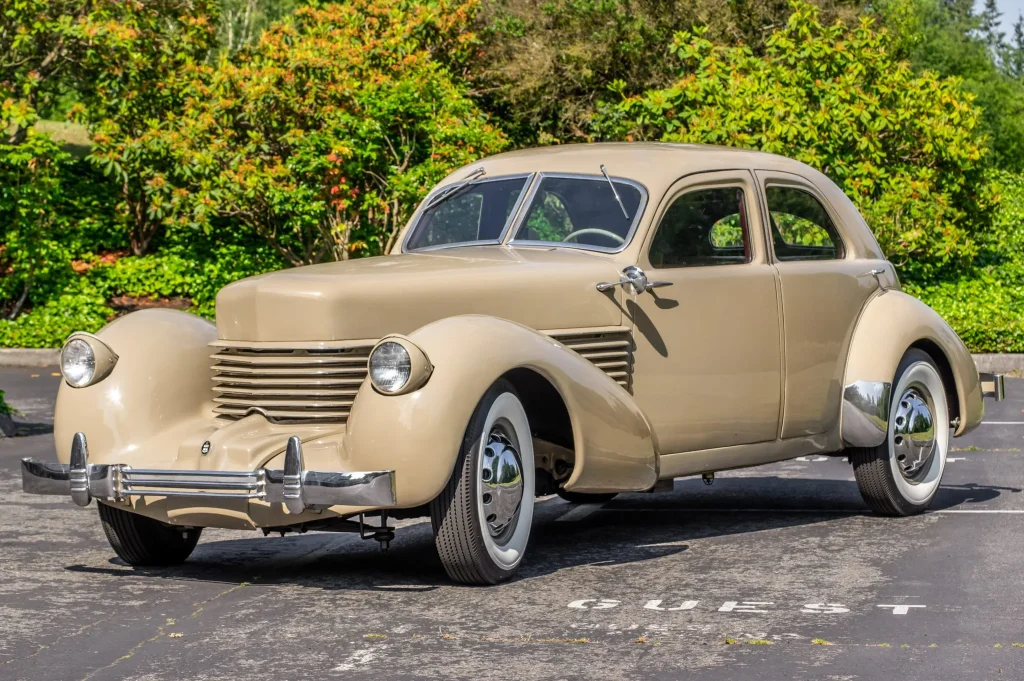
Its importance extends far beyond its relatively small sales figure. The Cord demonstrated that headlights could be hidden completely within a vehicle’s body and later became a reference point for designers developing streamlined automobiles.
For that reason, the 810 is often credited as the first production automobile to feature retractable headlights. Its system was primitive compared with the electric pop-up lamps that followed, but the basic concept was the same. The lighting hardware could be hidden when it was not needed, allowing the body design to take center stage.
7. Buick Y-Job
The Buick Y-Job is the most unusual entry in this ranking because it was not a production car, so it cannot be ranked by normal sales volume. It was a groundbreaking General Motors experimental vehicle created in the late 1930s by designer Harley Earl.
Earl developed the Y-Job as a functioning design and technology showcase rather than a vehicle intended for customers. It featured several ideas that were far ahead of contemporary production cars, including power-operated windows, concealed door handles, a retractable convertible top and hidden headlights.
The headlights were concealed behind the front fenders, helping Earl achieve a cleaner and more streamlined appearance. That decision demonstrated how retractable lighting could be incorporated into a broader design philosophy rather than treated as an isolated novelty.
The Y-Job is particularly significant because it influenced how automakers thought about concept and styling cars. Harley Earl used the vehicle as his personal automobile for years, giving the experimental machine a much longer real-world life than most concept cars receive.
It was also created at a fascinating moment in automotive design. Streamlining was becoming increasingly influential, but most production vehicles still wore prominent external headlights. The Y-Job demonstrated what could happen when a designer was freed from many of the practical constraints governing showroom automobiles.
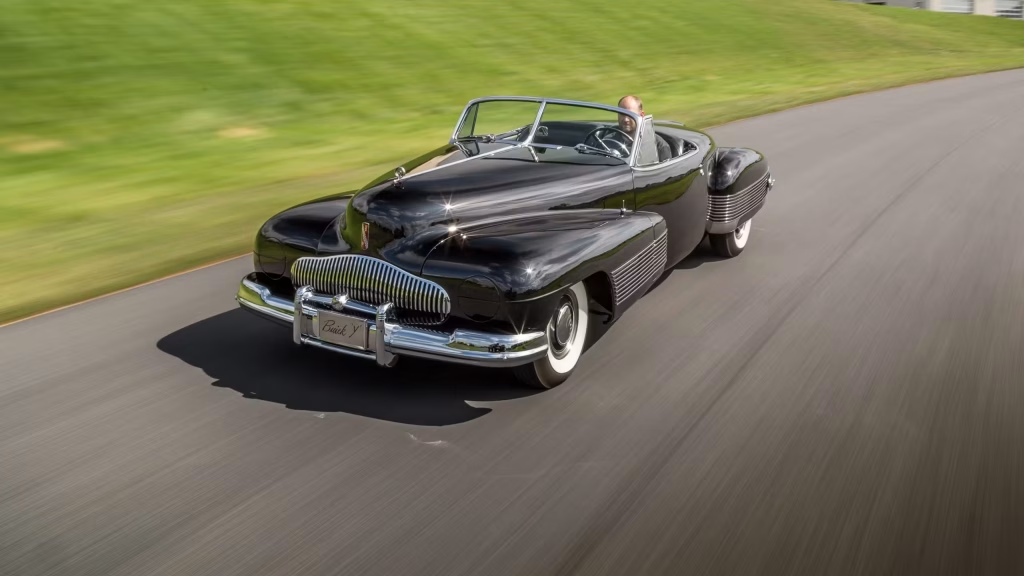
Because it never entered series production, there is no legitimate production or sales total to place alongside the other six cars. It is therefore last in a production-volume ranking by default, rather than because it was unsuccessful.
Its contribution to the history of hidden headlights is nevertheless substantial. The Y-Job showed that concealed lighting could help create a cleaner, more futuristic automobile decades before retractable headlights became common on production sports cars.
In that sense, it was less a commercial car than a preview of where automotive styling could go next.
