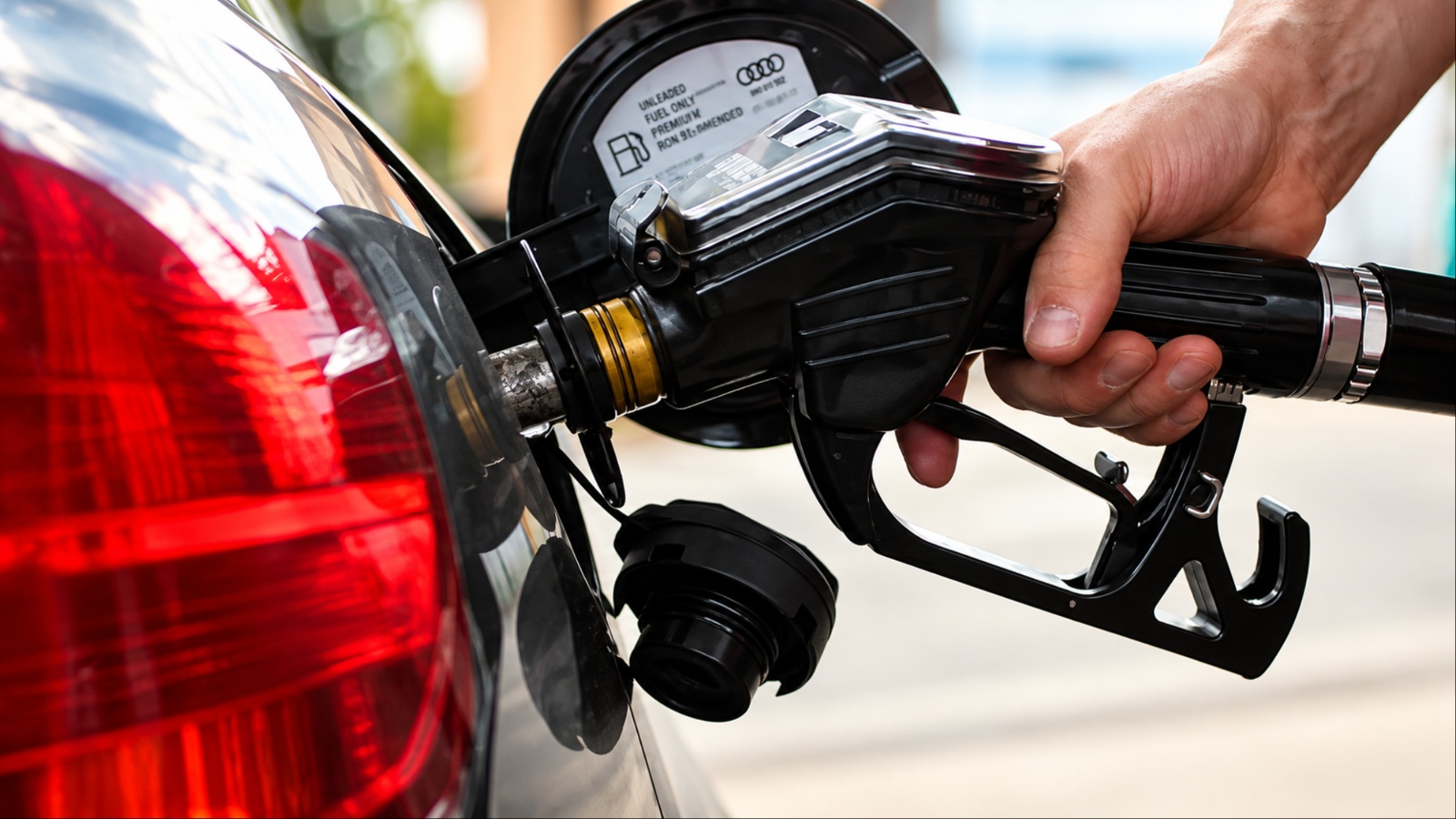
Every time you fill your vehicle’s gas tank in the United States, part of what you pay goes toward fuel taxes. The exact amount depends on how much gasoline you purchase and the federal and state taxes charged where you live.
For a typical driver buying 15 gallons, the tax portion can add up to several dollars before local charges are considered. Understanding these costs makes it easier to see where your money goes at the pump. This article explains how gas taxes work, how much drivers commonly pay per fill-up, and why the amount varies significantly across different states.
How Gas Taxes Work in the United States
Gas taxes are charges added to the price of gasoline sold at fuel stations. In the United States, drivers generally pay both a federal gasoline tax and a state gasoline tax.
The federal government charges a fixed tax on gasoline, while individual states set their own fuel tax rates. Depending on the state, additional taxes or fees can also affect the final amount paid at the pump. These charges are generally included in the advertised price of gasoline, so drivers do not normally see a separate tax bill when they purchase fuel.
The federal gasoline tax has remained at 18.4 cents per gallon for gasoline for many years. This means a driver purchasing 10 gallons pays $1.84 in federal gasoline tax. A 15-gallon fill-up results in $2.76 in federal gasoline tax, while purchasing 20 gallons produces $3.68.
The federal portion is straightforward because it is based on the number of gallons purchased rather than the retail price of gasoline. The money collected from federal fuel taxes primarily supports transportation programs, including the Highway Trust Fund.
State gasoline taxes vary considerably. Some states charge relatively low rates, while others impose substantially higher taxes on each gallon. Because these taxes are generally calculated on a per-gallon basis, the difference becomes more noticeable when a driver purchases a larger amount of fuel.
A motorist buying 15 gallons in a state with a 20-cent state gasoline tax would pay $3 in state tax. The same purchase in a state with a 40-cent tax would result in $6 in state gasoline tax before considering other applicable charges.
The price displayed at a gas station can also make it difficult to recognize how much of a fill-up represents taxation. Drivers usually focus on the price per gallon because that is the number shown prominently on the station sign.
How Much Tax Is Paid on a Typical Fill-Up?
A typical American vehicle can hold anywhere from around 10 to more than 20 gallons of gasoline, depending on its size and design. Many passenger cars have tanks in the 12-to-18-gallon range, while larger SUVs and pickup trucks can have substantially larger tanks.
For that reason, there is no single amount of gas tax that applies to every fill-up. The number of gallons purchased is the first factor that determines the tax paid.
Consider a 15-gallon purchase as a practical example. At the federal rate of 18.4 cents per gallon, the federal government receives $2.76 from that fill-up. If the state tax is 30 cents per gallon, the state receives another $4.50.
Together, those two taxes total $7.26. If the state’s tax rate is higher, the total increases. A state tax of 40 cents per gallon would produce $6 in state tax on the same 15-gallon purchase, bringing the combined federal and state amount to $8.76.
The situation changes when a driver buys 20 gallons. The federal tax alone would be $3.68. At a state tax rate of 30 cents per gallon, the state portion would be $6, creating a combined total of $9.68.
At a state tax rate of 40 cents per gallon, the combined amount would rise to $11.68. These examples show why drivers who operate larger vehicles or frequently fill larger tanks can contribute more in fuel taxes over time.
The total dollar amount can appear small when viewed as a single purchase, but frequent driving changes the calculation. Suppose someone buys 15 gallons every week. At a combined tax rate of 48.4 cents per gallon, that driver would pay approximately $7.26 in federal and state fuel taxes each week.
Over 52 weeks, that adds up to about $377.52. A driver purchasing 20 gallons every week at the same combined tax rate would pay about $503.36 annually.
Fuel economy also matters. Two drivers may pay very different amounts in gasoline taxes even if they travel the same distance. A vehicle that uses more gasoline requires more gallons to cover a particular number of miles.
Since fuel taxes are generally charged per gallon, higher fuel consumption results in greater fuel-tax payments for the same distance traveled. Drivers with efficient vehicles can therefore spend less on fuel taxes when traveling the same number of miles as someone operating a less efficient vehicle.
Why Gas Tax Rates Differ by State
Each state has its own approach to gasoline taxation. State governments use fuel taxes to generate revenue for transportation and infrastructure programs, but the rates and structures differ.
Some states use a simple per-gallon tax, while others have additional taxes or mechanisms that can influence the amount collected from fuel sales. These differences mean that two drivers purchasing the same quantity of gasoline can pay different amounts in tax simply because they are filling up in different states.
The differences become especially noticeable near state borders. Drivers who live close to a neighboring state may compare fuel prices before deciding where to purchase gasoline. The advertised price can reflect differences in state taxes, regional fuel costs, competition among retailers, and other market conditions.
A lower fuel tax can contribute to a lower pump price, but taxes are only one part of the price equation. Wholesale gasoline prices, refinery costs, transportation expenses and local market competition also affect what consumers pay.
Some states have relatively high gasoline tax burdens, while others have lower rates. State fuel taxes can also change over time when lawmakers approve increases or when statutory formulas adjust rates.
How Gas Prices Affect Your Total Fill-Up
Gas taxes and gasoline prices are related, but they are not the same thing. A fuel tax charged at a fixed number of cents per gallon does not automatically rise when the retail price of gasoline increases.
For example, if the applicable federal and state taxes total 50 cents per gallon, a driver purchasing 15 gallons pays $7.50 in those taxes whether the underlying gasoline price is $3 per gallon or $4 per gallon, assuming the tax structure has not changed.
The total cost of a fill-up can rise sharply when gasoline prices increase even if the fuel tax stays unchanged. Consider a 15-gallon tank. At $3 per gallon, the purchase costs $45 before considering whether the displayed price already includes taxes. At $4 per gallon, the same amount of gasoline costs $60.
The difference is $15. If the per-gallon fuel tax remains unchanged, the increase comes from the higher underlying price rather than a corresponding increase in the fixed fuel-tax amount.
Percentage-based taxes can produce a different result. Some fuel-related taxes and fees can be calculated using a percentage of the sale price rather than a fixed amount per gallon. In such cases, a higher gasoline price can increase the dollar amount of the tax.
This is part of the reason the complete tax structure can be more complicated than simply adding the federal gasoline tax to a state’s advertised per-gallon rate.
The cost of crude oil is another major factor behind gasoline prices. Refining costs, distribution expenses, seasonal fuel requirements, market conditions and regional supply can also influence retail prices.
These factors can cause gas prices to differ substantially between states or even between cities within the same state. Consequently, a driver should not assume that a station with a lower price necessarily has a lower tax burden.
How Much Gas Tax You Pay in a Year
A single fill-up may involve only a few dollars in federal and state gasoline taxes, but frequent driving can turn that amount into hundreds of dollars each year. Someone who purchases 15 gallons once a week buys approximately 780 gallons annually.
At a combined federal and state tax rate of 48.4 cents per gallon, that would equal approximately $377.52 in annual fuel taxes. This calculation does not include any additional taxes or fees that may apply in a particular state.
A driver covering more miles can quickly exceed that figure. Suppose a vehicle consumes 1,000 gallons of gasoline during a year. At a combined tax rate of 48.4 cents per gallon, the driver would pay approximately $484 in federal and state fuel taxes.
A motorist using 1,500 gallons at the same rate would pay about $726. These figures demonstrate why vehicle fuel consumption is important when estimating the annual tax burden associated with driving.
Vehicle efficiency can significantly influence these costs. A fuel-efficient vehicle may travel considerably farther on each gallon, reducing the number of gallons required for a given annual mileage. A less efficient vehicle may require substantially more gasoline to travel the same distance. Since gasoline taxes are generally tied to gallons purchased, fuel efficiency can reduce the amount of gasoline tax paid per mile traveled.
Electric vehicles have changed the discussion because they generally do not purchase gasoline and therefore do not contribute gasoline taxes in the traditional way.
Many states have introduced separate registration fees or other charges for electric and hybrid vehicles as governments consider how to replace transportation revenue that has historically come from gasoline and diesel taxes. The specific fees vary by state, and the policies continue to change as vehicle technology develops.