A modern electric vehicle can be more than transportation when the power goes out. With bidirectional charging, some EVs can send stored battery energy back into a properly equipped home, turning a parked vehicle into a temporary energy source.
The technology varies considerably, however. Some vehicles can support automatic whole-home backup, while others are better suited to running selected appliances through vehicle-to-load outlets.
The difference matters during hurricanes, winter storms, and other outages. The following vehicles stand out in the U.S. market for their ability to provide useful backup power, based on manufacturer information and current bidirectional-charging capabilities.
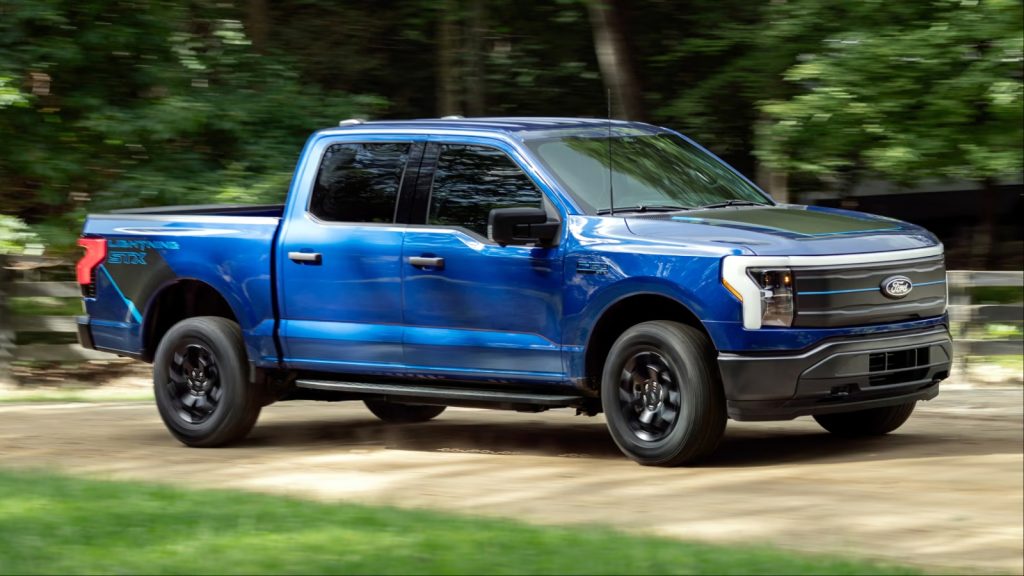
1. Ford F-150 Lightning
The Ford F-150 Lightning remains one of the clearest examples of an electric vehicle being designed to do something useful when it is sitting in the driveway.
Ford’s Intelligent Backup Power system allows the truck to send electricity into a properly equipped home during an outage, giving owners another reason to view the large battery as more than a range reserve.
The system works with Ford’s home integration equipment and can automatically transition the home to vehicle power when the electrical grid fails. Ford has said the F-150 Lightning can provide backup power for a home for up to three days under its stated operating assumptions.
The truck also has Pro Power Onboard, which provides up to 9.6 kilowatts of exportable power through its available outlets.
That distinction is important because there are really two useful forms of backup here. The onboard outlets can directly operate equipment, tools, and appliances, while the home backup system allows the truck’s battery to become part of the home’s electrical infrastructure.
For homeowners facing frequent outages, that makes the Lightning particularly interesting. A gasoline pickup normally becomes more useful during a storm only if it has fuel and can safely operate a generator. The Lightning can instead arrive at an outage already carrying a substantial energy reserve.
Its usefulness does depend on installation, household consumption, and the amount of energy remaining in the battery. Still, Ford’s approach helped establish the idea that a full-size electric pickup can function as emergency household storage as well as a vehicle.
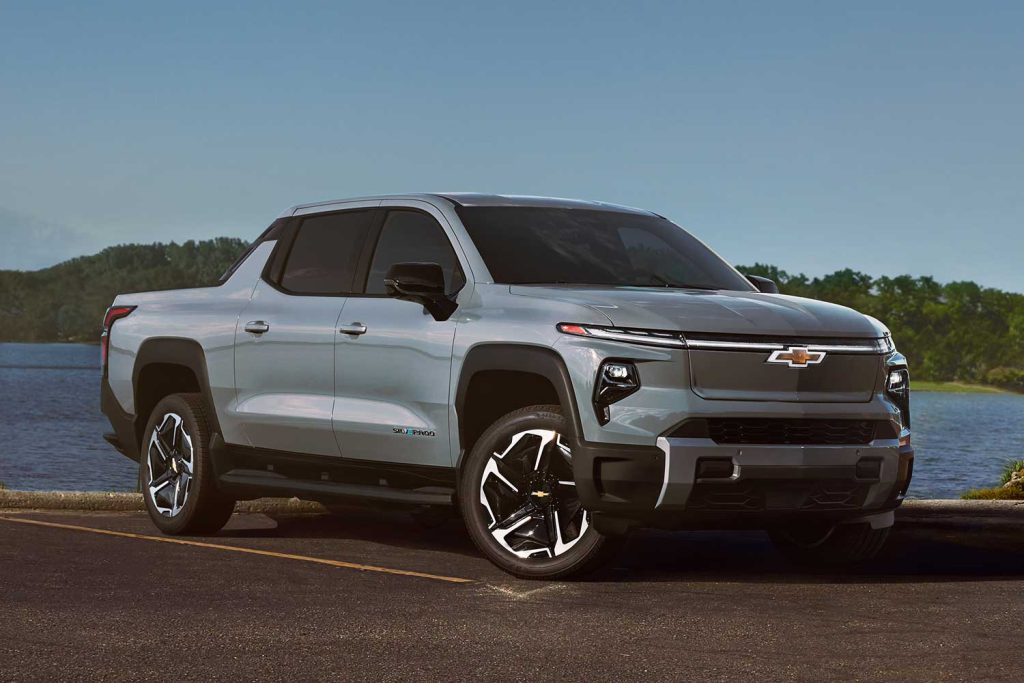
2. Chevrolet Silverado EV
The Chevrolet Silverado EV gives General Motors a powerful answer to the question of whether an electric pickup can double as home backup.
GM Energy now offers a vehicle-to-home system that connects compatible GM electric vehicles to a properly equipped residence and allows electricity stored in the vehicle to flow back into the home when the grid fails.
GM says its V2H system can provide up to 9.6 kilowatts of backup power for common household appliances. The system can also automatically disconnect the home from the grid and begin supplying electricity from the vehicle when an outage is detected.
The Silverado EV is particularly notable because battery capacity and backup duration can be significant in the right configuration. GM says a 2026 Silverado EV Max Range can help power a properly equipped home for up to five days, although the actual duration depends heavily on household energy consumption.
That caveat matters. Five days is not a universal promise for every homeowner because heating, cooling, water heating, and other large electrical loads can consume energy rapidly. A home that carefully manages its electrical demand can stretch the battery much further than one operating every major appliance normally.
The Silverado EV therefore makes the most sense for owners who want their electric truck integrated into a broader home energy strategy. With GM Energy equipment, the vehicle can become an important backup resource rather than simply an emergency outlet on wheels.
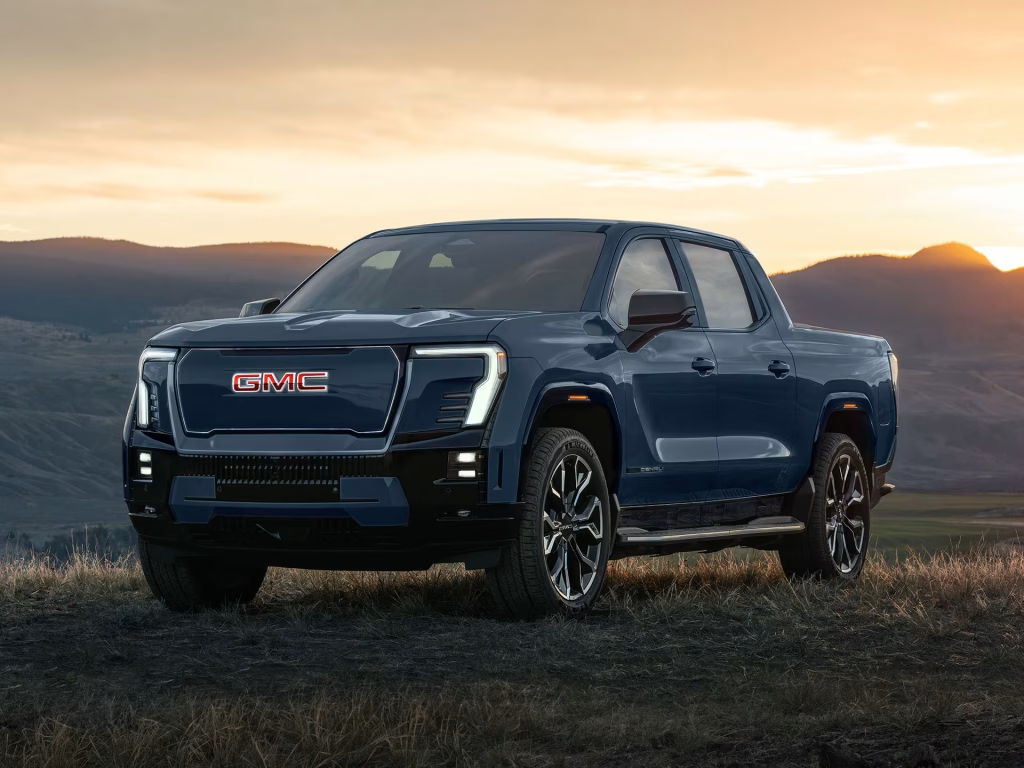
3. GMC Sierra EV
The GMC Sierra EV shares much of its underlying technology with other GM Ultium vehicles, but its role as an emergency power source deserves separate attention because it gives truck buyers another route into GM’s expanding home-energy ecosystem.
GM Energy lists the Sierra EV among its vehicles capable of supporting vehicle-to-home backup. When paired with the appropriate GM Energy charging and home equipment, the truck can send stored battery energy back to a properly equipped residence during an outage.
The system is designed to automatically disconnect the house from the utility grid before supplying backup electricity.
GM says its V2H setup can provide as much as 9.6 kilowatts of backup power. That is enough for many ordinary household loads, although the system still requires homeowners to understand which appliances are being supported and how much electricity they consume.
What makes the Sierra EV particularly useful in this context is that the vehicle does not have to be treated as a standalone generator. It can form part of a larger energy system involving a bidirectional charger, home controls, and, where applicable, stationary storage or solar generation.
That creates a different ownership proposition from simply plugging an appliance into an outlet. During a prolonged outage, homeowners can prioritize refrigerators, lighting, communications equipment, and other essential circuits rather than attempting to operate every electrical load simultaneously.
For households already considering an electric pickup, the Sierra EV demonstrates how the battery can become a practical household asset. The capability is not automatic with every configuration, but when the necessary GM Energy hardware is installed, the truck can provide meaningful backup during a grid failure.
4. Tesla Cybertruck
Tesla’s Cybertruck is one of the most capable vehicles currently offered in the United States for turning an EV battery into home backup power. Its PowerShare system was specifically developed to allow the truck to send electricity to a residence during an outage.
Tesla says Powershare Home Backup can deliver up to 11.5 kilowatts of continuous power and can provide more than three days of backup from a fully charged Cybertruck under the company’s stated assumption of 30 kilowatt-hours of household consumption per day.
The system can support both 120-volt household loads and larger 240-volt equipment. Tesla specifically lists items such as air conditioners, electric cooking ranges, well pumps, dryers, and water heaters among the equipment that can potentially be supported.
This is considerably different from simply using an EV’s accessory outlet. PowerShare Home Backup is integrated with the home’s electrical system, allowing the vehicle to provide electricity through a dedicated installation.
Tesla says the system requires equipment such as a PowerShare Gateway and Universal Wall Connector, with professional installation required.
The Cybertruck also demonstrates why backup power cannot be judged purely by battery size. The home’s electrical demand and the maximum discharge rate both matter. A large battery is valuable, but the system also needs to deliver sufficient instantaneous power to operate household equipment.
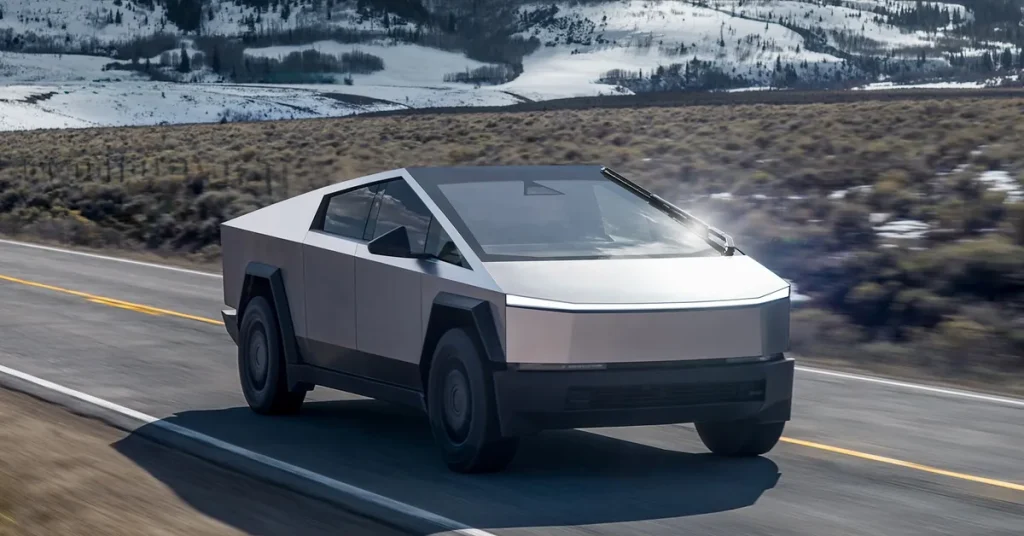
For drivers who experience frequent outages, the Cybertruck therefore functions as something closer to a mobile home battery. Tesla has also designed PowerShare to work with solar in supported configurations, potentially allowing solar generation to replenish the vehicle during a prolonged outage.
5. Chevrolet Blazer EV
The Chevrolet Blazer EV may not attract as much attention for backup power as GM’s electric pickups, but it is part of the company’s expanding V2H lineup. GM lists the Blazer EV among the vehicles capable of providing backup power through the GM Energy ecosystem.
That is significant because it broadens the concept beyond large trucks. A homeowner does not necessarily need a pickup to have an EV that can contribute electricity during an outage. The Blazer EV shows how the technology can reach a conventional midsize electric SUV.
GM’s V2H system uses dedicated equipment to control the transfer of electricity between the vehicle and the residence. The PowerShift Charger provides bidirectional energy flow, while the home equipment handles grid disconnection and distribution of backup electricity.
GM states that its V2H system can provide up to 9.6 kilowatts of backup power. The exact amount of energy available to a homeowner depends on the vehicle configuration, state of charge, and household consumption.
This makes the Blazer EV especially relevant for households that want an electric SUV without moving into a full-size pickup. During an outage, the vehicle can help keep important circuits operating while the utility network is unavailable.
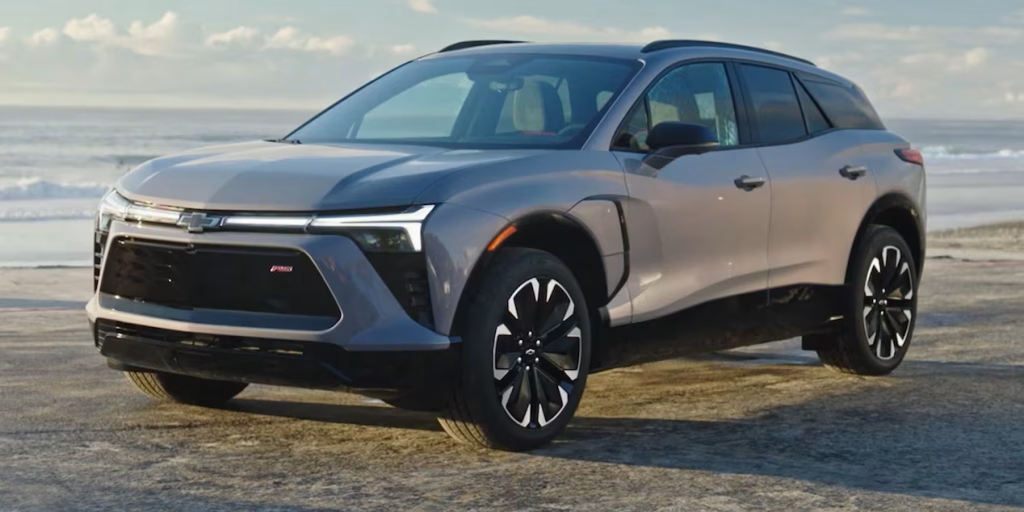
The key point is that the Blazer EV’s usefulness depends on the complete system rather than the vehicle alone. Buying the SUV does not automatically turn a house into a backup-powered property. The compatible charging and home equipment must be installed, and the residence must meet the requirements of the system.
Still, its inclusion in GM’s V2H portfolio signals that vehicle-based home backup is moving beyond niche applications and into more mainstream electric vehicles.
6. Chevrolet Equinox EV
The Chevrolet Equinox EV brings the same broader GM energy strategy into a much more mainstream electric crossover. GM identifies the Equinox EV as a V2H-capable vehicle for its home backup ecosystem, giving the relatively affordable EV a role that goes well beyond transportation.
That matters because backup power has traditionally required a dedicated generator or stationary battery. An Equinox EV equipped for GM’s V2H system can instead use energy already stored in the vehicle. When the utility supply fails, the properly equipped system can disconnect the house from the grid and use the EV battery to provide backup electricity.
GM’s V2H architecture is designed around the PowerShift Charger and V2H Enablement Kit. The system converts the vehicle’s stored energy into the type of AC electricity used by the home and manages the connection between the vehicle and the household electrical system.
GM says its V2H setup can deliver up to 9.6 kilowatts of backup power. That does not mean every Equinox EV owner will automatically receive that capability. Compatibility, equipment, and installation requirements remain important considerations.
The more interesting point is what this means for ordinary EV ownership. A family purchasing an electric crossover for commuting could potentially have a second function available during severe weather. Instead of leaving the vehicle parked while the neighborhood is without power, the battery can contribute to household resilience.
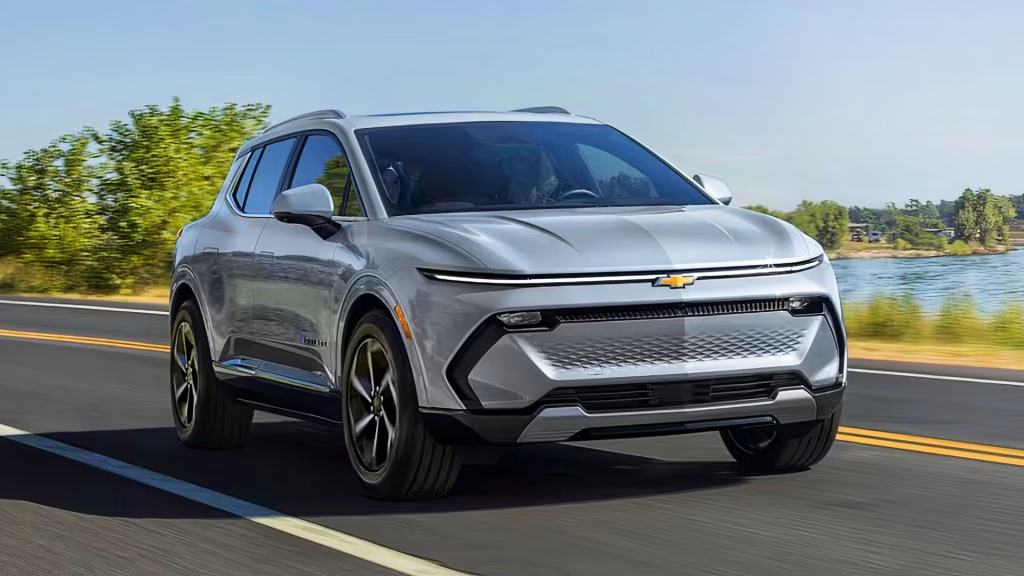
That becomes particularly useful when outages last for many hours. Refrigeration, lighting, internet equipment, and selected essential circuits can remain operational while utility crews work to restore service.
The Equinox EV therefore represents an important step in making vehicle-to-home technology less dependent on large, expensive electric trucks.
7. Cadillac Escalade IQ
The Cadillac Escalade IQ takes GM’s bidirectional charging strategy into the luxury SUV segment. GM lists the Escalade IQ among its V2H-capable electric vehicles, meaning it can participate in the company’s home backup system when paired with the required equipment.
The significance here is not simply that a luxury SUV can supply electricity. The Escalade IQ belongs to a group of GM electric vehicles with large batteries, making the vehicle particularly interesting for extended backup applications.
GM’s system is designed to disconnect a properly equipped house from the utility grid during an outage before the EV begins supplying electricity. The company says its V2H setup can provide up to 9.6 kilowatts of backup power.
For a homeowner, the benefit is straightforward. The vehicle can remain parked at home and act as an energy reserve instead of requiring a separate fuel supply. There is no gasoline tank to refill during the outage, and the system can be managed through GM’s connected energy tools.
The Escalade IQ also highlights an important distinction between emergency power and normal driving. Using the battery to support a home reduces the energy available for driving. Owners facing an approaching storm therefore need to decide how much charge to preserve for transportation and how much to make available for household use.
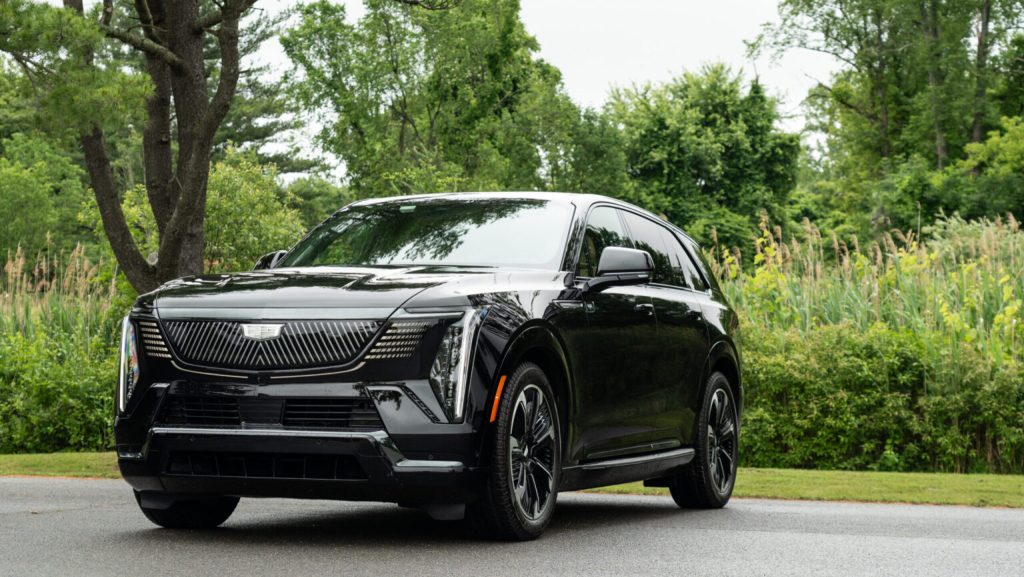
GM’s system can provide backup power automatically once properly configured, but the duration depends on the home’s electricity consumption. High-demand equipment such as central air conditioning can dramatically change how quickly stored energy is used.
For luxury EV buyers, the Escalade IQ demonstrates that home energy capability is becoming part of the broader technology package rather than a feature limited to work-oriented vehicles.
8. Hyundai Ioniq 5
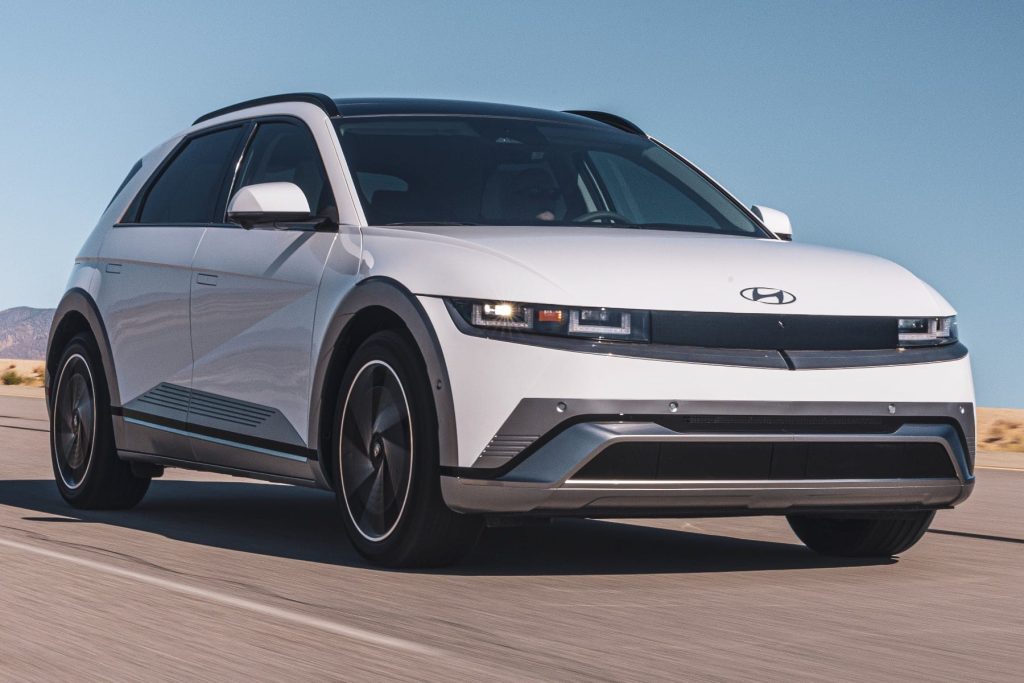
The Hyundai Ioniq 5 helped popularize vehicle-to-load capability in the United States, allowing owners to use stored battery energy to run external electrical equipment. Its approach is different from the full home-backup systems offered by Ford, Tesla, and GM, but it can still be extremely useful during an outage.
Hyundai’s E-GMP electric vehicles use vehicle-to-load technology to provide electricity through an appropriate adapter or outlet. This allows owners to operate equipment without depending on the electrical grid. The capability has been used for everything from camping equipment to household appliances.
The important distinction is that vehicle-to-load is not automatically equivalent to whole-home vehicle-to-home backup. The Ioniq 5 can act as a portable energy source, but homeowners should not assume that plugging an appliance into the vehicle creates an automatic backup system for the entire house.
That limitation does not make the feature unimportant. During a storm, the ability to operate a refrigerator, lights, communications equipment, or selected small appliances can make a meaningful difference. It can also provide power in locations where bringing a gasoline generator would be inconvenient.
The U.S. Department of Energy explains that bidirectional EVs can provide power to external loads or buildings when paired with compatible equipment, while also emphasizing that the vehicle and charging equipment must support the necessary functions.
The Ioniq 5 is therefore best viewed as a flexible emergency power source rather than automatically assuming the role of a whole-house generator. For owners who understand the distinction, its ability to export electricity adds another useful dimension to the vehicle.
9. Kia EV9
The Kia EV9 brings vehicle-to-load capability to a three-row electric SUV and gives owners another way to access energy stored in the vehicle during an outage. Kia’s system can provide electricity to external equipment, making the SUV useful when the household loses grid power.
The EV9’s vehicle-to-load function can supply electricity through compatible equipment, allowing owners to run selected devices rather than relying exclusively on a conventional generator. Kia lists vehicle-to-load as part of the vehicle’s technology package.
As with the Ioniq 5, however, the distinction between V2L and whole-home V2H matters. A vehicle that can power appliances does not automatically have the same capability as a vehicle connected to a dedicated bidirectional home-energy system.
For an outage, that difference can actually make the EV9 useful in a very practical way. A homeowner could prioritize the refrigerator, lighting, communications equipment, and other essential devices without attempting to energize the entire electrical panel.
The U.S. Department of Energy notes that bidirectional EVs can support external loads and building infrastructure, but compatible EV supply equipment is often necessary when electricity is being transferred into a building.
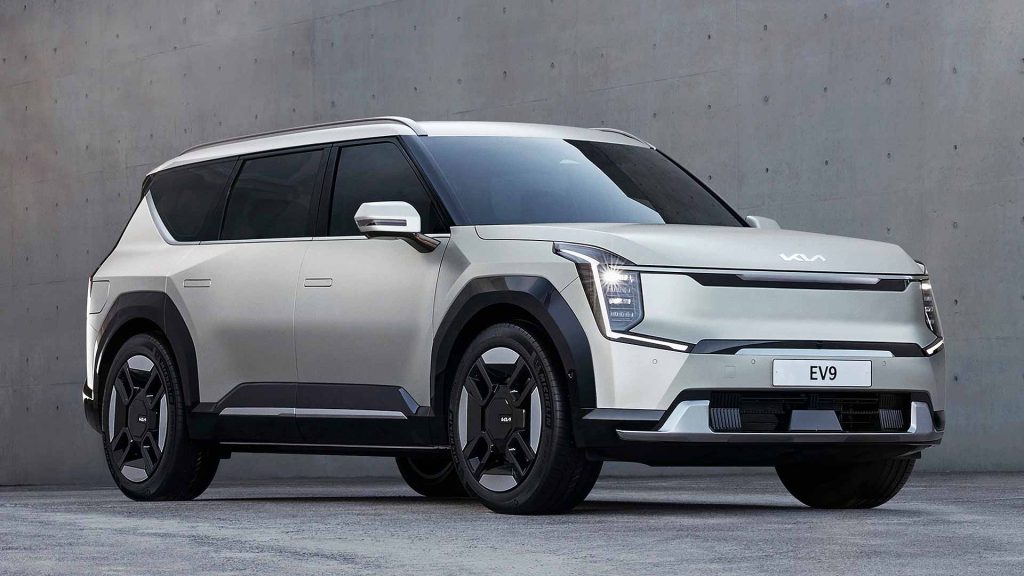
The EV9’s large interior and family-oriented design also make its emergency role interesting. It is a vehicle intended for everyday transportation, yet its battery can provide a second function when the grid is unavailable.
For households considering an electric SUV, this capability turns the vehicle into more than a transportation appliance. It can become a temporary source of electricity, provided owners understand its output limits and use approved equipment.
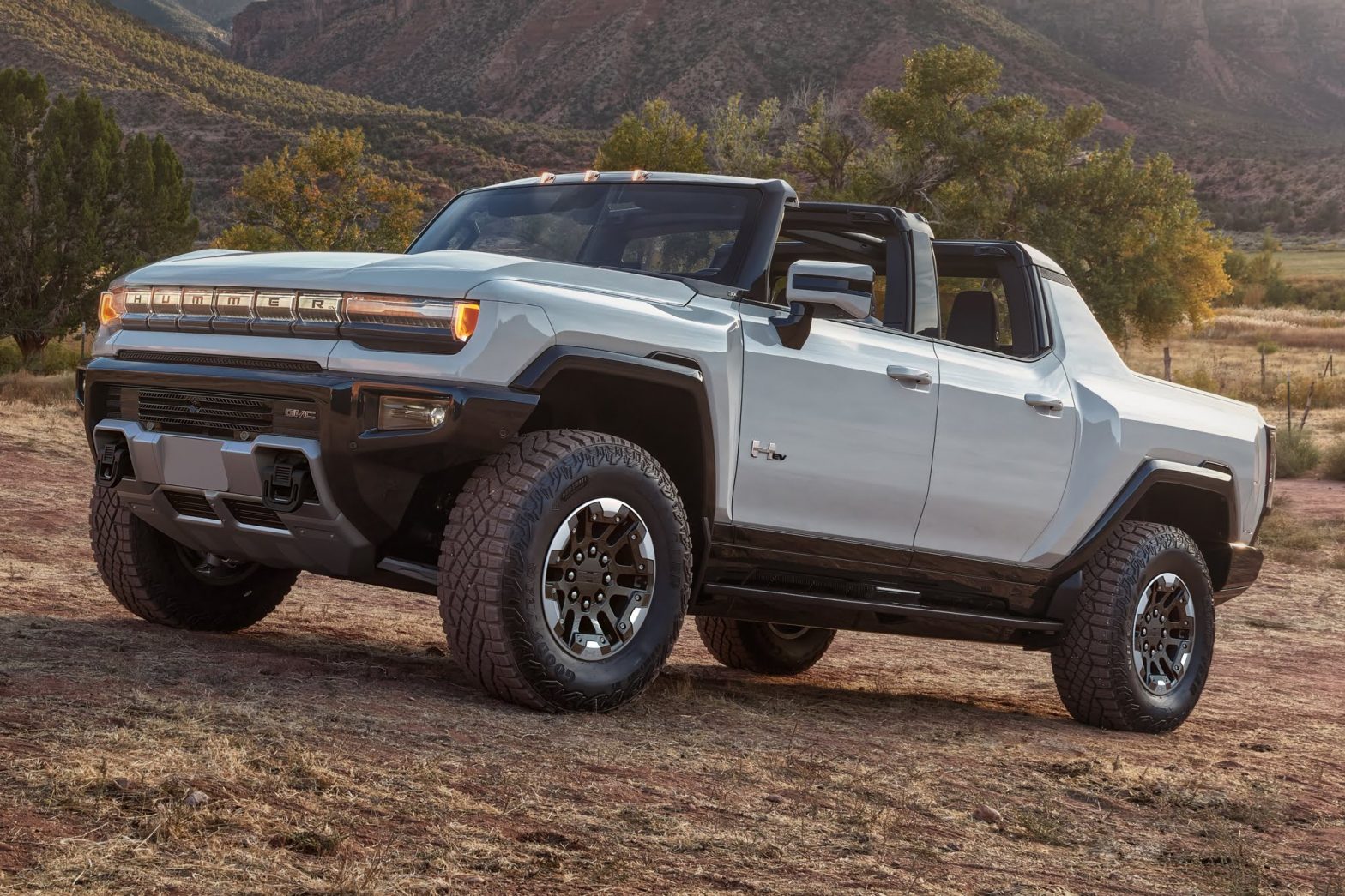
10. GMC Hummer EV
The GMC Hummer EV represents another branch of GM’s growing bidirectional charging strategy. GM lists the Hummer EV among its V2H-capable vehicles, allowing compatible versions to participate in the company’s home backup system.
The underlying idea is simple. When the vehicle is connected to the appropriate GM Energy equipment, stored battery energy can be converted and delivered to a properly equipped home during a grid outage. GM’s V2H architecture includes the PowerShift Charger, Home Hub and associated equipment needed to manage the transfer safely.
GM says the V2H system can provide up to 9.6 kilowatts of backup power for household loads. That output can support many everyday appliances, although homeowners still need to manage consumption if they want the battery to last through a prolonged outage.
The Hummer EV is an interesting example because it shows that vehicle-to-home technology is not restricted to vehicles marketed primarily around efficiency. A large, powerful electric vehicle can also function as mobile energy storage.
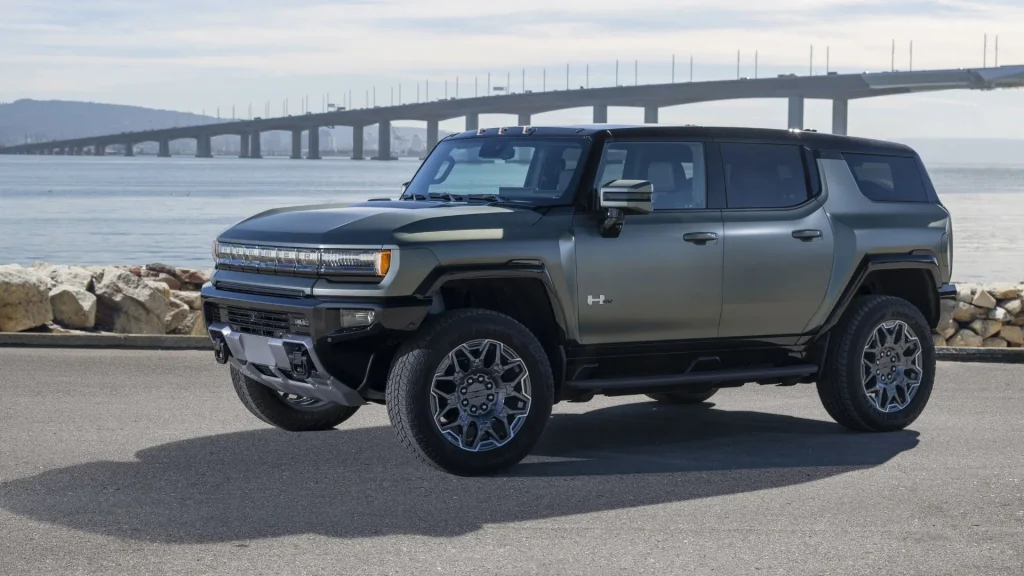
That becomes especially relevant during severe weather. If an owner charges the vehicle before a major storm, the stored energy can remain available even after the local utility supply disappears. Once the grid returns, the vehicle resumes its normal role as transportation.
The most important lesson from the Hummer EV is that backup power capability should be considered as part of the complete vehicle and home system.
The vehicle itself is only one component. Proper charging hardware, electrical installation, and sensible energy management determine how useful it becomes when the lights go out.