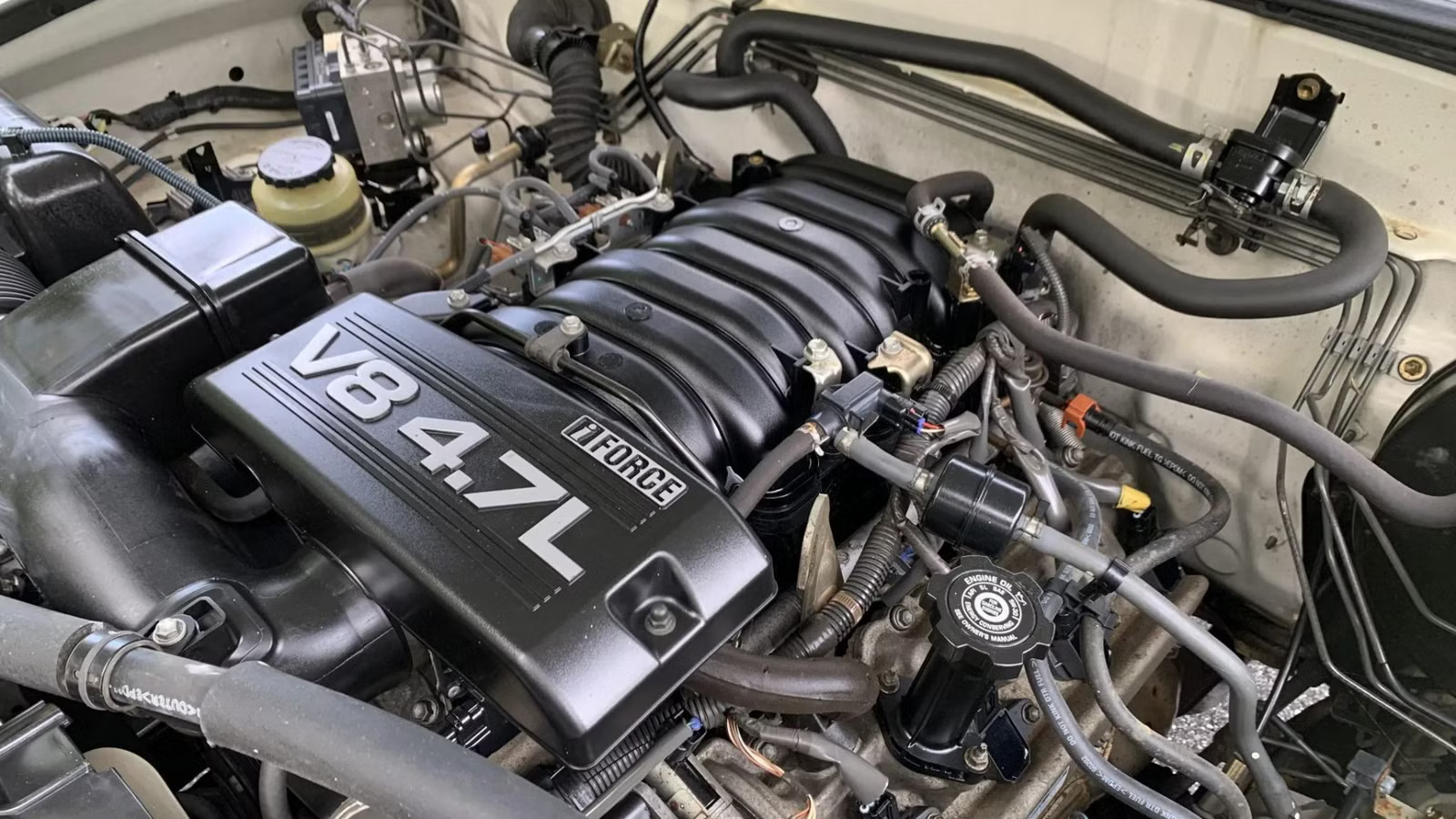
Timing chains dominate modern engine design, but the timing belt is far from extinct. Thousands of vehicles on American roads still use belt-driven engines, particularly older SUVs, trucks, performance cars, and several Honda models.
The distinction matters because a timing belt is a scheduled maintenance item rather than a component owners can simply assume will last the life of the engine. When a belt fails, valve timing disappears instantly, and on an interference engine, serious internal damage can follow.
The engines below represent notable belt-driven designs found in the U.S. market. Some are still relatively common, while others have become favorites among used-car enthusiasts because their engines are known for distinctive designs and strong reputations.
1. Honda J35 3.5-Liter V6
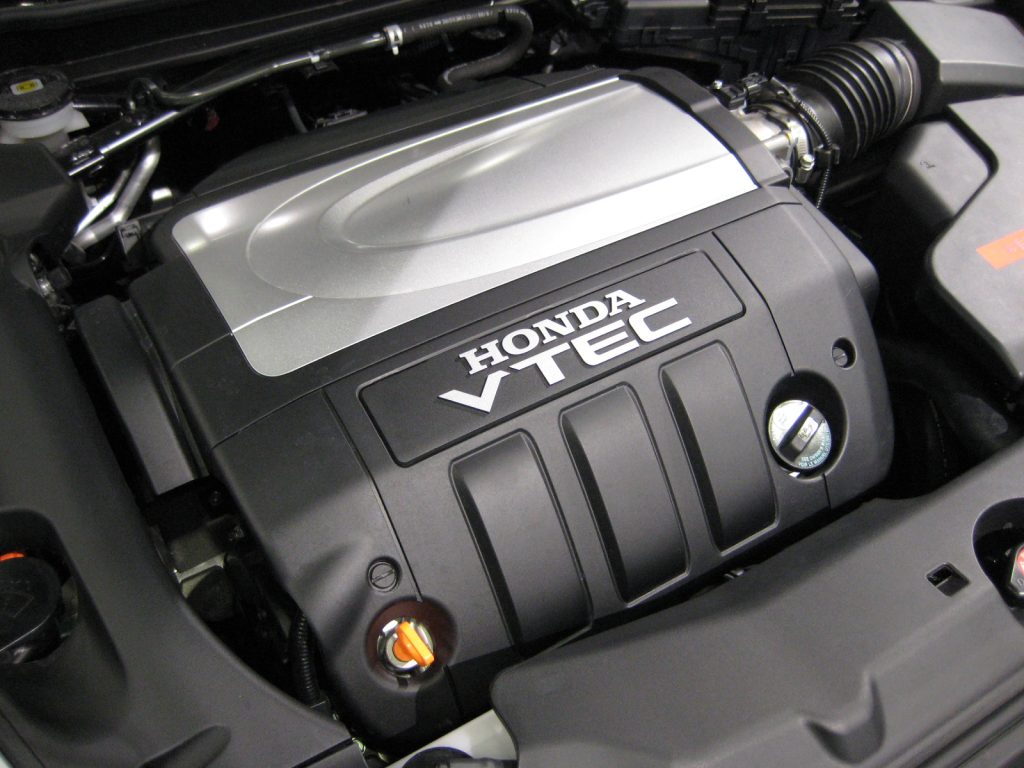
Honda’s J35 V6 is one of the most familiar belt-driven engines still encountered by American drivers. It has powered several generations of vehicles, including the Odyssey, Pilot, and Ridgeline, making the engine especially significant because belt maintenance is not limited to an obscure enthusiast model.
The J-series uses a single timing belt to synchronize the camshafts with the crankshaft. Sources covering the Ridgeline’s J35 specifically identify the engine as belt-driven, with timing belt replacement commonly associated with the major scheduled maintenance around the 100,000-mile range, depending on model year and maintenance requirements.
That makes this engine unusual in a modern Honda lineup increasingly dominated by chain-driven designs. The timing system is hidden behind covers, so owners cannot normally inspect the entire belt simply by opening the hood. Instead, maintenance history becomes extremely important when buying a used Honda equipped with this V6.
The belt is not the only component worth considering during service. Because accessing the timing system requires substantial labor, technicians commonly replace the water pump, tensioner, and related components at the same time. A belt that looks fine externally does not necessarily mean the complete timing system is ready for another long service interval.
The J35 is also an interference engine in many applications, meaning a failed timing belt can allow the pistons and valves to occupy the same space. That possibility makes the scheduled service particularly important.
For used-car shoppers, a documented timing belt replacement can therefore be worth far more than simply knowing the engine has low mileage. A 90,000-mile Honda with proof of belt service can present a very different ownership proposition from one with an unknown maintenance history.
2. Toyota 2UZ-FE 4.7-Liter V8
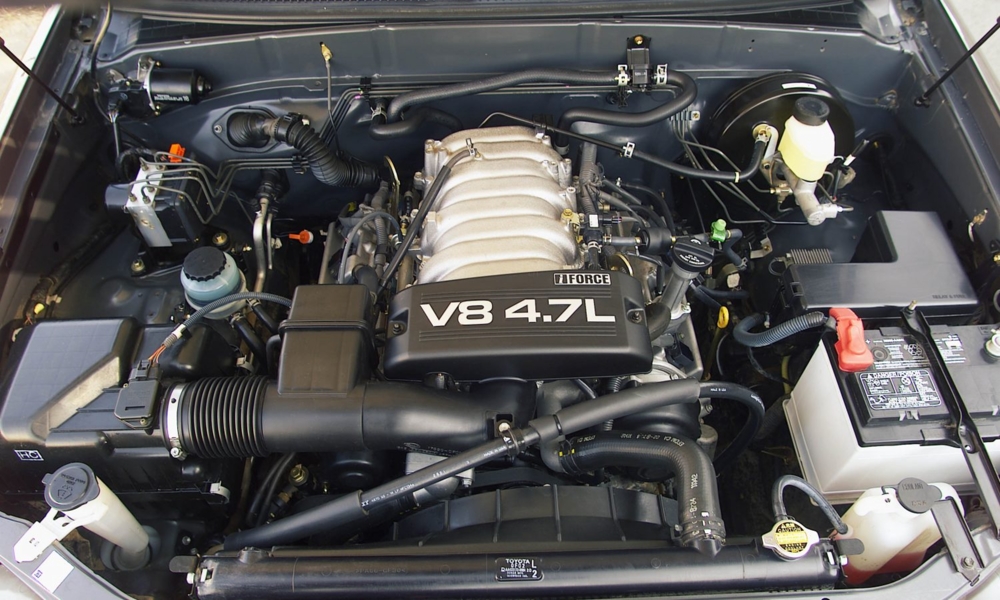
The Toyota 2UZ-FE is a very different kind of belt-driven engine. Rather than being associated with a family sedan, this 4.7-liter V8 became closely linked with Toyota and Lexus trucks and SUVs, including the 4Runner, Sequoia, Tundra, and Lexus GX 470. Its timing system uses a belt, and service documentation for these applications commonly places the replacement milestone around 90,000 miles.
That schedule is particularly important because many examples of the 2UZ-FE are now old enough to have accumulated substantial mileage. A vehicle can look remarkably well maintained while still carrying an aging timing belt underneath its covers.
The 2UZ-FE also demonstrates why engine identification matters. Several Toyota trucks from the same period were offered with different engines, so a buyer cannot determine the timing system simply from the vehicle’s badge. The 4.7-liter V8 designation is the important clue.
For owners who plan to keep one of these trucks for the long haul, the timing belt service is normally treated as a major maintenance event rather than an isolated belt replacement. The water pump and tensioning components are located in the same general service area, making replacement of related parts sensible when the system is opened.
There is another reason the 2UZ-FE remains interesting to enthusiasts. Its combination of V8 character and truck applications has helped these engines develop a strong following in the used market. But reputation does not eliminate maintenance requirements.
A low-mileage GX 470 or Tundra with no evidence of timing belt service can actually deserve more scrutiny than a higher-mileage example with complete records. Time, not just mileage, affects rubber components. Anyone buying one today should verify the exact service history and confirm the required interval for that specific model year.
3. Mazda 2.3-Liter Four-Cylinder
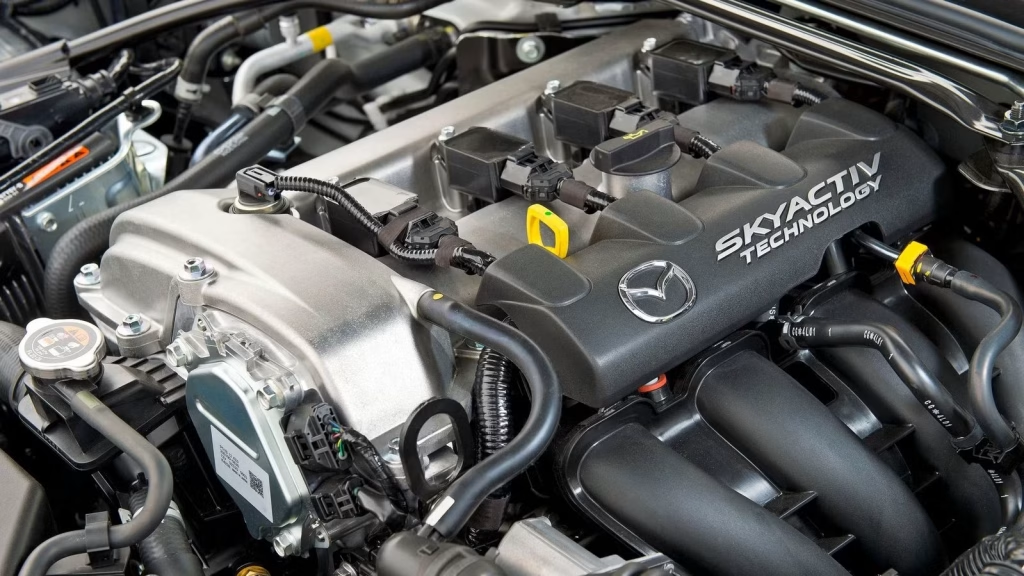
The Mazda 2.3-liter four-cylinder is a lesser-known example of a belt-driven engine found in the U.S. market. It was used in the Mazda B2300 pickup during the 1990s, including 1994-97 models.
Factory service information specifically details the removal, installation, and adjustment of the engine’s timing belt, confirming that this engine relies on a belt rather than a timing chain.
The timing belt synchronizes the crankshaft, camshaft, and oil-pump drive so the engine’s internal components remain correctly timed. Mazda’s service procedure requires the crankshaft and camshaft timing marks to be aligned before the belt is installed, while a tensioner maintains the correct belt tension during operation.
The B2300’s age makes timing-belt history particularly important today. These pickups are now several decades old, and an unknown belt can represent a significant maintenance concern even when the truck still runs properly.
SKF’s replacement guide lists a 120,000-mile replacement recommendation for the 1995-97 B2300 2.3-liter engine and advises replacing the tensioners and pulleys during belt service.
Another interesting detail is that sources differ on how they classify the engine’s behavior after a belt failure, so it is better not to make a blanket claim about valve damage across every production year without identifying the exact engine.
The safest approach for owners is to treat the belt as a scheduled maintenance component rather than waiting for visible symptoms.
For buyers considering an older B2300, maintenance records are especially valuable. A documented timing-belt replacement provides much greater confidence than simply knowing the truck has relatively low mileage. The engine may be mechanically straightforward, but its belt still requires attention as the vehicle ages.
The Mazda 2.3-liter therefore earns its place on this list as a genuine U.S.-market example of a timing-belt engine. It also adds variety to the list because, unlike the V6s, V8s, and performance engines already featured, it represents a compact four-cylinder pickup application.
4. Subaru EJ25 2.5-Liter Flat-Four
The Subaru EJ25 is one of the best-known belt-driven engines in the American enthusiast and performance-car world. The 2.5-liter member of the EJ family appeared in numerous Subaru models over several decades, including versions of the Legacy, Outback, Forester, Impreza, WRX, and WRX STI. The EJ family uses a timing belt rather than a chain.
What makes this engine particularly interesting is the variety of vehicles that received it. A naturally aspirated EJ25 in a family-oriented Subaru and a turbocharged version in a performance model may share fundamental architecture while delivering dramatically different driving experiences.
The timing belt has a particularly important role because the engine uses overhead camshafts that must remain precisely synchronized with the crankshaft. The belt system includes additional components such as tensioners and idlers, meaning replacing only the belt may not represent the best approach when a major service is due.
Age also matters. Many EJ-powered Subarus are now older vehicles, and some have changed owners several times. Maintenance documentation can therefore be difficult to establish. For a used-car buyer, a seller’s claim that “the belt was done” is much less useful than an invoice showing when the work was performed and what components were replaced.
Performance versions deserve additional caution because owners sometimes modify them for increased power. Higher engine output and aggressive driving can place additional demands on an already highly stressed engine.
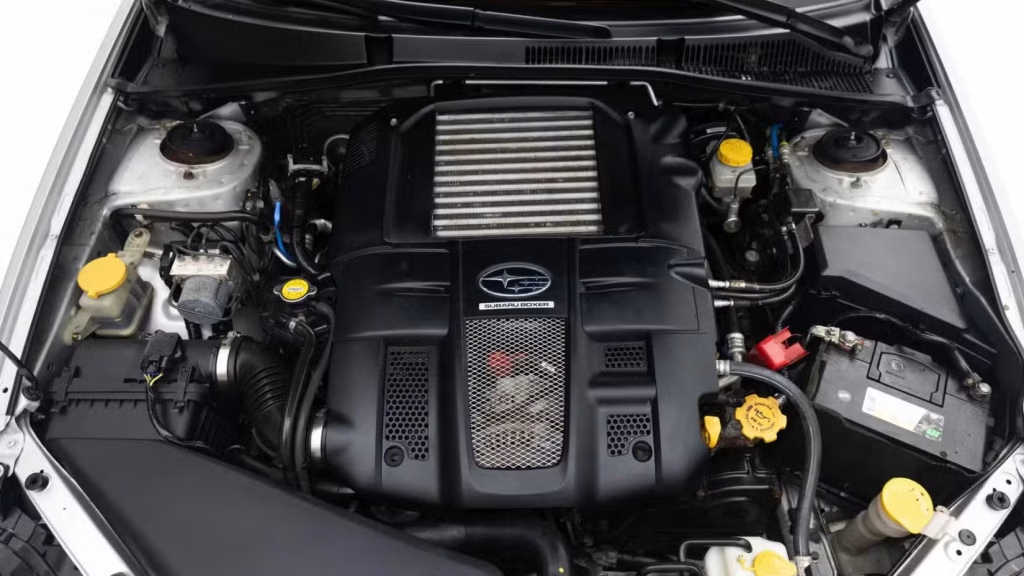
The EJ25 remains an important reminder that a timing belt is not inherently a sign of poor engineering. Subaru used the design successfully across millions of vehicles and multiple generations. The tradeoff is that owners must account for scheduled belt maintenance.
For anyone considering an older Subaru, identifying the exact EJ25 variant is essential. Engine codes, model year, and vehicle configuration can affect service requirements, so the factory maintenance documentation should always take precedence over generic timing-belt advice.
5. Nissan VG33E 3.3-Liter V6
Nissan’s VG33E is an older engine, but it remains relevant because of how many American trucks and SUVs received it. The 3.3-liter V6 appeared in vehicles including the Nissan Pathfinder, Frontier, and Xterra during the late 1990s and early 2000s. The VG family used a timing belt across its applications.
The engine is particularly interesting for used-vehicle shoppers because the vehicles that carried it were frequently purchased for utility rather than short-term ownership. An Xterra or Frontier from this period could spend years accumulating mileage through commuting, hauling, towing, or outdoor recreation. That makes timing-belt history extremely important today.
The VG33E is also an interference design, according to service references covering the engine. A broken belt can therefore allow piston-to-valve contact and cause severe internal damage.
Another consideration is that many surviving examples are now old enough for age-related deterioration to matter even when mileage is relatively modest. Rubber components do not remain new simply because a vehicle has spent years parked.
When purchasing a VG33E-powered Nissan, the timing belt should therefore be treated as one of the first maintenance questions. If the seller cannot document the last replacement, budgeting for the service is sensible rather than assuming the belt is still usable.
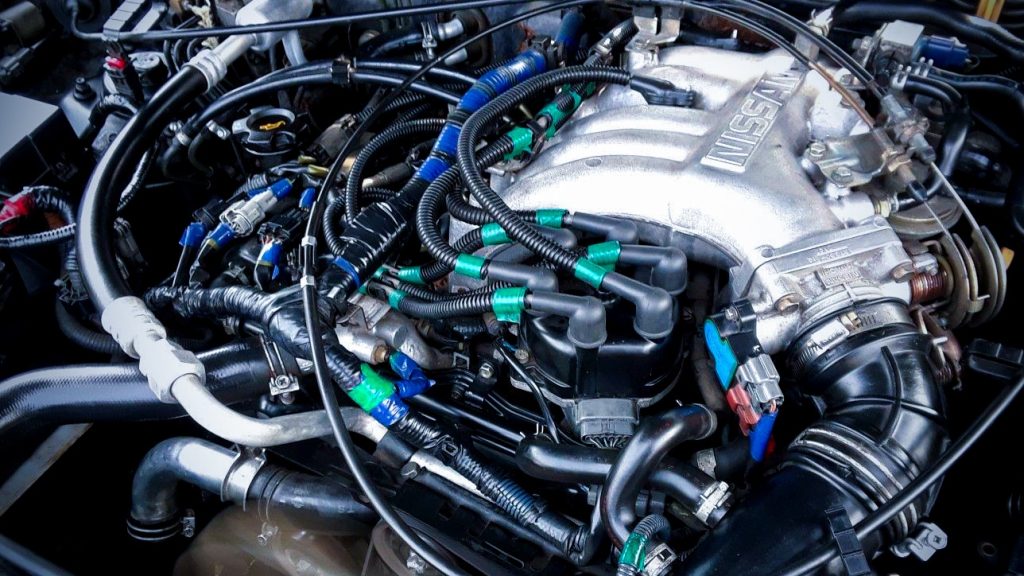
The water pump and belt tensioning components should also be considered during the same service because accessing the timing system involves significant labor.
The VG33E may lack the technology of Nissan’s modern engines, but that mechanical simplicity is part of its appeal. For buyers seeking an older truck or SUV with a straightforward naturally aspirated V6, it can remain an interesting option. The key is understanding that its simplicity does not mean maintenance-free ownership.
6. Toyota 2JZ-GE 3.0-Liter Inline-Six
The Toyota 2JZ-GE is perhaps the most famous enthusiast engine on this list, thanks largely to the reputation established by the broader 2JZ family. The naturally aspirated 3.0-liter inline-six was used in U.S.-market Toyota and Lexus applications, including the Lexus GS 300 and related models. Unlike many modern Toyota engines, the 2JZ-GE uses a timing belt.
The engine’s straight-six architecture and dual overhead camshafts require accurate synchronization between the crankshaft and both camshafts.
A rubber timing belt performs that job. Engine references identify the belt as the component driving the cams, with Toyota applications using a scheduled maintenance approach rather than treating the belt as a lifetime component.
The 2JZ-GE is especially interesting because its reputation can distract buyers from ordinary maintenance. Enthusiasts may focus on the engine’s durability, smoothness, and tuning potential while overlooking the fact that even a highly regarded engine still has wear items.
A used Lexus or Toyota carrying this engine can now be decades old. That makes service records increasingly valuable. If a vehicle has changed hands several times, determining when the timing belt was last replaced may require more investigation than simply checking the odometer.
The belt itself is only one part of the system. Tensioners, pulleys, seals, and the water pump can all become relevant when the front of the engine is opened.
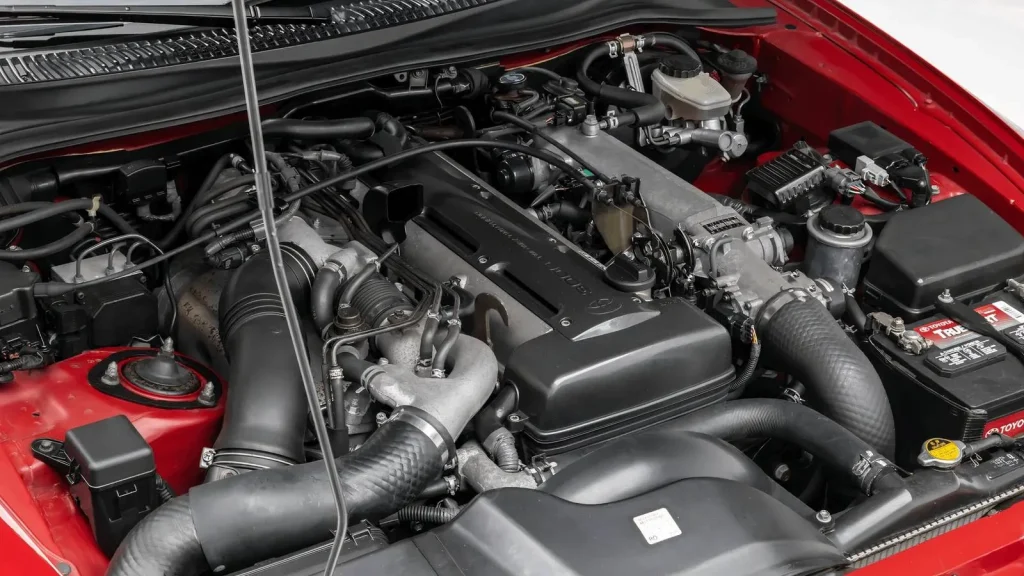
There is also an important distinction between the 2JZ-GE and the turbocharged 2JZ-GTE. Enthusiasts sometimes group the engines because they share fundamental architecture, but the applications and specifications are not identical.
For buyers considering a 2JZ-powered car today, the timing belt should therefore be viewed as a maintenance deadline rather than an optional upgrade. The engine’s legendary reputation may make it desirable, but it does not make an aging belt immune to wear.
7. Mitsubishi 4G63 2.0-Liter Four-Cylinder
The Mitsubishi 4G63 became famous in the United States through the performance-focused Lancer Evolution, but the engine’s history extends far beyond that celebrated application. It is a four-cylinder design with a timing belt, and aftermarket parts catalogs specifically list timing belts for 4G63 applications.
For enthusiasts, the 4G63 is significant because it demonstrates how a timing-belt engine can coexist with serious performance ambitions. Turbocharged versions became closely associated with all-wheel-drive performance and rally-inspired road cars.
That performance background makes maintenance particularly important. A timing belt does not know whether an engine is being driven gently through town or pushed hard on a track. High RPM and aggressive use make it even more important that the belt, tensioner, pulleys, and related components are in good condition.
The 4G63 also highlights the danger of buying a modified performance car without complete records. A vehicle may have aftermarket engine components, increased boost, or other modifications that make generic maintenance assumptions less reliable.
A buyer should establish exactly which version of the engine is installed and whether the timing system has been serviced correctly.
The belt is hidden behind covers, so visual inspection is not a substitute for knowing its age and mileage. If documentation is missing, treating the service as due can be a safer financial assumption than gambling on an unknown belt.
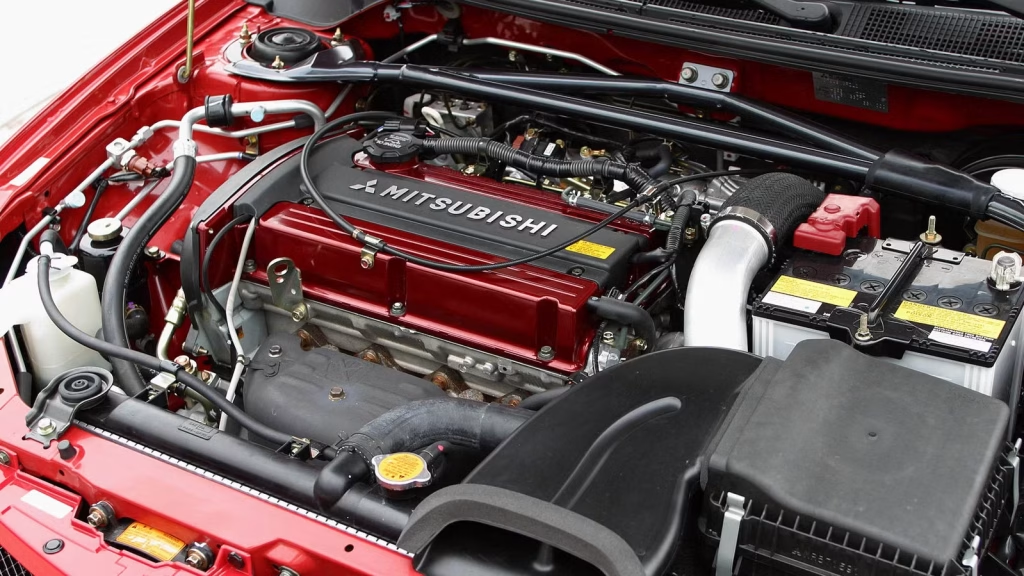
The engine’s popularity also means that specialist knowledge and aftermarket support remain strong. That can be helpful when maintaining an older example, provided the work is performed using components appropriate for the specific engine.
The 4G63 ultimately proves that timing belts are not confined to economy cars. Some of the most respected Japanese performance engines ever sold in America relied on them. The difference is that their owners must respect the maintenance schedule just as carefully as the engine’s performance potential.
8. Honda B18C 1.8-Liter Four-Cylinder
Honda’s B18C belongs to an earlier generation of engines, but it remains highly relevant to American enthusiasts because of its connection to the Acura Integra GS-R and related performance applications. The B-series family uses a timing belt, making belt maintenance a fundamental part of ownership.
Unlike the J35, which became associated with family SUVs and minivans, the B18C developed its reputation around lightweight performance cars. High-revving operation is central to the engine’s character, and that makes accurate camshaft timing especially important.
A timing belt synchronizes the crankshaft and camshafts. If the belt deteriorates, jumps teeth, or breaks, the engine can lose its carefully controlled valve timing. On an interference design, the consequences can be severe.
Age is now arguably the biggest issue for surviving B18C-powered cars. The Integra GS-R ended production decades ago, meaning even a carefully preserved example has an old timing system unless it has been replaced during its lifetime.
This is an area where low mileage can be misleading. A collector may have driven an Integra only a few thousand miles during the past several years, but that does not mean its timing belt is effectively new.
The B18C also appeals to modified-car enthusiasts, so buyers need to distinguish factory engines from heavily modified examples. An aftermarket intake or exhaust is relatively minor, but extensive engine modifications can make the maintenance history much harder to assess.
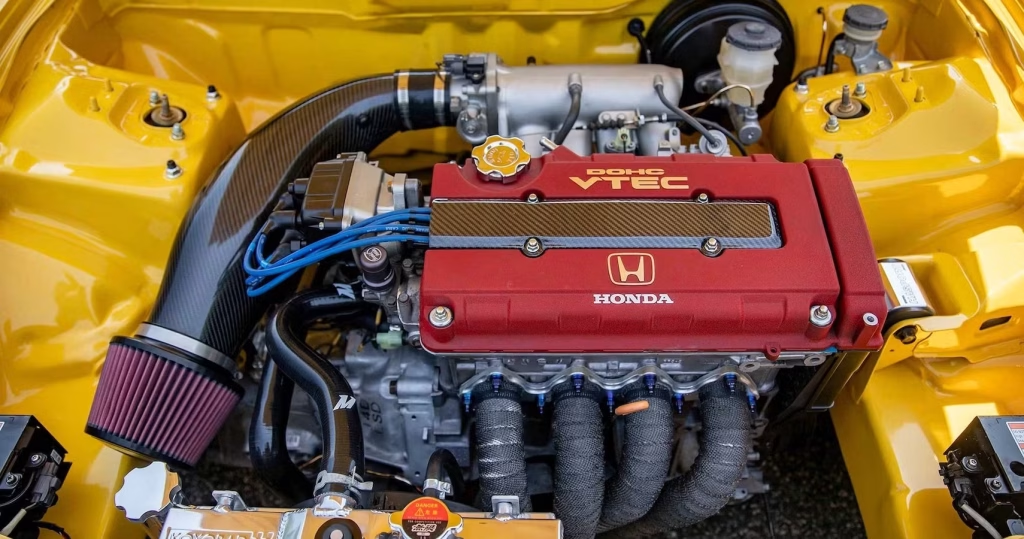
For someone buying one today, documentation is therefore critical. Look for evidence of timing belt replacement and related service rather than relying on the previous owner’s confidence.
The B18C’s high-revving performance has made it a favorite among collectors, but its timing belt is still a conventional wear item. The engine may be special, but the maintenance principle is simple. An old belt deserves attention before it turns into an expensive engine repair.
9. Honda B20 2.0-Liter Four-Cylinder
The Honda B20 is another member of the B-series family that keeps the timing-belt tradition alive among older American vehicles.
Most famously associated with the first-generation CR-V in the United States, the B20 also appeared in other Honda applications and became popular among enthusiasts because of its straightforward architecture and strong aftermarket support.
Like other B-series engines, the B20 uses a belt-driven timing system. That means owners of older examples cannot treat the engine as though it has the maintenance characteristics of a modern chain-driven Honda.
The age of these vehicles is now the major consideration. Early CR-Vs equipped with the B20 have become old enough that a timing belt’s service history can be more important than the mileage shown on the dashboard.
A belt replacement is also not something to approach as a belt-only operation. When the timing system is opened, related components such as the tensioner and water pump become logical items to evaluate. A complete service can reduce the risk of having to pay for the same labor again after a separate component reaches the end of its useful life.
The B20 is particularly interesting because the vehicles using it were not exotic. The first-generation CR-V was a practical compact SUV, which means many examples were used as everyday transportation for years. Some accumulated substantial mileage, while others were neglected as inexpensive used vehicles.
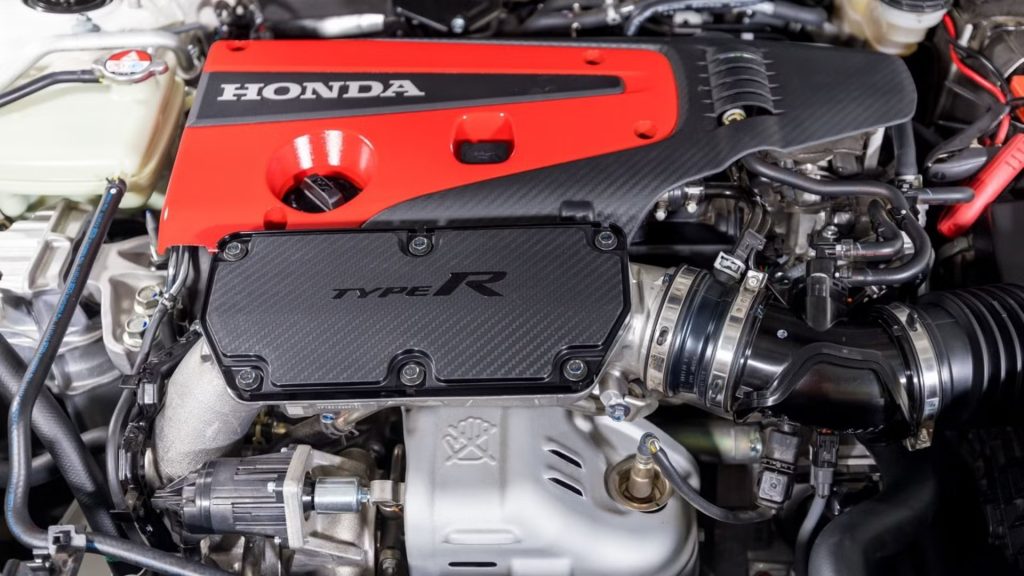
That makes condition highly variable today. A buyer should verify the exact engine fitted to the vehicle rather than assuming every older Honda has the same timing arrangement. Honda changed from belts to chains across different engine families over time, and model names alone do not tell the entire story.
The B20 may now seem simple compared with Honda’s modern hybrid and turbocharged engines, but its timing belt remains a critical service item. For an older CR-V or B-series project, confirming when that belt was last replaced can prevent a relatively predictable maintenance expense from becoming an engine failure.