
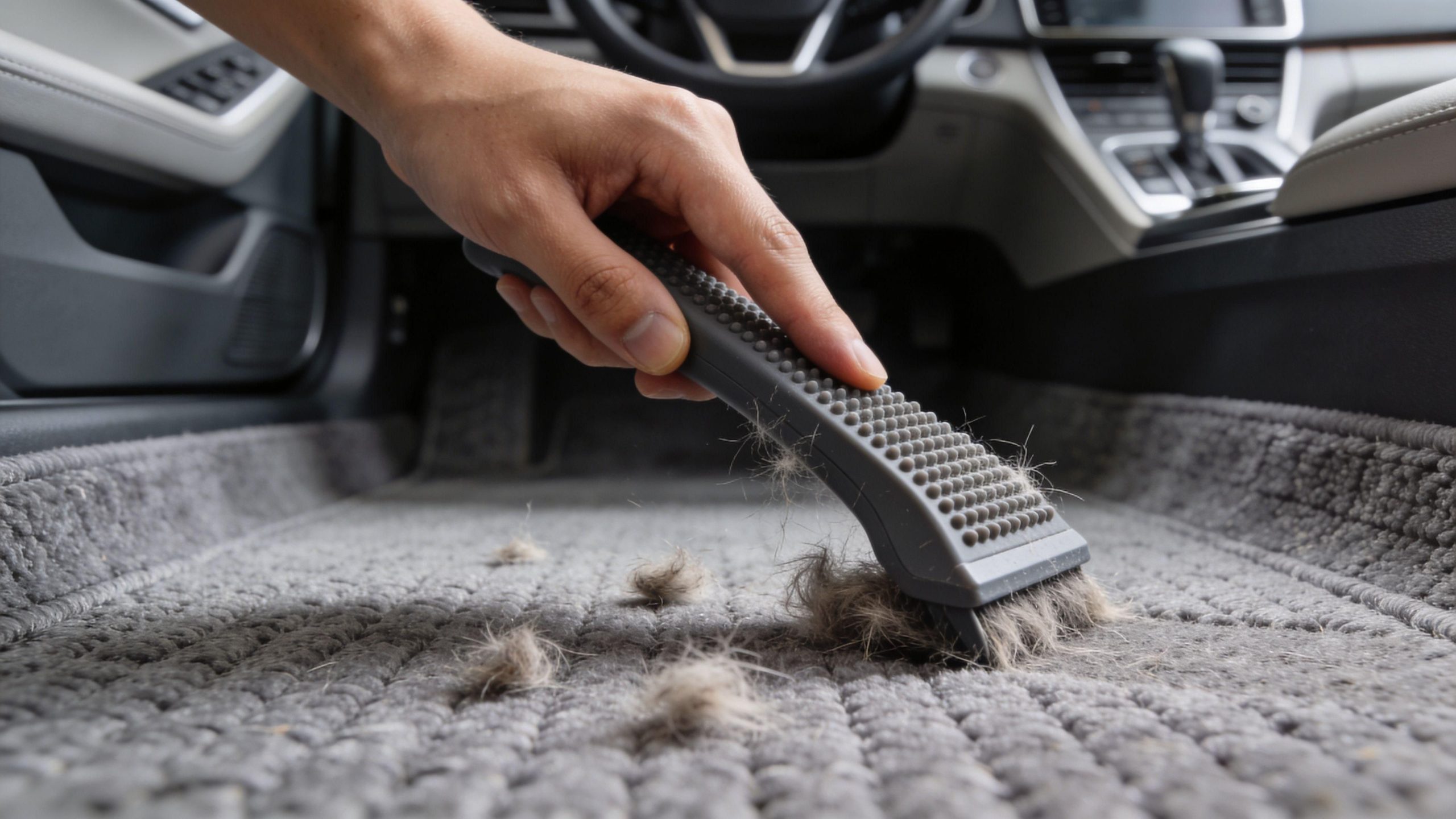
Pet hair in a car is a special kind of stubborn. It weaves into carpet fibers and refuses to leave. A regular vacuum often glides right over it. The problem comes down to texture. Car carpet is usually a tight, low-pile loop or cut-pile fabric. Pet hair has tiny scales along each strand. Those scales lock into the carpet like barbed hooks.
Heat, friction, and static make it worse. Sun bakes the hair into the fibers. Foot traffic grinds it deeper every day. The good news is that you do not need expensive tools. Most fixes use things you already own. Each method below works on a different principle.
Some loosen the hair. Some lift it. Some control static so it stops clinging. The best results usually come from combining two or three methods. Loosen first, then lift, then vacuum. That order saves time and effort.
Below are eight tested ways to clear pet hair from car carpet. Each includes how it works, how to use it, and where it fails. Pick the one that fits your carpet and your patience.
1. Damp Rubber Gloves
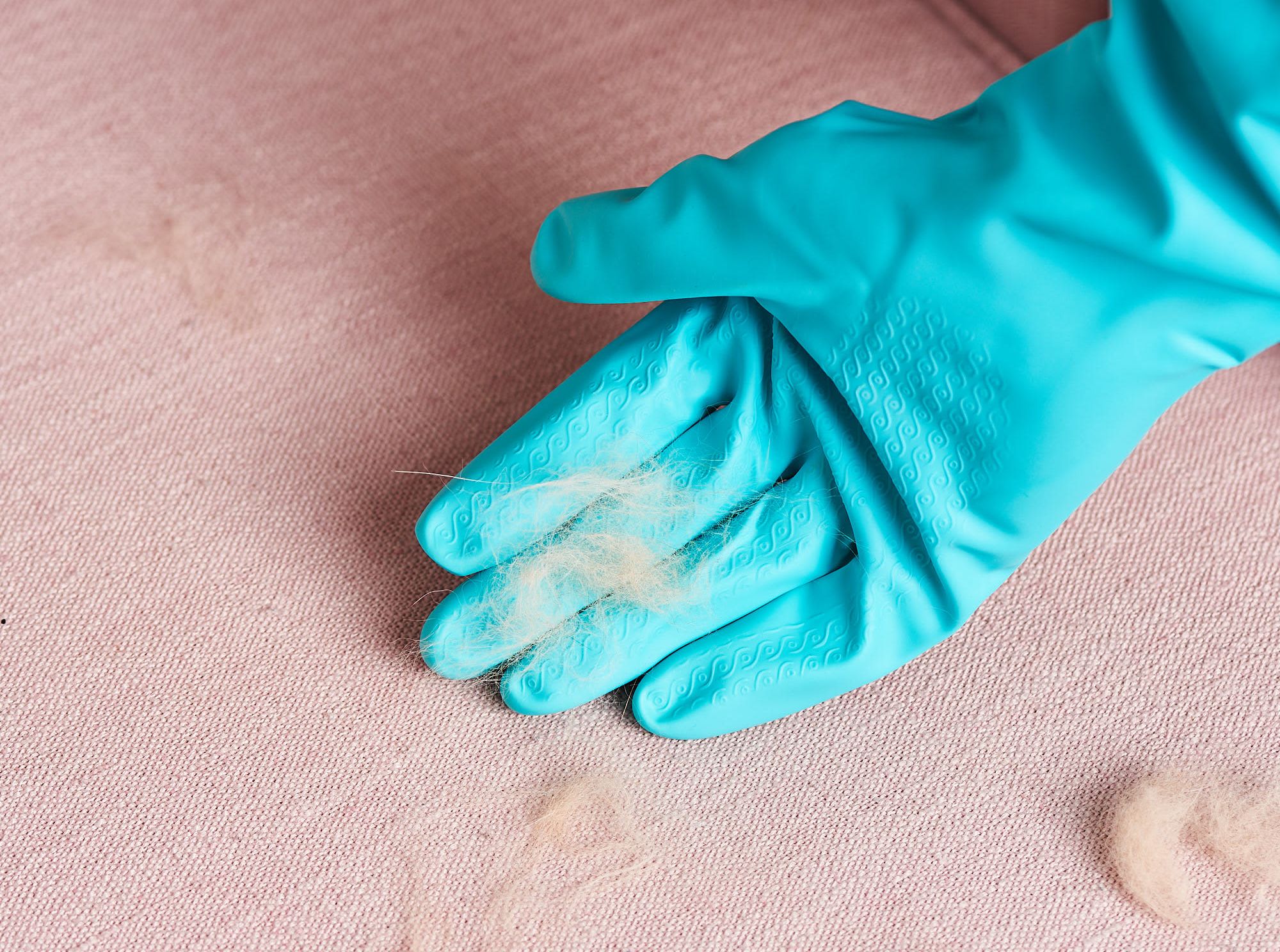
This is the cheapest trick, and it works surprisingly well. Rubber creates friction against hair. Moisture adds grip. Put on a pair of dishwashing gloves. Dampen them slightly under a tap. They should be wet, not dripping.
Drag your hand across the carpet in one direction. Use firm, short strokes. The hair will ball up into clumps. The rubber surface grabs each strand as it moves. Dry rubber works too, but dampness makes it better. Water also reduces static that keeps hair stuck.
Work in small sections. Pull the clumps off the glove as they form. Then move to the next patch. Do not scrub back and forth. That pushes hair deeper. A single direction pulls it up and out.
This method shines on short-pile carpet. It reaches tight corners where tools cannot. It also works well on floor mats. There are limits. Deep-pile or shaggy mats may trap hair even after gloving. Very large areas will tire your hand.
A practical tip helps here. Wear a glove on each hand. Use one to loosen and one to gather. Keep a small trash bag nearby. Hair clumps are light and drift easily. They can land right back on the carpet.
After gloving, always vacuum. The glove brings hair to the surface. The vacuum removes what remains. Test a hidden spot first if the carpet is delicate. Most automotive carpet handles this easily. Older, worn carpet may fuzz slightly.
This method costs almost nothing. It takes about ten minutes for a full front footwell. It is a great first step before anything else. Repeat weekly if you carry pets often. Short, regular sessions beat one heavy cleanup. Hair never gets a chance to embed.
2. Rubber Squeegee
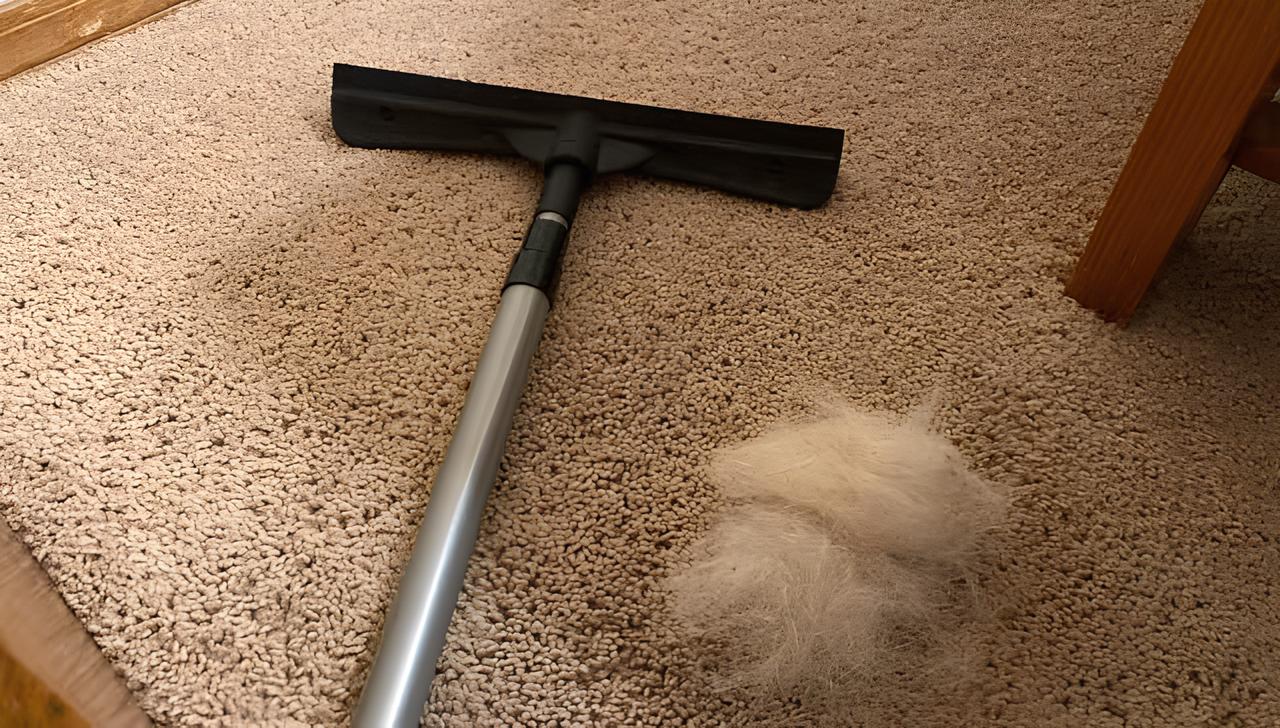
A window squeegee is a hidden hero. Its flat rubber blade is ideal for flat carpet. It pulls hair into neat rows. Choose a squeegee with a firm, straight edge. Soft, worn blades will not grip well. A sharp edge works best.
Hold the blade at a slight angle. Press it lightly into the carpet. Drag it toward you in one direction. The edge slides between fibers and catches hair. It gathers strands into a thin line. You can then pick it up by hand.
Pull in overlapping strokes. Cover the entire section before moving on. Overlap keeps you from missing patches. Compared with gloves, a squeegee covers more ground. It is faster on wide, open floors. Cargo areas and trunk liners suit it well.
It also works on fabric seats. Use gentle pressure there. Seat fabric tears more easily than floor carpet. Some drivers prefer a dedicated rubber broom. These have bristles made of soft rubber. They work on the same principle.
A rubber broom handles thicker carpet better. Its bristles dig deeper than a flat blade. Both options are inexpensive. Be careful on loop-pile carpet. A hard edge can snag loops. Use light pressure and test first.
Do not use a squeegee on wet carpet. Water thins the friction and spreads hair around. Dry carpet gives the best grip. After squeegeeing, you will see long, thin rows of hair. Lift them with your fingers or a vacuum. They come up easily.
For tight corners, switch tools. A squeegee cannot fit under seat rails. Use a gloved hand there. This method is best when the hair is surface-level. For deeply embedded hair, loosen it first with a brush. Then squeegee afterward. Clean the blade after each use. Rinse it and let it dry. A clean edge works better next time.
3. Stiff-Bristle Brush
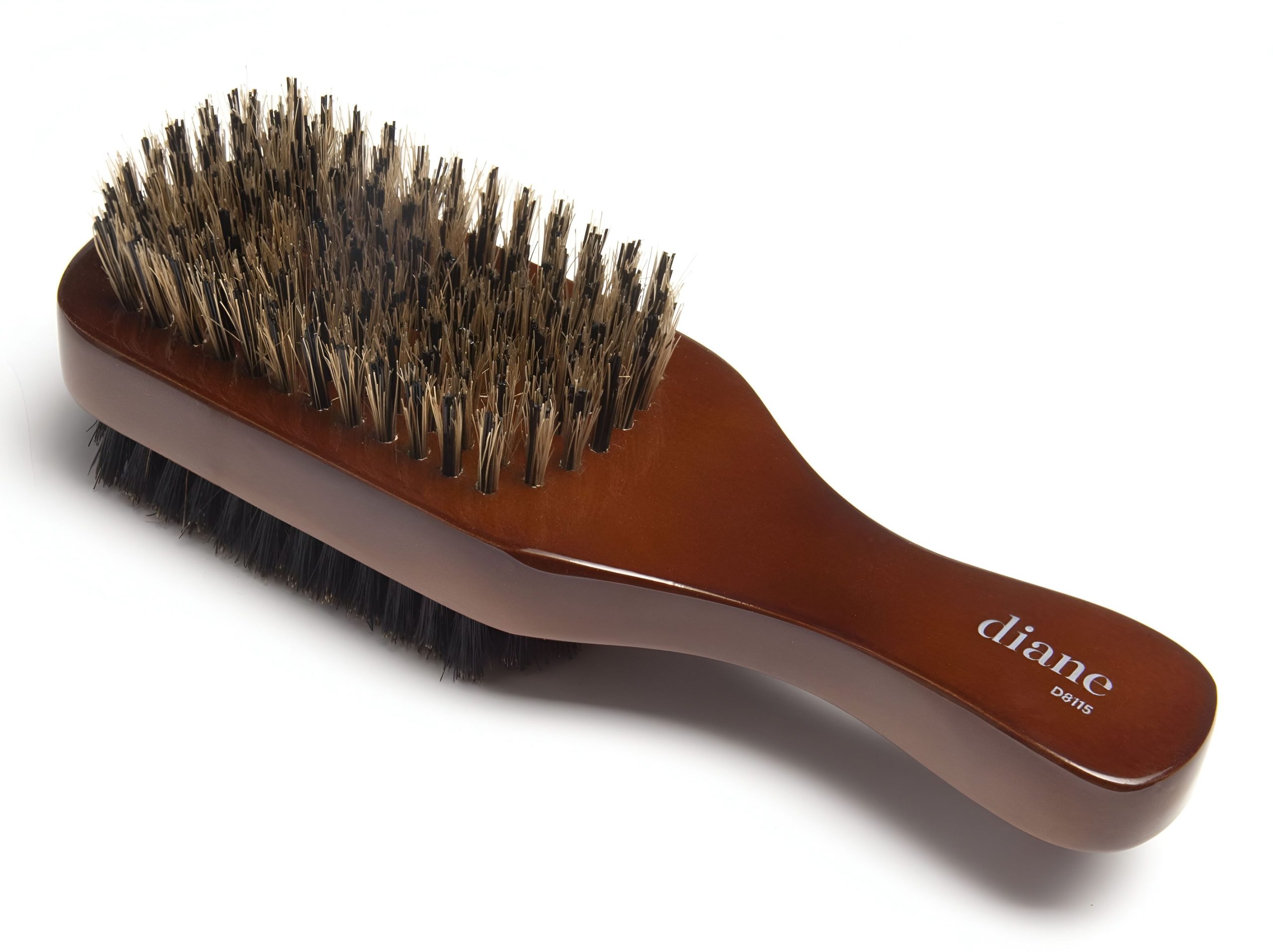
Embedded hair needs to be lifted before it can be removed. A stiff brush does exactly that. It agitates the fibers and frees trapped strands. A detailing brush or a firm scrub brush works. Nylon bristles are ideal. Avoid wire brushes, which damage carpet.
Brush in short, firm strokes. Move against the direction of the pile. This lifts hair up from the base. Next, brush in the opposite direction. That sweeps loosened hair into a pile. Then collect or vacuum it.
Think of it as a two-step motion. First loosen, then gather. Skipping either step reduces results. This method excels on thick, plush carpet. Rubber tools slide over such carpet. A brush digs in where it cannot.
It also helps in footwells with ground-in hair. Years of buildup respond well. Patience is the key here. Use the brush before vacuuming, not after. Loosening makes the vacuum far more effective. Many people reverse the order and get poor results.
You can also use a pet grooming brush. A slicker brush works nicely on mats. Its fine wire pins grab hair without harming fibers. Be gentle with slicker brushes. Press lightly to avoid scratching plastic trim. Keep the pins off door panels.
Work in small squares of about one foot. Finish each one before moving. This keeps the job organized. Wear a dust mask if the car is very dirty. Brushing sends dust and dander into the air. Open the doors for ventilation.
A slightly damp brush improves grip. Mist it with water, not soap. Too much moisture can leave a damp smell. Clean the brush often. Hair wraps around bristles quickly. Pull it off with a comb. This method pairs well with all others. It acts as the preparation step. Everything works better afterward.
4. Vacuum With the Right Attachment
A vacuum is the obvious tool. Yet most people use it wrong. Attachment choice makes all the difference. A bare hose has strong suction but poor agitation. It sucks up loose hair only. Embedded strands stay behind.
Use a motorized pet tool if you can. It has a spinning brush that loosens hair. It also pulls it into the suction path. If you lack one, try a rubber-tipped nozzle. The rubber grips hair as you drag it. Suction then removes it.
A crevice tool handles edges and seams. Hair collects along the base of seats and doors. Narrow tools reach those spots. Go slowly. Fast passes miss hair. Two slow passes beat five rushed ones.
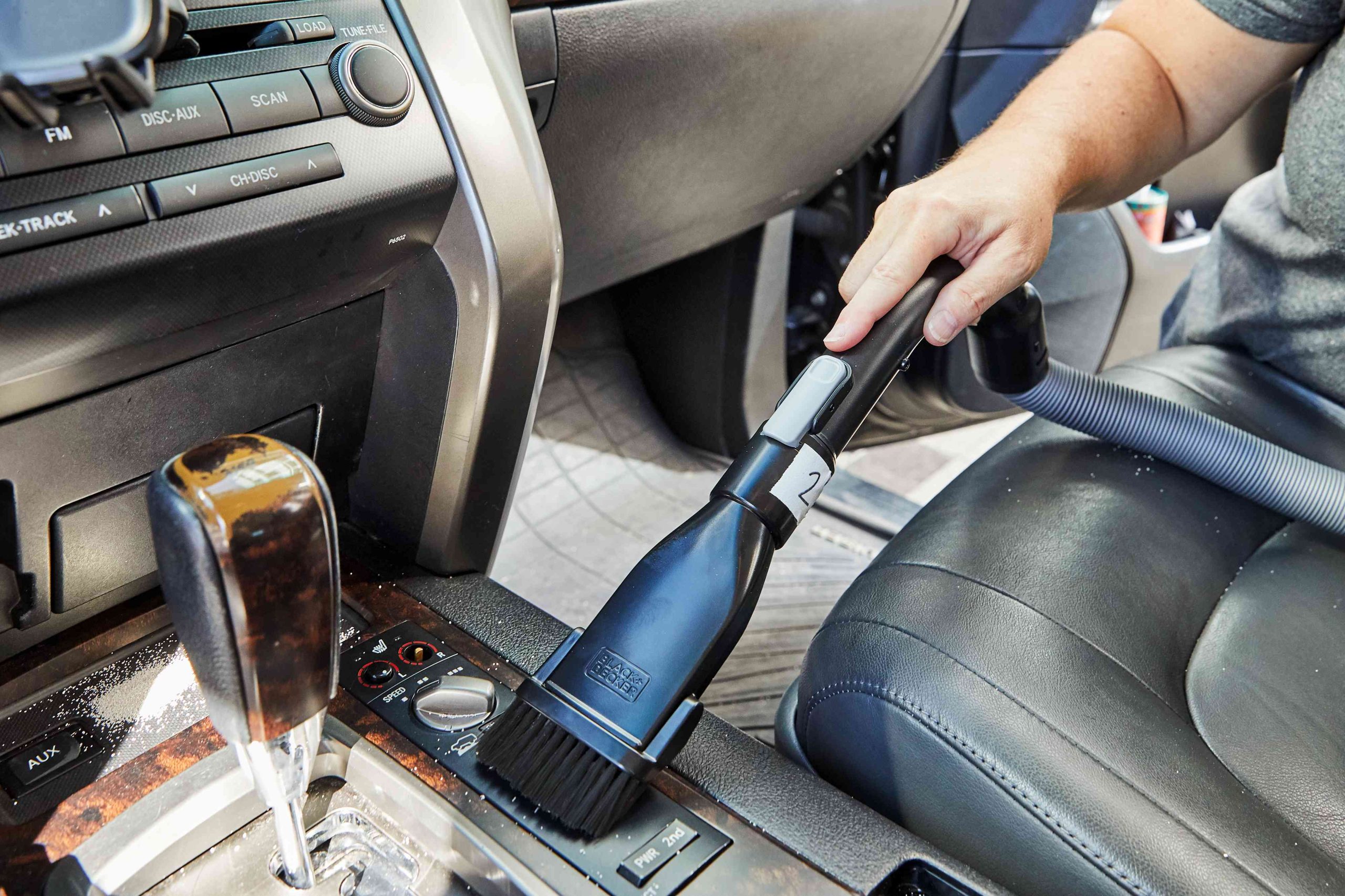
Overlap your lines like mowing a lawn. Cover forward and backward directions. Cross-hatching improves pickup. Always loosen hair first. Use a glove, squeegee, or brush before vacuuming. A vacuum alone rarely finishes the job.
Wet-dry shop vacs are popular among detailers. They offer more suction than household models. Many have specific upholstery nozzles. Cordless handheld vacuums are convenient. They are lighter and easier to maneuver. But battery power may limit suction.
Check your filter and bag. A clogged filter cuts suction dramatically. Pet hair fills filters faster than ordinary dust. Empty the canister often. A full container weakens performance. It also lets hair escape back out.
Lift floor mats and vacuum underneath. Hair hides there in large amounts. Shake the mats outdoors afterward. Do not forget the seat tracks. Move the seats fully forward and back.
Vacuum the exposed carpet each time. A good vacuum finishes the job. It removes everything the other methods loosen. Treat it as the final step, never the only one.
5. Fabric Softener Spray
Static makes hair cling stubbornly. Fabric softener reduces that static. It relaxes the fibers so hair releases easily. Mix one part liquid fabric softener with about three parts water. Pour it into a spray bottle. Shake it well.
Lightly mist the carpet. Do not soak it. A fine, even coating is enough. Wait a couple of minutes. The solution works into the fibers. Static begins to break down.
Then wipe, brush, or vacuum the area. Hair comes away much more easily. You will notice the difference right away. The softener coats strands with a thin layer. This reduces how well they grip each other. Hair then slides free.
It also leaves a fresh scent. Many people enjoy this bonus. Choose a fragrance you like. Be careful with quantity. Too much leaves residue that attracts dirt. It can also feel sticky underfoot.
Test on a small hidden spot first. Some dyes react to chemicals. Wait until it dries to check for stains. Avoid spraying electronics or seat controls. Liquid can damage wiring. Keep the mist directed at the floor.
Let the carpet dry fully afterward. Leave doors open for ventilation. Damp carpet can grow mildew. This method suits people with static-prone carpet. Synthetic fibers produce the most static. Dry winter air makes it worse.
You can also use it on seats. Use extra caution on leather or vinyl. Fabric-only seats handle it best. Fabric softener does not replace physical removal. It only prepares the hair. You still need a glove, brush, or vacuum. Make a fresh batch each time. Old mixtures can grow bacteria. A small bottle lasts several uses.
6. Pumice Stone
A pumice stone sounds odd for carpet. Yet it works remarkably well. Its rough surface grabs hair like Velcro. Choose a fine, natural pumice stone. Pet-specific versions exist. Avoid coarse stones that shred fibers.
Drag the stone lightly across the carpet. Use short strokes in one direction. Hair rolls into tight clumps. The porous surface catches strands as they pass. Clumps form quickly. Pick them up by hand.
This method works best on low-pile, short carpet. It is especially good on cut-pile. Plush carpet can fuzz or pill. Test first in an inconspicuous spot. Look closely for fiber damage. Some carpets are more delicate than they appear.
Use very light pressure. Let the stone do the work. Pressing hard will fray fibers. Do not use pumice on seat fabric or delicate upholstery. It can leave bald patches. Floor carpet is far more forgiving.
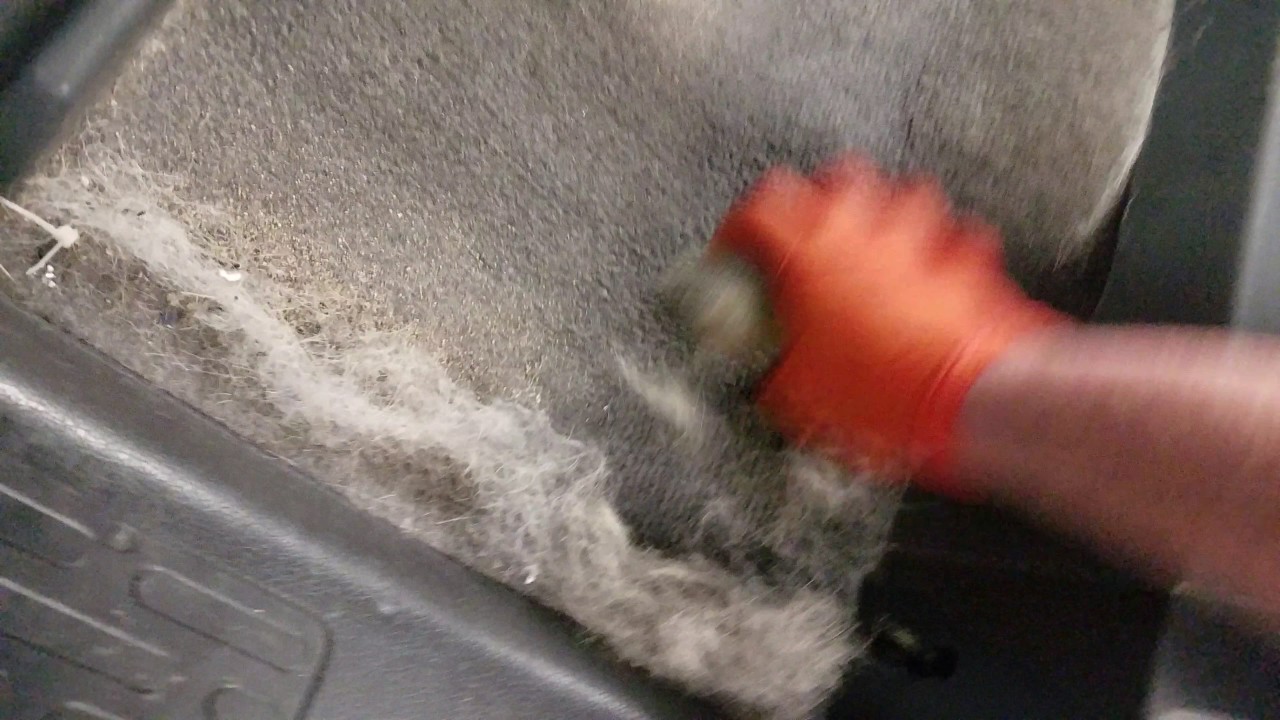
It also removes stubborn embedded hair. Dog hair that glues itself in place often yields. Pumice reaches where gloves cannot. Work in small sections. Collect clumps as you go. Vacuum afterward to pick up fine remnants.
Wear gloves if the stone is rough. Hands can get scraped. A comfortable grip speeds up the job. A pumice stone lasts a long time. It wears down slowly. Rinse and let it dry between uses.
Expect some fine dust to drift off the stone. It is harmless but messy. A final vacuum handles it. Many professional detailers keep one in their kit. It is cheap and compact. Few tools tackle embedded hair as well. This method requires a gentle touch. Done carefully, results are excellent. Done roughly, it can damage your carpet.
7. Lint Roller and Duct Tape
Sticky tools lift hair straight off the surface. They are quick and clean. They suit small areas and final touch-ups. A lint roller is the simplest option. Roll it across the carpet with light pressure. Hair sticks to the adhesive.
Peel the used sheet when it fills up. Fresh sheets restore grip. Keep a spare roll in the glove box. Large pet-hair rollers are available. They cover more area per pass. They suit seats and trunk liners nicely.
Duct tape works when you have no roller. Wrap a strip around your hand, sticky side out. Pat it onto the carpet. Press and lift repeatedly. Move to a fresh section as it fills. Wide masking tape is gentler than duct tape.
Adhesive tools pick up fine hair that vacuums miss. They grab short, wiry strands. Those often hide deep in fibers. They also catch hair on seat seams. Rollers fit into tight spots. Tape bends into narrow gaps.
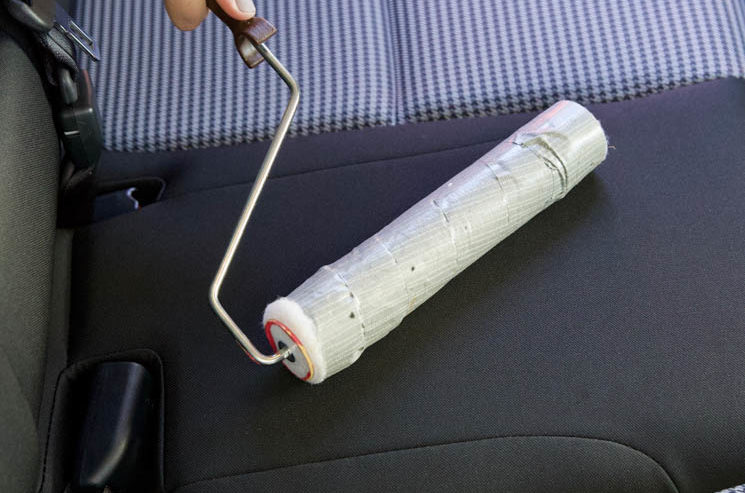
Be careful on delicate fabrics. Strong tape can pull threads. Test on a hidden area first. Do not leave tape on carpet for long. Heat can bake residue into fibers. Remove it quickly.
Sticky tools cost more over time. You use many sheets on large areas. They suit light cleaning better than heavy buildup. Save them for the finishing stage. Use a brush and vacuum first. Then roll over the remaining hair.
This approach is excellent before guests ride. It takes five minutes. The carpet looks neat immediately. Keep a roller in the car for daily upkeep. Quick passes stop hair from accumulating. Small habits prevent big cleanups. Dispose of used sheets properly. They are covered in hair and dust. A small trash bag is enough.
8. Dryer Sheets
Dryer sheets are an underrated tool. They fight static and lift hair together. Many drivers swear by them. Use a fresh sheet or a slightly used one. Wipe it across the carpet in one direction. Hair gathers onto the sheet.
The coating neutralizes static charge. Hair stops clinging so tightly. Strands then lift away. Wipe in small sections. Replace the sheet when it fills. A few sheets handle one footwell.
Dryer sheets suit fabric seats too. They are gentle on most materials. Wipe lightly and slowly. They leave a light, fresh scent. This helps cover pet odors. Pick unscented ones if you are sensitive.
Dampen a sheet for extra grip. A tiny amount of water improves pickup. Do not make it wet. Rub the sheet in a circular motion on stubborn patches. Then switch to straight strokes. The two motions loosen, then gather hair.
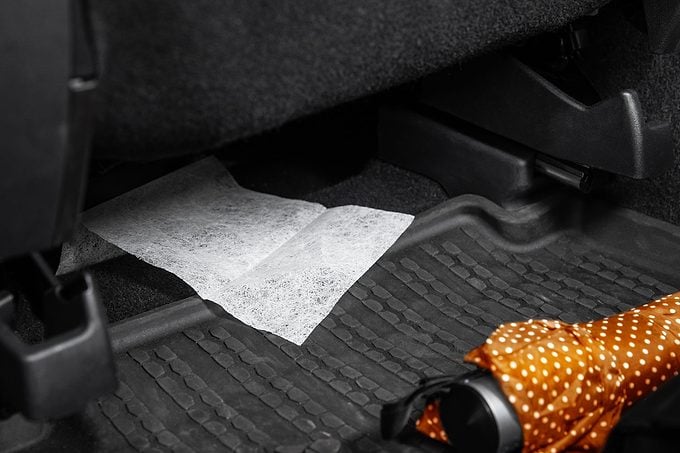
Wear gloves if you have sensitive skin. Some sheets contain fragrance chemicals. They can irritate hands. Avoid dryer sheets on leather or vinyl surfaces. The coating can leave a film. Use a proper cleaner there.
They also reduce future static. A light wipe leaves a thin protective layer. New hair clings less afterward. Do not expect miracles on embedded hair. Dryer sheets work best on surface hair. Deep strands need a brush or pumice stone.
Pair them with a vacuum for best results. Wipe first to loosen and lift. Then vacuum what remains. Used dryer sheets can be reused briefly. They still carry some anti-static power. Use them for a quick dusting. They are cheap and widely available. Most households already have them. That makes them a perfect emergency fix.
