
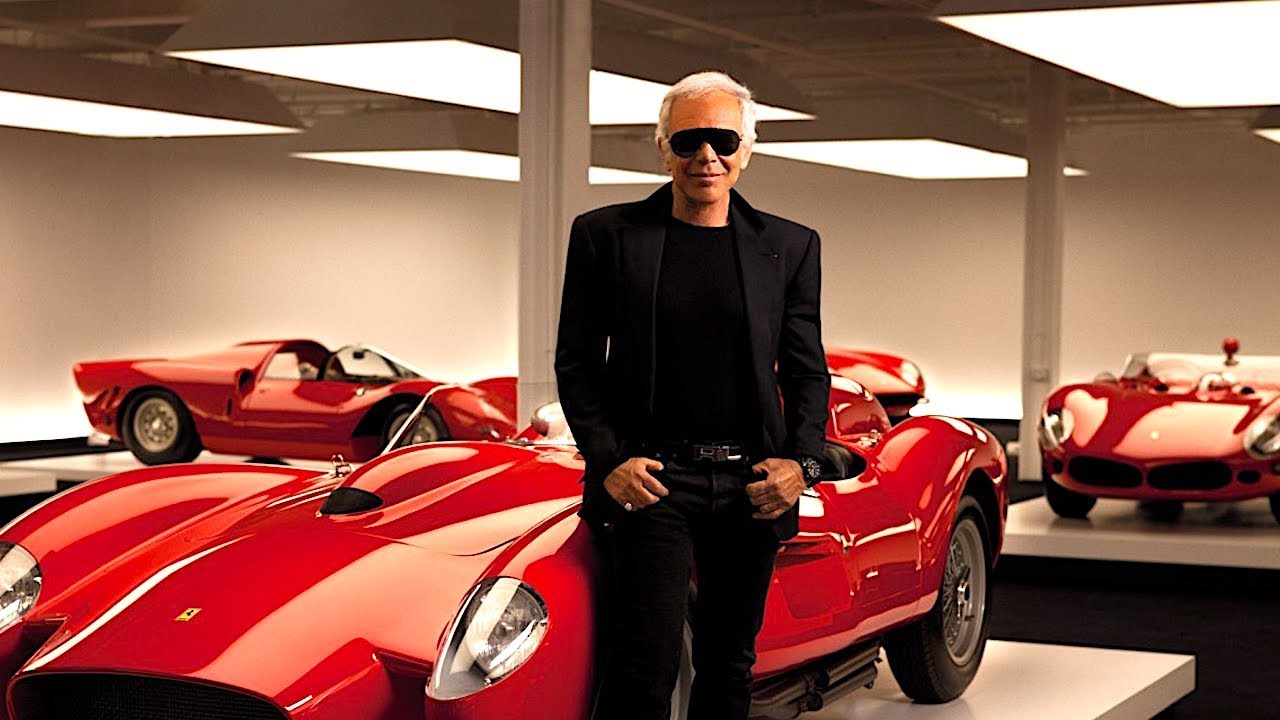
Ralph Lauren’s automotive collection is one of the world’s most celebrated private collections, bringing together prewar Grand Prix cars, legendary Ferraris, important British sports cars, and modern hypercars. Its appeal is not based simply on price.
Lauren has consistently selected automobiles for the way engineering, design, history, and craftsmanship come together.
Ralph Lauren’s own Speed, Style, and Beauty book presented 29 automotive masterpieces selected by Lauren, including the 1930 Mercedes-Benz SSK “Count Trossi,” the 1938 Alfa Romeo 8C 2900, and the 1938 Bugatti Atlantic. The collection has also included much newer machinery, including the McLaren F1.
This ranking focuses on 20 notable cars associated with Lauren’s collection and places them from great to extraordinary. The order considers historical importance, rarity, design, engineering, racing pedigree, and how well each car represents a defining moment in automotive history.
1. 1938 Bugatti Type 57SC Atlantic Coupe
The 1938 Bugatti Type 57SC Atlantic is the car that best captures the character of Ralph Lauren’s collection. Its dramatic dorsal seam, low roof, and riveted bodywork make it one of the most recognizable prewar automobiles ever created.
Lauren’s own automotive material repeatedly identifies his Atlantic as a defining influence on the Automotive Watch collection, while Ralph Lauren’s editorial coverage describes the car as one of the collection’s signature masterpieces.
The Type 57SC combined Jean Bugatti’s striking design with serious engineering. It used a supercharged 3.3-liter straight-eight and a sophisticated chassis, creating a machine that was as technically ambitious as it was visually dramatic.
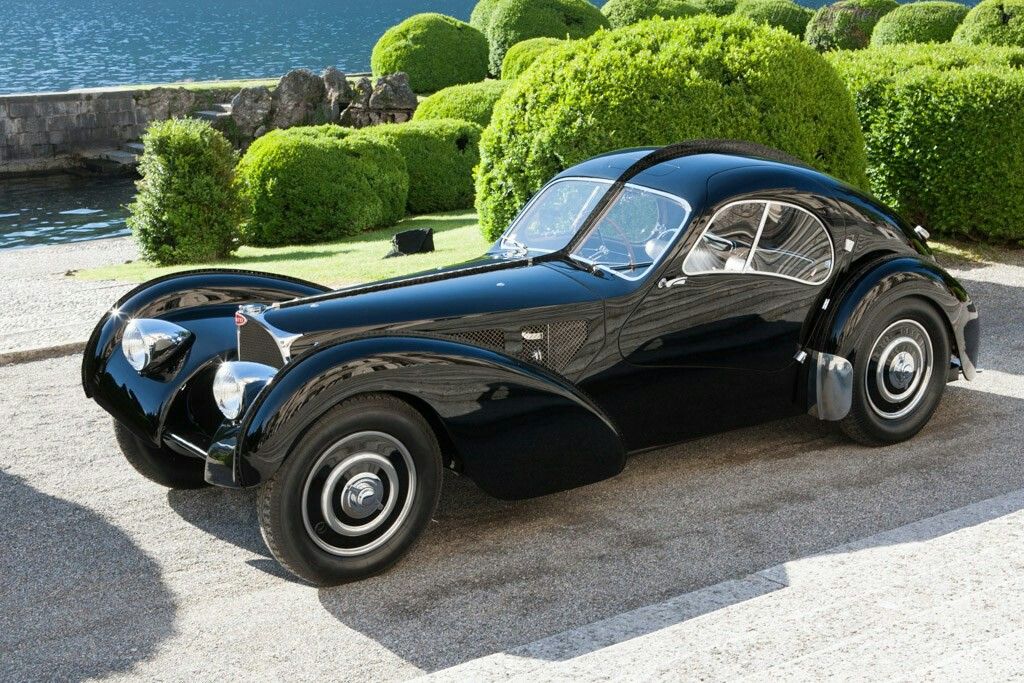
Only four Atlantics were built, giving surviving examples extraordinary rarity. Lauren’s car also won Best of Show at the 1990 Pebble Beach Concours d’Elegance. The Atlantic therefore brings together scarcity, craftsmanship, historical importance, and concours recognition better than almost any other car in the collection.
2. 1962 Ferrari 250 GTO
The Ferrari 250 GTO represents the point where road-going Ferrari design and international competition became almost inseparable. Ralph Lauren’s 1962 example is one of the most important Ferraris associated with the collection, and Lauren has spoken about becoming hooked on Ferrari after driving one.
His own editorial material specifically identifies the 250 GTO and credits Sergio Scaglietti with one of the model’s celebrated designs.
The GTO used Ferrari’s 3.0-liter Colombo V12 and lightweight construction, while its body was shaped around the demands of GT racing. Its limited production and competition pedigree have made it one of the defining collector cars of the twentieth century.
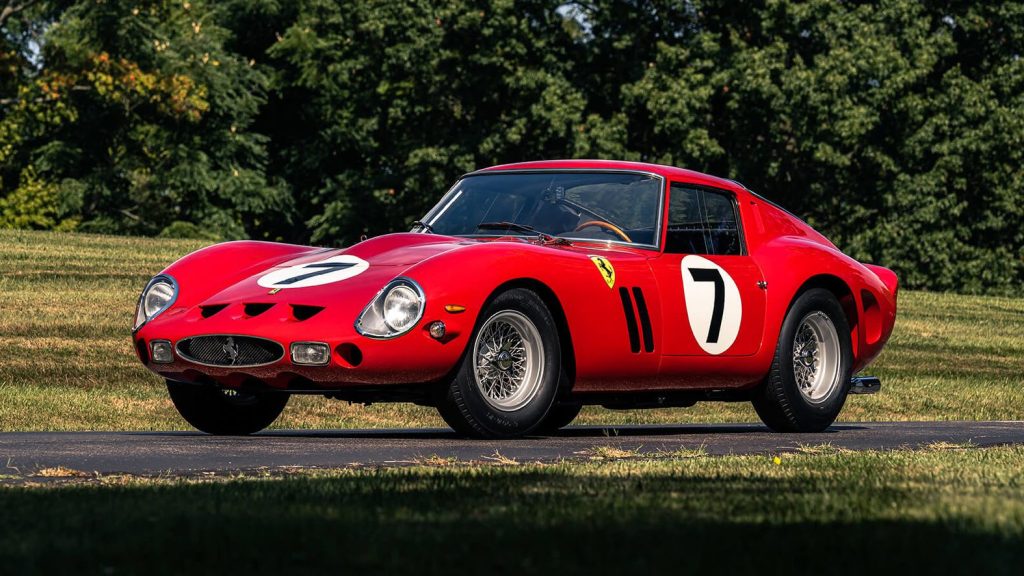
What makes it especially compelling in Lauren’s garage is the balance between beauty and purpose. The GTO looks refined enough for a grand collection, yet its engineering was developed around winning races. It is one of the clearest examples of Ferrari turning motorsport technology into an enduring design icon.
3. 1930 Mercedes-Benz SSK “Count Trossi”
The Mercedes-Benz SSK “Count Trossi” represents the end of prewar performance. Its enormous proportions, long hood, and exposed mechanical components create the unmistakable appearance of a supercharged sports car built before aerodynamics became dominant.
The SSK evolved from Mercedes-Benz’s S-series and used a supercharged 7.1-liter six-cylinder engine. That combination of displacement and forced induction produced extraordinary performance for its era.
Lauren’s particular car is associated with Count Carlo Felice Trossi and its distinctive bodywork. It also won Best of Show at the 1993 Pebble Beach Concours d’Elegance.
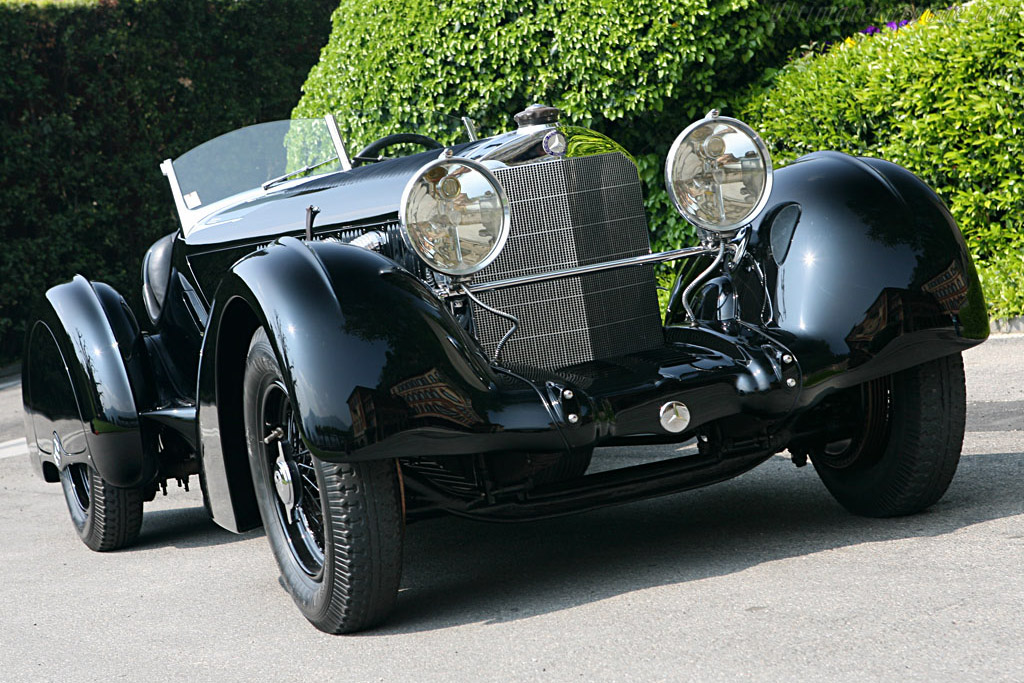
Ralph Lauren’s own Speed, Style, and Beauty material identifies the 1930 Mercedes-Benz SSK “Count Trossi” as one of the collection’s automotive masterpieces. For Ralph Lauren, the car’s significance extends beyond its rarity and reflects its importance within the broader collection.
It represents an era when high performance was visibly mechanical and when a competition-inspired automobile could still be a highly individualized work of coachbuilding.
4. 1933 Bugatti Type 59 Grand Prix
The Bugatti Type 59 is one of the collection’s most important links to prewar Grand Prix racing. Developed during the final stage of Bugatti’s major Grand Prix program, the Type 59 combined the company’s traditional elegance with the increasingly specialized requirements of international competition.
A supercharged 3.3-liter straight-eight provided the power, while the lightweight chassis and narrow body reflected the priorities of racing in the early 1930s. Only a very small number were produced, and surviving examples are among the most significant Bugatti competition cars.
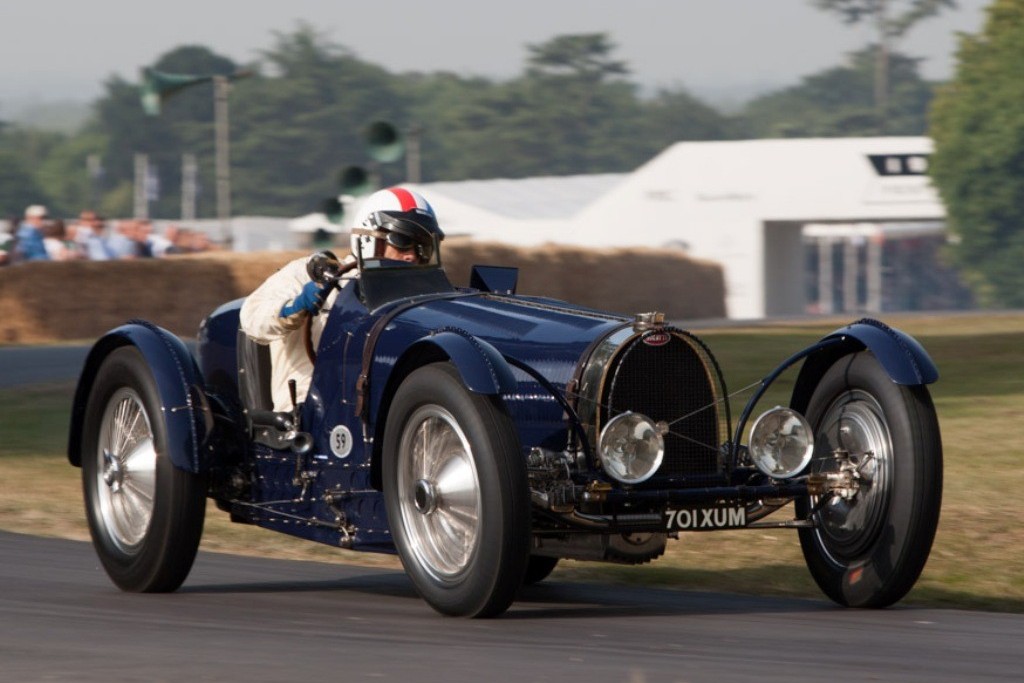
The Type 59 also shows why Lauren’s collection cannot be judged purely by horsepower or auction value. Its importance comes from its place in racing history and from the way its engineering is presented through delicate, almost sculptural bodywork.
Exposed wheels, a narrow cockpit, and carefully shaped mechanical components give it the unmistakable character of a Grand Prix machine. In Lauren’s collection, it forms an important bridge between automotive art and the demanding world of international motorsport.
5. 1938 Alfa Romeo 8C 2900B Mille Miglia
The Alfa Romeo 8C 2900B is one of the most sophisticated European sports cars of the prewar era. Alfa Romeo developed the 8C platform around a twin-supercharged straight-eight, while the 2900B specification brought competition-derived engineering into a more refined sports-car package.
The model was produced in very small numbers and became closely associated with major road races, including the Mille Miglia. Its mechanical specification was impressive, but its bodywork is equally important. Long flowing fenders, a low cabin, and an elegant grille create a shape that remains unmistakably Italian even beside much newer automobiles.
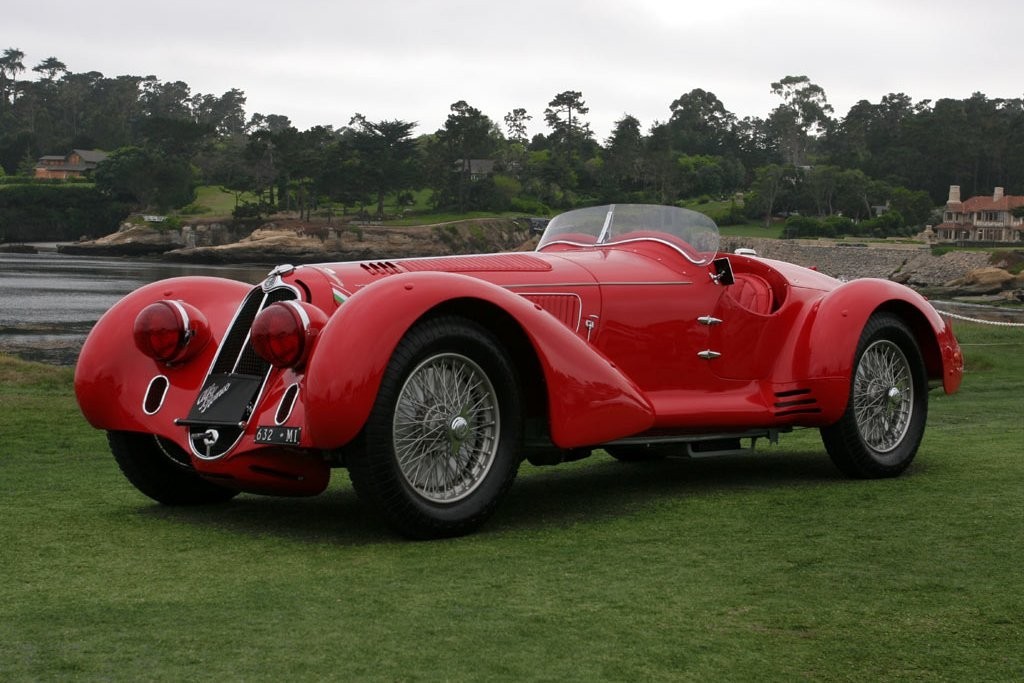
Ralph Lauren’s official description of Speed, Style, and Beauty specifically names the 1938 Alfa Romeo 8C 2900 Mille Miglia among the 29 automotive masterpieces selected for the book. Ralph Lauren makes it a particularly strong representation of Lauren’s collecting philosophy.
The 8C 2900B is not simply a valuable classic. It captures the period when manufacturers were combining advanced racing technology, long-distance performance, and coach-built luxury into a single automobile.
6. 1958 Ferrari 250 Testa Rossa
The Ferrari 250 Testa Rossa is one of the defining competition Ferraris of the 1950s. Its name came from the red-painted valve covers, but its importance is rooted in the engineering and racing success of the car itself.
The Testa Rossa used Ferrari’s 3.0-liter V12 and was developed for sports-car competition. Lightweight construction and an aerodynamic body helped it perform in endurance events, while the famous pontoon-fender design created one of the most recognizable silhouettes in Ferrari history.
Lauren’s example represents Ferrari at a point when racing remained central to the company’s identity. Unlike a later Ferrari designed mainly around luxury or road performance, the Testa Rossa was conceived around competition requirements.
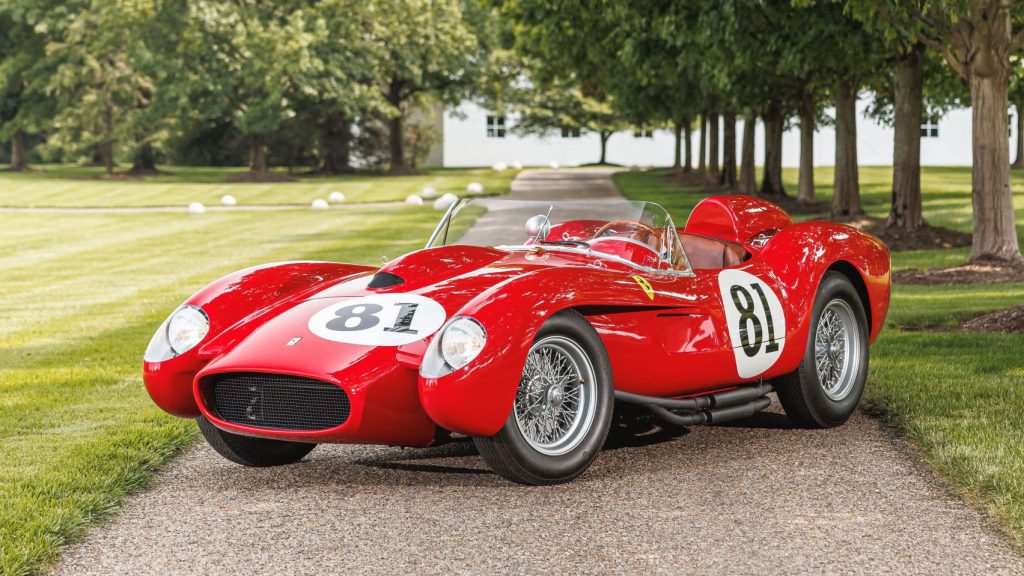
That makes it particularly valuable within this collection because it shows how Ferrari’s road-car heritage grew directly out of motorsport. Its rarity, engineering pedigree, and distinctive shape give it a place near the top, even among a garage filled with famous Ferraris and Bugattis.
7. 1957 Jaguar XKSS
The Jaguar XKSS is essentially a road-going interpretation of the successful D-Type racing car. Jaguar had won the 24 Hours of Le Mans three consecutive times from 1955 through 1957 with the D-Type, then converted selected unsold competition cars for road use. A factory fire in 1957 destroyed unfinished XKSS examples, leaving the model exceptionally rare.
Ralph Lauren’s editorial coverage confirms that his collection includes an XKSS and describes the model as an iconic automobile. The car preserved the D-Type’s lightweight construction and racing character while adding the equipment needed to make it suitable for road use.
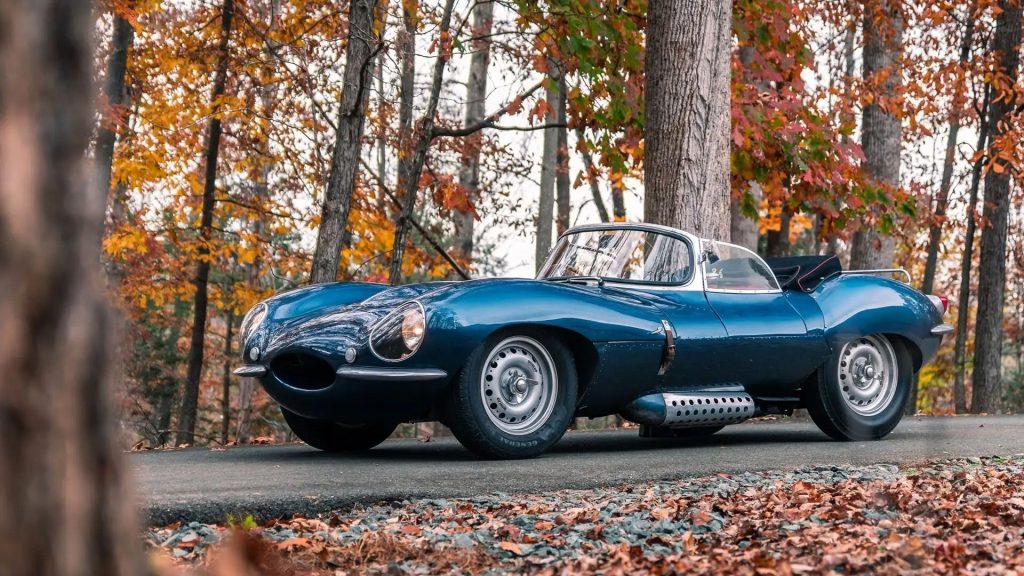
Its importance goes beyond scarcity. The XKSS demonstrates how directly racing technology could influence a road car during the 1950s. The long nose, tail fin, and low cockpit are unmistakably connected to endurance racing, yet the car remains elegant enough for a luxury collection.
Lauren’s example therefore represents both Jaguar’s competition heritage and the period’s fascination with turning race-bred machinery into exclusive road cars.
8. 1955 Porsche 550 Spyder
The Porsche 550 Spyder was a compact competition machine that helped establish the engineering philosophy that would shape Porsche for decades. Rather than relying on enormous displacement, Porsche concentrated on low weight, balanced handling, and efficient packaging.
The 550 used a mid-mounted layout and a lightweight body, with a flat-four engine developed for performance. Its small dimensions allowed it to compete effectively against much larger sports cars, demonstrating how intelligently designed chassis engineering could compensate for limited engine size.
The model also became famous through James Dean, but its real historical significance comes from Porsche’s early racing program. Lauren’s 550 represents the company before the 911 era transformed Porsche into a global sports-car powerhouse.
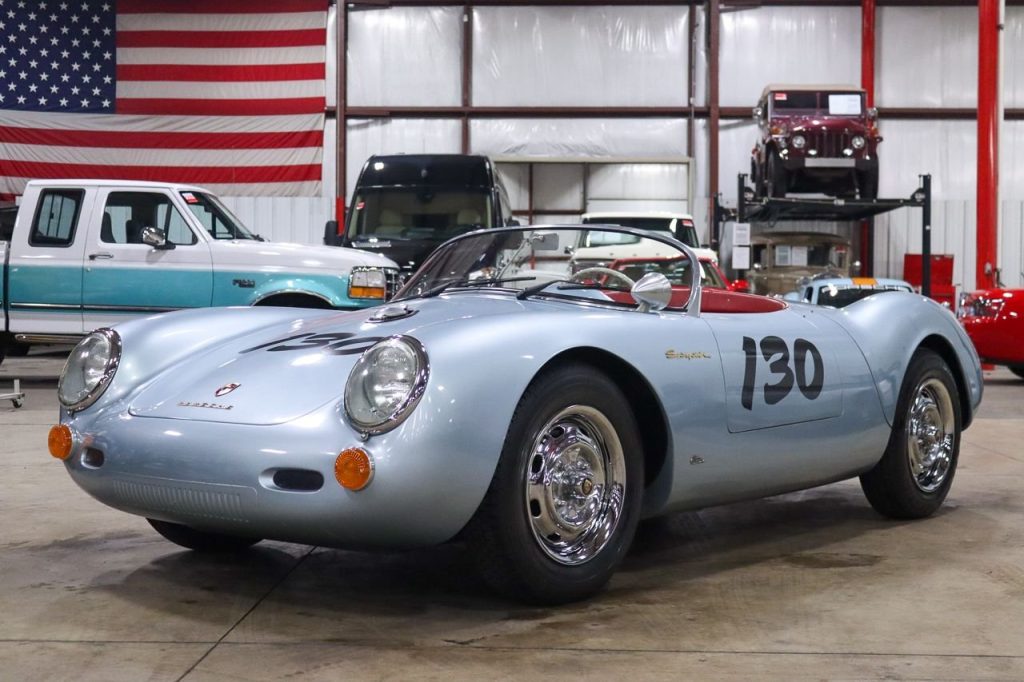
Its importance therefore comes from more than size or power. The car represents the early development of a distinctive Porsche formula built around compact dimensions, low weight, precise engineering, and a strong connection between driver and machine.
9. 1960 Ferrari 250 GT Berlinetta SWB
The Ferrari 250 GT Berlinetta Short Wheelbase is one of the most accomplished road and competition Ferraris of its period. The shortened wheelbase improved agility, while the familiar 3.0-liter V12 provided the performance expected from Ferrari’s 250 family.
The SWB was available in configurations suited to both road use and competition. Its compact body, short overhangs and carefully developed proportions gave it a balance that helped make it one of Ferrari’s most admired designs.
In Lauren’s collection, the SWB occupies an interesting middle ground. It does not have the extreme competition focus of a 250 GTO, yet it carries much of the same engineering philosophy.
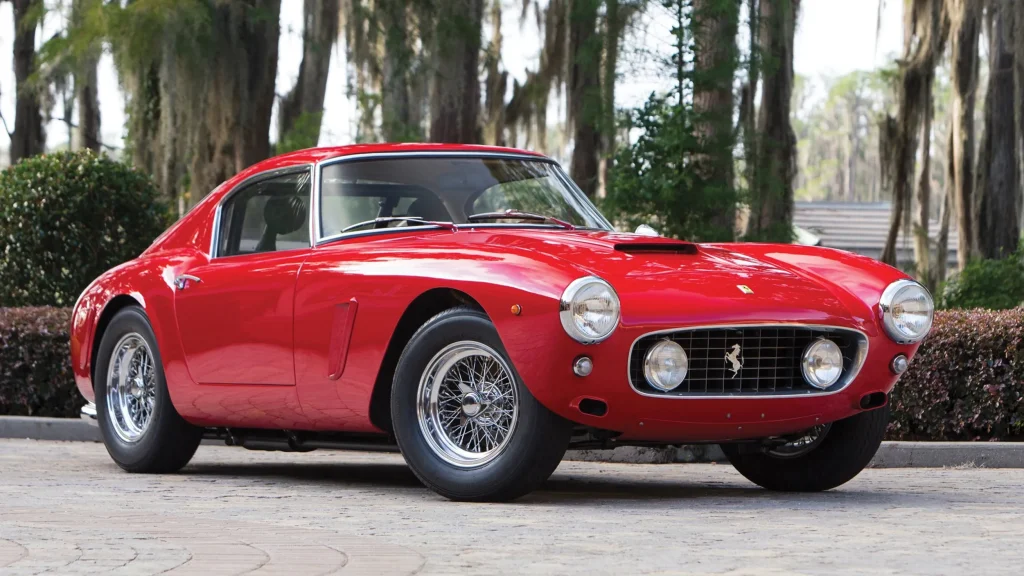
The result is a Ferrari that feels more versatile without sacrificing character. Its design has also aged exceptionally well. The restrained shape avoids the visual excess associated with some later supercars, allowing the mechanical and coachbuilt qualities to remain central to the car’s identity.
10. 1955 Mercedes-Benz 300 SL Gullwing
The 300 SL Gullwing was one of the most technically significant sports cars of the 1950s. Its famous roof-hinged doors were not merely a styling exercise. Mercedes-Benz used a tubular space frame that made conventional side doors difficult, so the unusual opening mechanism became part of the solution.
The 3.0-liter straight-six also used direct fuel injection, an important feature for a production sports car of the period. Ralph Lauren’s own editorial material describes his 1955 300 SL Coupe as the fastest production car of its time, with a top speed of 161 mph. Ralph Lauren
The Gullwing therefore deserves its place for engineering as much as appearance. It translated ideas developed in Mercedes-Benz competition cars into an automobile customers could buy.
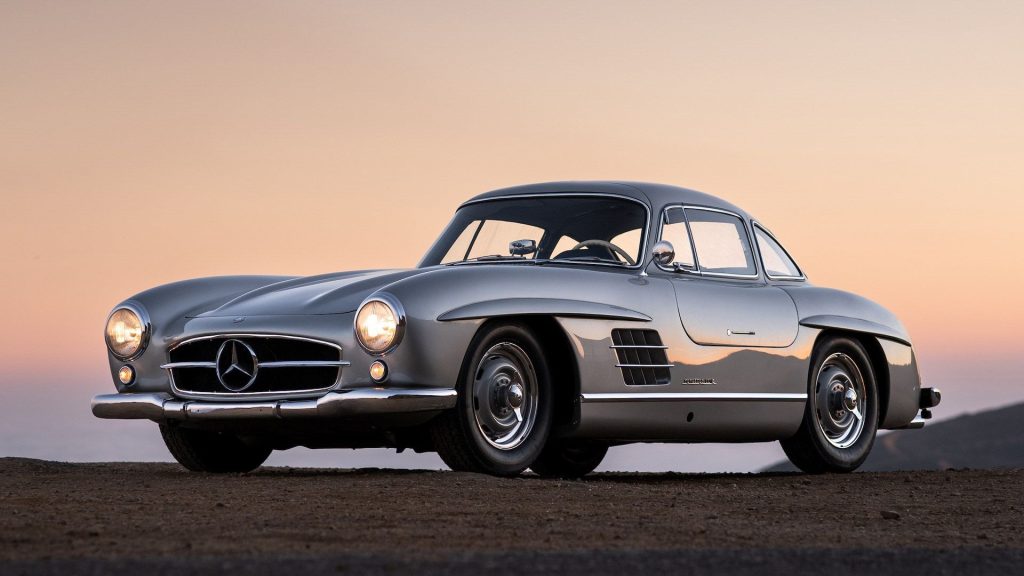
Its dramatic doors made it famous, but the space frame, fuel injection, and performance made it historically important. In Lauren’s collection, it represents the transition from specialized racing engineering to sophisticated postwar road cars.
11. 1965 Aston Martin DB5 Volante
The Aston Martin DB5 is often remembered through James Bond, yet its appeal existed before the movie connection. It evolved from the DB4 and combined a refined straight-six with elegant British grand-touring proportions.
The Volante convertible version adds an open-air character to that formula. Instead of focusing solely on outright speed, the DB5 was designed as a sophisticated performance GT, capable of combining comfort, style and long-distance ability.
Lauren’s collection has included a DB5, and the model fits naturally into a garage built around craftsmanship and timeless proportions. Its long hood, compact cabin and clean rear treatment remain among the most recognizable British sports-car forms of the 1960s.
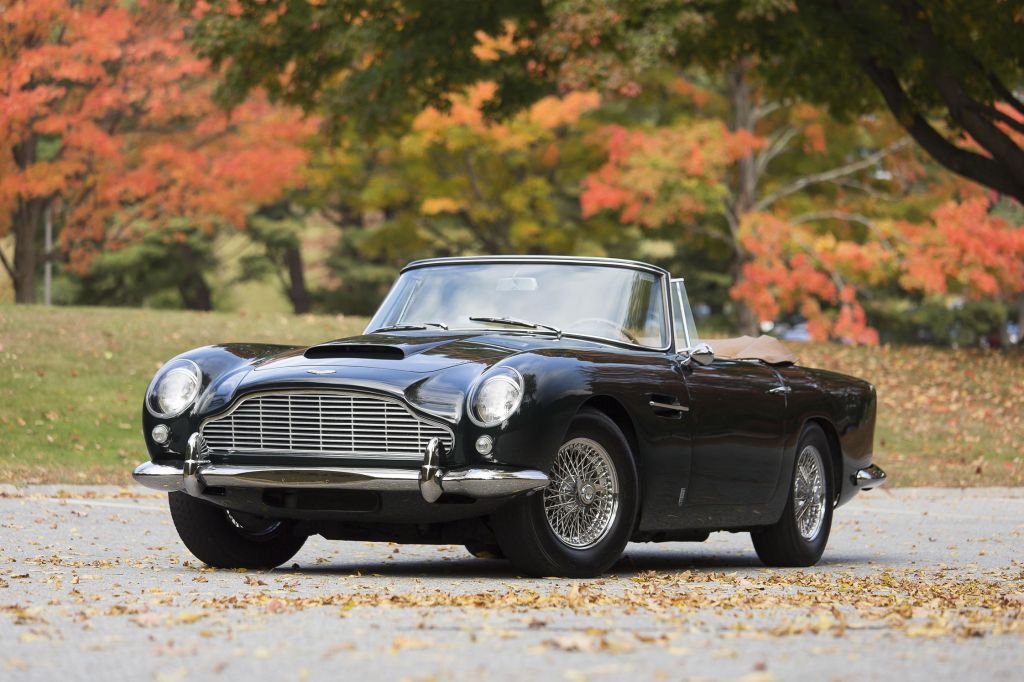
Compared with the collection’s prewar racing machines, the DB5 is more civilized. That difference is precisely what makes it valuable here. It represents an era when a sports car could be both an elegant grand tourer and a serious performance automobile, without requiring the extreme engineering of a dedicated race car.
12. 1967 Ferrari 275 GTB/4 NART Spyder
The Ferrari 275 GTB/4 NART Spyder is among the rarest open Ferraris of the 1960s. Based on the 275 GTB/4, it combined Ferrari’s four-cam V12 with a convertible body developed for the North American market.
Only 10 NART Spyders were produced. Ferrari importer Luigi Chinetti played a major role in creating the model, which gave the car a particularly strong connection with American Ferrari culture.
Its importance within Lauren’s collection comes from the combination of scarcity, mechanical sophistication and design. The NART Spyder is not simply a 275 with its roof removed. It represents a distinct chapter in Ferrari history, when influential customers and importers could help shape highly specialized versions of the company’s cars.
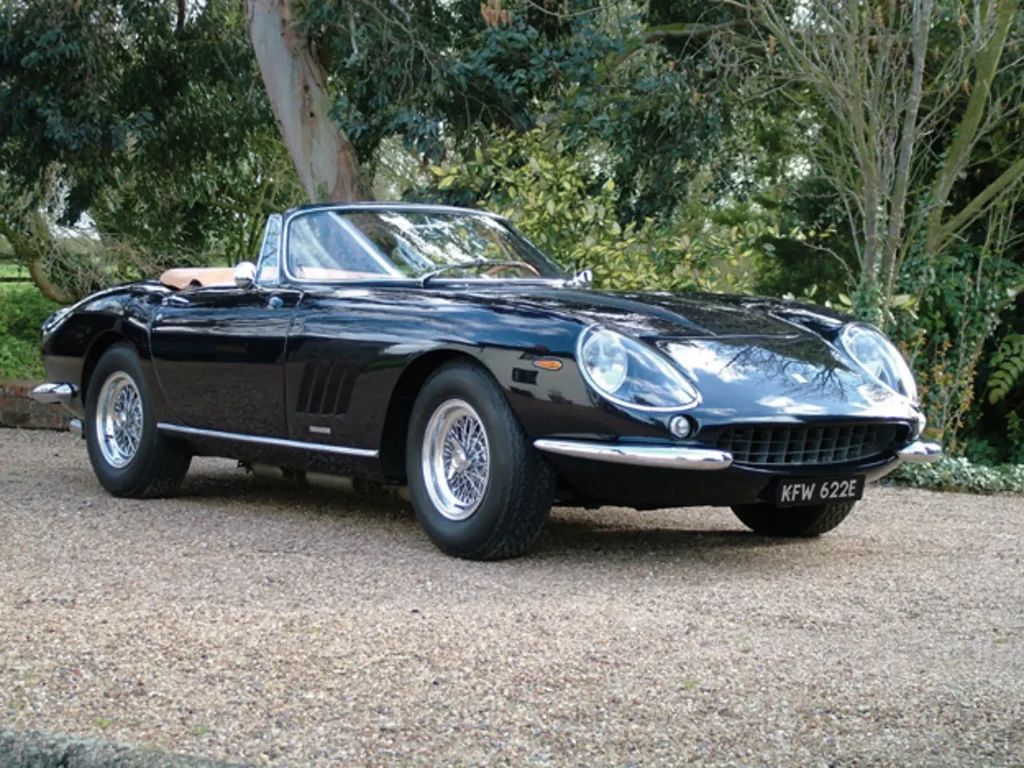
The model also fits Lauren’s preference for automobiles that look beautiful without hiding their engineering purpose. Its long hood, compact cabin and exposed open cockpit create a dramatic profile, while the V12 gives it the mechanical character expected of a major Ferrari.
13. 1937 Bugatti Type 57SC Gangloff Drophead Coupe
The Bugatti Type 57SC Gangloff Drophead Coupe demonstrates the possibilities of bespoke prewar coachbuilding. The Type 57 platform already combined sophisticated engineering with elegant design, while the SC specification added supercharging to its straight-eight engine.
Gangloff was one of the major European coachbuilders of the period, and its bodywork gave the car a distinctive open-top character. In the years before standardized luxury-car styling, wealthy customers could commission automobiles with highly individual bodies, making each major example a combination of engineering and craftsmanship.
That philosophy also fits naturally within Lauren’s collection. The car may not have the same level of recognition as the Atlantic, but it represents a different interpretation of the same underlying Bugatti engineering.
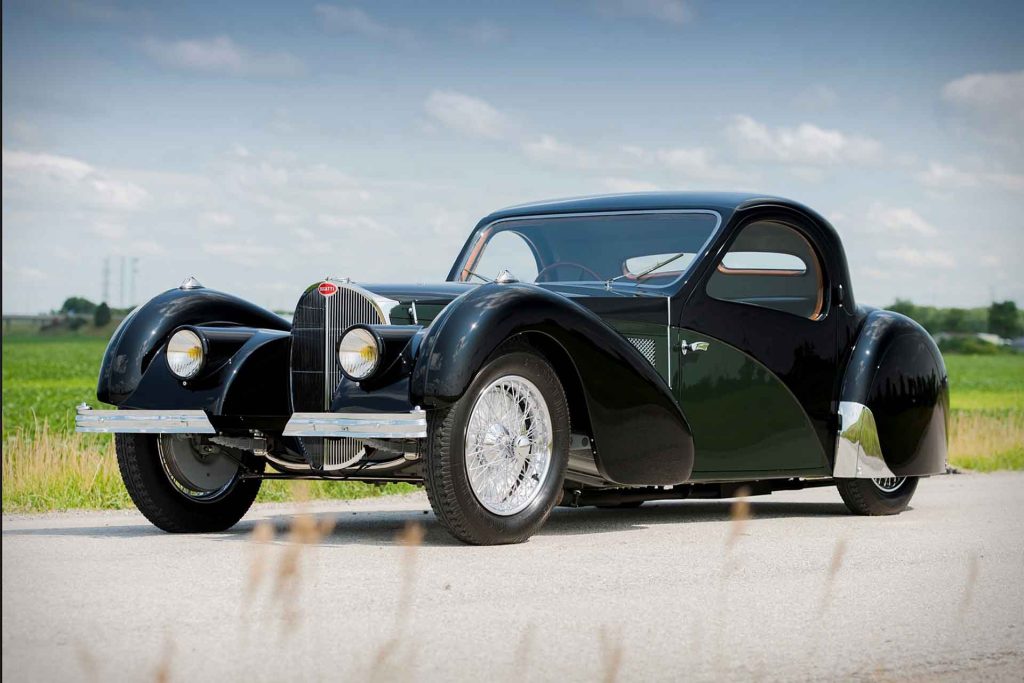
Its importance therefore lies in the combination of supercharged performance and bespoke bodywork. The Drophead Coupe is a reminder that automotive design once existed at the intersection of mechanical engineering, fashion and traditional coachbuilding. Few modern automobiles can offer that same degree of individuality.
14. 1931 Alfa Romeo 8C Monza
The Alfa Romeo 8C Monza represents another major chapter in prewar Grand Prix racing. Developed from Alfa Romeo’s 8C family, the Monza used a supercharged straight-eight and a lightweight chassis to deliver serious competition performance.
Its narrow body, exposed wheels and upright grille give it the unmistakable appearance of an early Grand Prix machine. There is little visual separation between the mechanical components and the body, reinforcing the impression that the car was designed first as a racing tool.
Lauren’s collection benefits from having an automobile like this because it illustrates how much racing engineering changed before and after the 1930s.
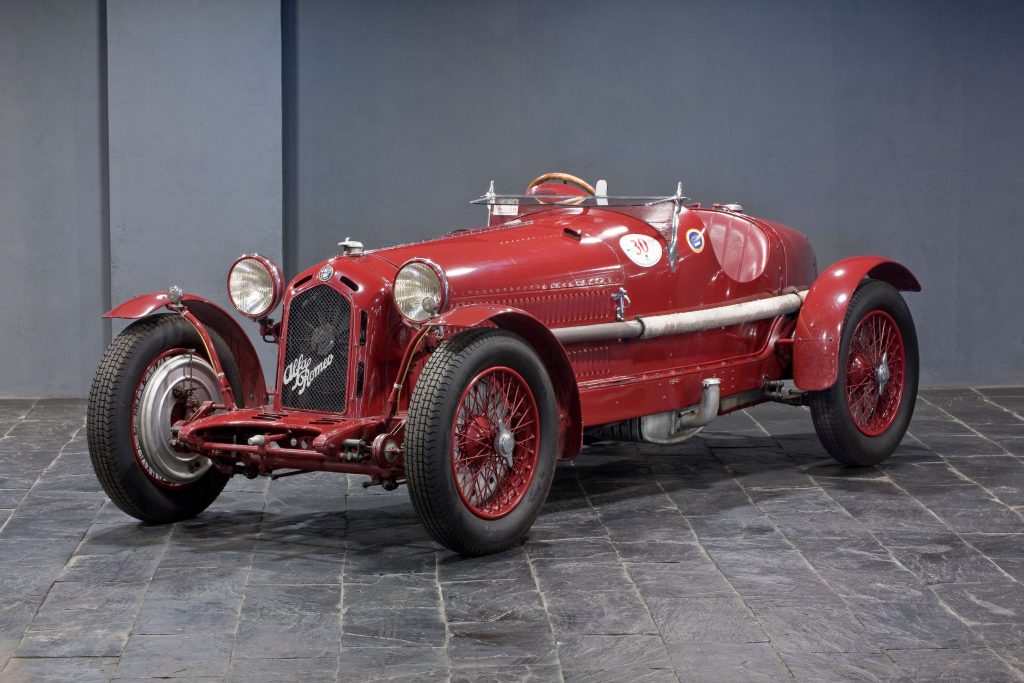
Later cars would become smoother, more aerodynamic and increasingly enclosed, but the 8C Monza shows a period when speed was achieved through mechanical sophistication, lightness and driver skill.
It is also an important example of Italian engineering before Alfa Romeo became associated primarily with road-going sports cars. The Monza connects Lauren’s interest in beautiful coachwork with the much harder demands of Grand Prix competition.
15. 1929 Bentley 4½ Litre “Blower”
The Bentley 4½ Litre “Blower” is one of the most recognizable British performance cars of the interwar period. Its most obvious feature is the supercharger mounted ahead of the radiator, giving the car a mechanical appearance that is almost impossible to mistake.
The Blower was created to increase the performance of Bentley’s large four-cylinder engine for competition. Although Bentley’s naturally aspirated cars achieved greater Le Mans success, the supercharged Blower became a cultural icon because of its aggressive appearance and association with the Bentley racing era.
Its character is very different from the sleek Ferraris and Bugattis elsewhere in Lauren’s collection. The Bentley looks substantial, mechanical and almost industrial. That makes it valuable as a counterpoint.
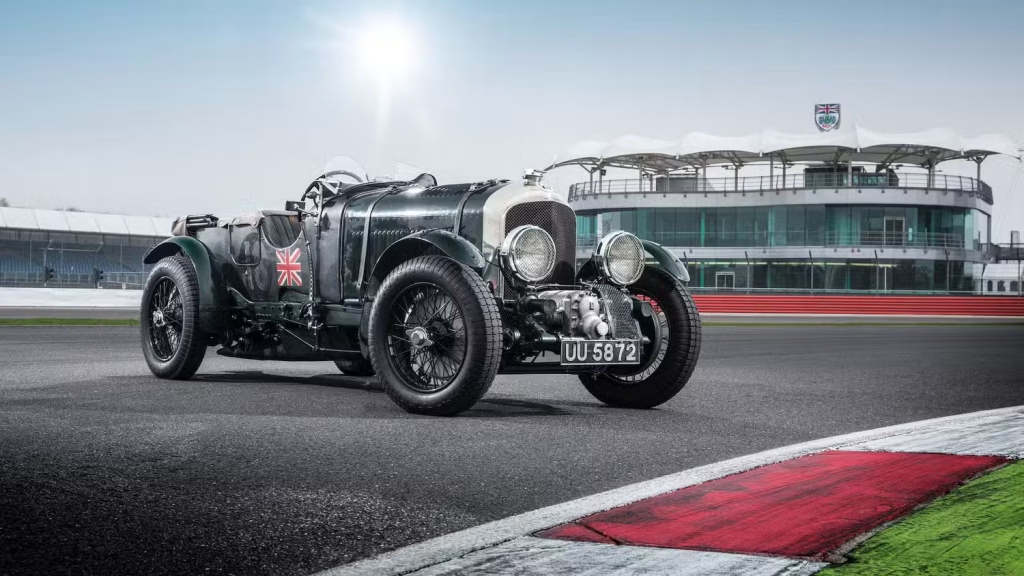
It also represents the period when wealthy private drivers and manufacturer-backed teams could take part in major European races with machines that remained visibly related to road cars. The Blower’s appeal is therefore rooted as much in its historical atmosphere as in its engineering.
16. 1955 Morgan Plus 4
The Morgan Plus 4 brings a very different kind of sports-car character to the collection. Morgan introduced the Plus 4 in 1950 as a larger and more powerful model than the 4/4, and the car became one of the company’s defining long-running products.
Morgan itself describes the Plus 4 as its most popular model for much of its history. Morgan Motor Company
The early Plus 4 used a traditional chassis and relatively compact body, emphasizing driver involvement rather than outright power. By 1955, the model was part of Morgan’s early postwar sports-car formula, with a two-liter engine and a deliberately old-fashioned construction philosophy.
Its place in Lauren’s collection is important because not every memorable car needs to be a racing legend or million-dollar Ferrari. The Morgan represents craftsmanship, simplicity and the pleasure of a lightweight British sports car.
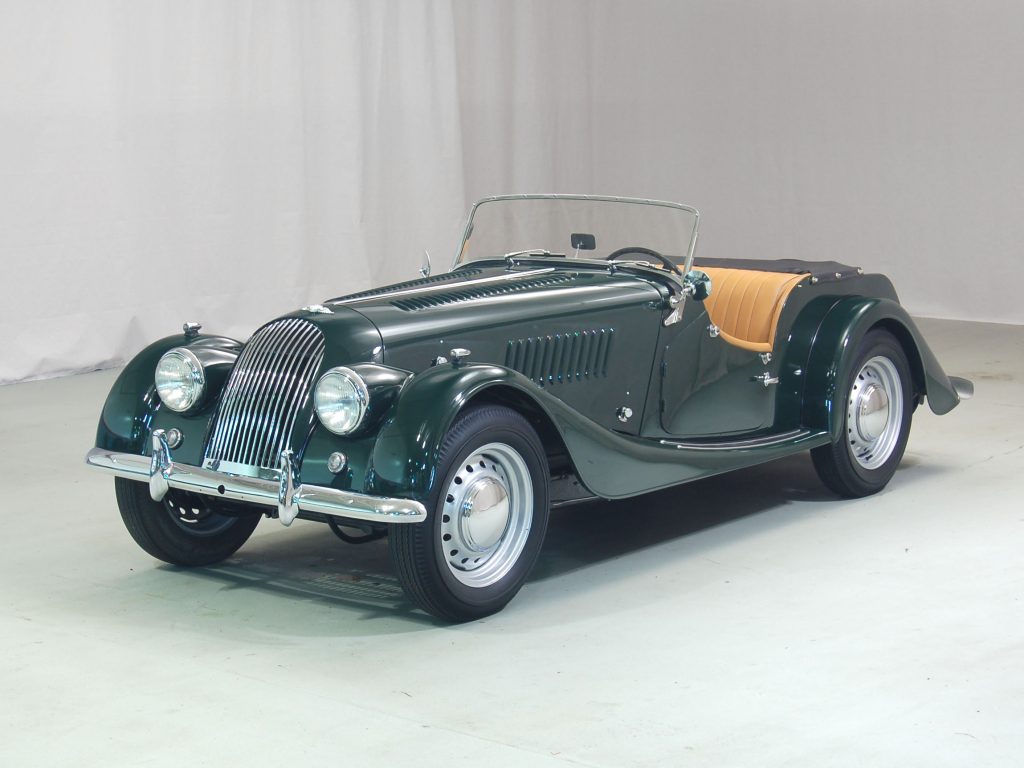
That makes it a useful contrast to the technologically extreme automobiles elsewhere in the garage. The Plus 4 is about tactile driving and traditional construction rather than headline performance, showing that Lauren’s collecting taste also includes character and historical personality.
17. 1996 McLaren F1 LM
The McLaren F1 LM brings Lauren’s collection into the modern supercar era. The LM was created as a more competition-focused interpretation of the F1, drawing inspiration from McLaren’s F1 GTR racing program and its achievements at Le Mans.
The standard F1 already represented a radical approach to road-car engineering, using a carbon-fiber monocoque, central driving position and naturally aspirated BMW V12. The LM pushed the concept further through weight reduction, aerodynamic development and a more focused specification.
Ralph Lauren’s own editorial coverage identifies the 1996 McLaren F1 among the defining cars of his collection, while published collection records identify an F1 LM as one of the cars associated with Lauren. Ralph Lauren
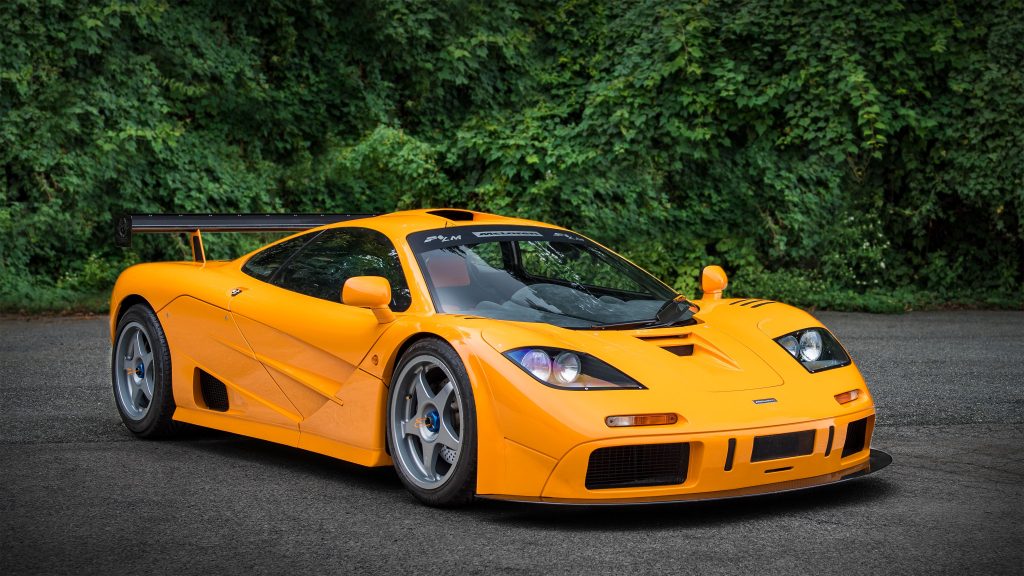
The F1 LM is significant because it bridges the gap between classic racing cars and later-generation hypercars. It incorporates modern materials and advanced technology while retaining a familiar philosophy focused on reducing weight, refining engineering, and creating a direct connection between driver and machine.
18. 2006 Bugatti Veyron
The Bugatti Veyron shows what happens when the pursuit of speed becomes a massive engineering project. The original Veyron used an 8.0-liter quad-turbocharged W16, all-wheel drive and an elaborate cooling system designed to support sustained high-speed operation.
Its ability to exceed 250 mph moved the production-car performance benchmark into territory that had previously belonged largely to specialized racing machines. The Veyron was also important for the Bugatti name because it represented the modern revival of the marque under Volkswagen Group ownership.
Within Lauren’s collection, the Veyron creates a fascinating contrast with the 1930s Bugattis. The Type 57SC and Type 59 depended on mechanical craftsmanship and relatively lightweight construction, while the Veyron relied on immense power, electronics, advanced materials and complex thermal management.
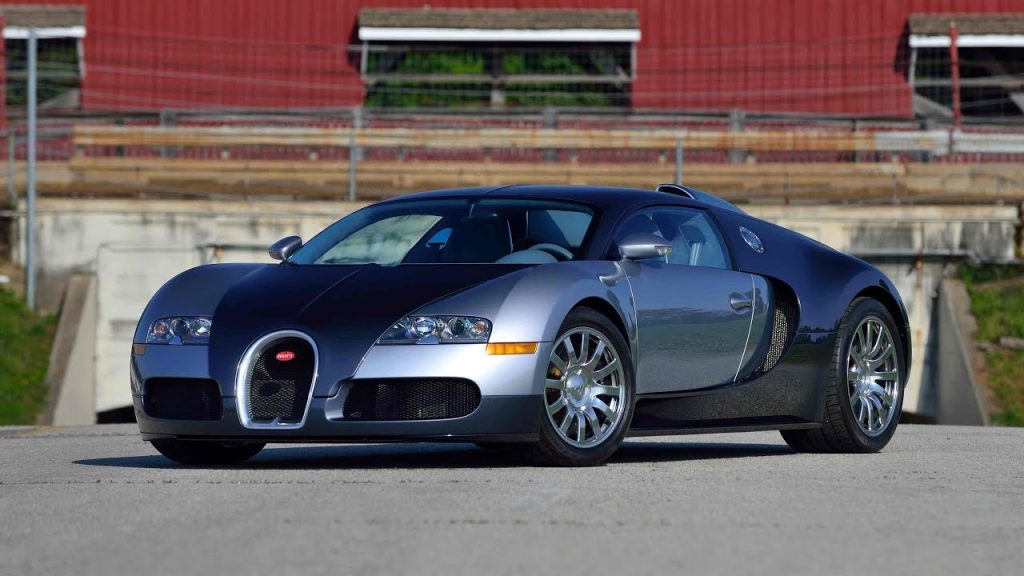
That contrast makes the Veyron historically significant for more than its performance. It shows how dramatically the concept of an ultra-high-performance automobile evolved over seven decades while preserving the fundamental Bugatti ambition of creating something technically exceptional.
19. 2009 Lamborghini Reventón Roadster
The Lamborghini Reventón Roadster represents the collection’s modern design-driven side. Based on the Murciélago LP640 platform, the Reventón adopted sharp, angular surfaces influenced by the visual language of military aircraft.
The Roadster added an open cockpit to Lamborghini’s naturally aspirated V12 formula, while extremely limited production made it far rarer than a conventional Murciélago. The result was less a mainstream model than a highly exclusive design statement.
The Reventón fits naturally into Lauren’s collection because it shows that his appreciation for automotive design extends well beyond prewar coachbuilt cars. Modern materials, computer-aided design, and aerospace-inspired styling created a very different visual language, but the goal remained familiar: create an automobile that is impossible to forget.
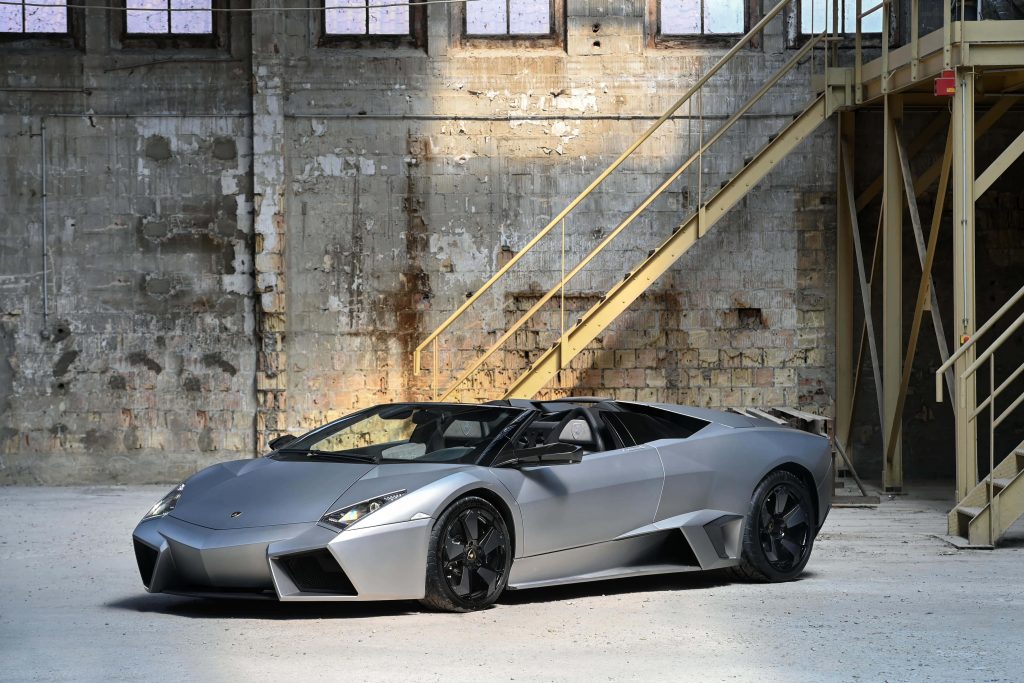
Compared with the soft curves of a Bugatti Atlantic or Ferrari Testa Rossa, the Lamborghini is intentionally aggressive. Its surfaces are sharp, its proportions are dramatic and its design is unmistakably contemporary.
It therefore provides a useful example of how the idea of automotive sculpture evolved into the twenty-first century.
20. 1976 Jeep CJ-5
The Jeep CJ-5 is the most unconventional entry on this list, but it adds an important personal dimension to Lauren’s collection.
Ralph Lauren’s own editorial coverage has described a Jeep CJ-5 connected with Ralph and Ricky Lauren and their life around Montauk, showing that some vehicles in the broader collection have significance beyond rarity or competition history.
The CJ-5 grew from the military Jeep lineage and became one of the defining civilian off-road vehicles of the postwar era. Its four-wheel-drive layout, compact dimensions and rugged construction made it useful in places where a Ferrari or Bugatti would be completely impractical.

That is exactly why it works as the final entry. The CJ-5 is not here because it can compete with the Atlantic, GTO or McLaren F1 in engineering sophistication. It represents freedom, utility and personal memories.
A great collection does not have to consist exclusively of the most expensive cars. The Jeep demonstrates that an automobile can matter because of how it was used and what it represents to its owner. In a garage filled with extraordinary machines, the humble CJ-5 adds a sense of adventure and personal history that money alone cannot reproduce.
