
3D printing has moved well beyond concept cars and engineering prototypes. Automakers are now using additive manufacturing to produce selected components that can be installed on production vehicles, while development programs are testing whether printed metal parts can replace conventionally forged or cast components.
The technology is particularly useful when engineers need complicated shapes, low-volume production, or structures that would be difficult to manufacture traditionally.
Some applications are surprisingly ordinary, such as brackets and trim pieces, while others involve highly stressed components such as brake calipers and engine pistons. The examples below show where 3D printing has actually reached automotive hardware, rather than simply appearing in futuristic concept designs.
1. Cadillac CELESTIQ
The Cadillac CELESTIQ provides one of the clearest examples of 3D printing moving into a production vehicle. General Motors says the hand-built electric luxury sedan contains more than 130 parts produced using additive manufacturing.
That makes the technology far more than a prototype-building exercise for this particular Cadillac. It is being used for functional, structural, and decorative components throughout the vehicle.
One of the most notable examples is the steering-wheel center. GM produced the component using metal laser powder bed fusion, a process in which a laser selectively fuses successive layers of metal powder. The result allows designers to create shapes that would be difficult to produce through conventional manufacturing.
GM identifies the CELESTIQ steering-wheel center as its largest 3D-printed production metal part to date. The part also incorporates illuminated elements, demonstrating why additive manufacturing can be useful when designers want complicated geometry and a highly finished appearance in a relatively small component.
The car also contains a 3D-printed metal seatbelt adjustable guide loop. GM describes this as its first 3D-printed metal safety component. Rather than simply reproducing an existing piece, additive manufacturing allowed engineers to consolidate several elements into a single continuous component.
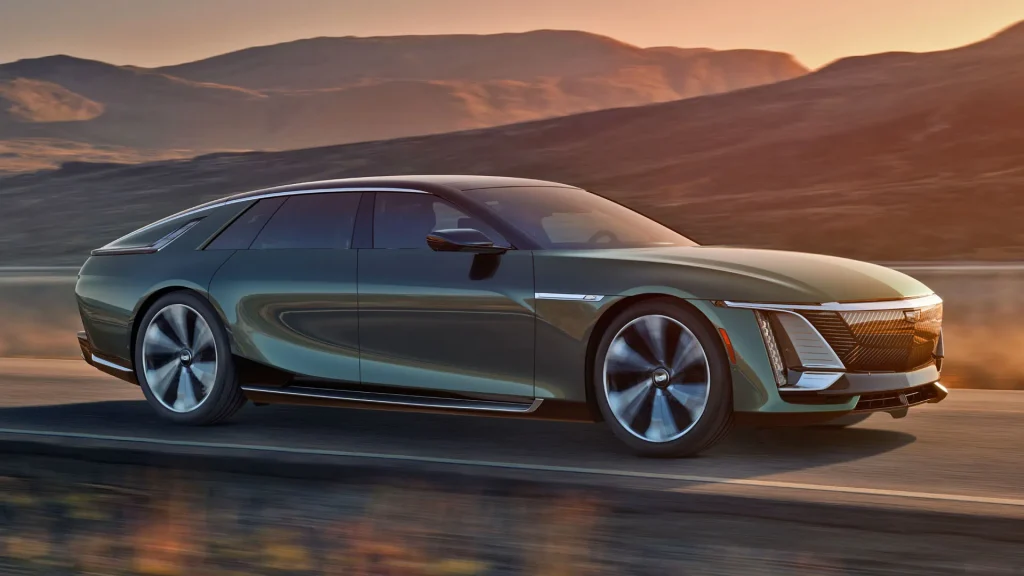
The CELESTIQ highlights one of the major advantages of 3D printing. It can make low-volume production more practical without requiring the large production runs normally needed to justify expensive tooling. Because the vehicle is hand-built and extensively customized, additive manufacturing can be a cost-effective option for components that would otherwise require specialized tooling.
GM’s Additive Industrialization Center in Michigan is central to this work, and the company says many CELESTIQ components are initially developed there before moving into production.
2. Bugatti Chiron
The Bugatti Chiron provides a much more extreme example, but it needs an important qualification. Its famous 3D-printed titanium brake caliper was a development project rather than a standard production component fitted to customer cars.
Bugatti introduced the eight-piston titanium caliper in 2018 as a demonstration of what additive manufacturing could achieve. The company described it as the world’s first brake caliper produced using a 3D printer and said the component was intended for trials and further development toward possible series production.
The numbers explain why engineers were interested. The printed caliper measured about 16.1 inches long, 8.3 inches wide, and 5.4 inches high. It weighed approximately 6.4 pounds, compared with about 10.8 pounds for the aluminum component it was being compared against. Bugatti therefore reported a weight reduction of roughly 40 percent.
The material was Ti6Al4V titanium alloy, which is widely used in aerospace applications. Bugatti reported a tensile strength of approximately 1,250 megapascals for the printed material.
The complex internal geometry was another important part of the experiment. Conventional machining would make such a lightweight structure considerably more difficult and expensive to manufacture.
Printing the component was not quick. Bugatti reported that the caliper required approximately 45 hours to print and consisted of 2,213 individual layers. Four 400-watt lasers were used in the production process.
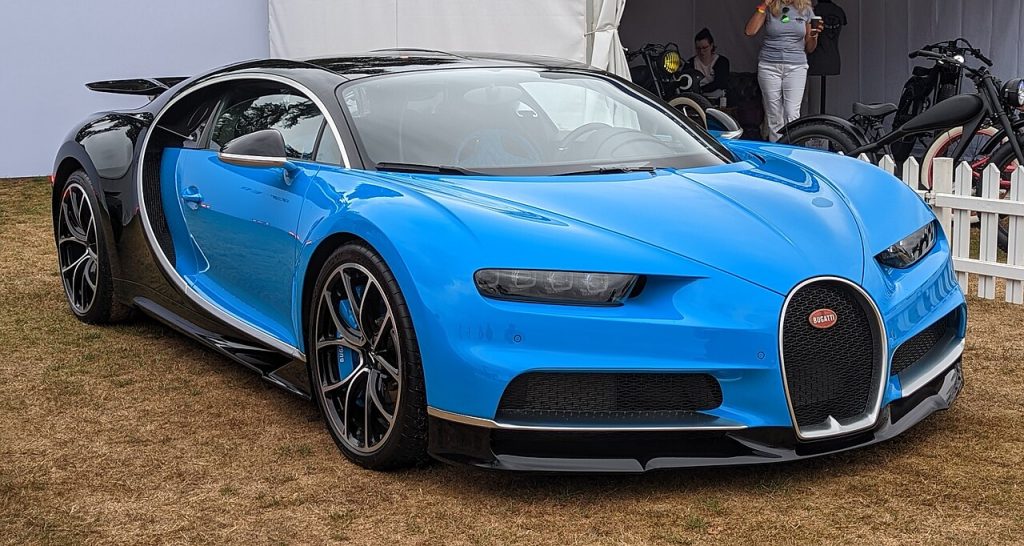
Bugatti later reported further research showing a redesigned 3D-printed titanium caliper could be approximately 43 percent lighter than the already lightweight production component. That work reinforced the potential of additive manufacturing for highly stressed automotive hardware.
The crucial fact remains that the original 2018 caliper was a development project, not a standard Chiron part.
3. BMW i8 Roadster
The BMW i8 Roadster turned 3D printing into a genuine series-production application by using the technology for part of its convertible roof mechanism. This was not simply an experimental component displayed at an auto show. BMW produced several thousand of the aluminum parts for actual production vehicles.
The component connects the soft-top mechanism to the body. BMW engineers used additive manufacturing because it allowed them to create a topology-optimized shape that would have been difficult to manufacture using conventional casting techniques. The resulting geometry was designed to balance rigidity with low weight.
BMW described the aluminum component as a major milestone for its additive-manufacturing program. The company said the i8 Roadster became the first BMW Group vehicle to receive a production run of several thousand metal 3D-printed components.
The geometry is particularly interesting because the printer does not need to follow the same design restrictions as a traditional mold. Engineers can remove material from areas where it contributes little to structural performance while leaving material where strength is required.
The approach also demonstrates why additive manufacturing can make sense even when a component is not enormous or mechanically complicated. A relatively small roof bracket can benefit when its shape is difficult to cast efficiently.
BMW later reported that the i8 Roadster became the location of its one-millionth 3D-printed component in series production, a window guide rail produced using HP Multi Jet Fusion technology. The rail was integrated into the vehicle’s door and was designed to help the window move smoothly.
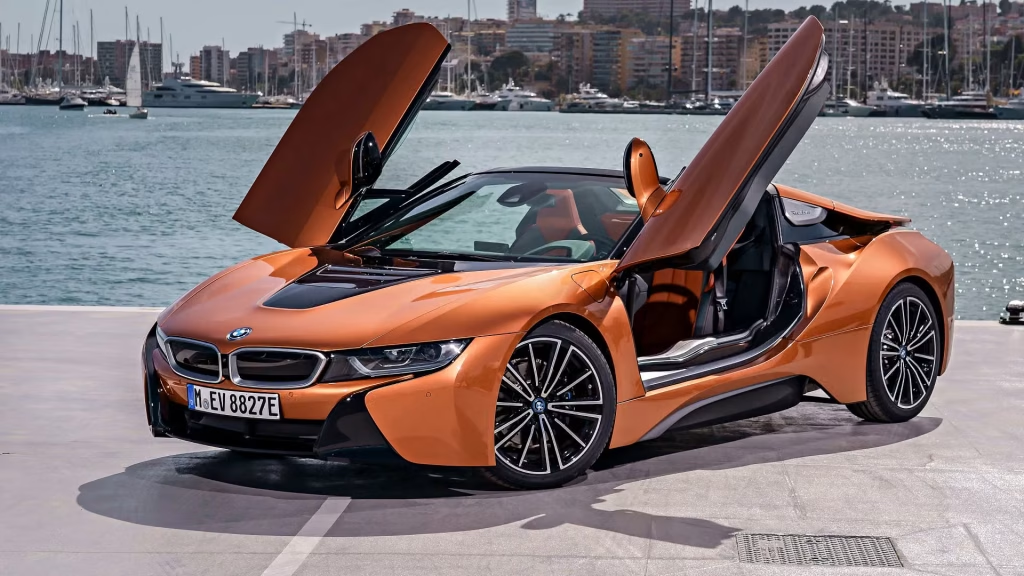
The i8 Roadster provides two documented examples of additive manufacturing being used in series production. BMW used 3D printing for an aluminum soft-top fixture as well as a printed window guide rail. Both applications show how the technology can be valuable for conventional production components when complex geometry or the flexibility of low-volume manufacturing makes traditional methods less practical.
4. Porsche 911 GT2 RS
Porsche pushed 3D printing into one of the most demanding areas of an internal-combustion engine when it produced experimental pistons for the 911 GT2 RS. These were not ordinary replacement parts or standard production equipment.
Porsche described them as an advanced development project designed to investigate how additive manufacturing could improve a highly stressed engine component.
The pistons were produced in cooperation with Mahle and Trumpf using laser metal fusion. Porsche redesigned the internal structure around the loads acting on the piston, something that conventional manufacturing methods could not easily reproduce.
The most significant change was an integrated closed cooling duct inside the piston crown. Porsche said the channel reduced the thermal load and could not be produced using conventional methods. The printed pistons also weighed 10 percent less than the forged series-production pistons.
That weight reduction had consequences beyond simply reducing engine mass. Porsche engineers said the lighter pistons allowed them to consider higher engine speeds, lower thermal loading, and optimized combustion. The company estimated that the development could provide up to 30 additional horsepower from the engine.
Porsche subsequently reported that the pistons successfully completed a 200-hour endurance test on an engine test bench. That was an important step because a printed component intended for an extreme-performance engine cannot be judged only by its weight or appearance. It must survive repeated high-temperature and high-load operation.
The wording surrounding this example matters. Porsche did not announce that every 911 GT2 RS received these printed pistons. The company presented them as part of an advanced development project. The claimed 30-horsepower gain was therefore a development result, not an advertised production specification for customer cars.

It remains an important demonstration of how additive manufacturing can change the internal shape of an engine component.
5. Rolls-Royce Phantom
The Rolls-Royce Phantom demonstrates that 3D printing can be useful for relatively simple parts when production quantities and tooling costs make additive manufacturing attractive. BMW Group began incorporating additively manufactured components into Rolls-Royce series production as early as 2012.
BMW reported that more than 10,000 additively manufactured components had been integrated into Phantom series production by 2016. The parts included plastic holders for hazard-warning lights, center-lock buttons, electronic parking-brake components, and sockets.
These may not be glamorous engine components, but they highlight an important strength of 3D printing. A part does not have to be highly specialized or exotic to benefit from additive manufacturing.
The technology was particularly useful for components with complicated shapes or relatively low production requirements. Traditional manufacturing can require dedicated tooling even when only a modest number of parts are needed.
Additive manufacturing can reduce that requirement because the digital design can be sent directly to a printer.
BMW also reported that 3D printing was used for mounting brackets for fiber-optic cables on the Rolls-Royce Dawn. Several thousand of those clips were expected to be installed during the model’s production life.
The Phantom application is significant because it demonstrates that the technology was not limited to experimental vehicles. BMW Group explicitly described the parts as series-production components.
The company has continued increasing its use of additive manufacturing. In 2026, BMW said more than 1.6 million components had been manufactured at its Additive Manufacturing Campus and used across BMW Group brands, while more than 100,000 additional components were being produced each year at vehicle plants worldwide.
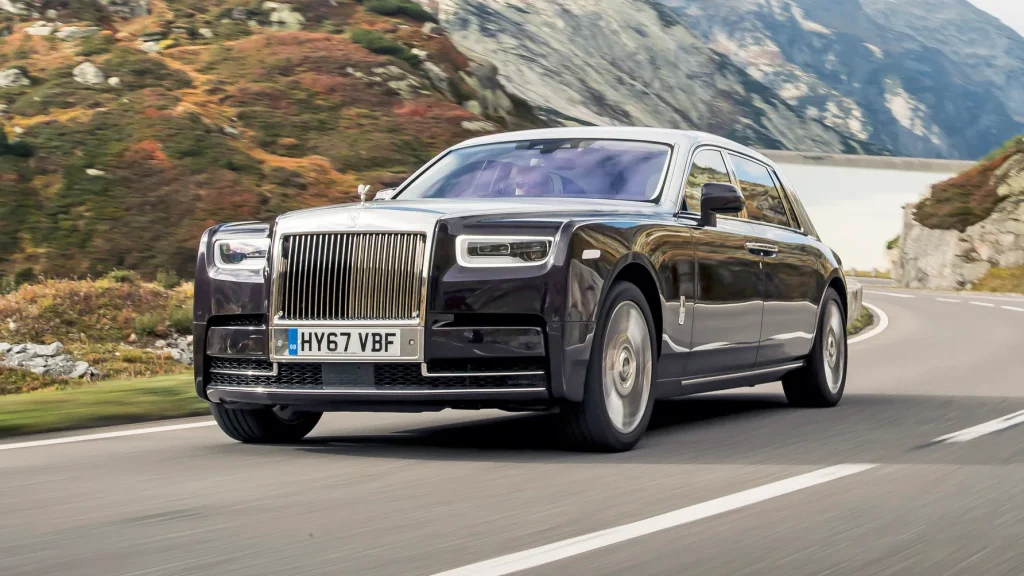
That history places the Phantom among the early production vehicles that helped prove 3D printing could move from an engineering laboratory into everyday automotive manufacturing.
6. MINI John Cooper Works GP
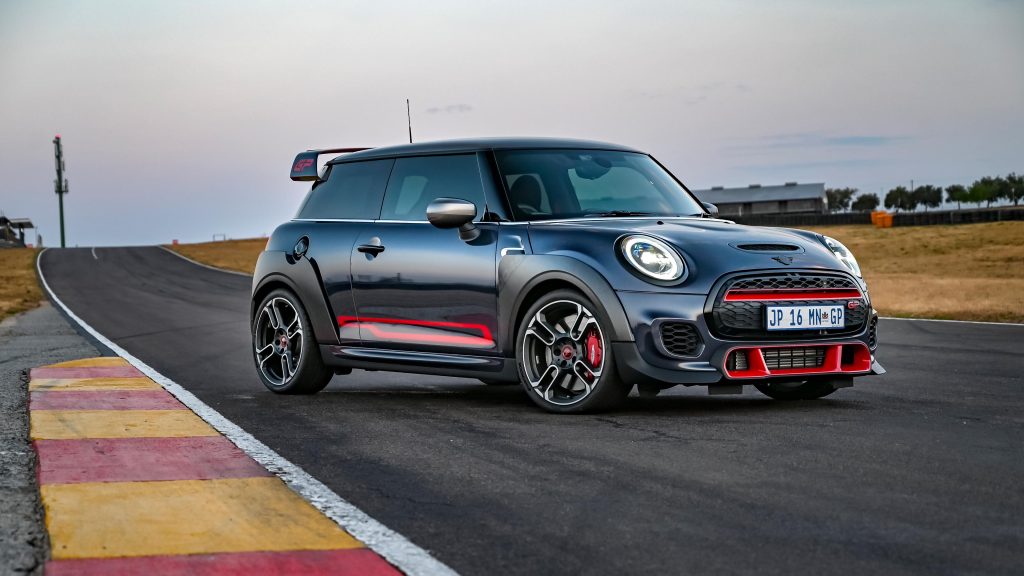
The MINI John Cooper Works GP offers another example of 3D printing being used on a production vehicle, although the application is much less dramatic than an engine piston or brake caliper.
BMW Group has said the 2020 MINI John Cooper Works GP contained four 3D-printed components as standard. The model followed earlier BMW Group applications in which additive manufacturing was used for small-series production and customized vehicle components.
The importance of this example is the scale of production. 3D printing is frequently associated with prototypes because engineers can produce a unique shape without creating expensive tooling. The MINI application showed that the same principle could be extended to components installed on customer vehicles.
BMW’s additive-manufacturing program was already capable of producing both polymer and metal parts by this stage. The company had also developed production methods that allowed components to be manufactured with complex geometry while maintaining the quality requirements expected of series vehicles.
The MINI John Cooper Works GP was a particularly logical candidate for additive manufacturing because it was produced as a limited-performance model rather than a mass-market vehicle.
Lower production volumes can make conventional tooling less attractive, while the ability to manufacture specialized components directly from digital designs can make additive production more flexible.
BMW’s broader program also extended to personalized components. Through its MINI Yours Customized program, customers could order selected parts tailored to their preferences. The program highlighted another benefit of additive manufacturing, since digital production makes it easier to create different designs without requiring a separate conventional mold for each variation.
The company later expanded additive manufacturing into more vehicles and production applications. BMW says its series-production history includes the Rolls-Royce Phantom beginning in 2012, the BMW i8 Roadster in 2017 and the MINI John Cooper Works GP in 2020.
The MINI therefore represents an important middle ground between one-off prototypes and high-volume manufacturing.
7. Cadillac CT5-V Blackwing
The Cadillac CT5-V Blackwing provides another confirmed production application from General Motors, although the 3D-printed part is considerably smaller than the components found in some development programs.
GM says its V-Series Blackwing models were the company’s first production vehicles to use 3D-printed components. One documented example is a unique 3D-printed medallion installed on the manual transmission shifter knob.
That application illustrates why additive manufacturing can be attractive for performance vehicles and low-volume components. A small personalized or highly detailed piece can be produced without relying on the same tooling processes used for high-volume conventional parts.
The technology has continued into newer Blackwing applications. GM’s 2026 Cadillac CT5-V Blackwing F1 Collector Series includes a 3D-printed F1 logo shifter medallion along with other specially finished components.
The vehicle uses a 6.2-liter supercharged V8 producing 685 horsepower and 673 lb-ft of torque, making it one of the most powerful versions of the Blackwing.
The printed medallion itself does not contribute meaningfully to that engine’s performance. Its significance is manufacturing flexibility. Additive manufacturing allows GM to create intricate, low-volume pieces without approaching them in exactly the same way as mass-produced components.

That is an important reality of automotive 3D printing. The technology is not replacing every cast, forged, or injection-molded part in a car. Instead, manufacturers are choosing it where the economics, geometry, customization, or production volume make sense.
GM’s CELESTIQ demonstrates that additive manufacturing can also be used for structural and safety-related components, while the Blackwing shows how the same basic technology can serve a much smaller decorative application.
Together, these examples show that 3D printing is already part of real automotive production, not simply a futuristic manufacturing concept.