
Artificial intelligence has moved from science fiction into everyday driving. Modern vehicles can understand conversational voice commands, recognize where a driver is looking, adjust assistance based on driving behavior, and use machine-learning algorithms to control steering or acceleration.
But the label “AI” is now attached to almost every new automotive technology, so it is important to separate genuine machine-learning or generative-AI applications from ordinary computerized functions.
The examples below are based on technologies automakers specifically identify as AI, machine learning, or AI-based systems. Each shows a different way software is changing what drivers can ask, see, and experience behind the wheel.
1. BMW iX3 – A Voice Assistant That Understands Natural Conversation
The BMW iX3 represents one of the clearest examples of generative AI moving directly into the vehicle’s cabin. For the 2026 model year, BMW expanded its Intelligent Personal Assistant using Amazon’s Alexa+ AI technology, allowing the system to handle more natural conversations instead of relying exclusively on rigid voice commands.
BMW says the system is based on Amazon’s AI Alexa+ architecture and was introduced with the new iX3. The United States is among the first markets for the technology. The assistant can control vehicle functions while also answering general questions, and BMW designed it to understand the context and intention behind what occupants say.
That distinction is important. Traditional voice systems often require drivers to use a specific command structure. A conversational AI assistant can interpret a request in more flexible language and continue a discussion without treating every sentence as an entirely separate interaction.
BMW demonstrated the technology at CES 2026 in Las Vegas before beginning its rollout. The company said the upgraded assistant would initially debut in the iX3 and subsequently expand to additional models equipped with BMW Operating System 9 or Operating System X.
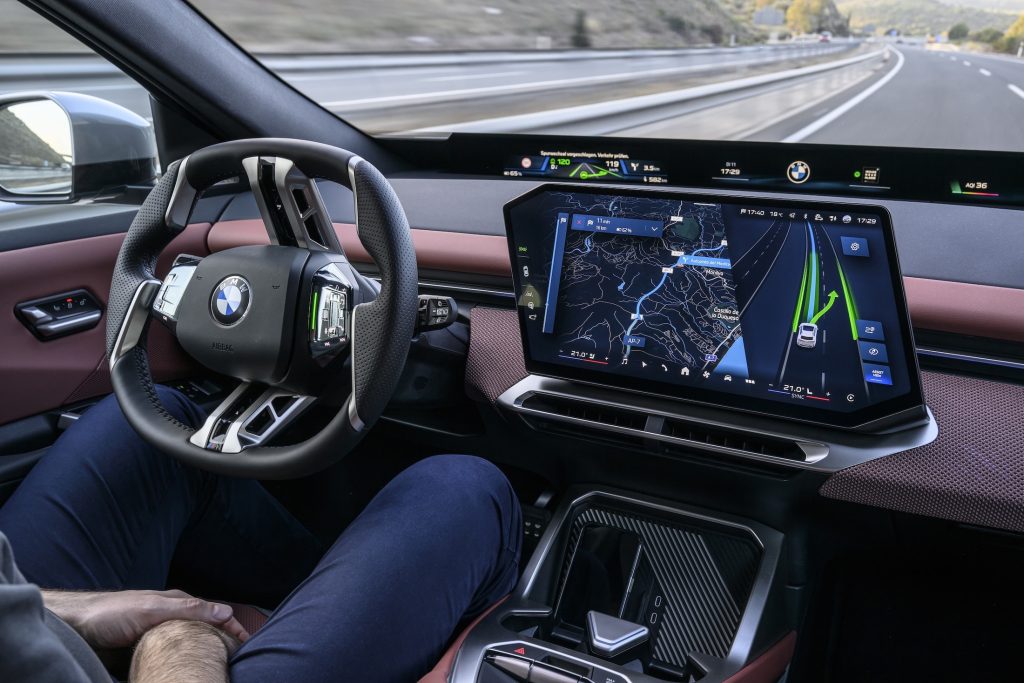
There is another reason the system qualifies as a genuine AI application rather than merely a renamed voice command system. BMW specifically describes the new assistant as AI-based and says its ability to understand context and ongoing conversations comes from the underlying AI technology.
For drivers, the practical difference could be substantial. Instead of memorizing the exact wording required to operate a function, the person can speak more naturally and expect the vehicle to interpret the request.
2. Mercedes-Benz CLA – Gemini Brings AI Into Navigation Questions
Navigation has traditionally followed a simple process. Drivers enter a destination, receive a route, and follow the directions. The latest Mercedes-Benz CLA takes a different approach by using artificial intelligence to make navigation conversations more natural and flexible.
The fourth-generation MBUX system in the new CLA combines technologies from several companies. Mercedes-Benz says the MBUX Virtual Assistant uses ChatGPT-4o and Microsoft Bing for broader information, while Google Gemini provides capabilities specifically related to navigation destinations.
The system can access information from the Google Maps platform when responding to questions about places and destinations.
That means a driver does not necessarily have to treat navigation as a single command. Mercedes gives the example of asking the assistant about activities or places near a particular location. The system is designed to understand follow-up questions within an ongoing conversation.
This is different from simply putting Google Maps on a dashboard screen. Mercedes says its Automotive AI Agent from Google Cloud was developed using Gemini through Vertex AI and was specifically adapted for automotive use.
It can work with Google Maps information to answer questions about navigation destinations, attractions, and other location-related subjects.
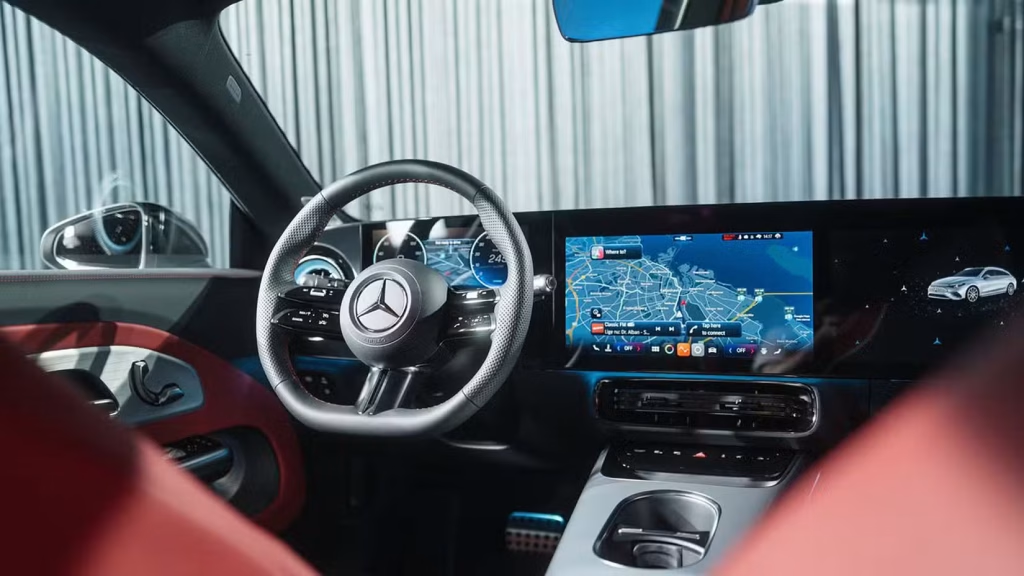
The technology is particularly interesting because the AI does not replace the conventional navigation system. Instead, it adds a conversational layer on top of it.
A driver can therefore interact with the navigation system more like a digital assistant than a traditional route planner. Mercedes also says the MBUX Virtual Assistant has short-term memory, allowing it to continue multi-part conversations.
That is a genuine AI use case because the system is interpreting natural-language requests and using generative AI technology to produce context-aware responses rather than simply matching a fixed list of commands.
3. Volkswagen ID.4 – ChatGPT Expands What the Voice Assistant Can Answer
Volkswagen took a different route to bringing generative AI into its vehicles. Instead of replacing its existing voice assistant, the automaker connected its IDA system to ChatGPT through Cerence’s automotive AI technology.
Volkswagen announced the integration at CES 2024 and subsequently made it available in numerous models. In the United States, the technology is available in selected vehicles equipped with the appropriate generation of infotainment and IDA voice-assistant systems.
Volkswagen has identified models, including the ID family, the Golf, the Tiguan, and the Passat, among vehicles receiving the functionality, subject to equipment and market availability.
The interesting part is what happens when IDA cannot answer a question itself. Volkswagen says the system can forward an unanswered query anonymously to ChatGPT. The resulting response is then delivered through the vehicle’s familiar voice assistant.
This means ChatGPT is not necessarily controlling the vehicle. It serves as an additional source of information when the Volkswagen system needs help answering a question.
Volkswagen also states that ChatGPT does not receive access to vehicle data. The company says questions and answers are deleted immediately after the interaction, while drivers can deactivate the online voice assistant through the vehicle or Volkswagen app’s privacy settings.
That makes the feature different from AI-powered driver assistance. The software is not steering the vehicle or deciding when to brake. Its role is conversational.
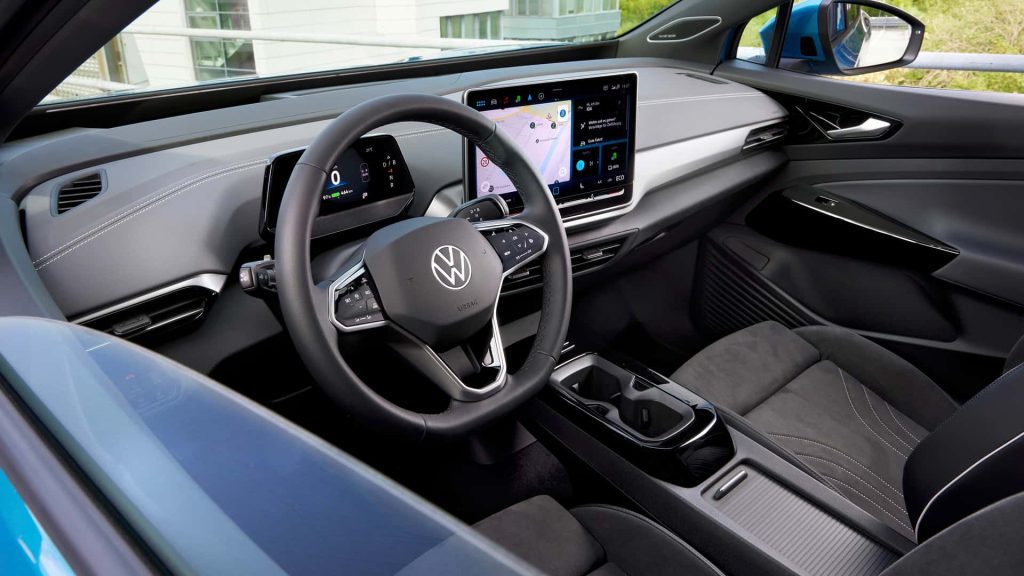
For drivers, the benefit is breadth. A conventional automotive voice assistant may understand vehicle commands such as changing the temperature or finding a destination. By adding ChatGPT through Cerence Chat Pro, Volkswagen can provide answers to a much wider range of general questions without requiring the driver to use a phone.
It is therefore one of the simplest examples of generative AI becoming part of a production-car interface.
4. Subaru Ascent – DriverFocus Uses a Camera to Watch the Driver
Artificial intelligence in a vehicle does not always have to speak to the driver. Sometimes its job is to watch the driver and determine whether attention appears to be moving away from the road.
Subaru’s DriverFocus Distraction Mitigation System is designed for precisely that purpose. On equipped U.S. models such as the 2026 Subaru Ascent, DriverFocus works with Subaru’s EyeSight driver-assistance technology and can alert a driver who becomes distracted or drowsy.
The system uses a near-infrared camera directed toward the driver. Subaru’s technical documentation states that DriverFocus uses the camera to monitor the driver’s eyes and head position. If the system determines that the driver’s attention has moved away from the road, it can provide an alert.
There is another function that makes DriverFocus more than a simple warning light. Subaru says the system can recognize up to five different drivers and remember individual preferences such as seat position, climate settings, and outside-mirror position.
The important qualification is that Subaru describes DriverFocus as a driver-recognition and distraction-mitigation system. It does not mean the vehicle can determine exactly what a person is thinking or guarantee that the driver is attentive.
The technology also has limitations. Clothing, facial coverings, and other conditions can affect the camera’s ability to monitor the driver. Subaru explicitly reminds drivers that they remain responsible for safe and attentive driving.
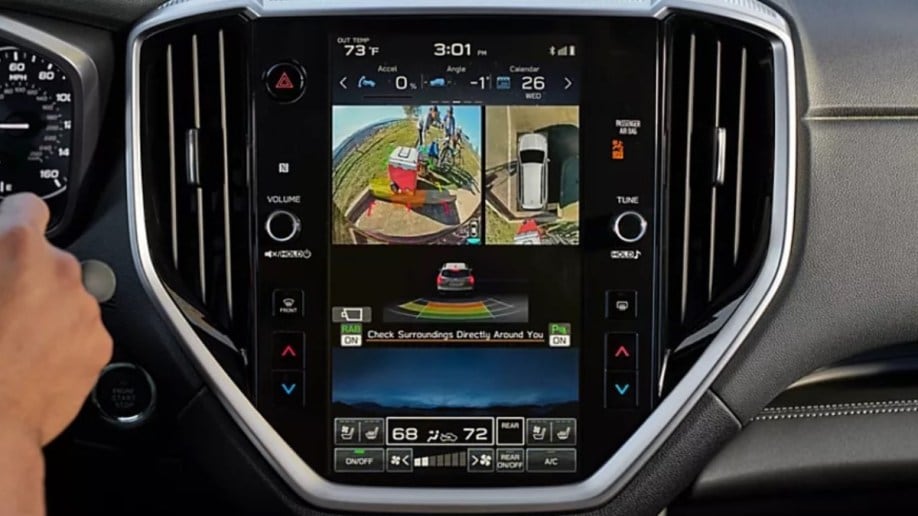
DriverFocus is therefore a useful example of how AI-related vehicle technology can operate quietly in the background. There is no chatbot and no complicated conversation.
Instead, a camera continuously provides information about the driver’s head and eye position, allowing the vehicle to recognize a potential attention problem and respond with a warning.
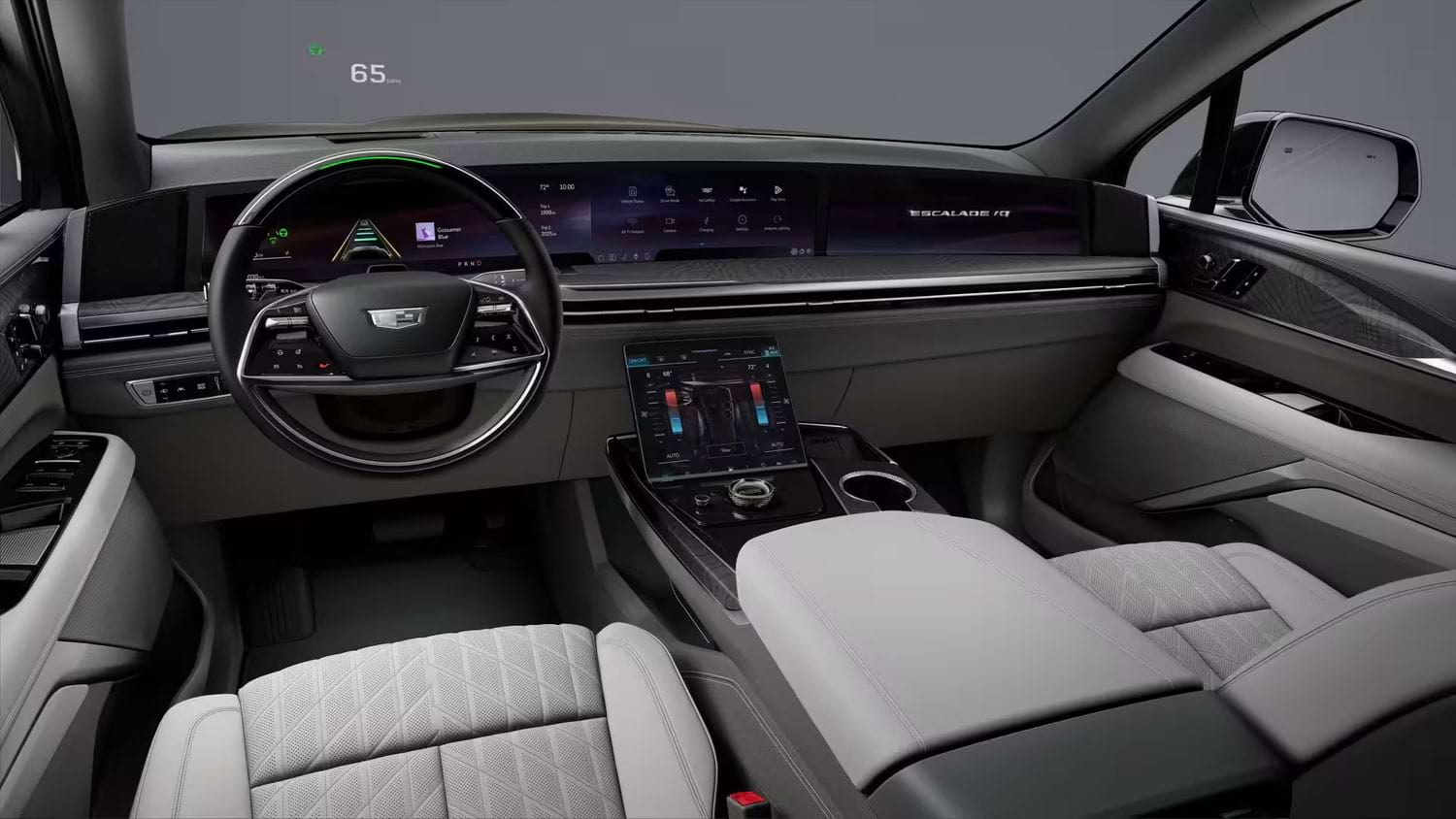
5. Cadillac Escalade IQ – Machine Learning Helps Super Cruise Manage the Drive
Advanced driver assistance is another area where automakers are explicitly using machine learning. General Motors says its Super Cruise system includes a self-learning software architecture that uses machine-learning algorithms to manage vehicle dynamics and controls.
The system is available on numerous GM vehicles in North America, including the Cadillac Escalade IQ. Super Cruise combines cameras, sensors, GPS information, and precision map data to provide hands-free driver assistance on compatible roads under specified conditions.
The machine-learning component is particularly relevant to how the system handles vehicle movement. GM says its Unified Lateral Controller uses machine-learning algorithms and real-time information to manage functions such as lane centering, steering, and lane changes.
That does not make Super Cruise a fully autonomous driving system. GM continues to describe the current technology as driver assistance, and drivers must remain attentive and prepared to take control.
The scale of the system also provides an unusual source of real-world information for development. In April 2026, GM said customers had driven 1 billion hands-free miles with Super Cruise, with nearly 750,000 Super Cruise-enabled vehicles across 23 North American models contributing to that figure. GM said this real-world use was helping its autonomous-driving development.
The distinction between software automation and machine learning matters here. A conventional electronic control system can follow predefined instructions.
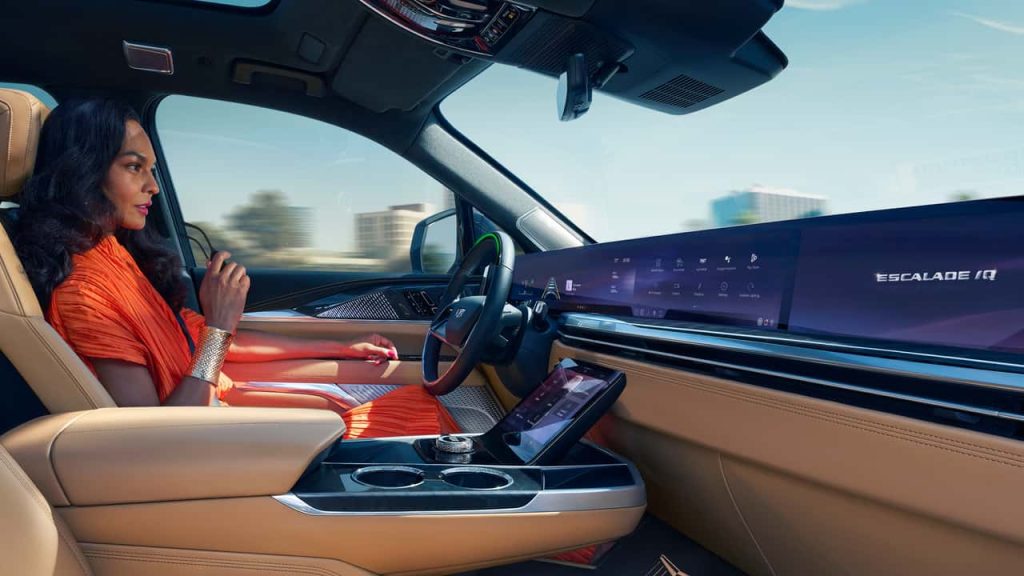
GM says the Unified Lateral Controller uses machine-learning algorithms to update vehicle dynamics and controls, making this a documented AI and machine-learning application rather than simply a marketing label.
For the driver, the experience can seem straightforward. The vehicle can stay within its lane, adjust its speed, and perform certain lane changes. Behind those functions is a far more complex software system that brings together sensors, mapping data, onboard computing, and machine learning.
6. Ford BlueCruise – Machine Learning Is Part of the Road to More Advanced Assistance
Ford’s BlueCruise is another example of AI and machine learning being applied to driver assistance, although the technology should not be confused with a completely autonomous car.
BlueCruise provides hands-free driving assistance on designated roads while requiring the driver to keep attention on the roadway. Ford’s broader automated-driving development involves Latitude AI, a Ford subsidiary focused on machine learning, robotics, software, sensors and systems engineering.
Ford describes machine learning as part of the technology development behind its next-generation driver-assistance work.
That distinction is important because BlueCruise itself consists of several technologies working together. Cameras and other sensors provide information about the surrounding environment, while software interprets the road and vehicle conditions. A driver-monitoring system also helps ensure the person behind the wheel remains engaged.
Ford’s machine-learning work extends beyond simply keeping a vehicle centered. Latitude AI is developing automated-driving technology using machine learning, robotics and sensor systems, with Ford describing that work as part of its path toward increasingly advanced driver assistance.
The reason this belongs on an AI list is therefore not because Ford places an “AI” badge on BlueCruise. It is because the company explicitly identifies machine learning as part of the technology stack being developed for its automated-driving systems.
For the person sitting behind the wheel, the immediate effect remains fairly conventional. BlueCruise can assist with steering and speed control in supported situations, allowing hands-free driving while the driver continues to supervise the vehicle.
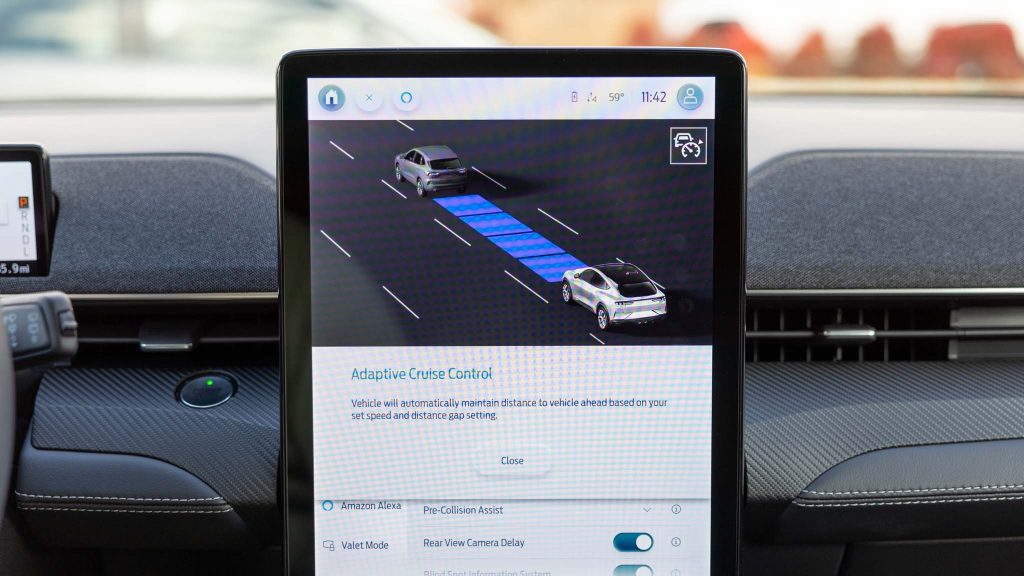
The technology also illustrates why AI in cars is difficult to define with a single feature. A modern driver-assistance system may combine machine learning with conventional control algorithms, cameras, maps, radar and other sensors. Calling the entire system “AI” can hide that complexity.
Ford’s own description of its technology development provides a more precise picture: machine learning is one component of a larger automated-driving architecture.
7. Hyundai IONIQ 6 – Machine Learning Can Adapt Cruise Control to Driving Style
Artificial intelligence can also be used for something much less dramatic than conversational assistants or hands-free driving. Hyundai has introduced machine-learning functionality into its Smart Cruise Control system, allowing the system to account for a driver’s established driving style.
The 2026 Hyundai IONIQ 6 specification lists Smart Cruise Control with a machine-learning function based on driving style. That means the feature is specifically identified by Hyundai as using machine learning rather than simply being described as “smart” because it contains computerized controls.
The idea is relatively straightforward. Traditional adaptive cruise control generally uses predefined control logic to maintain a selected speed and distance from vehicles ahead.
A machine-learning component can use information about how a particular driver typically operates the vehicle to make the assistance feel more closely matched to that driver’s behavior.
This is different from allowing the computer to make completely independent driving decisions. The system remains a driver-assistance feature, and the driver continues to be responsible for operating the vehicle.
Hyundai’s broader software strategy shows where this type of technology is heading. The company has described a “data flywheel” involving data collection, analysis, AI, service improvements and over-the-air updates. Hyundai says information from vehicles can be analyzed to improve software and services.
That makes machine learning increasingly relevant even when the feature itself does not look futuristic.
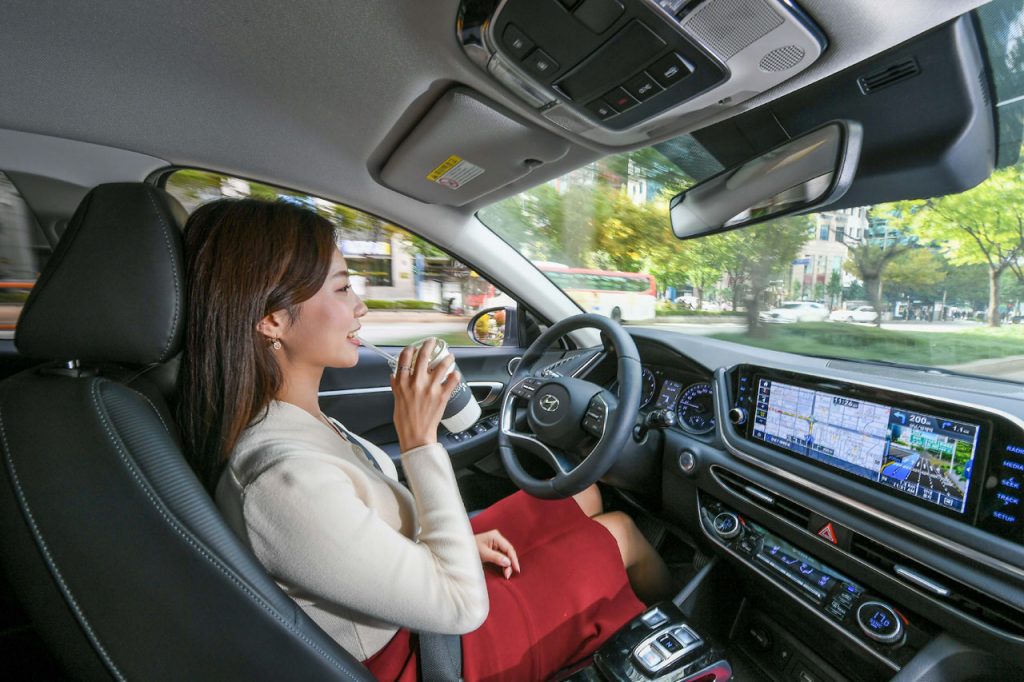
There is no chatbot on the screen and no dramatic autonomous maneuver. Instead, the software attempts to make an established driving-assistance function more personalized.
This is one of the more practical forms of automotive AI because it demonstrates that machine learning is not limited to generative AI. It can also be used to identify patterns in driving behavior and incorporate those patterns into how an assistance system responds.
8. Hyundai Gleo AI – Natural-Language Vehicle Control
Another direction for automotive AI is to make the vehicle itself more conversational. Hyundai Motor Group’s Gleo AI is designed around this idea, using a large language model to interpret natural-language requests and connect them with vehicle functions.
Hyundai describes Gleo AI as an advanced voice assistant built on a large language model. The system is part of the company’s Pleos Connect software platform and is designed to understand conversational requests involving vehicle controls and convenience functions.
The system can interpret context rather than requiring every instruction to follow a fixed command format. Hyundai gives examples such as asking the system to navigate to a place or find a restaurant nearby. It can also process multiple commands within a single request.
Another unusual capability is location-aware control within the cabin. Hyundai says Gleo AI can identify where a speaker is located and use that information for commands such as turning on a particular occupant’s heated seat.
The technology is part of a much larger software-defined vehicle strategy. Hyundai says Pleos Connect began appearing in mass-produced vehicles in 2026, with the company targeting expansion to more than 20 million vehicles by 2030.
Gleo AI is therefore different from an ordinary voice-recognition system. Conventional voice control can recognize specific phrases and map them to predetermined functions. A large-language-model-based assistant can interpret more open-ended requests and use conversational context to determine what the driver means.
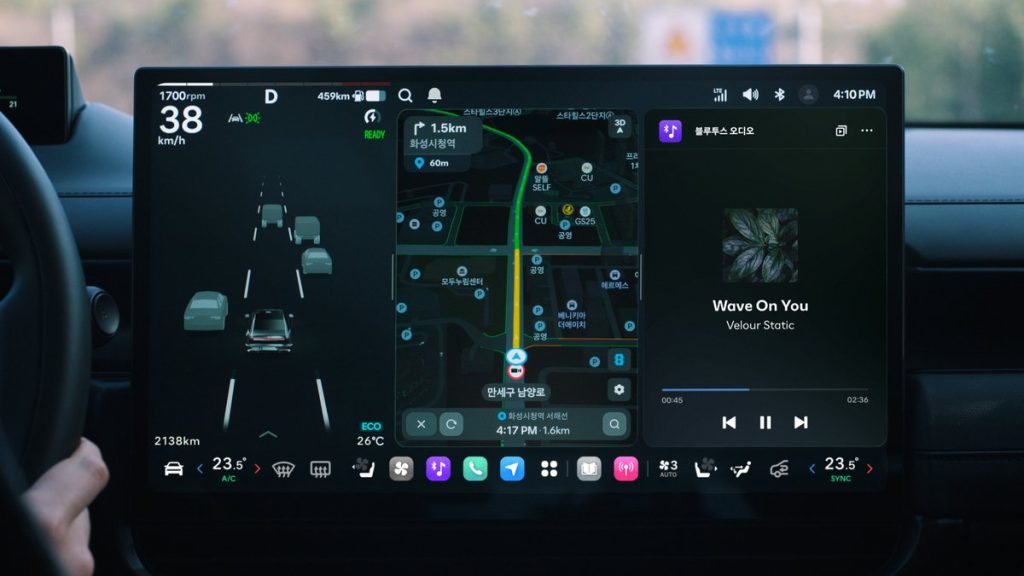
The technology is still not equivalent to an autonomous driver. Its primary role is interaction and vehicle control through language.
That distinction is worth keeping in mind as automakers increasingly use the word “AI.” Some features genuinely rely on machine learning or generative AI, while others are conventional electronic systems with sophisticated software.
The examples above show that today’s automotive AI already covers several distinct categories, from conversational assistants and navigation to driver monitoring, personalized cruise control, and advanced driver assistance.
