
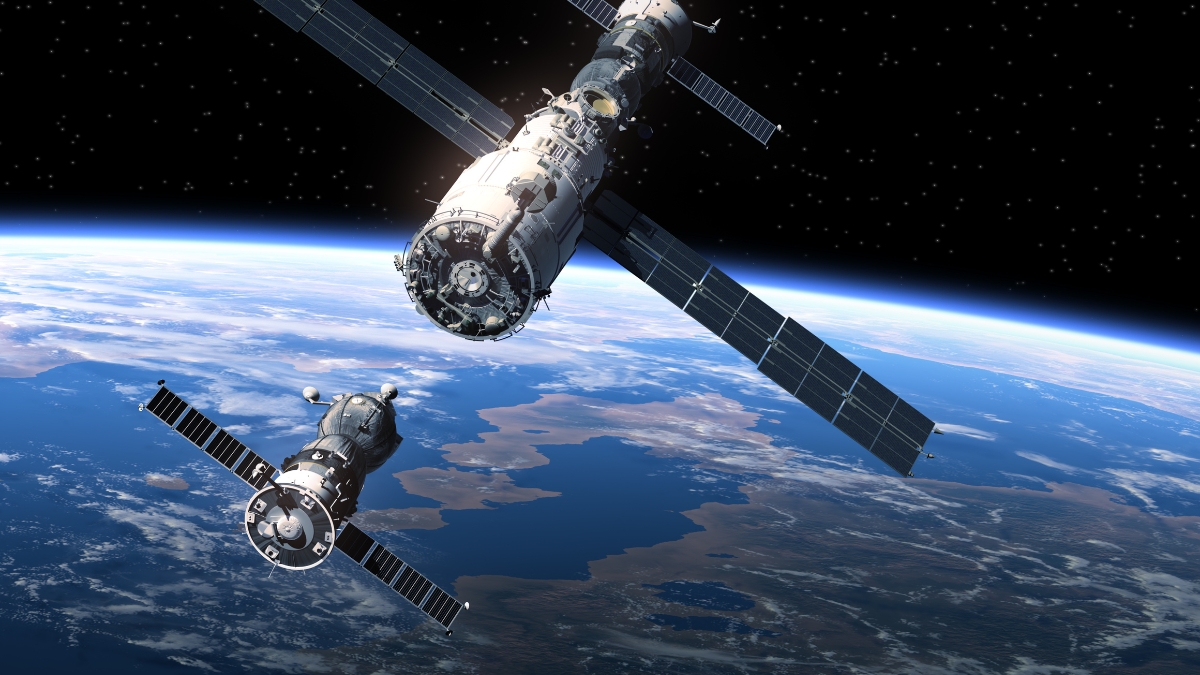
Space exploration has produced more than rockets, satellites, and spacecraft. Some of the research created for extreme conditions beyond Earth has eventually found practical uses on American roads and in motorsports.
NASA’s technology transfer program documents several cases in which aerospace research was adapted by automakers, suppliers, and racing teams. The connection is sometimes direct, such as a pressure sensor originally developed for Space Shuttle tires.
In other cases, NASA research served as a starting point for a commercial product. That distinction matters because NASA did not simply invent every technology listed here. Instead, its research helped develop or advance technologies that later reached transportation.
1. Zero-Gravity-Inspired Seats
A comfortable car seat might seem far removed from space exploration, but its design has a direct connection to research NASA conducted on astronauts. During the Skylab program, NASA studied how the human body naturally positioned itself in microgravity.
Measurements involving 12 people helped establish what NASA called neutral body posture, or NBP, a position intended to support the body while reducing unnecessary muscular loading. NASA later incorporated this research into standards for designing spacecraft work areas and crew systems.
The automotive connection came through Nissan. Beginning in 2005, engineers at the automaker used NASA’s neutral body posture research as a starting point for developing a new vehicle seat.
Rather than simply copying an astronaut’s posture, Nissan used the research as a benchmark for shaping the seat so it could provide continuous support from the pelvis toward the chest.
The development process included testing rather than relying solely on NASA’s original measurements. Nissan’s research found that its experimental seat could reduce physical exhaustion during long-term driving.
NASA’s Spinoff account reports a 50 percent reduction in physical exhaustion during one freeway-driving study compared with a conventional seat.
The result eventually reached production in the United States. Nissan introduced the NASA-derived seat design in the 2013 Altima, with the company planning to extend the approach to additional Nissan and Infiniti vehicles.
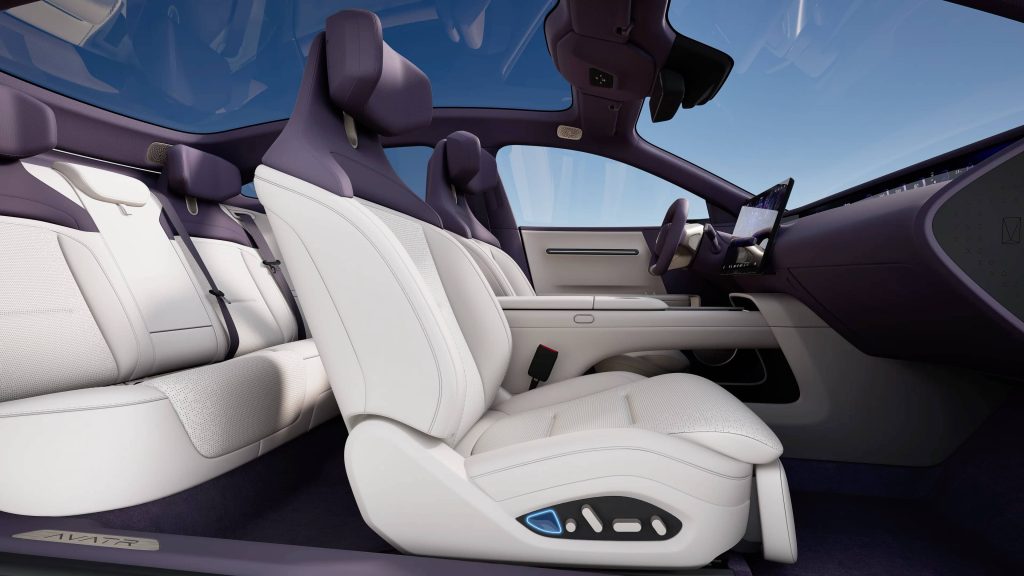
The important point is that NASA did not design the production seat itself. Its research into astronaut posture gave Nissan an engineering reference that helped the company develop a different kind of automotive seating system.
That makes this technology a particularly interesting example of space research influencing something drivers experience every day without realizing where the idea began.
2. Spacecraft Tire Sensors
Few automotive technologies have a more obvious connection to spacecraft than tire-pressure monitoring. Before a Space Shuttle could return to Earth, engineers had to know that its landing tires were properly inflated.
The stakes were unusually high because the Shuttle had four rear tires, with two positioned under each wing. A serious pressure problem could create major difficulties during landing.
NASA eventually worked with NovaSensor, a company specializing in microelectromechanical systems, or MEMS, to develop a more accurate pressure sensor for Shuttle tires. The device used piezoresistive technology. Pressure applied to a silicon chip created a change in electrical resistance, producing a measurable signal.
The sensor was packaged with a small battery and radio-frequency transmission capability so pressure information could be monitored without relying on a simple visual inspection.
The operating environment was considerably more demanding than that of a normal passenger vehicle. NASA’s Spinoff publication notes that typical automobile tires were generally around 35 to 45 pounds per square inch, while the original Shuttle tires required roughly 350 psi. Shuttle tires were also about 4.5 feet in diameter.
After the technology was delivered to NASA, the company adapted the sensor for automotive applications. According to NASA, millions of these sensors were eventually sold, with most going into U.S. passenger vehicles.
The commercial version did not need to withstand precisely the same conditions as a shuttle tire, but the basic pressure-sensing principle transferred effectively.
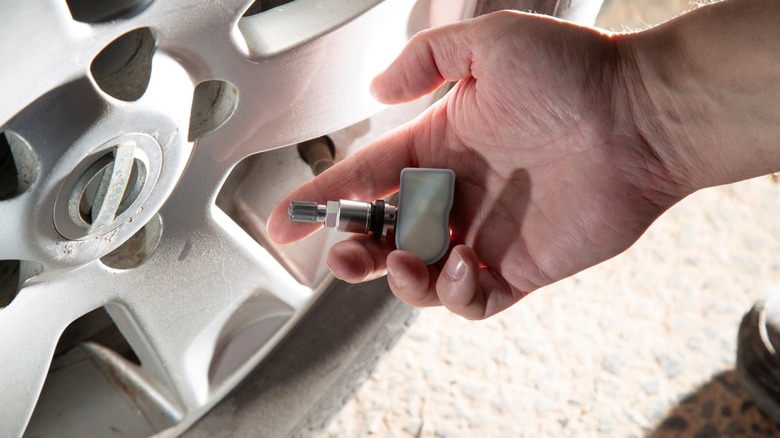
This is why calling NASA the sole inventor of modern tire-pressure monitoring would be misleading. NASA commissioned and supported a specific spacecraft application, while the commercial sensor maker adapted the technology for road vehicles.
The result helped establish a technology that now gives drivers an immediate dashboard warning when tire pressure falls outside the expected range.
3. Safety-Grooved Roads
The next time rain covers an American highway, the pavement beneath the tires may contain a feature that traces back to NASA’s aircraft research. It is not a sensor, computer, or piece of equipment. It is a pattern of narrow grooves cut directly into the pavement.
NASA Langley Research Center began extensive research into pavement grooving during the 1960s while investigating aircraft hydroplaning. When a runway becomes covered with water, a tire can lose contact with the pavement because water pressure builds between the tire and the surface. The aircraft can then skid or require more distance to stop.
NASA researchers found that carefully cut grooves could provide channels for water to escape, helping the tire maintain contact with the pavement.
The concept eventually moved beyond airports. Highway engineers adopted grooving for sections of roads where wet-weather traction was a concern. NASA reported that the technique reduced skidding, shortened stopping distances, and improved vehicle cornering on curves.
One California Division of Highways study cited by NASA found an approximately 85 percent reduction in wet-weather accidents at locations after grooving was installed.
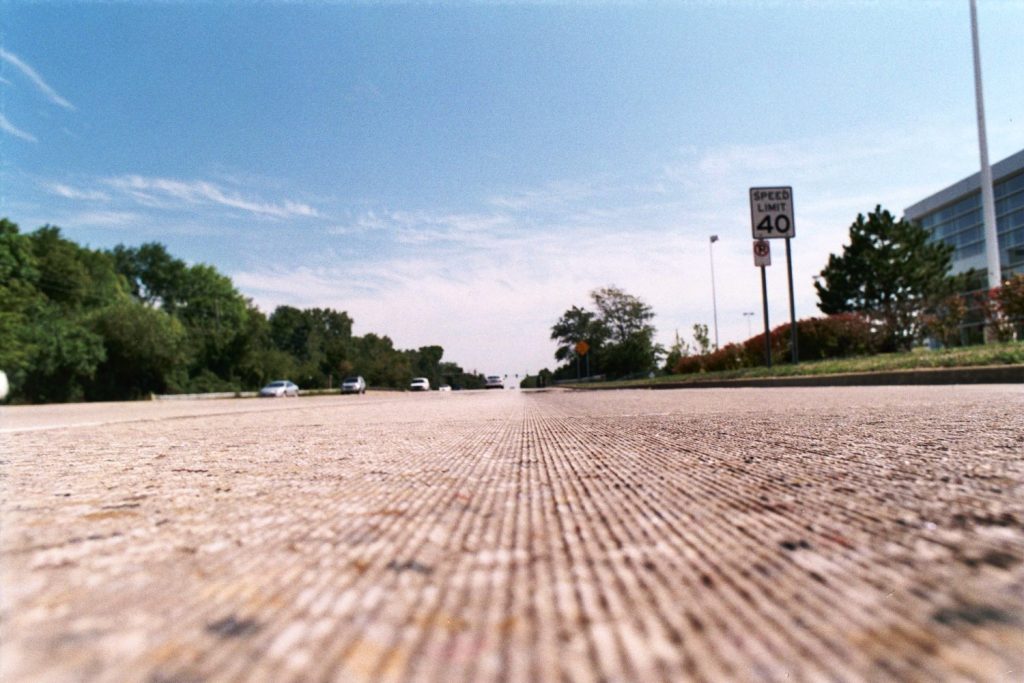
The application is different from a car manufacturer borrowing a spacecraft component. No production vehicle contains a “NASA groove.” Instead, NASA’s research helped establish a pavement-treatment technique that became useful for ground transportation.
That distinction is important, because safety grooving was not simply invented for automobiles. NASA developed and tested the technique to address aircraft traction problems, and highway authorities subsequently adapted the idea for vehicles.
NASA later reported that every U.S. state had grooved at least some portion of its highway system. So, in this case, the space connection is underneath the car rather than inside it.
4. Race-Car Air Filtration
Racing drivers can face a hazard that ordinary motorists rarely encounter. Exhaust gases can become trapped around a fast-moving race car, creating a potentially dangerous breathing environment. Research originally developed by NASA for spacecraft atmospheric systems eventually contributed to a compact filtration system designed to help protect race-car drivers from harmful gases.
The story began at NASA Langley, where researchers worked on catalysts capable of oxidizing carbon monoxide and other gases at relatively low temperatures.
The technology was originally associated with an atmospheric satellite project and was intended to help recycle and recapture carbon dioxide for systems involving carbon dioxide lasers. Its eventual transportation application was far removed from that original purpose.
Motorsports teams needed a practical way to reduce the concentration of exhaust-related gases reaching the driver. The resulting system combined several filtration stages.
NASA’s Spinoff account describes activated carbon, a carbon-monoxide-scrubbing catalyst, and a 99.997 percent efficient HEPA filter. The compact unit was designed to deliver treated air directly toward the driver’s helmet.
The numbers were significant. NASA reported that the system could reduce harmful gases by as much as 70 percent or more, depending on track and humidity conditions. The technology was used in high-performance motorsports, including NASCAR teams.
A NASA technical document also records approximately 190 INCAR systems produced and used by major racing organizations during the period described.
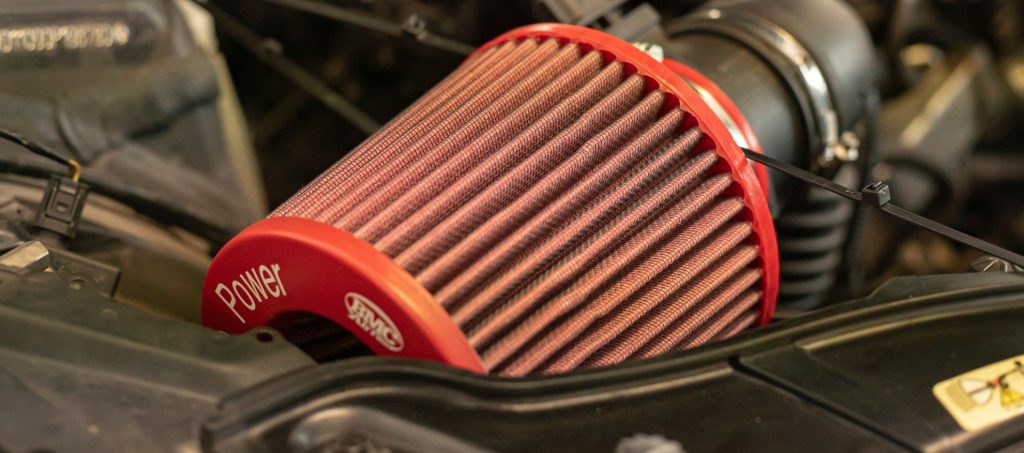
This was not a case of NASA inventing a NASCAR air filter. Instead, NASA’s catalyst research provided an important technological foundation that industry partners adapted into a motorsports filtration system.
The result demonstrates how research designed for managing gases in aerospace environments could eventually address a very different problem inside a race-car cockpit.
5. Nanotechnology That Can Repair Engine Wear
The connection between NASA and a modern car engine is not always visible from the driver’s seat. One particularly unusual example involves nanoparticles designed to address the microscopic wear created by friction inside moving engine components.
The research began with Pavlo Rudenko, a Washington State University researcher studying tribology, the science of friction, lubrication, and wear. NASA became involved in 2011 through a fellowship awarded through the Washington Space Grant Consortium.
The research investigated whether nanoparticles could be carried through a liquid lubricant to damaged surfaces and rebuild worn areas. NASA was interested because the same basic problem exists in spacecraft and other machinery where replacing a worn component can be difficult or expensive.
The resulting technology became TriboTEX. Its nanoparticles have surfaces with different properties. According to NASA’s Spinoff documentation, one side is attracted to areas experiencing friction while the other side remains smoother.
Repeated layers can build up in microscopic grooves, with heat and pressure generated during operation helping form a durable surface. The first commercial formula was specifically developed for automobile engines.
NASA reports that more than 30,000 cars and trucks were using the product when the technology was documented for Spinoff. The company also developed versions for diesel trucks, sports cars, motorcycles, and other small engines.
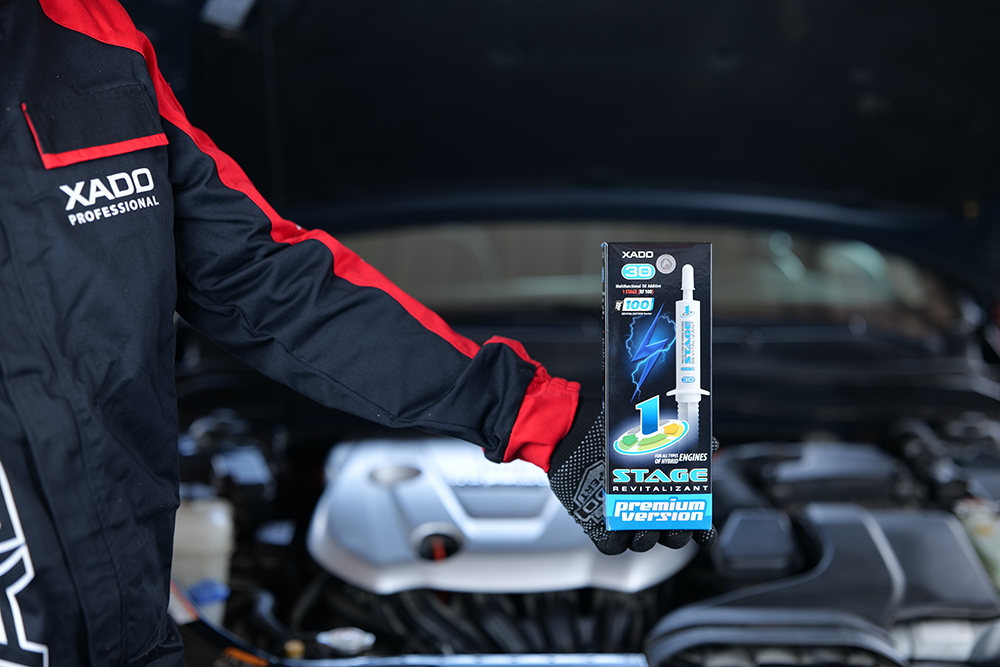
However, claims about fuel-economy or power improvements come from the manufacturer rather than independent NASA testing, so they should not be presented as guaranteed results for every vehicle.
That distinction makes this a genuine space-program spinoff without exaggerating what NASA actually did. NASA helped fund and support the underlying research. The commercial company subsequently developed the automotive product.
6. Brake Materials Built for Extreme Heat
Braking systems share an important challenge with spacecraft hardware. Both must continue functioning when extreme temperatures push conventional materials toward their limits. That common problem prompted NASA researchers and automotive suppliers to explore materials capable of maintaining performance when traditional brake linings began to deteriorate under high heat.
In the 1970s, NASA’s Ames Research Center worked with Bendix Corporation on a composite material for brake linings. The research was connected to NASA’s continuing investigation of high-temperature materials that could be useful for space applications.
Engineers produced and evaluated several composite combinations before selecting one that maintained a relatively constant coefficient of friction at temperatures reaching 650 degrees Fahrenheit.
That temperature capability mattered because conventional brake linings could experience significant fade as temperatures climbed. Brake fade occurs when the friction material becomes less effective under heavy thermal loads, potentially reducing braking performance.
NASA’s research did not mean that every American passenger car suddenly received a NASA-developed brake lining. The technology was instead investigated for broader transportation applications, including trucks and industrial equipment. NASA’s documentation specifically noted that the material could subsequently find applications in passenger cars.
There is also a more recent NASA brake connection that demonstrates how the agency’s expertise continues to influence automotive engineering. NASA Marshall Space Flight Center engineer Jonathan Lee developed a lightweight disc-brake concept that became the basis for technology licensed by Orbis Brakes.
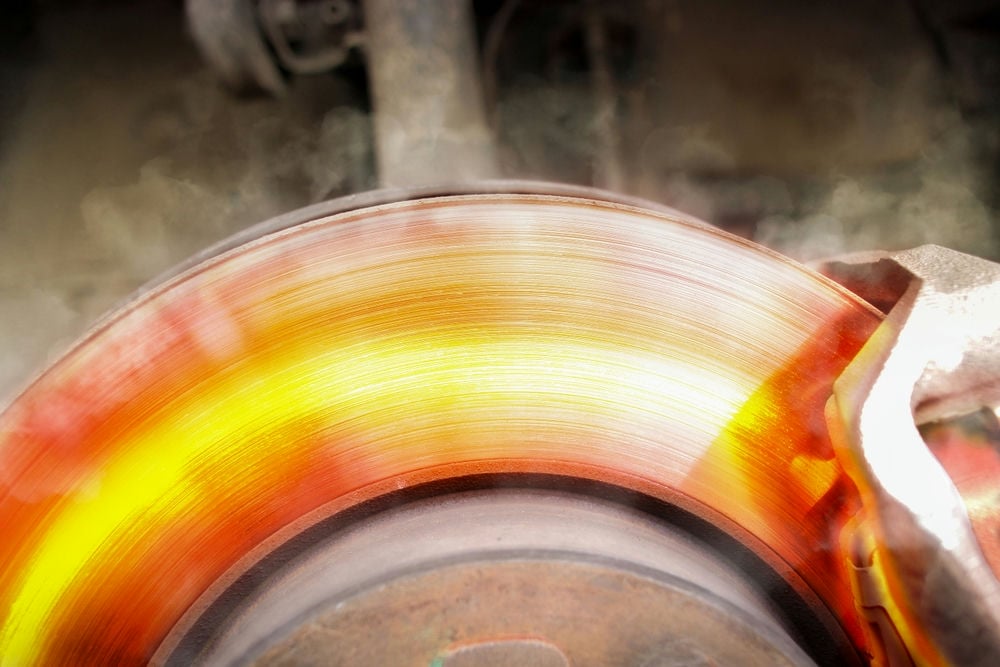
NASA says the resulting design can be at least 42 percent lighter than conventional cast-iron rotors while improving direct cooling of the braking surfaces.
Although the two developments emerged decades apart, they reflect the same basic principle. Materials and engineering techniques developed for demanding aerospace applications can eventually be adapted to solve more familiar automotive challenges, including the need to stop a vehicle safely.
7. NASA Structural Software Helped Design Cars
Not every NASA contribution to automobiles is something you can physically touch. Some of the most important examples are software tools that allow engineers to predict how a vehicle will behave before building the finished machine. One of those tools is NASTRAN, a structural-analysis program developed by NASA.
NASA’s Goddard Space Flight Center developed NASTRAN to help engineers analyze the structural behavior of aerospace vehicles. Instead of relying entirely on physical prototypes, engineers could create mathematical models and use computers to study how different designs would respond to forces and loads.
NASA later made the technology available for broader industrial applications, including automotive engineering.
One documented automotive example is the 1987 Acura Legend Coupe. NASA’s Spinoff publication reported that Honda R&D used the NASA-developed NASTRAN program during the vehicle’s design process.
The software allowed engineers to analyze structural characteristics digitally and compare different designs before committing to physical hardware.
That was especially valuable because changing a vehicle’s structure after a prototype has already been built can be expensive and time-consuming. Computer-based structural analysis gives engineers an opportunity to identify potential weaknesses much earlier.
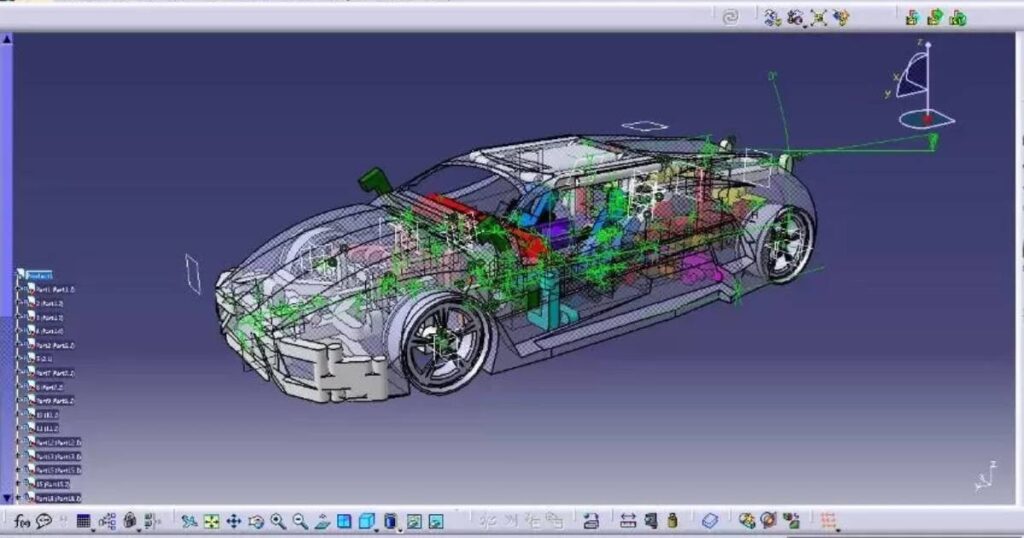
The technology was not created specifically for passenger cars, and NASA did not design the Acura Legend. NASTRAN originated from NASA’s aircraft and spacecraft engineering work before becoming a broader engineering tool.
That makes this example different from a NASA-derived seat or tire sensor. The space connection exists inside the engineering process itself.
A program created to understand structures used in spacecraft could also help automotive engineers evaluate the stresses and behavior of a road-going vehicle long before the finished car reached an American showroom.
