
A half tank usually feels like a warning that a fuel stop is getting close, but that assumption does not hold for every car. Efficient powertrains, useful fuel-tank capacity, and a strong economy can turn half a tank into hundreds of miles.
For this list, the comparison uses U.S.-market specifications and EPA-estimated combined fuel economy. The estimated half-tank distance is calculated by multiplying tank capacity by combined MPG and dividing by two.
The result is a benchmark, not a promise, because speed, weather, traffic, cargo, tires, and driving style can change fuel consumption for many drivers.
1. Hyundai Sonata Hybrid
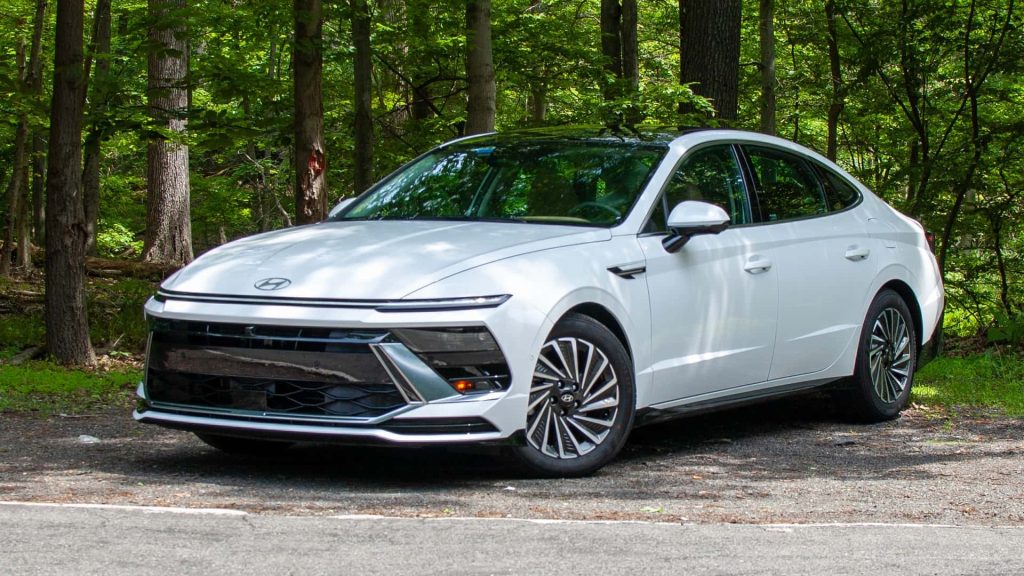
The 2026 Hyundai Sonata Hybrid shows why a midsize sedan does not need an enormous fuel tank to deliver long stretches between stops. Hyundai lists a 13.2-gallon tank for the hybrid, while the Blue Hybrid reaches an EPA-estimated 51 MPG combined.
Those figures produce a mathematical full-tank range of about 673 miles and approximately 337 miles from half the tank. Hyundai USA
The result is notable because the Sonata is not a tiny economy car. It uses a 2.0-liter four-cylinder hybrid powertrain with a 39-kW electric motor and 192 combined horsepower.
Hyundai rates the Blue Hybrid at 47 MPG city and 56 MPG highway, so the efficiency is not dependent on a single favorable rating. The other hybrid trims are rated at 47 MPG combined, making the Blue the appropriate configuration for this calculation. Hyundai USA
The hybrid system can use electric assistance during driving and recover energy through regenerative braking. That reduces how often the gasoline engine must provide all the propulsion energy, helping the car turn its fuel into more miles.
For a driver whose gauge is near halfway, an estimated 337 miles represents a substantial amount of travel under EPA-style conditions. It could cover several commuting days or a large portion of a road trip before another fuel stop.
Real-world distance will vary. Highway speed, winter temperatures, passengers, cargo, traffic, and driving style can all reduce fuel economy. The useful takeaway is therefore the relationship between the 13.2-gallon tank and the 51 MPG rating, not a guaranteed 337-mile reserve.
2. Lexus ES 350h
The 2026 Lexus ES 350h proves that impressive half-tank range is not limited to compact or budget-oriented vehicles. Its 14.5-gallon fuel tank is substantial, while the front-wheel-drive version carries an EPA-estimated 46 MPG combined rating. That combination works out to roughly 667 miles on a full tank and about 334 miles from half. Car and Driver
The ES 350h pairs a 2.5-liter four-cylinder engine with Lexus’ sixth-generation hybrid system and produces 244 net combined horsepower. U.S. EPA figures give the front-drive model 48 MPG city and 44 MPG highway. Lexus also offers all-wheel drive, but the FWD version is the relevant configuration because it has the stronger combined rating. Car and Driver
What makes the result striking is the vehicle’s size and mass. The 2026 ES 350h Premium FWD is listed at about 4,001 pounds, yet its hybrid powertrain keeps official fuel consumption low enough to put more than 300 miles inside a theoretical half tank. Edmunds
There is a practical advantage for long-distance drivers. A large tank gives the ES 350h useful capacity, while the hybrid system reduces the rate at which those gallons disappear. That combination can mean fewer fuel stops without requiring a small economy car.
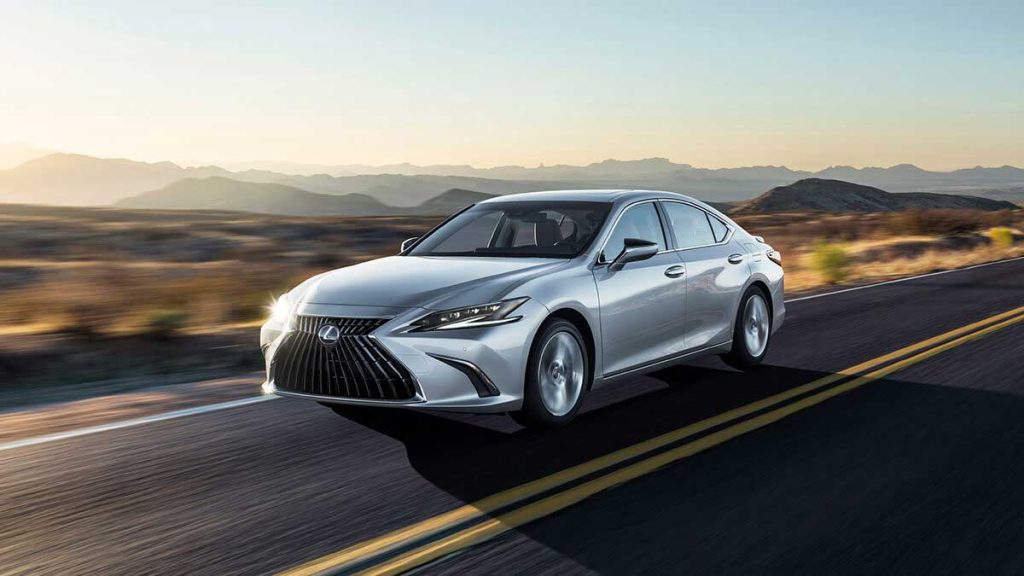
The calculated 334-mile figure remains a benchmark. Sustained high speeds, cold weather, heavy loads, and traffic can reduce actual range. Even so, the published 14.5-gallon capacity and 46 MPG combined rating make the ES 350h one of the strongest half-tank performers in the U.S. luxury-sedan market.
3. Toyota Camry
The 2026 Toyota Camry has become a particularly interesting fuel-range car because the current U.S. lineup is hybrid-only. Toyota rates the front-wheel-drive Camry LE at 52 MPG city, 49 MPG highway, and 51 MPG combined, while the fuel tank holds 13.0 gallons. That gives an estimated full-tank range of 663 miles and approximately 332 miles when half full. Toyota
The Camry’s result is not based on a tiny tank. At 13 gallons, its capacity is large enough to make the EPA efficiency rating translate into serious distance. Toyota’s hybrid system also offers up to 232 net combined horsepower, so the efficiency-focused setup is not simply about minimizing performance. Toyota
Trim selection matters. Toyota lists lower combined ratings for sportier and all-wheel-drive versions, with the XSE AWD reaching 43 MPG combined. The 332-mile estimate therefore applies to the highly efficient front-wheel-drive LE rather than every Camry configuration. Toyota
That makes the Camry especially relevant to everyday drivers. It remains a mainstream midsize sedan with the space and road-trip character expected from the segment, yet its official fuel economy pushes it into territory once associated mainly with smaller cars.
A half tank theoretically covering more than 330 miles could mean fewer stops during a long trip, although actual highway consumption depends heavily on speed. EPA combined MPG blends different test conditions, so it should not be interpreted as a guaranteed interstate figure.
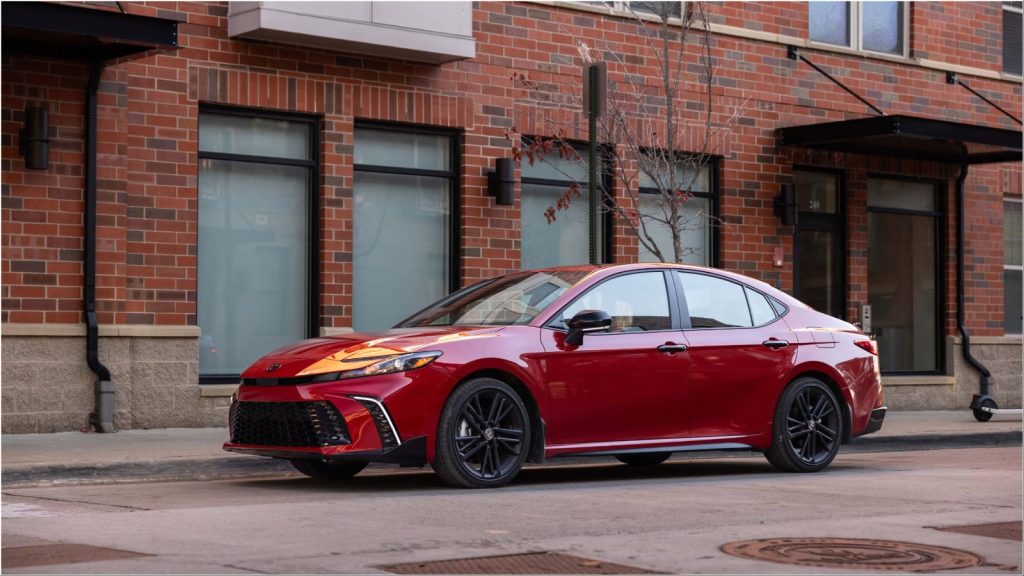
The key figures are 13.0 gallons of fuel capacity, 51 MPG combined, and an estimated 332 miles of range using half the tank. Together, these figures make the sedan an appealing option for buyers seeking fuel efficiency and practical driving range.
4. Toyota Prius
The 2026 Toyota Prius remains one of the clearest examples of how fuel economy can compensate for a relatively modest fuel tank. Toyota lists an 11.3-gallon tank for the Prius, while the most efficient version reaches 57 MPG combined. The resulting calculation is about 644 miles for a full tank and roughly 322 miles half full. Toyota
At first glance, an 11.3-gallon tank may not sound impressive. The important part is what the Prius does with those gallons. Its hybrid system combines a gasoline engine with electric drive and regenerative braking, allowing the vehicle to recover energy during deceleration. Toyota’s U.S. data also lists 194 horsepower for the Prius. Toyota
The Prius illustrates why fuel capacity should not be considered in isolation. A larger vehicle with a lower MPG rating can carry more gasoline yet fail to match this smaller tank. Here, the EPA rating does most of the work.
The estimated 322-mile half-tank distance puts the efficiency into a real distance context. A commuter could potentially travel for several days before refueling, while a road-tripper can cover a large stretch between stops.
There is still a gap between laboratory estimates and daily driving. Toyota notes that mileage varies with driving conditions, habits, and vehicle condition. Highway speeds, cold weather, hills, and passengers and luggage can all increase fuel consumption.
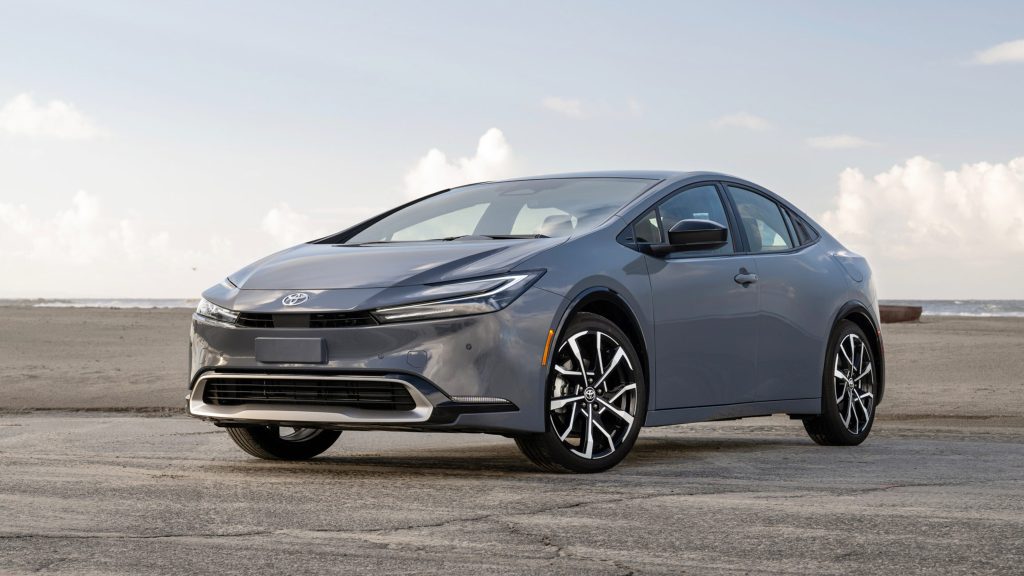
The calculation should not mean ignoring the fuel gauge. It shows why the Prius can travel so far on relatively little gasoline. An 11.3-gallon tank combined with a 57 MPG EPA rating produces an unusually strong half-tank benchmark.
5. Honda Accord Hybrid
The 2026 Honda Accord Hybrid takes a different route to long half-tank range. Its fuel tank is 12.8 gallons, while the most efficient hybrid configuration is rated at 48 MPG combined. That produces a calculated full-tank range of about 614 miles and a half-tank figure of approximately 307 miles. Honda Automobiles
Honda’s U.S. specifications show hybrid ratings ranging from 44 to 48 MPG combined depending on configuration. The most efficient version reaches 51 MPG city, 44 MPG highway, and 48 MPG combined, so the calculation here is tied to that configuration rather than every Accord Hybrid. Honda Automobiles
The Accord is considerably larger than a typical compact economy car. Its midsize cabin makes this fuel efficiency particularly useful for long commutes and road trips. The hybrid powertrain provides 204 total system horsepower, according to Honda’s U.S. specifications.
A half tank therefore represents more than 300 theoretical miles without requiring a small fuel reservoir. Its 12.8-gallon capacity combines with a strong EPA rating to make each gallon produce significant distance.
The calculation remains a mathematical benchmark. Traffic, steep grades, passengers, high interstate speeds, and frequent climate-control use can reduce actual mileage. Tire pressure and weather can also affect consumption.
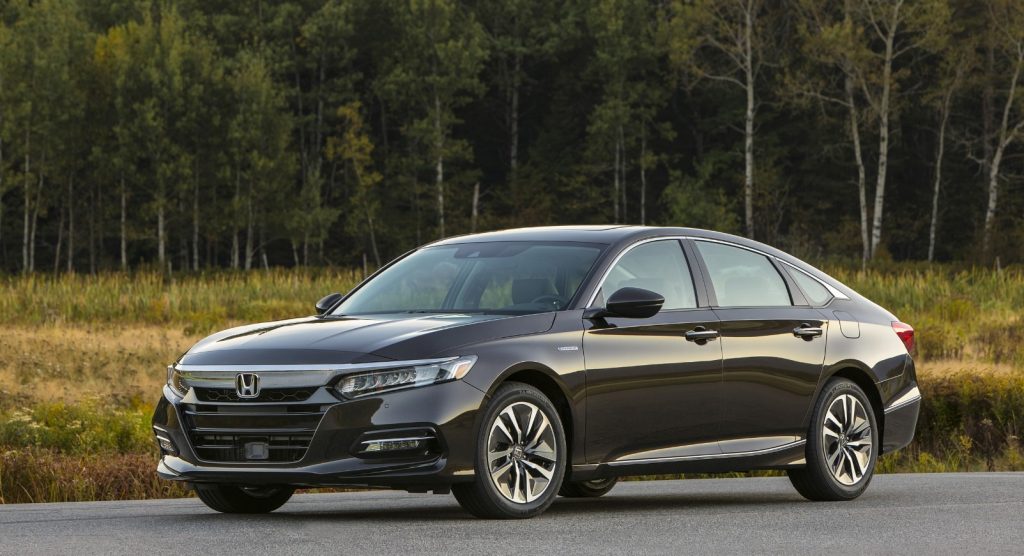
Still, the published specifications give the Accord Hybrid a strong long-distance efficiency profile. About 307 miles from half a tank is enough to make a single fuel stop feel much less urgent during many normal trips. The advantage comes from the combination of tank size and hybrid efficiency, rather than either number by itself.
6. Hyundai Elantra Hybrid
Hyundai’s 2026 Elantra Hybrid is smaller than the Sonata and Accord, yet its fuel numbers show why a compact sedan can be exceptionally effective at stretching each gallon.
The Blue Hybrid uses an 11.0-gallon tank and carries an EPA-estimated 54 MPG combined rating. The resulting full-tank calculation is 594 miles, while half the tank works out to about 297 miles. Hyundai USA
The Blue Hybrid’s 51 MPG city and 58 MPG highway ratings explain how it reaches that combined figure. Hyundai’s other Elantra Hybrid trims are rated at 50 MPG combined, so the difference is tied to configuration. For this comparison, Blue provides the highest official U.S. combined rating. Hyundai USA
The powertrain is a 1.6-liter four-cylinder hybrid system paired with a six-speed dual-clutch transmission. Hyundai lists 139 combined horsepower and 195 lb.-ft. of combined torque. Regenerative braking also recovers energy during deceleration. Hyundai USA
The key is the relationship between the modest 11-gallon tank and 54 MPG. A driver does not need a large reservoir when each gallon can theoretically support more than 50 miles. That makes the Elantra Hybrid appealing to drivers seeking long intervals between fuel stops.
The 297-mile half-tank estimate is not a guaranteed trip range. EPA testing provides a standardized comparison, while real roads introduce weather, speed, traffic, load and driving-style variables.
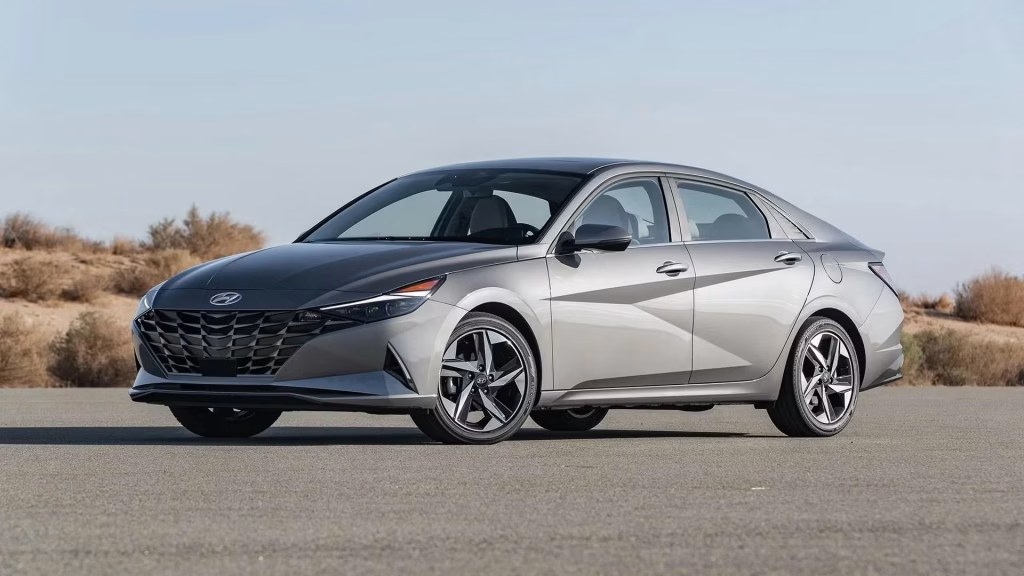
Even with those caveats, the math is impressive. Half of an 11.0-gallon tank equals 5.5 gallons, and 5.5 multiplied by 54 MPG produces 297 miles.
7. Honda Civic Hybrid
The 2026 Honda Civic Hybrid proves that a compact sedan does not need a large fuel tank to cover a serious distance before refueling. Honda lists a 10.6-gallon tank for the Civic Sport Hybrid and Sport Touring Hybrid, while both are rated at 49 MPG combined.
That creates a calculated full-tank range of roughly 519 miles and a half-tank distance of about 260 miles. Honda Automobiles
The tank is one of the smallest in this group. Instead of relying on extra fuel capacity, the Civic gets its distance from efficiency. Honda rates the hybrid models at 50 MPG city and 47 MPG highway. Honda Automobiles
The hybrid Civic also produces 200 total system horsepower, while Honda lists 141 horsepower for the gasoline engine portion. That makes the fuel-saving powertrain quite different from the old assumption that economy-focused cars must sacrifice usable performance.
With a 10.6-gallon tank, half the capacity equals 5.3 gallons. At 49 MPG, that amount of fuel provides an estimated range of 260 miles. For some drivers, this could be enough to cover several days of regular commuting before needing to refuel.
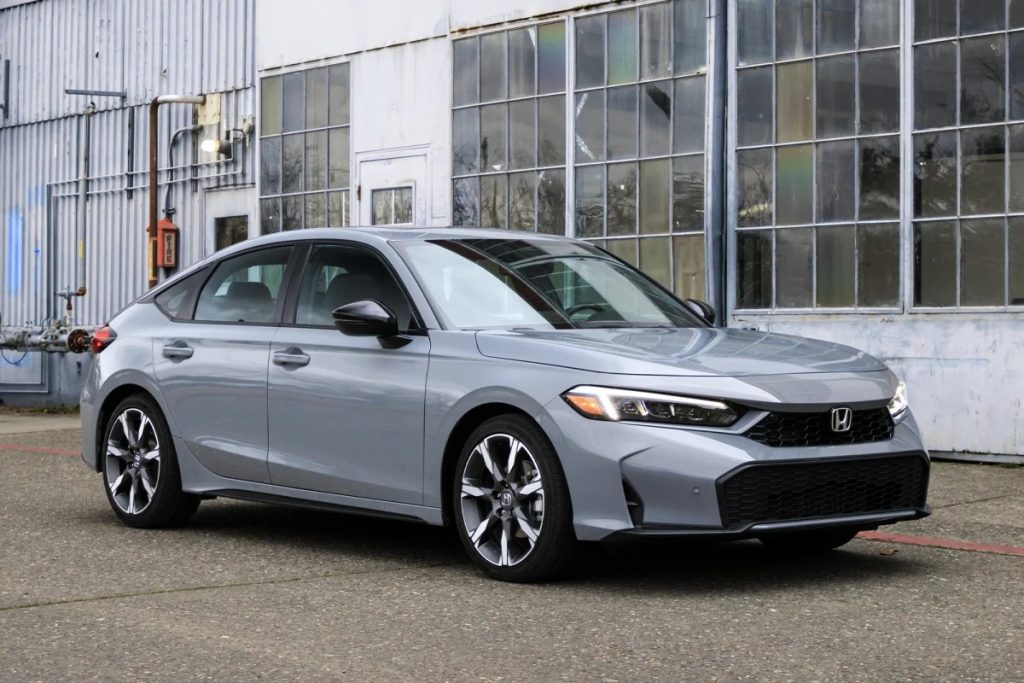
Actual fuel use can change quickly. Passengers, climate-control use, strong winds, aggressive acceleration and low tire pressure can all reduce economy. The EPA rating is therefore a comparison point, not a promise.
The specifications make the Civic Hybrid a convincing example of efficient fuel use. Its small tank could look limiting, but the 49 MPG combined rating changes the equation.
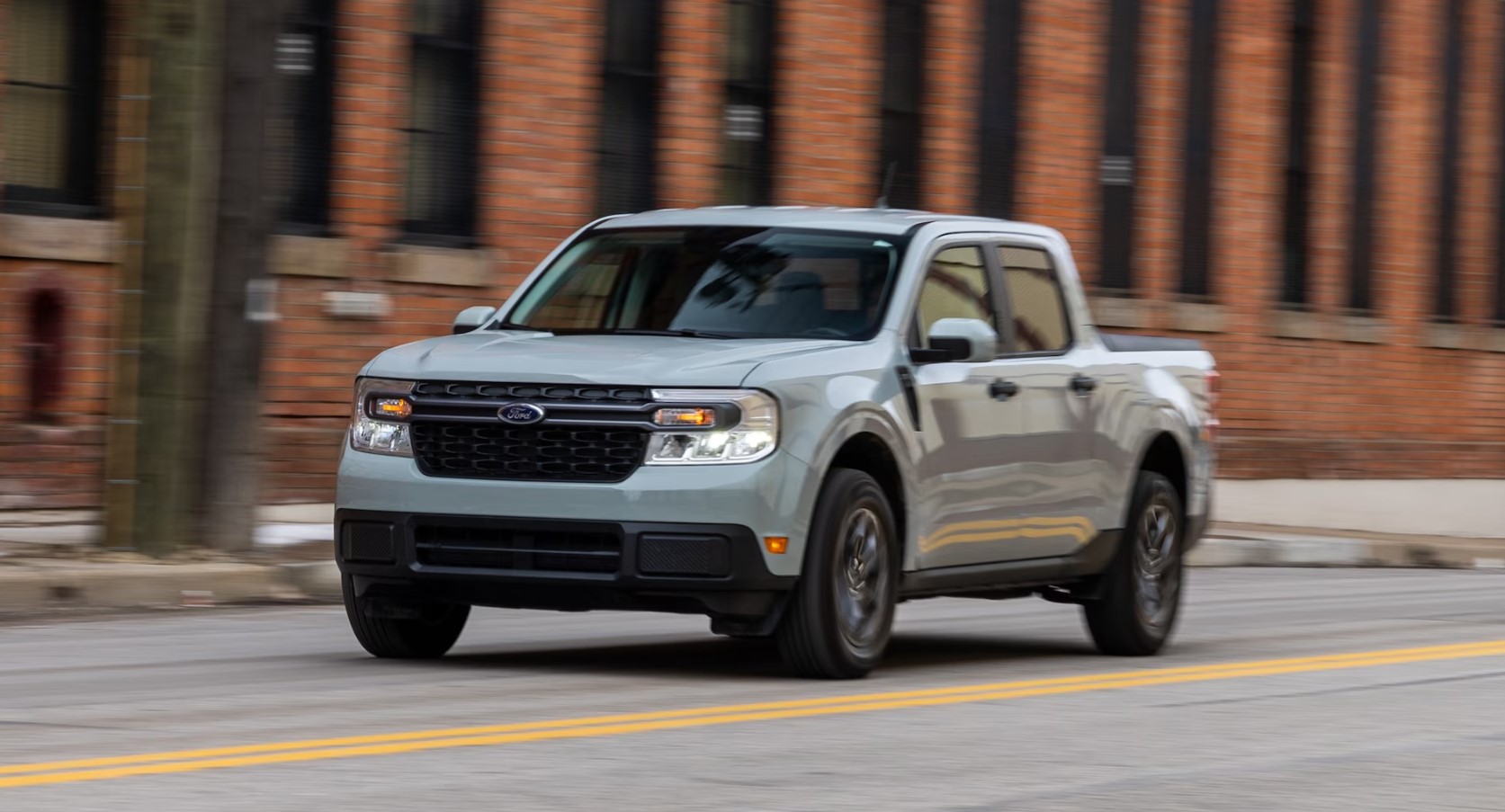
8. Ford Maverick Hybrid
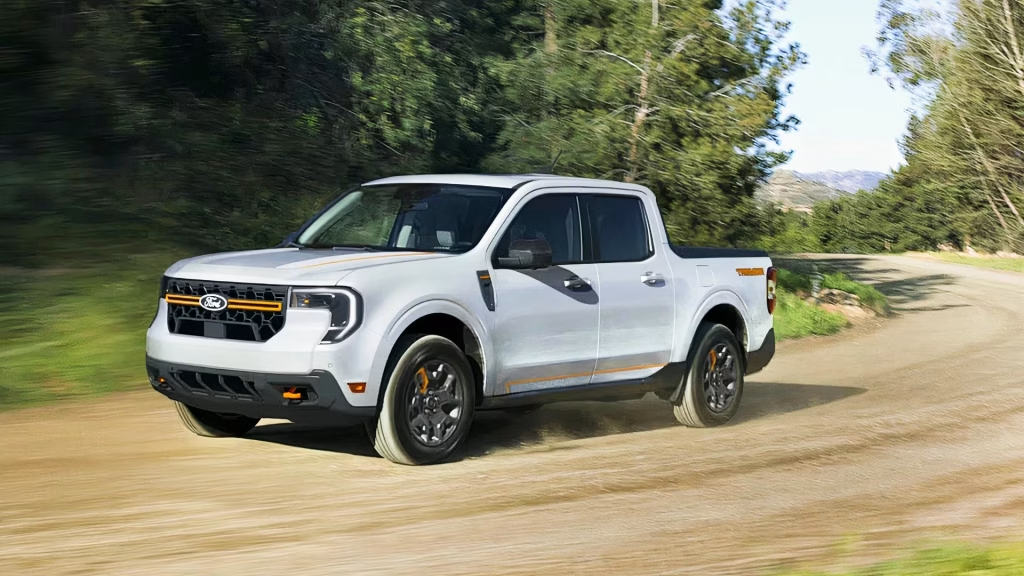
The Ford Maverick Hybrid is the unusual entry here because it is a compact pickup rather than a sedan. Ford’s U.S. technical specifications list a 13.8-gallon tank for the 2.5-liter hybrid powertrain and a 37 MPG combined EPA rating for the front-wheel-drive version.
That produces a theoretical full-tank range of about 511 miles and roughly 255 miles from half a tank. Ford From the Road
For a pickup, that is a notable result. The Maverick provides a usable bed and truck functionality, yet its hybrid powertrain delivers fuel economy associated with smaller passenger vehicles. Ford lists 42 MPG city and 33 MPG highway, with 37 MPG combined. Ford From the Road
The half-tank calculation also puts the Maverick’s efficiency into perspective. A 6.9-gallon portion of its rated tank, multiplied by 37 MPG, equals about 255 miles. That means the truck can theoretically travel more than 250 miles before using half its available fuel under combined EPA conditions.
The figure matters for pickup owners who carry equipment or recreational gear. The hybrid Maverick combines truck utility with lower fuel consumption than many traditional gasoline pickups.
Real-world results can change sharply when the truck is heavily loaded, driven at high speed or used for towing. Trailer weight and aerodynamic drag can increase fuel consumption considerably, so this estimate should not be treated as a towing-range figure.
The important comparison is with other pickups, not just efficient sedans. A 37 MPG combined rating paired with a 13.8-gallon tank gives the Maverick Hybrid a calculated half-tank range of about 255 miles, which is a surprisingly strong result for a truck.
9. Toyota Corolla
The 2026 Toyota Corolla is a useful reminder that strong half-tank range does not always require hybrid technology. The gasoline Corolla LE is rated at 32 MPG city, 41 MPG highway and 35 MPG combined, while Toyota’s U.S. comparison data lists a 13.2-gallon tank.
Using the 35 MPG combined figure produces an estimated full-tank distance of about 462 miles and approximately 231 miles from half. Toyota
The Corolla LE is the relevant configuration because Toyota lists different ratings across the lineup. Sportier versions with larger wheels can return lower figures, so the 231-mile calculation does not apply to every Corolla trim.
The result is useful because the powertrain is conventional. This is a gasoline compact sedan rather than a hybrid, using a 2.0-liter four-cylinder in current U.S. gasoline versions.
Half of a 13.2-gallon tank equals 6.6 gallons. At 35 MPG, that fuel quantity corresponds to approximately 231 miles under the EPA combined rating. For a commuter covering 30 miles per day, that theoretical distance represents more than a week of driving, although traffic and real-world consumption can change the result.
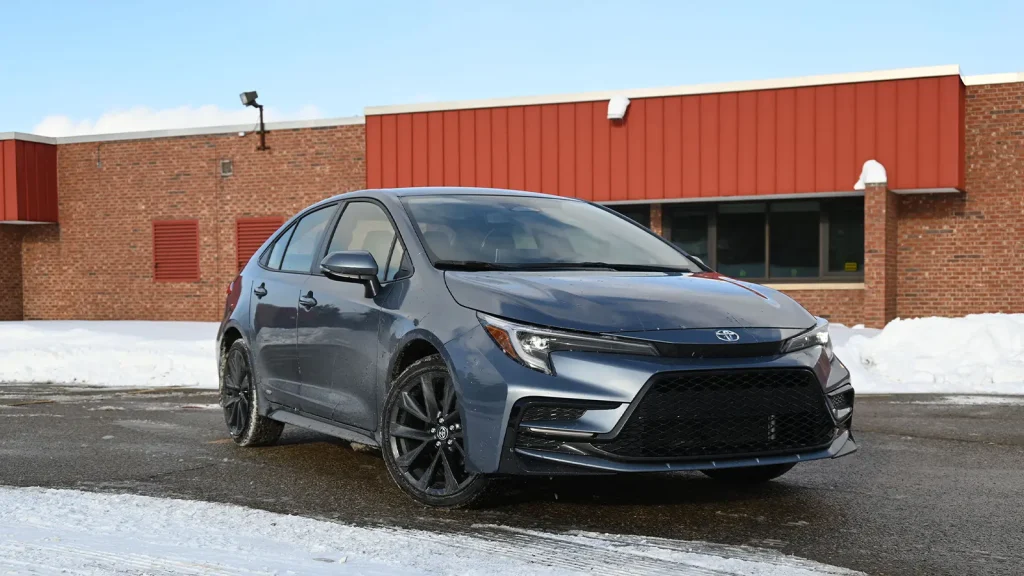
The highway rating is particularly strong at 41 MPG, meaning steady cruising can potentially stretch the available fuel further than the combined calculation suggests. However, sustained high speeds can work in the opposite direction, so the EPA highway figure is not a guarantee.
The Corolla is interesting because it does not depend on a battery-assisted powertrain to deliver respectable distance. A 13.2-gallon capacity paired with a 35 MPG combined EPA rating gives the gasoline Corolla a useful 231-mile half-tank benchmark.
10. Nissan Kicks
The 2026 Nissan Kicks finishes the list with a different interpretation of fuel efficiency. The front-wheel-drive model uses an 11.9-gallon fuel tank and carries an EPA-estimated 31 MPG combined rating. Those figures produce a mathematical full-tank range of about 369 miles, leaving roughly 185 miles from half a tank. Edmunds
The result is lower than the hybrid sedans above, but the Kicks is a subcompact crossover rather than a low-slung sedan. Nissan lists a 2.0-liter four-cylinder producing 141 horsepower with a continuously variable transmission. FWD is rated at 28 MPG city and 35 MPG highway. Nissan USA
The Kicks shows why body style matters when judging fuel range. A crossover generally sits higher and presents more frontal area than a sedan, which can affect aerodynamic efficiency. Even so, its 31 MPG combined EPA rating allows a relatively small tank to produce a respectable theoretical distance.
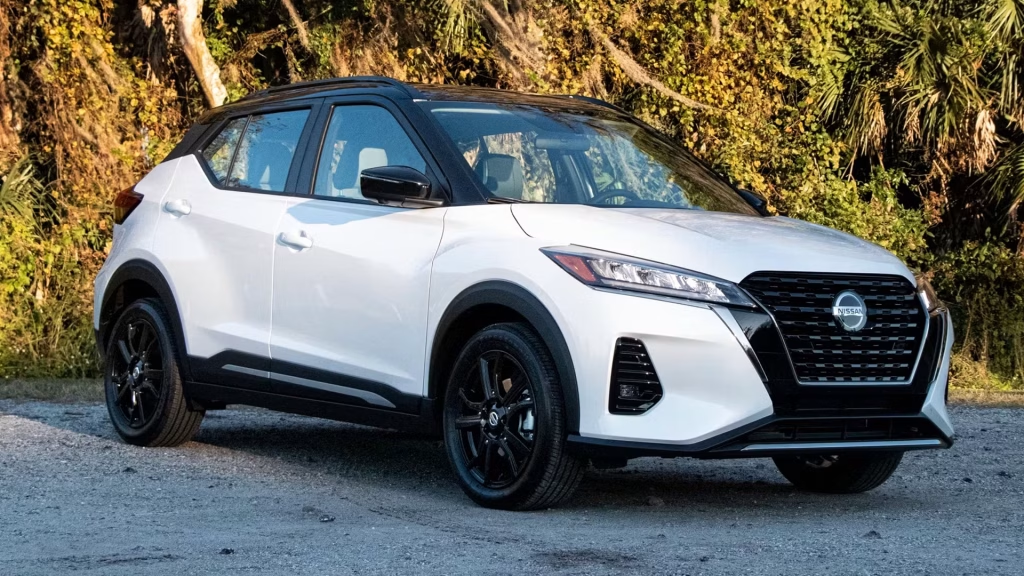
The half-tank math is straightforward. About 5.95 gallons remain when the tank is precisely half full. Multiplying that amount by 31 MPG gives approximately 184.5 miles, rounded here to 185 miles. Nissan’s all-wheel-drive version is less efficient at 30 MPG combined, so this estimate applies specifically to the front-wheel-drive configuration. Nissan USA
Actual Kicks economy varies with road conditions, speed, load and drivetrain. Heavy cargo or aggressive driving can increase fuel consumption.
Still, nearly 185 estimated miles from half a tank is enough for substantial daily use. It may not match the hybrid sedans above, but for a small crossover, the combination of 11.9 gallons and 31 MPG remains a useful fuel-efficiency benchmark.
