
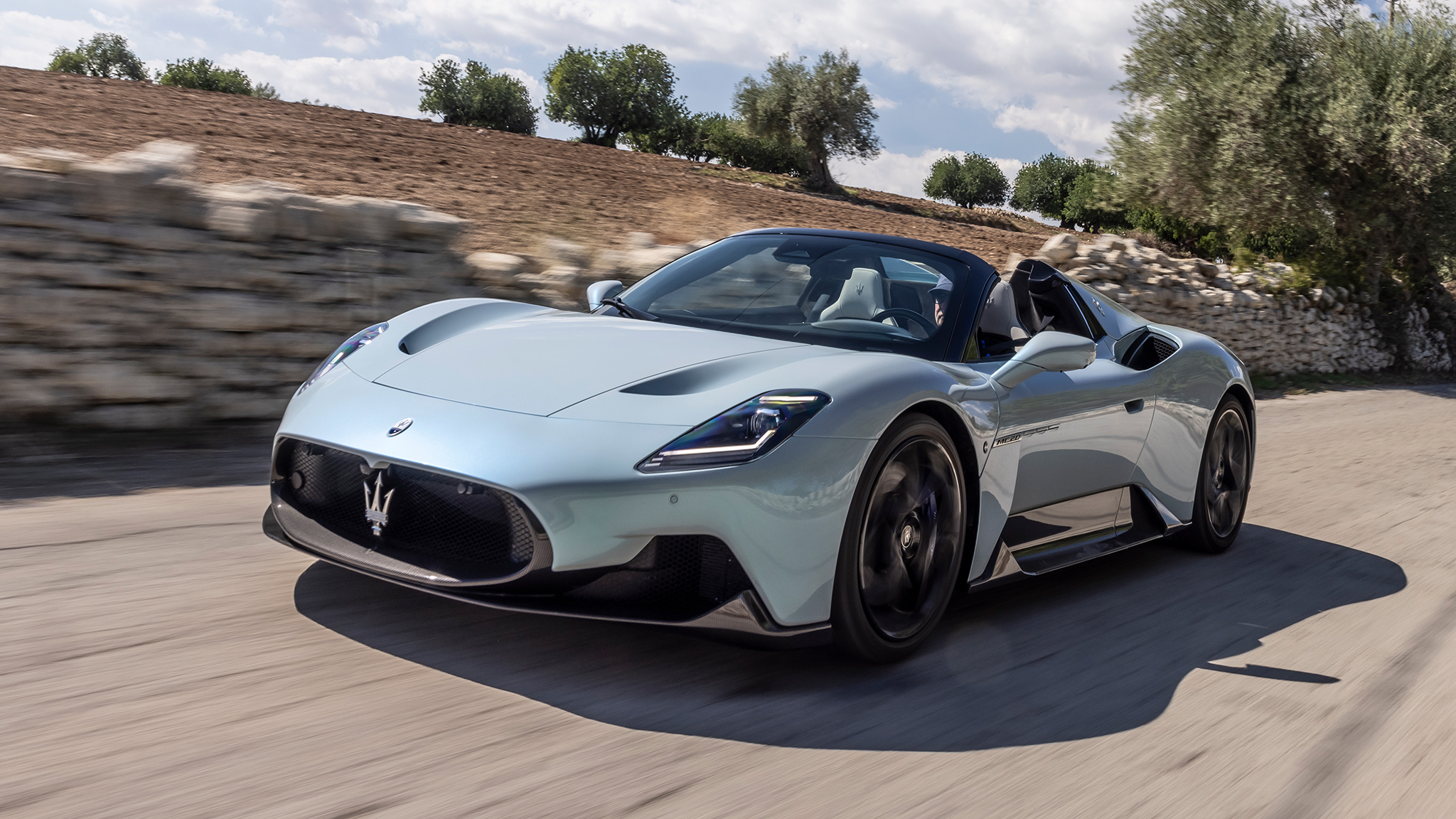
This ranking uses manufacturer-published engine horsepower as the primary measure, with torque in lb-ft as a second performance figure. Hybrid system output is kept separate from combustion-engine output, since adding electric-motor power can change a vehicle’s ranking dramatically.
The list focuses on road-going vehicles sold in the U.S. market, not racing-only engines or aftermarket tuning packages. Horsepower and torque figures can vary by model year and specification, so each entry identifies the relevant engine and vehicle rather than treating every version of a model as identical.
1. Ferrari 296 Speciale
The Ferrari 296 Speciale pushes a road-going V6 into territory once associated with much larger engines. Its 3.0-liter, 120-degree twin-turbocharged V6 produces 700 metric horsepower, equivalent to approximately 690 U.S. horsepower, at 8,000 rpm.
Ferrari lists peak engine torque at 755 Nm, or approximately 557 lb-ft, at 6,000 rpm. Those figures refer to the combustion engine alone, not the complete hybrid system.
The distinction matters because the 296 Speciale also uses an electric motor. Combined output reaches 880 metric horsepower, but that total should not be used to rank the V6 itself. By isolating the engine’s contribution, this article compares combustion power on a more consistent basis.
Ferrari developed the Speciale as a sharper, lighter, more track-focused version of its hybrid sports-car formula. Its engine benefits from revised management and boost strategies, along with hardware changes that include titanium connecting rods, reinforced pistons, and a lighter crankshaft.
The company says the V6 delivers 37 metric horsepower more than the engine in the standard 296 GTB.
The result is a remarkably high specific output for a production road-car V6. At this level, turbocharging, combustion control, cooling, and precise engine management are essential to delivering repeatable performance.
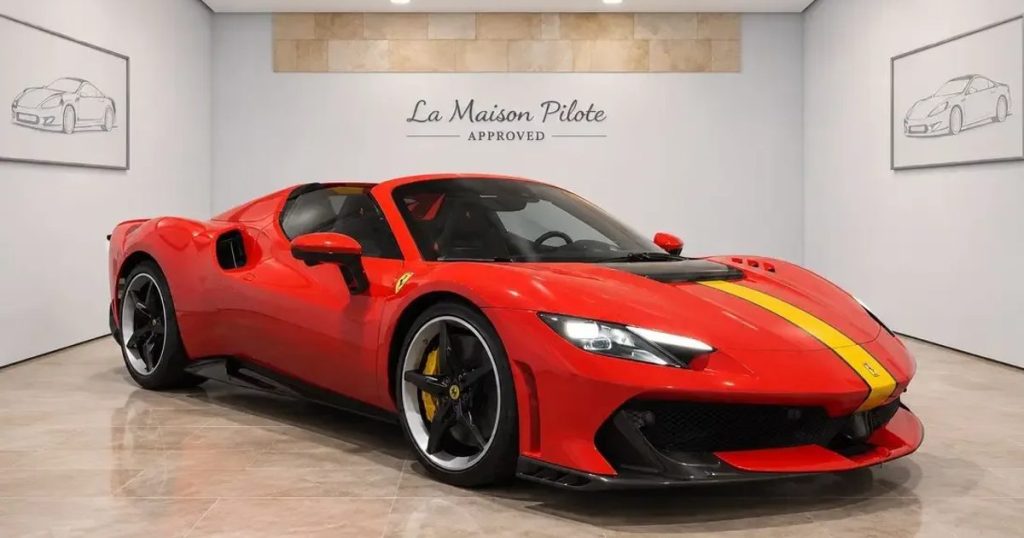
The 296 Speciale is more than a small-displacement engine delivering impressive power. It features an integrated hybrid system engineered to achieve high performance.
For this ranking, its position comes from the V6’s own published output. The electric motor adds substantial performance, but it is deliberately excluded from the engine-only figure.
2. Ford GT
Ford’s final-generation GT established a remarkable benchmark for American performance engineering with its twin-turbocharged 3.5-liter EcoBoost V6.
Ford lists the engine at 660 horsepower, while U.S. technical specifications for earlier versions quote 647 horsepower and 550 lb-ft of torque at 5,900 rpm. The difference reflects the distinction between model-year specifications, so the later 660-horsepower figure should not be applied indiscriminately to every GT.
The engine’s placement behind the driver is central to the GT’s design. Rather than building a conventional front-engine muscle car, Ford developed a low-slung supercar with a carbon-fiber structure, active aerodynamics, and a seven-speed dual-clutch transmission. The V6’s compact dimensions helped package the powertrain within that layout.
Its EcoBoost name connects the GT to Ford’s broader turbocharged engine family, but this application is far removed from a regular pickup or family SUV.
The GT’s engine was developed for an exceptionally demanding performance target, using twin turbochargers, direct and port fuel injection, and a dry-sump lubrication system. These features support high output and help manage lubrication under hard cornering.
The torque figure is particularly important because it indicates how much twisting force the engine produces, but horsepower remains the primary ranking measure here. Peak torque and peak horsepower occur at different engine speeds, so neither number alone fully describes how the engine delivers performance.
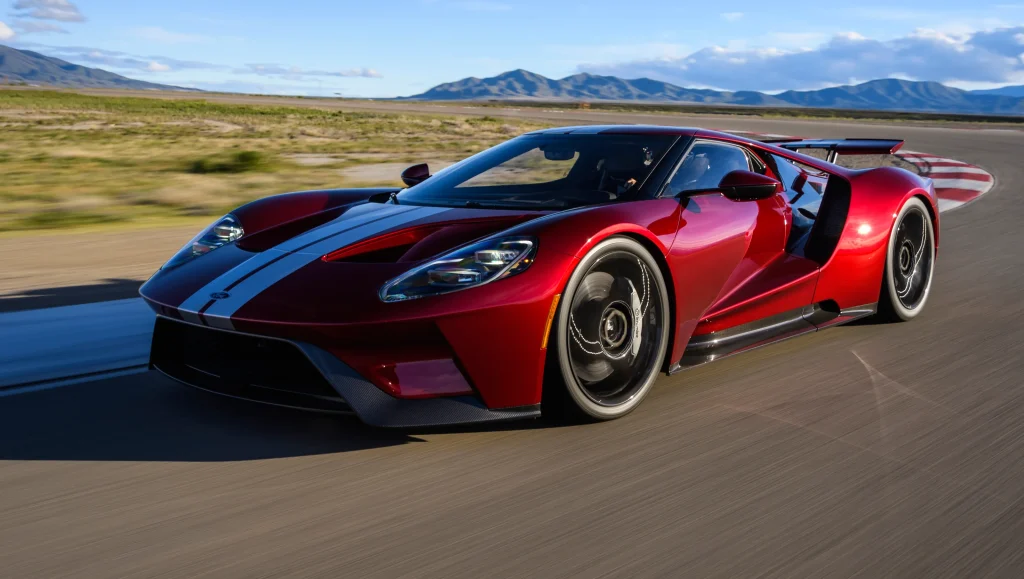
The GT also illustrates why this ranking uses manufacturer specifications instead of mixing aftermarket dyno figures with factory ratings. Tuned examples may produce much more power, but their results depend on modifications, fuel, and testing conditions.
The factory-rated engine earns its place on its published U.S. specifications, making it a clear contender among the most powerful V6 engines sold to American buyers.
3. Maserati MC20
Maserati’s 3.0-liter Nettuno V6 demonstrates how much power a modern engine can produce without relying on eight or twelve cylinders.
The twin-turbocharged engine delivers 621 horsepower at 7,500 rpm and 538 lb-ft of torque between 3,000 and 5,500 rpm, according to Maserati’s U.S. technical specifications. Those figures put it among the most powerful production V6 engines fitted to a conventional, non-hybrid road car sold in America.
The Nettuno’s unusual feature is its patented Maserati Twin Combustion technology. The system uses a pre-chamber combustion arrangement with twin spark plugs, drawing inspiration from principles developed in motorsport.
Maserati combines this approach with direct and port fuel injection, twin turbochargers, and a dry-sump lubrication system.
The engineering is designed to deliver considerable power from a relatively compact 3.0-liter engine while preserving the sharp response and performance expected of a mid-engine supercar.
Maserati quotes a 0-to-60-mph time of less than 2.9 seconds for the MC20, although that acceleration figure reflects the complete vehicle and drivetrain rather than engine output alone.
Unlike hybrid-powered competitors, the MC20’s headline 621-horsepower rating comes from its combustion engine.
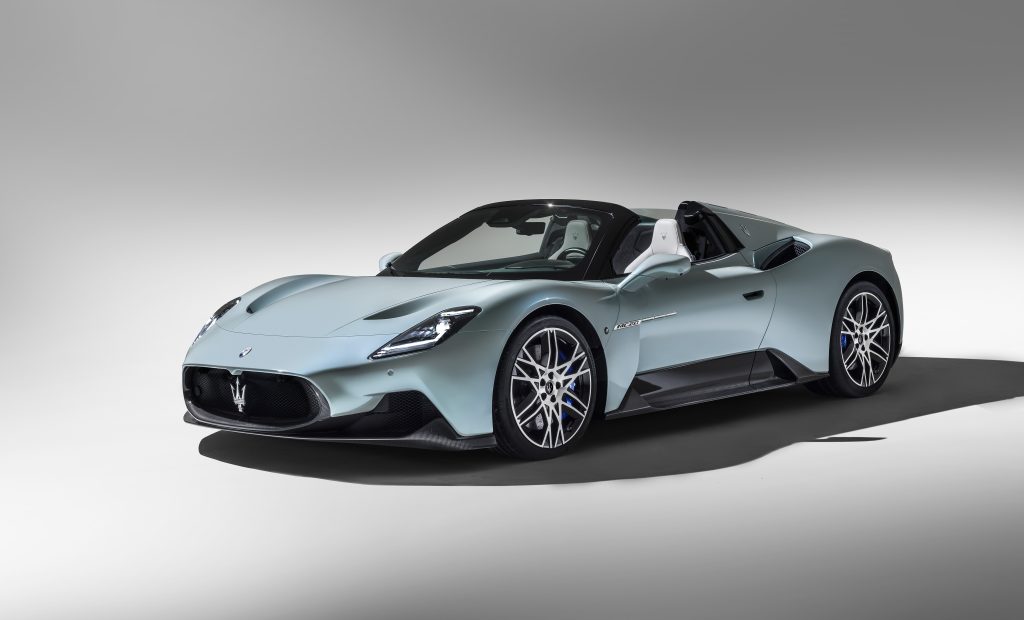
This makes the engine especially relevant for a ranking based solely on engine output. Its torque delivery is equally important, as maximum twisting force is reached well before peak horsepower, allowing the car to deliver strong acceleration throughout the middle of the rev range.
The Nettuno’s combination of high output, specialized combustion technology, and relatively small displacement secures its place near the top of this list. It shows that a modern V6 can deliver supercar-level performance through careful engineering rather than displacement alone.
4. Nissan GT-R NISMO
Nissan’s GT-R NISMO takes a different approach to high-output V6 performance. Its hand-assembled 3.8-liter VR38DETT twin-turbo engine produces 600 horsepower at 6,800 rpm and 481 lb-ft of torque between 3,600 and 5,600 rpm.
Nissan confirmed those specifications for the 2024 U.S. model, which was offered alongside less powerful GT-R versions.
The NISMO version is not simply a standard GT-R with a software adjustment. Nissan equipped it with high-capacity turbochargers derived from its GT3 racing program and made additional changes to responsiveness, aerodynamics, brakes, and weight.
Those upgrades help distinguish the NISMO from the regular GT-R, whose engine is rated at 565 horsepower and 467 lb-ft of torque.
Its power delivery suits the GT-R’s all-wheel-drive layout and six-speed dual-clutch transmission. Rather than relying solely on peak output, the car uses its drivetrain and electronic controls to put power onto the road effectively.
Nissan recommends 93-octane premium gasoline for the NISMO’s published performance specification, so fuel requirements are part of the ownership equation.
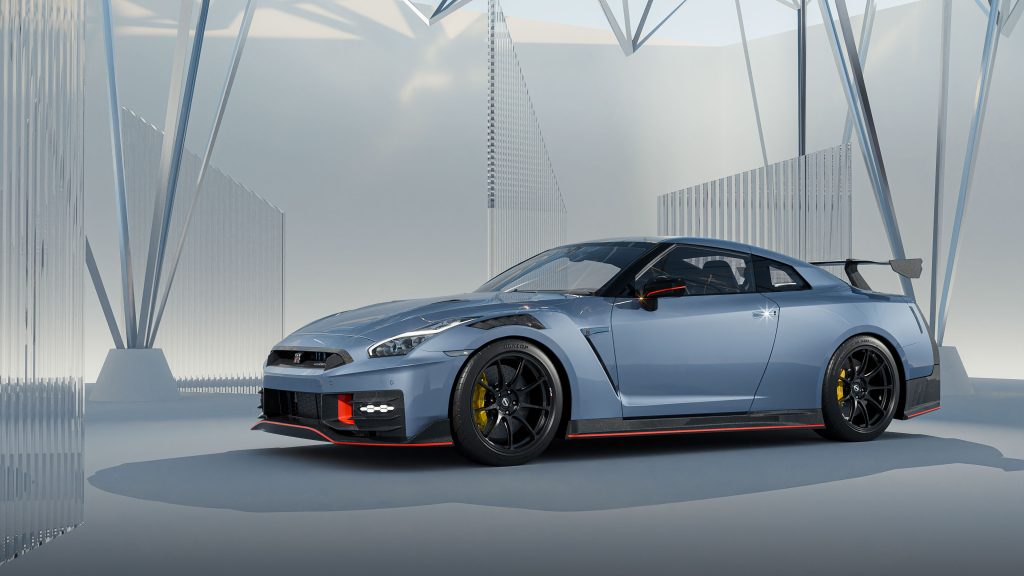
The VR38 engine has remained central to the modern GT-R’s identity for years, with Nissan refining it through successive model updates. Its displacement is larger than the Maserati’s 3.0-liter unit, yet the NISMO still delivers an impressive 600 horsepower from six cylinders.
This entry earns its place through a clearly documented factory rating, not tuned-car claims or aftermarket dyno results. With 600 horsepower and 481 lb-ft of torque, the GT-R NISMO represents one of the strongest factory V6 applications offered to American performance-car buyers.
5. Alfa Romeo Giulia Quadrifoglio
The Alfa Romeo Giulia Quadrifoglio brings Italian sports-car engineering into a four-door sedan. Its 2.9-liter twin-turbocharged V6 is rated at 505 horsepower and 443 lb-ft of torque in U.S. specifications.
Unlike a hybrid supercar, the Quadrifoglio relies on its combustion engine for its published power output, making its figures directly comparable with other non-hybrid engines in this ranking.
Alfa Romeo’s performance-focused engineering is evident in the engine’s compact V6 design, turbocharging, and wide torque range. Producing a peak of 443 lb-ft well before reaching maximum horsepower allows the sedan to accelerate forcefully without requiring the engine to operate at high revs constantly.c
Alfa Romeo pairs the engine with an eight-speed automatic transmission and rear-wheel drive in the U.S. Quadrifoglio. The car’s lightweight-focused construction, performance suspension, and electronically controlled systems work alongside the engine to make the sedan capable on winding roads and racetracks.
The horsepower figure alone cannot explain the driving experience, but it establishes the engine’s place among the most powerful V6s fitted to American-market production cars.
The Quadrifoglio also shows why a ranking should use factory output rather than numbers from tuned vehicles. Aftermarket turbocharger, fuel-system, and engine-management changes can push a V6 far beyond its original rating, but results vary with hardware and calibration. The factory-rated 505 horsepower offers a consistent basis for comparison.
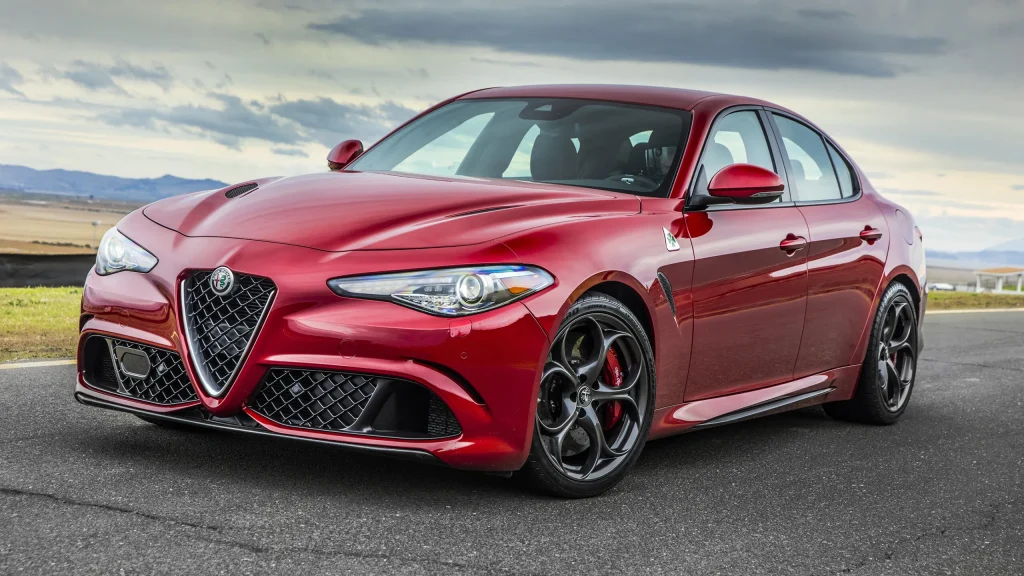
For buyers considering a used example, the engine’s performance comes with the need for careful maintenance. Service history, correct fluids, cooling-system condition, and evidence of proper repairs should be examined before purchase.
Its 505-horsepower rating is impressive, but the condition of an individual car matters more than its position in a power ranking.
6. Acura NSX
The second-generation Acura NSX deserves a place among America’s most powerful V6-powered sports cars, but its hybrid architecture makes the numbers especially important. Its 3.5-liter twin-turbocharged V6 produces 500 horsepower and 406 lb-ft of torque.
Acura’s published specifications for the 2020 model confirm those engine-only figures, while the complete Sport Hybrid SH-AWD powertrain produces 573 horsepower and 476 lb-ft of combined system torque.
That distinction keeps the NSX’s ranking fair. The gasoline engine is not responsible for all 573 horsepower by itself. Three electric motors supplement its output, with two powering the front wheels and another integrated into the rear powertrain.
Together, the components provide electric assistance during acceleration and help control torque delivery through corners.
The V6 sits longitudinally behind the passenger compartment and uses twin turbochargers, direct and port fuel injection, and a dry-sump lubrication system.
Acura designed the engine to produce substantial power from relatively little displacement, quoting a specific output of 143 horsepower per liter. That is a strong figure for a production engine, particularly one intended for a road car that must also meet U.S. emissions requirements.
Acura paired the engine with a nine-speed dual-clutch transmission. The electric motors help deliver immediate torque while the gasoline engine builds power, giving the hybrid system a different response from a conventional turbocharged V6 alone.
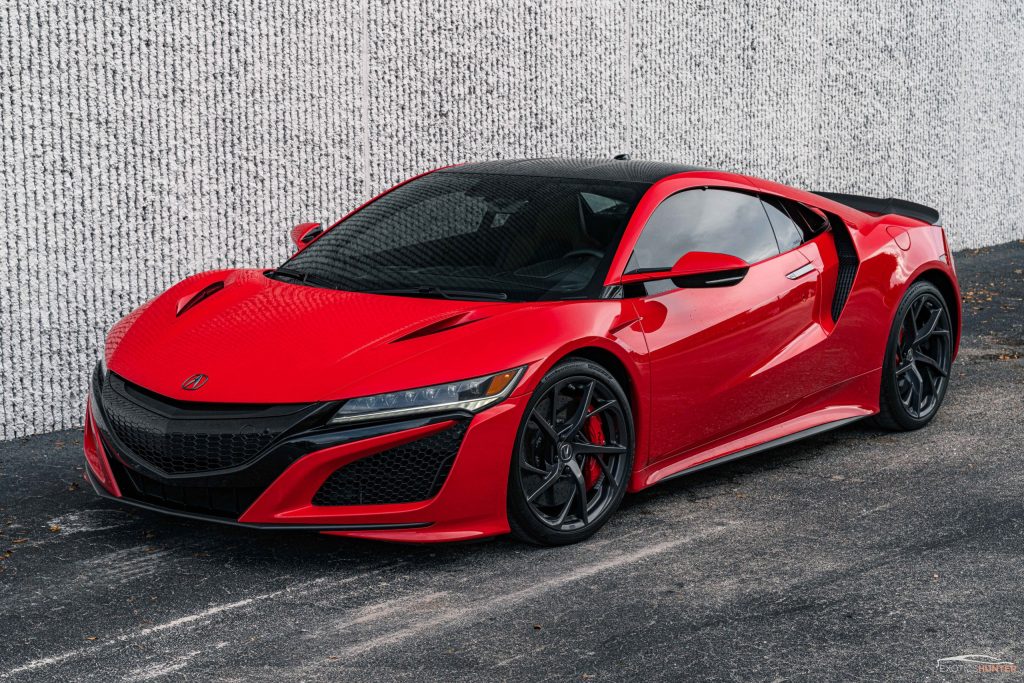
The NSX was sold in the United States from 2017 through the 2022 model year. Its engine-only rating places it just behind the 505-horsepower Alfa Romeo in this ranking, but its hybrid system produces considerably more combined power than the engine figure suggests.
Keeping those measurements separate is essential when comparing V6 engines rather than complete powertrains.
7. Cadillac CT4-V Blackwing
Cadillac’s CT4-V Blackwing proves that a compact luxury sedan can deliver serious performance without a V8. Its 3.6-liter twin-turbocharged V6 produces 472 horsepower and 445 lb-ft of torque when running on premium gasoline, according to Cadillac’s U.S. specifications.
The engine is paired with a six-speed manual transmission as standard, while a 10-speed automatic is available.
This engine stands out partly because Cadillac retained a manual gearbox in a segment where automatic transmissions dominate. The combination gives enthusiasts direct control over gear selection while the twin turbochargers provide substantial power across the rev range.
Cadillac quotes a 0-to-60-mph time of 3.9 seconds for the CT4-V Blackwing, demonstrating what the engine can achieve when combined with the car’s transmission, rear-wheel-drive layout, and launch-control systems.
The 3.6-liter unit is not simply a larger version of an ordinary economy-car V6. Its forced induction and performance-focused calibration are intended to support repeated acceleration and track use.
The Blackwing also includes performance-oriented chassis equipment, including Magnetic Ride Control and a mechanical limited-slip rear differential, helping the car translate engine output into controlled acceleration and cornering.
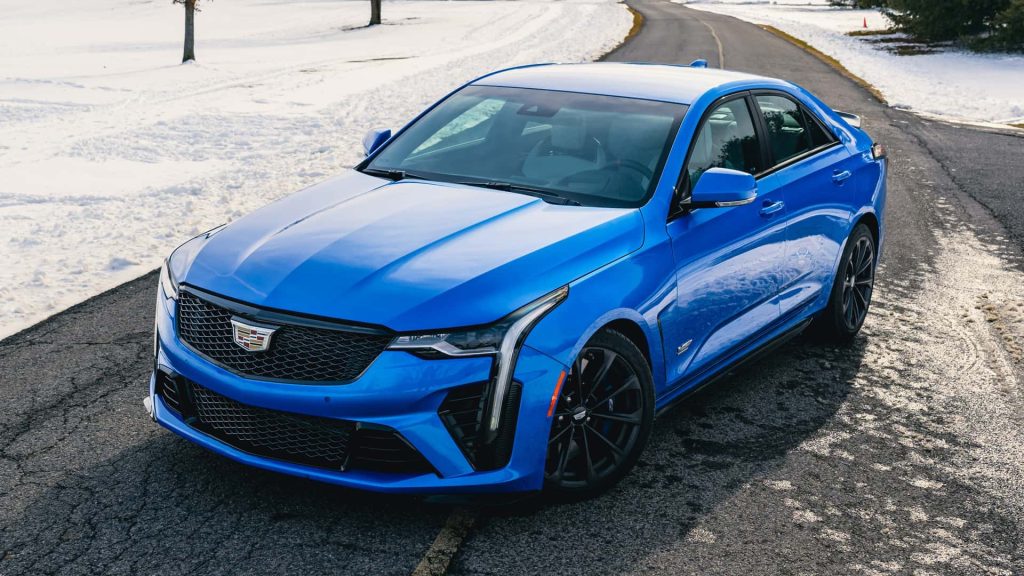
For this ranking, the CT4-V Blackwing sits below the 500-horsepower Acura NSX engine and above the 450-horsepower Ford F-150 Raptor V6. Its 472-horsepower rating is the relevant comparison, rather than the car’s acceleration time or any modified-engine result.
The Blackwing’s appeal extends beyond its headline numbers. It combines substantial V6 output with a usable four-door body and a choice of transmissions, making it a distinctive example of American performance engineering.
8. Ford F-150 Raptor
The Ford F-150 Raptor demonstrates that a high-output V6 does not need to power a sports car to earn a place among the strongest engines sold in the United States.
Its 3.5-liter high-output EcoBoost V6 produces 450 horsepower and 510 lb-ft of torque, according to Ford’s published specifications. Peak torque arrives at 3,000 rpm, giving the truck substantial pulling force at relatively low engine speeds.
That torque figure is particularly important for a performance pickup. The Raptor is designed for high-speed off-road driving, rough terrain, and demanding recreational use.
Strong low- and mid-range output helps the truck accelerate across loose surfaces and maintain momentum, while its turbocharged design produces considerable power without the displacement of a traditional large V8.
Ford pairs the engine with a 10-speed automatic transmission. The broader truck package includes specialized suspension and off-road hardware, but those features should not be confused with engine output. The V6 itself is responsible for the published 450 horsepower and 510 lb-ft rating.
The Raptor also illustrates why horsepower alone does not tell the entire performance story. Although it produces less horsepower than the CT4-V Blackwing, its 510 lb-ft of torque exceeds the Cadillac’s 445 lb-ft. The vehicles serve very different purposes, so their performance cannot be compared solely through acceleration or torque figures.
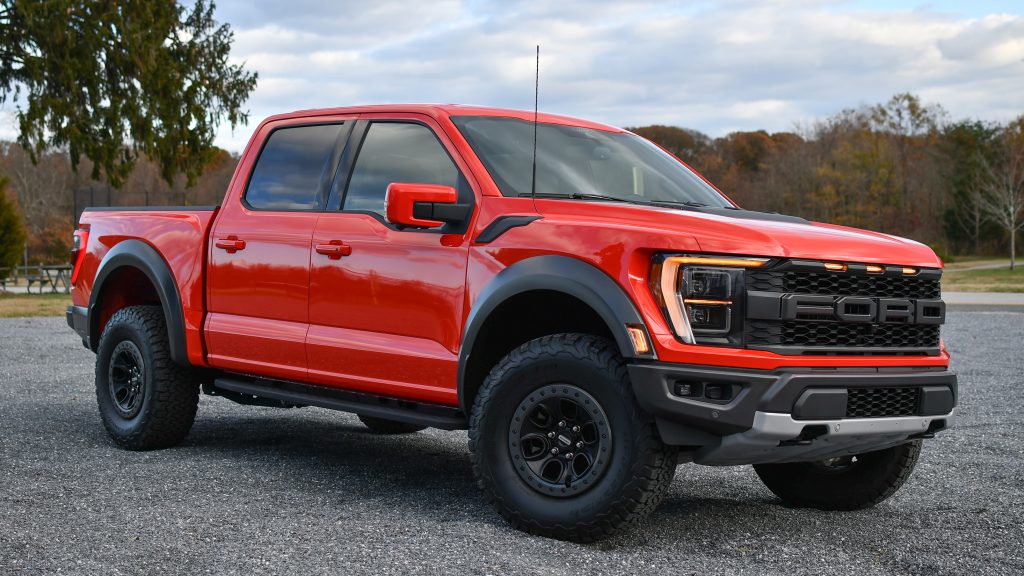
The F-150 Raptor’s engine is factory-rated rather than aftermarket-tuned, making it a reliable entry for this list. It ranks below the CT4-V Blackwing by horsepower but ahead of several other production V6 engines sold in the U.S. market.
Its combination of 450 horsepower and 510 lb-ft makes it one of the most muscular V6 applications in a mainstream American pickup.
9. Ford Bronco Raptor
The Ford Bronco Raptor uses a 3.0-liter twin-turbocharged EcoBoost V6 rated at 418 horsepower and 440 lb-ft of torque in U.S. specifications.
Its position in this ranking comes from the engine’s factory horsepower figure, which places it below the F-150 Raptor’s 450-horsepower V6 but above the 365-horsepower Genesis G70 engine.
The Bronco Raptor’s engine is calibrated for a very different vehicle from a luxury sedan or a road-focused supercar. It powers a four-wheel-drive SUV developed for serious off-road use, where traction, low-speed control, cooling, and the ability to deliver torque across changing terrain are important.
The 440 lb-ft output helps the Bronco tackle steep trails and accelerate through loose surfaces, while its turbochargers help maintain strong performance from a relatively compact engine.
Ford combines the V6 with a 10-speed automatic transmission and specialized off-road equipment.
The Bronco Raptor’s suspension, tires, wider track, and reinforced components are central to its capabilities, so engine horsepower alone cannot describe the complete vehicle. Nevertheless, the V6’s output is a useful measure when comparing engines across different body styles.
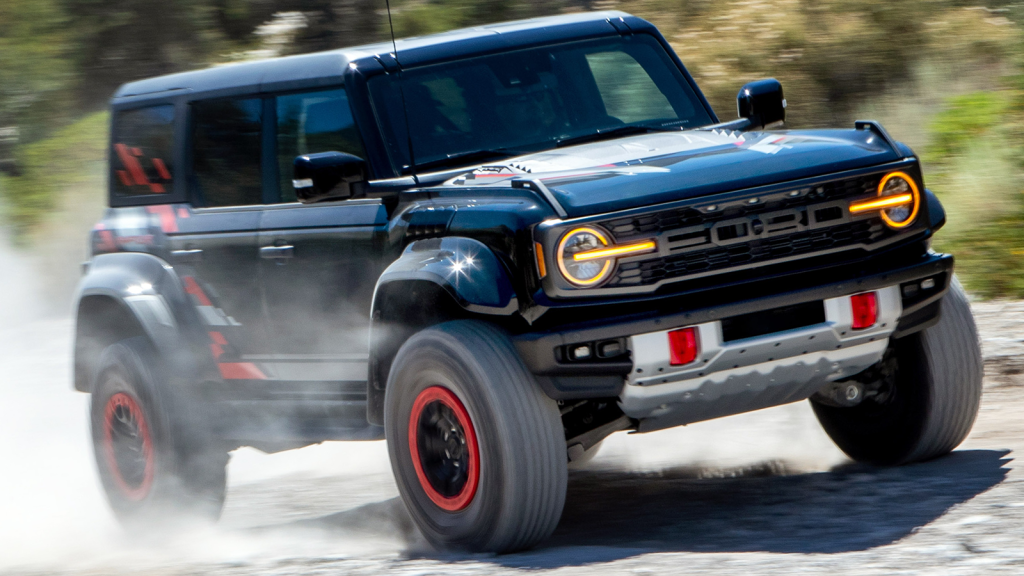
Its 3.0-liter displacement is smaller than the F-150 Raptor’s 3.5-liter unit, yet it still produces more than 400 horsepower. That result illustrates how turbocharging and engine calibration can extract substantial output from a smaller engine without resorting to aftermarket modifications.
For this list, the 418-horsepower rating is the key figure. Torque is included for context, not as a second ranking criterion. The Bronco Raptor earns its place among the most powerful V6-powered vehicles sold in America because it combines high factory output with the demanding requirements of an off-road SUV.
10. Genesis G70 3.3T
The Genesis G70 3.3T rounds out the ranking with a twin-turbocharged 3.3-liter V6 producing 365 horsepower and 376 lb-ft of torque in its U.S. specification. Genesis lists these figures for the 3.3T version, which uses an eight-speed automatic transmission. All-wheel drive is available, depending on trim and configuration.
Rather than chasing supercar-level output, this engine gives a compact luxury sport sedan the power to deliver brisk acceleration while retaining everyday usability. The 376 lb-ft torque figure is particularly relevant in normal driving because strong mid-range pulling power can make highway merging and passing easier without requiring constant downshifts.
The G70’s twin-turbo V6 sits below the higher-output engines earlier in this article, but its output remains substantial for a luxury sedan.
The ranking also highlights the versatility of powerful V6 engines across different vehicle categories. Ferrari and Maserati use them in exotic sports cars, Ford equips its engines in specialized trucks and SUVs, while Genesis focuses on delivering performance suited to a premium everyday vehicle.
Buyers should distinguish the 3.3T from other G70 powertrains. Genesis has also sold versions with a turbocharged four-cylinder engine, and the specifications are not interchangeable. Model year, trim, and drivetrain can affect the exact equipment and published figures, so the vehicle’s original specification sheet is the appropriate reference.
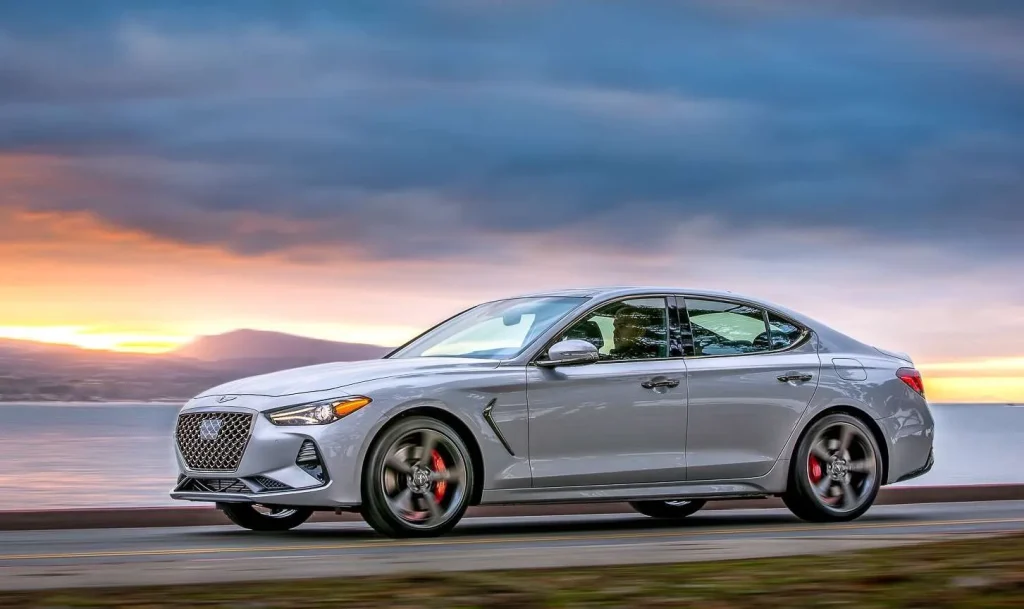
The 365-horsepower rating places the G70 below the Bronco Raptor’s 418 horsepower, but its sedan format makes the engine’s character different. It is designed to balance strong acceleration with comfort and regular road use rather than prioritize off-road performance or track-focused extremes.
As the final entry, the G70 shows that a V6 does not need to exceed 400 horsepower to be a serious performance engine. Its factory-rated output makes it a relevant member of the U.S. market’s high-powered V6 field.
