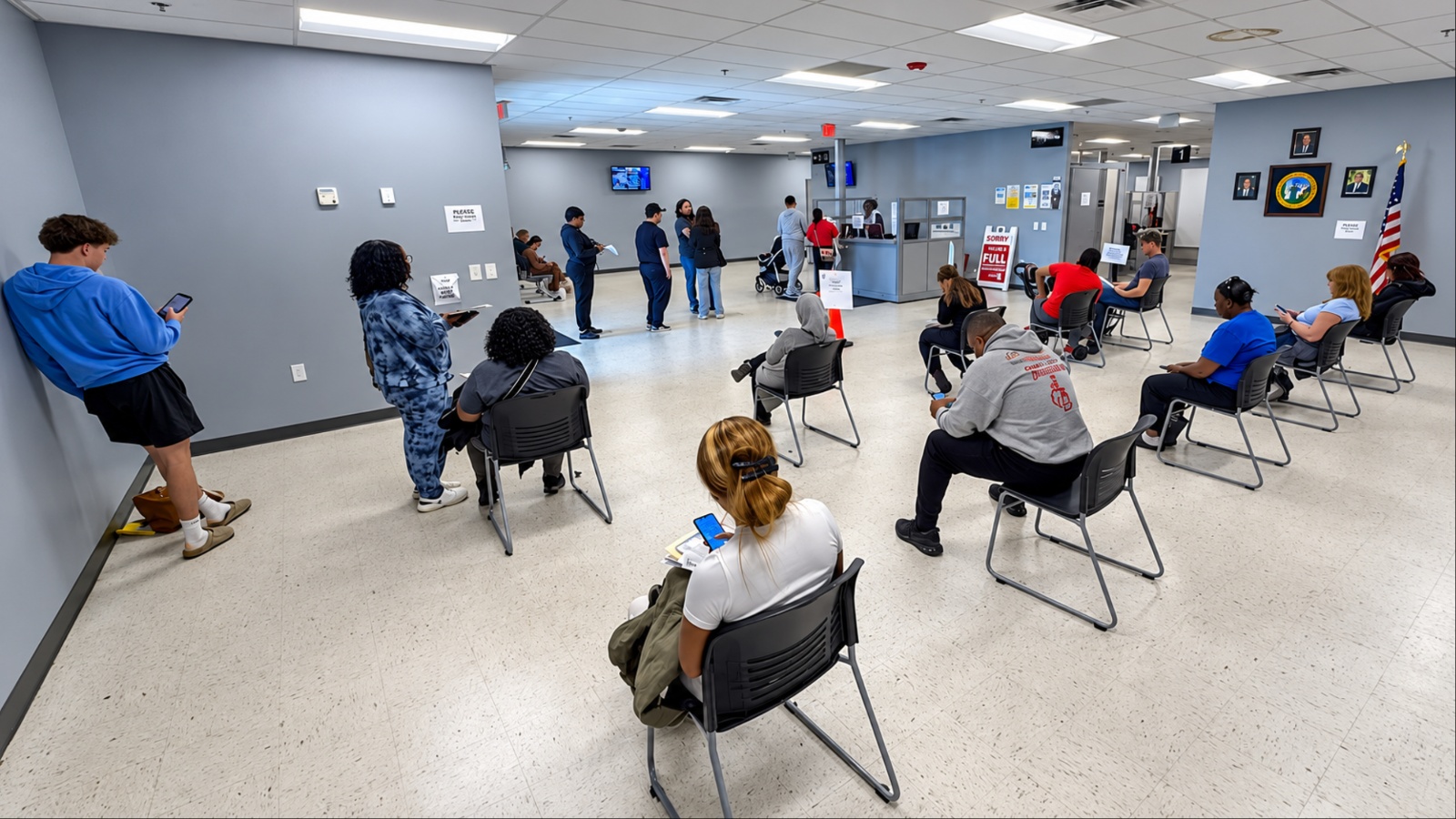
DMV waits are difficult to compare cleanly across the United States because states do not publish one standardized national metric. Some agencies report live walk-in waits, others publish appointment lead times, and some only provide statewide averages or office-level dashboards.
For this list, the comparison uses the most recent official state DMV, RMV, MVA, or licensing-agency data available, emphasizing published appointment delays, average office waits, and documented high-wait locations rather than relying on anecdotal complaints.
The goal is not to label one state as permanently “the worst” but to identify places where motorists may face unusually long waits depending on the office, the service they need, and whether they have an appointment. In some states, booking an appointment can significantly reduce delays.
In others, population growth, REAL ID demand, staffing shortages, and heavy traffic at urban offices continue to cause bottlenecks. The key takeaway is simple. Check the official wait-time dashboard, schedule an appointment whenever possible, and remember that service times can vary widely between branches within the same state.
1. Massachusetts
Massachusetts stands out because its Registry of Motor Vehicles publishes unusually clear appointment lead-time estimates. As of 2026, the RMV says customers seeking a Service Center appointment may wait about 14 days, while a road-test appointment can take roughly 20 to 30 days. That makes Massachusetts one of the clearest examples of a state where the real DMV wait can occur before the customer even enters the building.
That distinction matters. An office lobby might move relatively efficiently once a driver arrives, but if the next usable appointment is two weeks away, the practical delay is still significant. This is especially frustrating for people dealing with license problems, title transactions, or deadlines that cannot be handled entirely online.
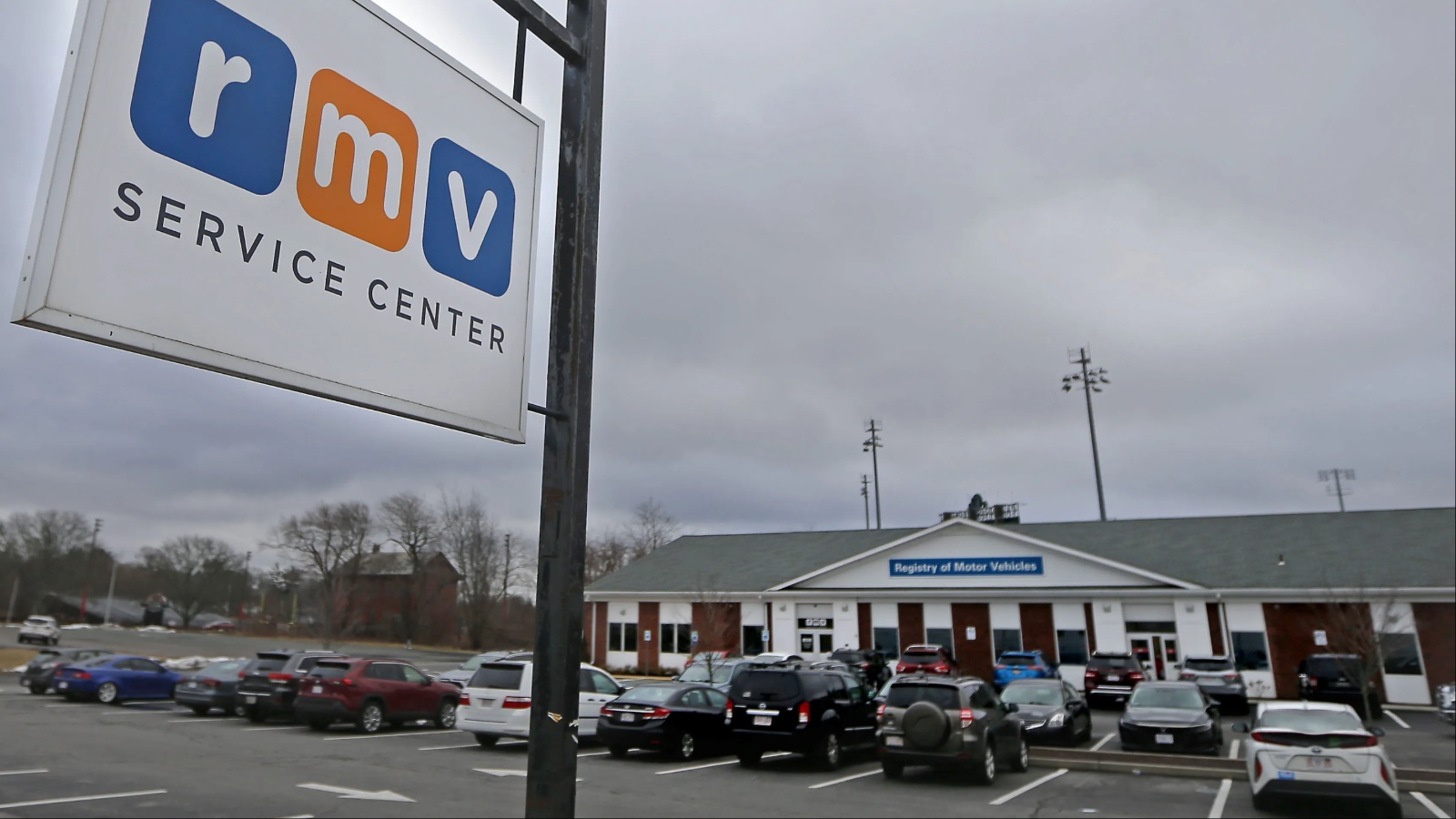
Massachusetts has been expanding appointment access. In 2026, the RMV announced that registration and title appointments would become available online at service centers statewide, while walk-in service would remain available. The goal is to give customers more flexibility and smooth demand across locations.
For residents, the best strategy is to schedule as early as possible and keep checking for newly opened appointment slots. Appointments can appear after cancellations, so checking more than once may help. Massachusetts may not always have the longest lobby lines, but its published appointment delays make it one of the strongest candidates for this list.
2. Virginia
Virginia shows just how dramatically DMV waits can vary from one office to another. The state publishes live office-level wait estimates, and some locations can become extremely slow during busy periods. A published snapshot for the Tysons Corner customer service center showed estimated waits of about 1 hour and 17 minutes across several service categories, including driver and ID services, registrations, and titles.
Other offices can be much faster. Some locations have shown waits measured in only a few minutes, while others have posted waits exceeding 40 minutes for certain services. That variation is precisely why statewide averages can be misleading.
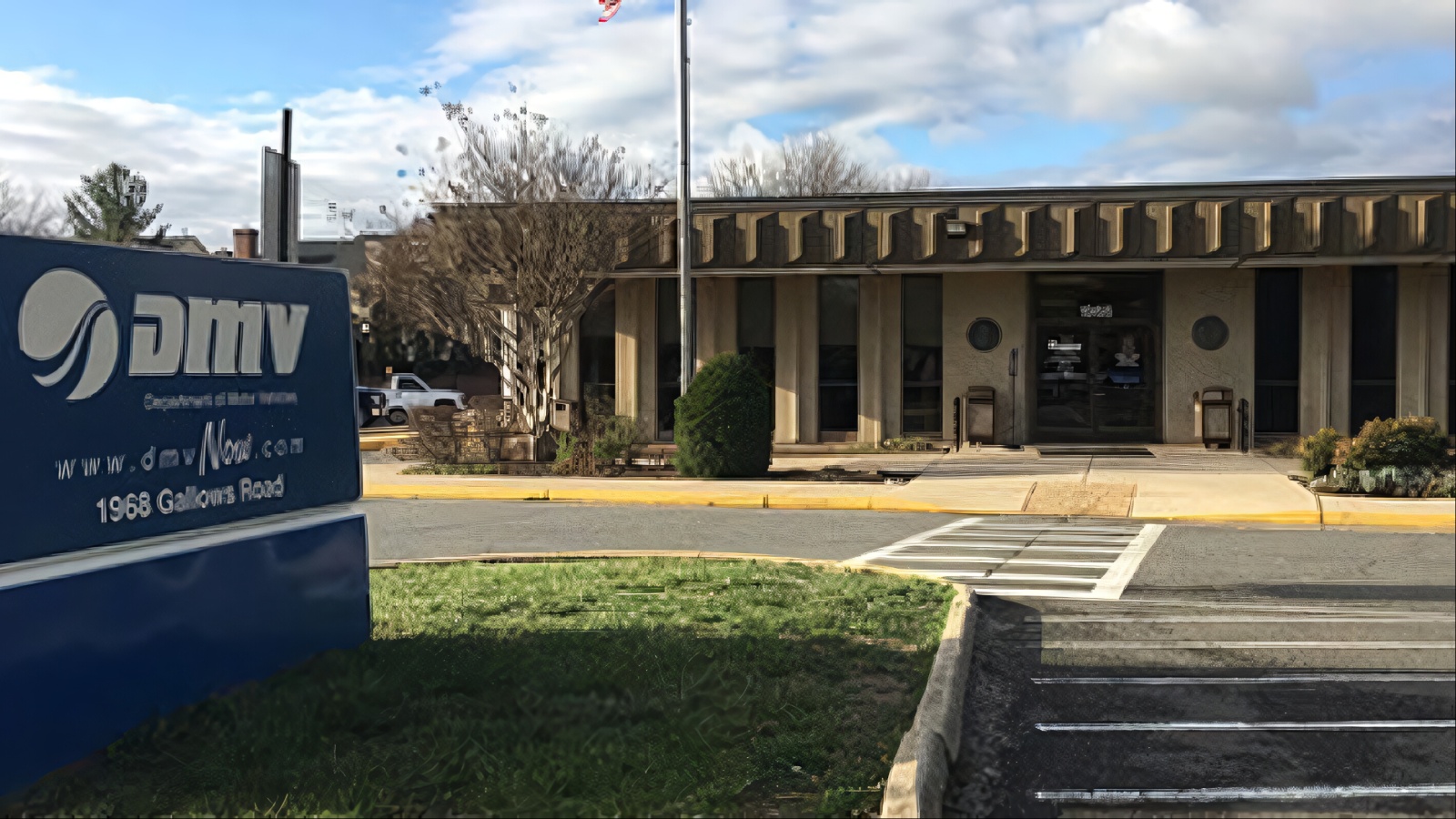
Virginia updates its estimated waits frequently, and the published figure can change quickly as customer volume and transaction complexity shift throughout the day. This makes timing especially important for drivers who do not have appointments.
For drivers, location choice can matter almost as much as appointment timing. A resident willing to travel to another service center may save a substantial amount of time. Virginia deserves a high position on this list not because every DMV visit is slow, but because official state data shows that some high-demand offices can exceed an hour.
The practical takeaway is straightforward. Before heading to a Virginia DMV, check current wait times, compare nearby locations, and book an appointment whenever the service allows it.
3. California
California’s enormous population and large DMV network create some of the widest variations in wait time in the country. The state publishes current wait estimates for individual offices, and the difference between locations can be dramatic. Recent office listings have shown waits approaching an hour at some high-demand branches, while nearby locations can be far quicker.
That illustrates the California problem perfectly. There is no single California DMV wait. A customer can face a long queue at one branch while another office within reasonable driving distance may move much faster.
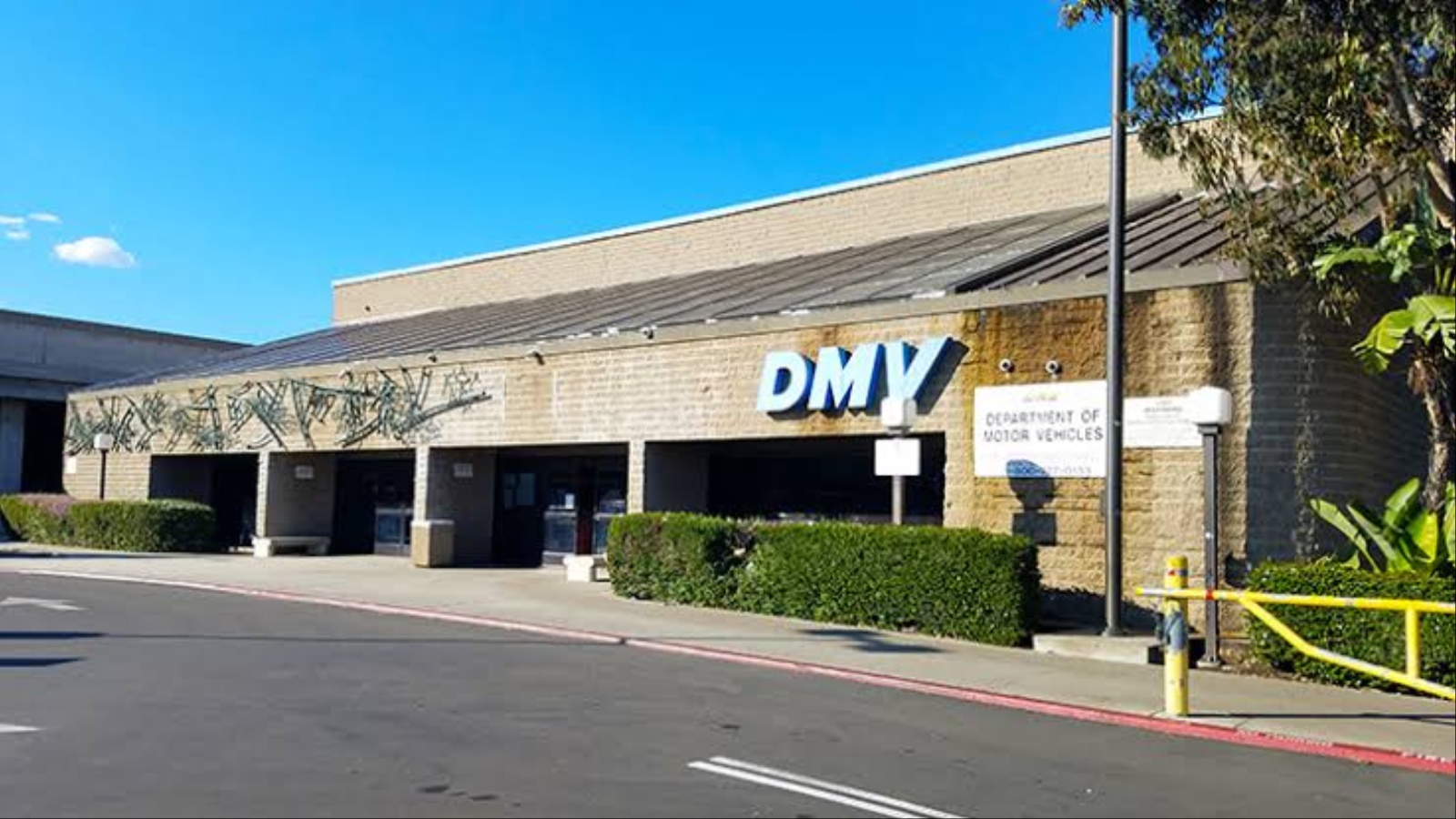
Appointments can make a major difference. At many California locations, customers with appointments are served substantially faster than walk-ins. The state has also invested heavily in online services, self-service kiosks, and authorized partners for eligible transactions. Those alternatives can remove many customers from DMV office lines entirely.
Still, for transactions that require an in-person appearance, urban and high-demand locations can produce some of the longest officially published waits in the country. The difference between offices can easily be large enough to justify driving farther.
Californians should check wait times at nearby offices before heading out instead of automatically choosing the closest branch. Driving an extra 20 or 30 minutes to a less crowded location could save considerably more time waiting in line.
4. Washington
Washington State’s own workload reports provide strong evidence of significant walk-in waits. In the fourth quarter of 2025, the Department of Licensing reported that the ten offices with the longest average walk-in waits ranged from 21 to 45 minutes. Everett topped the list at about 45 minutes, followed by Bellingham and Vancouver.
The state has also warned that walk-in waits could remain elevated because of unusually high numbers of customers needing in-person renewals. That makes Washington particularly notable. The agency is not merely reporting a temporary bad day but acknowledging sustained pressure on its licensing system.
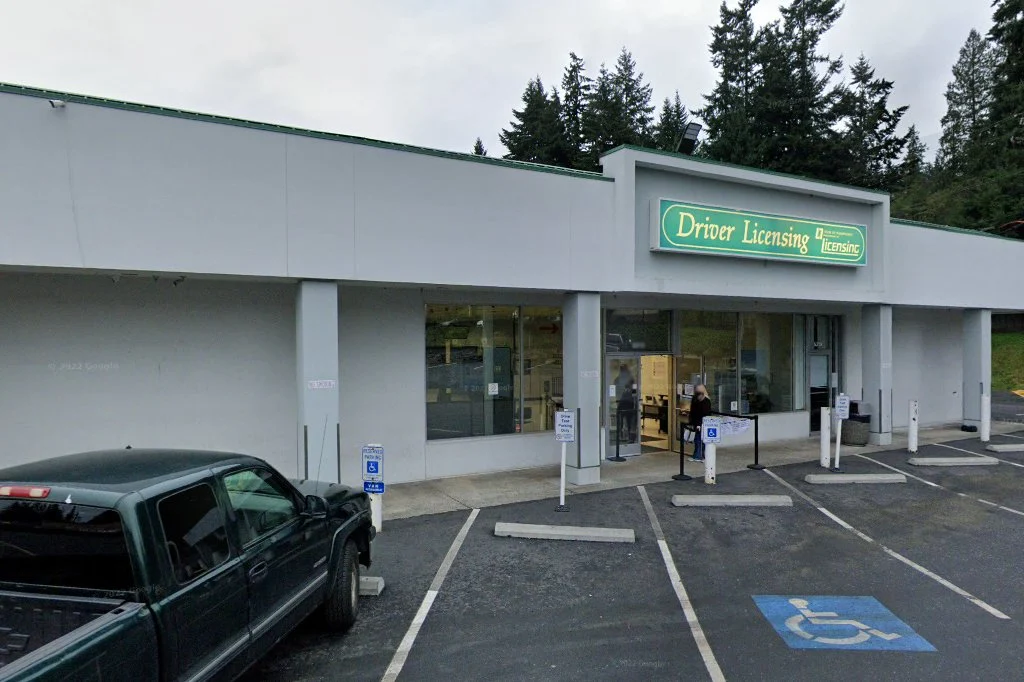
Washington strongly encourages appointments. An appointment helps ensure that customers are seen at a predictable time and reduces the risk of arriving at an office that has reached capacity. Walk-ins are fitted around appointment customers and may sometimes be asked to try another office or return later.
The department has responded by increasing the number of appointment service lines at medium and large offices. Even so, drivers without appointments remain the most exposed to long waits.
For Washington residents, planning ahead can make a significant difference. State data indicates that walk-in customers at busy offices may wait 30 to 45 minutes before their transactions begin, with delays sometimes persisting for extended periods. Booking an appointment in advance can help reduce waiting time and make the visit more predictable.
5. North Carolina
North Carolina has made major progress on DMV waits, but it still belongs on this list because the state has historically struggled with severe driver-license office congestion and only recently began publishing comprehensive live wait information.
In 2026, NCDMV launched a statewide system showing estimated wait ranges and whether each driver-license office is accepting customers, busy, or already at capacity. The estimates take into account the number of operating service stations, customers waiting, and average transaction times.
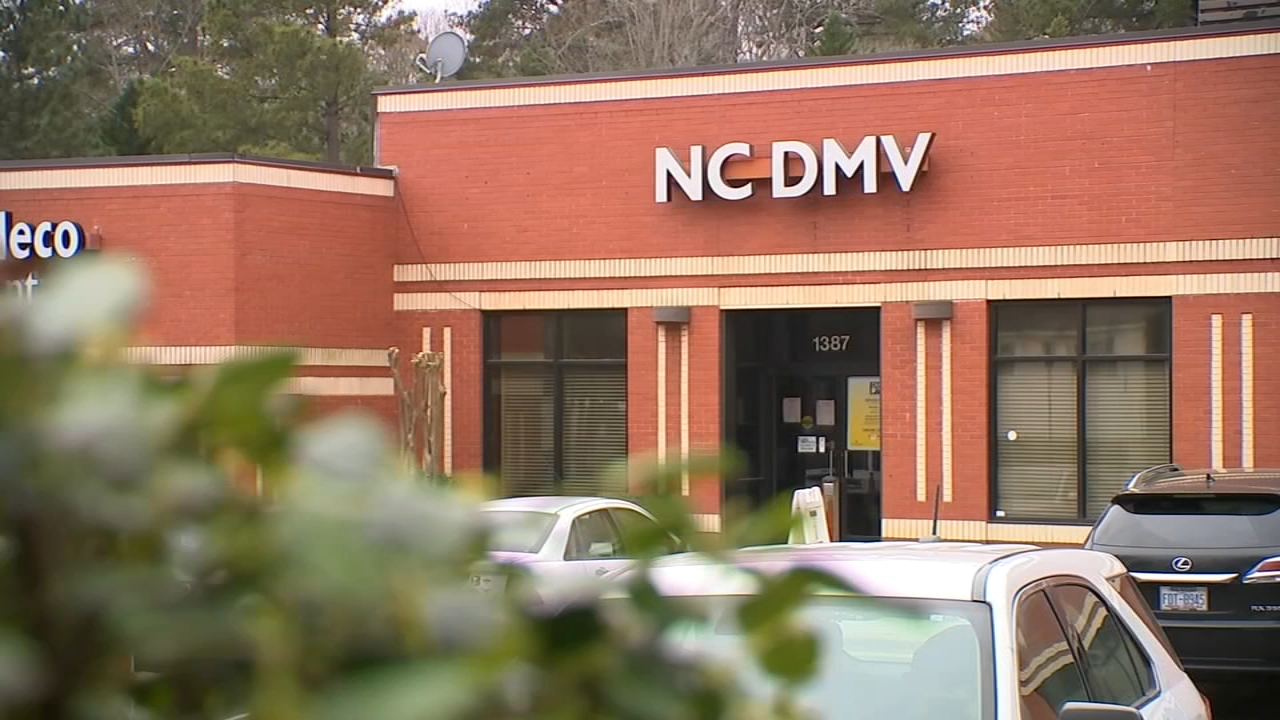
The good news is that the situation improved sharply. By mid-2026, North Carolina reported an average driver-license office wait of about 23 minutes, describing that as a major reduction from the previous year. That improvement also shows how serious delays had been beforehand.
A statewide average of 23 minutes is not extreme compared with the worst individual offices elsewhere, but an average can hide branches with much longer waits, especially when capacity warnings appear. Walk-in demand can also fluctuate significantly by time of day and location.
North Carolina is a useful example of how publishing real-time data can improve the customer experience. Drivers can now check conditions before leaving home and choose a less crowded branch. It may no longer deserve the reputation it once had, but planning ahead is still important.
6. Oregon
Oregon’s DMV data shows a different kind of delay problem. Rather than publishing one simple statewide average wait, Oregon tracks the percentage of customers served within 20 minutes. In early 2026, only about 72% to 77% of customers were being served within that 20-minute target, depending on the month.
That means roughly one-quarter of customers in some months waited longer than 20 minutes. The state attributed much of the pressure to the REAL ID surge, noting that Oregon issued significantly more REAL IDs in 2025 than in the previous year.
Conditions have been improving in 2026, but the official numbers still show that the state has not consistently hit its goal of serving 80% of customers within 20 minutes. That puts Oregon among the states where a walk-in visit can easily become a longer-than-expected errand.
The important point is that Oregon’s data is statewide rather than limited to one unusually busy office. Even if a particular branch is fast, the broader system has been dealing with demand levels high enough to affect service performance.
Oregon also continues to push customers toward online services where possible. For anyone who must visit in person, checking office conditions and avoiding peak periods is worthwhile.
7. Illinois
Illinois has dealt with DMV congestion by making appointments mandatory for many high-demand driver services. At dozens of the busiest DMV facilities, customers seeking services such as REAL ID, driver’s licenses, state IDs, or driving tests generally must schedule ahead.
That policy means Illinois wait times are often expressed less as a long lobby queue and more as limited appointment availability. In the Chicago area, many major facilities require appointments for core driver services.
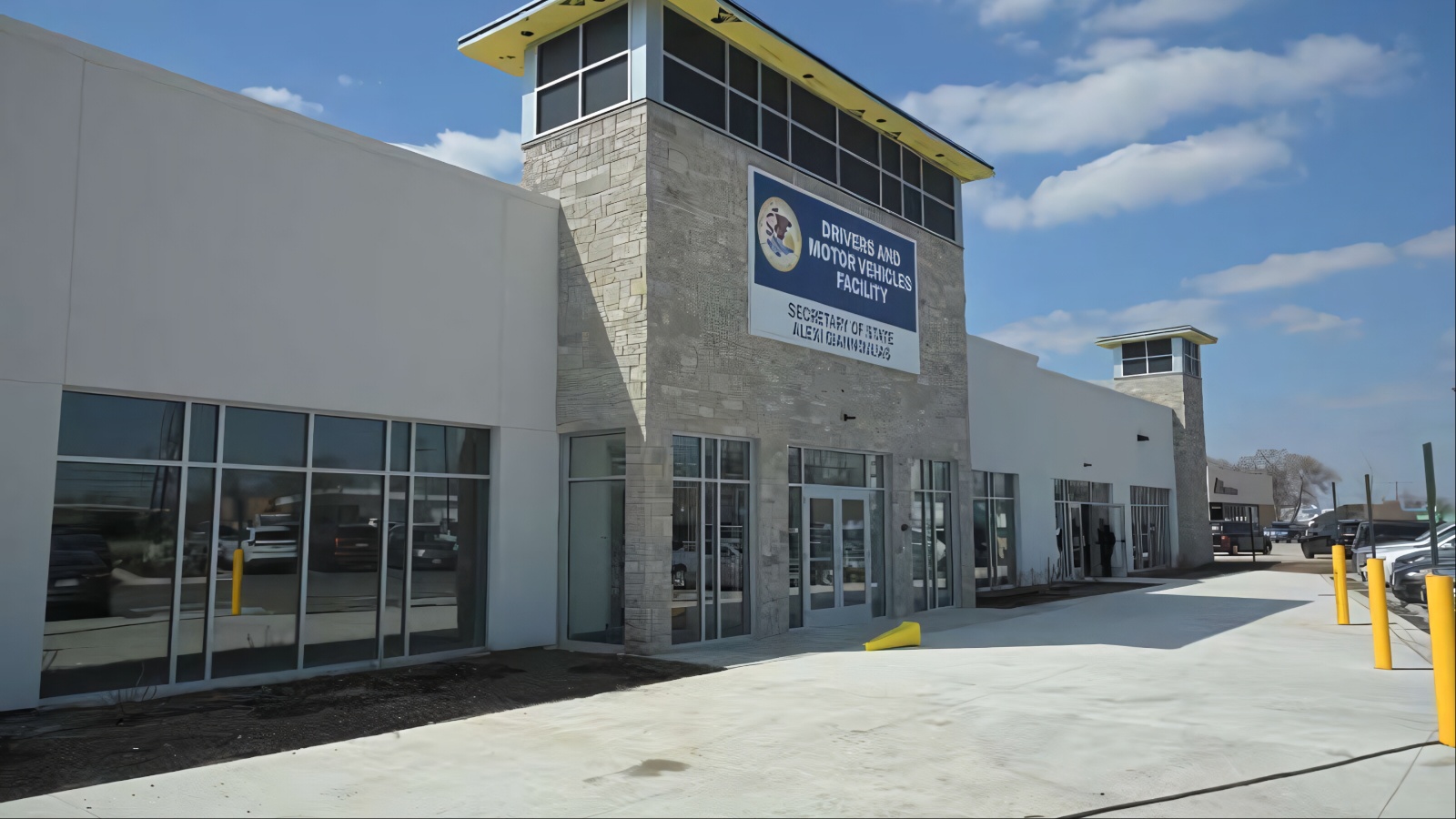
Illinois introduced its appointment system specifically to eliminate unpredictable wait times at busy DMVs. The state has also expanded hours, opened specialized facilities, and redesigned offices using a one-stop model in which employees can handle multiple transaction types at one counter.
For customers, that is better than standing in a line for hours, but it creates another challenge. You may not be able to simply show up when you need service.
Illinois therefore earns its place here because appointment dependence is a sign of underlying demand. The system is designed to control long waits rather than pretend they do not exist.
Residents should schedule as soon as they know they need an in-person transaction. Walk-in options still exist for some services, but many of the busiest offices no longer operate that way for key licensing transactions.
8. New York
New York does not publish a simple statewide average wait time, but its own DMV guidance makes clear that congestion can become severe enough that customers without reservations may not be admitted.
The state strongly encourages reservations, and some offices may restrict access to customers with reservations when wait times become excessive. That is a significant signal of demand pressure, particularly in high-population areas such as New York City and Long Island.
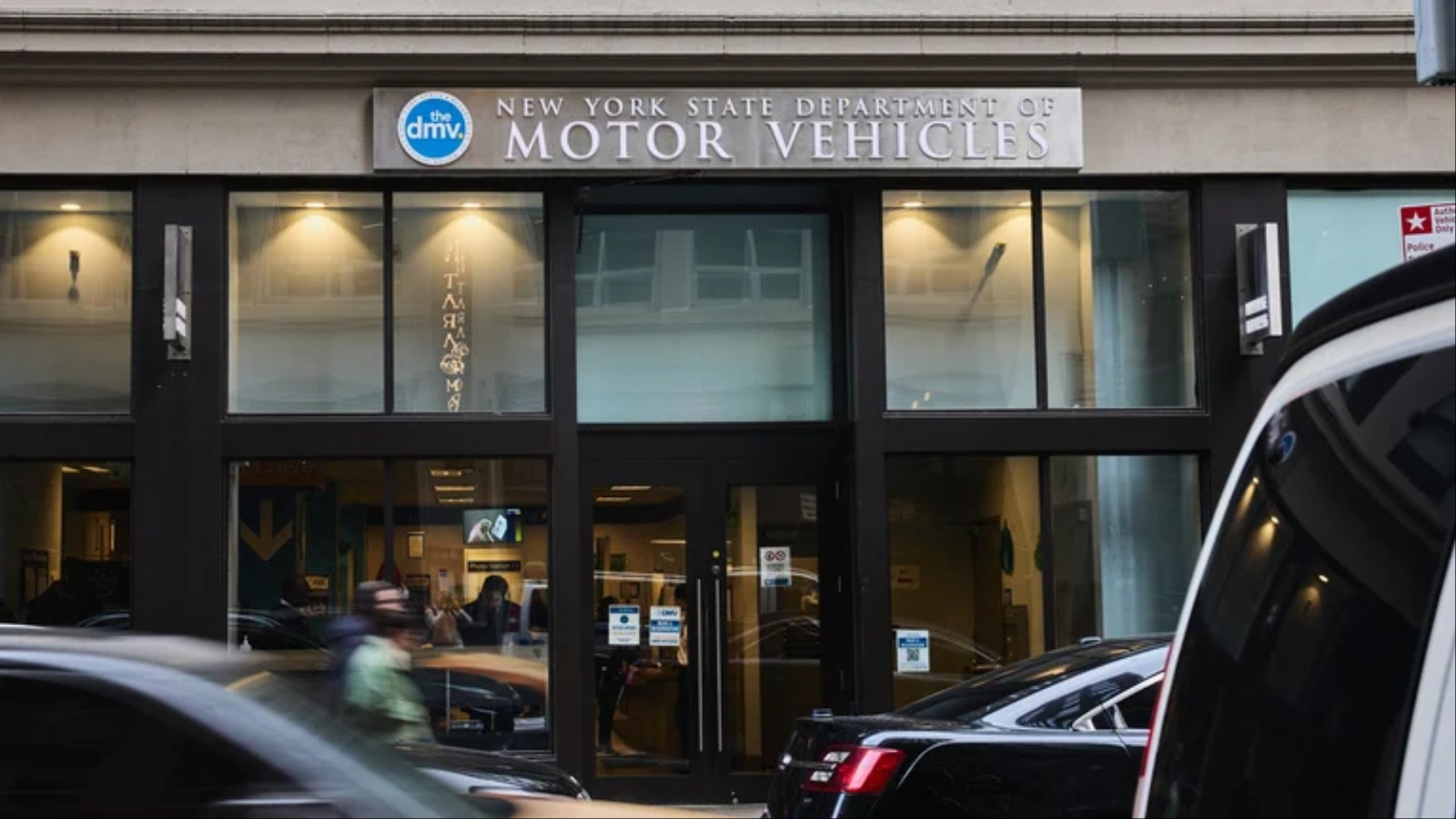
New York’s system is complicated by the fact that some DMV offices are operated by counties rather than directly by the state. Appointment availability and policies can therefore differ depending on location.
The smartest approach is to review the specific branch’s services and reserve a time whenever possible. New York also offers alternative service locations for certain eligible transactions, which can help reduce pressure on traditional DMV offices.
Because New York does not provide a single comparable statewide wait-time number, it is difficult to rank precisely against California or Washington. Still, the fact that walk-ins may face restrictions during long-wait periods makes New York one of the states where showing up without a plan can be risky.
In dense metropolitan areas, an appointment can be the difference between a routine visit and a wasted afternoon.
9. Nevada
Nevada has responded to high DMV demand by moving most major services to an appointment-based model. Virtually all DMV services require an appointment, with only a limited number of exceptions such as certain plate drop-offs, debt payments, and VIN inspections.
That policy says a lot about the underlying workload. Instead of allowing large walk-in crowds to create unpredictable lines, Nevada controls demand through scheduled appointments.
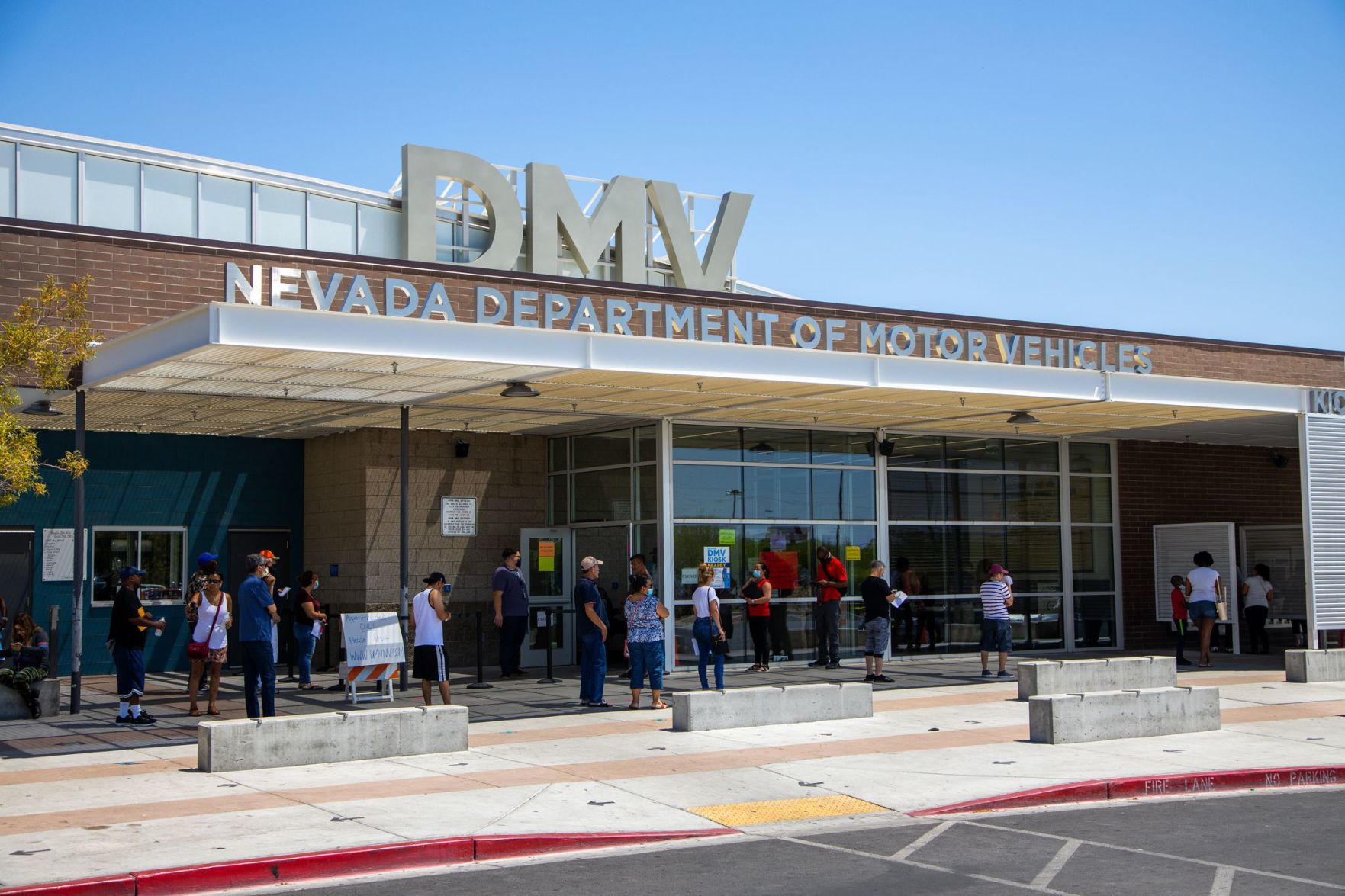
For customers, the trade-off is obvious. Once an appointment is secured, the office experience can be more orderly. But if the calendar is heavily booked, the effective wait occurs before the visit. That can be frustrating for drivers dealing with expiring credentials, newly purchased vehicles, or transactions that cannot be completed online.
Nevada’s major metropolitan areas, particularly Las Vegas and Reno, place substantial pressure on DMV offices because of population growth and high transaction volumes. Rural offices operate differently, but appointments are also required for many services there.
Nevada therefore belongs on this list not because every customer sits in a chair for an hour, but because the state has largely eliminated unrestricted walk-in DMV service to manage demand. The appointment itself has become part of the waiting process.
10. New Jersey
New Jersey’s Motor Vehicle Commission relies heavily on appointments for driver-license, road-test, and vehicle transactions, especially for services that cannot be completed online. Customers are commonly directed to schedule appointments before visiting an agency.
The system can become especially pressured when facilities close or undergo construction. In 2026, for example, some inspection operations were disrupted and motorists were directed to alternative locations. The state also adjusted certain expiration periods to reduce the impact on customers.
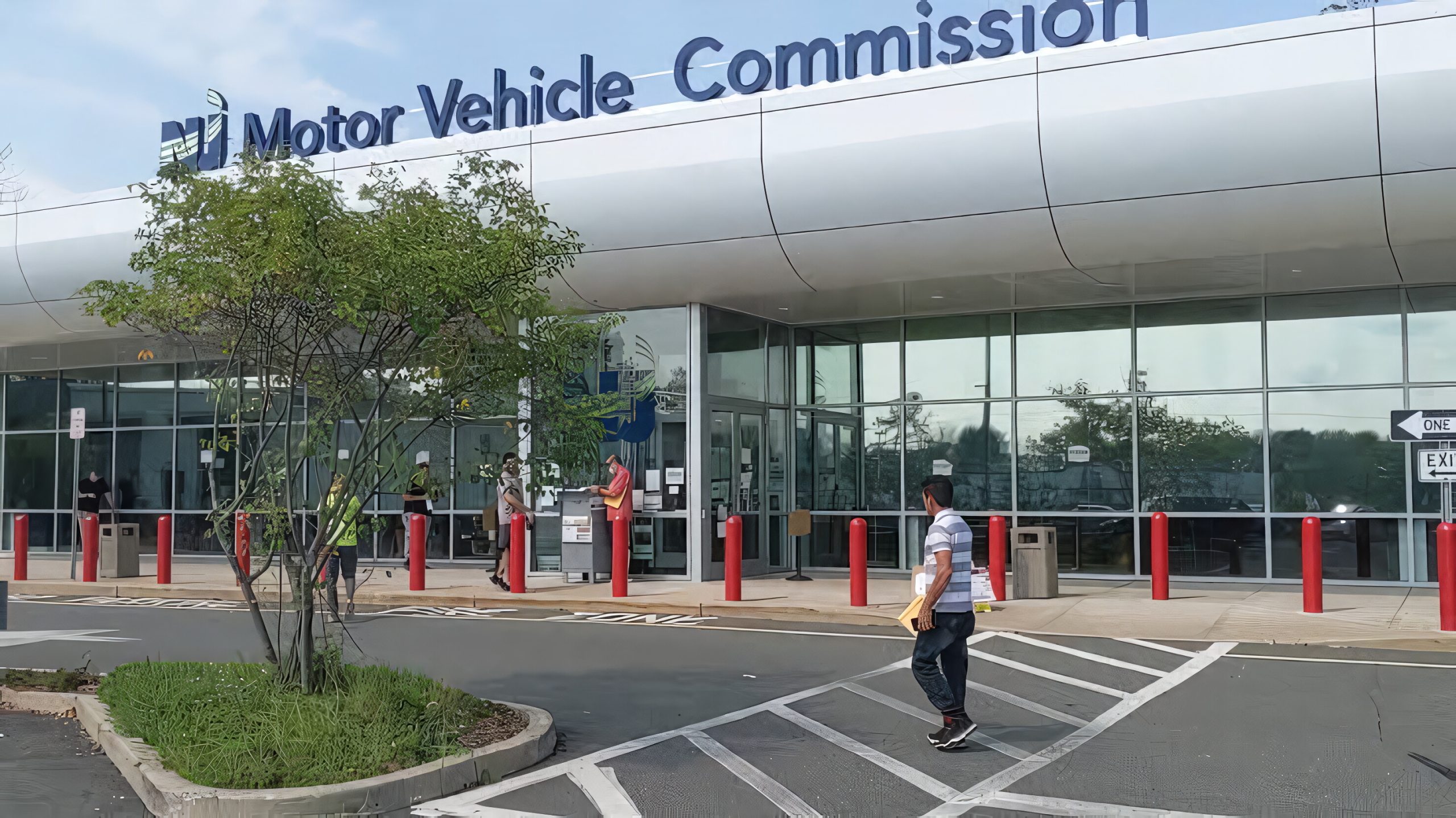
New Jersey has continued expanding REAL ID appointment availability at additional agencies, another sign that appointment capacity remains an important service issue.
The MVC does not publish a single statewide average wait that can be directly compared with Virginia’s live office figures or Massachusetts’ appointment lead times. Still, the state’s reliance on scheduled transactions and continuing expansion of appointment capacity make it a reasonable inclusion among states where motorists should plan ahead.
The best defense against a frustrating visit is to use online services first, then book an appointment for anything that truly requires an agency visit. New Jersey’s system works much better when customers arrive scheduled and prepared than when they simply show up and hope for a short line.