Euro NCAP’s child occupant protection score offers a closer look at how well a vehicle protects younger passengers in simulated crashes and accommodates child-restraint systems.
The percentage is separate from the car’s star rating, which combines four assessment categories. For this list, the focus is on vehicles with exceptionally high published child-protection scores, including several models reaching 93%.
These are European test results, not U.S. crash-test ratings, and equipment can differ between markets. Scores are presented with their test years in mind, because Euro NCAP regularly strengthens its procedures, and older results are not directly equivalent to newer ones.
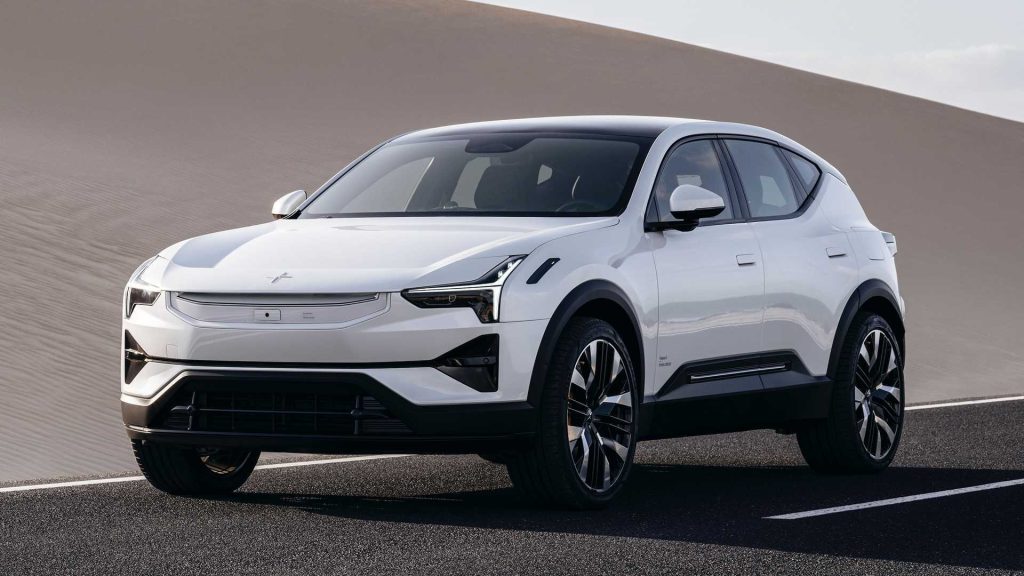
1. Polestar 3: 93% Child Occupant Protection
The Polestar 3 set a notable benchmark when Euro NCAP announced its results in April 2025. The five-seat electric SUV scored 93% for child occupant protection, which Euro NCAP described as the highest score achieved by a passenger car in the preceding nine years.
The result is particularly impressive because the vehicle was assessed under the organization’s demanding contemporary testing protocols.
Child protection testing looks beyond the strength of the passenger compartment. Euro NCAP assesses how child-sized crash-test dummies are protected in frontal and side impacts, as well as how effectively the vehicle accommodates child restraints. It also checks the clarity of information for installing child seats and the availability of suitable restraint positions.
The Polestar 3’s score formed part of a five-star safety rating, meaning its performance was strong across the broader assessment program, not just in the child category. Its electric SUV layout also gives it a family-focused role, with a five-seat cabin rather than a third row that introduces additional seating and restraint considerations.
Still, a 93% score does not mean every possible child-seat arrangement is suitable or that injuries are impossible in a severe crash.
Parents should consult the owner’s manual and child-seat compatibility information, install restraints according to the manufacturer’s instructions, and select a seat appropriate for the child’s height and weight.
The result is tied to the European-market vehicle tested in 2025. U.S. buyers should not assume the same rating applies to every specification sold in America, where equipment and certification requirements can differ.
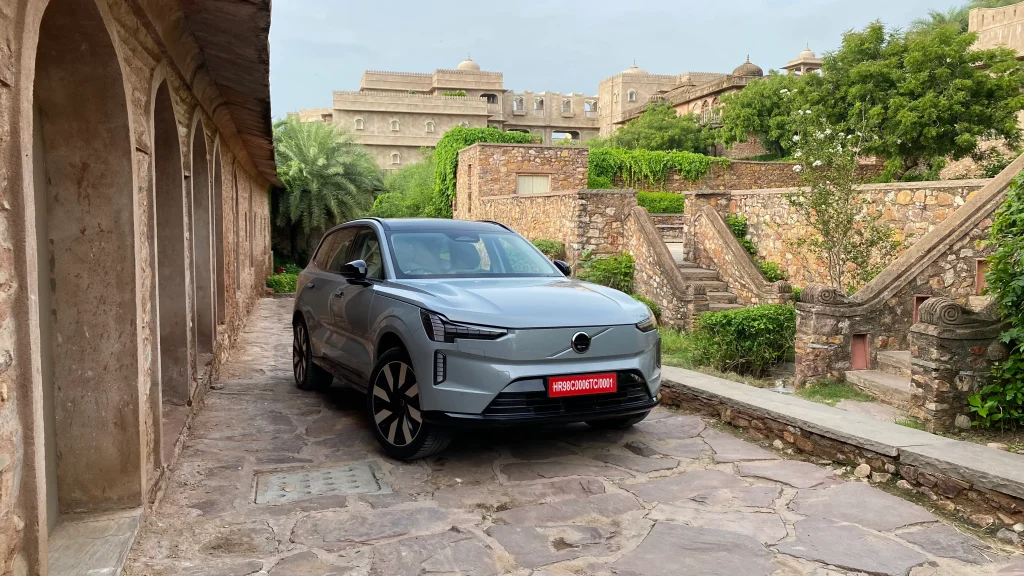
2. Volvo EX90: 93% Child Occupant Protection
Volvo has long built its brand around occupant safety, and the EX90 delivered a strong result in Euro NCAP’s 2025 testing. The large electric SUV achieved 93% for child occupant protection and earned a five-star rating.
Its other published category scores were 92% for adult occupant protection and 86% for safety assist, illustrating that the child score was part of a broadly strong safety assessment.
The EX90 is designed as a family-oriented SUV with three rows of seating. That makes child-restraint compatibility and clear seating-position information especially relevant to parents choosing between a large SUV and a smaller vehicle.
However, a high child-protection score should not be interpreted as proof that every seating position accommodates every child seat. Owners must check the manual and restraint compatibility guidance for their exact vehicle.
Euro NCAP’s child occupant category combines crash-test performance with assessments related to child restraints. The score therefore reflects more than a single impact result. A vehicle needs to protect child dummies effectively in the prescribed tests and provide appropriate support for the installation and use of child seats.
The EX90’s 93% result places it among the strongest performers in the published 2025 results. It does not mean the vehicle is automatically safer for every family than all cars with slightly lower percentages.
Different body sizes, seating needs, and child-restraint types can affect the practical choice, and star ratings should be considered alongside the individual category scores.
For U.S. shoppers, the European result is a useful reference but not a substitute for checking American-market specifications and applicable crash-test information. The tested model and equipment are what the published figure represents.
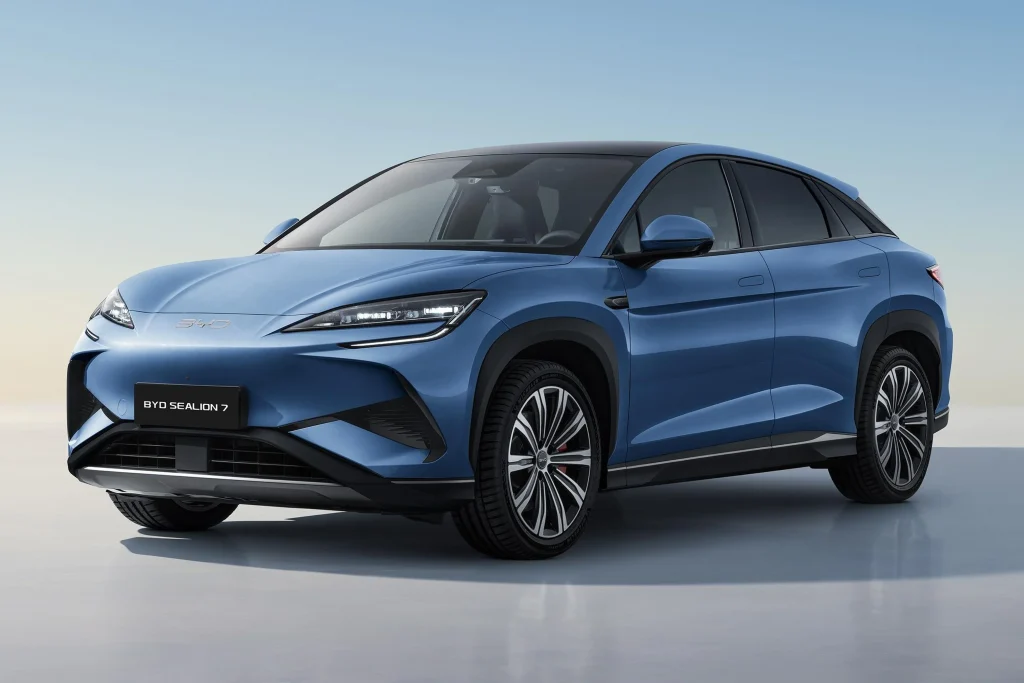
3. BYD SEALION 7: 93% Child Occupant Protection
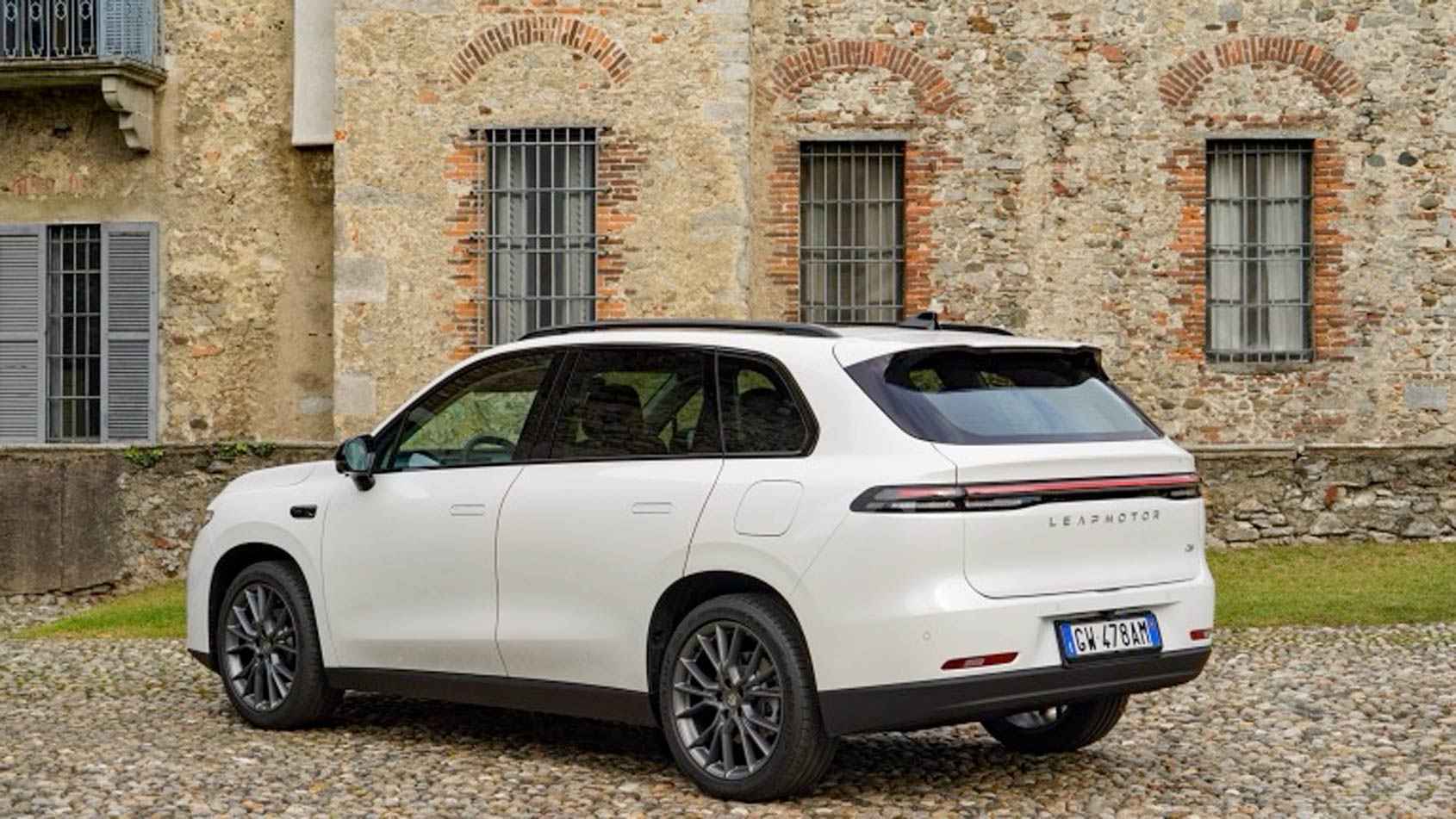
The BYD SEALION 7 joined the highest-scoring group in Euro NCAP’s April 2025 test results, earning 93% for child occupant protection and a five-star safety rating. Its result matched the score recorded by the Polestar 3, although the two electric SUVs differed in their performance across other safety categories.
The SEALION 7 scored 87% for adult occupant protection, 76% for vulnerable road users, and 79% for safety assist.
A child occupant score is built from several checks rather than one headline crash test. Euro NCAP assesses protection for child-sized dummies representing six-year-old and ten-year-old occupants in frontal and side impacts.
It also evaluates child-restraint compatibility, the availability of appropriate seating positions, and features that help caregivers install and use child seats correctly.
The SEALION 7’s 93% result places it among the strongest performers in the 2025 assessments. However, the difference between its child score and its 76% vulnerable-road-user score shows why individual categories deserve attention.
The child result specifically addresses the protection and restraint arrangements for younger passengers, while pedestrian and cyclist assessments measure different risks.
For families considering an electric SUV, the result is useful evidence, but it should not be treated as a guarantee of injury-free travel. The correct child restraint, proper installation, and appropriate seating position remain essential.
Parents should check the owner’s manual and the specific restraint manufacturer’s guidance before carrying a child.
The rating applies to the European-specification SEALION 7 assessed by Euro NCAP. American buyers should verify local equipment and crash-test information rather than assume the European rating transfers directly to a U.S.-market vehicle.
4. Tesla Model Y: 93% Child Occupant Protection
The Tesla Model Y earned 93% for child occupant protection in Euro NCAP’s 2025 assessment, along with a five-star safety rating.
The tested dual-motor all-wheel-drive model also scored 91% for adult occupant protection, 86% for vulnerable road users, and 92% for safety assist. These figures place its child-protection performance among the strongest in the test group.
One notable finding is the Model Y’s performance in crash tests involving child dummies, where it earned the maximum 24 points for protection in frontal and lateral impacts.
Euro NCAP uses dummies representing six-year-old and ten-year-old children to assess how the restraint systems and passenger compartment manage crash forces. The assessment also considers child-seat installation and the safety features provided for younger occupants.
The Model Y’s family appeal goes beyond its child-protection percentage. Its SUV body style provides a practical cabin and a rear seating area suited to family use, although a vehicle’s dimensions alone cannot establish whether a particular child seat will fit properly. Seat shape, anchor locations, and restraint design all matter.
The 93% score should also be read as a test result, not a promise that every child will be protected identically in every collision. Crash severity, correct seat installation, and the child’s size can affect real-world outcomes. Parents should follow the vehicle manufacturer’s instructions and use a restraint appropriate for the child.
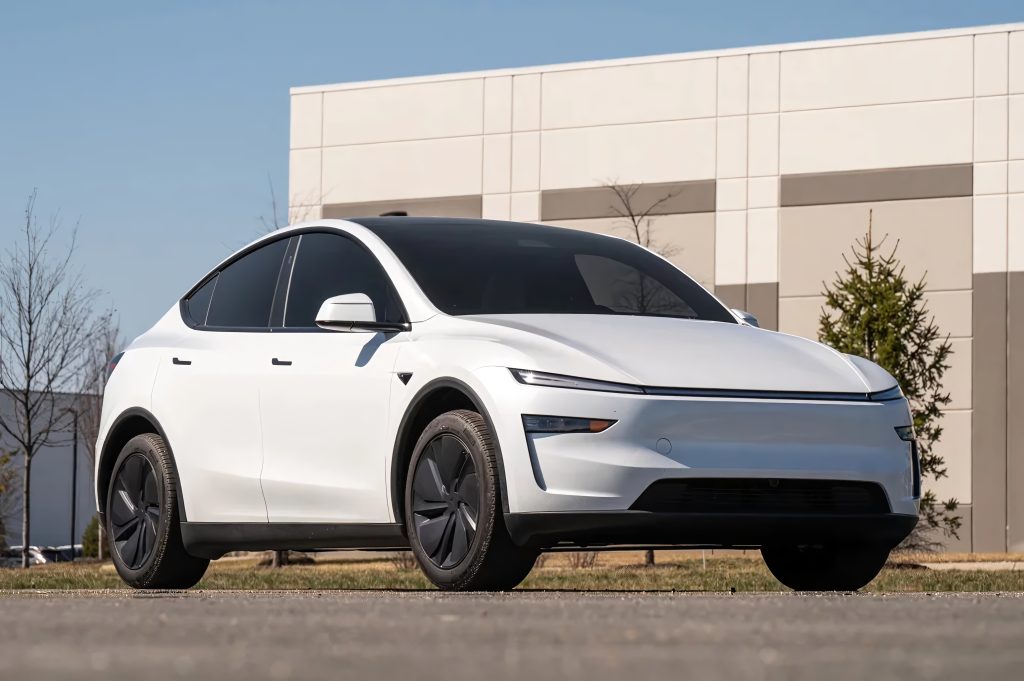
This result belongs to the European Model Y tested in 2025. Specifications and equipment may differ in the United States, so buyers should consult the safety information for the exact model year and market they intend to purchase.
5. Tesla Model 3: 93% Child Occupant Protection
A sedan can match the child-protection performance of much larger SUVs. The Tesla Model 3 achieved 93% for child occupant protection in its Euro NCAP assessment published in 2025.
It also recorded 90% for adult occupant protection, 89% for vulnerable road users, and 87% for safety assist. The five-star result reflects performance across all four categories, rather than the child score alone.
The Model 3 received 24 out of 24 available points for crash-test performance using six-year-old and ten-year-old child dummies in frontal and lateral impacts. Euro NCAP also examines child-restraint compatibility and the vehicle’s safety features.
These additional checks are important because a strong crash-test result is only one part of making a car suitable for carrying younger passengers.
For parents, a sedan’s lower seating height may appeal to those who prefer a conventional passenger car to an SUV. However, ease of getting a child into a seat depends on the individual family, the child’s age and mobility, and the restraint being used. It is worth physically checking the car-seat installation before committing to a purchase.
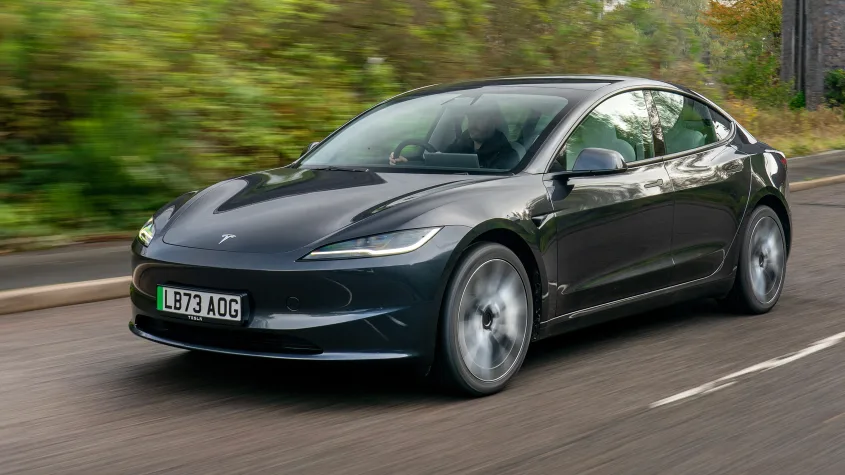
The Model 3’s 93% result is evidence of strong performance under Euro NCAP’s specified child-protection tests. It does not mean that every seating position accommodates every restraint or that the same outcome can be guaranteed in all real-world crashes. The vehicle manual and child-seat instructions remain the best guides to safe installation.
This assessment concerns the European model and the tested specification. U.S. vehicles may have different equipment or certification details, so American buyers should consult local safety information when comparing vehicles.
6. Smart #5: 93% Child Occupant Protection
The Smart #5 demonstrates how a relatively new electric SUV can achieve a leading child-protection score. Tested by Euro NCAP in 2025, it earned 93% for child occupant protection and a five-star rating. Its other category scores were 88% for adult occupant protection, 84% for vulnerable road users, and 92% for safety assist.
The detailed test sheet shows that the #5 achieved all 24 available points for crash-test performance involving six-year-old and ten-year-old child dummies. Its assessment also included a child-restraint installation check worth 12 points.
Euro NCAP recorded ISOFIX and i-Size compatibility for the front passenger seat and the two outer positions in the second row, while the rear centre position did not have the same listed compatibility.
That detail is particularly useful for families. A high child occupant score does not mean all seating positions are interchangeable. Parents with more than one child seat should check the exact restraint combinations they plan to use, especially if they intend to install a seat in the centre of the rear bench.
The smart #5 also scored strongly in safety assist, at 92%. That category evaluates technology designed to prevent crashes or reduce their severity, although it is separate from the child occupant score itself. Keeping the categories separate helps readers understand what the numbers actually measure.
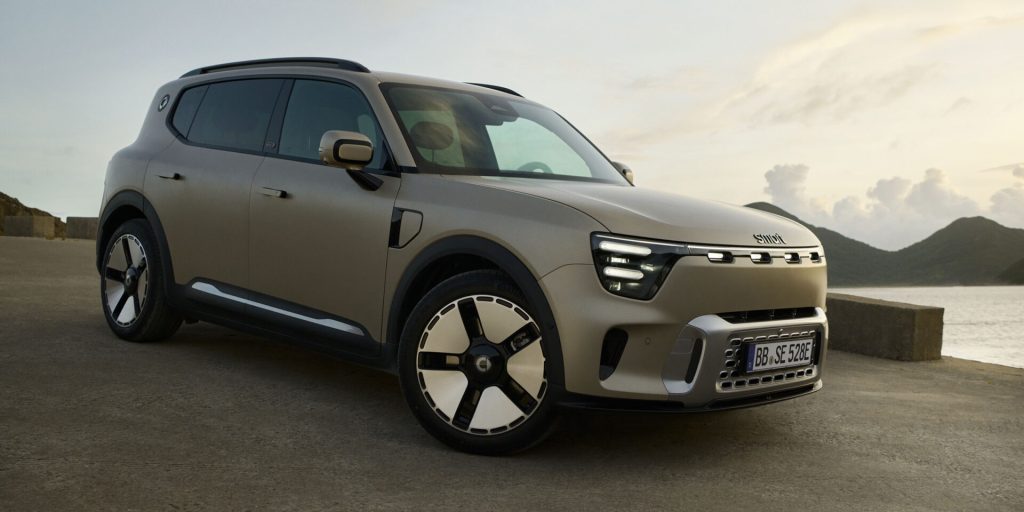
The published result applies to the European-market version tested in 2025. Equipment and specifications may vary by market, so a U.S. buyer should not assume the same features or rating apply to a vehicle sold locally.
The score is a valuable benchmark, but correct restraint selection and installation remain central to protecting young passengers.
7. Leapmotor B10: 93% Child Occupant Protection
The Leapmotor B10 earned 93% for child occupant protection in Euro NCAP’s 2025 assessment, placing it alongside several established electric vehicles at the top of this category.
Its complete scorecard included 93% for adult occupant protection, 84% for vulnerable road users and 85% for safety assist. The B10 also received a five-star rating.
The child-protection result was supported by full marks for the prescribed frontal and lateral crash tests using six-year-old and ten-year-old child dummies.
Euro NCAP assesses how the dummies are protected during impacts, then adds checks covering restraint-system compatibility and safety features. The published technical sheet identifies the tested vehicle as the left-hand-drive B10 Design, a five-door SUV.
The distinction between crash-test performance and child-seat accommodation matters. A car may protect child dummies well in laboratory impacts, but caregivers still need to install the correct restraint in a compatible seating position.
The B10’s score should therefore be treated as strong evidence from a defined test programme, not proof that every child seat will fit every position without difficulty.
Its 85% safety-assist result provides further context. Driver-assistance technologies are assessed separately from child occupant protection, and the B10’s five-star rating reflects the combined results across the four categories. The child score alone does not describe pedestrian protection or every system intended to prevent a crash.
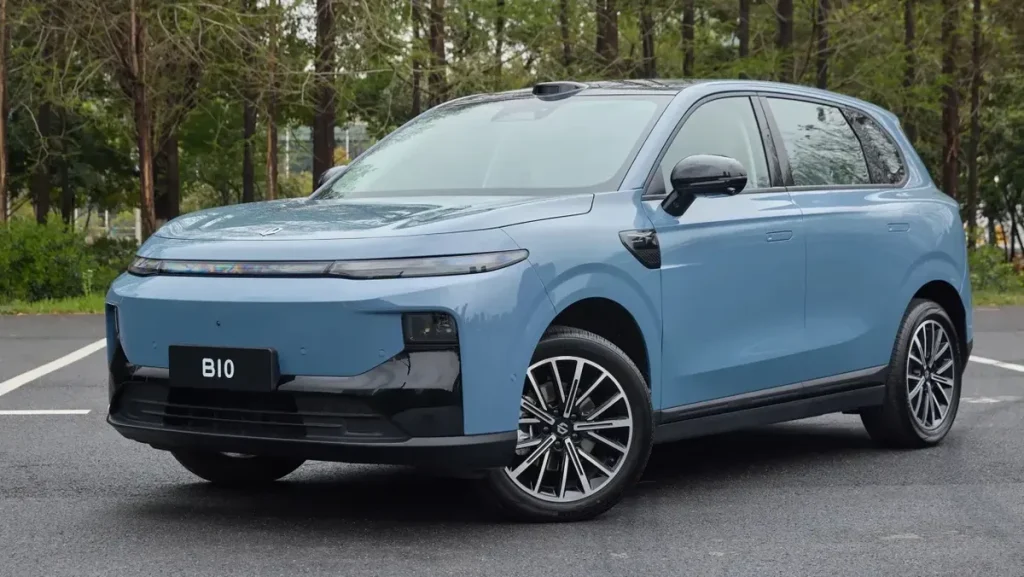
For buyers, the main limitation is market relevance. Euro NCAP’s published assessment concerns the European specification, and availability or equipment may differ elsewhere. Families considering a vehicle from another market should verify the exact specification, local crash-test results and child-seat instructions before making a decision.
8. Mazda 6e: 93% Child Occupant Protection
The Mazda 6e added a sleek electric passenger car to the group of vehicles recording 93% child occupant protection in Euro NCAP’s 2025 testing. Its scorecard included 93% for adult occupant protection, 74% for vulnerable road users and 77% for safety assist.
It received a five-star rating, but its category scores show that the strongest performance was in occupant protection rather than in every area of the assessment.
For child protection, Euro NCAP awarded the Mazda 6e all 24 available points for frontal and lateral impact tests involving six-year-old and ten-year-old dummies. The organisation also evaluates the availability and compatibility of child-restraint systems.
Those checks matter because parents need to know not only how a vehicle performs in a controlled impact, but also whether their child’s restraint can be fitted correctly.
A sedan-style electric car may appeal to families who prefer a lower roofline and conventional passenger-car proportions to a tall SUV. Still, body style alone does not determine child-seat practicality. The position of anchor points, rear-seat access, and the fit of a specific restraint all deserve attention before purchase.
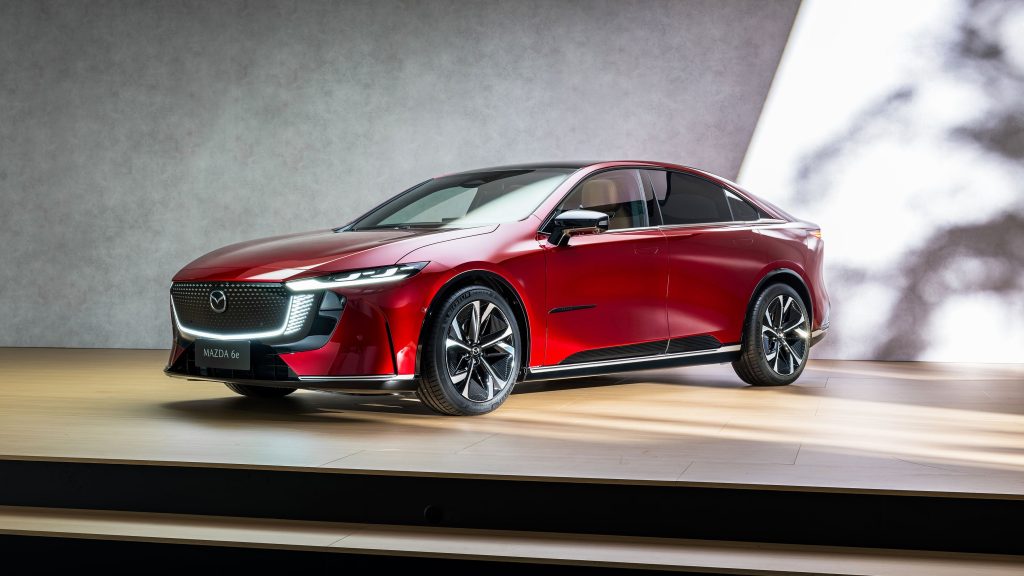
The Mazda’s 93% score is especially useful when comparing vehicles tested under the same general protocol. Its lower vulnerable-road-user and safety-assist percentages also underline why child protection should not be treated as a complete measure of vehicle safety. Each category addresses a different aspect of risk.
The assessment applies to the European model tested by Euro NCAP. Buyers in the United States should check whether the model and equipment are offered locally and review applicable U.S. safety data. Regardless of the rating, a properly fitted child restraint and adherence to manufacturer guidance remain essential.
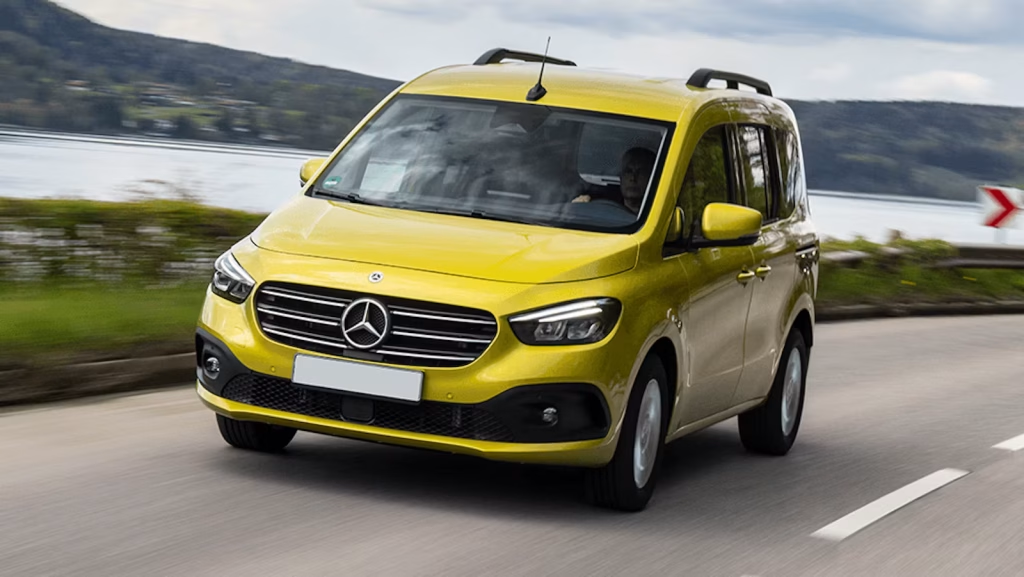
9. Mercedes-Benz T-Class: 93% Child Occupant Protection
The Mercedes-Benz T-Class earned 93% for child occupant protection in Euro NCAP testing published in 2022. Its assessment is older than the 2025 results above, so its percentage should not be treated as directly equivalent to a score earned under the newer protocols. Nevertheless, it remains a documented high result in the child-protection category.
The technical assessment recorded good or adequate protection for all critical body areas of both the six-year-old and ten-year-old dummies in the frontal offset test. In the side-barrier impact, protection of all body areas was good, and the vehicle earned maximum points for that test.
Euro NCAP also noted that the front passenger airbag automatically deactivated when a rear-facing child restraint was installed in that position, and tests showed the system worked reliably.
The T-Class is a practical people carrier rather than a conventional luxury sedan. Its relevance to families comes from its passenger-focused design and child-restraint provisions.
Euro NCAP’s installation checks covered several child-seat types, including i-Size, ISOFIX and belt-secured restraints. The assessment found that the child restraints for which the vehicle was designed could be installed and accommodated properly.
That does not mean every restraint will suit every seat position, nor does the 93% figure guarantee identical protection in every crash. Families should confirm the precise installation instructions and check that a chosen seat is approved for the intended position.
Because this result comes from 2022, comparisons with newer cars need caution. Euro NCAP has updated its testing procedures over time, making recent assessments more demanding in some areas. The T-Class remains a strong historical example, but its score should be understood in the context of its test year and European specification.
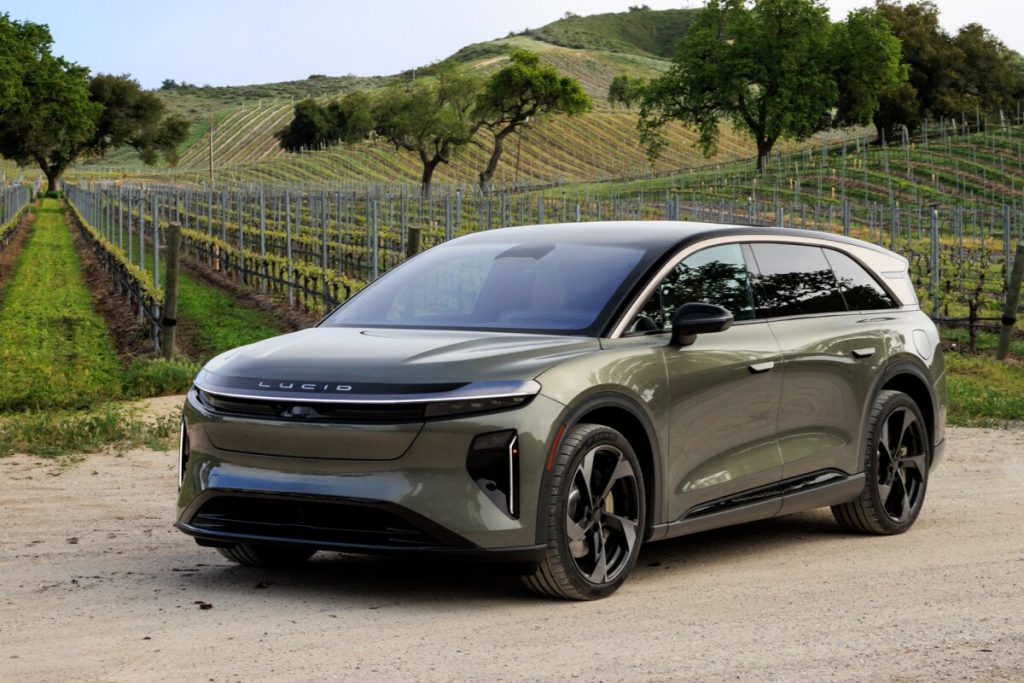
10. Lucid Gravity: 93% Child Occupant Protection
The Lucid Gravity, a large electric SUV, joined the top-scoring group in Euro NCAP’s 2025 test results with 93% for child occupant protection and a five-star rating.
Euro NCAP reported that the Gravity performed strongly in the child category, while its adult occupant score was 83%. The organisation’s summary placed it among the vehicles that achieved five stars in the same round of assessments.
The child score reflects a defined testing programme, including protection for child-sized dummies in frontal and side impacts and checks related to child-restraint installation. These measurements are designed to give families more detail than a star rating alone.
A vehicle’s star rating is based on four assessment categories, while the child-protection percentage specifically evaluates the safety of younger passengers, including occupant protection and child-restraint systems.
The Gravity’s large-SUV format and three-row layout may interest families who need additional passenger capacity. However, the presence of a third row does not automatically make every seat suitable for every child restraint.
Parents should check the exact seating position, anchor availability and manufacturer instructions, particularly when fitting multiple seats or using the third row.
A 93% score is a strong result, but it is not a guarantee that injuries cannot occur. The circumstances of a crash, the correct installation of the child seat and the suitability of the restraint for the child remain important factors.
The result also should not be used to claim that the Gravity is categorically safer than every vehicle with a slightly lower score.
The assessment concerns the vehicle tested for the European programme. U.S. specifications and availability may differ, so American buyers should check local safety information before comparing the Gravity with vehicles sold in their market.