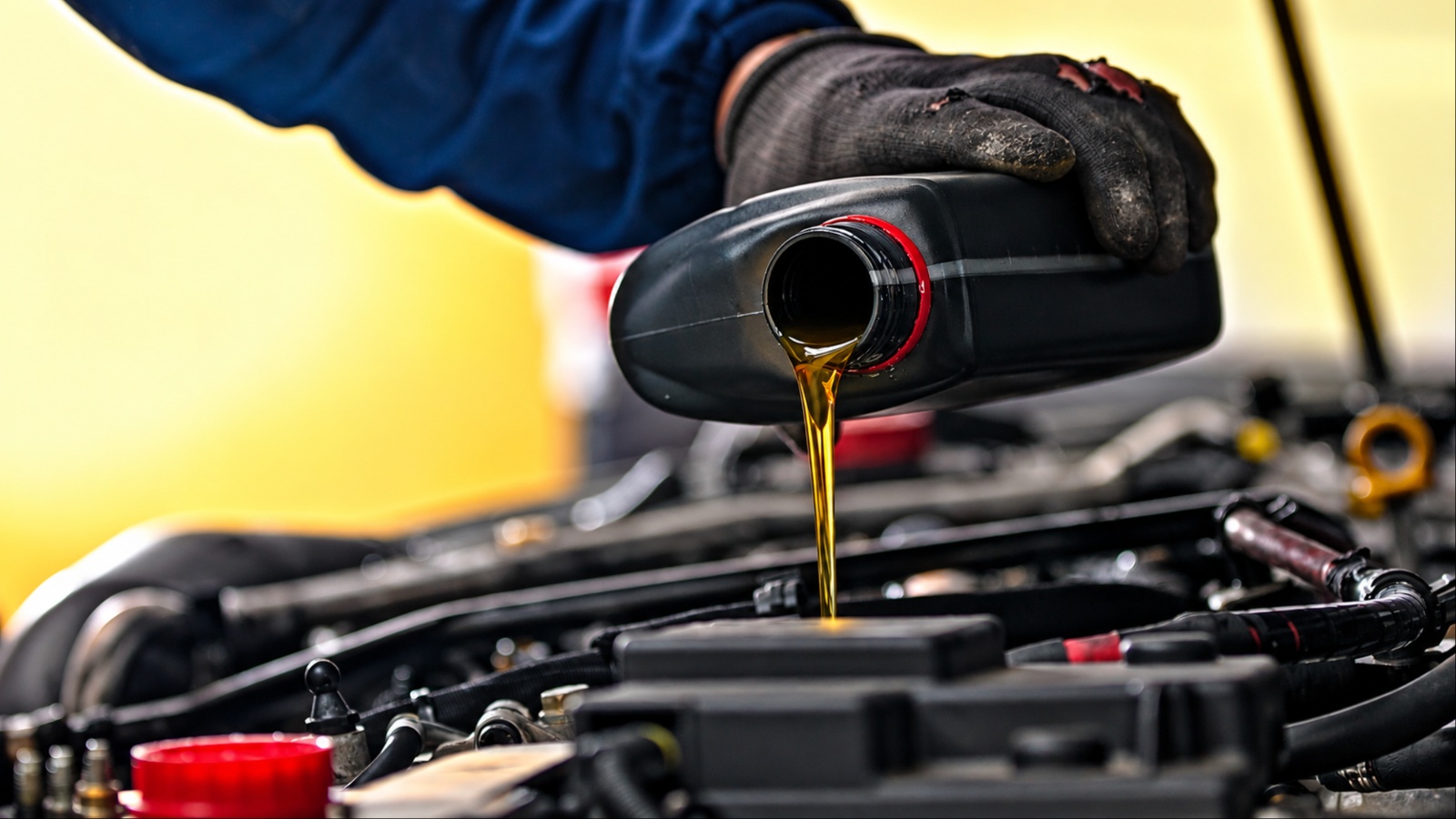
Walk into a dealership service lane, and the oil change looks simple. A technician drains old oil, swaps a filter, and pours in new oil. The invoice often lands between 90 and 140 dollars for a synthetic service.
That number hides a lot of accounting. Oil, a filter, and a gasket cost the dealer perhaps 35 dollars. Labor is billed from a flat-rate guide, not a stopwatch.
Dealers also add shop supply and disposal fees. Each line is priced to produce profit, and each carries a different margin. Together they explain why service is the quiet engine of the whole dealership.
According to NADA dealership data, the service and parts department, called fixed operations, brings in roughly 12 percent of dealer revenue. It produces close to half of total gross profit. New car sales often barely break even on their own.
This article breaks one typical synthetic oil change into its parts. The figures below are modeled estimates built from industry ranges. Exact numbers shift by brand, region, and store.
What Goes Into the Price of One Oil Change
A dealer invoice for an oil change has four layers. These are parts, labor, shop supplies, and sometimes a disposal charge. Each layer is priced on a different logic.
Parts are priced from a manufacturer list price or a markup on cost. Labor is priced from a posted hourly rate times a time allowance. Fees are added as a small percentage or flat charge.
Posted labor rates at franchised dealers commonly run 150 to 200 dollars per hour. Luxury brands in large metro areas can exceed that. Rural stores often sit near the low end.
The time allowance for an oil change comes from flat-rate guides. Manufacturers and independent publishers produce these. A basic oil and filter service is typically listed at 0.3 to 0.5 hours.
Flat-rate means the customer pays the book time, not the actual time. A good technician may finish in 20 minutes. The invoice still shows the full allowance.
Dealers defend this as fair to both sides. A slow technician does not raise your bill. A fast one does not lower it. The service advisor also matters. This person writes the repair order and sells the package. Advisors usually earn a commission tied to department gross profit.
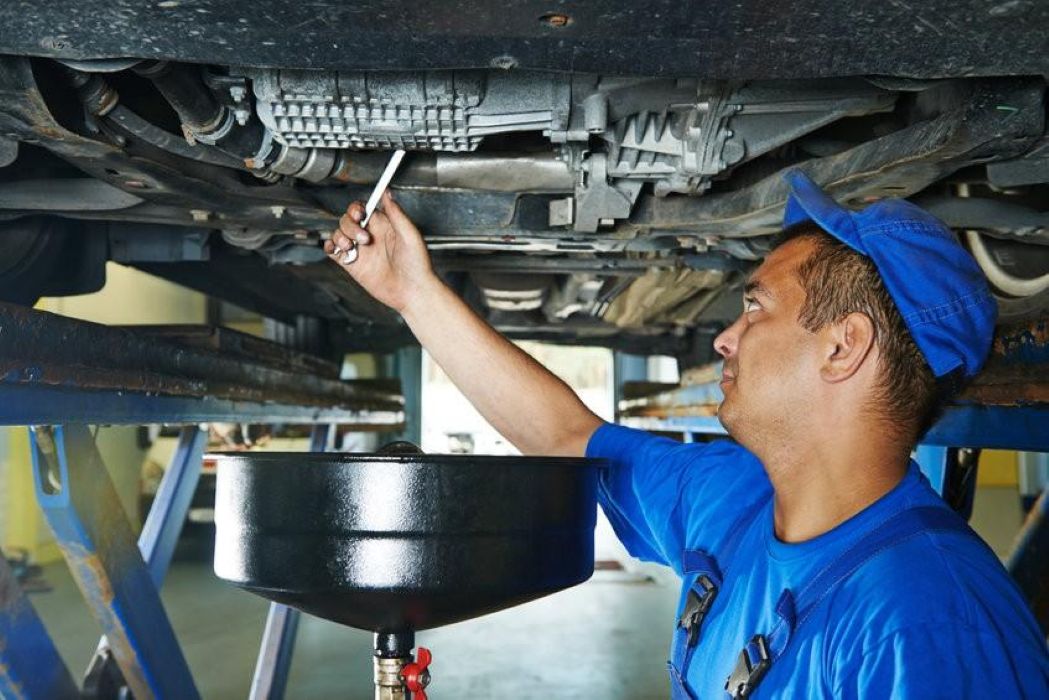
Oil type drives the parts side of the bill. A conventional oil change might use four quarts. A modern synthetic often needs five to eight quarts, and some European and truck engines need more.
Most new vehicles call for full synthetic oil. Automakers specify it for fuel economy and emissions compliance. That has pushed the average ticket up over the past decade.
Dealers buy oil in bulk, often from a drum or a metered bulk system. This lowers the per-quart cost well below retail shelf prices. Bulk synthetic can cost a dealer roughly 4 to 7 dollars per quart.
Filters are bought as genuine factory parts. A typical filter costs the dealer 6 to 12 dollars. The drain plug gasket costs under 2 dollars. The customer-facing menu price often bundles all of this. Many dealers advertise a flat price, such as 89.95 or 119.95. The bundle still follows the same underlying math.
A low advertised price is often a traffic builder. The dealer expects an inspection to find other work. Wipers, filters, tires, and brake fluid are common add-ons.
Industry service managers call this the multi-point inspection effect. A cheap oil change brings the car into the lane. The real revenue may come from the recommendations that follow.
Warranty and fleet work are priced differently. Warranty repairs reimburse labor at rates set by the manufacturer. Those rates are often lower than the customer-pay rate.
That is why dealers guard customer-pay work closely. It carries the highest margin in the building. An oil change is the most frequent customer-pay visit of all.
Parts, Labor, and Fees: The Line-by-Line Math
Here is a modeled invoice for a synthetic oil change on a mid-size SUV. It uses five quarts of oil and a factory filter. The labor rate is 150 dollars per hour.
Oil is billed at 7.80 per quart, for 39.00 total. The filter is billed at 13.00. The gasket is billed at 1.50, bringing parts to 53.50. Labor is booked at 0.4 hours. At 150 dollars per hour, that is 60.00. Shop supplies are charged at 10 percent of labor, or 6.00.
The invoice total is 119.50 before tax. That sits inside the typical range for franchised dealers. Many stores run promotions that cut it, and others charge more.
Now the dealer’s cost side. Oil costs 5.20 per quart in bulk, or 26.00 for five quarts. The filter costs 7.80, and the gasket costs 0.75. Total parts cost is 34.55. Against 53.50 of parts revenue, gross profit is 18.95. That is a parts margin of about 35 percent.
A margin of 35 percent is on the low side for parts. Oil is a high-volume commodity and customers know its price. Dealers accept thinner margins here to win the visit.
Brake pads, batteries, and filters in the cabin often carry far higher margins. Industry benchmarks put the average customer-pay parts margin near 45 to 50 percent. Oil drags that average down.
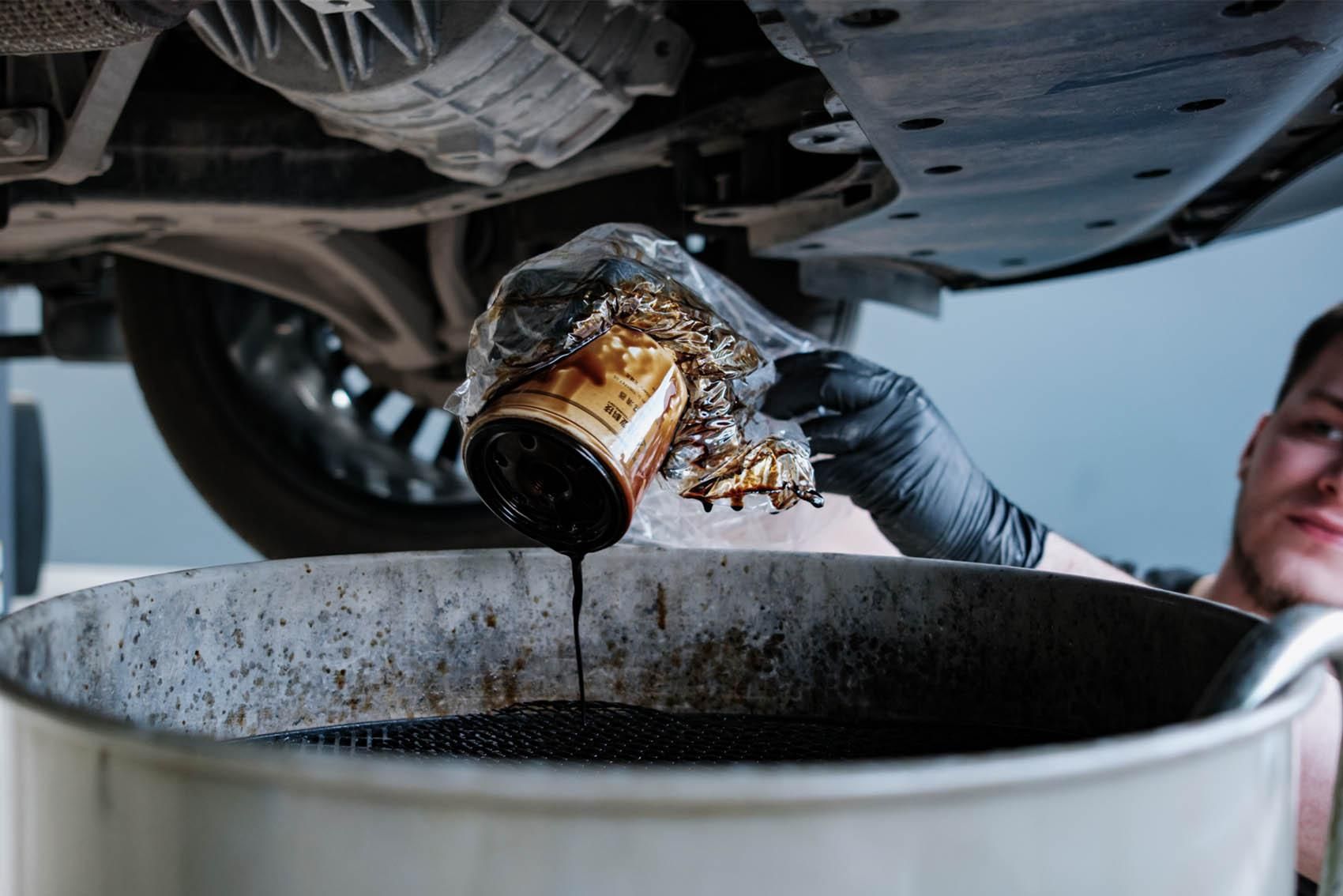
Labor tells a different story. The technician is paid by flat-rate hours, often 30 to 45 dollars per flagged hour. Using 38 dollars, the 0.4-hour job pays the technician 15.20.
Employers also carry payroll burden on top of wages. This includes payroll taxes, benefits, and workers’ compensation. A burden of about 20 percent lifts the cost to 18.24.
Labor revenue is 60.00, so labor gross profit is 41.76. That is a labor margin near 70 percent. Industry benchmarks for customer-pay labor commonly land in the 70 to 75 percent range.
This is the heart of the economics. Labor is the highest-margin product a dealer sells. Every flagged hour that is billed and not wasted is nearly pure margin.
Shop supplies and disposal are the smallest line. The dealer collects 6.00 and spends perhaps 2.50. Spent oil removal, rags, absorbents, and cleaners make up that cost.
Many states regulate how these fees are labeled. Some require they be tied to actual consumables. Others cap the percentage or the dollar amount.
Add it all up. Revenue is 119.50. Direct costs are 34.55 for parts, 18.24 for labor, and 2.50 for supplies, or 55.29 total. Gross profit is 64.21. That is a blended gross margin of about 54 percent. Few products in a car dealership come close.
Compare that with a new vehicle sale. NADA data shows the average new car gross margin is a small fraction of price. Even in strong years, it sits in the low-to-mid single digits.
Used cars do better, but still far below 54 percent. Finance and insurance add profit, but only on a portion of buyers. The service lane works every day on the same customers.
Where the Profit Really Goes and Why It Matters
Gross profit is not net profit. The 64 dollars must still pay for the building and the people. It also pays for equipment, advertising, and corporate fees.
A service lane carries heavy fixed costs. Lifts, scan tools, and oil systems cost thousands to buy and maintain. The advisor, cashier, porter, and manager all draw pay.
Dealership accounting spreads this overhead across the department. Industry benchmarks suggest fixed operations net profit is often 15 to 25 percent of department revenue in a healthy store. That implies about 18 to 30 dollars net on this job.
I would treat that as a reasonable estimate, not a precise figure. Expenses vary by city and by store age. A busy urban store absorbs rent differently than a small rural one.
Absorption rate is a key dealer metric. It measures how much of total dealership overhead is covered by fixed operations gross profit. Well-run stores aim for 100 percent or more.
At 100 percent absorption, service and parts pay every fixed bill. Car sales profit then becomes pure upside. That is why dealers can survive thin new car margins.
Oil changes help this goal in a particular way. They are frequent and predictable. A car on a 7,500-mile oil interval visits the lane once or twice a year.
Each visit builds a service history. It also gives the advisor an opening to recommend work. Industry reports often show that a meaningful share of oil change visits convert into additional repair orders.
Those add-ons raise the average repair order value. A 120 dollar oil change can become a 350 dollar ticket. The extra revenue carries higher margins than the oil itself.
Customers have real alternatives. Quick-lube chains, independent shops, and big-box tire centers all compete. Their advertised synthetic price is often 20 to 40 dollars below dealer rates.
Dealers respond with value arguments. Factory-trained technicians, genuine parts, and warranty-safe documentation are the usual pitch. Software updates and recall checks sometimes happen during the same visit.
Some of this is real value. Using the specified oil grade and filter protects warranty coverage. Keeping records can matter at resale or in a dispute.
Still, the buyer should know the math. The posted rate and book time are negotiable at some stores. Coupons, prepaid maintenance plans, and loyalty pricing can shift the bill.
Here are practical ways to check an invoice. Ask for the labor time and the hourly rate. Ask how the shop supply fee is calculated.
Compare the oil quantity with your owner’s manual. Confirm the oil grade matches the specification. A quote that bundles everything hides these details.
Watch for stacked fees. A percentage-based supply charge on top of a separate disposal charge can duplicate costs. Ask whether both apply.
Also consider the interval. Many automakers now recommend 7,500 to 10,000 miles for synthetic oil under normal use. Dealers may suggest shorter intervals by habit.
Follow the manual’s schedule for your driving conditions. Severe use, such as short trips or towing, may justify earlier changes. Otherwise, extra visits mostly add to dealer revenue.
For the dealer, the oil change is a small product with a large role. It earns a healthy margin, fills lifts, and feeds future work. For the customer, it is a modest bill that is worth understanding.
The key lesson is that labor, not oil, is the profit center. Parts are priced to be competitive and fees are small. The flat-rate hour carries the real margin.
That one fact explains much of the dealership model. Cars bring people in, but service pays the bills. The humble oil change is where that model shows up most clearly.