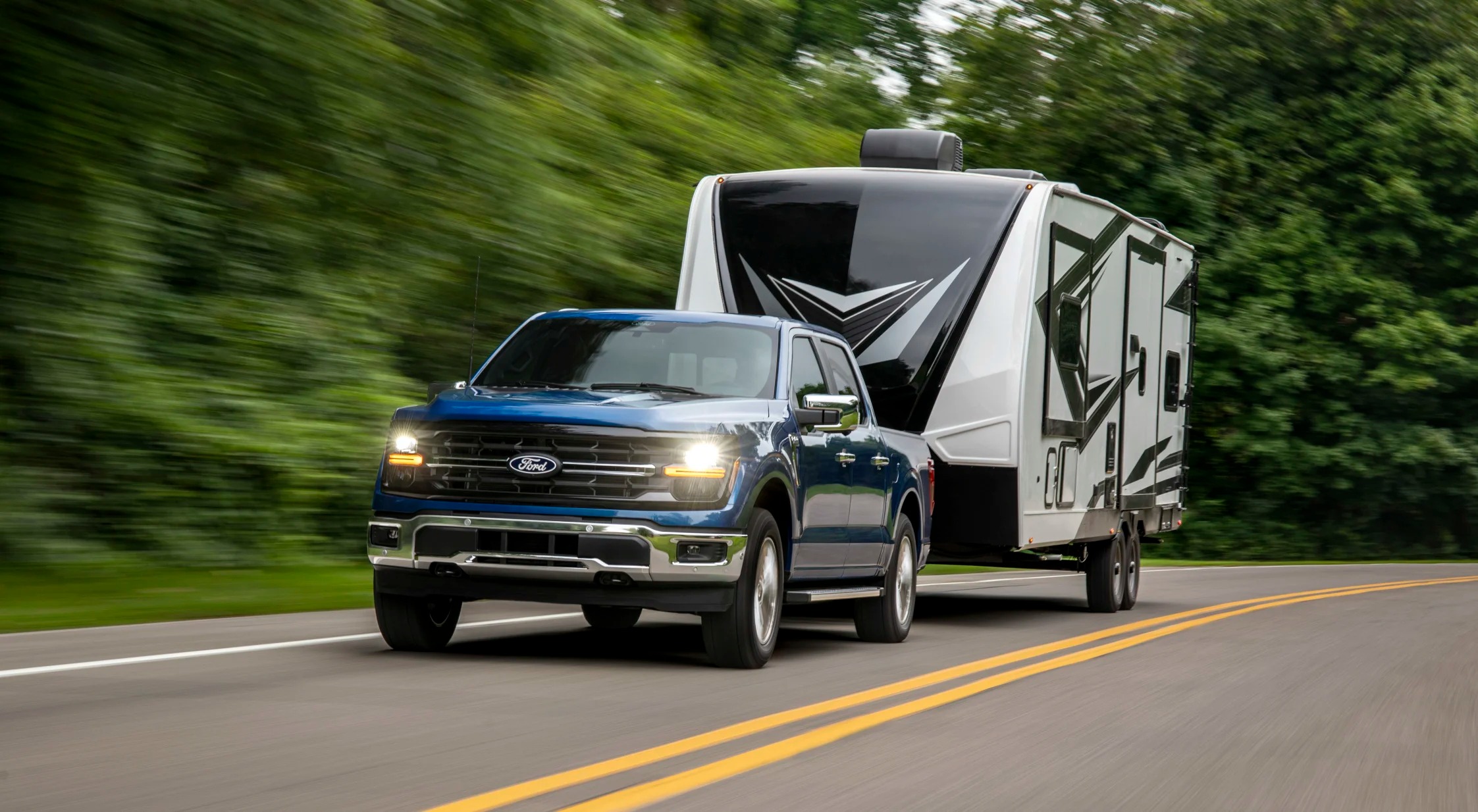
American pickups have changed dramatically since their earliest generations. What once counted as a compact work truck can look surprisingly small beside a modern model, with today’s pickups offering wider bodies, longer wheelbases, roomier cabins, and more advanced technology.
But the growth has not followed the same pattern for every nameplate. Some trucks have expanded to accommodate family use and heavier workloads, while others have moved into a different size class altogether.
This comparison examines six familiar pickups, using published U.S. specifications to show how their first generations compare with their latest generations and where the biggest dimensional changes appear.
1. Ford Ranger: From Compact Workhorse to a Much Broader Midsize Truck
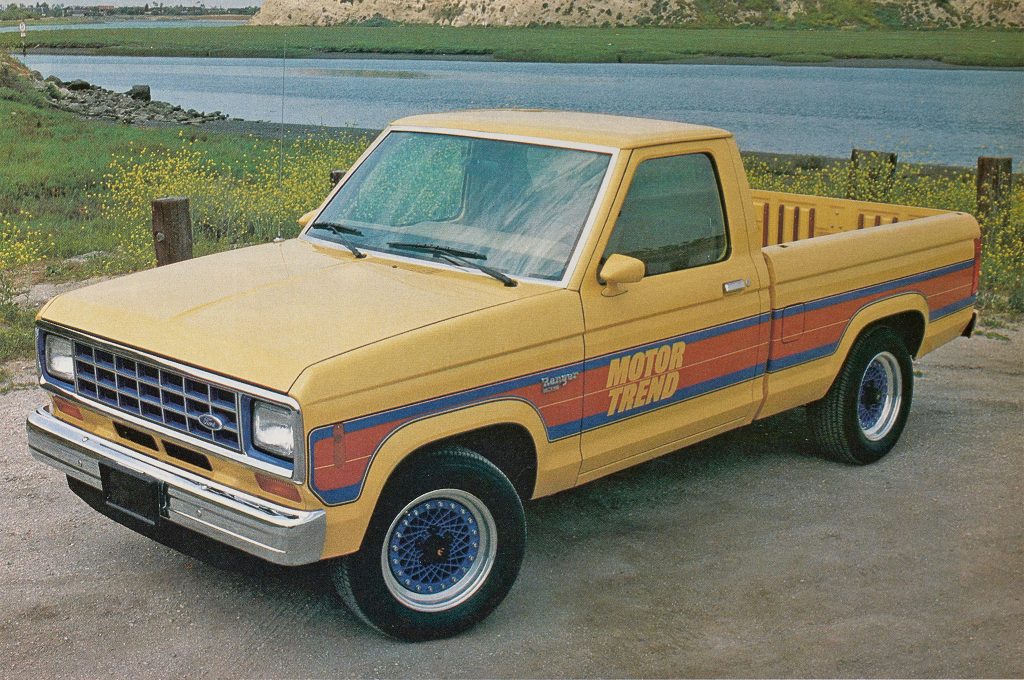
The original 1983 Ford Ranger was designed for buyers who wanted pickup usefulness without the footprint of a full-size truck. In a regular-cab, short-bed configuration, it measured approximately 175.6 inches long and 66.9 inches wide, excluding mirrors.
Its compact proportions made it easier to park, maneuver through tight work sites, and use as everyday transportation. The original Ranger also offered a simple, upright cabin rather than the large passenger space that many truck buyers expect today.
The modern U.S. Ranger has a different presence. Ford’s 2025 technical specifications list the SuperCrew model at 210.6 inches long and 75.5 inches wide without mirrors.
Compared with the original short-bed regular cab, that is an increase of about 35 inches in length and 8.6 inches in width. Its 128.7-inch wheelbase also supports a larger overall package, including a four-door cabin and a rear seat suitable for carrying passengers.
That comparison does require context: the 1983 measurements describe a regular-cab truck, while the modern figures describe a four-door SuperCrew. Part of the increase comes from comparing different body styles, not just from the same design becoming larger.
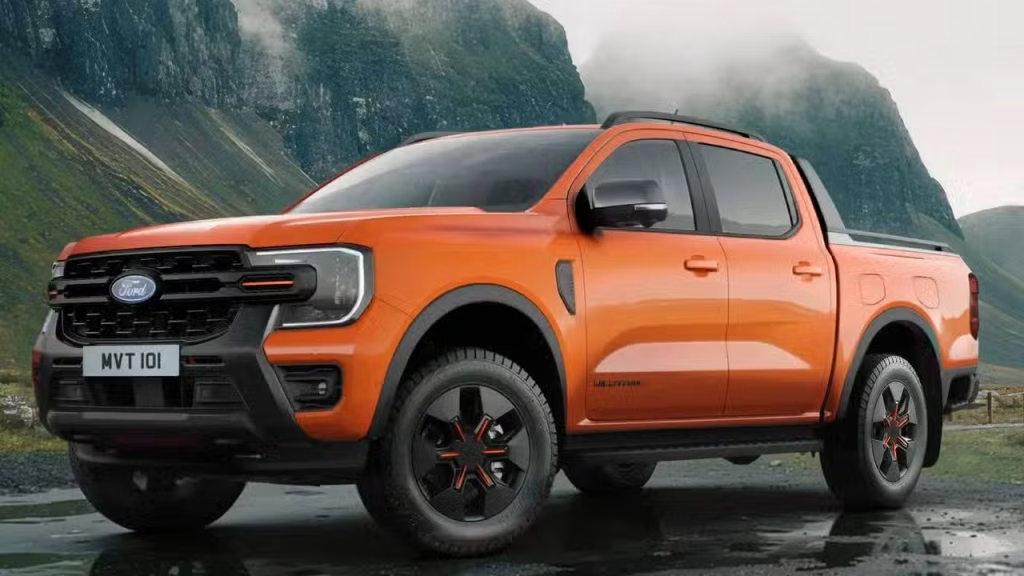
Even so, the numbers illustrate how the Ranger’s role has evolved. It remains smaller than Ford’s full-size pickup, but it now delivers the passenger space, technology, and road presence associated with today’s midsize segment.
The evolution goes beyond appearance. Today’s Ranger is designed for a variety of needs, from weekday commuting and family trips to towing equipment and weekend off-road adventures. While the original focused on compact utility, the modern truck combines that practical foundation with greater versatility for everyday life.
2. Toyota Tundra: From a Relatively Compact Full-Size Challenger to a Broad, Modern Hauler
When the Toyota Tundra arrived for the 2000 model year, it marked Toyota’s serious entry into the American full-size pickup market. The first-generation truck was already substantial for its time, but its proportions were noticeably more restrained than those of the current model.
Toyota’s original owner’s manual lists a standard-cab configuration at approximately 212.8 inches long and 75.2 inches wide, with the precise measurements depending on equipment and whether the width includes exterior body extensions.
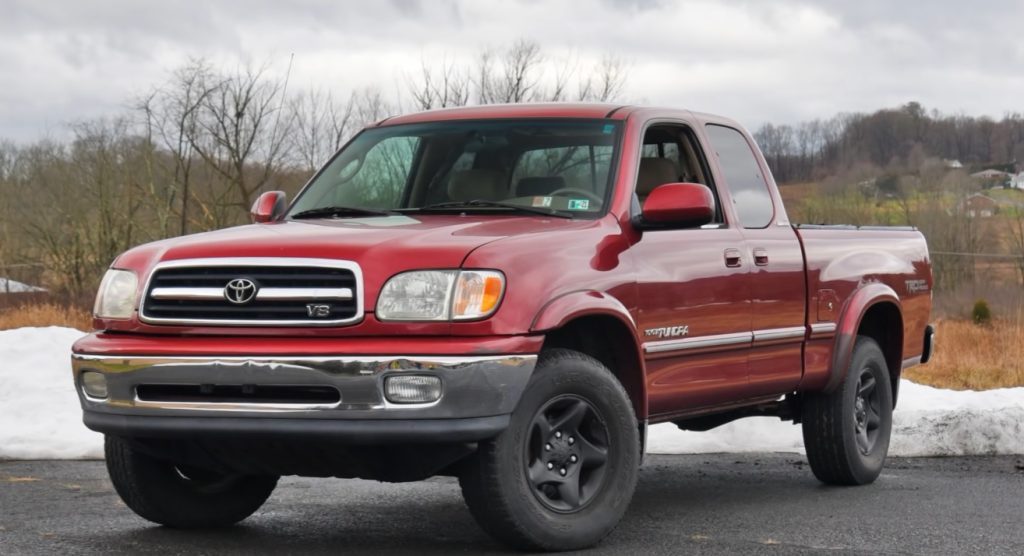
By 2025, the Tundra had grown into a much larger machine. Toyota lists its Double Cab with the standard bed at 233.6 inches long and 80.2 inches wide.
That represents an increase of about 20.8 inches in length and 5 inches in width compared with the cited first-generation configuration. The modern truck also uses a 145.7-inch wheelbase in this setup, contributing to its longer footprint and more spacious cabin.
The comparison is not perfectly like-for-like because the original measurements describe a standard cab, while the newer example has a double cab. Still, the scale of the change is clear: the Tundra now occupies more road space and is built around the expectations of contemporary full-size pickup buyers.
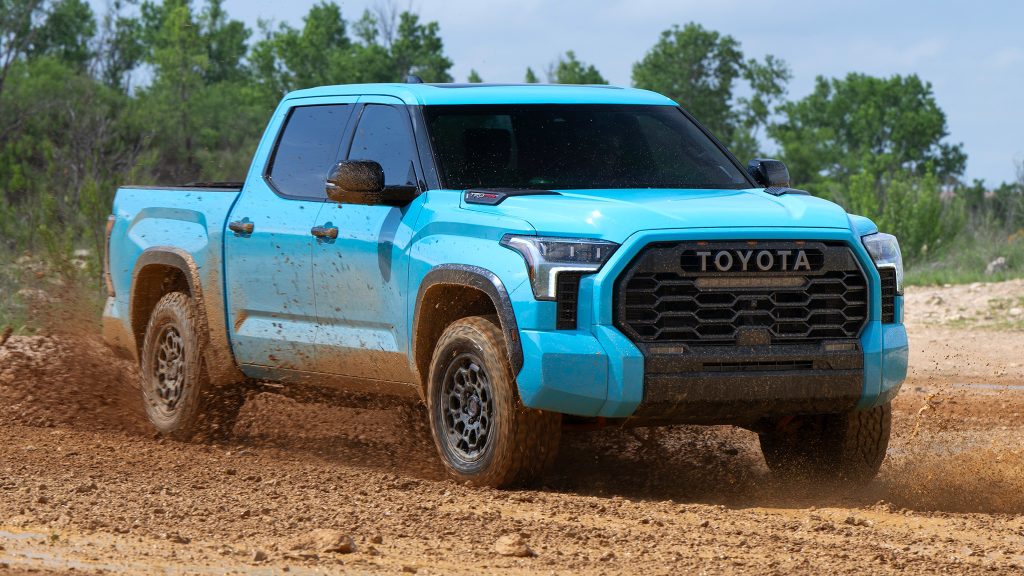
Its growth also reflects how American truck ownership has changed. Buyers increasingly want a pickup that can handle work duties without sacrificing rear-seat comfort, towing capability, safety technology, and everyday usability.
The current Tundra reflects this broader purpose through its twin-turbo V6 engine, available hybrid powertrain, and updated interior. The first-generation model marked Toyota’s entry into a market led by domestic manufacturers, while today’s version competes in a more advanced full-size truck segment where dimensions, comfort, and capability are all important.
3. Ford F-Series: From a Postwar Work Truck to a Modern Full-Size Giant
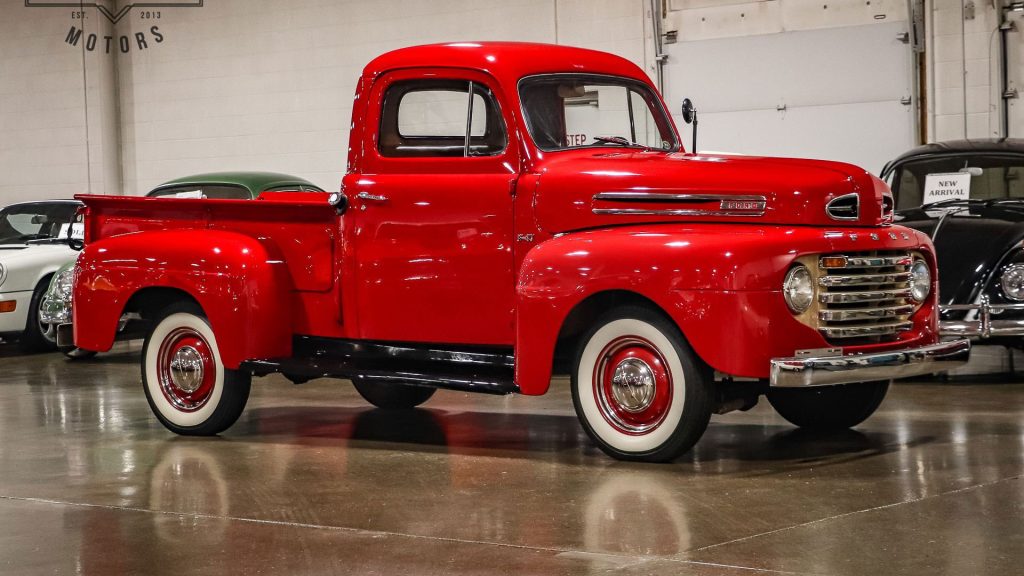
The Ford F-Series began its postwar chapter in 1948 with the F-1, a pickup designed around straightforward utility. Its regular-cab body measured approximately 188.8 inches long, with a 114-inch wheelbase.
Compared with today’s trucks, its proportions were relatively compact, and its cabin was focused on getting the driver and a passenger to the job rather than providing family-car comfort.
The F-1’s appeal came from its practical layout, useful cargo bed, and simple approach to everyday hauling. It was built for a time when a pickup was primarily a tool, not a multipurpose lifestyle vehicle.
The modern Ford F-150 has expanded substantially. For the 2025 model year, Ford lists exterior lengths ranging from approximately 231.8 inches for certain regular-cab configurations to 243.5 inches for a King Ranch SuperCrew.
Comparing the longest listed version with the original F-1 shows a difference of about 54.7 inches, or more than four and a half feet. This is a comparison of different cab configurations, rather than a perfectly matched body style, but it demonstrates how much larger the current lineup can be.
The increase reflects a change in what buyers expect from a pickup. Today’s F-150 can be a basic fleet vehicle, a comfortable four-door family truck, a towing machine, or an off-road model.
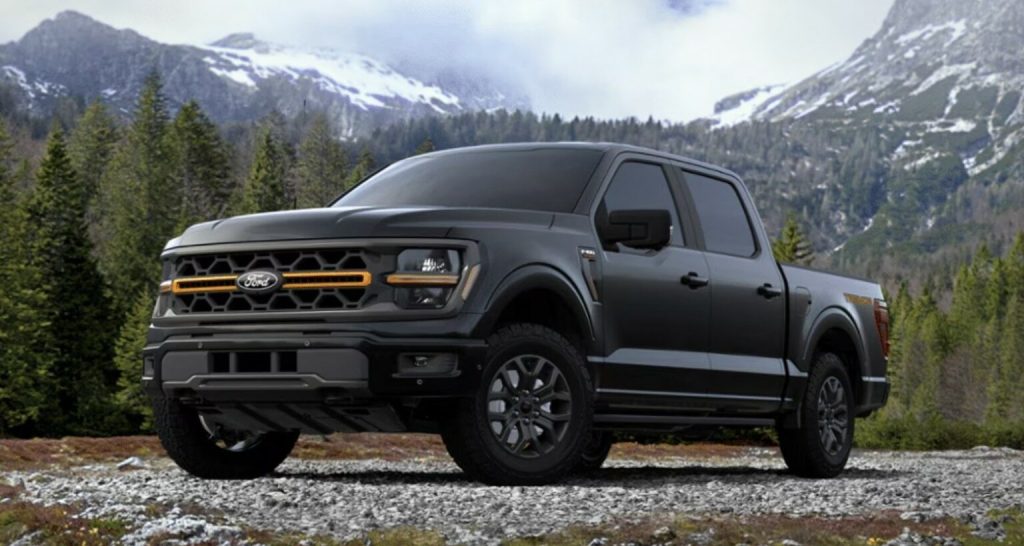
Its powertrain range also includes turbocharged V6 engines, a V8, and a hybrid option, while modern safety and infotainment features support daily driving.
The F-1’s job was relatively straightforward: carry people, tools, and materials. Today’s F-150 must do all that while accommodating larger crews, longer journeys, and more varied uses. Its expanded dimensions are part of a broader shift in American truck ownership, where work capability and passenger comfort increasingly share the same vehicle.
4. Chevrolet C/K to Silverado: How a Classic Work Truck Became a Bigger All-Rounder
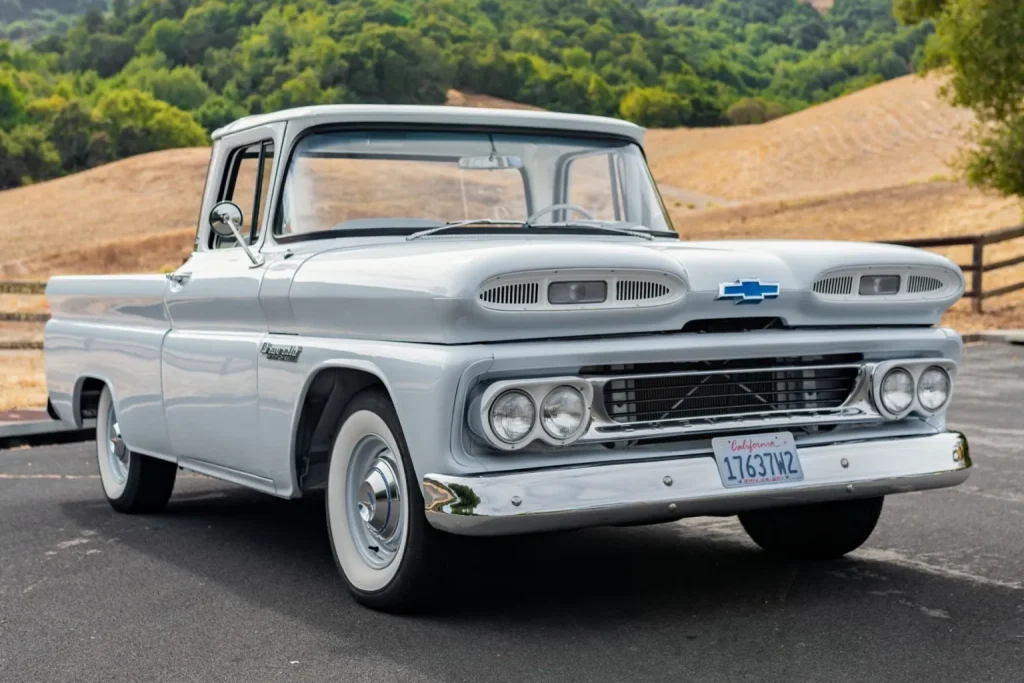
Chevrolet’s C/K pickup family illustrates how dramatically the American truck has changed since the middle of the 20th century. The 1960 Chevrolet C-10 introduced a redesigned light-duty pickup with independent front suspension, a feature intended to improve ride and handling.
A representative short-bed version measured approximately 186.7 inches long, with a wheelbase of about 115 inches.
Its regular cab kept the layout straightforward, leaving most of the vehicle’s practical space dedicated to the driver, passenger, and cargo bed. For buyers at the time, a pickup was primarily a working vehicle rather than a substitute for a family sedan.
The modern Chevrolet Silverado 1500 takes up considerably more room. Chevrolet lists the 2025 Crew Cab with a standard bed at approximately $241. 4 inches long and 81.2 inches wide, excluding mirrors.
Compared with the cited C-10, that is around 54.7 inches more length and 2.4 inches more width. The modern truck’s extended footprint accommodates four doors, a larger passenger cabin, and a cargo bed designed for contemporary hauling requirements.
There is an important distinction in this comparison: the classic example is a short-bed regular cab, while the modern Silverado is a Crew Cab. That means the length difference reflects both the evolution of pickup design and the additional passenger space of a four-door configuration.
Shorter Silverado versions are available, so the largest modern configuration should not be treated as representative of every truck in the range.
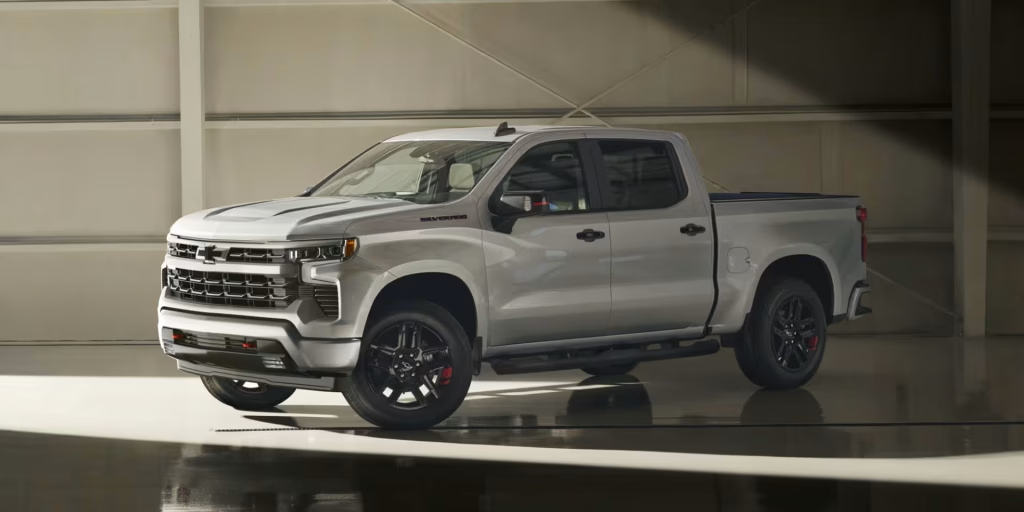
The bigger change, however, is the vehicle’s purpose. The C-10 was a practical workhorse, while the Silverado can handle commuting, family travel, towing, and recreational driving.
Modern infotainment, driver-assistance technology, and a wider range of engines add capabilities that were not part of the original truck’s mission. Chevrolet’s evolution shows that pickup growth is not simply about adding inches. It is also about fitting more responsibilities into a single vehicle.
5. Nissan Frontier: The Compact Pickup That Grew Into a Modern Midsize Truck
The first-generation Nissan Frontier arrived in the United States for the 1998 model year, replacing Nissan’s earlier Hardbody pickup. Its basic rear-wheel-drive regular cab measured 184.3 inches long and 66.5 inches wide, with a 104.3-inch wheelbase.
That relatively narrow footprint suited drivers who wanted a useful cargo bed without the bulk of a full-size truck. The original Frontier offered a 2.4-liter four-cylinder engine producing 143 horsepower, reinforcing its practical, everyday character.
The 2025 Frontier is considerably larger. Nissan’s published specifications list the standard-wheelbase version at 210.2 inches long and 73 inches wide in selected configurations.
Compared with the original rear-wheel-drive regular cab, that means the newer truck has gained approximately 25.9 inches in length and 6.5 inches in width. Its 126-inch wheelbase is also substantially longer than the original’s 104.3 inches.
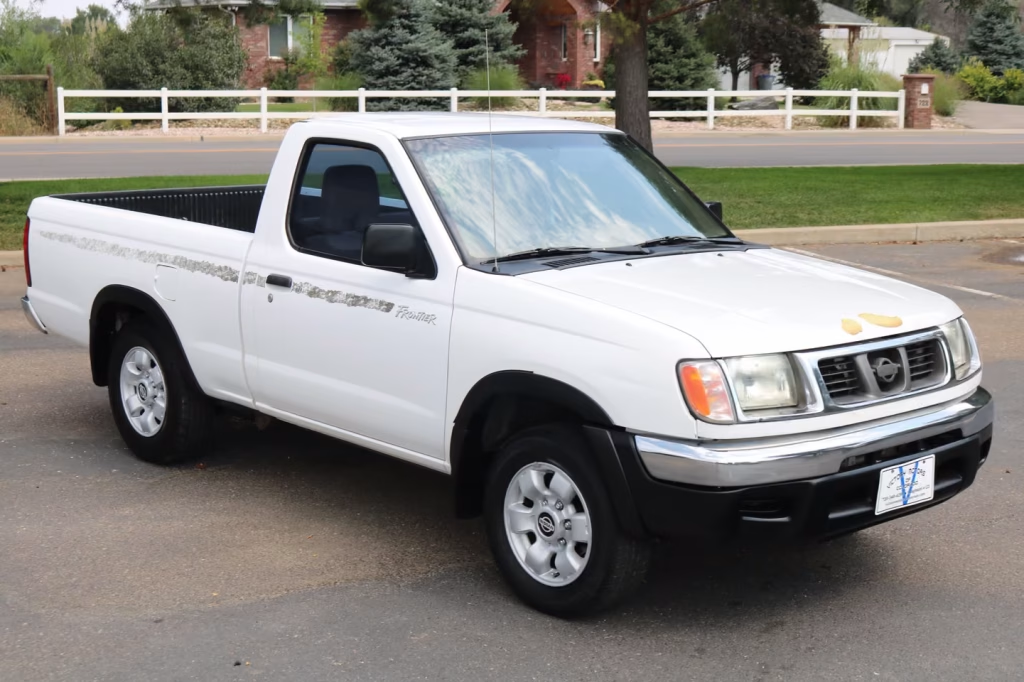
These figures compare a two-door regular cab with a modern configuration, so they do not isolate changes to the basic truck design alone. Cab layout, safety requirements, equipment, and packaging all contribute to the difference.
The Frontier’s transformation reflects the shrinking space between compact and midsize pickups. Today’s truck offers a more substantial cabin, available four-wheel drive, modern infotainment, and towing capacity of up to 7,150 pounds in certain 2025 configurations. That is a very different proposition from the original’s maximum 3,500-pound towing rating.
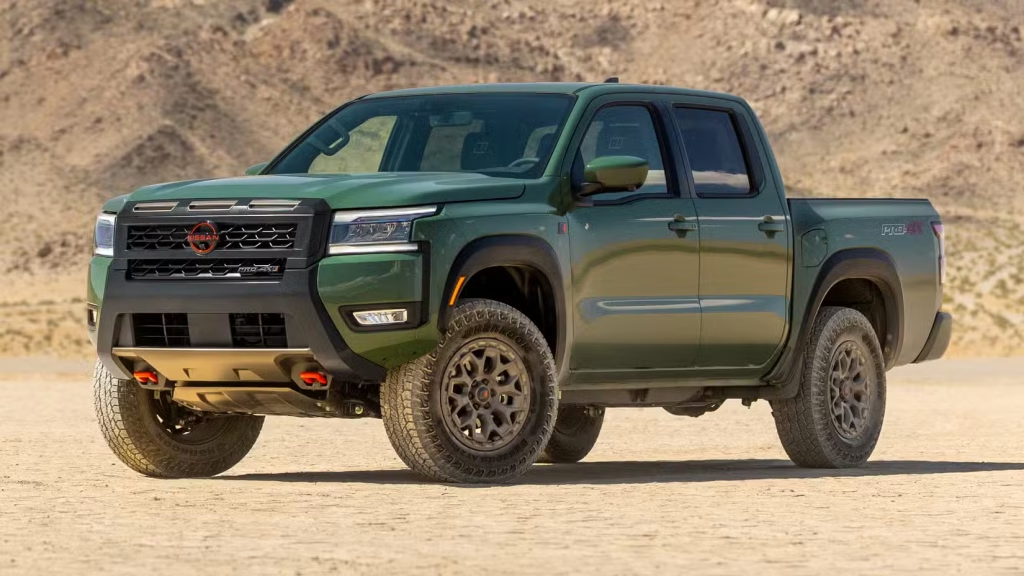
For drivers, the extra size brings useful capability and a more spacious feel, but it also means the Frontier no longer has the especially small footprint that defined its earliest American version.
6. Ram 1500: From the Bold 1990s Dodge Ram to Today’s Larger Crew Cab
The second-generation Dodge Ram arrived for 1994 with styling that deliberately made the pickup look muscular and distinctive. Its tall hood, prominent grille, and squared-off body helped separate it from more conservative rivals.
A representative 1994 Ram 1500 four-wheel-drive regular cab with a long bed measured 224.3 inches long and 78.4 inches wide, according to published specifications. With a 134.7-inch wheelbase, it was already a sizeable truck by the standards of the early 1990s.
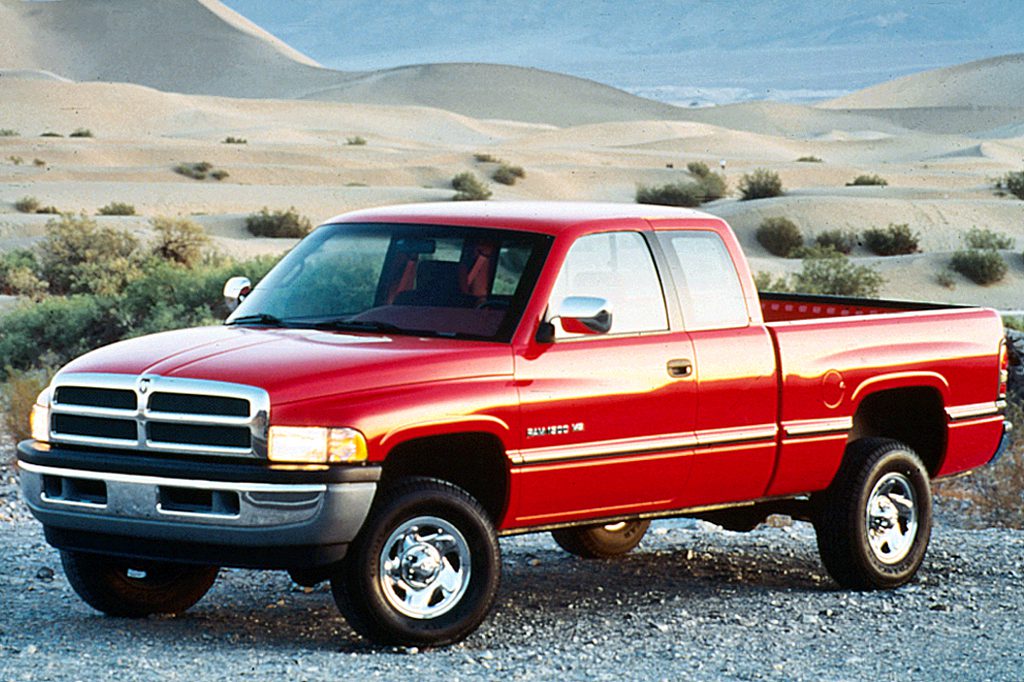
Today’s Ram 1500 extends that footprint further, especially in four-door form. For 2025, Ram lists the Crew Cab with the 6-foot, 4-inch bed at approximately 241.3 inches long and 81.2 inches wide.
That is about 17 inches longer and 2.8 inches wider than the cited 1994 truck. The modern version’s 153.5-inch wheelbase also adds nearly 19 inches compared with the older regular cab.
This is not a perfectly matched comparison: the older example has a regular cab, while the newer one carries a Crew Cab. The additional rear-seat space accounts for part of the modern truck’s longer body, so the figures should be understood as a comparison of representative configurations.
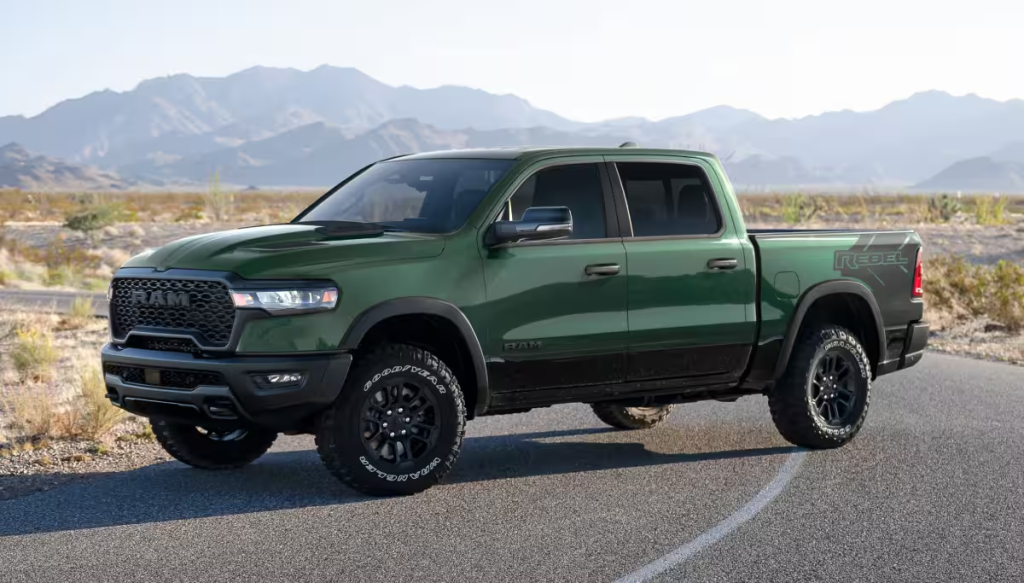
The Ram’s evolution is not simply about dimensions. Modern models combine large cabins with advanced driver assistance, touchscreen infotainment, and a choice of engines, including twin-turbocharged inline-six options. Certain 2025 versions offer up to 540 horsepower.
The 1994 Ram stood out for its distinctive design, while the modern version combines that bold appearance with the comfort and technology of a contemporary full-size pickup. Its evolution reflects how today’s trucks must deliver strong work capabilities while providing a comfortable driving experience for daily use.