
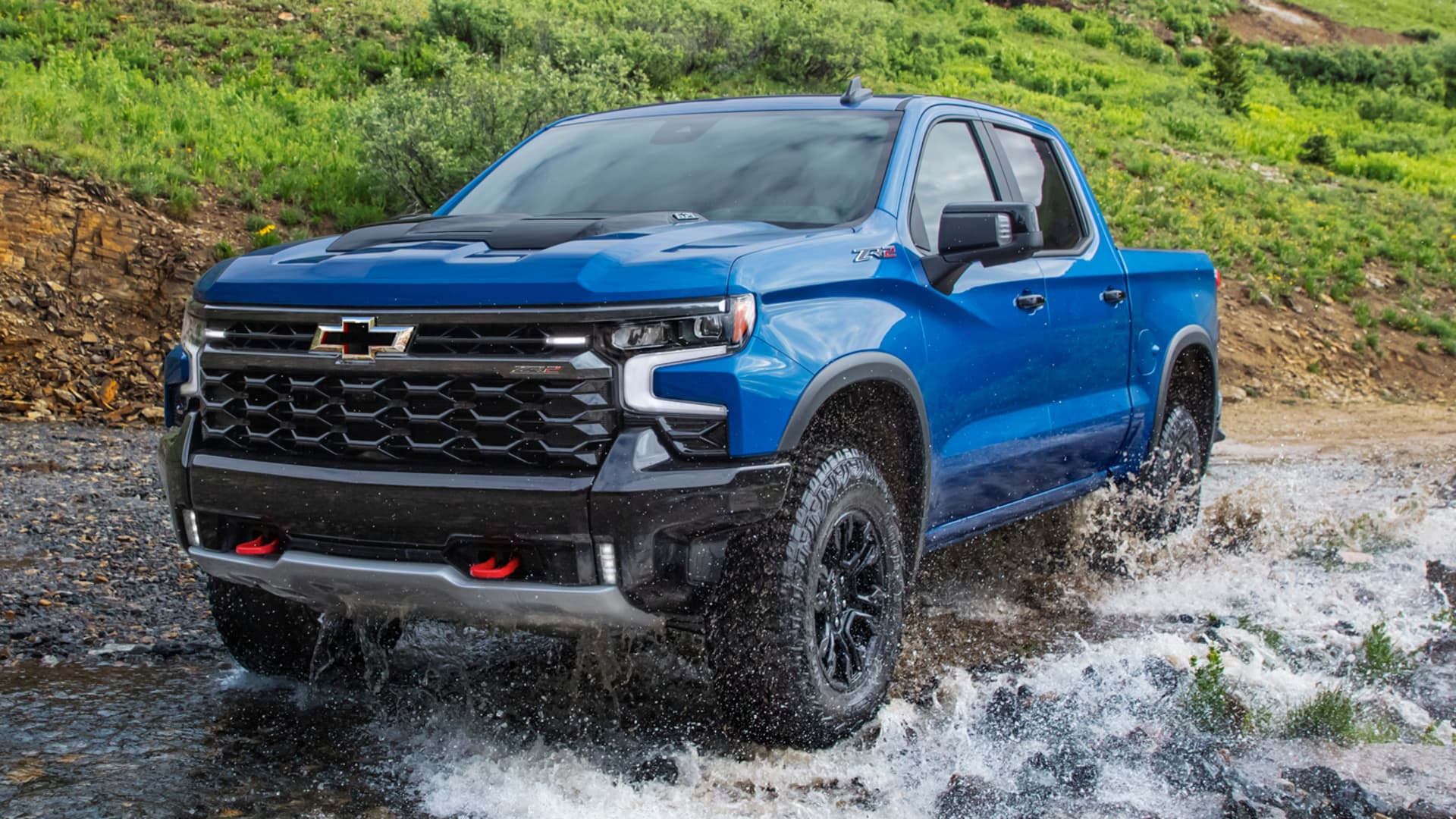
Pickup trucks have traditionally prioritized towing strength, payload capacity, and rugged construction over fuel efficiency. That balance is changing as hybrid systems, turbocharged engines, and modern diesel powertrains help trucks travel farther on a gallon of fuel.
For American buyers, comparing U.S. Environmental Protection Agency (EPA) fuel economy ratings provides a useful way to identify efficient options. This ranking focuses on gasoline, hybrid, and diesel pickups, using their most efficient relevant configurations where verified figures are available.
Electric trucks are excluded because their MPGe ratings measure energy efficiency differently from gasoline MPG, making direct comparisons less straightforward.
1. Ford Maverick Hybrid
The Ford Maverick Hybrid sets the benchmark for fuel-conscious pickup buyers. For the 2026 model year, its front-wheel-drive configuration is EPA-rated at 38 MPG combined, with 42 MPG city and 35 MPG highway.
Those figures are exceptional for a vehicle with an open cargo bed, and they put the Maverick in a different efficiency league from conventional midsize and full-size trucks.
The powertrain pairs a 2.5-liter four-cylinder gasoline engine with an electric motor and hybrid battery. Rather than relying on a large engine to move a heavy truck, the system can use electric assistance during acceleration and recover energy through regenerative braking.
That arrangement is particularly beneficial in stop-and-go traffic, where conventional gasoline pickups tend to consume more fuel.
Its compact dimensions also make the Maverick practical for urban owners. It is easier to park than a full-size pickup, while the bed remains useful for home-improvement supplies, bicycles, gardening equipment, and weekend projects. Buyers who rarely tow heavy trailers may find that this smaller format covers most everyday needs.
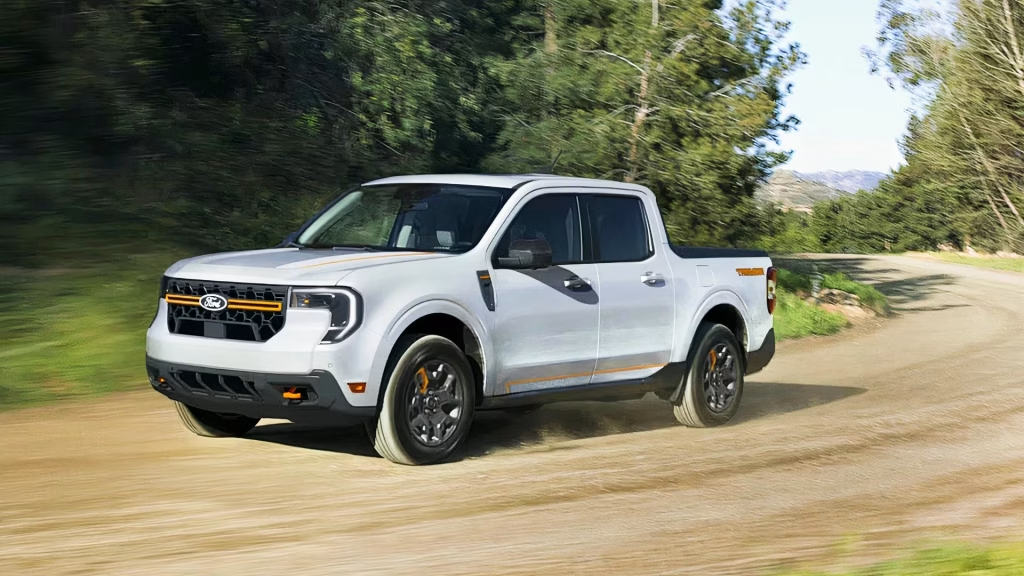
There are trade-offs. The hybrid is not intended to match a heavy-duty truck’s payload or towing capabilities, and carrying substantial loads can reduce real-world fuel economy. Four-wheel-drive requirements and configuration choices also affect the final rating.
For drivers who want pickup utility without full-size fuel bills, the Maverick Hybrid earns first place through its combination of a practical bed, compact footprint, and outstanding EPA-rated efficiency.
2. Chevrolet Silverado 1500 Duramax Diesel
The Chevrolet Silverado 1500 demonstrates that a full-size work truck can deliver competitive fuel economy without sacrificing the torque needed for demanding jobs.
Its available 3.0-liter Duramax turbo-diesel inline-six is rated at up to 25 MPG combined in the 2026 model year with two-wheel drive. Four-wheel-drive versions achieve up to 24 MPG combined, depending on configuration.
This engine produces 305 horsepower and 495 lb-ft of torque. That substantial torque output makes the Silverado attractive to owners who tow trailers, transport equipment, or regularly cover long highway distances.
Properly equipped versions can tow up to 13,300 pounds, although the maximum depends on the truck’s configuration and equipment.
Diesel technology helps explain the truck’s efficiency. The engine is designed to deliver strong pulling power at relatively low engine speeds, which suits highway cruising and hauling.
Unlike a hybrid, it does not rely on an electric motor to improve its fuel economy. Instead, its diesel combustion process and powertrain calibration contribute to its ability to cover long distances efficiently.
There is a financial consideration, though. Diesel fuel prices can be higher than gasoline prices, and emissions-control components add maintenance considerations that buyers should account for. A higher MPG figure does not automatically translate into lower annual fuel costs.
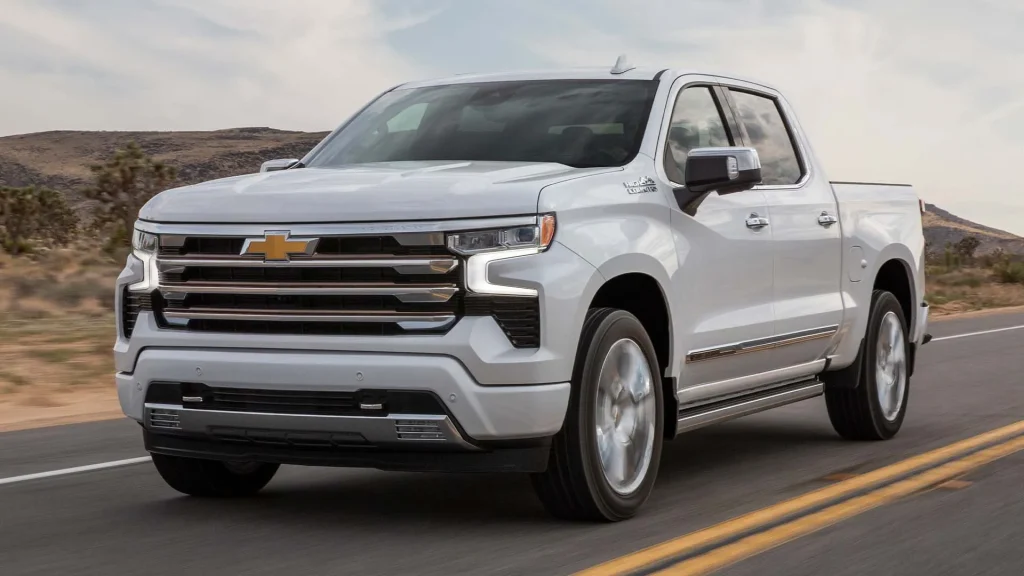
The Silverado is also much larger than the Maverick, offering greater work capability but requiring more space in parking lots and narrow streets. Owners who rarely tow or carry heavy cargo may not need that extra capacity.
For buyers who regularly put their trucks to work, the Duramax-powered Silverado offers an appealing combination of towing strength, highway efficiency, and full-size practicality.
3. Hyundai Santa Cruz
The Hyundai Santa Cruz shows how a compact pickup can prioritize everyday usability without demanding the fuel consumption associated with larger trucks.
Its front-wheel-drive versions equipped with the standard 2.5-liter four-cylinder engine achieve an EPA-estimated 25 MPG combined, with 22 MPG city and 30 MPG highway. All-wheel drive and the more powerful turbocharged engine change those figures, so buyers should compare the specific trim they intend to purchase.
Unlike traditional body-on-frame pickups, the Santa Cruz uses unibody construction, similar to many passenger cars and crossovers. This approach suits drivers who want an open cargo bed for camping equipment, gardening supplies, bicycles, or home-improvement materials but do not need a heavy-duty work vehicle.
The standard engine produces 191 horsepower and 181 lb-ft of torque. That output is appropriate for everyday commuting and light hauling, while the available turbocharged engine offers stronger acceleration at the expense of fuel economy. Maximum towing capacity reaches 3,500 pounds when properly equipped with the standard engine.
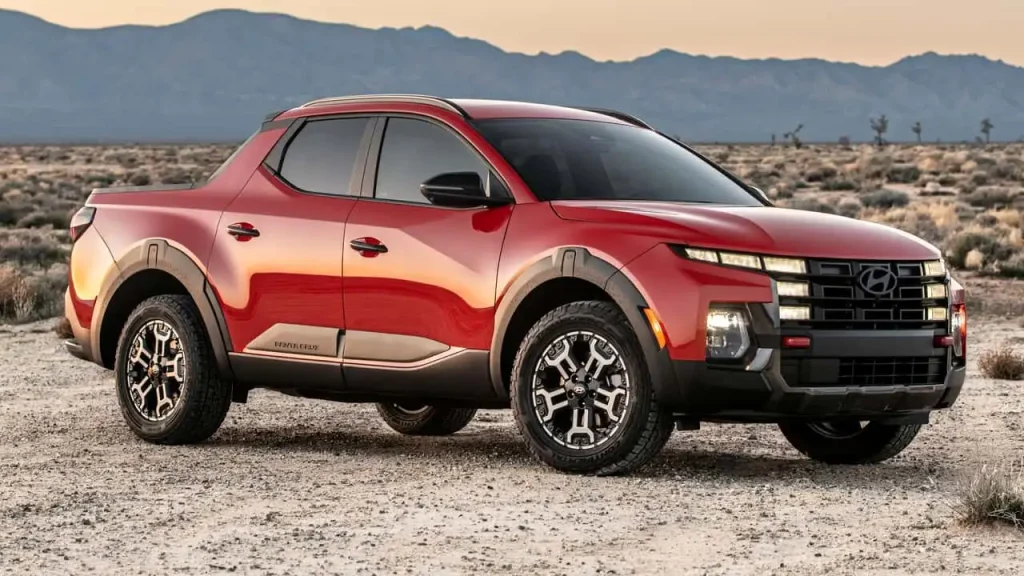
Its biggest advantage is how naturally it fits into daily life. The smaller footprint makes parking and urban driving less demanding than in a full-size pickup. The trade-off is cargo-bed length and towing capacity, which cannot match those of larger trucks.
Drivers who frequently carry heavy construction materials or tow large trailers should consider a more capable alternative. For commuters who occasionally need a bed, however, the Santa Cruz provides a useful middle ground between a crossover and a conventional pickup.
Its fuel economy is particularly appealing to owners who spend more time driving to work than hauling substantial loads.
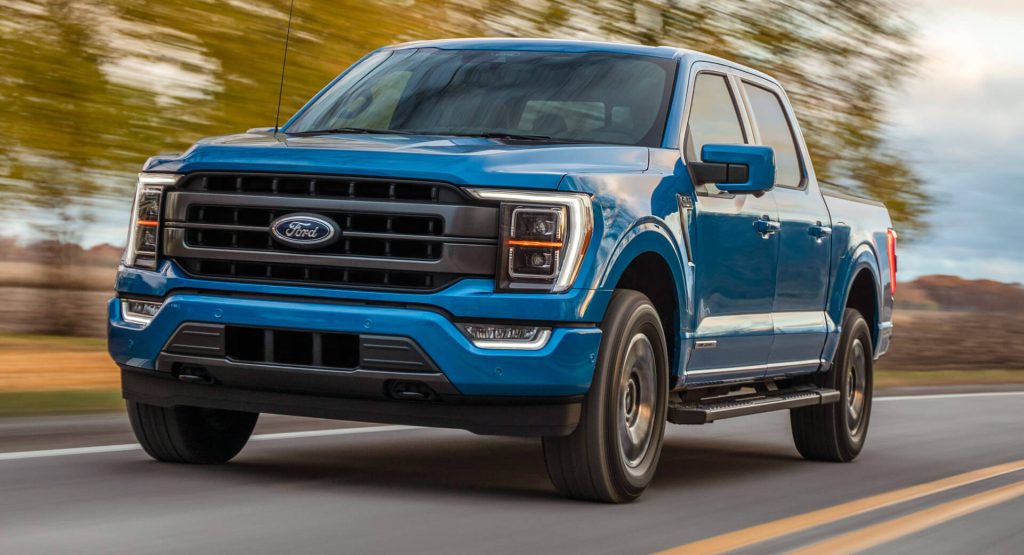
4. Ford F-150 PowerBoost Hybrid
The Ford F-150 PowerBoost Hybrid brings fuel-saving technology to one of America’s most familiar full-size pickups. Its 3.5-liter twin-turbocharged V6 works with an electric motor and battery system, producing up to 430 horsepower and 570 lb-ft of torque.
For the 2026 model year, the four-wheel-drive configuration is rated at up to 23 MPG combined, while certain two-wheel-drive versions reach 24 MPG combined.
That combination matters for drivers who need more than a compact pickup can provide. Depending on configuration, the F-150 can tow substantial trailers and carry work equipment while retaining respectable fuel economy for a full-size truck.
The hybrid system adds electric assistance during acceleration and recovers energy through regenerative braking, helping reduce fuel use in situations where a conventional gasoline engine may be less efficient.
The PowerBoost is not designed to operate like a fully electric truck. Its gasoline engine remains central to propulsion, and the battery is charged through driving rather than requiring routine external charging. That makes it convenient for owners who want hybrid assistance without changing their refueling habits.
Fuel economy still depends heavily on how the truck is used. Towing, heavy cargo, large tires, and frequent acceleration can all increase consumption. Buyers should also compare the exact cab, bed, and drivetrain combination because EPA ratings vary across the lineup.
The hybrid powertrain can be especially attractive to people who use their truck for commuting during the week and towing on weekends. However, someone who rarely needs full-size capacity may save more money by choosing a smaller pickup.
The F-150 PowerBoost earns its position by combining substantial capability with fuel economy that remains competitive among large pickups.
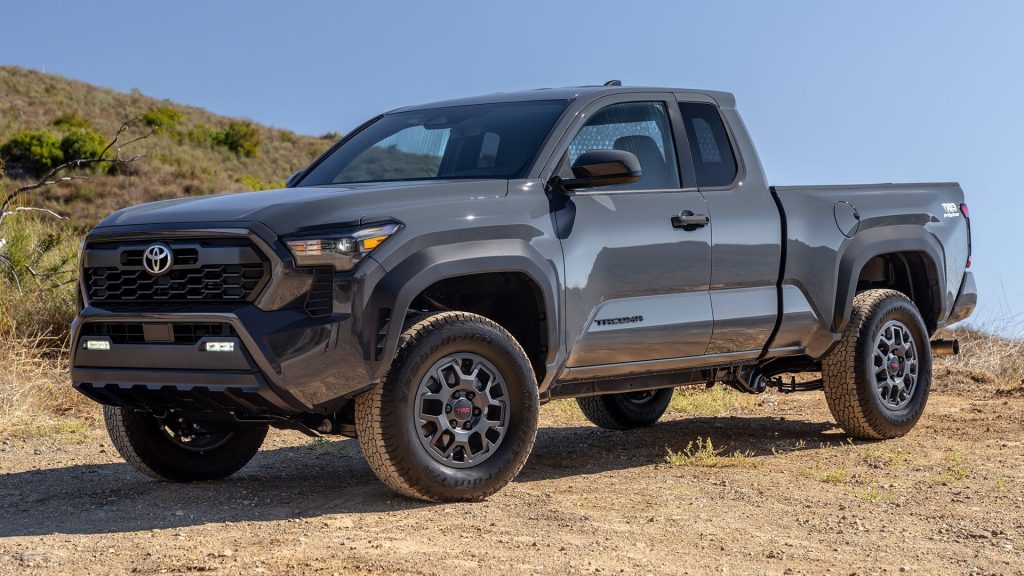
5. Toyota Tacoma
The Toyota Tacoma remains a popular choice for buyers who want midsize pickup capability without moving up to a full-size truck. Its most fuel-efficient 2026 gasoline configurations achieve up to 23 MPG combined, with certain rear-wheel-drive versions rated at 21 MPG city and 26 MPG highway.
Four-wheel-drive models and off-road-focused trims can return lower figures because of their additional equipment and drivetrain requirements.
Toyota offers a turbocharged 2.4-liter four-cylinder engine across the Tacoma range, with output varying by trim and transmission.
The available i-FORCE MAX hybrid produces up to 326 horsepower and 465 lb-ft of torque, prioritizing stronger performance and pulling power rather than delivering a dramatic fuel-economy advantage over every gasoline version.
The Tacoma’s appeal extends beyond its MPG rating. Its midsize dimensions make it more manageable than a full-size pickup in many parking areas and on narrower roads. Available four-wheel drive, off-road hardware, and useful ground clearance also make it suitable for drivers who regularly travel beyond paved highways.
Those features can come at an efficiency cost. Larger tires, added protective equipment, and heavier off-road packages may reduce fuel economy. Buyers should therefore consider how they actually intend to use the truck rather than choosing an off-road trim solely for its appearance.
The Tacoma suits people who need a genuine pickup bed and occasional hauling capability but do not require the maximum towing capacity of a larger truck. Its EPA rating is competitive, although it cannot match the much higher combined MPG of a compact hybrid pickup.
For drivers balancing recreational use with everyday transportation, the Tacoma provides a practical middle ground between efficiency and traditional truck capability.
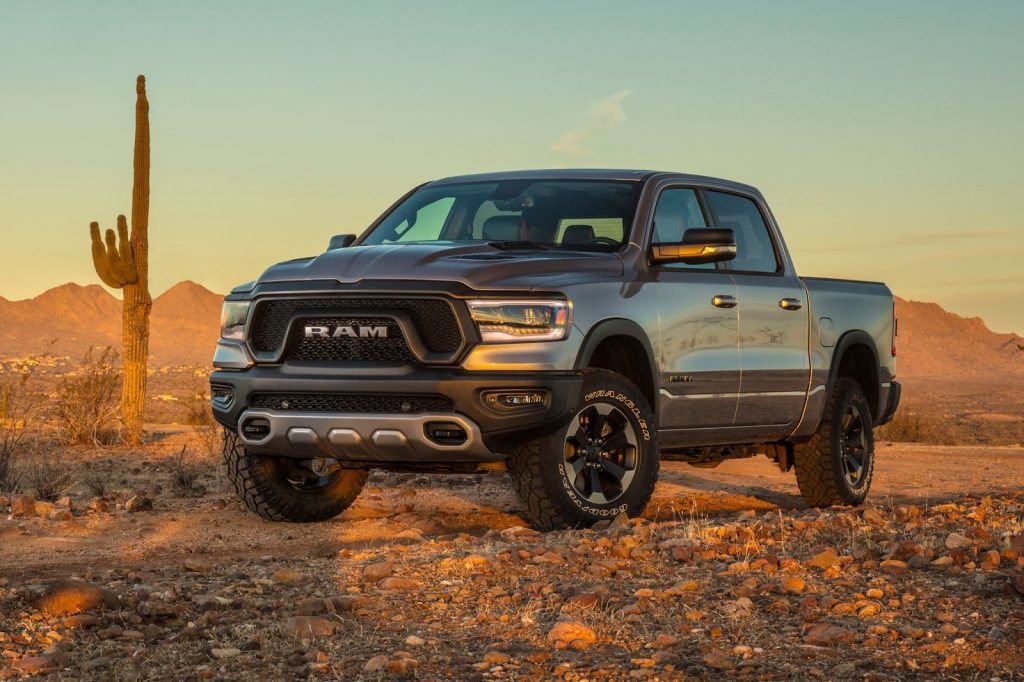
6. Ram 1500 V6 eTorque
The Ram 1500 V6 eTorque rounds out this ranking by showing that a full-size pickup can achieve reasonable fuel economy without relying on a conventional full-hybrid powertrain.
Its 3.6-liter Pentastar V6 uses a mild-hybrid system that assists the engine during certain driving situations and supports stop-start operation. The most efficient rear-wheel-drive configuration is EPA-rated at 22 MPG combined, with 20 MPG city and 25 MPG highway.
The V6 produces 305 horsepower and 269 lb-ft of torque. It is designed for everyday driving and general pickup duties rather than the highest performance available in the Ram lineup. Buyers who do not need the stronger output of the available turbocharged inline-six engines may find this configuration sufficient for commuting, light hauling, and routine work.
The eTorque system differs from a full hybrid because it does not normally propel the truck independently using electric power. Instead, its motor-generator assists with deceleration.
This relatively modest intervention can improve efficiency without requiring owners to plug in the vehicle or change their usual refueling routine.
As with other full-size pickups, the Ram’s fuel economy depends on configuration and usage. Four-wheel drive, larger wheels, heavier equipment, cargo, and towing can all reduce MPG. Drivers should also verify that the engine and mild-hybrid system are available on the specific model year and trim they are considering.
The Ram’s spacious cabin and substantial cargo capacity make it useful for families, contractors, and drivers who need a full-size vehicle. However, its fuel economy remains below that of compact pickups, so choosing one makes the most sense when its additional space and capability are genuinely useful.
For buyers seeking a traditional full-size truck with a comparatively efficient gasoline powertrain, the V6 eTorque configuration offers a sensible balance of everyday usability and fuel consumption.
