
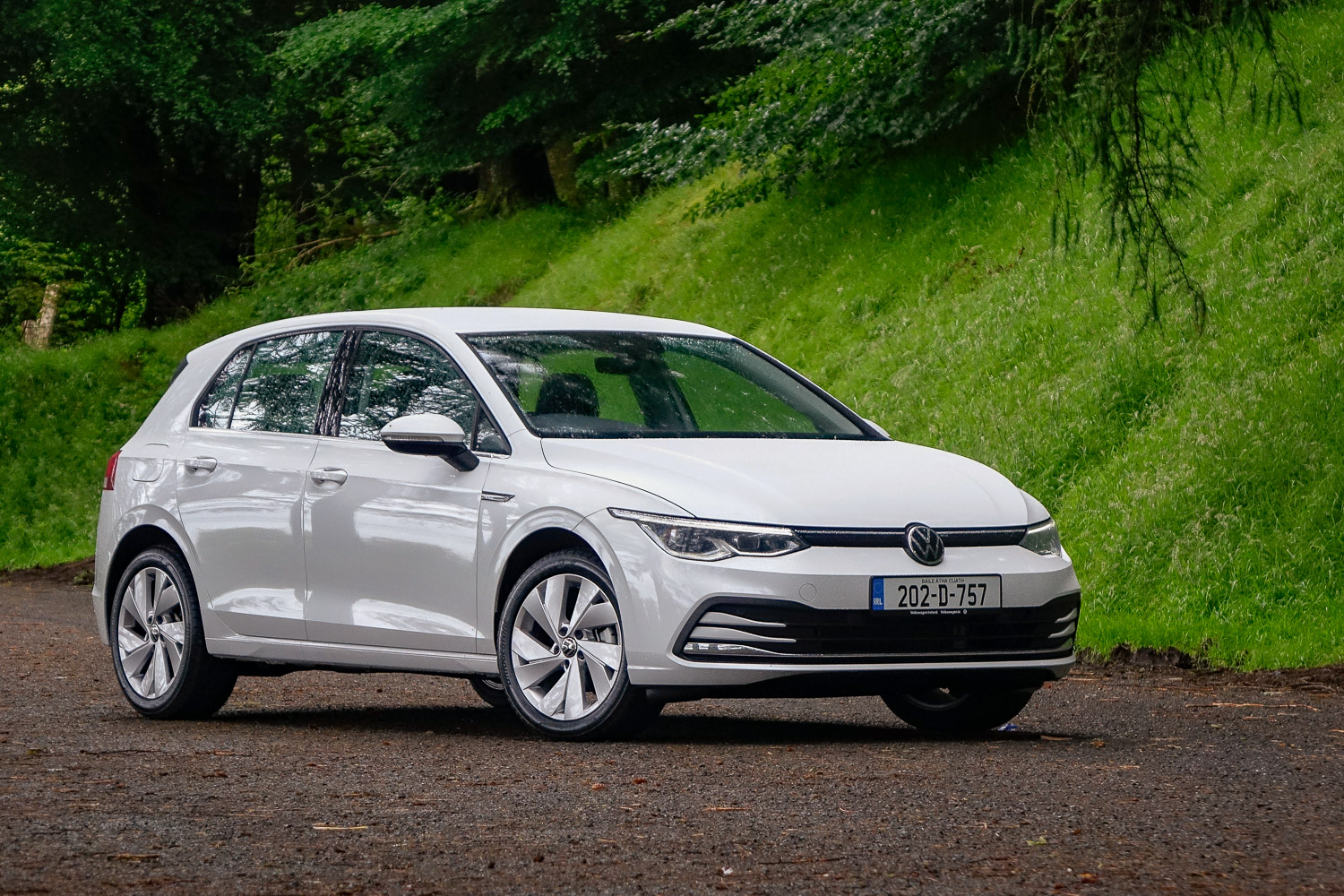
The 1990s produced several cars that delivered surprisingly impressive fuel economy without hybrid batteries, sophisticated driver assistance systems, or today’s complex powertrains. Some compact sedans and lightweight hatchbacks could travel considerable distances on a gallon of gasoline, making them attractive to budget-conscious drivers.
Modern vehicles offer more horsepower, improved crash protection, greater comfort, and cleaner emissions, but those improvements can come with extra weight and higher fuel consumption.
Comparing older models with their modern counterparts reveals some unexpected results. The key is to use U.S. EPA fuel economy ratings, compare equivalent models carefully, and distinguish historical test figures from today’s standards.
1. Geo Metro: The Lightweight Economy Champion
The Geo Metro demonstrated how far a small engine and a lightweight body could stretch a gallon of gasoline. For 1995, the three-cylinder Metro with a five-speed manual transmission received EPA ratings of 37 MPG in the city, 44 MPG on the highway, and 40 MPG combined.
Those figures made it an exceptional choice for commuters who valued low running costs above acceleration or luxury.
Its secret was simplicity. The 1.0-liter engine produced modest power, while the compact body required relatively little energy to move.
Drivers did not get the sound insulation, extensive safety equipment, or generous interior space expected from many modern vehicles. However, the Metro’s basic engineering suited everyday trips where efficiency mattered far more than performance.
An important caveat is that Chevrolet’s modern Trax is not a direct successor to the Metro. It is a much larger crossover, so comparing their fuel economy reflects changes in vehicle categories over time rather than showing that the same model has become less fuel-efficient.
The Metro’s 40 MPG combined rating nevertheless remains an impressive historical benchmark for a gasoline-powered car.
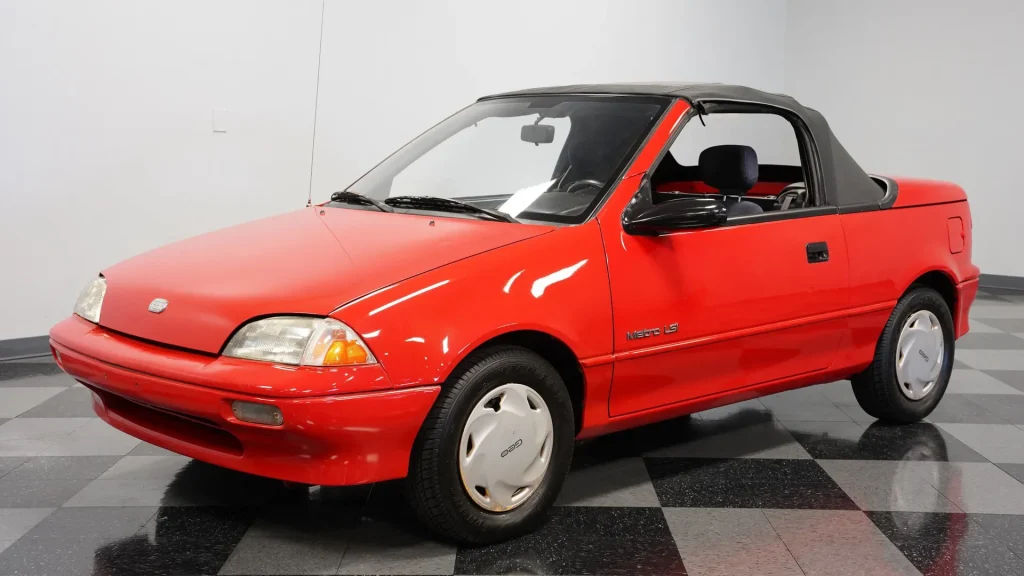
Its tiny dimensions also made parking and navigating narrow streets straightforward. Yet buyers considering one today should inspect rust, engine condition, transmission operation, and parts availability. A decades-old vehicle can require repairs that erase some fuel savings.
The Metro’s appeal was never about speed or prestige. It was about making every gallon count, a principle that still resonates with drivers facing expensive commutes.
2. Honda Civic HX: Efficiency Without Hybrid Technology
The late-1990s Honda Civic HX shows that impressive fuel economy did not require an electric motor or a battery pack. The 1998 model equipped with its fuel-efficient gasoline engine and manual transmission earned EPA estimates of 30 MPG in city driving, 39 MPG on the highway, and 34 MPG combined.
That combined rating deserves attention beside the 2025 Civic sedan’s conventional LX trim, which was rated at 36 MPG combined, including 32 MPG city and 41 MPG highway. The newer car is more efficient by the published combined figures, so it would be inaccurate to claim that every 1990s Civic outperformed its modern counterpart.
The HX is relevant because it illustrates how specialized economy trims could deliver strong mileage long before hybrid powertrains became common. Its compact proportions, relatively modest power output, and emphasis on efficient cruising helped it use less fuel than many ordinary cars of its era.
The driving experience is also different from that of a modern compact sedan. The older car has fewer electronic systems and less contemporary convenience equipment, while its age can bring worn suspension components, deteriorated rubber parts, and maintenance concerns.
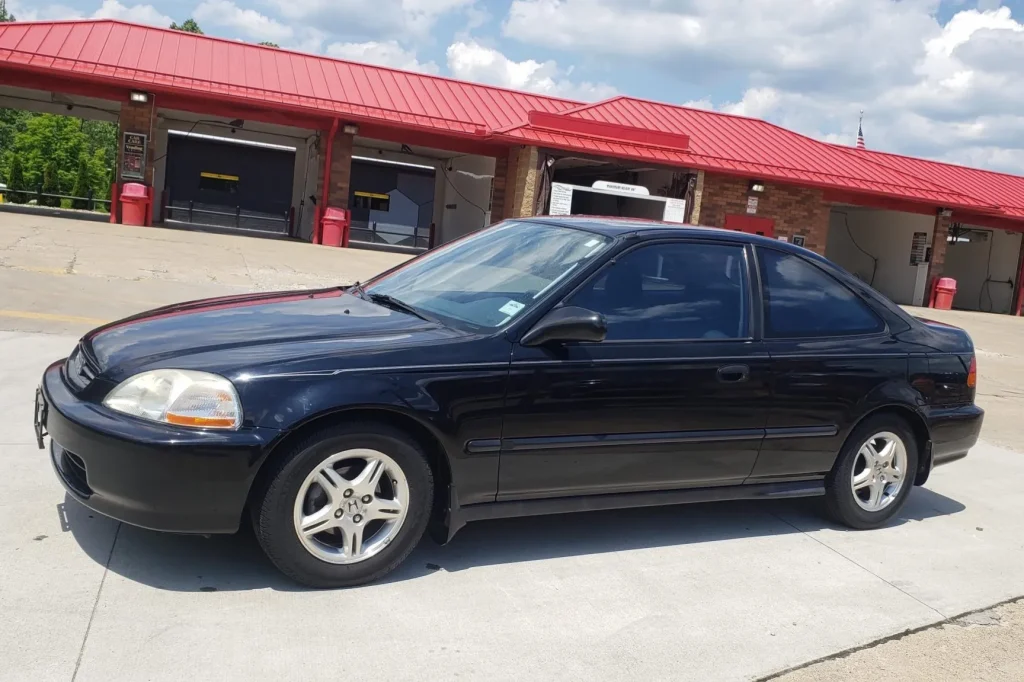
Fuel economy from a surviving example will depend heavily on condition and driving style. For buyers interested in automotive history, the HX is a reminder that engineers were already pursuing fuel savings through engine calibration, gearing, and reduced mechanical losses.
It is an important efficiency milestone, even though its modern counterpart now delivers better official mileage.
3. Volkswagen Golf TDI: Diesel Efficiency Before Today’s Electrification
For drivers who regularly covered long highway distances, the 1999 Volkswagen Golf TDI offered an appealing alternative to gasoline-powered hatchbacks.
EPA data listed certain 1999.5 Golf TDI versions at 35 MPG city, 44 MPG highway, and 38 MPG combined. That was remarkable for a practical hatchback with usable passenger space and a conventional internal-combustion engine.
Diesel technology was central to its appeal. The engine delivered strong low-speed pulling power, allowing relaxed cruising without needing the high engine speeds often associated with small gasoline engines.
Combined with the Golf’s compact shape, that characteristic made it particularly attractive to commuters and drivers who accumulated substantial annual mileage.
However, this comparison requires care. Volkswagen no longer sells the Golf in the United States as a regular new-car offering across its full historical range, so there is no directly equivalent current U.S. Golf TDI against which to make a clean comparison.
The older car’s rating is best understood as evidence of how efficient diesel hatchbacks could be, not proof that a current gasoline Golf would necessarily use more fuel.
Modern gasoline vehicles benefit from improvements in engine management, emissions control, and transmission design. Diesel vehicles also face different emissions requirements and ownership considerations, especially when older equipment must be repaired or maintained.
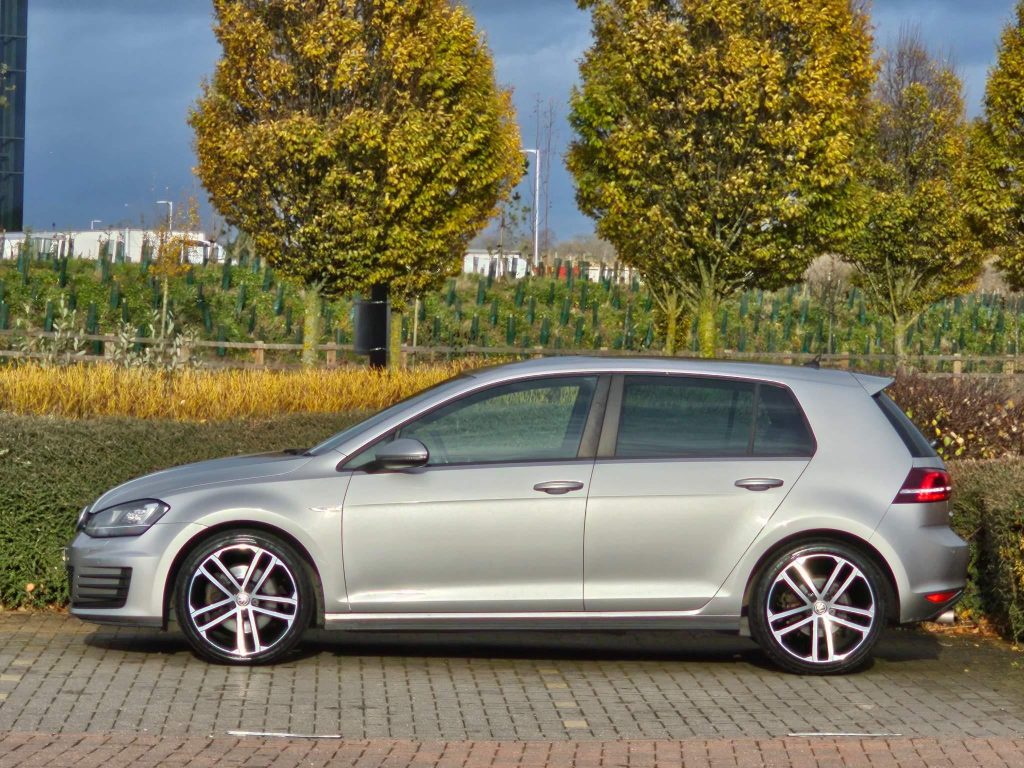
Anyone considering a used Golf TDI should examine service records, the condition of its fuel system, turbocharger, emissions equipment, and timing-belt maintenance where applicable. Repairs can be costly on an aging vehicle.
Its historical significance lies in the combination of highway efficiency and everyday practicality, demonstrating that fuel economy could coexist with a useful, versatile body style.
4. Toyota Tercel: A Small Sedan Built Around Low Running Costs
The 1999 Toyota Tercel was a straightforward subcompact for drivers who wanted dependable transportation without paying for a larger engine or a feature-heavy cabin. EPA-based data lists the model at up to 31 MPG combined, with 28 MPG in city driving and 36 MPG on the highway for the cited configuration.
The Tercel’s appeal came from its simple and practical design, with compact dimensions, a small four-cylinder engine, and a focus on everyday driving. It was easy to maneuver, convenient to park, and well suited to commuters who regularly traveled between home, work, and nearby destinations.
The comparison with modern cars is less direct because Toyota discontinued the Tercel in the United States. The Yaris later occupied a similar small-car role, but it is not an identical continuation of the Tercel, and its specifications varied by model year and transmission.
It would therefore be misleading to present the Tercel’s rating as proof that every modern small Toyota has worse fuel economy.
What the Tercel does demonstrate is the value of keeping a vehicle small and mechanically uncomplicated. Modern cars generally provide more safety equipment, stronger crash structures, and more convenience features, but buyers may also face higher purchase prices and more complex repairs.
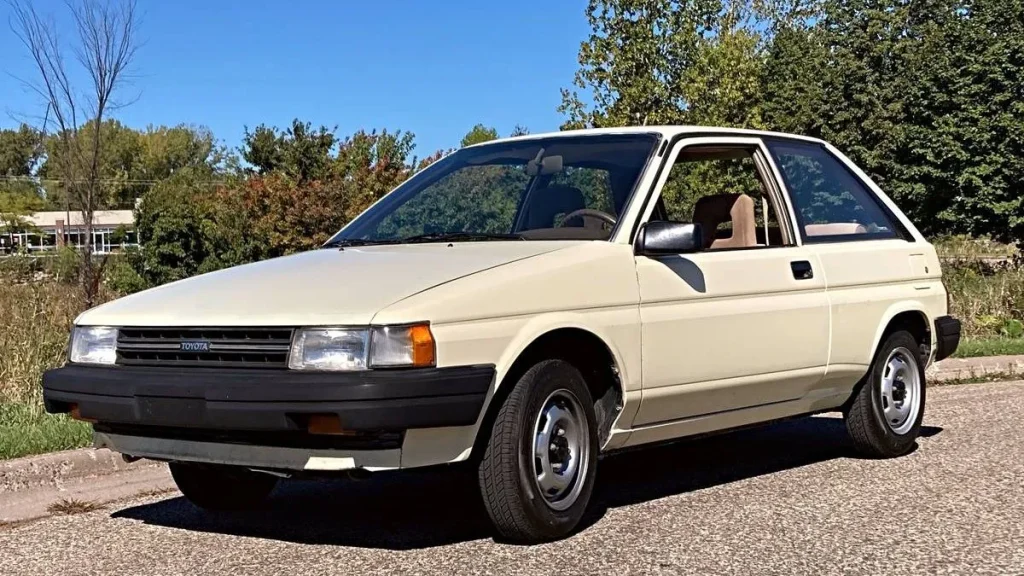
A used Tercel deserves a careful inspection for rust, oil leaks, cooling-system problems, and neglected maintenance. Even a fuel-efficient car becomes an expensive choice if its condition is poor.
The Tercel represents an era when a basic subcompact could meet many transportation needs without demanding much fuel. Its efficiency story is strongest as a historical example of economical design, rather than a direct victory over a current Toyota model.
5. Saturn SL: A Family Sedan With Modest Fuel Demands
The 1997 Saturn SL showed that an affordable four-door sedan could deliver useful highway mileage without relying on hybrid technology. A version equipped with the 1.9-liter four-cylinder engine and five-speed manual transmission received EPA estimates of 24 MPG in the city and 36 MPG on the highway, for 28 MPG combined.
Saturn positioned its compact sedans as practical alternatives to more expensive family cars. The SL’s uncomplicated layout, front-wheel-drive configuration, and relatively low weight helped keep fuel requirements reasonable.
It also offered four doors and a separate trunk, making it suitable for drivers who needed more conventional passenger-car practicality than a tiny two-door hatchback could provide.
A limitation of this comparison is that Saturn is no longer an active vehicle brand, and the SL has no direct successor in today’s market. Modern compact sedans often deliver comparable or better EPA fuel economy while providing more power, advanced safety features, and greater comfort.
The Saturn’s historical rating should therefore not be treated as evidence that modern sedans universally consume more fuel.
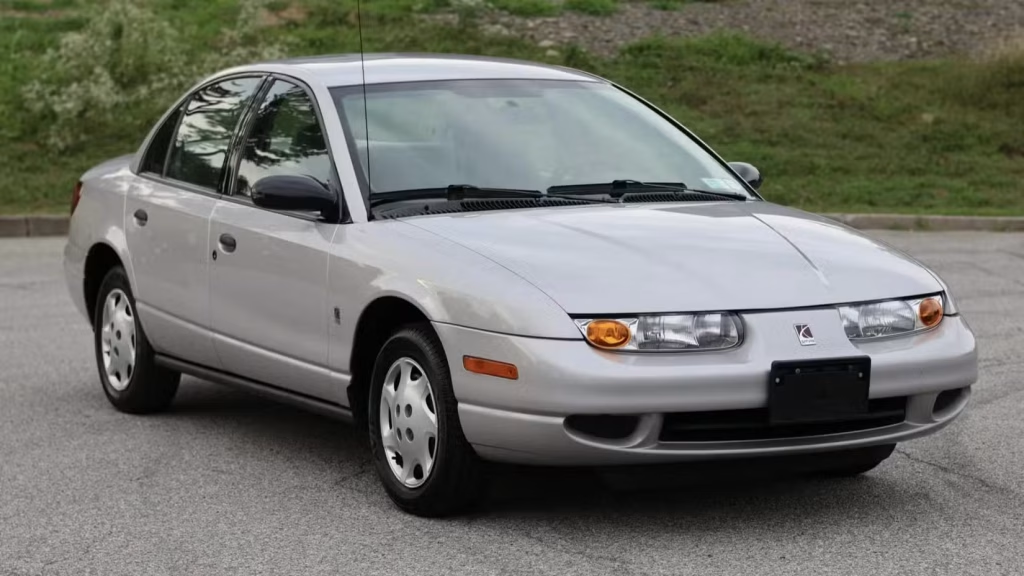
For someone interested in owning one, mechanical condition matters more than its original window-sticker rating. Age can affect fuel delivery, engine compression, sensors, tires, and drivetrain efficiency. Rust and the availability of replacement components also deserve attention before purchase.
The Saturn SL remains a useful example of how sensible engineering helped ordinary cars deliver respectable mileage in the 1990s. Its significance is not that it defeats every modern sedan but that a relatively basic gasoline car could provide practical family transportation while returning 36 MPG on the highway.
6. Ford Escort: Affordable Commuting With a Traditional Gasoline Engine
The 1999 Ford Escort LX was designed for buyers who wanted inexpensive transportation rather than a performance-oriented compact.
EPA-based figures list the Escort at 24 MPG city, 34 MPG highway, and 28 MPG combined for the cited configuration. That made it a reasonable choice for everyday commuting during the late 1990s.
Ford’s approach centered on familiar gasoline-engine technology and a conventional compact-car layout. The Escort was available in different body styles and configurations, giving buyers a choice between everyday practicality and a sportier appearance.
Its relatively modest engine output suited routine traffic, while its highway rating made longer trips less expensive than they would have been in many larger cars.
Comparing it with a modern Ford requires a qualification. The Escort nameplate is no longer used for a new U.S. compact car, and Ford’s current American lineup does not offer a direct successor. An Escape crossover, for example, serves a different market and should not be treated as an equivalent replacement simply because it carries the same brand.
Modern compact cars benefit from improved combustion technology, more sophisticated transmissions, and better aerodynamic development. Consequently, the Escort’s historical fuel economy is not proof that modern Ford vehicles are less efficient.
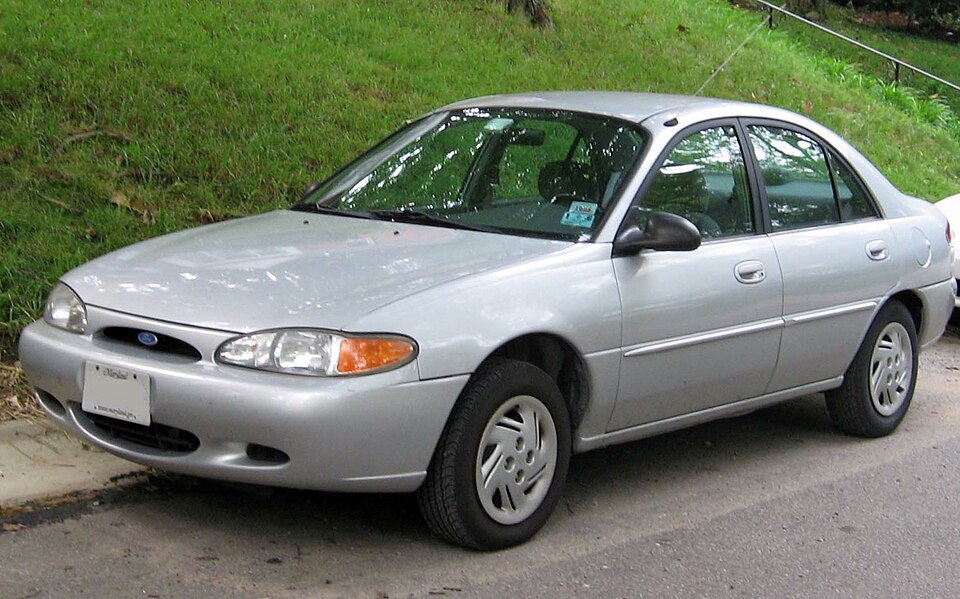
Used examples also require realistic maintenance budgeting. A car of this age may need suspension work, cooling-system repairs, tires, seals, or fuel-system attention. Poor maintenance can reduce mileage substantially.
The Escort earns its place in this discussion as an illustration of economical mainstream motoring. Its appeal was the balance between purchase price, familiar mechanical systems, and usable fuel economy, rather than an ability to outperform every current vehicle at the pump.
7. Nissan 200SX: Highway Mileage From a Compact Coupe
The 1998 Nissan 200SX offers a different perspective on 1990s fuel economy. The standard 200SX with its four-cylinder engine and automatic transmission received EPA estimates of 25 MPG city, 35 MPG highway, and 29 MPG combined in the cited configuration.
The sportier SE-R used a different engine setup and was rated lower, illustrating why trim selection matters when comparing fuel economy.
The 200SX combined compact dimensions with a two-door body and a conventional gasoline powertrain. It appealed to drivers who wanted something more distinctive than a basic economy sedan without stepping into a larger, thirstier performance car. Its highway efficiency was respectable for a coupe of its period, particularly when driven at steady speeds.
However, Nissan discontinued the 200SX in the United States, and there is no direct modern replacement carrying the same name.
Today’s Sentra occupies part of the compact-car market, but its four-door body, different engines, and updated engineering make it an imperfect comparison. The 200SX’s figures cannot establish that modern Nissan cars are less efficient.
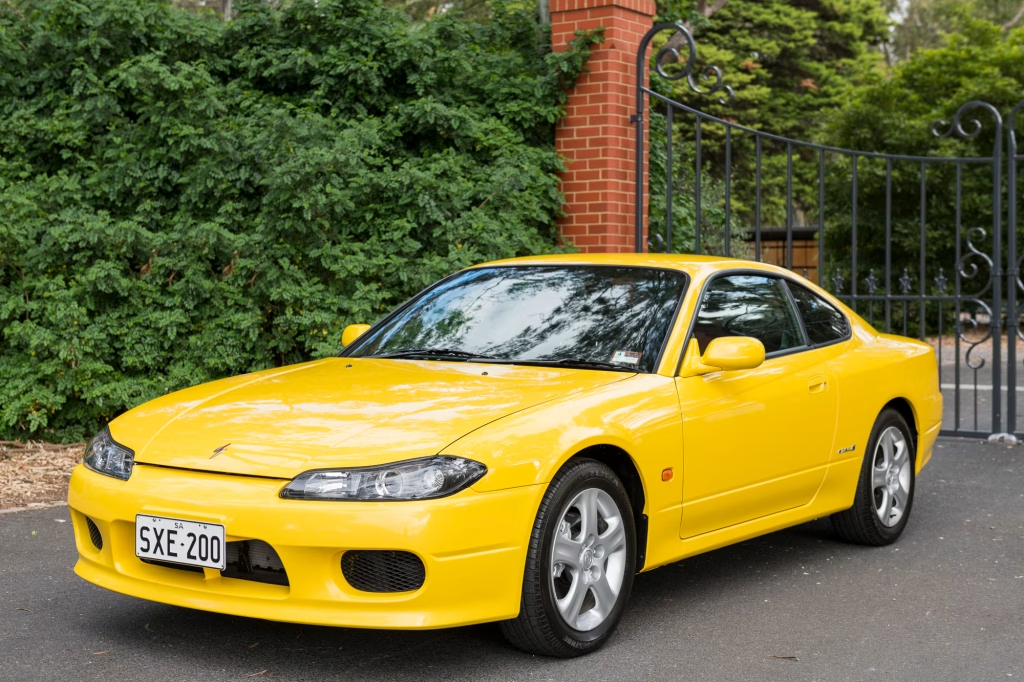
Buyers considering a surviving example should pay particular attention to engine condition, transmission behavior, suspension wear, and evidence of modifications or accident damage. Sport-oriented versions may have experienced harder use than ordinary commuter cars, which can affect both reliability and real-world fuel consumption.
The 200SX demonstrates how a compact coupe could combine enjoyable styling with practical fuel economy. Its historical figures are worth remembering, but any claim of superiority over a modern model must account for engine choice, body style, and comparable EPA test ratings.
