
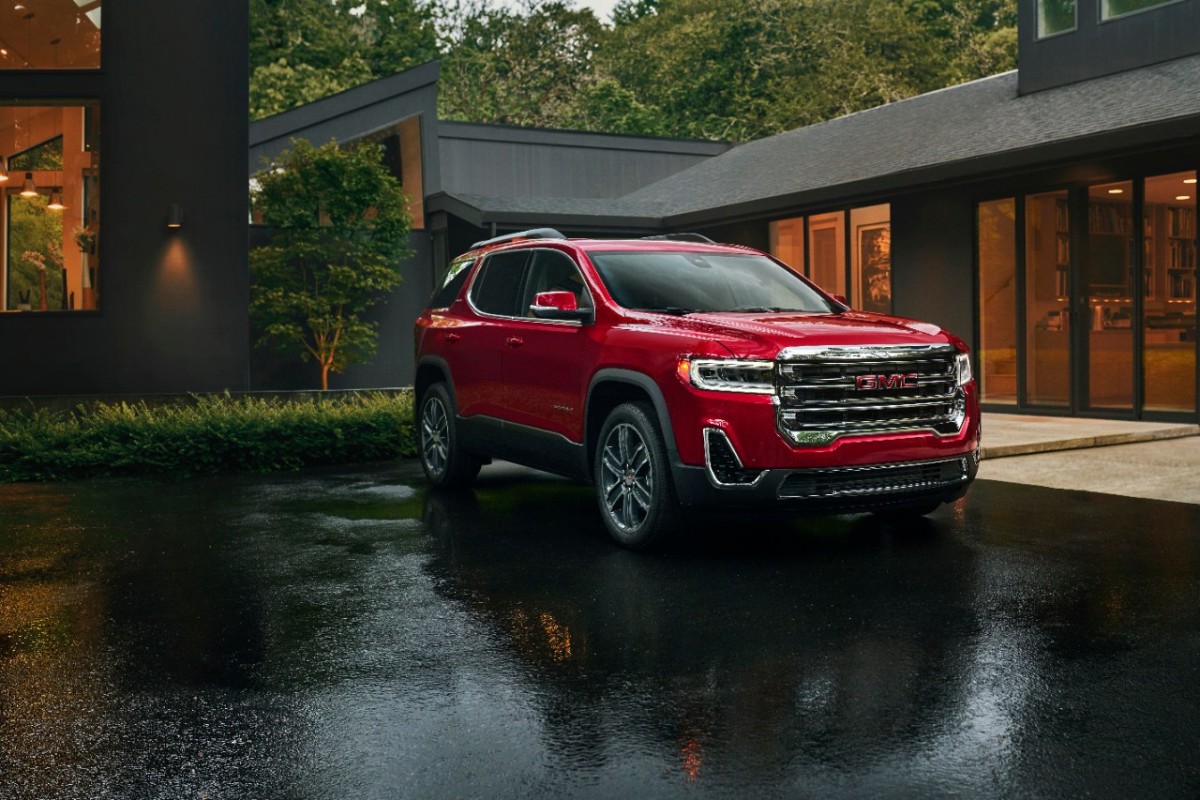
Consumer Reports removed its recommendation from 18 vehicles for the 2026 model year after its latest owner survey identified below-average predicted reliability. The findings, published on December 4, 2025, were based on responses covering more than 380,000 vehicles.
The affected lineup includes gasoline-powered SUVs, hybrids, plug-in hybrids, and electric vehicles. Losing the recommendation does not mean a vehicle is unsafe or that every example will suffer a breakdown.
Instead, it means the model no longer met Consumer Reports’ requirements for a recommendation, which consider reliability alongside road-test performance, owner satisfaction, and safety-related factors.
1. Ford Explorer
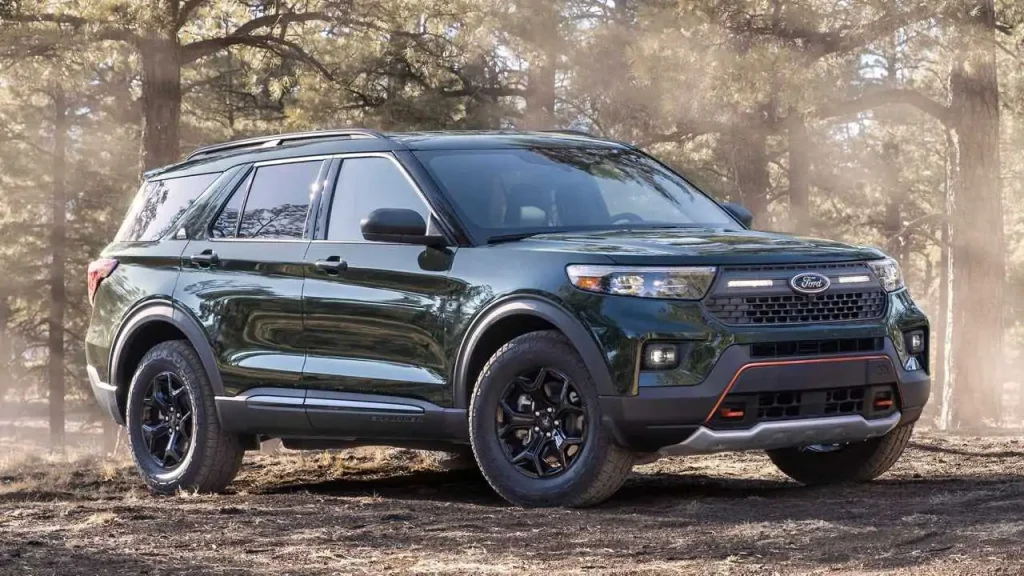
The Ford Explorer’s removal from Consumer Reports’ recommended list for the 2026 model year highlights how reliability concerns can change a vehicle’s standing even when it remains a popular family SUV.
The publication’s 2025 Auto Survey identified below-average predicted reliability for the model, contributing to the loss of its recommendation. This is a Consumer Reports assessment based on owner feedback, not a government recall determination or a declaration that every Explorer is defective.
Reliability surveys examine a much wider range of ownership experiences than a short road test can capture. Consumer Reports asks owners about problems across 20 areas, including the engine, transmission, electrical equipment, body hardware, and paint and trim.
Major engine or transmission trouble receives particular weight because it can lead to expensive repairs and extended time without a vehicle. The survey covers vehicles from multiple model years, helping analysts identify recurring problems rather than judging dependability from a single incident.
For families, the Explorer’s three-row layout and available all-wheel drive may still suit practical needs, but buyers should investigate the precise model year and powertrain before purchasing.
Check maintenance records, confirm that recalls have been completed, and arrange an independent inspection of the engine, transmission, and electronic systems. Reliability can vary between generations and individual vehicles, so the 2026 recommendation change should not automatically be applied to every used Explorer.
Consumer Reports’ decision is best understood as a warning about predicted ownership risk. It suggests shoppers should compare the Explorer carefully with alternatives rather than assuming that its popularity guarantees trouble-free ownership.
2. GMC Acadia
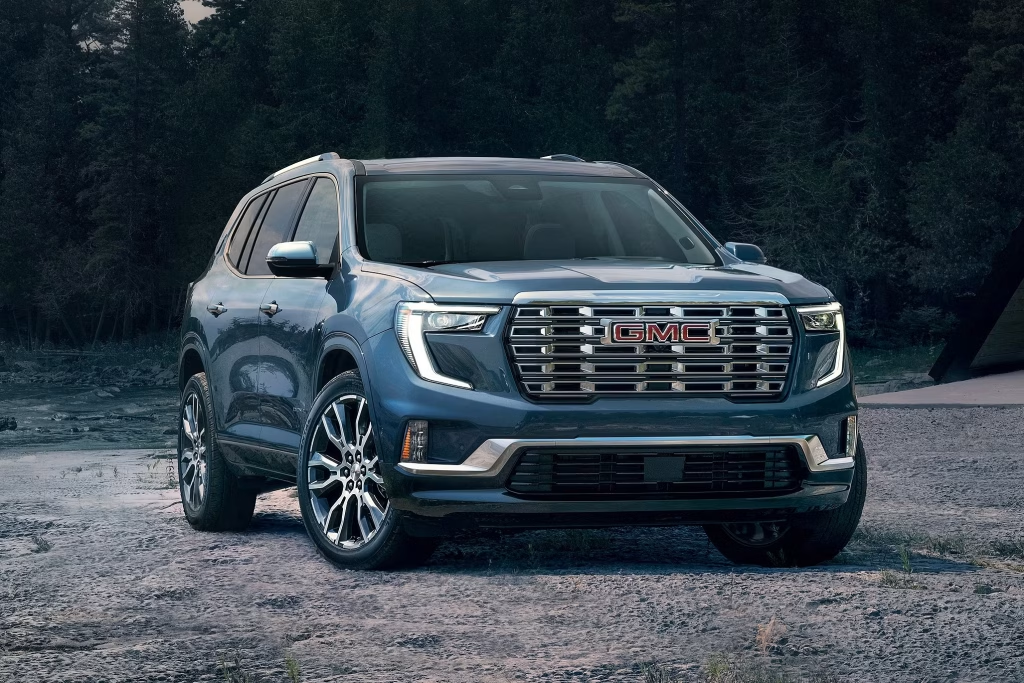
The GMC Acadia faced a particularly difficult result in Consumer Reports’ 2026 reliability assessment. Its predicted reliability score was 14 out of 100 in the publication’s December 2025 least-reliable-car rankings, placing it at the bottom of that particular list.
Consumer Reports also removed its recommendation after survey data indicated below-average reliability. That score is a rating from the publication’s own methodology, not a percentage chance that an Acadia will break down.
The Acadia is a three-row SUV aimed at households needing passenger room and cargo flexibility. Those qualities may make it appealing in a showroom, but a vehicle’s usefulness is only part of the ownership equation.
Consumer Reports gathers feedback about 20 possible trouble areas, with added weight for major engine, cooling-system, and transmission problems, along with drive-system and electrical issues. A poor predicted reliability score signals that the collected owner reports raised concerns about future repair risk.
Shoppers should be careful about applying this result across every Acadia generation. Reliability can change when a vehicle is redesigned, when powertrains are revised, or when manufacturers address recurring defects.
The survey’s prediction uses recent model-year data when available, but a score for the 2026 assessment is not a universal verdict on every Acadia ever sold.
Anyone considering an Acadia should review the exact year and engine, inspect service records, check open recalls, and pay attention to transmission behavior and dashboard warnings during a test drive.
A professional pre-purchase inspection is especially valuable for a used SUV with incomplete maintenance history. Consumer Reports’ decision is a reason to investigate more carefully, not proof that every Acadia will experience a major failure.
3. Buick Enclave
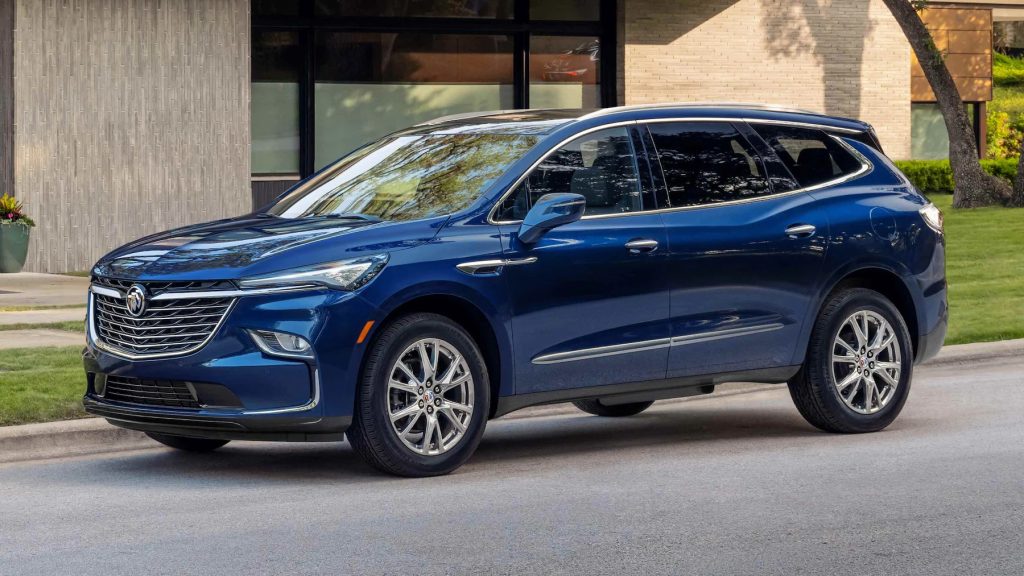
The Buick Enclave is another three-row SUV that lost its Consumer Reports recommendation following the publication’s 2026 model-year reliability assessment.
The concern is particularly relevant to buyers considering the redesigned 2025 model, because a new generation can introduce changes to the powertrain, electronics, and cabin technology that have not yet accumulated a long reliability record.
Consumer Reports’ December 2025 findings identified the Enclave among vehicles with below-average predicted reliability.
Reports about the Enclave highlighted transmission problems, including cases in which owners required major transmission repairs or replacement. Owners also reported problems with the large infotainment display, including instances in which the screen went blank.
These reports matter because the transmission is an expensive component, while a malfunctioning central display can interfere with access to navigation, climate controls, and other vehicle functions, depending on configuration.
Consumer Reports bases its predictions on owner experiences rather than assuming that every vehicle will develop the same fault. Its survey examines 20 potential trouble areas, from minor trim problems to major mechanical failures.
It places additional weight on issues that can be costly or inconvenient, including major engine and transmission problems. The resulting reliability prediction helps the organization assess how a new vehicle may perform over time.
For buyers, the Enclave’s lost recommendation is a reason to examine the exact model year carefully, especially when considering a recently redesigned vehicle. Check for software updates, outstanding recalls, and service campaigns, and ask whether the vehicle has a history of transmission warnings or display failures.
A professional inspection and a complete service record can help identify existing issues, although neither guarantees future reliability.
The decision does not mean every Enclave will experience these problems. It means Consumer Reports’ survey data did not support recommending the model under its 2026 criteria.
4. Chevrolet Equinox
The Chevrolet Equinox lost its Consumer Reports recommendation for the 2026 model year after the organization’s reliability survey identified below-average predicted reliability.
The finding is notable because the Equinox is a mainstream compact SUV aimed at drivers who want everyday practicality without moving up to a larger, more expensive vehicle. Its popularity, however, does not protect it from a change in reliability assessment.
Consumer Reports’ 2026 reliability coverage identified the Equinox as a model with particularly weak predicted reliability. The publication’s broader brand report also noted that the Chevrolet lineup had mixed results, with some vehicles performing well while others fell below average.
That distinction is important: the Equinox’s result should not be treated as a verdict on every Chevrolet model, nor should the ratings for other Chevrolet vehicles be transferred to it.
The survey process looks at 20 trouble areas reported by owners, including the engine, transmission, electrical accessories, in-car electronics, body hardware, and paint. Major mechanical faults receive more weight because they can create large repair bills and leave a vehicle out of service.
Consumer Reports then uses recent model-year data to predict the reliability of new vehicles, adjusting the data used when a model has been redesigned or when sample sizes are limited.
For shoppers, the most useful step is to determine which Equinox model year and powertrain they are considering. A newer generation may not share the same reliability record as an older one.
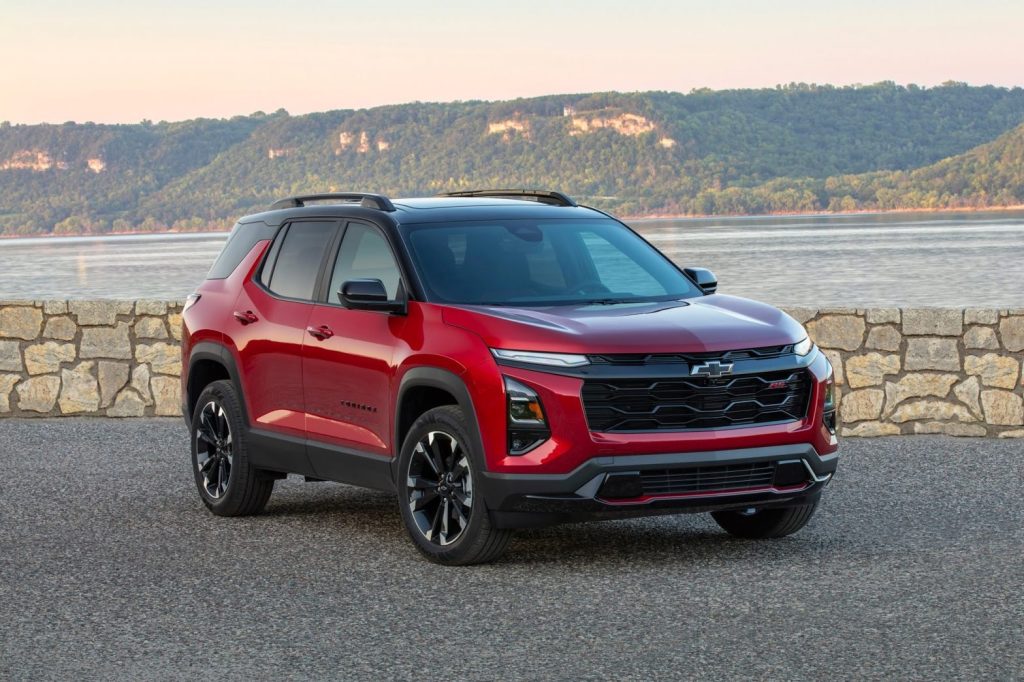
Review the vehicle’s service history, check for outstanding recalls, and make sure all software updates and repairs have been completed. Buyers should also compare the Equinox with alternatives using model-specific data rather than relying solely on the Chevrolet brand’s reputation.
Losing a recommendation is not proof that every Equinox is unreliable. It signals that the model’s predicted reliability did not meet Consumer Reports’ threshold for its 2026 recommendations.
5. Kia EV9
The Kia EV9 lost its Consumer Reports recommendation for the 2026 model year after owner survey data indicated below-average predicted reliability. As a three-row electric SUV, the EV9 targets families who want battery-powered driving without giving up the passenger space traditionally associated with larger gasoline SUVs.
Its loss of recommendation illustrates a challenge facing newer electric vehicles: impressive technology and interior space do not automatically translate into dependable long-term ownership.
Consumer Reports’ 2026 least-reliable-car analysis gave the EV9 a predicted reliability score of 24 out of 100. That number is the publication’s assessment of expected dependability, not a probability that an individual EV9 will fail.
The survey examines problems reported by owners across areas such as the EV battery, charging system, electric motor, drive system, electronics, and body hardware. The organization gives additional weight to issues that may lead to costly repairs or substantial inconvenience.
Electric SUVs have different ownership considerations from conventional gasoline vehicles. A buyer may need to investigate charging performance, software behavior, battery-related concerns, and the operation of the vehicle’s electronic systems, in addition to checking tires, brakes, and suspension components.
A reliability rating cannot tell a prospective owner exactly which fault will occur, but it can help identify models that deserve more careful research before purchase.
Anyone considering a used EV9 should check its service history, confirm that applicable software updates and recalls have been addressed, and ask the dealer about any unresolved charging or electrical complaints.
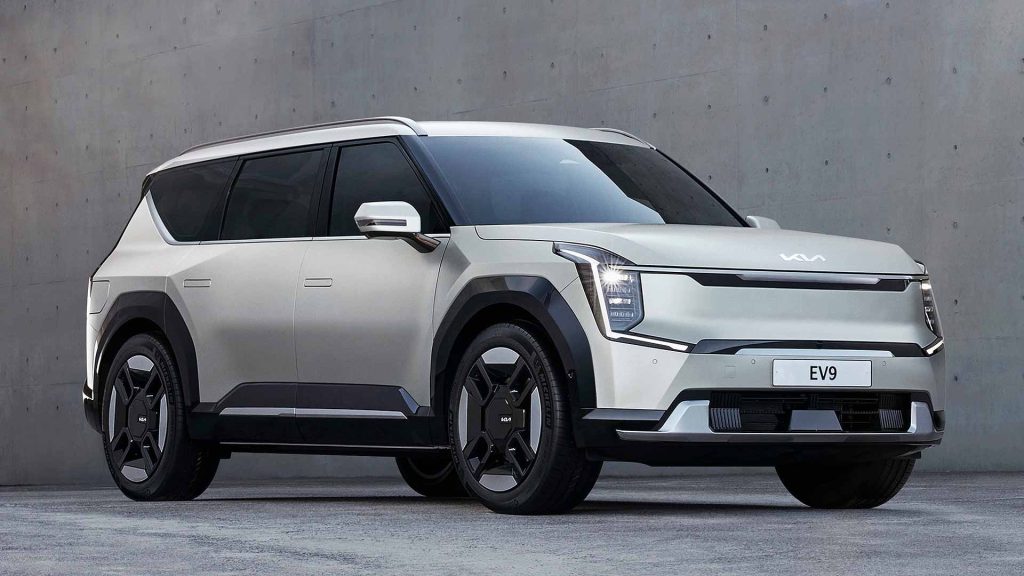
Buyers should also verify battery warranty coverage and understand how the vehicle performs with the charging equipment available at home.
The EV9’s lost recommendation does not mean every example is defective. It means Consumer Reports’ survey-based prediction did not meet its recommendation threshold for 2026.
6. Mazda CX-90 Plug-In Hybrid
The Mazda CX-90 Plug-In Hybrid is another vehicle that lost its Consumer Reports recommendation for 2026 because of below-average predicted reliability.
The model combines a rechargeable battery and electric motor with a gasoline engine, giving owners the ability to drive on electric power for shorter trips while retaining a gasoline powertrain for longer journeys.
That flexibility is appealing, but it also means the vehicle contains more interacting systems than a conventional gasoline-only SUV.
Consumer Reports assigned the CX-90 Plug-In Hybrid a predicted reliability score of 20 out of 100 in its 2026 least-reliable-car analysis. The score reflects the organization’s survey-based prediction, not a percentage chance of breakdown.
Its methodology examines up to 20 potential trouble areas, including engine and transmission problems, the electric motor, battery, charging system and in-car electronics. Major mechanical and electrified-powertrain faults receive additional weight because of their potential cost and inconvenience.
For owners, a plug-in hybrid’s complexity can make diagnosis more involved when something goes wrong. A problem might involve the gasoline engine, charging equipment, electric drive components or software that coordinates the powertrain.
This does not mean every component will fail, but it makes documented service history and completed software updates especially important when shopping for a used example.
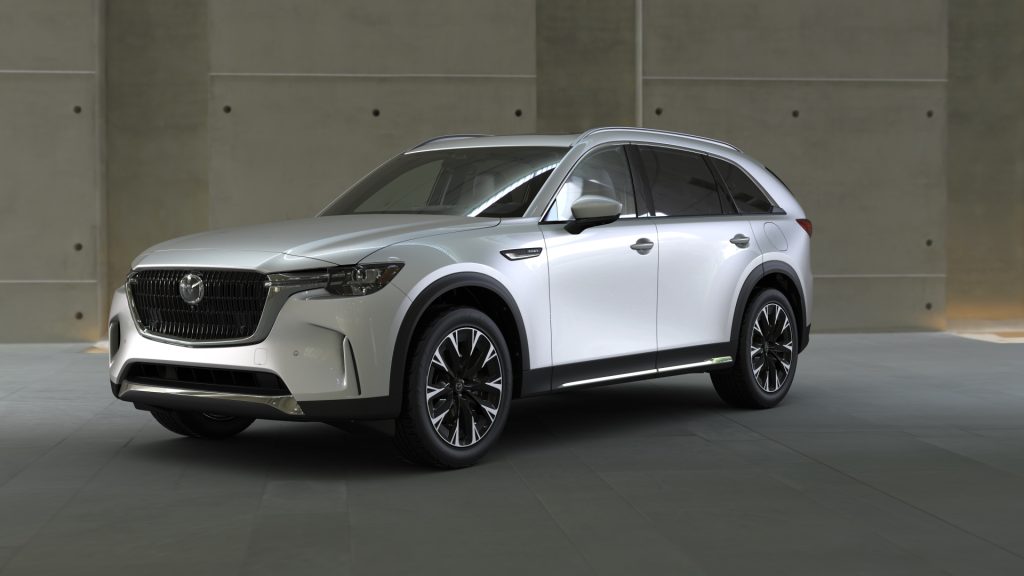
Buyers should check the vehicle’s VIN for open recalls, ask about warranty coverage for the high-voltage battery and related components, and confirm that the charging equipment operates correctly. A qualified inspection should examine both conventional mechanical systems and the plug-in hybrid components.
The CX-90 Plug-In Hybrid’s lost recommendation is a reason to research the exact model year and repair history carefully, rather than assuming that its sophisticated powertrain necessarily delivers trouble-free ownership.
7. Chrysler Pacifica Hybrid
The Chrysler Pacifica Hybrid lost its Consumer Reports recommendation for the 2026 model year after the organization’s owner survey identified below-average predicted reliability.
It is an important case because the Pacifica Hybrid serves a very specific purpose in the American market: providing minivan seating and family practicality while offering plug-in electric driving.
That combination can reduce gasoline use for some owners, but reliability concerns can undermine the financial advantages of electrification.
Consumer Reports’ 2026 least-reliable-car analysis gave the Pacifica Hybrid a predicted reliability score of 26 out of 100. This is a survey-based rating, not a 26 percent chance of failure.
The publication evaluates owner reports across 20 trouble areas, including the engine, transmission, electric motor, battery and charging system. It gives more weight to serious faults that can lead to expensive repairs or extended time in a service department.
Plug-in hybrids have two power sources to coordinate, so a reliability assessment needs to account for conventional mechanical components and electrified systems. A problem may concern the gasoline engine or transmission, or it may involve the electric drive system, battery or charging equipment.
The survey does not imply that every Pacifica Hybrid suffers from the same defect, but its results indicate that owners reported enough problems to affect the model’s predicted reliability.
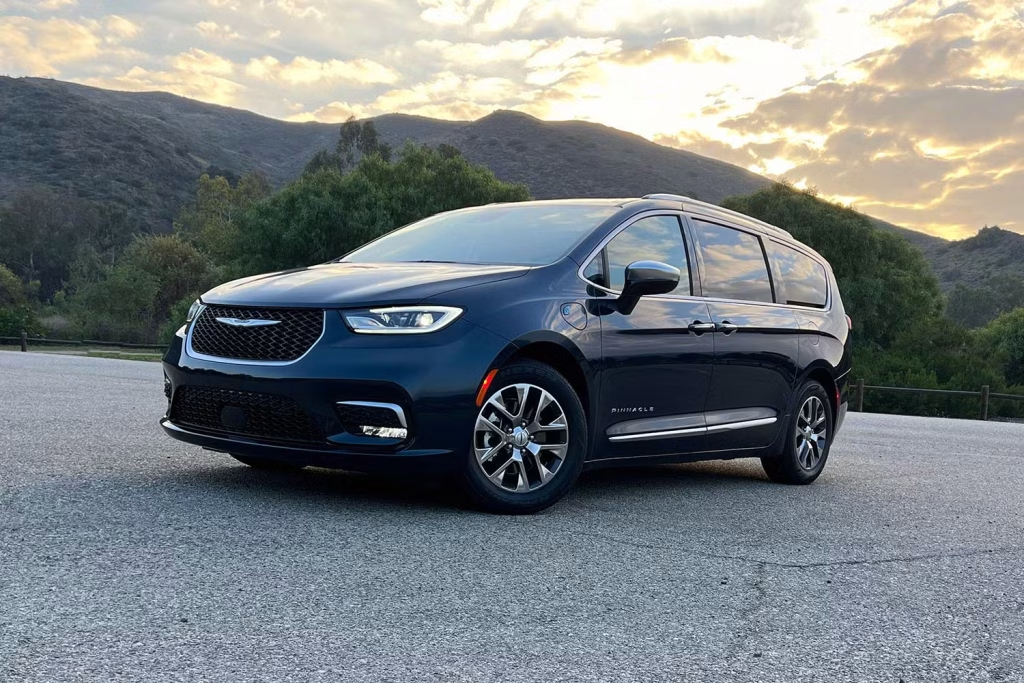
Families considering a used Pacifica Hybrid should inspect its service records and check whether all recalls and software updates have been completed.
Confirm that charging works correctly, review the warranty coverage for the high-voltage battery, and ask a qualified technician to examine the hybrid system. A standard used-car inspection may not cover every high-voltage component.
The Pacifica Hybrid remains a distinctive family vehicle, but its lost recommendation is a reason to investigate the specific model year and maintenance history before committing to a purchase.
