The Insurance Institute for Highway Safety (IIHS) evaluates vehicles through several crash tests designed to measure occupant protection in different collision scenarios. Its “Good” rating is the highest of four crashworthiness grades, ahead of Acceptable, Marginal, and Poor.
However, a car earning “Good” in every crash test is not necessarily the same as a vehicle qualifying for Top Safety Pick+, which also considers headlights and crash-prevention technology.
For this list, the focus is on American-market vehicles with strong results in the principal crashworthiness tests, with model-year distinctions kept clear so that different ratings are not mistakenly combined.
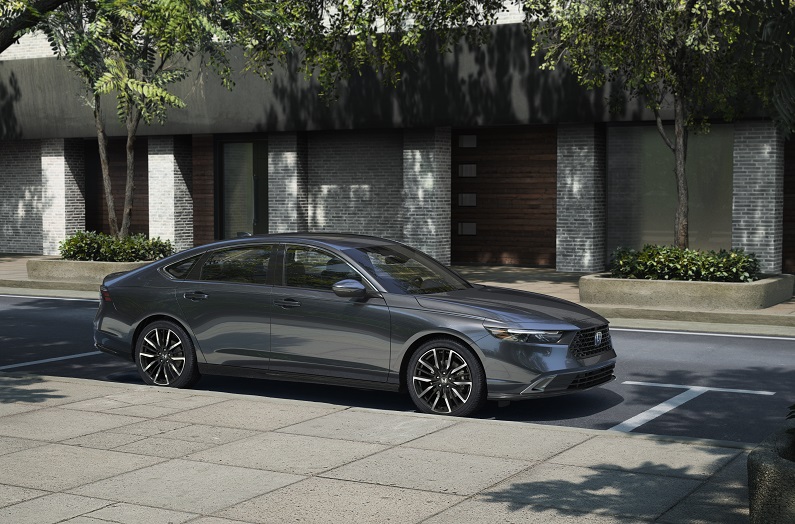
1. Honda Accord
The 2025 Honda Accord demonstrates how a mainstream family sedan can achieve strong crashworthiness results without relying on its price or brand prestige to make the case.
IIHS awards the Accord its Top Safety Pick+ designation, with “Good” ratings in all three major crashworthiness categories, including the small overlap front test, the updated moderate overlap front test, and the updated side test. These results apply to the redesigned Accord introduced for the 2023 model year and continued through the 2026 model year.
The frontal tests examine different collision scenarios. The small overlap assessment focuses on crashes in which only a limited portion of the vehicle’s front strikes an obstacle, while the updated moderate overlap test evaluates protection for front and rear occupants.
The side test examines how the passenger compartment and restraint systems perform when struck from the side. A “Good” overall rating in each category indicates strong performance under the applicable IIHS evaluation criteria.
The Accord’s results are not a claim that every individual measurement received the highest grade. Some subcategories, including particular injury measures or restraint assessments, can receive a lower rating even when the complete crash test earns “Good.” That distinction matters when comparing detailed reports rather than headline grades.
For American buyers, the Accord is a useful example of safety performance backed by published test results. Its award also considers factors beyond crashworthiness, including headlights and pedestrian crash prevention.
Buyers should still confirm the model year and equipment of the vehicle they are considering, since ratings and available safety technology can vary across versions.
2. Mazda3 Hatchback
The 2025 Mazda3 hatchback earned a Top Safety Pick+ designation and received “Good” overall ratings in all three principal IIHS crashworthiness categories. Those categories are the small overlap front test, the updated moderate overlap front test, and the updated side test.
The institute’s ratings apply to the hatchback, while some of the frontal crash-test results also apply to the closely related Mazda3 sedan.
One important detail is the updated moderate overlap test. IIHS introduced a rear-seat dummy to assess how well vehicles protect people sitting behind the driver, including the risk of excessive forward movement and injuries associated with seat-belt performance.
The Mazda3’s overall rating in this test is “Good,” although the rear passenger restraint and dummy-kinematics subcategory is rated “Acceptable.” This shows why the overall grade and the detailed measurements should be read together rather than treated as identical.
The updated side test evaluates protection during a more demanding side-impact scenario than earlier IIHS procedures. The Mazda3 earns a “Good” overall rating, but certain individual measures, including the structure and safety cage and some front-occupant injury assessments, have lower grades.
The overall result still indicates that the vehicle met the institute’s criteria for the top crashworthiness rating in that test.
For shoppers seeking a compact car, the Mazda3 provides a documented example of strong crash protection in a relatively small package. The Top Safety Pick+ designation additionally reflects qualifying headlights and pedestrian crash prevention performance.
Buyers should check the specific trim, since headlight ratings vary with equipment, and should not assume that every individual subcategory received a “Good” grade simply because the overall crash-test ratings did.
The next part will cover two more vehicles, using their official IIHS crashworthiness ratings and clearly distinguishing the overall crash-test grades from individual injury-measure results.
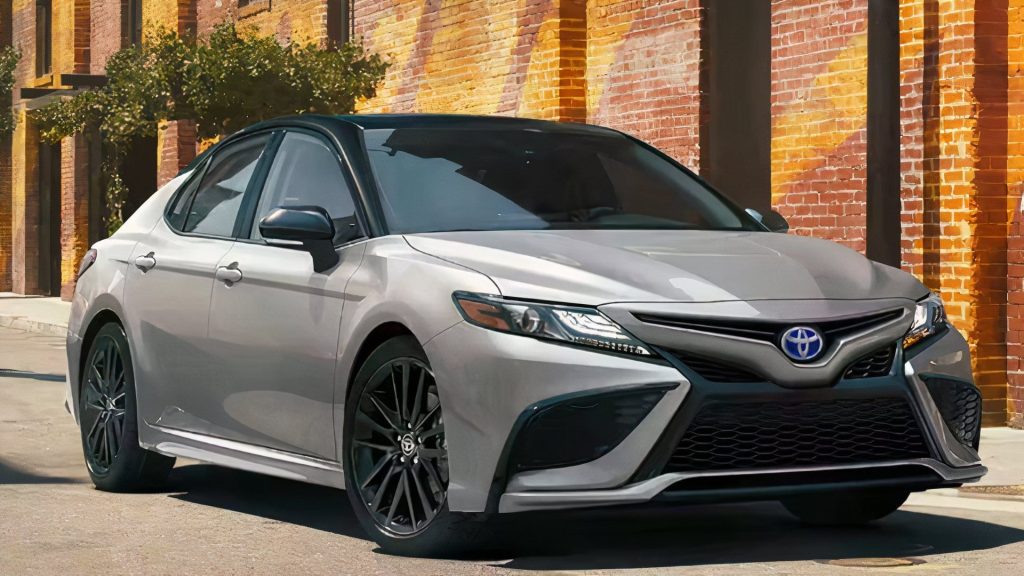
3. Toyota Camry
The Toyota Camry is another midsize sedan with strong documented crashworthiness results. The 2025 and 2026 Camry models earned the IIHS Top Safety Pick+ award, which requires a good rating in the small overlap front, an updated moderate overlap front, and updated side tests.
The award also requires qualifying headlights and pedestrian front crash prevention performance.
For a family sedan, the updated moderate overlap test deserves particular attention. IIHS revised this assessment to examine rear-seat occupant protection more closely, adding a dummy behind the driver.
This change matters because front-seat crash protection improved substantially over previous decades, while rear-seat restraint systems did not always keep pace. The updated test evaluates the risk of injuries to rear passengers and how effectively seat belts control their movement in a frontal collision.
The Camry’s Top Safety Pick+ designation means the qualifying model met the institute’s requirements across the relevant crashworthiness and crash-prevention categories.
It does not mean that every individual measurement within each test received the highest possible rating. The overall test grade and detailed injury measurements answer different questions, so buyers who want a more complete picture should read the individual test results.
The current-generation Camry also uses a hybrid powertrain across its U.S. lineup. That is a separate consideration from crash protection, but it makes the sedan relevant to buyers comparing fuel efficiency with documented safety performance. The award itself, however, is based on IIHS testing, not fuel economy or the type of powertrain.
For shoppers, verify the model year and specific configuration before applying these findings to a used vehicle. A rating for a recent Camry should not automatically be assigned to an older generation whose structure, restraints, or safety equipment may differ.
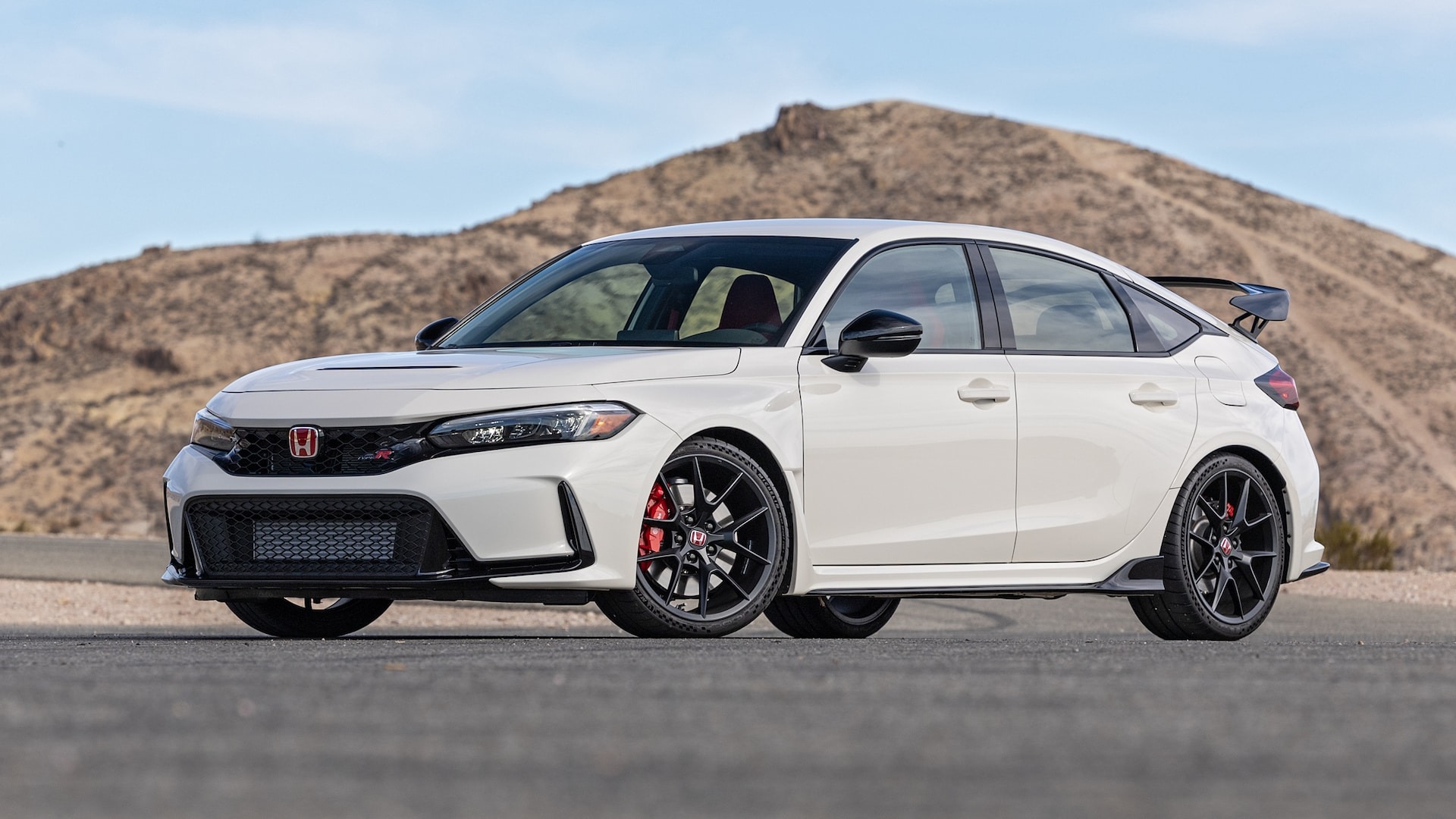
4. Honda Civic Hatchback
The Honda Civic hatchback earned the 2025 IIHS Top Safety Pick+ award, meeting the institute’s requirements for the small overlap front, updated moderate overlap front, and updated side tests.
It is a useful example of a compact car qualifying for the highest award level despite its smaller size. IIHS cautions that size and weight still matter in collisions, so an award does not mean a small car necessarily provides the same protection as a larger, heavier vehicle in every crash.
Honda’s published information confirms that the 2025 Civic hatchback achieved the top “Good” rating in both the small overlap front and updated side tests. Its Top Safety Pick+ award also establishes that the qualifying vehicle met the award’s required crashworthiness, headlight, and pedestrian crash prevention criteria.
The hatchback’s practical advantage is its combination of a compact footprint and a flexible cargo area. For city drivers, that can make parking and everyday errands easier than in a large SUV.
Those convenience benefits are separate from crashworthiness, though, and should not be confused with evidence of better protection. The relevant safety evidence comes from the institute’s tests and the equipment fitted to the vehicle.
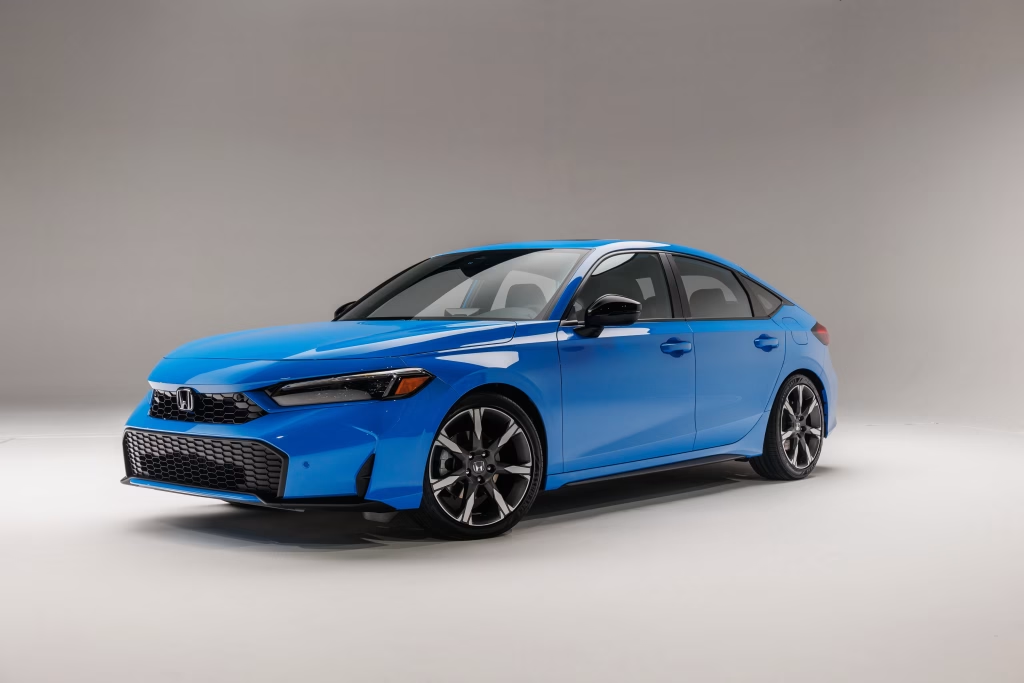
Buyers should also distinguish the hatchback from the Civic sedan. The sedan earned the lower-tier Top Safety Pick designation for 2025, while the hatchback qualified for Top Safety Pick+. That difference illustrates why the body style and exact model variant matter when checking safety awards.
For anyone considering a used Civic hatchback, the IIHS rating is a useful starting point. Confirm the model year, check for outstanding recalls, and make sure the vehicle retains its original safety equipment.
The award reflects a tested configuration, not a guarantee that every used example has remained in equally good condition.
5. Mazda CX-50
The Mazda CX-50 earned IIHS Top Safety Pick+ recognition for the 2025 and 2026 model years. Its award requires good ratings in the small overlap front, an updated moderate overlap front, and updated side tests, alongside acceptable or good headlights and pedestrian front crash prevention.
This gives shoppers a documented basis for comparing the CX-50 with other compact SUVs rather than relying on brand reputation alone.
The CX-50’s place on the list is particularly relevant for drivers who want an SUV without moving to a three-row vehicle. Its body style offers a raised driving position and a useful cargo area, but neither feature is a substitute for measured crash performance.
The IIHS tests focus on how well the passenger compartment holds up, how restraints manage occupant movement, and how effectively the vehicle reduces injury risk in specified collision scenarios.
The updated moderate overlap test is one of the most important parts of the modern evaluation. By including a rear-seat dummy, IIHS can examine whether a vehicle protects rear passengers as effectively as those in front.
A good result is required for Top Safety Pick+, so the award indicates that the CX-50 met this stricter standard for the qualifying configuration.
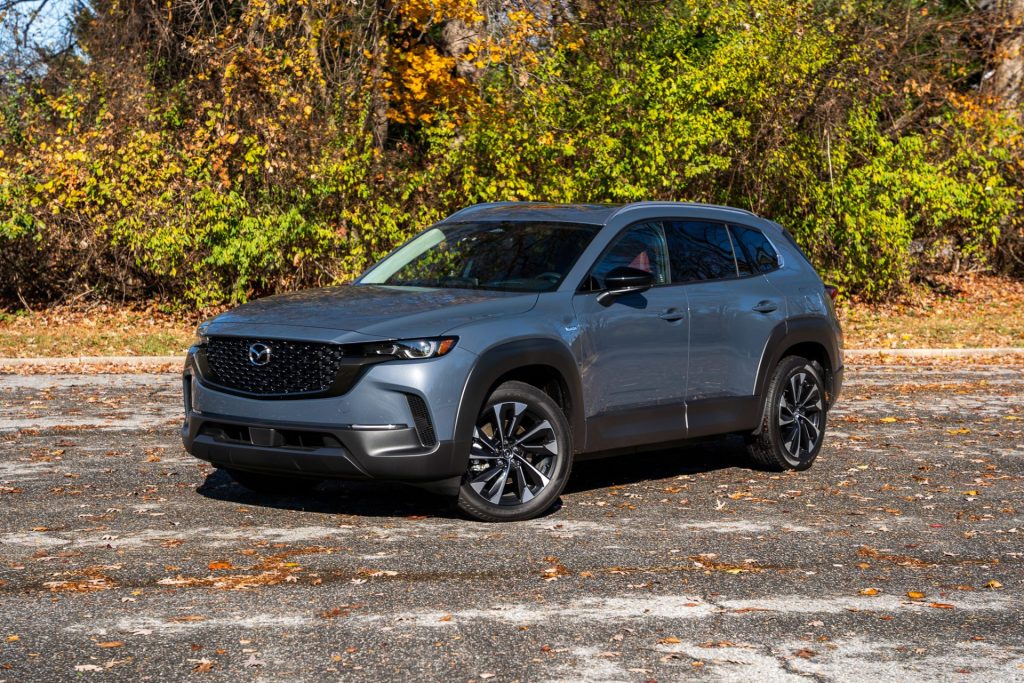
However, the award does not mean that every CX-50 trim has identical headlights or that every safety system operates in the same way. Buyers should verify equipment on the specific vehicle they are considering, especially when comparing used examples or different option packages.
The CX-50 is therefore a useful candidate for a safety-focused SUV shortlist, provided its award is interpreted correctly. The designation reflects performance under defined tests and criteria, while actual protection also depends on vehicle condition, seatbelt use, tire maintenance, and responsible driving.
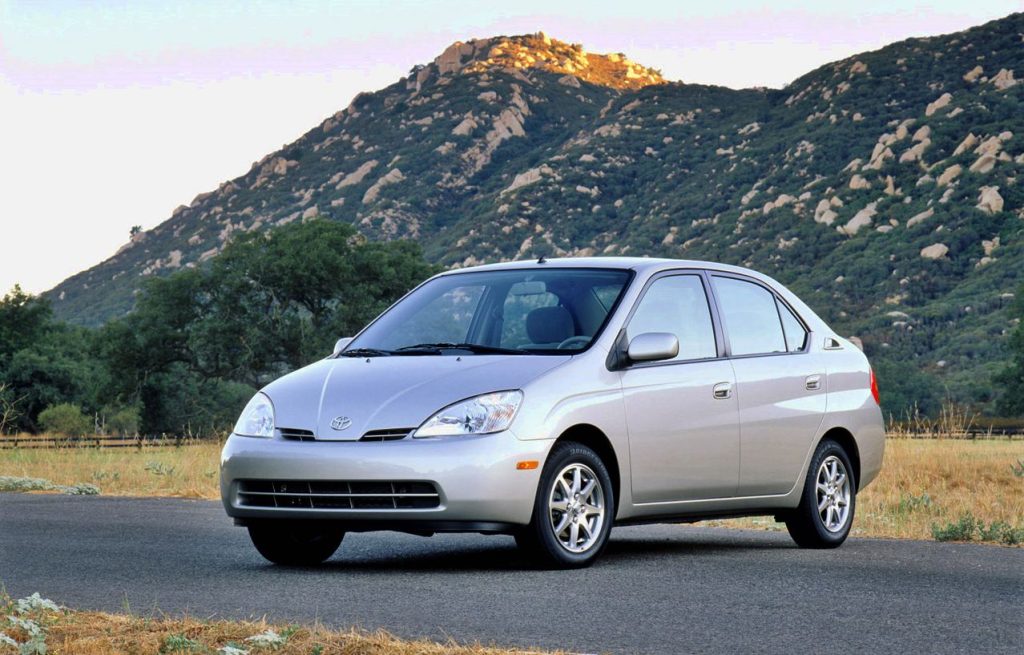
6. Toyota Prius
The Toyota Prius earned the IIHS Top Safety Pick+ award for the 2025 and 2026 model years. To qualify, it had to receive good ratings in the small overlap front, updated moderate overlap front, and updated side tests, as well as meet the institute’s minimum requirements for headlights and pedestrian front crash prevention.
Its award confirms that a hybrid hatchback can meet stringent crashworthiness standards without being a large SUV.
The Prius is also a reminder that powertrain efficiency and crash protection are separate measures. Its hybrid system is designed to reduce fuel consumption, while IIHS testing examines how well the vehicle protects occupants and helps prevent certain collisions.
Neither a hybrid powertrain nor a high safety award automatically guarantees lower injury risk in every real-world crash.
The updated moderate overlap test makes the Prius’s result especially relevant to families. The assessment includes a rear-seat dummy and evaluates protection for people sitting behind the driver.
This change addresses concerns that improvements in front-seat safety had not always been matched by equivalent advances in rear-seat protection. The Top Safety Pick+ requirement for a good rating pushes automakers to improve both areas.
One final point to consider is that a “Good” overall crash-test rating does not guarantee that every individual injury measure earns the same grade. A closer look at the detailed results may reveal weaker areas that are not apparent from the headline rating alone.
For buyers who want the fullest picture, the complete IIHS test record is more informative than the award badge alone.
The Prius belongs on a safety-focused shortlist because its qualifying model years met the institute’s published requirements. Still, anyone buying a used example should confirm its year, check recall status, and ensure that all original restraint and crash-prevention systems are functioning correctly.