
A car deal is not one price. It is a stack of numbers. Most buyers focus on the monthly payment. Dealers know this. The payment is the easiest number to bend.
The order sheet tells the real story. It is often called a buyer’s order or bill of sale. It lists every charge before you sign. Many people skim it. They are tired after hours at the dealership. That is when extra dollars slip in.
A few lines carry most of the risk. Some are fixed by law or the manufacturer. Others are pure dealer choice. Knowing which is which gives you leverage. It also tells you where to push back.
Researchers who track dealership pricing have found that fees and add-ons make up a large share of dealer profit. Margins on many new vehicles have thinned. Back-end items fill the gap.
This guide covers eight numbers to check. Each one can raise your final price. Some by a little. Some by thousands. Read them before you sign. Ask for the order in writing early. Compare it with your own math. A calm hour with a calculator can save you more than a hard afternoon of haggling. Now, the numbers.
1. The Selling Price Above MSRP
The first number is the selling price. Check it against the MSRP on the window sticker. The MSRP is the manufacturer’s suggested retail price. It is printed on the Monroney label. Federal law requires that label on new cars.
Dealers can legally sell above it. Many did during the shortage years. Some still do on popular trucks, hybrids, and performance models. The extra amount goes by many names.
You may see “market adjustment” or “additional dealer markup.” You may also see “ADM.” All of them mean the same thing. It is profit that adds no value to the car.
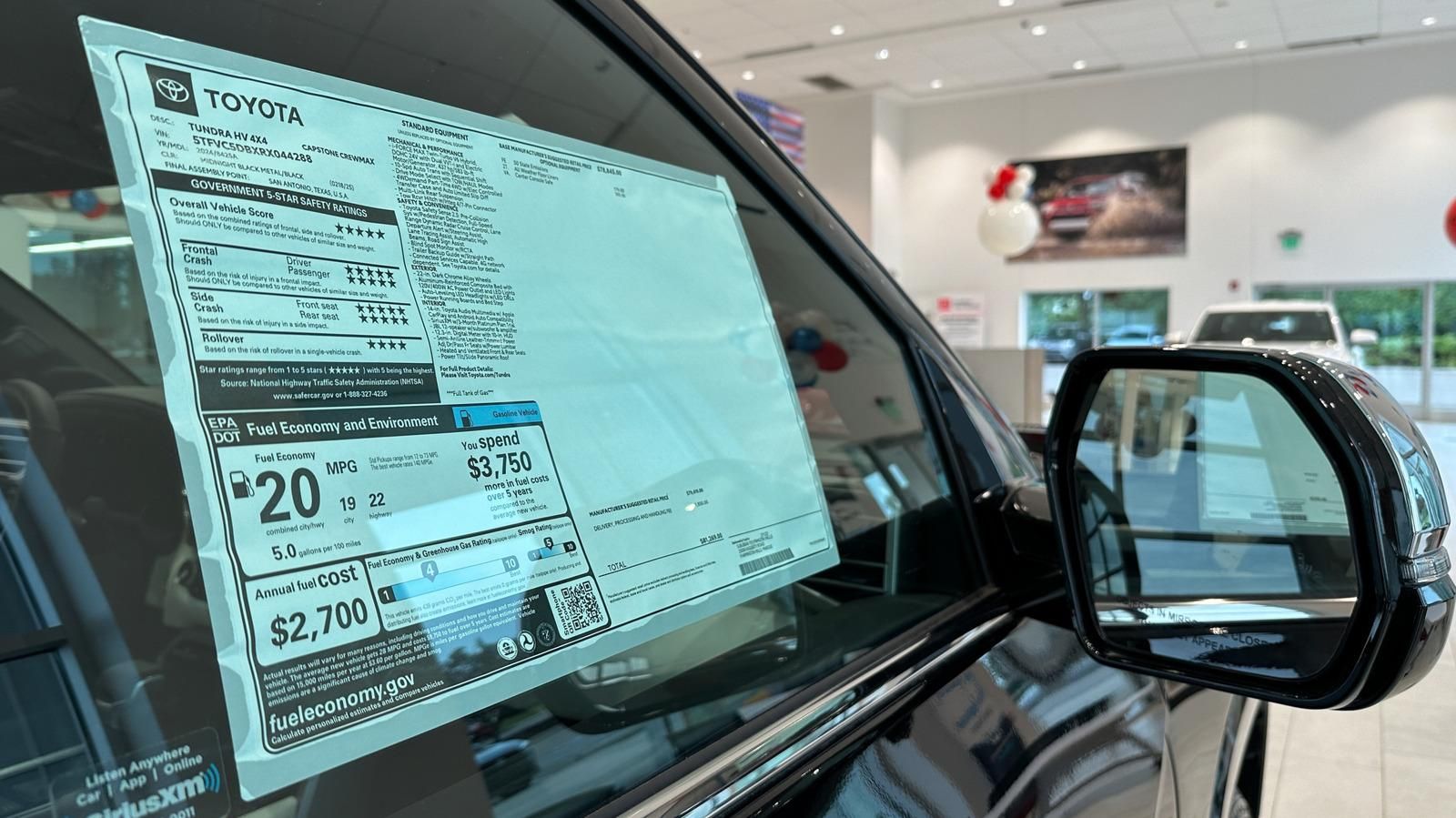
Read the line carefully. It may sit in a separate box. It may be folded into a higher “dealer price.” Ask for a full line-by-line breakdown. The sticker has two parts.
The factory label lists the car and its factory options. A second sticker beside it is usually from the dealer. Nothing on that second sticker comes from the manufacturer.
Scale matters here. A $3,000 markup on a $45,000 truck is not small. It also raises the base used to calculate sales tax. At 7 percent tax, that is another $210. Interest then grows on the full amount.
Do your research first. Use public pricing guides to see invoice data and recent transaction prices. Compare your quote with what buyers paid in your region. Check how long the model has sat on lots. Slow stock leaves less room for markup.
Get written quotes from several dealers. Send each one the same trim and options. Ask for the out-the-door price. Let them compete. Do not accept that markup is fixed. It is a choice the dealer makes. Your strongest tool is the ability to walk away.
Many stores drop the markup when a rival is ten miles down the road. If a model is truly scarce, set a limit. Decide the most you will pay above MSRP. Stick to it. Paying a big premium today often means owning a car that loses value fast.
2. The Documentation Fee
The second number is the documentation fee. It is often called the doc fee. Dealers say it covers paperwork. That means title work, registration filing, and contract processing. The real cost to them is small. The fee is mostly profit.
The amount varies widely by state. A handful of states cap it at modest levels. Many set no cap at all. In those places, fees can pass $800 or even $900.
Dealers often defend the fee as “fixed.” They say they charge everyone the same. That may be true. It does not make the fee fair. It only means the profit is built into the system.

Here is the trick. A high doc fee is rarely negotiable on its own. Dealers often refuse to lower it. So lower something else instead. Ask for a discount on the car equal to the fee.
Watch how the fee is taxed. In many states, the doc fee is taxable. A $900 fee at 7 percent tax adds $63. Check your state’s rules before you assume.
Look for repeats of the same charge. Some order sheets show a doc fee and a separate “processing fee.” Others add “dealer prep” or “e-filing.” These can overlap. Ask what each one actually covers.
Compare dealers by total fees, not by sticker deals. A store with a $1,000 price cut and a $995 doc fee is not cheaper. A store with a smaller cut and a $150 fee may be.
Check state consumer guidance too. Many states publish rules on what must be disclosed. Some require a posted notice that the fee is not government-mandated. If the notice is missing, ask why.
Put the doc fee in your math from the start. Ask for it in the first quote. Do not wait for the finance office. If the dealer will not budge, treat it as a fixed cost. Then negotiate the selling price down to offset it. That is where you still have room.
3. Dealer Add-Ons and Accessories
The third number sits in a line labeled “dealer-installed options” or “accessories.” This is where small items add up fast. Common examples include nitrogen tire fill, VIN etching, paint sealant, fabric protection, door-edge guards, and pinstripes. Some stores also add wheel locks, window tint, or all-weather mats.
Many of these are pre-installed. The dealer then says they cannot be removed. That claim is often false. You can ask to have them taken off the deal.
The markups are steep. Paint and fabric packages can cost $500 to $1,500. Their real cost to the dealer is a fraction of that. Nitrogen fill can cost $100 or more. Regular air is mostly nitrogen already, at about 78 percent.
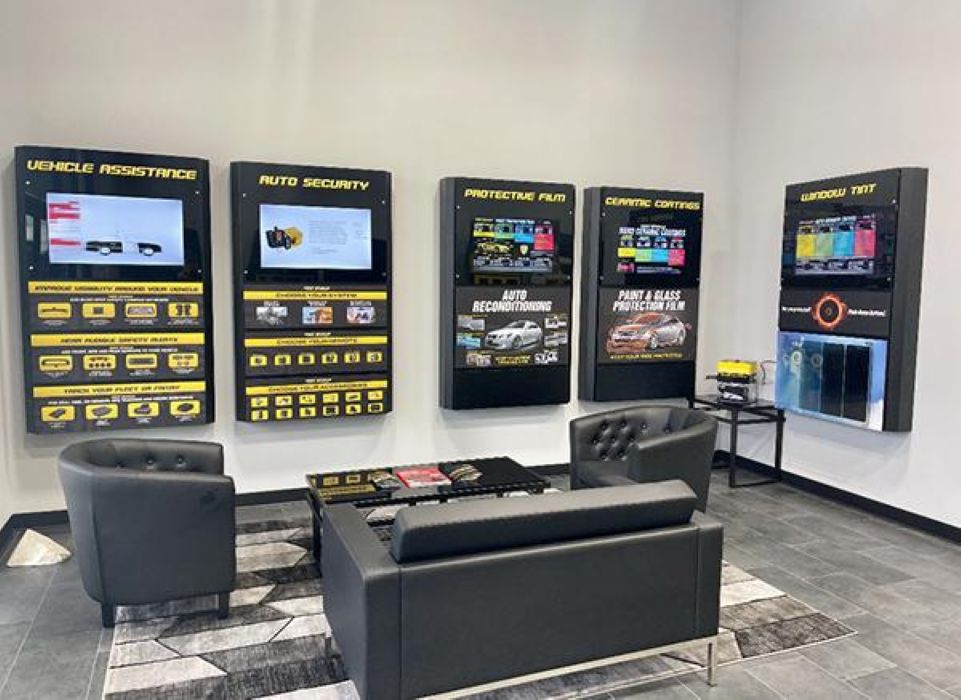
VIN etching is another classic. It is meant to deter theft. Kits cost very little. Dealers may charge $200 or more. Some insurers offer small discounts for it, but few offer enough to pay back the price.
Look at the sticker for clues. A second “addendum” label next to the factory sticker is the giveaway. It lists these items with prices. Some stores print it in small type and place it low on the window.
Do not confuse these with factory options. Those are listed on the manufacturer’s label. They are part of the car’s build. Dealer add-ons are extras layered on top.
Say no early. Tell the salesperson you want a price without add-ons. Do this in writing, by email, before you visit. If the car on the lot is already loaded, ask for a similar car without them.
If you want an item, price it elsewhere first. A tint shop or detailer will often charge far less. Mats and guards from the manufacturer’s parts counter may also cost less.
Add-ons raise your tax base too. A $2,000 package at 7 percent tax costs another $140. It also adds to the loan. Over six years, you pay interest on every dollar.
4. Destination Charge and Extra Dealer Fees
The fourth number is the delivery charge. Here, you need to separate the real from the padded. The destination charge is real. It is the cost of shipping the car from the factory to the dealer.
It appears on the Monroney sticker. It is part of the total MSRP. For many mainstream vehicles, it runs from roughly $1,000 to $1,500 or more. You cannot negotiate this charge. It is set by the manufacturer. Every dealer for that model charges the same amount. If a quote shows it, that is normal.
The problem is a second charge. Some dealers add “delivery,” “freight,” or “prep” fees on top. That is double billing. The car was already delivered. Prep is a basic part of selling a new vehicle. The manufacturer often pays the dealer for it.

Other padded lines include “advertising fee,” “regional marketing fee,” and “dealer handling.” Their amounts can reach hundreds of dollars. They are often labeled as required. They are not required by law.
Check the manufacturer’s label to confirm the real destination figure. Then compare it with the order sheet. The two numbers should match. Any extra “delivery” line is suspect.
Ask for the “out-the-door” price in writing. This is the full number you pay, including taxes and every fee. Do not accept a quote that shows only the monthly payment.
Compare quotes across dealers by that figure. Make a simple table. List price, doc fee, add-ons, and each extra charge. The lowest total is the best deal, even if the car price looks higher.
Consumer agencies have warned buyers about “junk fees” in car sales. Hidden or misleading charges can break state disclosure laws. If you find one, ask for it in writing.
Then ask for it to be removed. Most stores will drop at least some padded fees when pressed. They would rather lose the fee than the sale. It costs you nothing to ask.
5. The Trade-In Value
The fifth number is your trade-in value. It is easy to miss, because it can be a hidden cost. Dealers often work with four moving parts. These are the car price, the trade-in value, the down payment, and the monthly payment. By shifting one, they can hide changes in another.
Here is a common move. The dealer offers a high price for your trade. It feels like a win. But the selling price of the new car is higher too. The net result is the same, or worse.
Another move is a low trade offer. Your old car is valued below market. The dealer then resells it at a profit. Even a $1,500 gap hurts. It is also a tax issue. In most states, trade-in value reduces the taxable amount. A lower credit means higher tax.
Know your car’s worth before you walk in. Get offers from several sources. Online instant buyers can give a firm quote in minutes. Used-car retailers will often do the same. Check public valuation guides, but treat them as a guide only.

Treat the trade as a separate deal. Settle the new car price first. Do it in writing. Only then bring up the trade. This keeps the numbers clean. Check the order sheet for the payoff amount.
If you still owe money on the old car, the dealer pays it off. That amount appears on the order. Make sure it matches your lender’s statement. Errors happen.
Watch for negative equity. This means you owe more than the car is worth. Dealers may roll that debt into your new loan. It raises your balance from day one. It can leave you underwater on the new car too.
Sometimes selling privately earns more. It takes effort, but the gain can be $1,000 or more. If your tax rules give no credit for trade-ins, the private sale looks even better. Always compare. The best trade offer is the highest one you can prove.
6. The Sales Tax Number
The sixth number is the sales tax. It looks fixed. It rarely is. Sales tax on a vehicle is usually based on your home address. It is not always based on the dealership’s location. A rate that blends state, county, and city taxes may apply. Check which one the order uses.
Errors happen. A dealer may use a wrong rate. Or the system may use an old one. A one-point mistake on a $40,000 deal is $400. The taxable base matters as much as the rate. Rules vary by state.
In many places, the taxable amount includes the selling price, add-ons, and the doc fee. Some states tax rebates. Others take the rebate out first. Trade-ins change the math. In most states, tax applies only to the difference between the new car price and your trade value.
A few states give no such credit. If yours does, make sure the order shows it. Look for the lines under the tax amount. They should show the base clearly. If the figure seems high, ask how it was built. A $500 tax line difference needs an explanation.
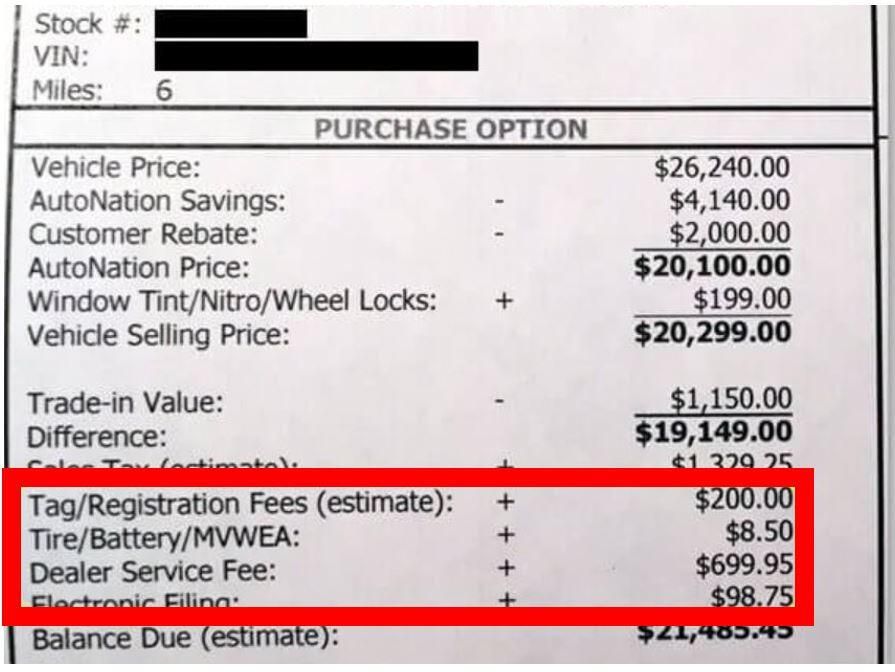
Keep in mind that tax is not paid to the dealer’s profit. It goes to the government. So you cannot negotiate it down directly. But you can shrink the base. Cut the add-ons. Lower the car price. Push for a higher trade value, where it is credited.
Be careful with rebates and incentives. Some are applied before tax. Some are not. A $2,000 incentive taxed at 7 percent still costs you $140. Ask how your state treats it.
Check your state’s revenue or motor vehicle agency for rules. Most post them online in plain language. A few minutes of reading can show whether the dealer’s math holds up.
Also note registration and title fees. They are separate from sales tax. They should match the state’s published schedule. Dealers sometimes round up. Ask for a copy of the fee breakdown.
7. The APR and Loan Term
The seventh number is the annual percentage rate, or APR. It may be the most expensive number on the sheet. Dealers often arrange your loan. They send your application to several lenders. A lender offers a “buy rate.” That is the lowest rate it will give you. The dealer can add to it. The extra is called dealer reserve or markup. It is pure profit for the dealer.
The markup can be a point or two. That sounds small. It is not. Take a $40,000 loan over 72 months. At 7 percent, the payment is about $682. At 8 percent, it is about $701. Over six years, the extra cost is roughly $1,400.
Never rely on the dealer’s rate alone. Get pre-approved first. Ask a bank, a credit union, or an online lender. Credit unions often offer lower rates. A pre-approval gives you a number to beat.

Bring it to the dealer. Say, “Can you beat this rate?” Many can. Some have access to special manufacturer rates that no bank matches. Those are real offers, often for well-qualified buyers on certain models.
Then watch the term. A longer loan lowers the monthly payment. It raises the total interest. An 84-month loan can cost thousands more than a 60-month one. It also keeps you underwater for longer, as the car loses value faster than you pay it down.
Dealers may stretch the term to hit a payment target. Do not let them. Decide on your total price first. Then pick the shortest term you can afford.
Check the order sheet for the exact figures. These include the APR, the number of months, the amount financed, and the total of payments. Compare them with your pre-approval.
Credit score plays a big role. Check your report before you shop. A few points can shift your rate tier. Fixing an error can save real money. If anything in the contract differs from what you were told, stop. Ask for it to be fixed before you sign.
8. Finance Office Products
The eighth number appears at the end, in the finance office. It is the total of optional protection products. These include extended warranties, also called vehicle service contracts.
They also include GAP coverage, tire and wheel plans, paint protection, key replacement, and prepaid maintenance. Each has its own price. Together, they can add $3,000 to $5,000 or more.
These items are profitable for dealers. Markups are large and often negotiable. A service contract may carry a price well above what the dealer paid. The same coverage may be cheaper from another provider.
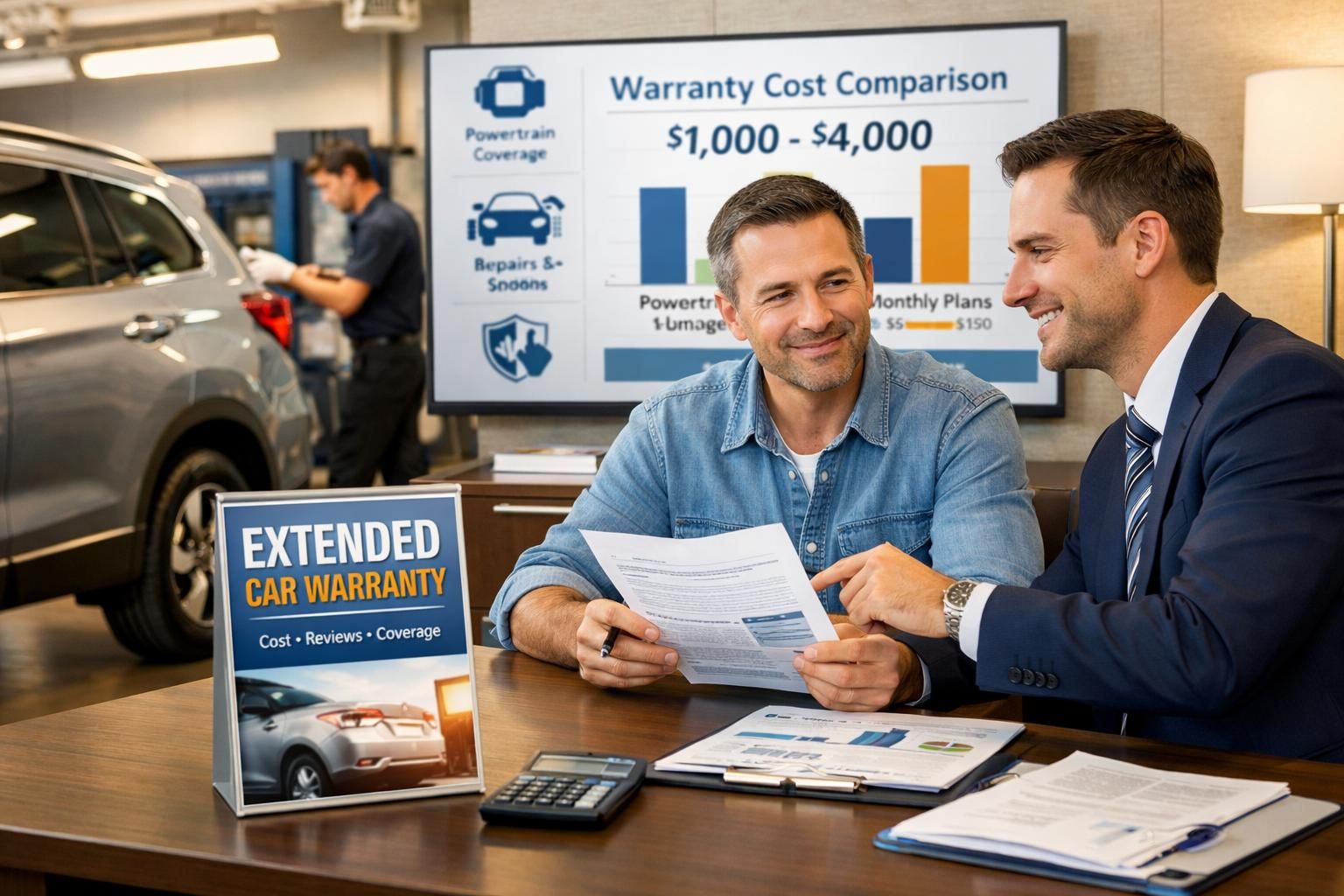
GAP is a good example. It covers the gap between your loan balance and the car’s value if it is totaled. It can be useful, mostly with a small down payment or a long loan. But dealer GAP often costs several hundred dollars more than the same coverage from an insurer or credit union. Check with yours first.
Extended warranties need careful reading. Look at what is covered and what is excluded. Look at the deductible, the claim process, and who backs the plan. The manufacturer’s own plan may be a better choice than a third-party one. You can usually buy these later, too.
Do not feel rushed. You can say no. You can also buy most products after the sale, often at a lower price. Federal guidance warns that add-ons must not be forced on you.
Pay attention to how they are presented. Some are shown as “just a few dollars more per month.” That hides the total. Ask for the full price of each. Then ask what it adds to the loan, including interest.
Bundled packages can bury items you do not want. Ask for each product listed on its own. Cross out what you decline. Check the final contract to confirm they are gone.
Read every line before you sign. Look at the amount financed. It should match the earlier numbers. If it jumped, find out why. Taking ten extra minutes here can protect thousands of dollars. The finance office is the last stop. It is also the best place to lose money by accident.