A compact car does not have to mean a cramped cabin. Clever packaging, a long wheelbase, a tall roof, and carefully shaped seats can create impressive passenger room without requiring a large exterior footprint.
Some hatchbacks offer cargo flexibility that rivals struggle to match, while certain small sedans and crossovers provide generous rear legroom for their size.
These seven vehicles demonstrate how thoughtful design can make a car feel much bigger inside than it looks from the curb. Their published U.S. specifications reveal the differences, helping shoppers identify models that combine easier parking with useful everyday space.
1. Kia Soul
The Kia Soul has an unusually upright body for a vehicle of its length, and that boxy silhouette serves a genuine purpose. Measuring just 165.2 inches long, the 2025 Soul is shorter than many family sedans, yet its cabin offers 120.9 cubic feet of interior volume.
Rear passengers receive 38.8 inches of legroom, giving adults more space to settle in than the car’s compact proportions might suggest.
The roofline is one of the biggest reasons the Soul feels airy. Instead of tapering sharply toward the rear, the body maintains a tall profile, helping passengers avoid the confined feeling that can affect some small hatchbacks. Its high seating position also creates a more open view through the windows, particularly for passengers sitting in the back.
Cargo flexibility is another strength. Kia lists up to 24.2 cubic feet behind the rear seats under one measurement configuration, while folding the rear seats increases the available capacity to 62.1 cubic feet. The exact figure depends on the cargo-floor arrangement, so buyers should check the configuration they intend to use.
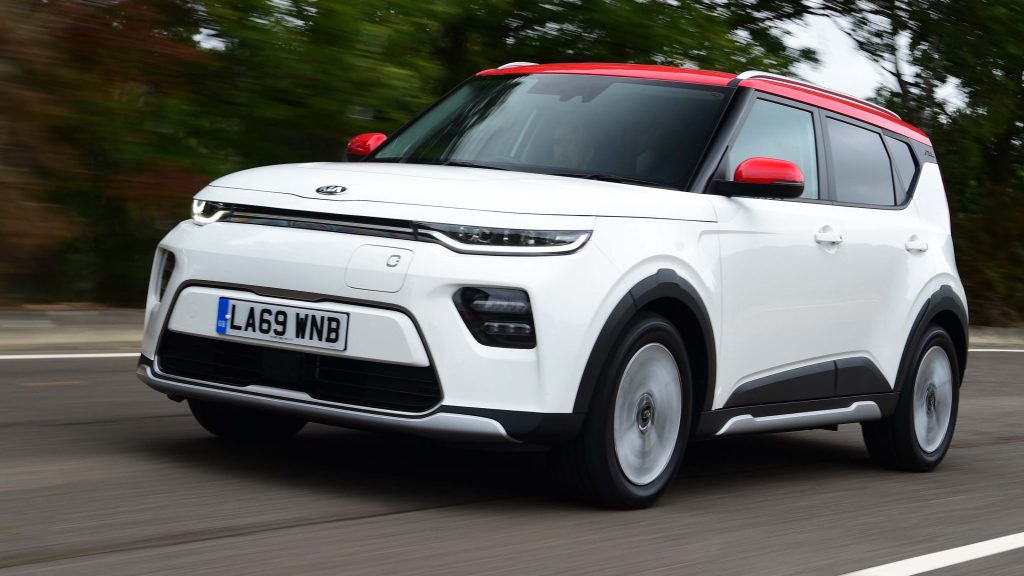
One key factor for buyers is that Kia ended Soul production after the 2025 model year. Those interested in the vehicle should look for remaining new stock or consider used models instead of expecting a 2026 successor.
For shoppers who prioritize passenger room and flexible storage over a sleek silhouette, the Soul demonstrates how a small footprint can deliver substantial everyday usefulness.
2. Honda Civic Hatchback
A low roof and sporty profile can make the Honda Civic Hatchback look less accommodating than it really is. The 2026 model measures 179 inches long, yet Honda lists 99.0 cubic feet of passenger volume for the conventional Sport version.
Its front occupants receive 42.3 inches of legroom, while rear passengers have 37.4 inches. Those measurements help explain why the Civic can work for adults sitting in both rows, despite its car-like proportions.
The cabin’s length is put to good use. Front-seat occupants have room to adjust their seating positions without immediately leaving rear passengers short of knee space.
The rear bench is still a compact-car back seat, so three adults may find shoulder room restrictive, but two passengers can enjoy a reasonably comfortable arrangement for commuting or longer journeys.
Then there is the hatchback advantage. Honda lists 24.5 cubic feet of cargo space with the rear seats upright. Rather than requiring owners to load everything through a conventional sedan trunk, the large rear opening makes it easier to handle items with awkward shapes. Suitcases, grocery bags, and smaller household purchases can be arranged more flexibly.
The rear seatbacks fold when more room is needed, allowing the Civic to accommodate longer cargo without the need for a larger vehicle. Hybrid versions retain the same published rear-seat-up cargo figure, although passenger volume is slightly lower at 96.6 cubic feet.

The Civic Hatchback is a useful example of how a compact car can combine passenger space, everyday practicality, and an exterior that remains easy to maneuver in city traffic.
3. Nissan Kicks
The Nissan Kicks looks like a small urban crossover, but its interior packaging makes it more versatile than its modest footprint suggests. For the 2026 U.S. model, Nissan lists 95.7 cubic feet of passenger compartment volume, divided into 53.6 cubic feet in the first row and 42.1 cubic feet in the second.
Those figures show that the cabin is not simply a large front compartment followed by a token rear bench.
The Kicks’ rear passenger space is particularly relevant to households that regularly carry friends, relatives, or growing children. Its second row can accommodate everyday journeys without requiring the owner to move up to a larger crossover.
As with most vehicles in this size class, the middle rear position is less suitable for a full-size adult on long trips, but the two outer seats are the more practical places for regular passengers.
Cargo capacity depends on the drivetrain and trim. Nissan lists up to 30.0 cubic feet behind the second row for front-wheel-drive versions, while all-wheel-drive versions provide 23.9 cubic feet. With the rear seats folded, the maximum figures rise to 60.0 cubic feet for FWD and 50.1 cubic feet for AWD.
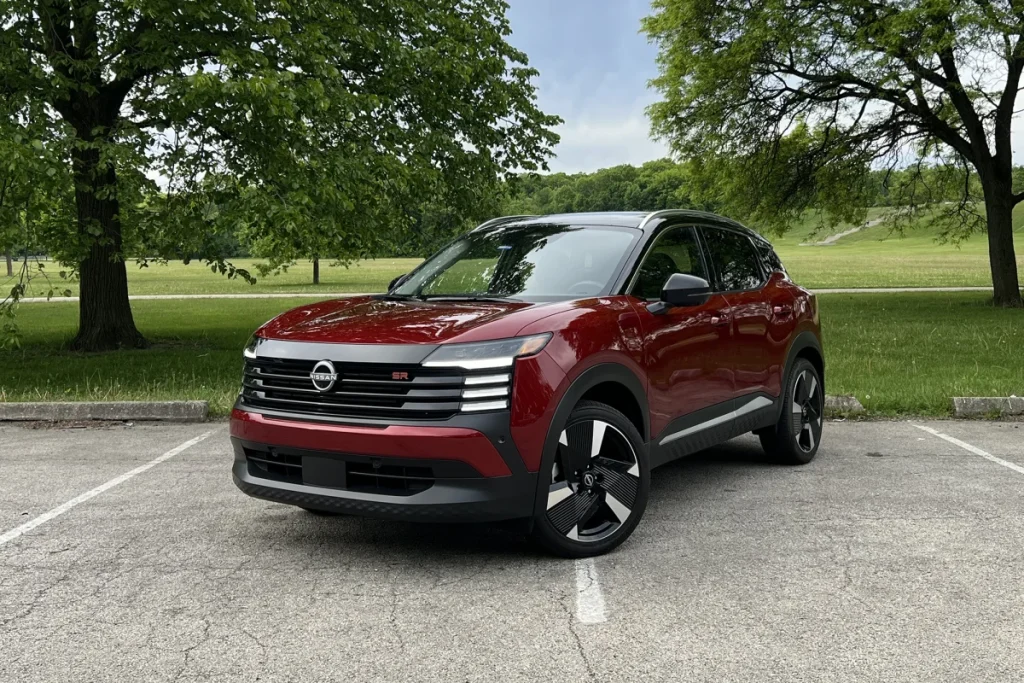
That difference is worth remembering when shopping. A buyer who values luggage space should not assume that every Kicks configuration offers identical storage. The all-wheel-drive model trades some cargo capacity for its drivetrain arrangement, so checking the specific version is essential.
For urban drivers, the Nissan Kicks combines compact dimensions that make parking easier with a roomy rear passenger area and practical cargo space for daily errands. While it cannot replace a three-row family vehicle, it offers a comfortable amount of space for a small SUV.
4. Subaru Impreza
The Subaru Impreza hatchback does not have the tall body of a small SUV, yet its cabin measurements reveal an efficient use of space.
The 2026 model is 176.2 inches long and provides 100.5 cubic feet of passenger volume without a moonroof. Subaru lists 42.9 inches of front legroom and 36.5 inches in the rear, giving occupants useful space in a vehicle that remains relatively easy to park.
Those numbers matter because exterior height can be misleading. The Impreza sits lower than many crossovers, but passengers do not have to sacrifice all their legroom to get that lower profile. The front seats provide generous adjustment room, while the rear bench has enough space for adult passengers on everyday commutes and moderate-length road trips.
Cargo capacity is more modest than its passenger compartment might lead some buyers to expect. Subaru lists 20.4 cubic feet behind the rear seats, expanding to 56.0 cubic feet when the rear seatbacks are lowered.
The moonroof reduces passenger volume to 99.0 cubic feet, so shoppers comparing trims should pay attention to the precise specification.
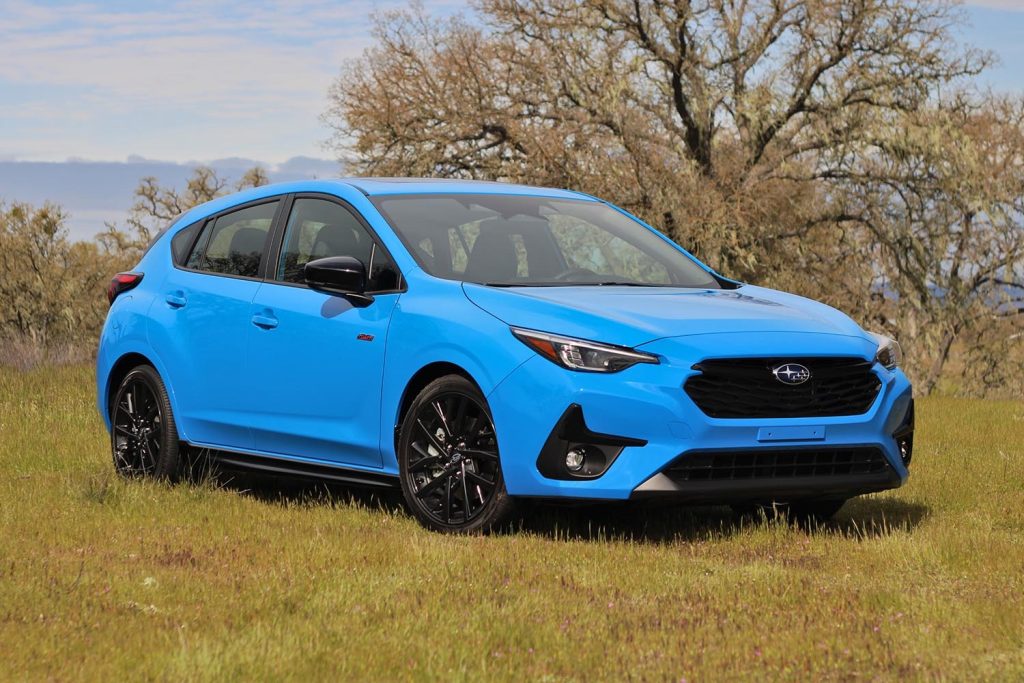
The hatchback design is valuable when carrying longer items. Instead of relying on a narrow sedan trunk opening, owners can load bags, boxes, and recreational equipment through the rear hatch. Folding the back seats creates a longer cargo floor for items that would not fit in the standard layout.
The Impreza makes sense for drivers who want a traditional car’s lower driving position but still need practical passenger room. Its interior is a reminder that a vehicle does not have to look tall or bulky to provide useful space for five occupants.
5. Toyota Prius
The Toyota Prius has a low, aerodynamic shape designed to reduce air resistance, so it does not look like a particularly spacious family car.
However, its cabin dimensions make better use of its footprint than its sloping roofline might suggest. The 2026 U.S. Prius provides 91.2 cubic feet of passenger volume, with 43.2 inches of front legroom and 34.8 inches in the rear.
The front seats are especially accommodating for a compact hybrid. Drivers and front passengers have room to stretch their legs, while the cockpit layout keeps the major controls within easy reach.
The rear seats are less generous than those in some upright hatchbacks, but they remain practical for children, teenagers, and adults on shorter trips. Taller passengers should sit in the back during a test drive to check headroom under the sloping roof.
Cargo space is another useful part of the Prius package. Toyota lists up to 23.8 cubic feet of cargo capacity, and the rear hatch makes the load area easier to access than a traditional sedan trunk. The 60/40 split-folding rear seats allow one side to be lowered while a passenger occupies the other, or both sections to be folded for a larger load.
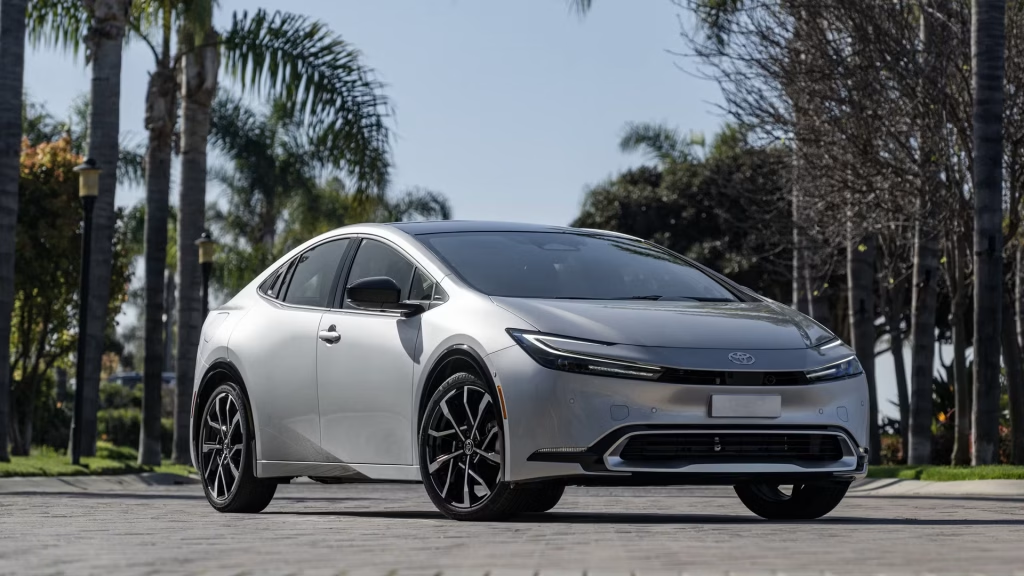
The low roofline does affect what can be carried. Tall boxes may be harder to load than they would be in a square-backed vehicle, even when the volume appears sufficient. That is why checking the opening height and the shape of the load area matters as much as looking at the capacity figure.
For drivers who want strong fuel efficiency without giving up hatchback practicality, the Prius offers a useful middle ground. Its exterior prioritizes aerodynamics, but the interior remains flexible enough for regular commuting, shopping, and weekend luggage.
6. Volkswagen Golf GTI
The Volkswagen Golf GTI is a sporty hatchback that looks compact from the outside, yet its cabin is designed to serve as more than a driver’s space. Volkswagen lists 19.9 cubic feet of cargo room behind the rear seats and 34.5 cubic feet with the rear seatbacks folded.
Those figures are not enormous, but they show how the hatchback layout gives this performance-oriented car a practical side.
The Golf’s proportions also help it feel like a conventional passenger car rather than a cramped sports coupe. Its roofline does not descend as sharply as that of many sleek fastbacks, leaving the rear compartment more usable.
Passengers benefit from a relatively upright seating arrangement, and the rear bench can accommodate adults for everyday trips, although taller occupants should check headroom and knee clearance in person.
The hatch opening adds versatility that a similarly sized sedan may lack. A suitcase or a large shopping bag can be lifted into the rear compartment without negotiating a small trunk aperture.
When a trip calls for more equipment, the rear seats can fold to provide a longer loading area. This is useful for weekend bags, sports gear, or a trip to the home-improvement store.
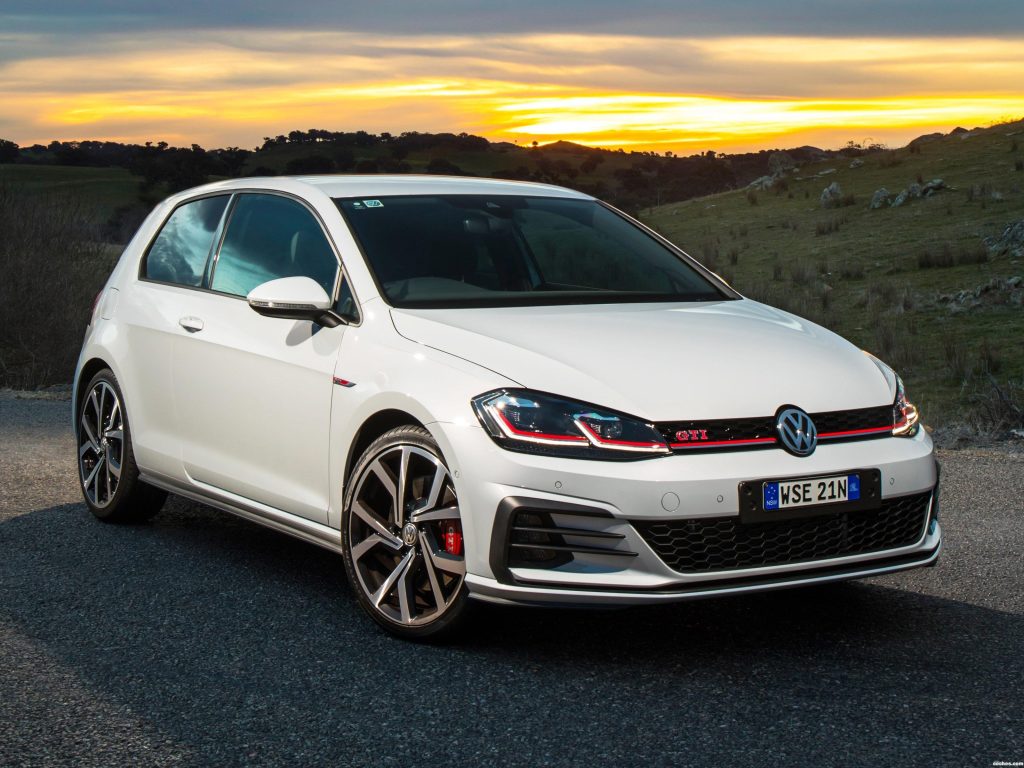
The GTI’s performance character is still central to its appeal. It is designed to deliver engaging driving rather than maximize every inch of cargo capacity. Its interior space is therefore best viewed as a welcome practical benefit, not a replacement for a dedicated utility vehicle.
For someone who wants one car for commuting, enjoyable back-road driving, and ordinary errands, the Golf GTI combines a manageable exterior with a cabin that can adapt to changing needs. Its hatchback shape makes that balance possible.
7. Kia Seltos
The Kia Seltos looks like a conventional small SUV, but its cabin dimensions help it compete with vehicles that appear larger.
The 2026 U.S. model provides 53.2 cubic feet of first-row passenger space and 46.4 cubic feet in the second row, according to Kia’s published specifications. That gives the cabin a useful balance between front-seat comfort and room for people riding in the back.
Rear passengers benefit from a layout that prioritizes everyday usability. The Seltos has enough space for children and adults to sit behind the driver without the severe knee-room compromise sometimes found in small cars.
Its taller body also gives the cabin a more upright feel than a low-slung hatchback. The vehicle is still compact enough to suit urban driving, so the additional interior room does not require moving to a much larger SUV.
Storage is another part of the story. Kia lists 26.6 cubic feet of cargo capacity behind the second row and 62.8 cubic feet behind the first row, with the dual-level cargo floor in its lower position. That creates a useful space for grocery bags, suitcases, and everyday equipment while retaining rear passenger seating.
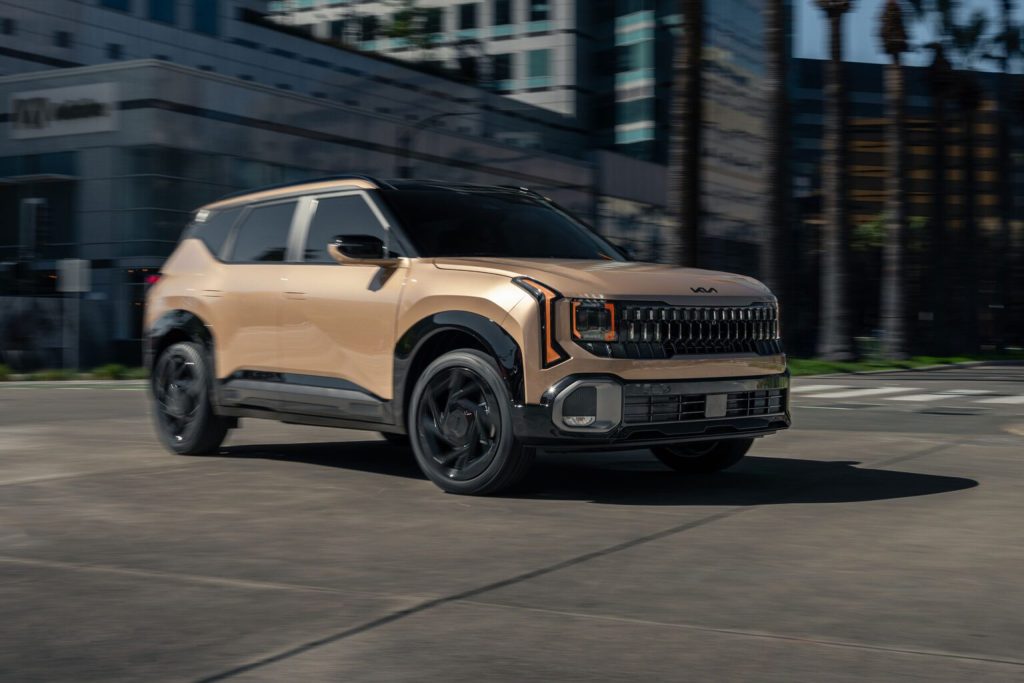
The dual-level floor adds flexibility, but the way cargo is arranged still matters. A pair of large suitcases may fit differently from several soft bags, and taller items need to clear the liftgate opening. Folding the rear seats expands the load area, although doing so means giving up those passenger positions.
The Seltos is a strong example of compact exterior dimensions paired with a practical interior. Buyers who need regular rear-seat use and a decent luggage area may find it more accommodating than its small-SUV classification suggests. As with any vehicle, sitting in both rows and testing the cargo area is the best way to confirm that its space suits your routine.