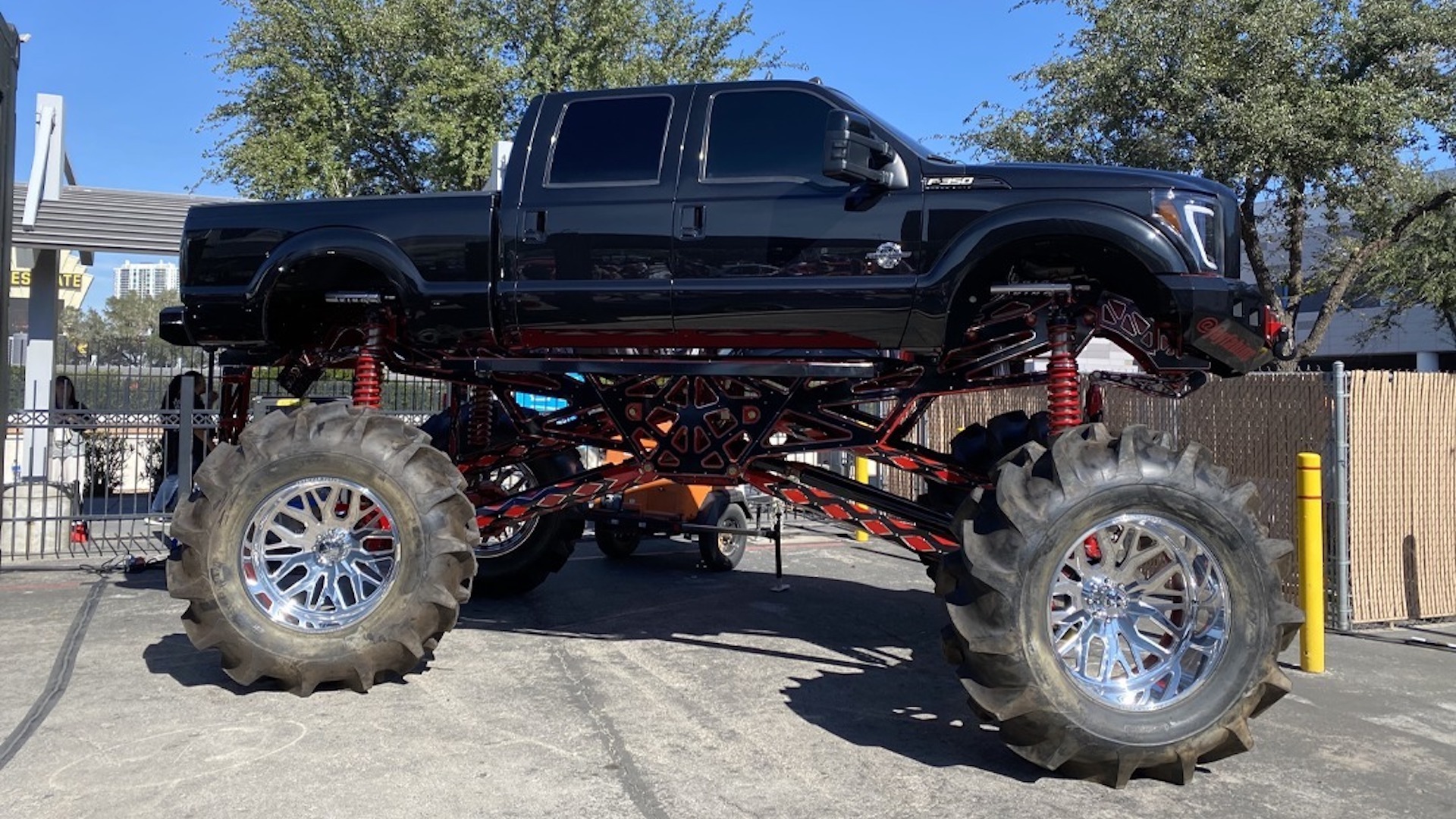
Do you love a truck with attitude? You are not alone, but some attitude now comes with a ticket. Across the country, lawmakers have gone after extreme front-end lifts, the look people call the Carolina Squat or the Cali Lean, where the front fender sits far higher than the rear. Supporters call it style. Officials call it a hazard, and critics say it can limit a driver’s view of the road and hurt steering and braking.
Eight states have taken action, and the penalties range from modest fines to license suspensions. Maybe your truck is fine, or maybe it is about to cost you real money. Stick around, check the list, and learn where the rules bite before a patrol car makes the point for you.
1. North Carolina
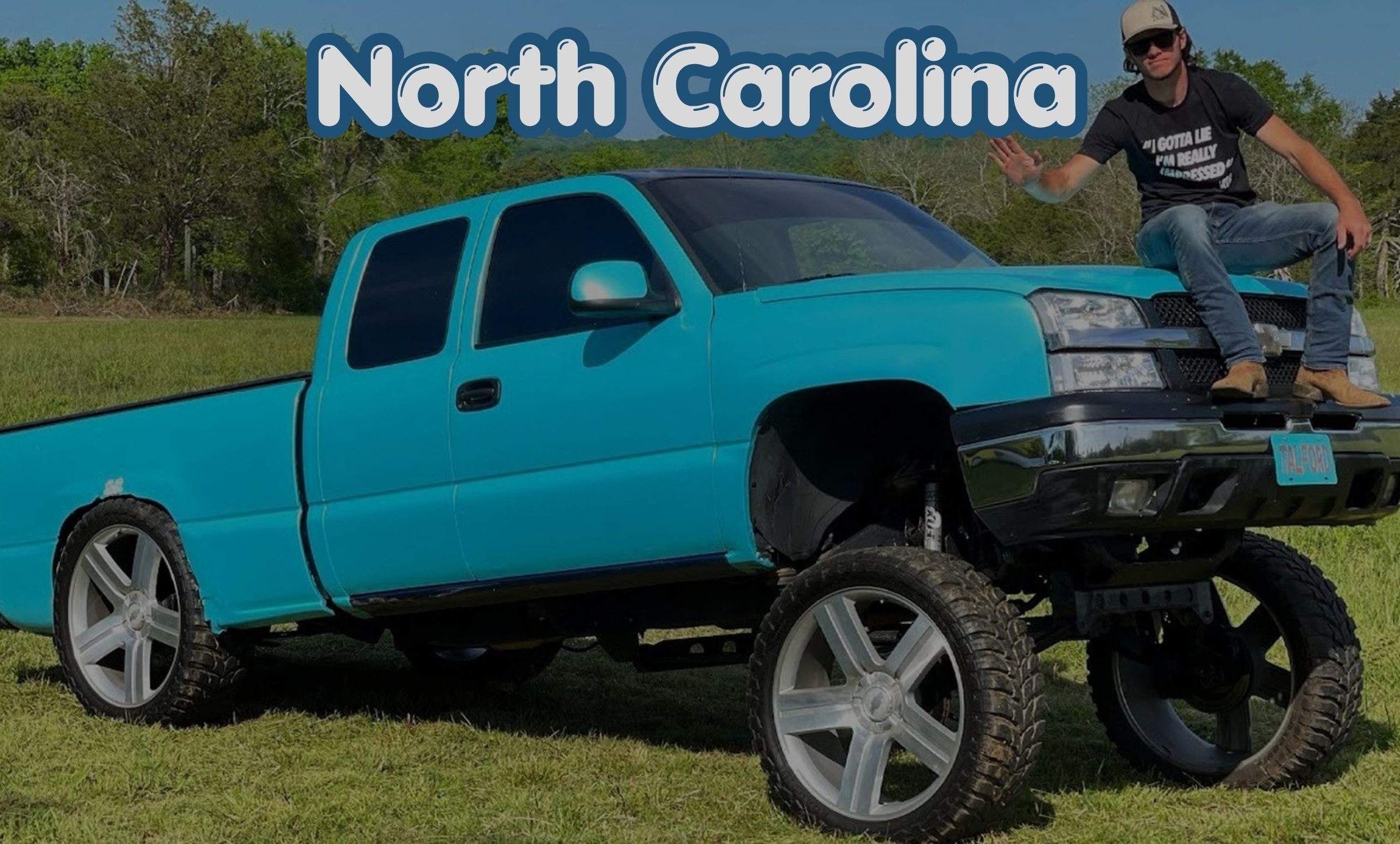
North Carolina became an early leader in restricting the Carolina Squat, putting its ban into effect in December 2021. The law targets vehicles modified so that the front portion sits much higher than the rear, a setup that can affect the driver’s view of the road immediately ahead.
For truck owners, the issue is not simply whether a vehicle looks unusual. An extreme front-end lift can change the vehicle’s handling characteristics and make it harder to judge distances, spot nearby road users, or respond to sudden obstacles.
These concerns are particularly important when driving around pedestrians, cyclists, and smaller vehicles. North Carolina’s restrictions carry financial and licensing consequences.
According to the supplied information, violations can result in fines of up to $300, while a third offense can lead to license suspension. Repeated violations can therefore create a problem that extends beyond the cost of modifying a truck.
Drivers should remember that the law concerns the vehicle’s configuration, not merely the driver’s intention. A truck owner who considers the modification harmless may still face enforcement if the vehicle fails to meet the state’s requirements.
Before installing a lift kit or changing suspension components, owners should verify the applicable height limits and inspection requirements with the North Carolina Division of Motor Vehicles or the appropriate state authority.
Existing modifications should also be checked against the current rules. A practical approach is to keep the truck level within legal limits, retain appropriate visibility, and obtain professional advice before making major suspension changes.
2. Virginia
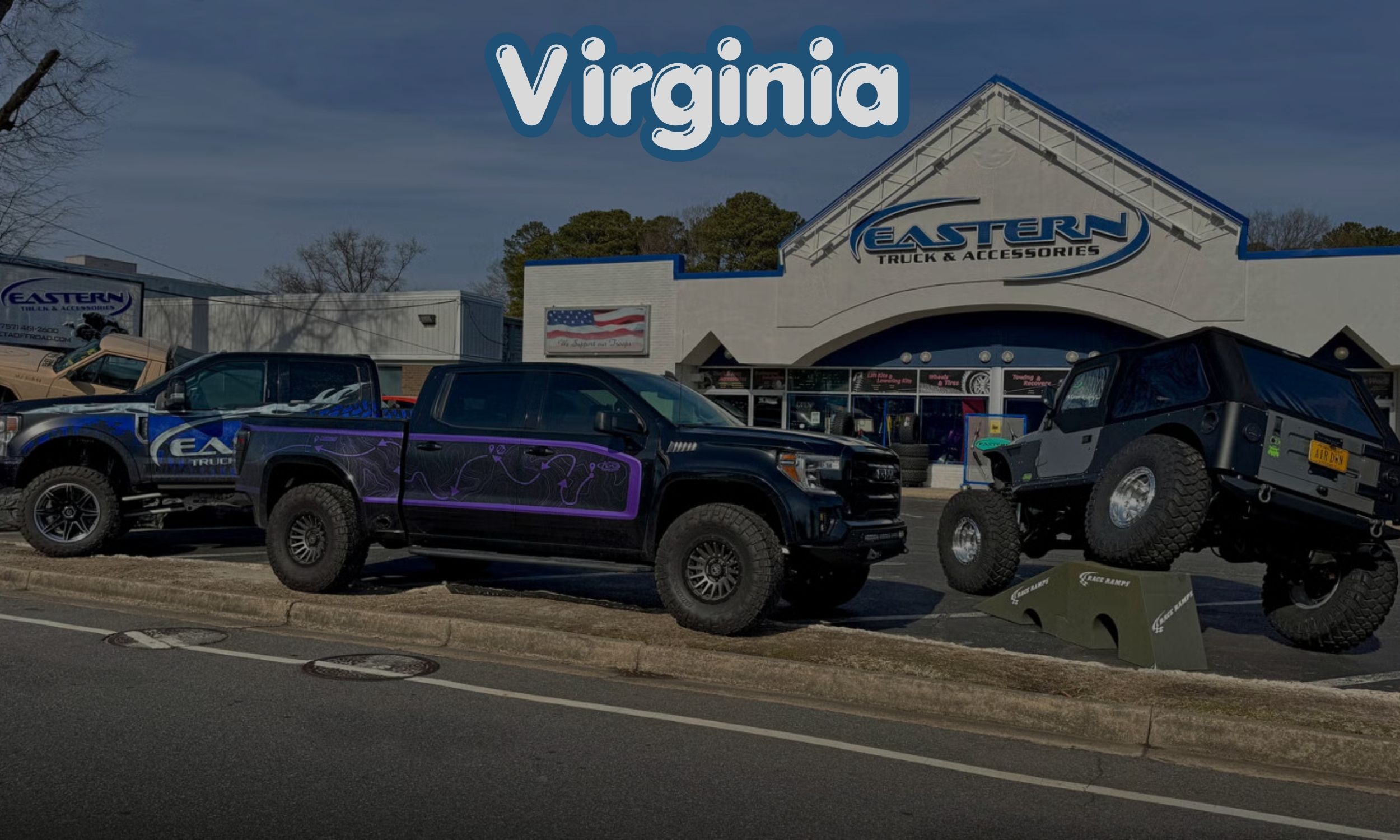
Virginia took action against squatted vehicles in March 2022, following a fatal crash involving a truck with this type of modification. The response brought attention to the safety concerns associated with raising the front end far above the rear.
A squatted truck may attract attention at a car show or on social media, but public roads present very different demands. Drivers must see the road ahead, maintain control during braking, and respond quickly when traffic slows unexpectedly.
Changes to suspension geometry can affect how a vehicle behaves, making extreme modifications a concern for both the driver and surrounding traffic. Virginia’s prohibition was intended to address this particular style of vehicle modification.
The supplied information describes the ban as taking effect immediately in March 2022, although drivers should confirm the effective date, statutory language, and current enforcement details with the Virginia Department of Motor Vehicles or state police.
For anyone buying a used pickup in Virginia, a careful inspection is worthwhile. A truck may already have aftermarket suspension parts installed, and the seller’s assurance that the vehicle is road legal is not a substitute for checking the law.
Ask for details about the modification and verify whether the setup complies with state requirements.
Owners who have already installed a front-end lift should not assume that registration alone makes the modification lawful. Registration, inspection, and equipment rules can address different requirements.
The safest choice is to verify the truck’s present configuration before driving it on public roads. If it does not comply, consult a qualified suspension shop about returning the vehicle to a permitted setup.
3. South Carolina
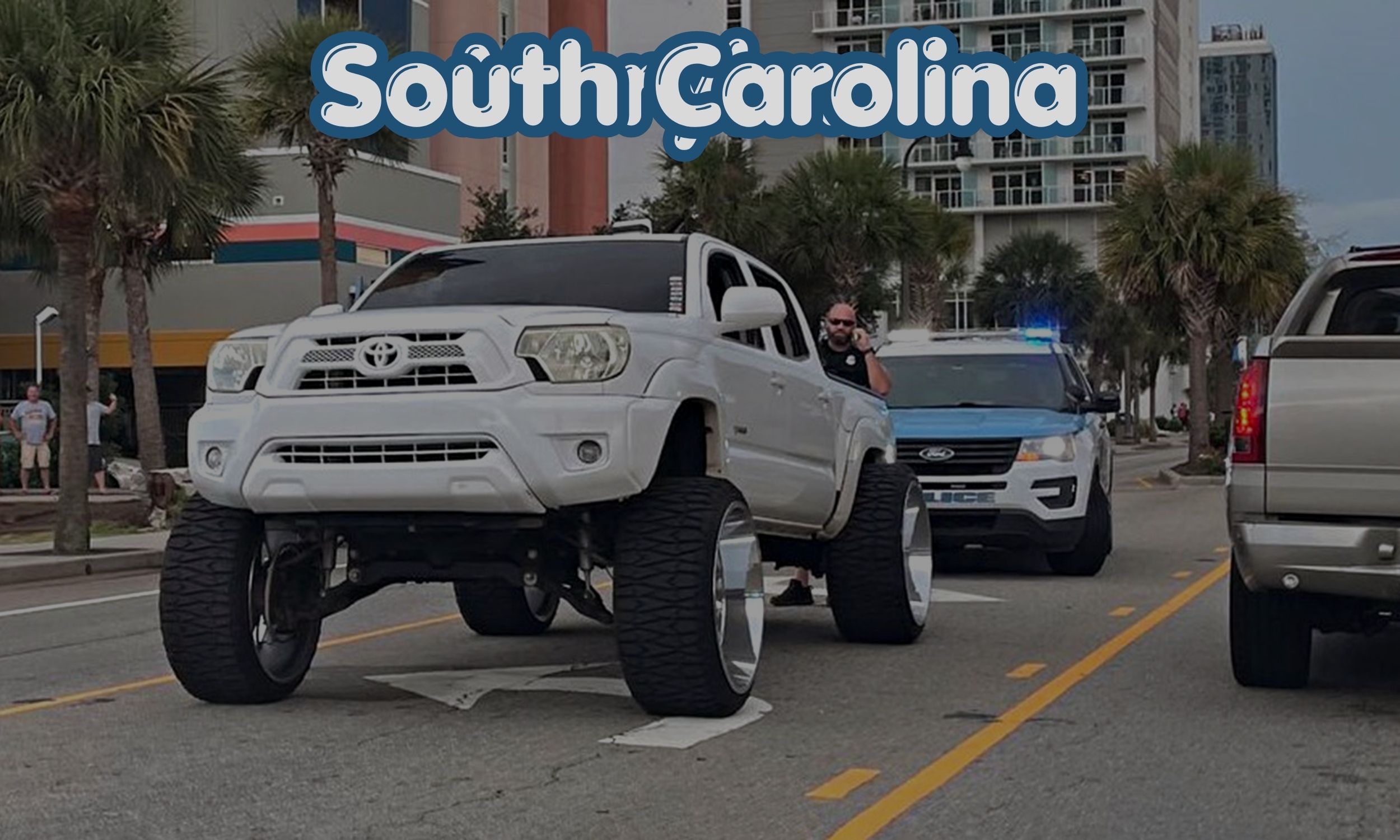
Next door, South Carolina took a slower road before landing in the same place. Legislators passed rules restricting front-end lift modifications, and the state has since moved to full fine enforcement. The warning period is over.
The numbers are simple. Fines run from $100 to $300. Repeat violations carry a 12-month license suspension, which means a full year without driving. Twelve months. That is long enough to miss birthdays, lose a job, and rack up rideshare bills that dwarf any fine.
Some owners assume a first ticket is no big deal. Maybe so. But a pattern of violations changes the math fast. Officers can cite the same truck again and again if the owner keeps driving it unchanged, and each ticket moves the driver closer to that suspension.
Smart owners handle it before the first ticket arrives. Get the truck checked, return the stance to something reasonable, and keep records of the work.
Parts like lift blocks, shackles, and suspension adjustments can often be reversed without replacing the whole truck. Talk with a trusted mechanic about the cost, and compare it with what a single citation plus court time would run you.
Spending a little now usually beats paying a lot later. And if you sell the truck, tell the buyer about the rules so nobody gets surprised.
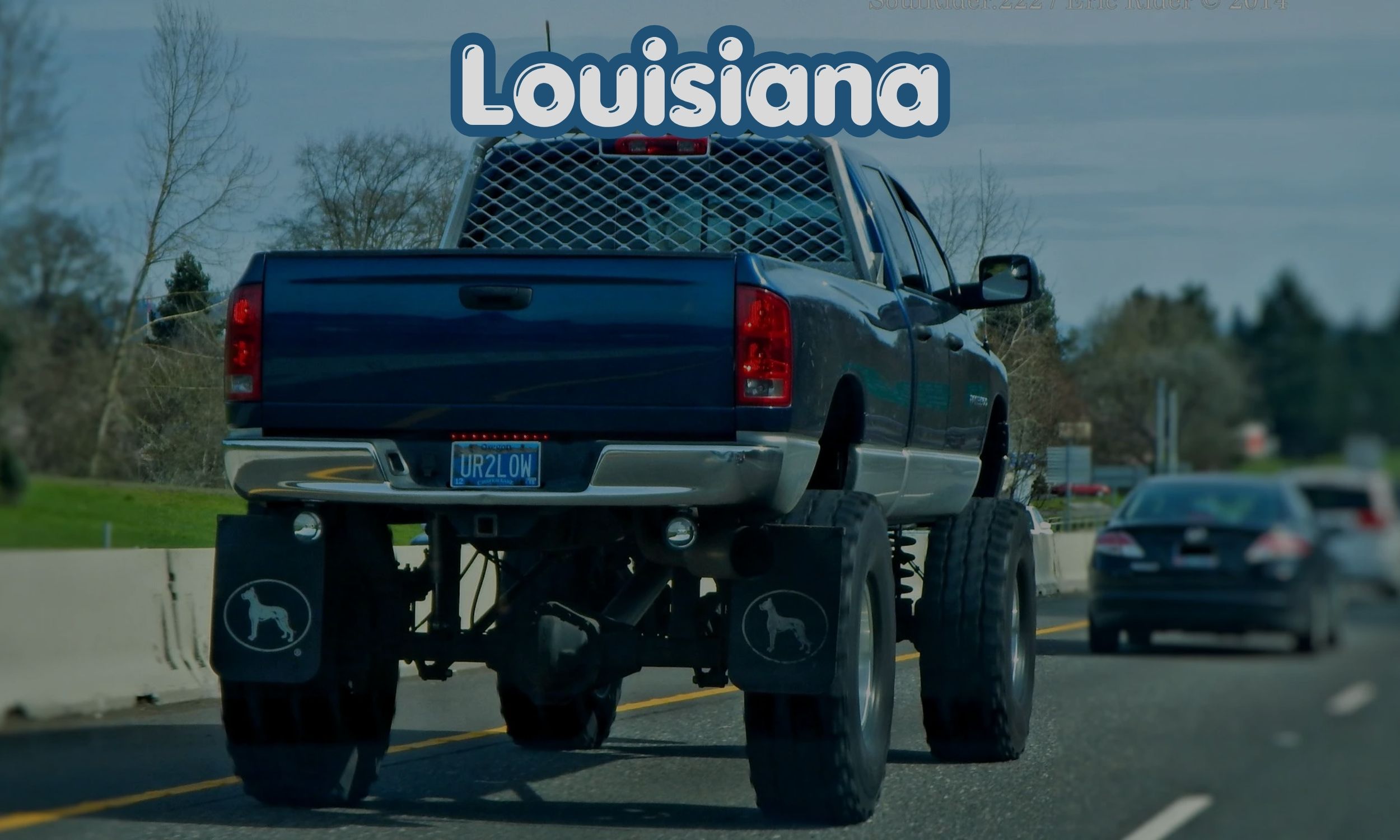
4. Louisiana
Louisiana takes a different approach, and it is worth understanding. Instead of a headline ban with a catchy name, the state imposed restrictions and relies on standard vehicle code enforcement against squatted or improperly parked trucks.
What does that mean for you? Officers do not need a special squat law to write a ticket. They can lean on existing vehicle code, and a truck that looks wrong may draw attention. An officer who spots a safety problem can act on it.
That flexibility cuts both ways. Owners get less certainty, since no single number tells them where the line sits. Officers get more discretion. A truck that one patrol officer ignores might earn a citation from another.
So play it safe. Keep the rake modest, keep the headlights aimed properly, and make sure the truck handles predictably.
Ask a local inspection station or the state’s motor vehicle office for current guidance, because the specifics can change and penalties depend on the section of code used. If you modify a truck, keep documentation showing the original specifications.
A clean paper trail makes a conversation with an officer much calmer, and it also helps when you sell the truck. A little caution keeps the fun in the hobby and the tickets out of your mailbox.
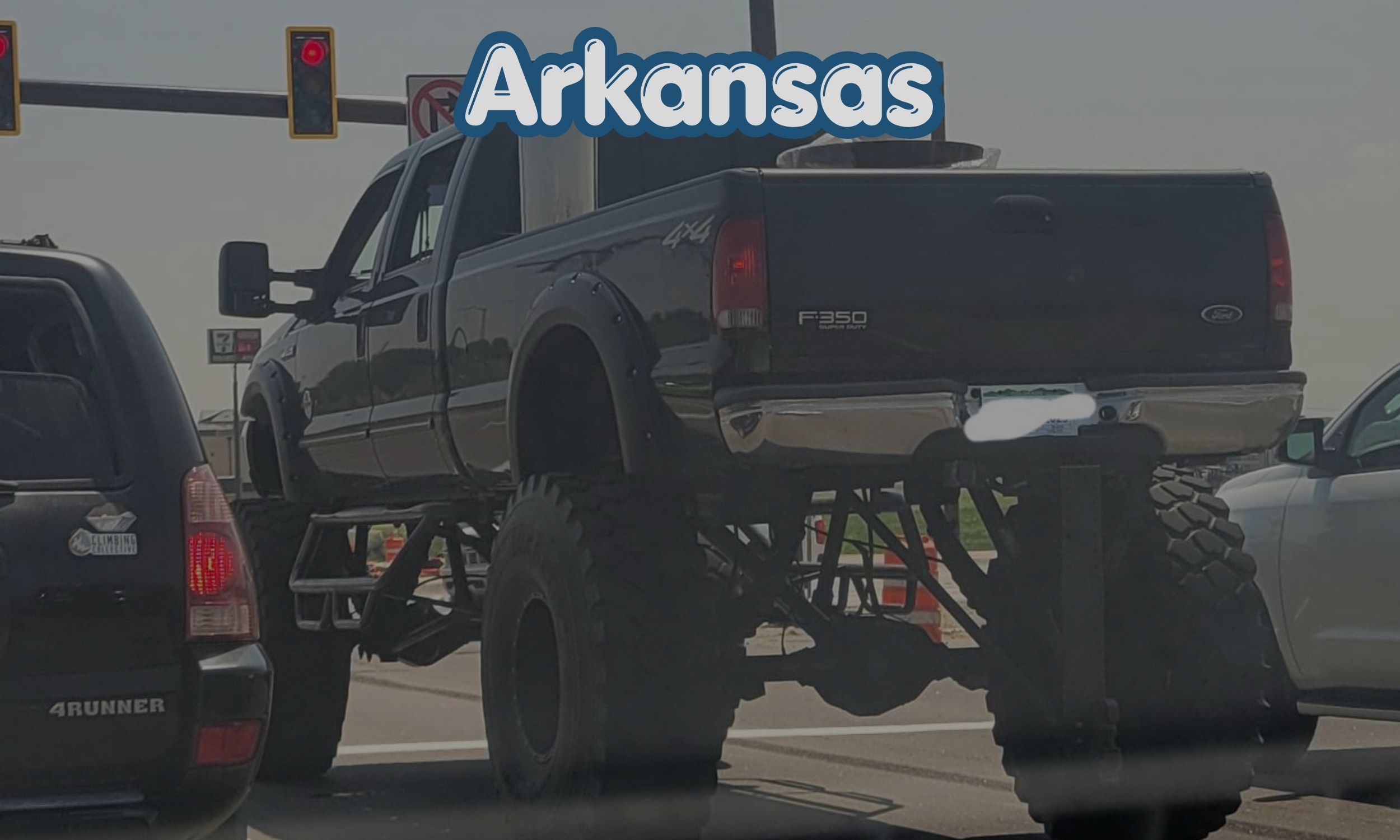
5. Arkansas
Arkansas has banned the Carolina Squat, according to the supplied information, and violations can carry fines ranging from $250 to $500. Repeat offenders may also face license suspension.
Those penalties give truck owners a practical reason to review their suspension setup before heading onto public roads. A modification that seemed like a personal styling choice can become an expensive problem when it falls outside the state’s legal requirements.
The concern is the large difference between the front and rear ride heights. By raising the front substantially, a driver may reduce the ability to see hazards directly ahead.
The altered suspension geometry can also affect steering response and vehicle balance, especially when braking or traveling on uneven pavement.
For drivers in Arkansas, confirming the current rules is especially important before buying a lift kit online or paying a shop to install one.
Products advertised as suitable for lifted trucks are not automatically legal in every state. Compatibility with a vehicle’s make and model also does not guarantee compliance with local law.
Owners can consult the Arkansas Department of Finance and Administration’s motor vehicle resources and relevant state statutes for current requirements.
If a vehicle is already modified, a qualified shop can measure the ride height and help determine whether adjustments are needed.
The financial risk extends beyond the initial fine. Correcting an illegal suspension setup can involve new components, installation labor, alignment work, and additional inspections where required.
A sensible plan is to confirm the legal limits first, select compliant equipment, and keep records of the work performed. That approach helps prevent a costly modification from becoming a road-use problem.
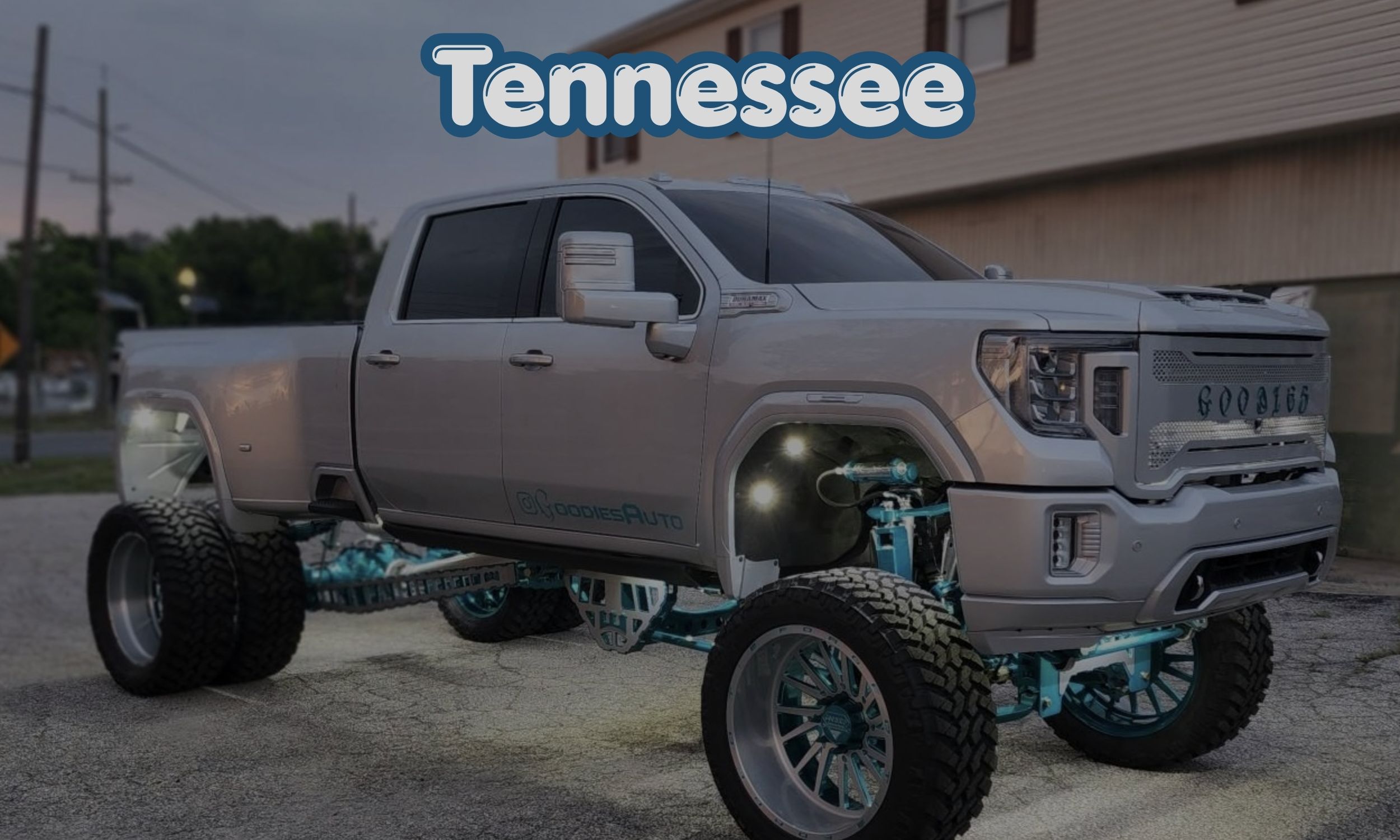
6. Tennessee
Tennessee classifies the targeted squatted-vehicle modification as a Class B misdemeanor, with a $250 fine, according to the supplied information.
That classification makes it especially important for drivers to understand the state’s rules before modifying a pickup.
A misdemeanor is different from a simple equipment warning, so owners should not treat the issue as a minor matter of appearance.
The precise legal consequences depend on the applicable statute and the circumstances of a violation.
Drivers should confirm the current law with Tennessee authorities rather than assuming the listed fine represents every possible consequence.
The modification at issue raises the front of the truck much higher than the rear. Although some owners prefer the look, the altered stance can interfere with road visibility and affect the vehicle’s response to steering and braking inputs.
If you own a truck in Tennessee, start by reviewing the current requirements before purchasing suspension parts.
Ask the installer to explain the proposed ride height, how the modification affects suspension geometry, and whether the final vehicle complies with state law. A professional installation alone does not guarantee that the resulting setup is legal.
Buyers shopping for a used lifted truck should also check its equipment before completing the purchase. Modifications made in another state may not meet Tennessee requirements, even if the vehicle was previously registered elsewhere.
For accurate information, consult the Tennessee Department of Safety and Homeland Security, the relevant state statutes, or a qualified legal professional. Those sources can clarify the current restriction and the consequences of violating it.
When in doubt, avoid driving a potentially noncompliant truck on public roads until its legal status has been confirmed.
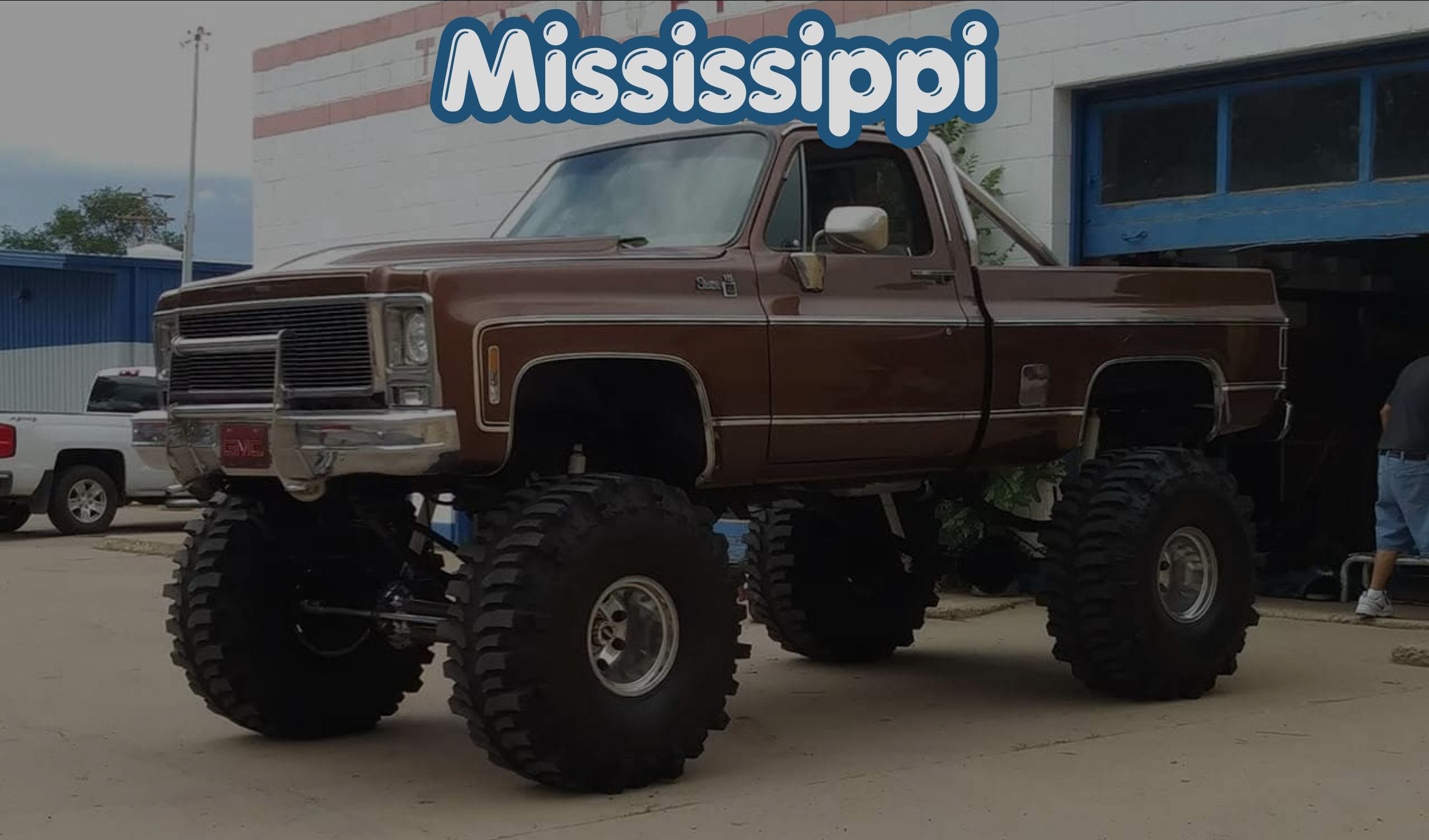
7. Mississippi
Mississippi went broad. The state enacted a statewide prohibition on public roads for severely squatted vehicles.
Two phrases matter there. Statewide means no county or city gets a pass, so crossing a county line will not save you, and out-of-state visitors are included.
On public roads means the ban focuses on driving, not owning. Your truck can sit in a garage or appear at a private show while you sort out what to do.
Then there is the word severely. That wording suggests the law aims at extreme cases rather than every truck with a slight rake. Still, nobody carries a ruler around town, and an officer’s eyes decide the first call. If your truck looks dramatic, expect questions.
I would not gamble on gray areas. Before your next road trip, look up the exact statute and see how it defines the offense, because definitions control what counts.
A mechanic can measure front and rear fender heights, and that number gives you something concrete if you ever dispute a ticket. Keep the truck in good working order too, with sound tires, proper alignment, and working lights.
A well-kept truck gets less attention than a neglected one.
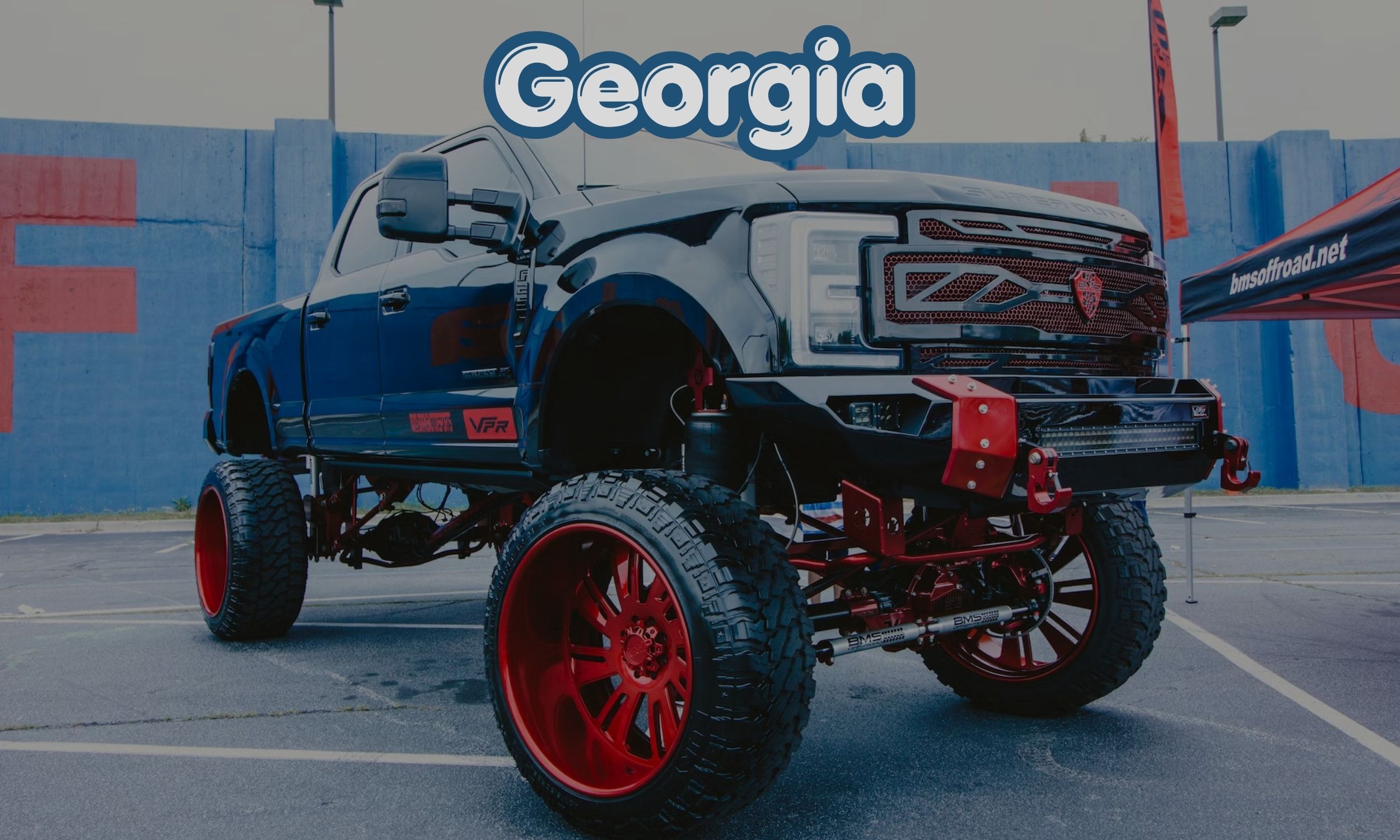
8. Georgia
Georgia gives you a number, and drivers appreciate that. The state implemented a strict 6-inch maximum allowance between the front and rear, and it issues fines for vehicles exceeding the limit.
Numbers make life easier. You can grab a tape measure on a flat driveway, measure the fender height at the front and rear, and compare the two.
No guessing, no arguing about whether a truck looks too tall. Six inches is the line, and one inch past it is a violation.
Imagine you land at 5 inches. Great, but a heavy load in the bed or a worn spring could change the gap.
Leave yourself some margin. A truck sitting right at the limit might cross it on a bad day, and an officer will not care why.
Here is a quick routine. Park on level ground, measure both sides, write the numbers down, and repeat after any suspension work. Photograph the tape measure beside the fender for your records.
If you land over the limit, a shop can often adjust ride height with simple changes. Confirm the exact measuring points the law uses, since small differences in method can change the result. A few minutes with a tape can protect your wallet.