Pickup trucks were once valued mainly for their ability to haul equipment, tow trailers, and handle demanding work. That perception has changed considerably in the American collector market.
Certain older pickups now attract enthusiasts because of their distinctive styling, limited production runs, memorable engines, and connection to important periods in automotive history.
Hagerty’s valuation data tracks this growing interest through auction results, private sales, and market trends.
From classic American work trucks to high-performance sport pickups, these seven models demonstrate how vehicles originally designed for practical purposes became desirable collector machines. Their values, however, depend heavily on condition, originality, and history.
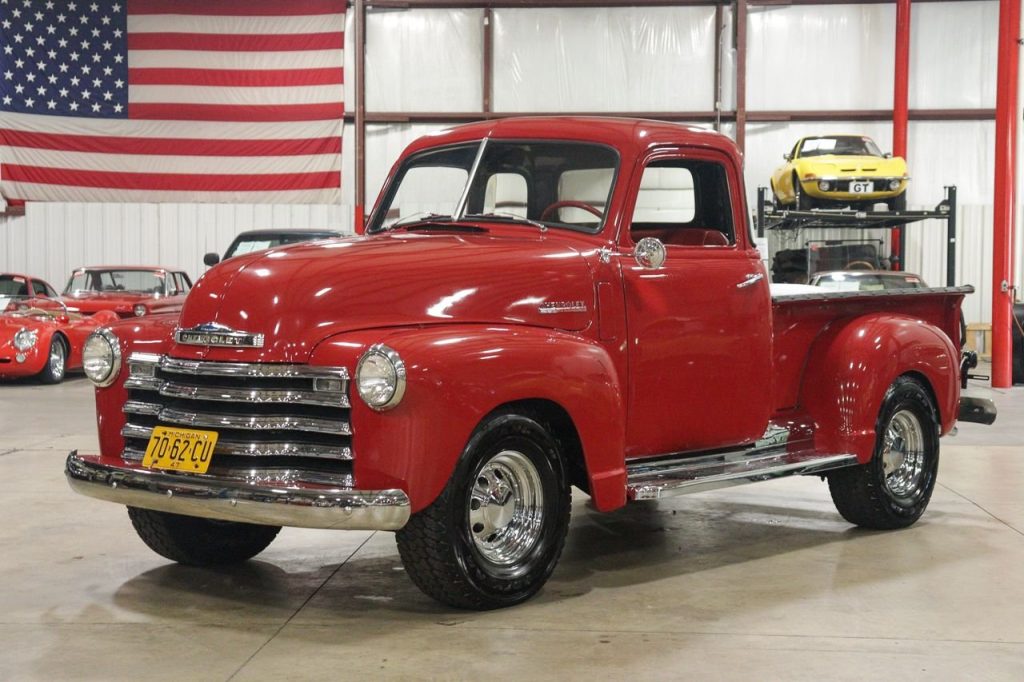
1. Chevrolet 3100 Advance-Design (1947–1955)
Hagerty #3 Good Condition value: Approximately $22,700 for a 1950 example
The Chevrolet 3100 became one of the defining American pickups of the postwar era, and its appeal among collectors has continued decades after production ended. Introduced in 1947 as part of Chevrolet’s Advance-Design truck family, it represented the company’s first major post-World War II commercial vehicle redesign.
Its rounded front end, prominent grille, separate fenders, and straightforward cabin gave it an appearance that remains instantly recognizable among classic truck enthusiasts. Hagerty identifies the 1947–1955 generation as an established collector vehicle, with values supported by auction transactions and other market data.
The 1950 version is particularly interesting because it represents the middle of the original advance-design production period. Its standard 216.5-cubic-inch inline-six produced 92 horsepower, prioritizing dependable everyday operation rather than performance.
That modest output might seem unremarkable today, but the truck was designed primarily for hauling and commercial transportation.
Hagerty’s valuation data placed a #3 Good Condition 1950 example at approximately $22,700 in October 2026. Actual auction results demonstrate how dramatically condition and restoration quality can change the selling price.
One 1950 example sold for $41,250 at Barrett-Jackson in September 2026, while other examples have commanded substantially different amounts.
Original body panels, factory-style interiors, correct mechanical components, and documented restoration work can make a considerable difference to collectors. Modified examples also attract buyers, although their appeal depends on the quality and character of the changes.
The 3100’s collector status comes from its historical importance, recognizable styling, and continued presence in America’s classic truck culture.
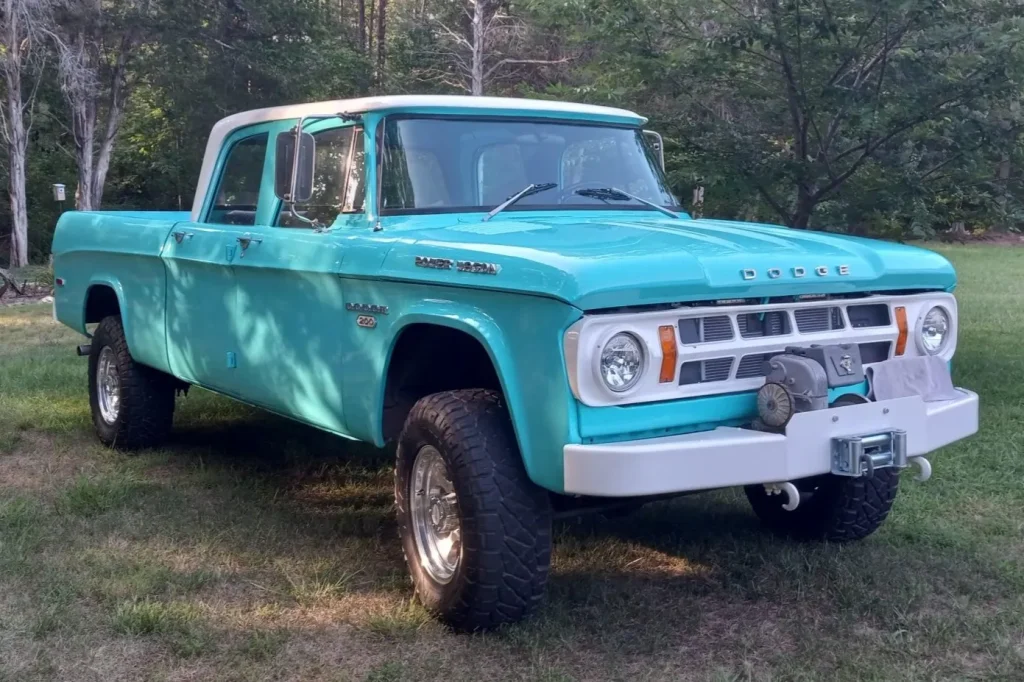
2. Dodge Power Wagon (1945–1968)
Hagerty #3 Good Condition value: Approximately $40,400 for a 1960 example
Long before luxury-oriented off-road pickups became popular, Dodge was producing trucks designed to operate in conditions that ordinary road vehicles could not handle.
The Power Wagon developed its reputation through rugged engineering and four-wheel-drive capability, drawing heavily on the company’s experience supplying military vehicles during World War II.
Its civilian production began in 1945, making it one of the earliest widely recognized purpose-built four-wheel-drive pickups available to American buyers. Hagerty tracks the original Power Wagon generation from 1945 through 1968.
The 1960 WM300 provides a useful example of why these trucks attract collectors. It featured a 250.6-cubic-inch inline-six engine producing 125 horsepower, paired with a four-wheel-drive system designed for demanding working conditions.
Its tall stance, utilitarian bodywork, and straightforward mechanical layout were intended to prioritize durability rather than comfort or speed.
Its modern collector appeal is reflected in Hagerty’s October 2026 valuation. A #3 Good Condition 1960 example was valued at approximately $40,400, with a reported three-year increase of 78.8%.
Hagerty’s recent market records also include a 1968 WM300 selling for $87,150 in October 2026. These figures illustrate the interest in well-preserved examples, although an exceptional auction result should not be confused with the typical market value.
Collectors particularly appreciate surviving trucks with original four-wheel-drive hardware, factory body components, and documented histories. Restorations can be expensive because older commercial vehicles frequently require specialized parts and extensive mechanical attention.
The Power Wagon’s appeal comes from its rich working heritage. It is more than just a vintage pickup with classic styling. It stands as a significant part of the history and evolution of civilian four-wheel-drive trucks in the United States.
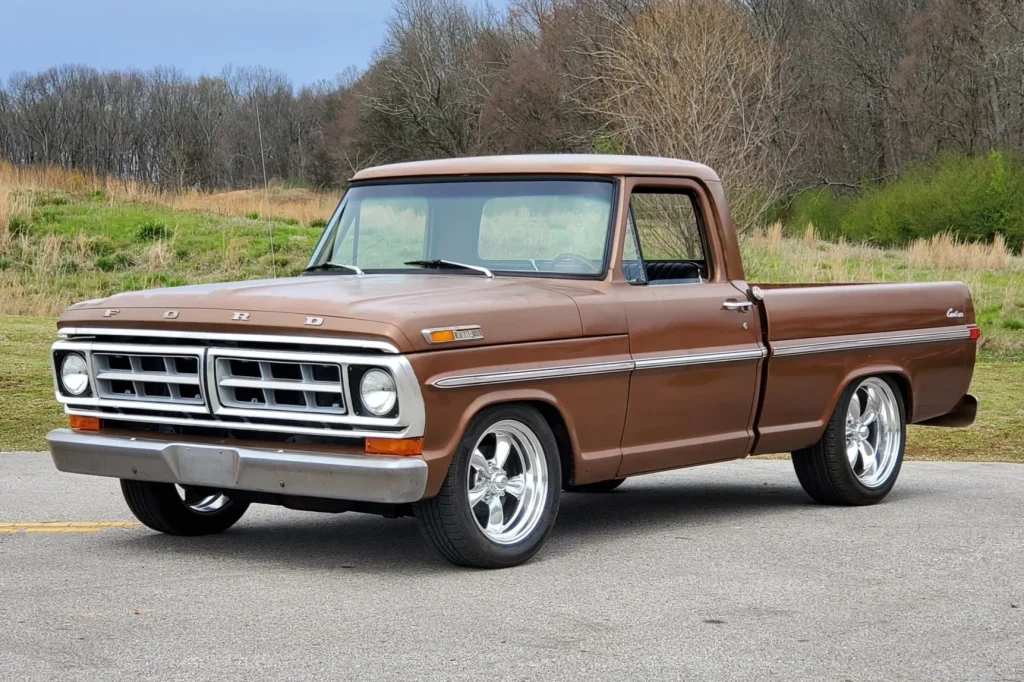
3. Ford F-100 (1967–1972)
Hagerty #3 Good Condition value: Approximately $23,300 for a 1967 example
The sixth-generation Ford F-Series introduced in 1967 helped establish the styling direction that would influence Ford pickups for years. The F-100 became particularly recognizable for its squared-off bodywork, prominent horizontal grille, and relatively simple cabin.
Unlike highly specialized performance trucks, it attracted buyers through everyday usefulness, mechanical variety, and a design that has aged remarkably well. Today, its combination of traditional American pickup proportions and straightforward engineering makes it a familiar sight at classic truck gatherings and collector auctions.
Ford offered several engine configurations during this generation, including inline-six and V8 options. Hagerty’s records for a 1967 F-100 include a 240-cubic-inch six-cylinder producing 150 horsepower in one configuration. Buyers could also find V8-powered versions, with equipment and output varying according to year and specification.
The market activity surrounding these trucks provides useful evidence of their collector appeal. Hagerty recorded 207 sales across the 1967–1972 Ford F-Series generation over the preceding 12 months in its October 2026 data, generating approximately $7.8 million in sales volume.
The average transaction price was around $37,900, although this figure covers multiple configurations and should not be treated as the value of every F-100. A 1967 F-100 in #3 Good Condition was valued at approximately $23,300.
Collectors often pay particular attention to short-bed examples, desirable factory options, original paint, and surviving documentation. Four-wheel-drive versions can also attract a different group of enthusiasts from conventional rear-wheel-drive trucks.
The F-100’s transformation into a collector vehicle reflects its importance in Ford’s pickup history. It offers classic styling, mechanical simplicity, and a strong connection to the era when American pickups were becoming increasingly comfortable without abandoning their working purpose.
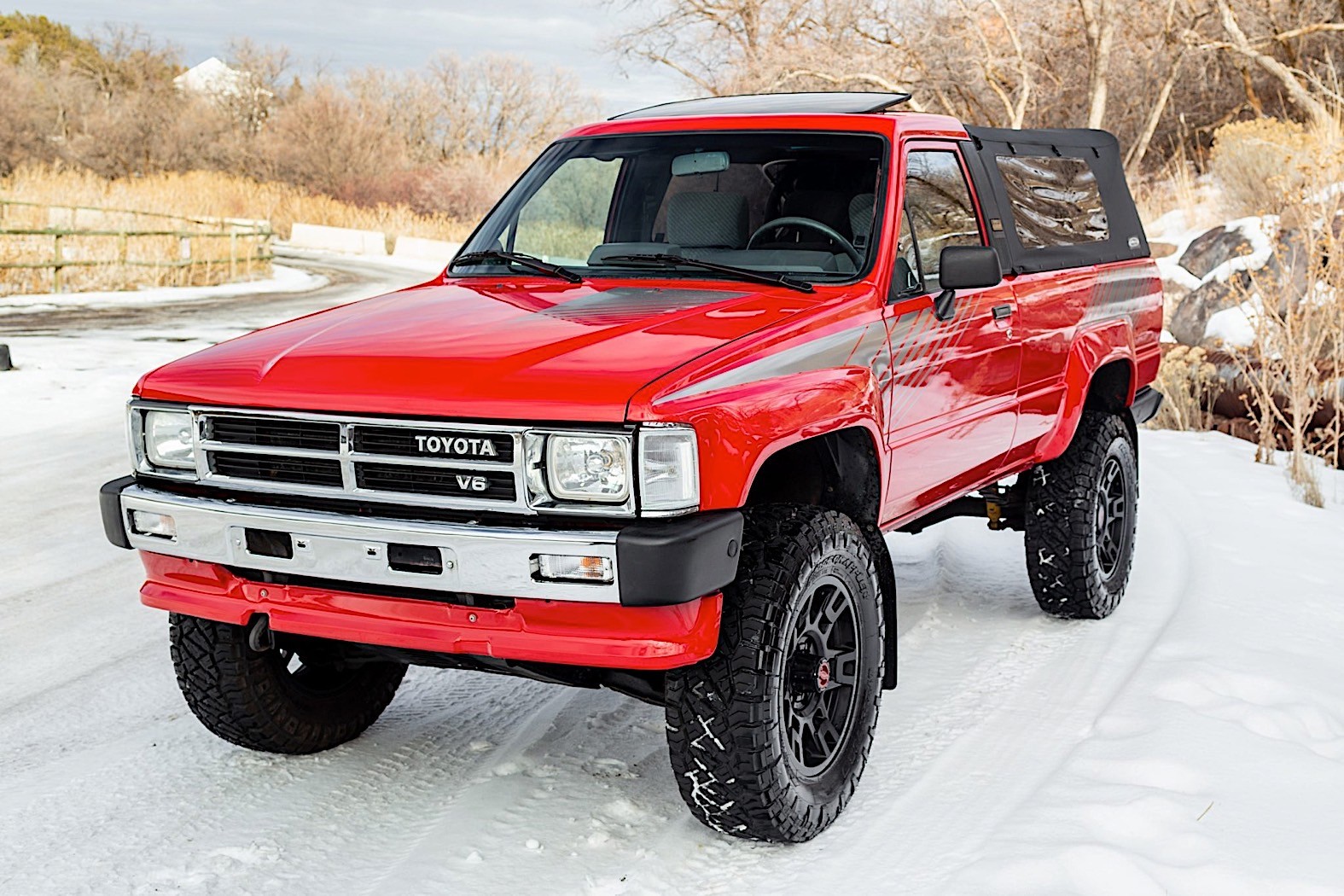
4. Toyota Pickup SR5 (1984–1989)
Hagerty #3 Good Condition value: Approximately $13,700 for a 1985 example
Not every collectible pickup needs a powerful V8 or an oversized body. The Toyota Pickup SR5 has become desirable for almost the opposite reasons: compact dimensions, practical engineering, and a reputation for surviving years of demanding use.
The 1984–1989 generation is especially interesting because it represents a period when Japanese-built compact trucks gained a substantial following in the United States.
Their combination of manageable size and available four-wheel drive made them attractive to buyers who wanted genuine utility without the operating demands of a full-size American pickup.
The 1985 SR5 provides a good example of the generation’s mechanical character. Its 2.4-liter four-cylinder engine produced 112 horsepower and used electronic fuel injection.
Although those figures appear modest by modern standards, the truck’s relatively low weight helped it deliver useful everyday performance. Hagerty lists a shipping weight of approximately 2,670 pounds for one 1985 configuration.
The collector market has recently shown considerable interest in surviving examples. Hagerty’s October 2026 valuation places a standard 1985 long-bed configuration in #3 Good Condition at approximately $9,900, while its SR5-specific July valuation was around $13,700.
The difference illustrates why trim, drivetrain, and configuration must be identified before quoting a classic truck’s value.
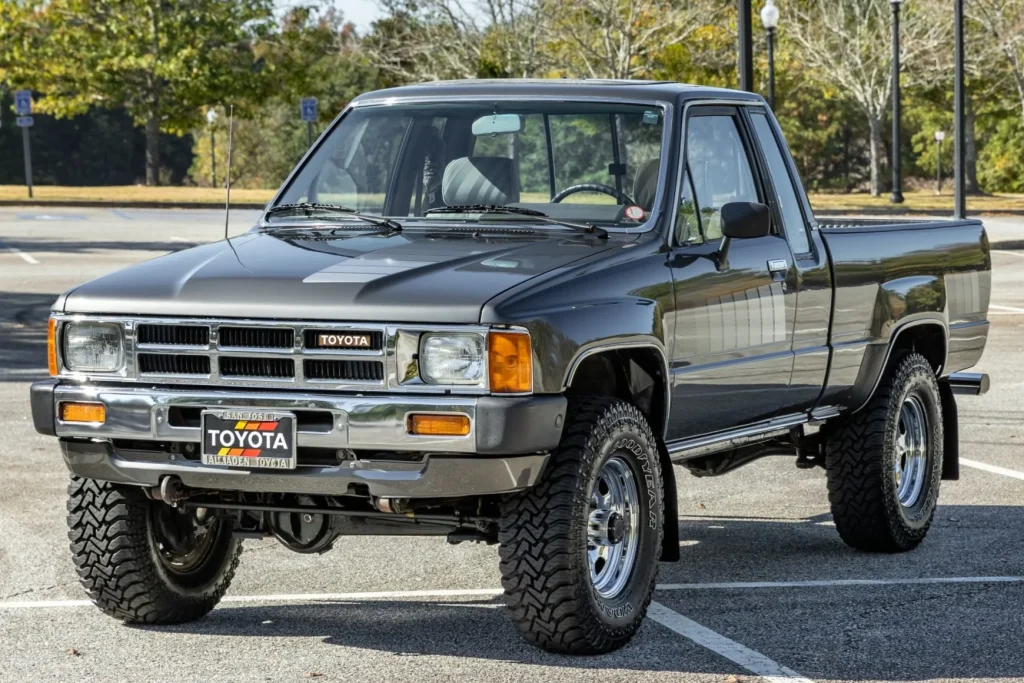
Auction results reinforce that point. A 1985 SR5 four-wheel-drive example with 66,000 miles sold for $50,400 in October 2026, an exceptional transaction rather than a typical valuation.
For collectors, originality, rust-free bodywork, and documented maintenance are especially important. Its growing desirability demonstrates that dependable compact pickups have earned a meaningful place in America’s classic truck market.
5. Dodge Li’l Red Express (1978–1979)
Hagerty #3 Good Condition value: Approximately $25,500 for a 1979 example
The Dodge Li’l Red Express stands apart from traditional work pickups because it was developed with performance and visual impact as major selling points. Introduced for the 1978 model year, it became one of the most recognizable American sport trucks of its era.
Its distinctive vertical exhaust stacks behind the cab, bright exterior graphics, gold-colored wheels, and wood-accented bodywork gave it an appearance unlike conventional pickups. Dodge created something that appealed to customers who wanted the practicality of a truck with the personality of a performance vehicle.
Under the hood, the Li’l Red Express used a 360-cubic-inch V8 producing 225 horsepower. It was paired with an automatic transmission and rear-wheel drive.
The engine was particularly interesting because Dodge developed a relatively powerful configuration during an era when emissions regulations and tightening fuel-economy requirements were changing American performance vehicles.
Its historical importance also comes from its performance reputation. The truck became famous for its acceleration at a time when many contemporary passenger cars were losing power. That helped establish its identity beyond the appearance package, making it an important part of the late-1970s American performance scene.
Hagerty’s October 2026 valuation places a 1979 example in #3 Good Condition at approximately $25,500. The same valuation report recorded 19 sales across the 1978–1979 generation over the preceding 12 months, with an average transaction price of approximately $32,000. Its reported three-year valuation increase was 13.3%.
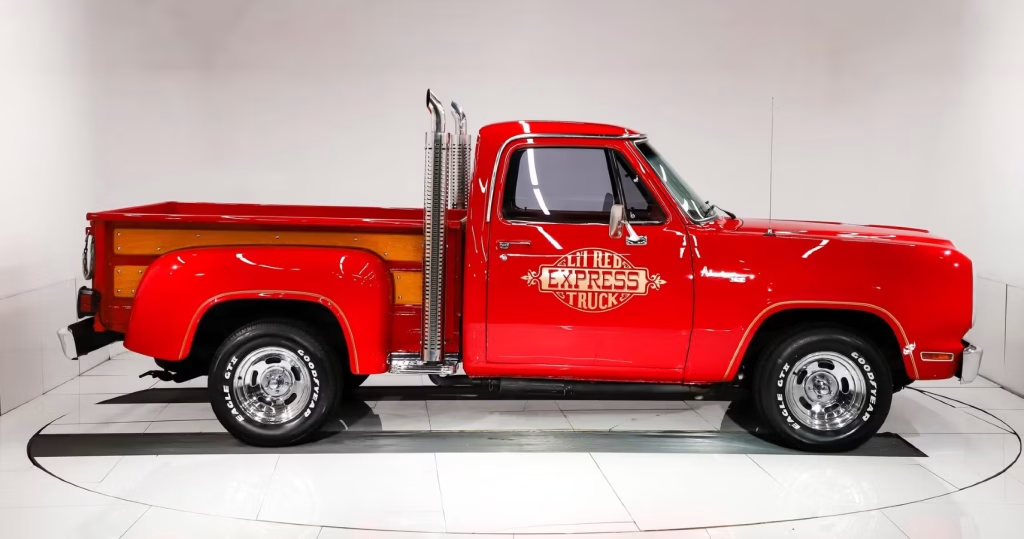
Collectors generally favor examples retaining their original exhaust equipment, graphics, wheels and mechanical specifications. Because modifications can change its historical character, originality is especially important.
The Li’l Red Express earned collector status by combining unusual styling with genuine performance credentials, making it one of the most memorable sport pickups ever sold in America.
6. Jeep J-10 (1963–1987)
Hagerty #3 Good Condition value: Approximately $16,100 for a 1978 example
Jeep’s pickup history extends far beyond the modern Gladiator, and the J-Series trucks represent an important part of that story. The J-10 evolved from the Gladiator pickup introduced for 1963, sharing its basic architecture with the Wagoneer.
Unlike conventional rear-wheel-drive work trucks, the J-10 offered four-wheel-drive capability and a rugged chassis that made it suitable for customers who regularly traveled on unpaved roads. Its combination of traditional pickup utility and Jeep’s off-road heritage has helped it gain recognition among collectors.
The 1978 J-10 illustrates the variety available during the truck’s production life. Hagerty lists a 258-cubic-inch inline-six producing 120 horsepower in one configuration.
Buyers could also choose V8 engines, including a 401-cubic-inch unit rated at 235 horsepower. Depending on the trim, the truck could be equipped with distinctive exterior treatments and different bed configurations.
The Golden Eagle and Honcho packages are particularly recognizable today. Their graphics, wheels and additional exterior details helped distinguish them from more basic versions. These packages have become interesting targets for enthusiasts who appreciate factory-specific styling rather than heavily modified custom trucks.
Hagerty’s October 2026 valuation places a 1978 J-10 with the 258-cubic-inch six-cylinder engine in #3 Good Condition at approximately $16,100. A separate 1978 J-10 10-4 configuration was valued at around $18,400 in the same period, showing how trim and equipment can influence market value.
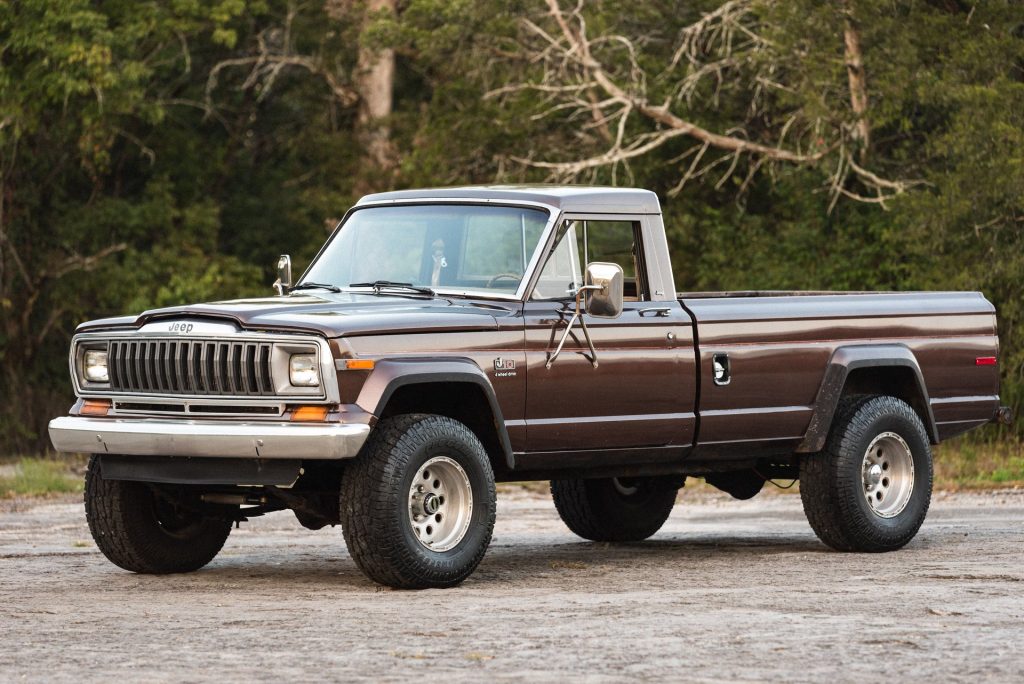
The collector appeal is not limited to appearance. Original four-wheel-drive components, correct engine configurations and rust-free bodywork are important considerations when evaluating surviving examples.
The J-10 remains a distinctive alternative to the better-known Chevrolet and Ford classics. Its relatively uncommon presence at collector events gives it an identity that goes beyond simply being another vintage American pickup.
7. Ford F-150 SVT Lightning (1999–2004)
Hagerty #3 Good Condition value: Approximately $37,400 for a 2002 example
Modern performance pickups owe part of their popularity to vehicles such as the second-generation Ford F-150 SVT Lightning. Developed by Ford’s Special Vehicle Team, the Lightning transformed an ordinary-looking F-150 into a considerably more powerful street-focused truck.
Produced between 1999 and 2004, it combined the practicality of a regular-cab pickup with supercharged V8 performance. Its restrained appearance also made it unusual: unlike many modern performance trucks, it did not rely on aggressive bodywork to communicate its capabilities.
Power came from a 5.4-liter supercharged Triton V8 producing 360 horsepower in the earlier model years and 380 horsepower from 2001 onward. The engine was paired with a four-speed automatic transmission and rear-wheel drive.
Ford also upgraded the suspension, brakes and supporting mechanical components to create a truck capable of handling its additional performance.
The Lightning’s acceleration helped establish it as an important American sport pickup. At a time when most full-size trucks were purchased primarily for hauling and towing, Ford offered a factory-built performance alternative aimed at enthusiasts who wanted muscle-car character in a pickup body.
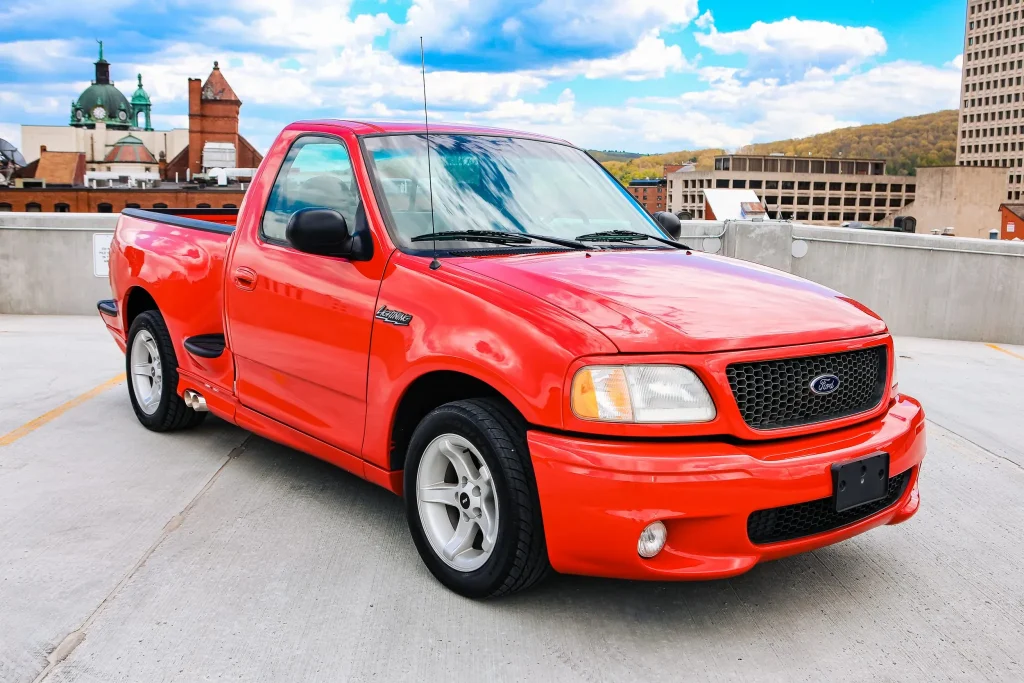
Hagerty’s July 2026 valuation placed a 2002 Lightning in #3 Good Condition at approximately $37,400, with a three-year value increase of 3.7%. Its valuation records also show 323 sales across the 1999–2004 generation, with the highest recorded sale reaching $110,000. That exceptional transaction should not be confused with the typical market price.
Collectors generally look for unmodified examples with original supercharger equipment, factory wheels, complete documentation and consistent maintenance histories.
The Lightning’s significance comes from its combination of factory engineering and everyday pickup proportions. It helped establish the modern performance-truck formula and remains one of the most recognizable collectible Ford pickups of its generation.