Fuel economy is one of the most important considerations when choosing a new vehicle, particularly for American drivers who spend considerable time commuting or travelling long distances.
However, impressive EPA mileage figures do not automatically translate into satisfied owners. Drivers also consider real-world efficiency, driving range, refueling frequency, and how consistently a vehicle delivers its advertised economy.
J.D. Power examines fuel economy as one of the experience categories in its U.S. APEAL Study. This article combines that owner-satisfaction research with EPA fuel economy figures to provide a more useful comparison.
1. Hyundai Elantra Hybrid
The Hyundai Elantra Hybrid makes a convincing case for drivers who want excellent fuel economy without moving into a larger, more expensive vehicle.
The 2025 Elantra Hybrid Limited was listed by AAA’s Automotive Research Center with an EPA-estimated 50 MPG combined, making it one of the most efficient conventional hybrid sedans in its comparison.
This figure provides a useful starting point for understanding why the Elantra Hybrid attracts attention from efficiency-conscious American buyers.
Its powertrain combines a 1.6-liter four-cylinder gasoline engine with an electric motor and a lithium-ion polymer battery.
The combined system produces 139 horsepower and 195 lb-ft of torque. Instead of relying on a conventional continuously variable transmission, Hyundai uses a six-speed dual-clutch automatic transmission, giving the sedan a more familiar gear-changing experience.
The hybrid system is particularly useful in urban driving. At lower speeds, electric assistance can reduce the amount of work required from the gasoline engine, while regenerative braking recovers some energy during deceleration.
This allows the vehicle to use less gasoline in conditions where conventional engines frequently waste energy through repeated acceleration and braking.
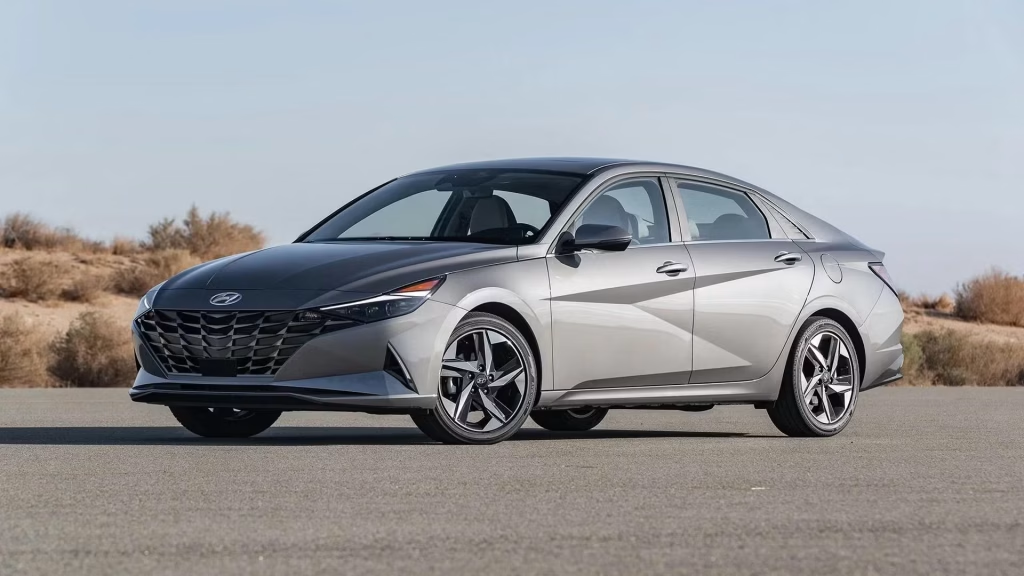
The Elantra Hybrid also offers a practical ownership proposition. Its compact dimensions make parking easier, while its four-door layout provides useful passenger space for everyday commuting. Buyers should remember that EPA estimates vary with trim, wheels, and driving conditions.
For anyone comparing fuel-efficient sedans, the Elantra Hybrid deserves serious consideration. Its EPA-rated economy is independently documented, although its individual APEAL Fuel Economy category score has not been publicly released.
2. Honda Civic Hybrid
The Honda Civic Hybrid combines strong fuel efficiency with the familiar practicality that has made the Civic popular among American drivers. According to AAA’s 2026 Car Guide, the 2025 Civic Hybrid Sport Touring sedan achieves an EPA-estimated 49 MPG combined.
Its hatchback counterpart is rated at 48 MPG combined. These figures make the Civic Hybrid particularly attractive to commuters who want to reduce fuel expenses without sacrificing the everyday usability of a conventional compact car.
Honda uses a 2.0-liter four-cylinder engine alongside two electric motors in the Civic Hybrid. The system produces 200 horsepower and 232 lb-ft of torque.
Unlike a traditional hybrid arrangement that relies on a conventional stepped automatic transmission, Honda’s system uses electric drive for much of its operation, with the gasoline engine supplying power directly to the wheels under appropriate conditions.
That arrangement has an important advantage in stop-and-go traffic. The electric motors can deliver immediate response from a standstill, while regenerative braking captures energy that would otherwise be lost during deceleration. Drivers therefore receive both useful acceleration and reduced gasoline consumption.
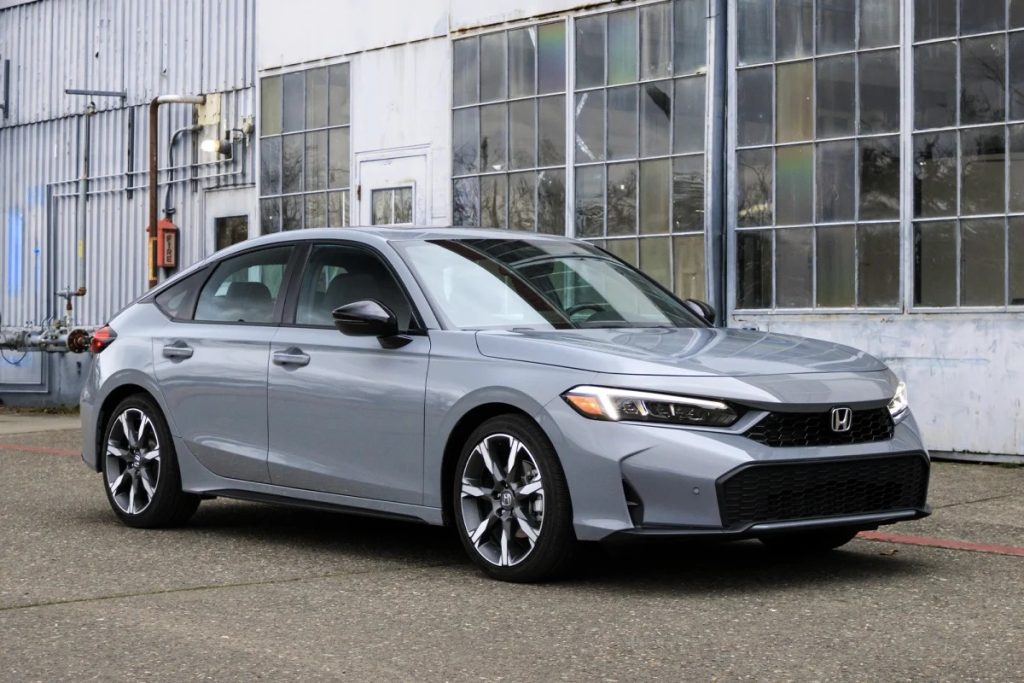
The Civic’s efficiency does not come at the expense of its everyday character. It retains a spacious cabin, straightforward controls, and a comfortable driving position. The Sport Touring version also adds premium equipment, making it suitable for buyers who want more than basic transportation.
For American households balancing fuel expenses with daily convenience, the Civic Hybrid offers a compelling combination. Its EPA figures provide a measurable reason to consider it, although individual APEAL Fuel Economy satisfaction scores are not publicly available.
3. Hyundai Sonata Hybrid
The Hyundai Sonata Hybrid offers a useful balance between midsize-sedan comfort and reduced fuel consumption.
For the 2025 U.S. model year, both the SEL Hybrid and Limited Hybrid carry EPA-estimated ratings of 44 MPG in the city, 51 MPG on the highway, and 47 MPG combined. That makes the Sonata an attractive option for drivers who regularly cover highway miles but still encounter congested urban traffic.
Unlike a conventional gasoline sedan, the Sonata Hybrid combines a 2.0-liter four-cylinder engine with an electric motor and lithium-ion polymer battery.
The combined system produces 192 horsepower and sends power through a six-speed automatic transmission. This setup provides a more familiar gear-changing experience than many hybrids that use continuously variable transmissions.
Its fuel-saving advantage becomes particularly useful during stop-and-go driving. The electric motor can assist acceleration, while regenerative braking recovers energy during deceleration. The system also manages the transition between gasoline and electric power automatically, so drivers do not need to change their driving habits to benefit from hybrid technology.
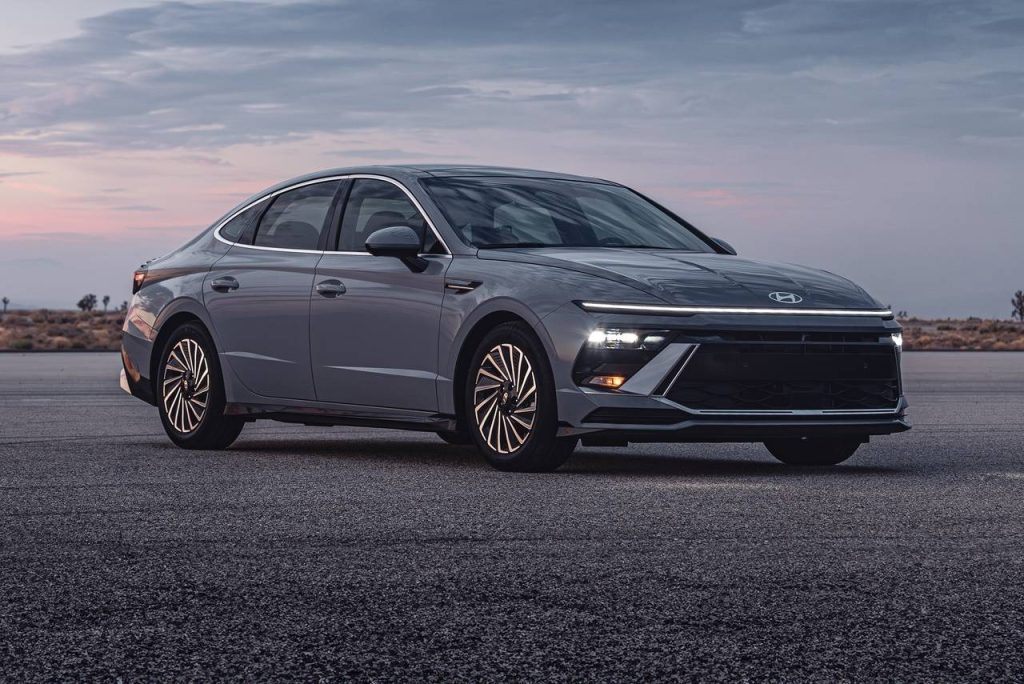
The Sonata’s spacious cabin and comfortable seating make it suitable for longer journeys, while its conventional sedan proportions keep it relatively easy to maneuver and park. Buyers should remember that the 47 MPG combined figure is an EPA estimate, not a guaranteed real-world result.
For shoppers considering a midsize hybrid, the Sonata stands out because it combines useful highway efficiency with a conventional automatic transmission and everyday practicality. Its individual APEAL Fuel Economy satisfaction score, however, has not been publicly disclosed.
4. Honda Accord Hybrid
The Honda Accord Hybrid demonstrates how a midsize sedan can deliver impressive fuel economy without becoming a basic transportation appliance. For 2025, the Accord EX-L Hybrid achieves an EPA-estimated 51 MPG in city driving, 44 MPG on the highway, and 48 MPG combined.
The Sport, Sport-L, and Touring Hybrid versions receive slightly lower ratings of 46 MPG city, 41 MPG highway, and 44 MPG combined. This difference makes trim selection particularly important when comparing fuel expenses.
Honda uses a two-motor hybrid system paired with a 2.0-liter four-cylinder gasoline engine. The hybrid powertrain produces 204 horsepower and 247 lb-ft of torque, providing useful acceleration while prioritizing efficiency.
Most everyday driving is handled through electric propulsion, with the gasoline engine supplying power according to operating conditions.
One advantage of the Accord is its ability to combine city efficiency with highway comfort. Regenerative braking helps recover energy during deceleration, while the hybrid system automatically manages power delivery.
Drivers can also use selectable regenerative braking levels through the deceleration selectors, allowing some adjustment to how the car slows when lifting off the accelerator.
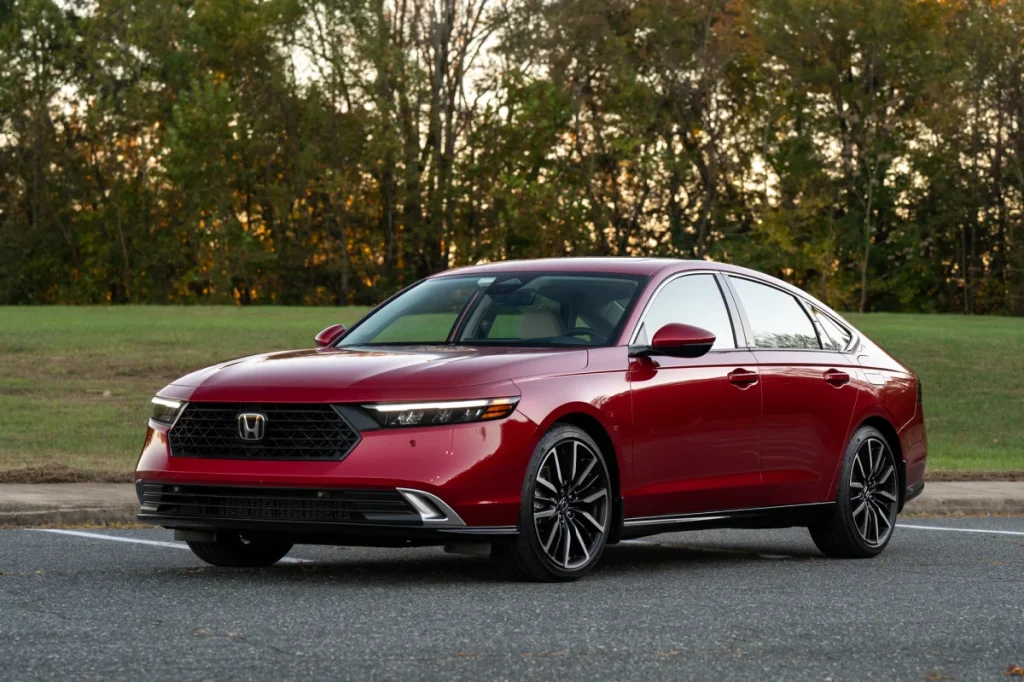
The Accord’s spacious interior and generous passenger accommodation make it particularly suitable for families and regular commuters. Its 16.7-cubic-foot trunk also provides practical storage capacity.
For buyers who want a fuel-efficient vehicle without moving into a compact sedan, the Accord Hybrid offers an appealing compromise. Its EPA figures are independently published for each trim, although they should not be confused with an official APEAL Fuel Economy satisfaction ranking.
5. Toyota Prius
The Toyota Prius remains one of the clearest examples of how hybrid engineering can deliver exceptional fuel economy without requiring drivers to change their daily routines. For the 2025 model year, the front-wheel-drive Prius LE carries an EPA-estimated rating of 57 MPG combined, with 57 MPG in the city and 56 MPG on the highway.
That figure makes it particularly appealing to commuters who want to reduce fuel stops while retaining the flexibility of a conventional gasoline-powered vehicle. Toyota also offers all-wheel drive, although that configuration delivers lower mileage.
Under the hood, the Prius uses a 2.0-liter four-cylinder hybrid powertrain producing 194 horsepower in the LE configuration. Its continuously variable transmission manages the interaction between the gasoline engine and electric motor, while regenerative braking recovers energy during deceleration.
The system can operate on electric power in suitable conditions, helping reduce gasoline consumption in stop-and-go traffic.
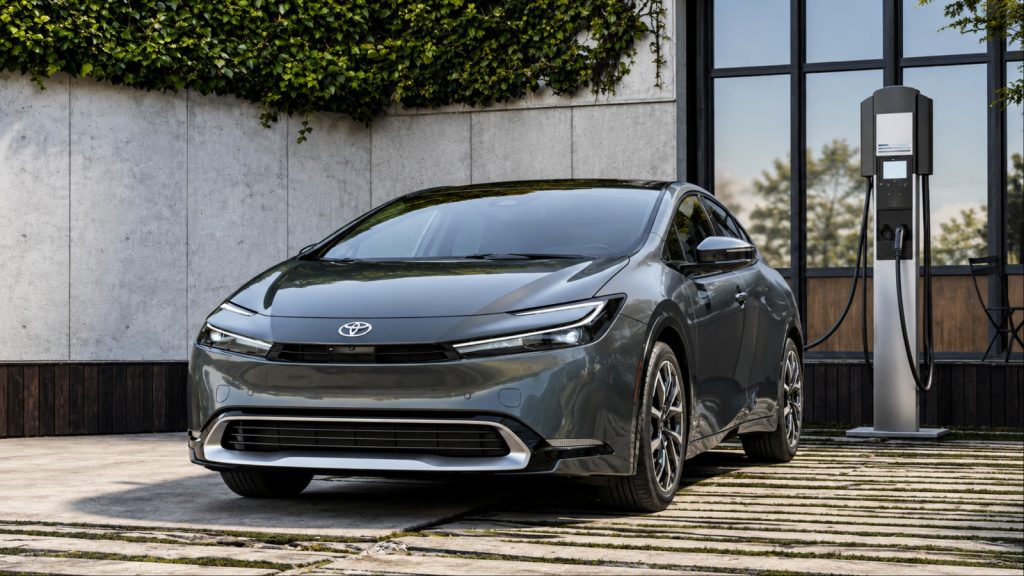
Practicality is another part of the Prius appeal. Its liftback design provides useful cargo flexibility, and the cabin accommodates five passengers. Drivers do not have to sacrifice everyday usability simply to achieve impressive mileage.
However, the 57-MPG rating applies specifically to the front-wheel-drive LE, not every Prius trim. Larger wheels and all-wheel-drive configurations can reduce efficiency. The Prius is included here because its EPA figures demonstrate outstanding efficiency, not because Toyota has published a model-specific J.D. Power APEAL Fuel Economy score.
6. Kia Niro Hybrid
Drivers who want hybrid efficiency but prefer a higher seating position may find the Kia Niro Hybrid particularly attractive. Unlike the Prius, which uses a low-slung hatchback shape, the Niro has a small crossover-style body that offers a more upright driving position and practical passenger access.
The Niro Hybrid also delivers impressive fuel efficiency. The 2025 front-wheel-drive LX model earns an EPA-estimated 53 MPG combined, with ratings of 53 MPG for city driving and 54 MPG on the highway. These figures make it an appealing option for drivers looking to reduce fuel expenses without sacrificing everyday practicality.
Power comes from a 1.6-liter four-cylinder engine paired with an electric motor. The combined system produces 139 horsepower and 195 lb-ft of torque, working through a six-speed dual-clutch automatic transmission.
This arrangement gives the Niro a different driving character from hybrids that use continuously variable transmissions. Gear changes are more noticeable, which some drivers may appreciate for a familiar driving feel.
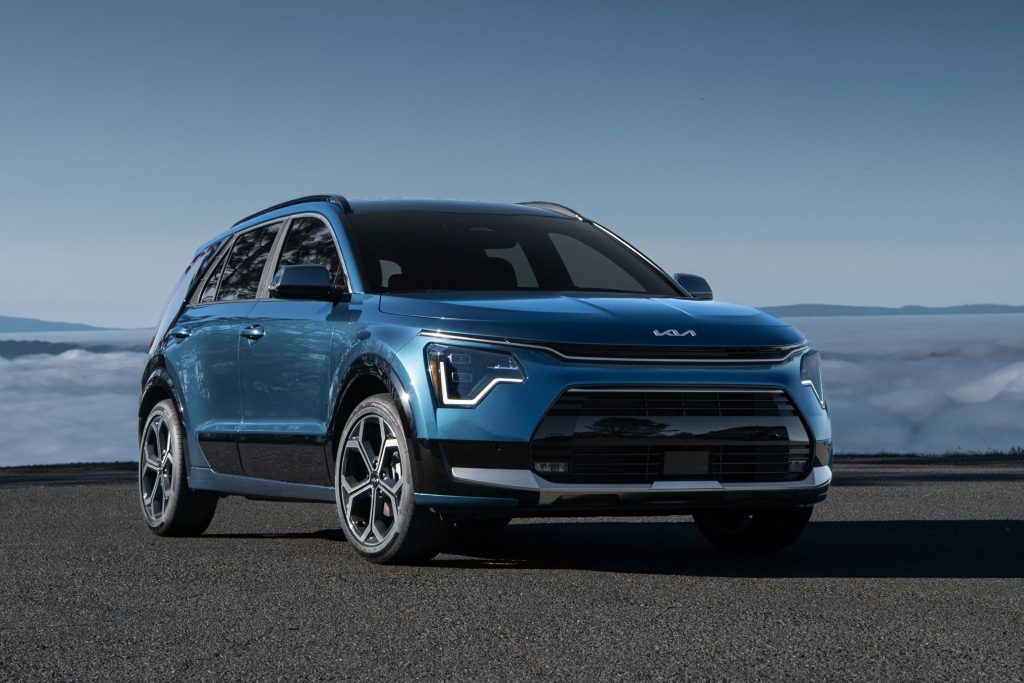
The Niro’s efficiency is especially relevant for people whose journeys involve regular urban traffic. Its hybrid system can use electric assistance during acceleration and recover energy through regenerative braking. That reduces the amount of work required from the gasoline engine in suitable driving conditions.
Buyers should pay attention to the trim level, though. The 53-MPG combined rating applies to the front-wheel-drive LX, while some higher trims with different equipment and wheels return lower EPA figures.
The Niro earns its place in this comparison through its published efficiency and crossover practicality. It should not be mistaken for an official APEAL category winner, since individual model-level satisfaction scores have not been publicly disclosed.
7. Toyota Camry Hybrid
The Toyota Camry Hybrid demonstrates that excellent fuel economy does not have to come at the expense of interior space or the comfort expected from a midsize sedan. For 2025, the front-wheel-drive Camry LE carries an EPA-estimated rating of 52 MPG in the city, 50 MPG on the highway and 51 MPG combined.
That makes it an appealing option for drivers who want a larger family car without accepting the fuel consumption traditionally associated with midsize gasoline sedans.
Toyota redesigned the Camry for 2025 and made hybrid power standard across the entire lineup. The front-wheel-drive version combines a 2.5-liter four-cylinder engine with Toyota’s fifth-generation hybrid system to produce 225 net combined horsepower.
Buyers can also choose electronic on-demand all-wheel drive, which adds a rear electric motor and increases combined output to 232 horsepower. The AWD version, however, has a lower EPA fuel economy rating than the most efficient front-wheel-drive LE.
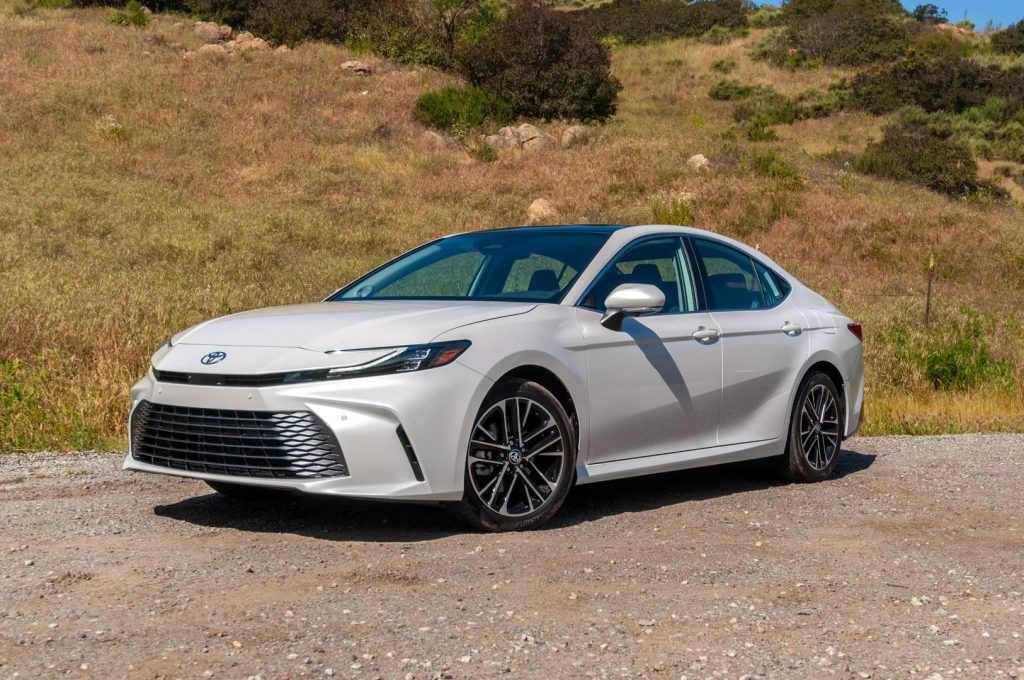
What makes the Camry interesting is its balance of efficiency and everyday usability. It offers a conventional sedan layout, a spacious cabin and enough power for highway merging and passing. Drivers who regularly carry passengers may find that combination more useful than choosing a smaller vehicle purely for its mileage.
The 51-MPG combined figure belongs specifically to the 2025 Camry LE with front-wheel drive. Other trims and drivetrain configurations have different ratings. Its inclusion reflects verified EPA efficiency, not a publicly disclosed model-specific J.D. Power APEAL Fuel Economy score.
8. Toyota Corolla Hybrid
For buyers who want a compact sedan with strong fuel economy and a relatively straightforward ownership proposition, the Toyota Corolla Hybrid is a compelling candidate.
The 2025 Corolla Hybrid LE and XLE with front-wheel drive are EPA-rated at 53 MPG in the city, 46 MPG on the highway and 50 MPG combined. These figures place the Corolla among the most efficient conventional hybrid sedans in its class.
The powertrain pairs a 1.8-liter four-cylinder engine with Toyota’s hybrid system, producing 138 horsepower. An electronically controlled continuously variable transmission manages power delivery, while the hybrid system uses electric assistance to reduce gasoline consumption during acceleration and lower-speed driving.
Regenerative braking also captures energy that would otherwise be lost during deceleration. The Corolla’s appeal is not based on headline performance. Its modest output is better suited to commuting, everyday errands and economical transportation than aggressive driving.
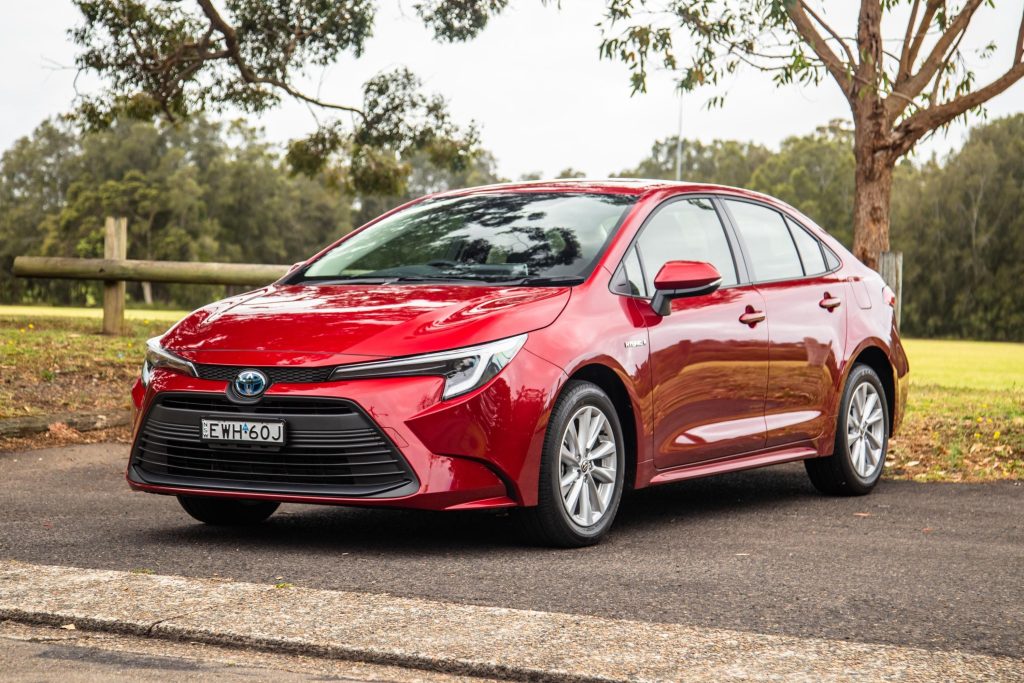
Its compact dimensions also make it easier to manoeuvre and park in crowded urban areas than a larger sedan. For drivers who spend much of their time navigating traffic, the strong city rating is particularly relevant.
There are important trim differences to consider. The 50-MPG combined rating applies to the front-wheel-drive LE and XLE. The SE front-wheel-drive version is rated at 47 MPG combined, while available all-wheel-drive versions have their own figures.
The Corolla Hybrid is included because its EPA ratings support its efficiency credentials, not because it has a published individual APEAL Fuel Economy category score.
9. Lexus ES 300h
Fuel efficiency is not usually the first thing people associate with luxury sedans, but the Lexus ES 300h challenges that assumption. The 2025 model delivers an EPA-estimated 44 MPG combined, with 43 MPG in the city and 44 MPG on the highway.
Those figures are particularly impressive for a midsize luxury sedan designed around comfort, quiet operation and premium features rather than simply minimizing fuel consumption. Lexus describes it as its most fuel-efficient non-plug-in luxury sedan.
The ES 300h combines a 2.5-liter four-cylinder gasoline engine with two electric motor-generators. The hybrid system produces 215 horsepower and sends power to the front wheels through an electronically controlled continuously variable transmission.
Electric assistance helps the car use less gasoline during acceleration, while regenerative braking recovers energy during deceleration.
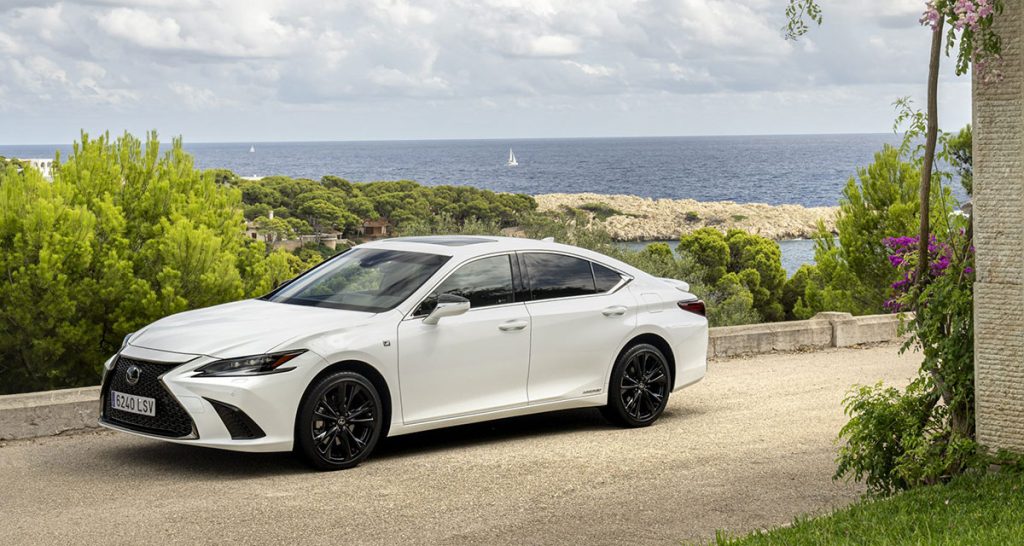
Its appeal extends beyond the fuel economy figures. The ES offers a quiet cabin, comfortable seating and a smooth driving experience, making it suitable for long commutes and extended highway journeys. Buyers who want a premium interior without moving to a larger, less efficient luxury vehicle may find this combination attractive.
The ES 300h does come with a compromise, as it focuses more on ride comfort, smooth performance, and fuel efficiency than sporty handling or acceleration. Its EPA-estimated 44 MPG combined rating applies specifically to the hybrid version, not the conventional gasoline-powered ES 350. Its inclusion in this comparison is supported by official EPA fuel economy figures rather than an independently published ranking in APEAL’s Fuel Economy category.
10. Ford Maverick Hybrid
The Ford Maverick Hybrid takes a different approach to fuel efficiency by bringing hybrid technology into a compact pickup truck. Pickup buyers often accept higher fuel consumption in exchange for an open cargo bed and useful hauling capability.
The Maverick offers those practical advantages while delivering an EPA-estimated 38 MPG combined in its 2025 front-wheel-drive hybrid configuration, with 42 MPG in the city and 35 MPG on the highway.
Its powertrain combines a 2.5-liter four-cylinder gasoline engine with an electric motor and an electronically controlled continuously variable transmission. This setup produces 191 horsepower in the front-wheel-drive hybrid configuration.
Rather than focusing on maximum towing or off-road performance, the standard hybrid system is designed to make everyday pickup use more economical.
The Maverick’s usefulness is a major part of its appeal. Its four-door SuperCrew cabin provides seating for five, while the four-and-a-half-foot cargo bed can accommodate equipment, supplies and recreational gear.
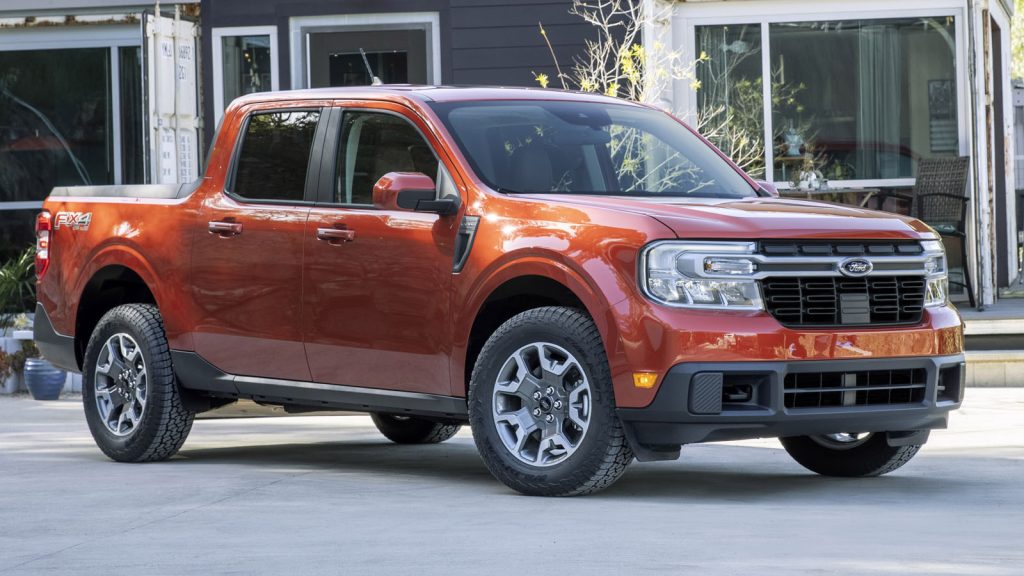
That makes it an interesting choice for drivers who need pickup functionality but do not want to move directly into a larger truck with substantially higher fuel consumption.
Configuration matters here as well. The 38-MPG combined figure applies to the front-wheel-drive hybrid. The available all-wheel-drive hybrid has a different rating, while performance-oriented gasoline versions are considerably less efficient.
The Maverick is included because it shows how hybrid technology can improve fuel economy in a traditionally less efficient vehicle category. It is not being presented as an official J.D. Power APEAL Fuel Economy winner.