Electric trucks and SUVs are challenging the traditional idea that large vehicles must sacrifice speed for size and capability. Their electric motors can deliver substantial power instantly, producing acceleration figures once associated mainly with high-performance sports cars.
This ranking compares ten U.S.-market electric trucks and SUVs using their highest manufacturer-published horsepower figures for the specified model years and trims. Temporary performance modes are included when the manufacturer officially quotes them as maximum output.
The list also considers what each vehicle offers beyond its headline power, because horsepower means more when understood alongside range, towing ability, acceleration, and everyday usefulness.
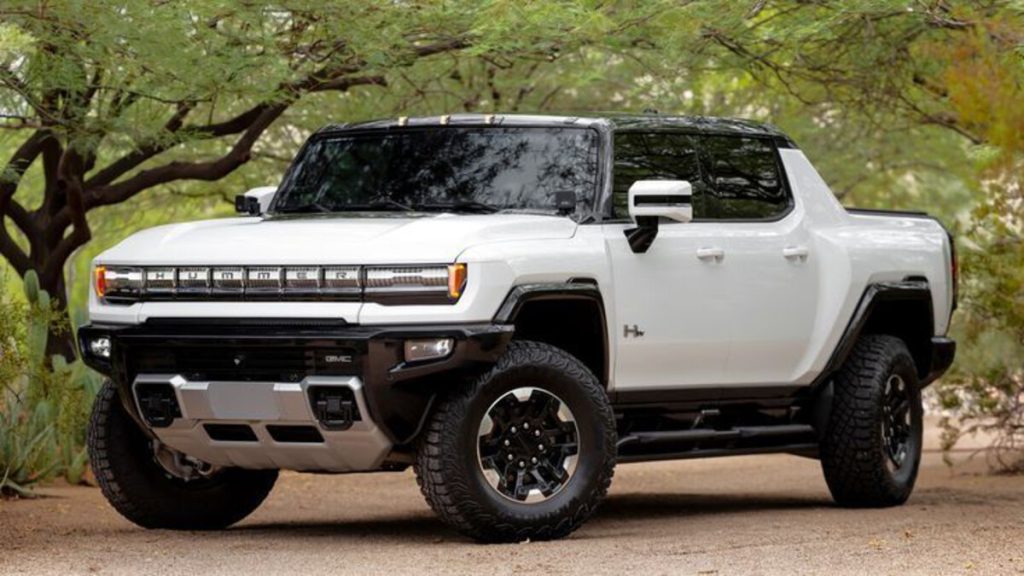
1. GMC HUMMER EV 3X Pickup: 1,160 HP
The electric pickup at the top of this ranking makes a remarkable statement about how far truck performance has moved. The 2027 GMC HUMMER EV 3X Pickup is rated at up to 1,160 horsepower when equipped with the available 24-module battery.
GMC also quotes an extraordinary 13,000 lb-ft of torque, although this is a wheel-torque figure produced through the vehicle’s gearing and should not be compared directly with conventional engine torque ratings. Production of the 2027 model is scheduled to begin later in 2026 at GM’s Factory ZERO assembly facility.
Three electric motors provide the power, giving the pickup independent control over its front and rear axles. That arrangement is useful for more than straight-line acceleration. Electric torque can be distributed rapidly, helping the vehicle manage traction when climbing, turning, or travelling over uneven surfaces.
GMC has also developed the truck around serious off-road equipment, including four-wheel steering and CrabWalk capability. The latter allows the vehicle to move diagonally at low speeds by turning all four wheels in the same direction.
The acceleration claim is equally eye-catching. GMC says the 2027 3X pickup can reach 60 mph in as little as 2.8 seconds with the optional battery and appropriate performance settings.
That is sports-car territory for a vehicle with a pickup bed and substantial off-road hardware. However, such a figure should not be mistaken for a normal everyday launch time under every road or weather condition.
Buyers should also remember that maximum horsepower is not the same as maximum range. The larger battery and high-performance configuration are intended to deliver exceptional output, but actual driving distance depends on equipment, speed, terrain, temperature, and load.
GMC had yet to reveal the official starting price of the 2027 model when it announced the vehicle’s power specifications. However, its performance figures already make a strong impression, positioning this full-size electric pickup among the most powerful production trucks introduced for the U.S. market.
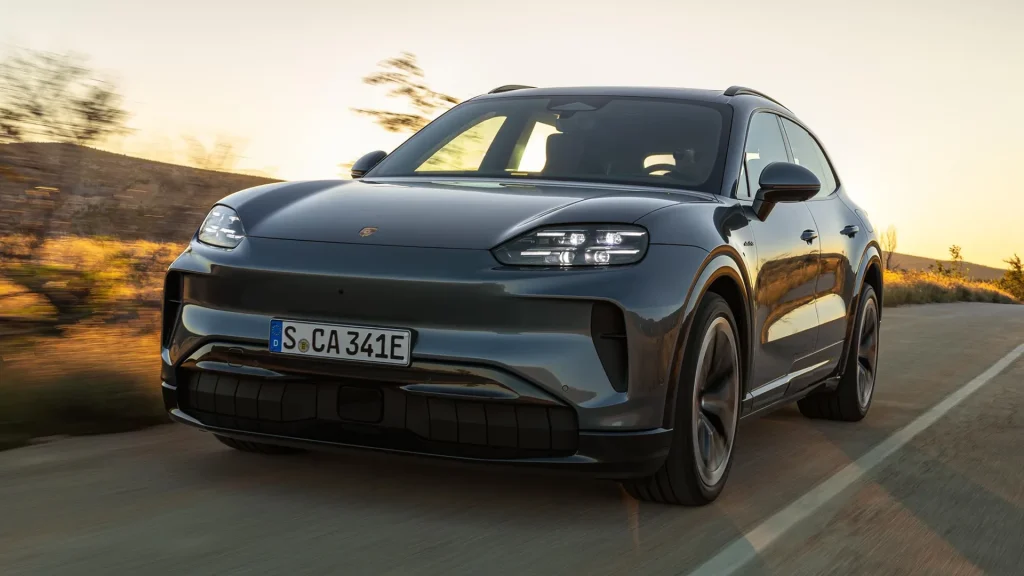
2. Porsche Cayenne Turbo Electric: 1,139 HP
A luxury SUV taking second place with 1,139 horsepower would have sounded unlikely only a few years ago. The 2027 Porsche Cayenne Turbo Electric achieves that figure through its dual-motor electric drivetrain, with the maximum available output delivered using Launch Control and overboost.
Porsche lists a standard output of 844 horsepower for the Turbo Electric, rising to 1,139 horsepower under the specified launch conditions. The distinction matters because the larger number is a temporary performance figure, not the vehicle’s continuous everyday output.
The performance figures are startling for a large luxury SUV. Porsche quotes a 0-to-60 mph time of 2.4 seconds with Launch Control and a top track speed of 162 mph when equipped with summer tires.
Those numbers put the electric version in territory usually occupied by dedicated performance cars. The power is delivered through all-wheel drive, with electric motors at both axles. This layout also allows the system to manage torque distribution quickly as grip changes.
There is more to the vehicle than acceleration. Porsche has developed the electric Cayenne around an 800-volt electrical architecture, supporting DC fast charging at up to 400 kW under suitable conditions.
The company says the battery can charge from 10 to 80 percent in less than 16 minutes when connected to a sufficiently powerful charger and under the required conditions. It also introduces optional inductive charging, allowing owners to charge by parking over a compatible floor plate.
The U.S. model starts at $163,000 before options, taxes, registration, and delivery-related charges, according to Porsche’s published pricing. That places it firmly in the premium performance-SUV category.
Buyers considering it should distinguish between the headline launch figure and the standard power rating while also considering charging access, tire costs, and the demands of a heavy, high-output electric vehicle.
Its ranking is based on the maximum manufacturer-quoted horsepower, not a claim that it will outperform every vehicle in every driving situation.
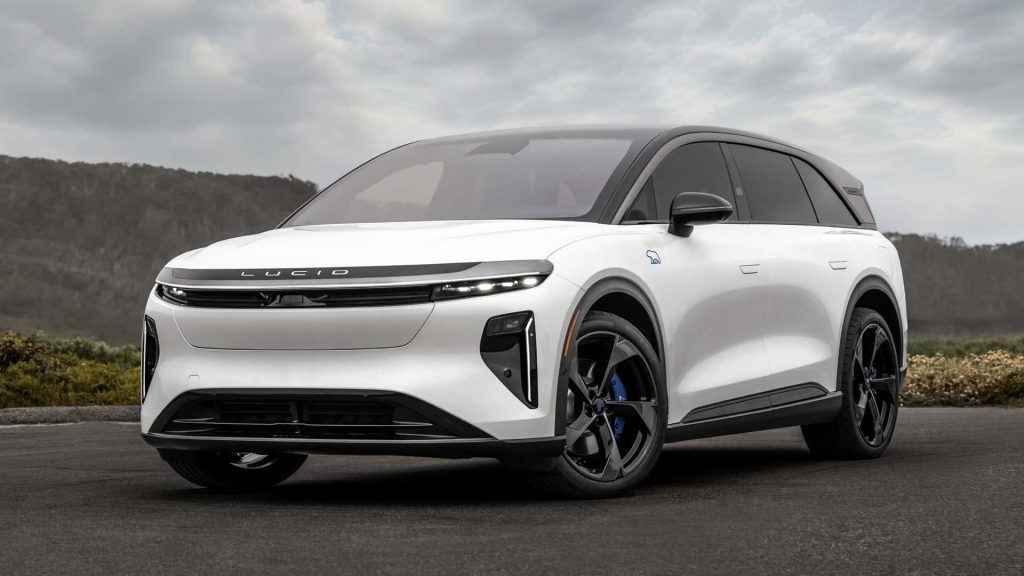
3. Lucid Gravity GT-S: 1,070 HP
Lucid’s most powerful Gravity variant brings supercar-level output to a three-row electric SUV. The 2027 Gravity GT-S is listed with 1,070 horsepower, making it one of the highest-output electric utility vehicles available in the U.S. market.
It sits above the Grand Touring version, which produces 828 horsepower, and the Touring model, rated at 560 horsepower. The GT-S is therefore not simply a cosmetic performance package. It represents a substantial increase in the power available from the same basic SUV platform.
Lucid quotes a 0-to-60-mph time of 3.1 seconds for the GT-S. That is an extraordinary result for a vehicle designed to carry up to seven adults. The company lists a projected driving range of 373 miles for this version, while the Grand Touring model has an EPA-estimated range of up to 450 miles.
This difference is worth noting because the GT-S is designed to deliver stronger performance, which comes at the expense of driving range. As a result, its projected range is shorter than that of the less powerful Grand Touring version.
The Gravity’s packaging is another reason its power deserves attention. Lucid lists seating for up to seven, a maximum towing capacity of 6,000 pounds, and an available cargo-friendly interior layout.
Its dimensions include a 198.2-inch body length and a 119.5-inch wheelbase. Those figures place it in the full-size family SUV conversation, rather than the compact performance crossover category.
Lucid also advertises the ability to add 200 miles of range in approximately 14 minutes for the GT-S under the company’s stated charging conditions. That is a charging-performance claim, not a guarantee that every public charger will deliver the same result. Charging speed depends on the station, battery temperature, state of charge, and other conditions.
The GT-S is the choice for buyers who want the strongest acceleration available in this lineup without giving up the basic usefulness of a three-row SUV. Its 1,070-horsepower rating earns third place, although customers who value maximum distance between charging stops may find the Grand Touring specification more suitable.
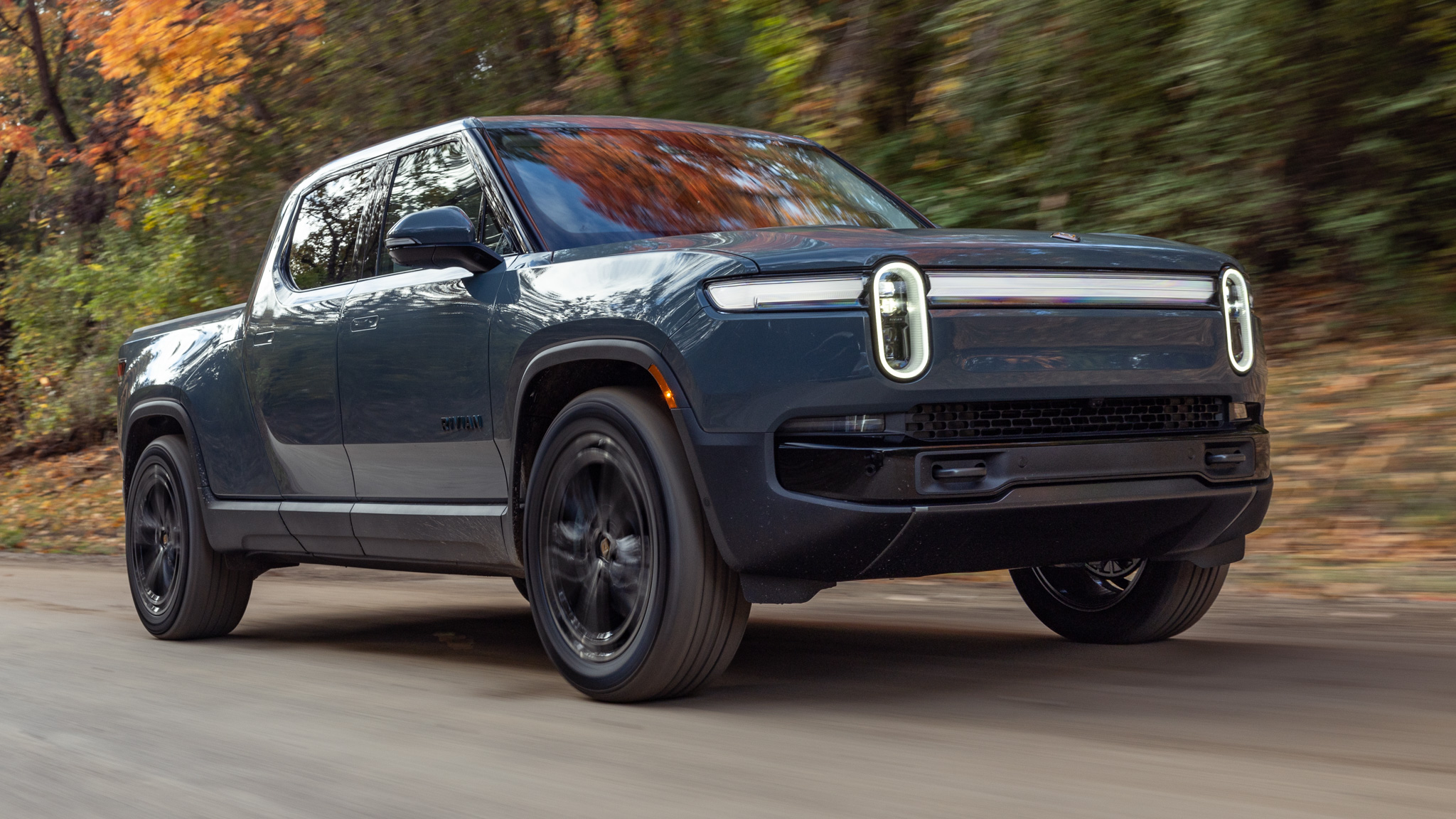
4. Rivian R1T Quad: 1,025 HP
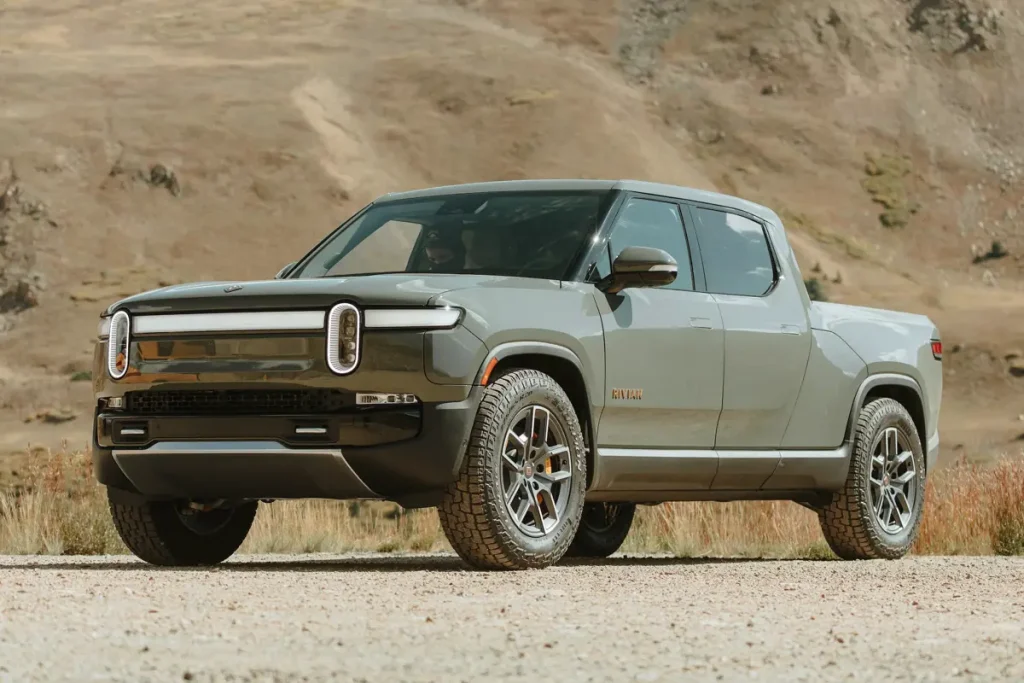
A pickup does not need a traditional high-displacement engine to deliver enormous power. The 2027 Rivian R1T Quad uses four electric motors, one at each wheel, to produce 1,025 horsepower and 1,198 lb-ft of torque.
Rivian positions this version at the top of its updated R1T range, above the three-motor Performance trim, which is rated at 850 horsepower. The Quad configuration is the clear choice for buyers who place maximum output at the top of their priorities.
The four-motor arrangement is especially interesting because it gives the truck independent control at each corner. Instead of relying on a conventional mechanical differential to distribute power, the control system can adjust motor output at individual wheels.
That creates opportunities for precise traction management on loose surfaces and helps the pickup put its substantial power down when accelerating. It is useful technology for a vehicle expected to handle both paved roads and challenging outdoor routes.
Rivian quotes a 0-to-60 mph time of as little as 2.5 seconds for the R1T Quad when Launch Mode is used. The company also gives a 10.5-second quarter-mile figure under that mode.
These are manufacturer performance claims, and results can vary with battery charge, surface conditions, tires, and temperature. The truck’s maximum EPA-estimated range is listed at up to 374 miles, depending on configuration.
The R1T also retains the practical features expected of an electric pickup. Its cargo bed, gear tunnel, and front storage compartment provide different ways to carry equipment, while the available towing setup makes it useful beyond commuting.
Maximum towing capacity and range depend on the specific configuration, battery, and equipment, so buyers should check the exact vehicle rather than assume every Quad has identical capability.
What separates this truck from a conventional high-horsepower pickup is the way its motors can manage traction. The output is impressive, but the four-motor layout is arguably the more important engineering story.
5. Rivian R1S Quad: 1,025 HP
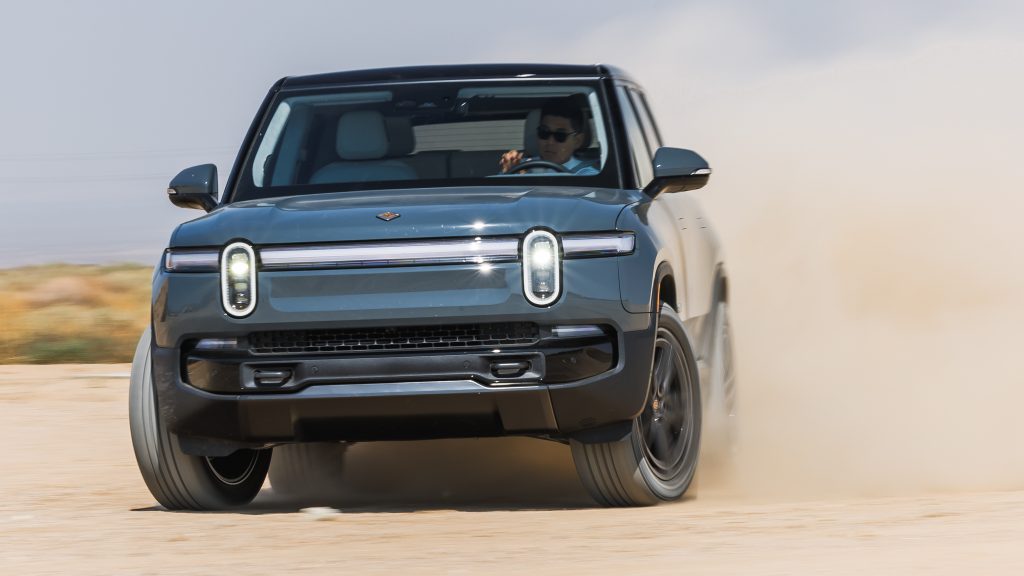
The R1S Quad shares its headline power figure with the R1T, but the two vehicles serve different purposes. In this case, 1,025 horsepower and 1,198 lb-ft of torque are delivered through four electric motors in a three-row SUV body.
Rivian lists the Quad as the top-performance version of the 2027 R1S range, with the same basic four-motor concept that makes its pickup sibling so powerful. The SUV’s shape, passenger accommodation, and cargo arrangement make that output particularly unusual.
Rivian’s published figures include a 0-to-60 mph time of as little as 2.5 seconds in Launch Mode for the Quad powertrain. The company also lists an EPA-estimated range of up to 374 miles for the Quad variants.
Those numbers should be read together. The vehicle can deliver extremely rapid acceleration, yet it is also designed to carry passengers and equipment over longer journeys. Actual range will depend on wheel and tire selection, driving conditions, speed, temperature and how much weight the vehicle carries.
The four-motor system offers an advantage beyond straight-line speed. Because each wheel has its own motor, the vehicle can control torque at each corner. This is valuable when the SUV encounters uneven ground, loose gravel or slippery surfaces.
Rivian’s software can adjust the power delivered to individual wheels, helping the vehicle maintain traction in conditions where a simpler drivetrain might struggle.
For families, the R1S offers a different kind of appeal from a two-row performance SUV. Its cabin is designed for multiple passengers, and Rivian’s 2027 update introduces available second-row captain’s chairs. The company also reorganized its R1 lineup around Premium, Performance and Quad trim levels, making the range easier to understand.
The reason it ranks just below the pickup is not a difference in horsepower. Both share the same published peak output. The R1S earns its own place because it is a separate SUV model, with three-row practicality and a different role for buyers who need passenger space alongside extreme electric performance.
6. GMC HUMMER EV SUV 3X: 830 HP
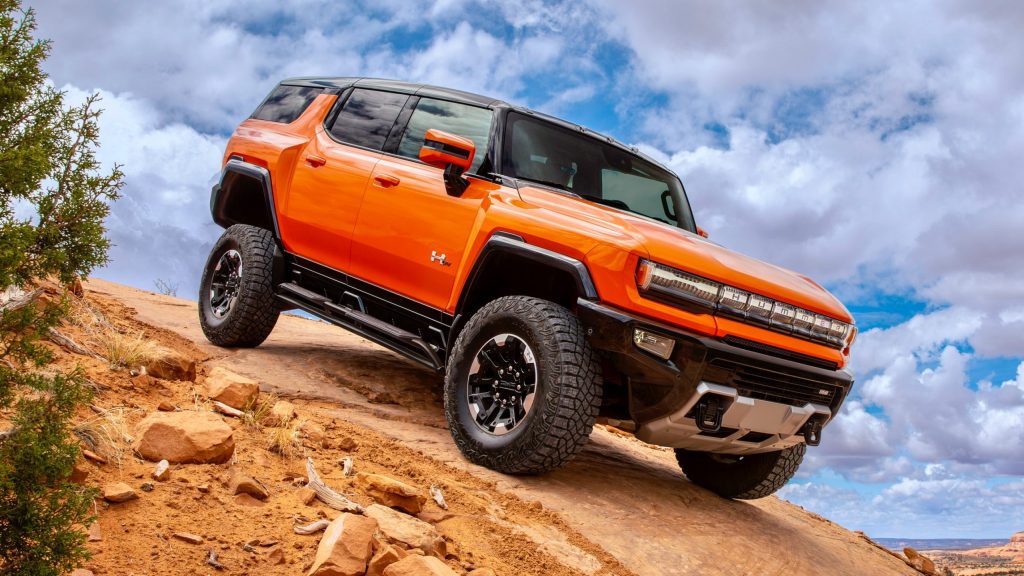
The 2026 GMC HUMMER EV SUV 3X delivers up to 830 horsepower from a three-motor electric drivetrain. That figure places it ahead of many performance-focused electric crossovers, while its design remains firmly rooted in off-road capability.
GMC estimates a maximum driving range of up to 310 miles for the 3X configuration. The less powerful 2X version is rated for up to 319 miles, illustrating how choosing the highest-output trim does not automatically provide the longest distance between charges.
The SUV’s three-motor setup is designed to provide strong acceleration and careful torque management across difficult terrain. GMC also offers its CrabWalk feature, which uses four-wheel steering to move the vehicle diagonally at low speeds.
That can be useful when navigating tight spaces on trails or maneuvering around obstacles. The available Extreme Off-Road Package adds equipment such as 35-inch mud-terrain tires, underbody skid plates and locking differentials, reinforcing the vehicle’s intended use beyond paved roads.
There is a trade-off to consider. The HUMMER EV SUV is large and heavy, and its off-road equipment can affect efficiency and driving range. Buyers who spend most of their time on highways may not need the most aggressive tire and suspension options.
Those who regularly travel on rough trails may find the additional hardware more relevant than the headline horsepower figure.
GMC’s published figures identify 830 horsepower as the maximum available output for the 3X. This is the manufacturer’s estimated rating, and it should not be confused with the lower output of the 2X model.
The SUV also comes with a 13.4-inch infotainment display, a Bose audio system and hands-free Super Cruise driver assistance technology, according to GMC’s U.S. product information.
Its position in this ranking reflects a combination of serious power and specialized capability. It is not the quickest vehicle here, nor does it offer the longest range, but it brings high output to a vehicle designed to handle demanding terrain and carry passengers in a distinctive full-size package.
7. GMC Sierra EV Denali Max Range: 760 HP
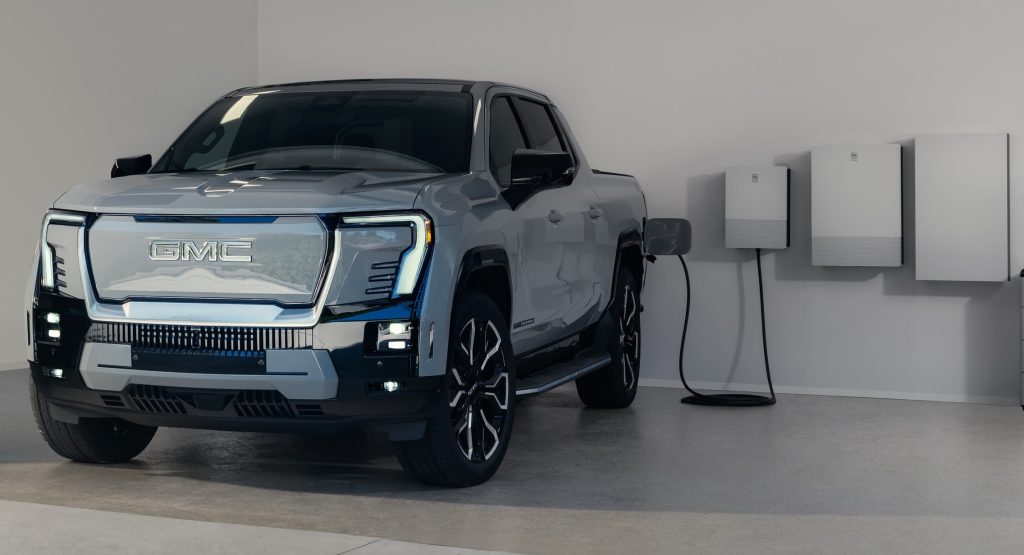
Luxury equipment and pickup capability come together in the 2026 GMC Sierra EV Denali Max Range, which can deliver up to 760 horsepower and 785 lb-ft of torque in Max Power mode. GMC lists the 760-horsepower figure for the Denali Max Range configuration, rather than every Sierra EV trim.
Lower versions have different power ratings, so the top figure should be tied to the correct battery and equipment combination.
The Sierra EV is also designed to cover substantial distances. GMC estimates up to 478 miles of range for the Max Range version, although the exact result depends on trim, wheel choice and other equipment.
That estimate gives the pickup an important advantage for drivers who need to travel longer distances between charging stops. It is still a manufacturer estimate, and towing, heavy payloads, cold weather and highway speeds can reduce real-world range.
One of the truck’s more practical features is the available MultiPro MidGate. It can expand the usable bed length to 10 feet, 10 inches when configured appropriately, making it easier to carry longer items that would not fit inside a conventional short bed.
The available eTrunk provides additional lockable storage at the front, while four-wheel steering and CrabWalk are offered to improve maneuverability.
The Denali specification adds a more premium cabin experience, but this is still a pickup intended to perform working duties. GMC lists a maximum available towing capacity of 12,500 pounds for the Sierra EV lineup.
That rating varies by configuration, and owners must account for passengers, cargo, trailer equipment and road conditions when towing.
The 760-horsepower output is available in Max Power mode, so it is not a constant figure that should be assumed under every driving condition. It places the Sierra EV among the most powerful electric pickups in this ranking, while its estimated range and flexible bed arrangement give it a broader purpose than acceleration alone.
8. Chevrolet Silverado EV LT Max: 760 HP
The 2026 Chevrolet Silverado EV LT Max delivers up to 760 horsepower with Wide Open Watts, matching the highest output figures among GM’s electric pickups. Chevrolet also lists up to 775 lb-ft of torque for the maximum-output configuration. These figures are specific to certain versions, as other battery and trim combinations produce less power.
Performance is impressive, but the Silverado EV also offers practical capabilities. Chevrolet says the Trail Boss can accelerate from 0 to 60 mph in under 4.5 seconds, although its maximum output is rated at 725 horsepower. Buyers should not confuse the Trail Boss specification with the LT Max’s 760-horsepower rating.
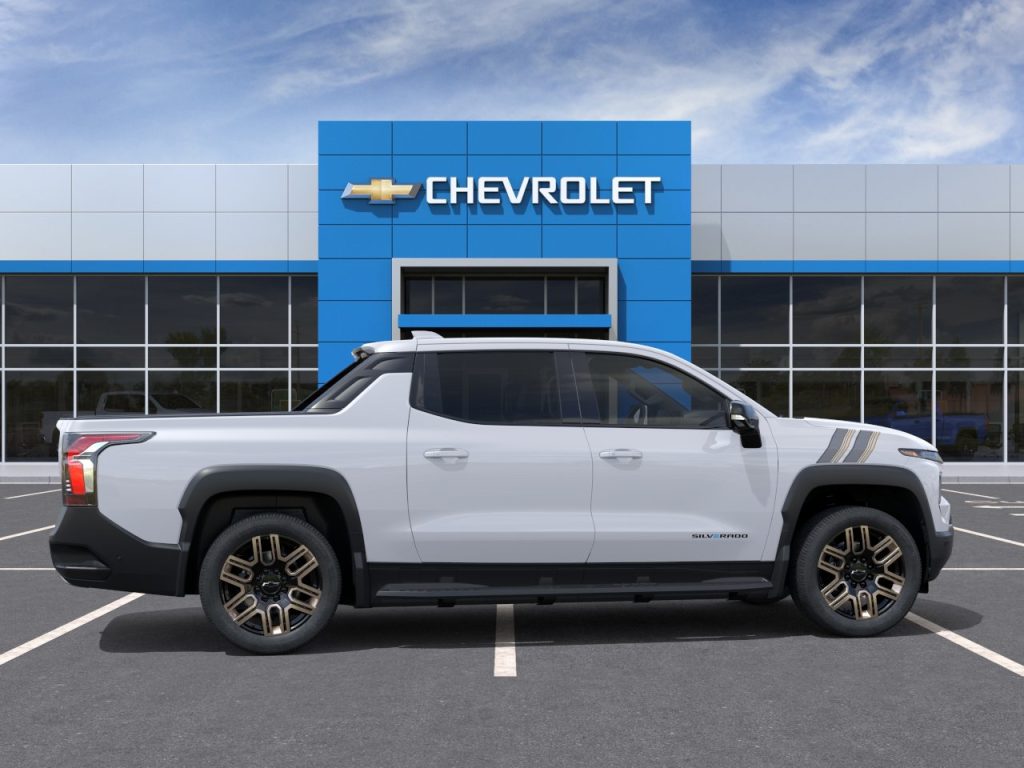
Range reaches an EPA-estimated 478 miles in certain configurations, while available features include up to 10.2 kW of off-board power, a Multi-Flex Midgate and maximum towing capacity of 12,500 pounds. With its combination of power, towing capability and flexible cargo space, the Silverado EV serves buyers who need more than straight-line speed.
9. Porsche Macan Turbo Electric: 630 HP
The 2027 Porsche Macan Turbo Electric combines compact SUV proportions with serious electric performance. It produces up to 630 horsepower with Launch Control and overboost, alongside 833 lb-ft of torque. Its 470-kW maximum output places it among the most powerful luxury electric SUVs in its class.
Porsche quotes a 0-to-60-mph time of 3.1 seconds and a top track speed of 162 mph with summer tires. Its dual-motor all-wheel-drive system delivers power to both axles, supporting acceleration and handling.
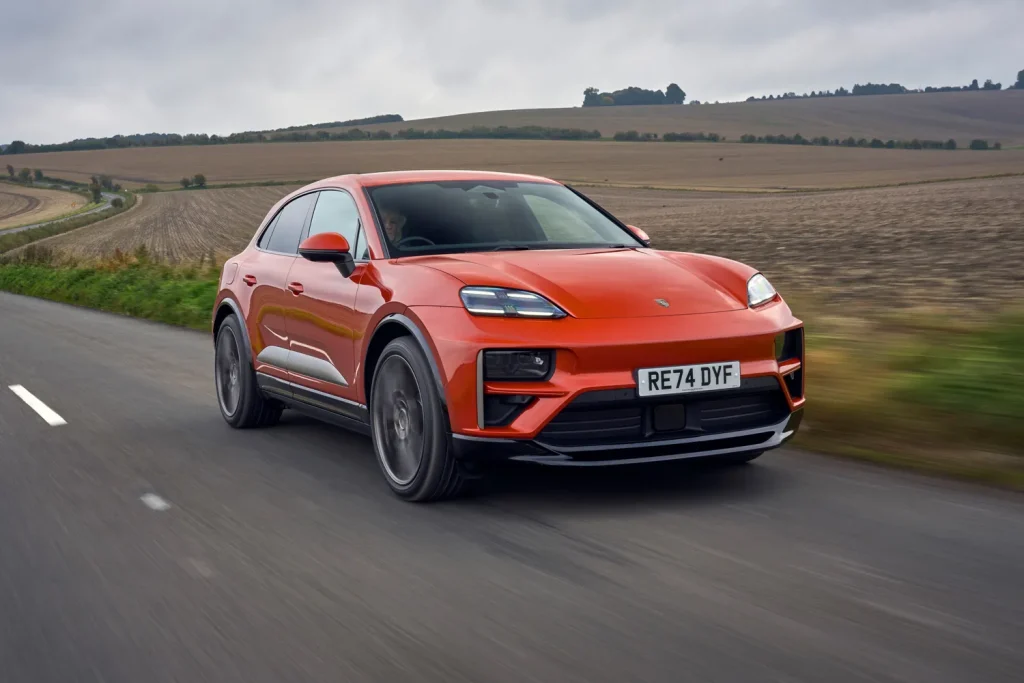
The 800-volt electrical architecture supports DC fast charging, with Porsche quoting approximately 21 minutes for a 10-to-80-percent charge under suitable conditions. The 2027 lineup also includes less powerful Macan Electric variants, so the 630-horsepower figure applies specifically to the Turbo.
Starting at $112,700 before options and additional charges, it targets buyers seeking high performance in a premium, relatively compact SUV.
10. Mercedes-Benz G 580 with EQ Technology: 579 HP
The 2027 Mercedes-Benz G 580 with EQ Technology delivers 579 horsepower and 859 lb-ft of torque through four permanently excited synchronous electric motors, with one motor positioned near each wheel. Unlike performance-focused electric SUVs, its drivetrain prioritizes traction and off-road control.
Mercedes-Benz quotes a 0-to-60-mph time of 4.6 seconds. Its individual motors can regulate power at each wheel, helping the SUV navigate challenging surfaces. The G-TURN function can also rotate the vehicle around its own axis under suitable off-road conditions.
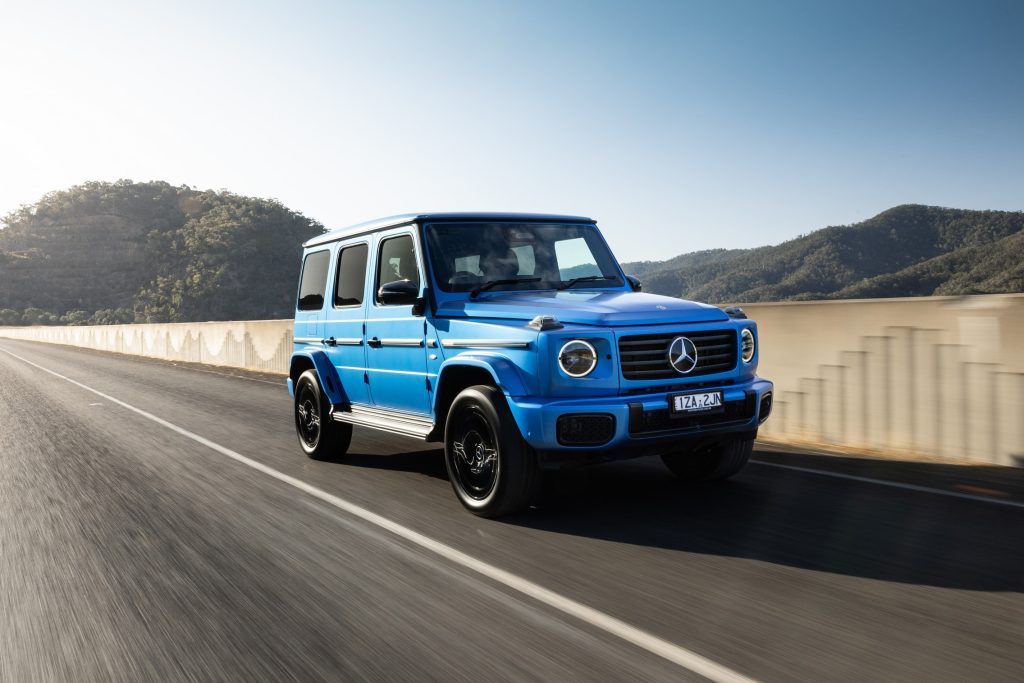
The G 580 features a 117-kWh battery and an EPA-estimated range of 249 miles. DC fast charging supports up to 200 kW, with a claimed 10-to-80-percent charging time of approximately 29 minutes.
Starting at $163,750, it is an expensive electric SUV, but its four-motor drivetrain, distinctive G-Class styling and specialized off-road abilities give it a character unlike conventional electric performance models.