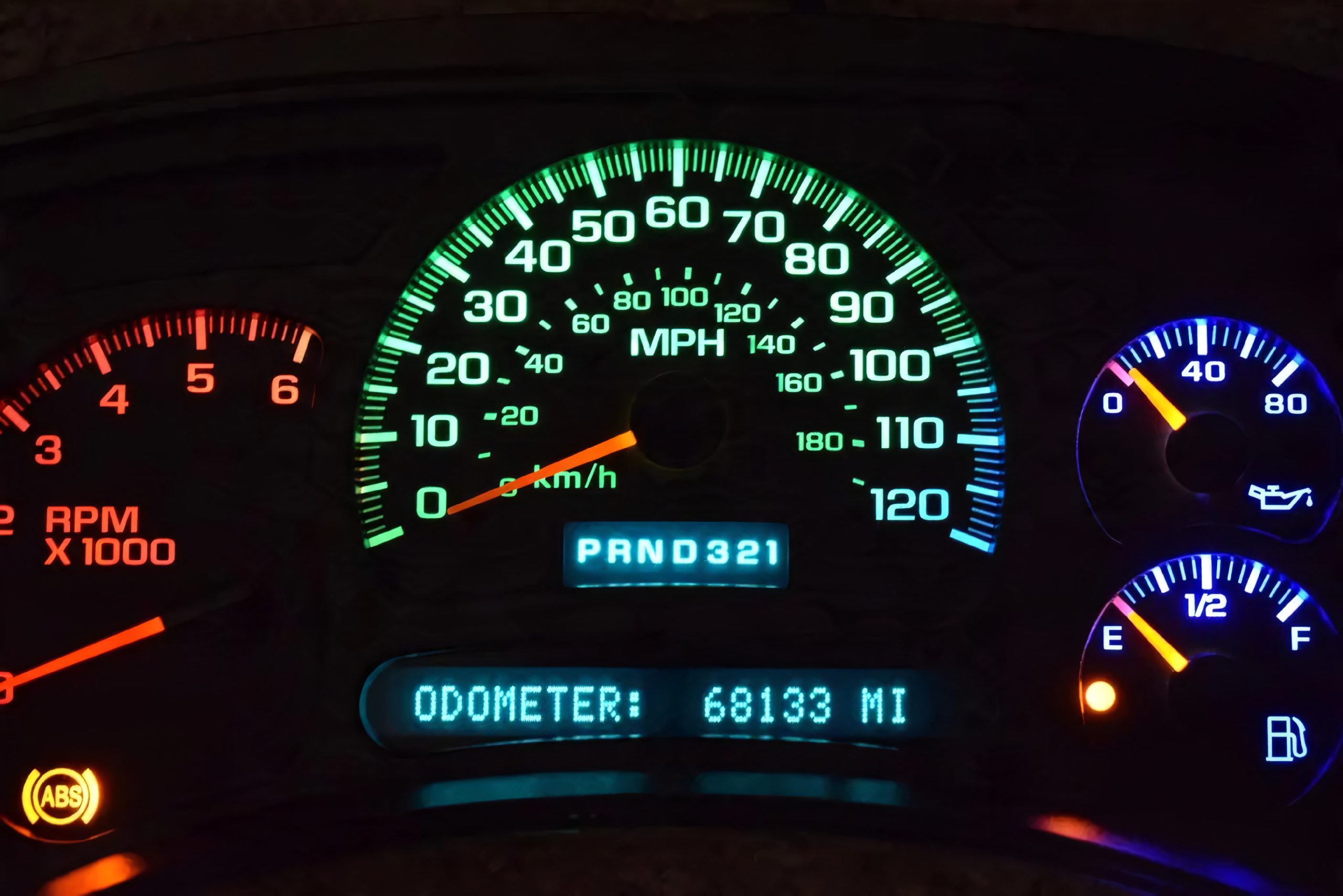
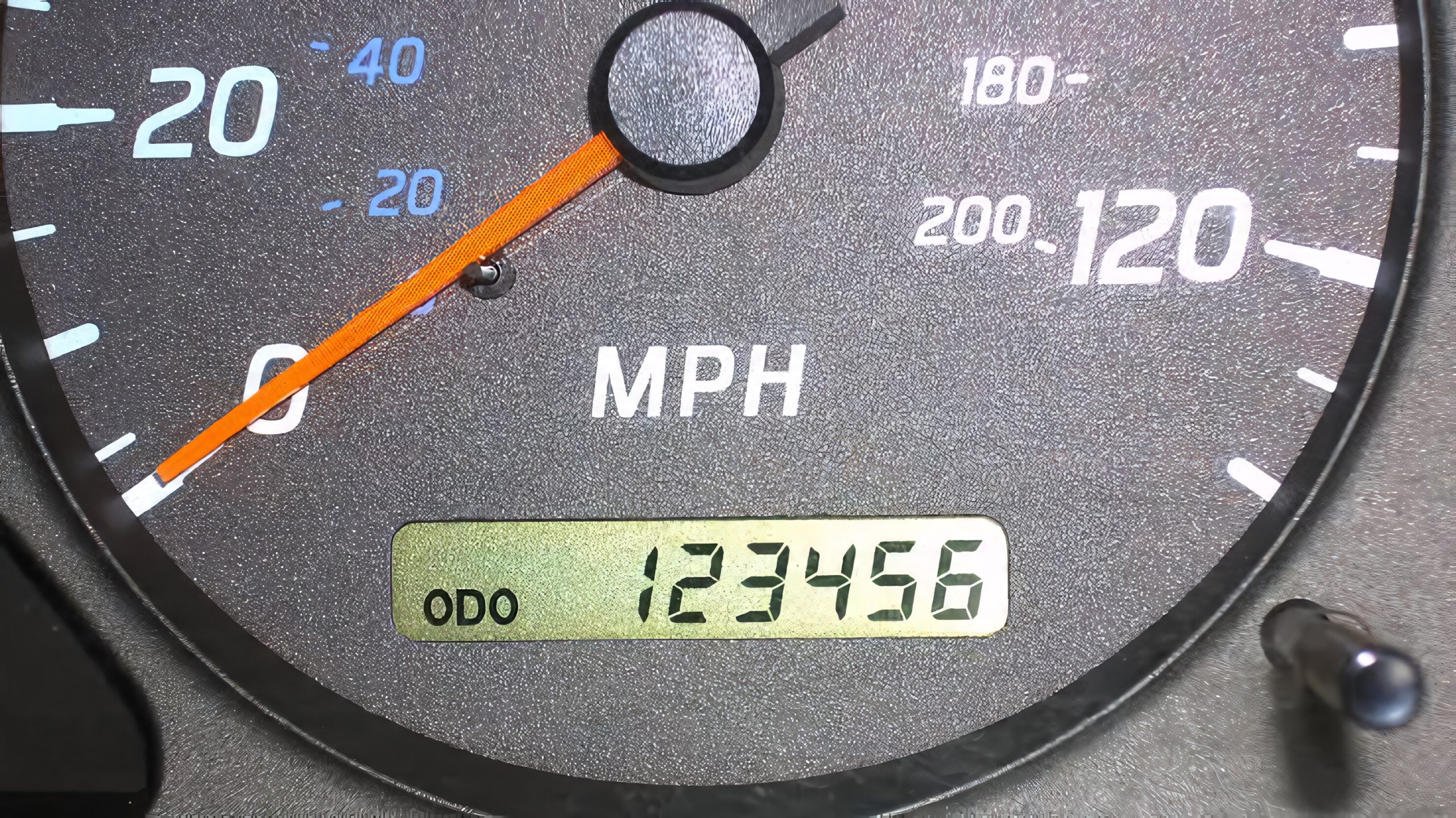
A used car with 62,000 miles on the dash and a price to match feels like a win. The paint shines, the engine starts clean, and the seller swears it was driven mostly on weekends. Then a mechanic puts it on a lift six months later and says the real number is closer to 140,000. That sinking feeling is expensive, and it’s more common than most buyers want to believe.
That gap is odometer fraud, and it’s still happening even though rolling back a mileage reading is a federal crime. Digital dashboards didn’t end the practice. They made it easier to hide, since a few keystrokes with the right tool can erase tens of thousands of miles. The good news is that a car can’t fake its entire past. Wear, paperwork, and electronic records tend to give the lie to it, and these eight signs will help you spot it.
1. The Wear Doesn’t Match the Mileage
Start with your hands and your eyes, because a car’s interior is the hardest thing to disguise. A vehicle with 50,000 miles shouldn’t look like it has lived a hard life, and a high-mileage one rarely looks fresh.
Check the driver’s seat first, especially the outer bolster you slide across every time you get in. Cracked leather, flattened foam, or shiny fabric at that spot suggests years of daily use. Then look at the steering wheel. A worn, glossy, or peeling rim doesn’t fit a car that supposedly covered 40,000 miles. Do the same with the shift knob, the pedal rubbers, and the door handles. Brake and clutch pedals that have lost their pattern are a classic giveaway.
Sellers know this, so some replace the obvious pieces. A brand-new steering wheel cover or a fresh set of pedal pads on an otherwise tired interior should raise your eyebrows, not lower them. When one part looks far newer than everything around it, ask why it was replaced. Most drivers put on roughly 12,000 miles a year, so if the car’s age and the odometer don’t line up with the condition of the cabin, trust the cabin.
2. The History Report Shows Higher Numbers Earlier
A vehicle history report is one of the cheapest ways to catch a rollback, and it works because mileage gets recorded in many places over a car’s life. Every oil change, state inspection, emissions test, dealer service visit, and title transfer can log a reading.
Pull a report from a service like Carfax or AutoCheck, and if you’re in the US, check the National Motor Vehicle Title Information System too. Then read the mileage timeline instead of skimming the summary. You’re looking for a reading that goes backward, or one that barely moves for years and then jumps. A car that logged 98,000 miles at an inspection in 2023 and shows 71,000 today has told on itself.
Keep in mind that a clean report doesn’t prove a clean car. Not every shop reports its visits, and a car that spent time in a region with loose record-keeping may have gaps. Treat the report as one piece of evidence, not a verdict. Ask for the paper maintenance records as well. Receipts, service stickers on the door jamb or windshield, and old inspection tags often carry mileage that the databases missed.
3. The Title and Paperwork Tell an Odd Story
Paperwork errors are small, and they’re easy to wave off. Don’t. A title is a legal document that records mileage at each transfer, and the details can reveal a lot.
Compare the odometer reading printed on the title to what’s on the dash. Look for a brand such as “not actual mileage” or “exceeds mechanical limits,” which means the true number isn’t known. Then study the transfer history.

Several owners in a short period, or a title that passed through multiple states in quick succession, deserves a closer look, because that’s a known tactic for muddying a car’s record. A duplicate title issued shortly before the sale is another flag, especially if the seller can’t explain why the original is gone.
In the US, sellers must provide a written mileage disclosure when they transfer a title, and the buyer signs it. Read it carefully before you do. If anything looks altered, smudged, or inconsistent, walk away. Check that the name on the title matches the seller’s ID, too. A seller who isn’t on the title is a separate problem, but it often travels with this one.
4. The Dashboard Shows Signs of Tampering
On older cars with mechanical odometers, the old-school method was to disconnect the cable and spin the numbers back by hand, and that left physical marks. On modern cars, the tampering usually involves opening the instrument cluster, so look for evidence that someone has been in there.
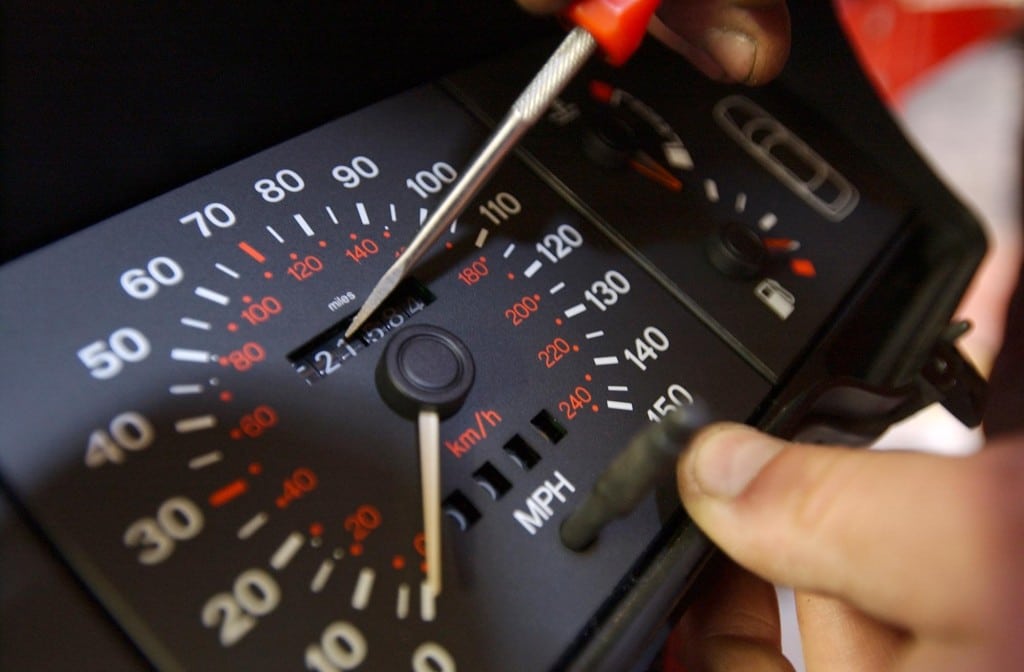
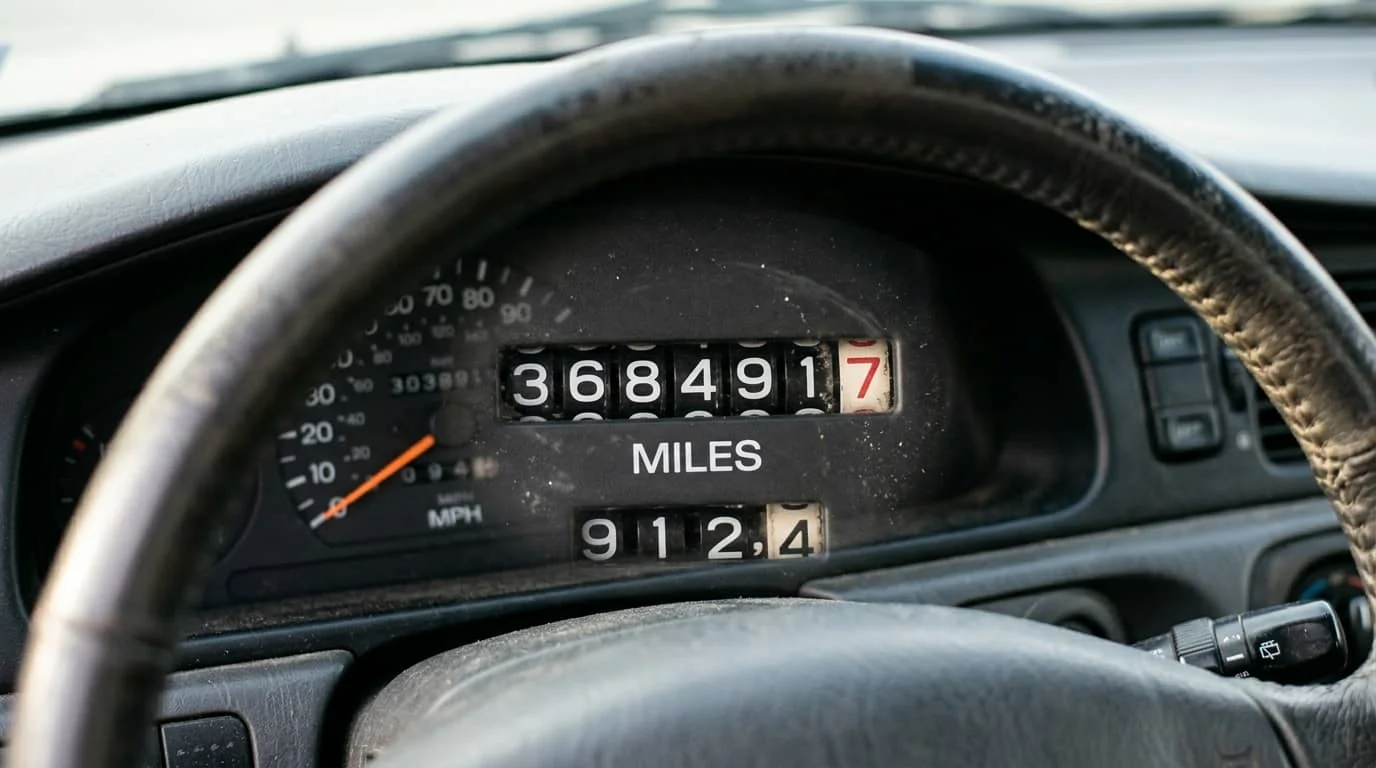
Study the area around the cluster. Scratches, tool marks, or chips in the trim, loose or mismatched screws, and uneven gaps can all mean the dash has been taken apart. Fingerprints or dust trapped inside the clear plastic lens are a bad sign. On a mechanical odometer, check that the digits line up evenly. Numbers that sit crooked, or one that’s slightly out of line with its neighbors, can mean the wheels were turned by hand.
None of this is proof on its own. Clusters get opened for legitimate repairs all the time. But if the dash looks disturbed, ask for the reason and for the paperwork that backs it up. A seller with an honest explanation usually has a receipt, and one without usually has a story.
5. The Instrument Cluster Was Replaced With No Explanation
Replacing a failed cluster is a normal repair, and shops are supposed to document it. The new unit is meant to be programmed to match the old mileage, and in many places a sticker has to go on the door jamb noting the change. The problem comes when the swap happens quietly and the mileage on the new unit is conveniently lower.
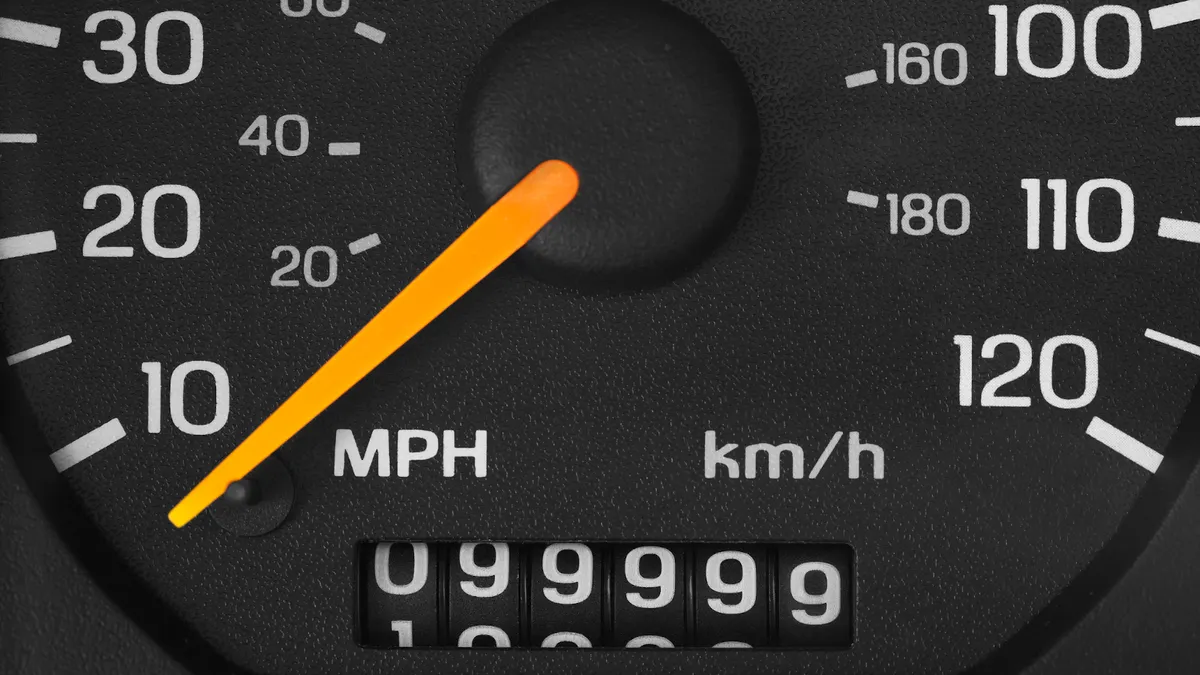
Look for a service sticker on the driver’s door jamb that notes a cluster replacement and the old mileage. Check whether the history report or the shop records mention it. If the car shows an odd mileage jump or a gap in its records around the time the cluster was changed, ask directly.
Some cars also give hints through how the dash behaves. Warning lights that don’t all come on during the startup self-check, a display that flickers, or fonts and graphics that look slightly different from what you’d expect for that model can suggest a non-original or modified unit. Compare it to photos of the same model online if you aren’t sure. A cluster swap can be completely innocent, but it should always come with a paper trail.
6. Other Computers in the Car Disagree
Here’s a check most buyers never think about. On many modern cars, the mileage isn’t stored in just one place. The engine computer, transmission module, ABS unit, and infotainment system may each keep their own record, and they don’t always get updated when someone tampers with the dash.
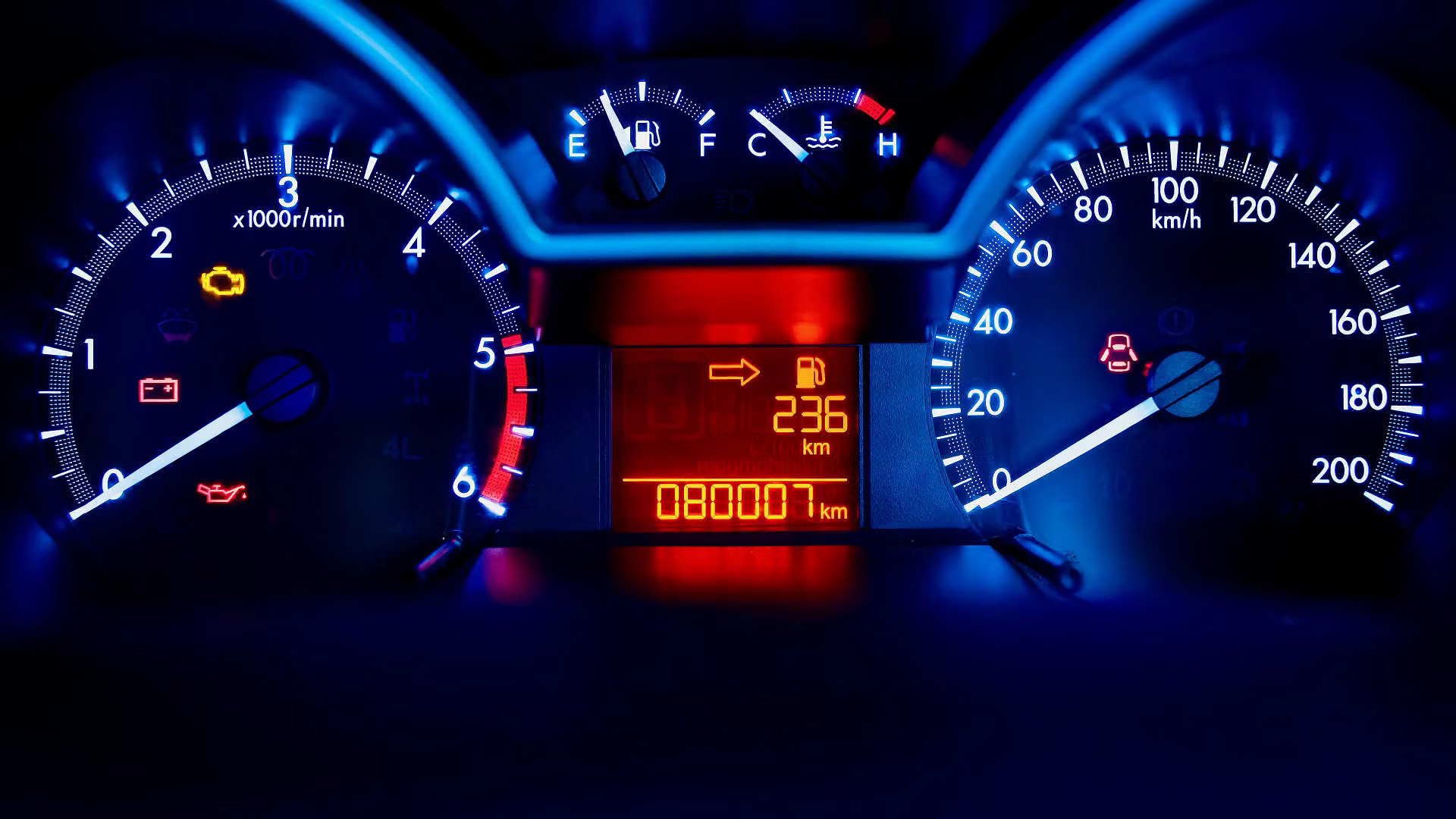
A mechanic or dealer with the right scan tool can read those modules and compare them against the displayed odometer. If the engine computer shows 130,000 miles and the dash shows 58,000, you’ve found your answer. Not every make stores mileage this way, and how easily it can be read varies by manufacturer, so ask the shop what’s possible for the specific car you’re looking at.
Some dealers can also pull a car’s service history straight from the manufacturer’s database using the VIN. That record covers every authorized service visit, no matter who owned the car at the time. It’s a quick request and it can save you thousands. If a seller won’t allow either check, that refusal says something too.
7. The Undercarriage and Engine Bay Tell a Different Story
Mileage leaves marks in places that are hard to clean up, and the parts underneath a car age on their own schedule. This is where an inspection pays for itself.
Get the car on a lift, or at least look underneath with a good flashlight. Heavy rust on the frame or suspension parts, worn or cracked rubber bushings, and sagging springs point to years of driving, not a gentle 40,000 miles.
Look at the brake rotors for deep grooves or a thick lip along the edge. Check the engine bay for oil seepage, grimy buildup, and brittle hoses and wiring. An engine bay that’s been pressure washed to a shine, paired with a worn interior, is its own kind of red flag.
Tires and glass can help too. If a car claims low mileage, the tires should be reasonably fresh or at least match what you’d expect for its age. Mismatched brands, uneven wear, or a set of cheap tires on a supposedly well-kept car can hint at a different past. And look at the windshield. Dozens of tiny stone chips across the glass and the hood suggest lots of highway miles, which doesn’t fit a story about a short commute.
8. The Seller and the Deal Feel Wrong
Sometimes the most useful evidence isn’t on the car at all. It’s in how the sale is being handled.
Price is the first clue. A car priced well below similar models in the same condition, with low mileage as the explanation, deserves caution. Real bargains exist, but they’re rarer than sellers imply. Then watch the behavior. Is the seller dodging questions about the car’s history, pushing for a fast sale, or insisting on cash?

Do they claim the service records were lost, or that the previous owner handled everything? Are they reluctant to let you take the car to an independent mechanic? That last one matters most. A seller with nothing to hide almost never says no to an inspection.
Pay attention to where the car came from, too. Vehicles bought at auction and flipped quickly, or sold by someone who isn’t the listed owner, deserve extra scrutiny. If the story keeps changing or the details don’t add up, trust the feeling and walk away.
No single sign proves a rollback, but several together paint a clear picture, and a couple hundred dollars on an independent inspection is little money next to overpaying for a car worth thousands less than the sticker says.