
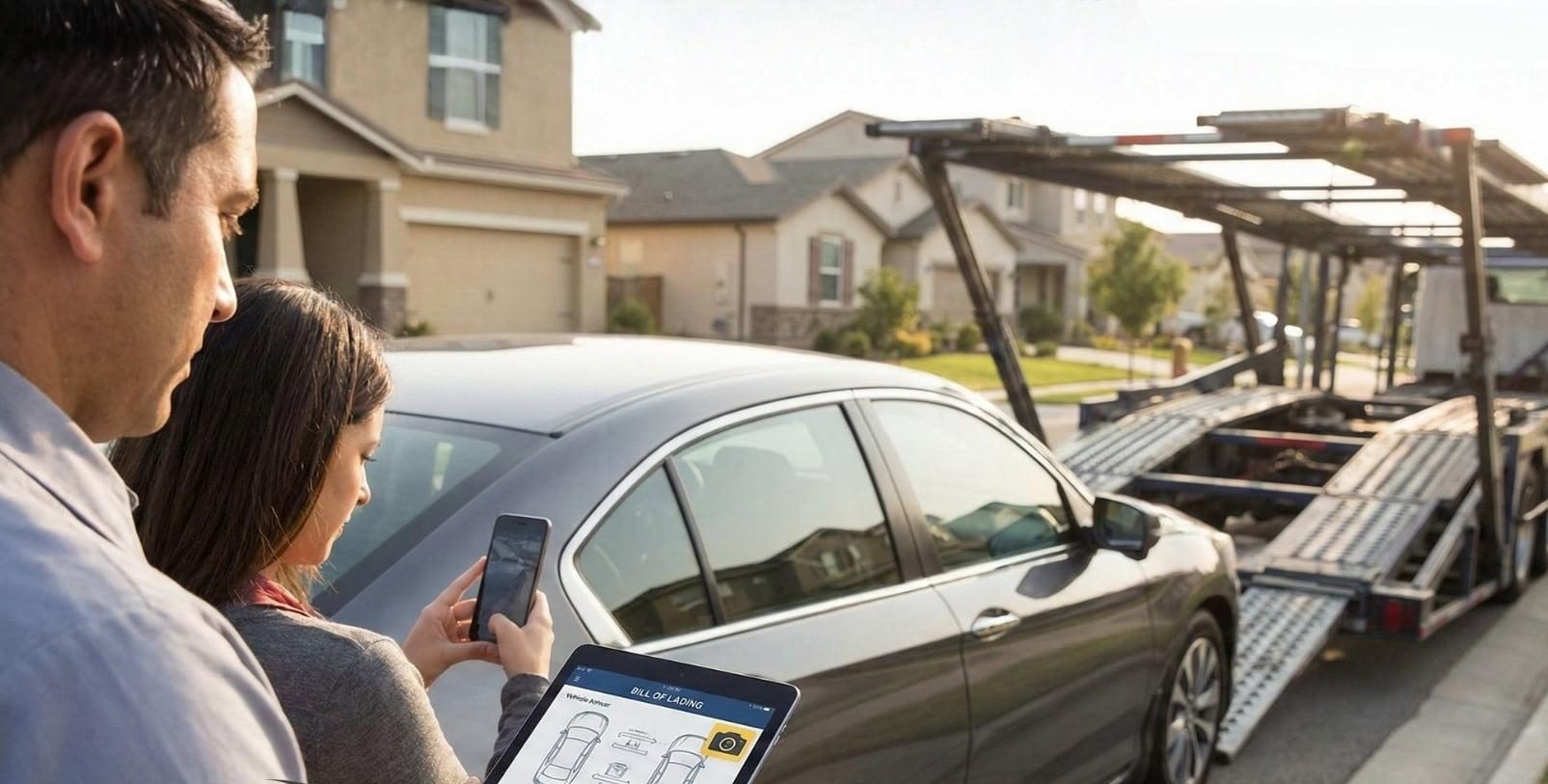
Buying a used car online can save time and help shoppers compare prices, but it also creates opportunities for criminals to impersonate sellers, dealerships, and vehicle owners. Fake listings, copied dealership websites, fraudulent titles, and suspicious payment requests can leave buyers without a car or their money.
The FBI’s Internet Crime Complaint Center (IC3) received 1,008,597 complaints reporting $20.877 billion in losses during 2025, compared with 859,532 complaints and $16.6 billion in 2024. These figures cover internet crime broadly, not vehicle scams specifically.
1. Fake Listings for Cars the Seller Does Not Own
One of the most common long-running scams in online car sales involves criminals advertising vehicles they do not actually own. To make the listing appear legitimate, they often steal photos from genuine advertisements, auction platforms, or other sellers’ social media accounts.
The price is often unusually attractive, creating pressure to contact the seller before another buyer supposedly takes the deal.
After receiving an inquiry, the scammer may claim to be working out of state, deployed overseas, going through a divorce, or unable to meet because of a sudden personal emergency.
They may offer to arrange delivery and promise that the buyer can inspect the vehicle after making an initial payment. In reality, the car may not exist in the seller’s possession at all.
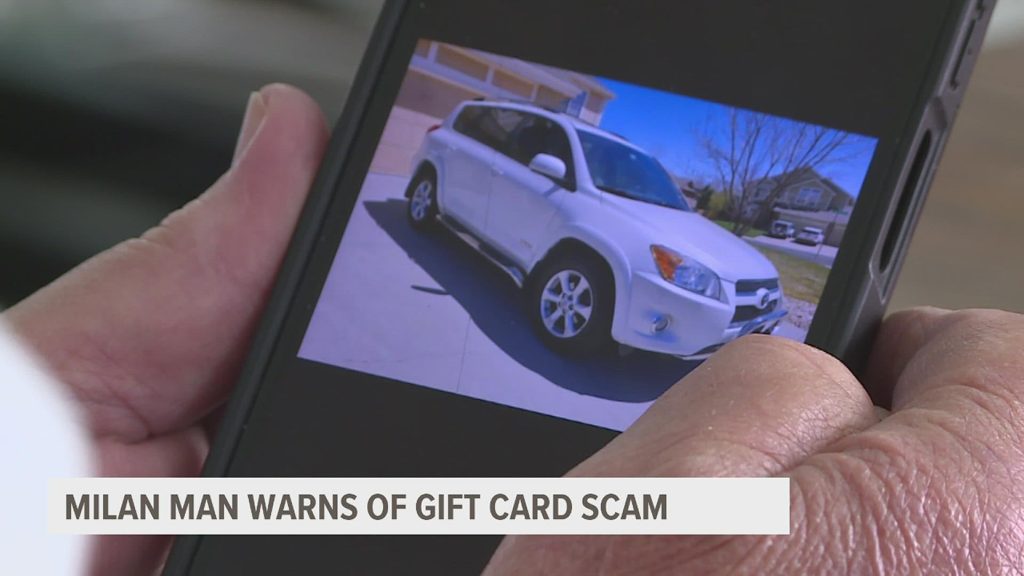
The Federal Trade Commission warns buyers about online vehicle sellers who refuse to meet in person, prevent an independent inspection, rush the transaction, or demand payment by wire transfer or gift card. These are major warning signs, not ordinary steps in a safe private sale.
Never send a deposit simply because the seller has supplied convincing photographs or a copy of a supposed title. Ask to see the vehicle in person, compare its VIN with the paperwork, and arrange an independent inspection.
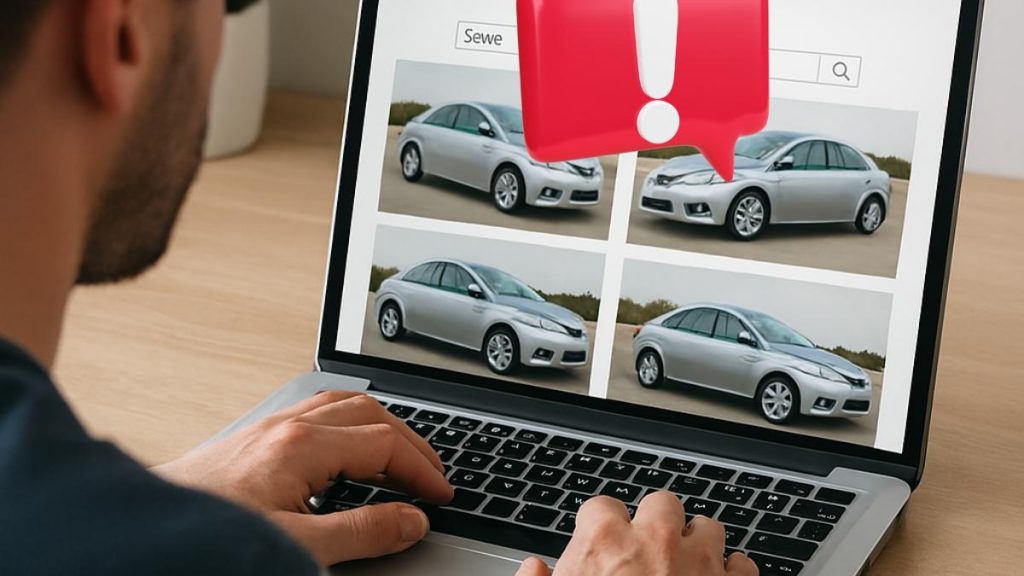
If distance makes a visit difficult, hire a legitimate local inspection service that you choose yourself. Do not use a company selected exclusively by the seller.
A genuine seller should be willing to establish control of the vehicle and complete the transaction transparently. If every conversation leads back to an upfront payment, stop communicating and report the listing to the marketplace.
2. Fake Dealership Websites Copying Real Businesses
A professional-looking dealership website is not proof that the business is genuine. Criminals increasingly create fake websites that imitate established U.S. dealerships, copying their logos, vehicle photographs, inventory descriptions, and even customer testimonials.
A shopper may believe they are dealing directly with a reputable dealer when the person answering emails or messages has no connection to that business.
The FTC issued a consumer alert in September 2026 describing dealership impersonation scams. It explains that criminals can use artificial intelligence to reproduce dealership websites and listings, then persuade buyers to send money for vehicles that the real dealership never offered for sale.
Some fake sites advertise rare or hard-to-find vehicles to make the offer particularly tempting.
The safest check is to contact the dealership through a phone number or address independently obtained from a trusted source, not through the suspicious listing.
Ask the business to confirm the vehicle’s stock number, VIN, advertised price, and whether the person communicating with you works there. If the real dealership has no record of the vehicle or sale, walk away.
The FTC also recommends searching the dealership’s name alongside terms such as “scam,” “review,” or “complaint.” Negative results deserve attention, although a lack of complaints does not establish that a website is authentic.
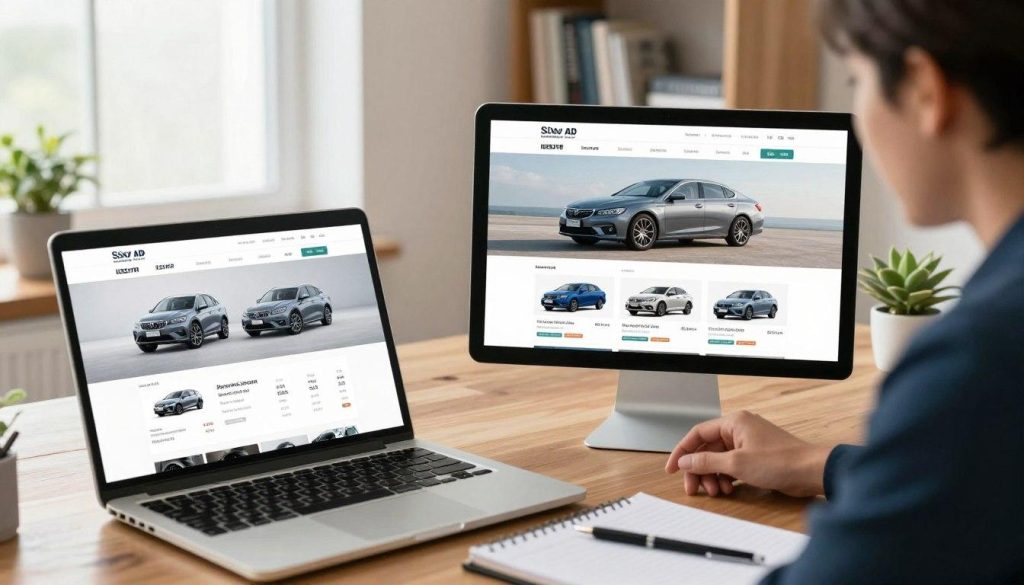
Scammers can impersonate a legitimate business with a strong reputation, so verify the actual domain and contact details carefully.
Never wire money simply because a website looks polished or claims a vehicle will be reserved after payment. Visit the dealership when possible, inspect the car, and independently confirm the transaction before sending funds.
3. Fake Shipping or Vehicle Transportation Charges
A car advertisement can appear genuine at first, only for the seller to request an additional payment for shipping or transportation. The scam typically follows a predictable pattern. The vehicle is advertised at an appealing price, the seller claims to be based in another location, and the buyer is asked to pay upfront before delivery can be arranged.
The seller may even provide a convincing-looking invoice, tracking number, or supposed transport-company details.
The danger is that the vehicle may not exist, or the person advertising it may have no authority to sell it. Once the buyer sends money for transportation, the scammer may disappear or demand additional payments for insurance, storage, customs, or delivery release.
The Federal Trade Commission specifically warns used-car shoppers about sellers who demand extra shipping or transportation money after an online sale has been discussed. It also advises buyers to avoid sellers who refuse an in-person inspection or insist on payment through wire transfers or gift cards.
A genuine vehicle shipment should involve an identifiable transportation company, a written agreement, clear pickup and delivery details, and independently verifiable contact information. Do not rely on a phone number or website supplied only by the seller. Find the carrier independently and confirm that it has actually accepted the vehicle for transport.
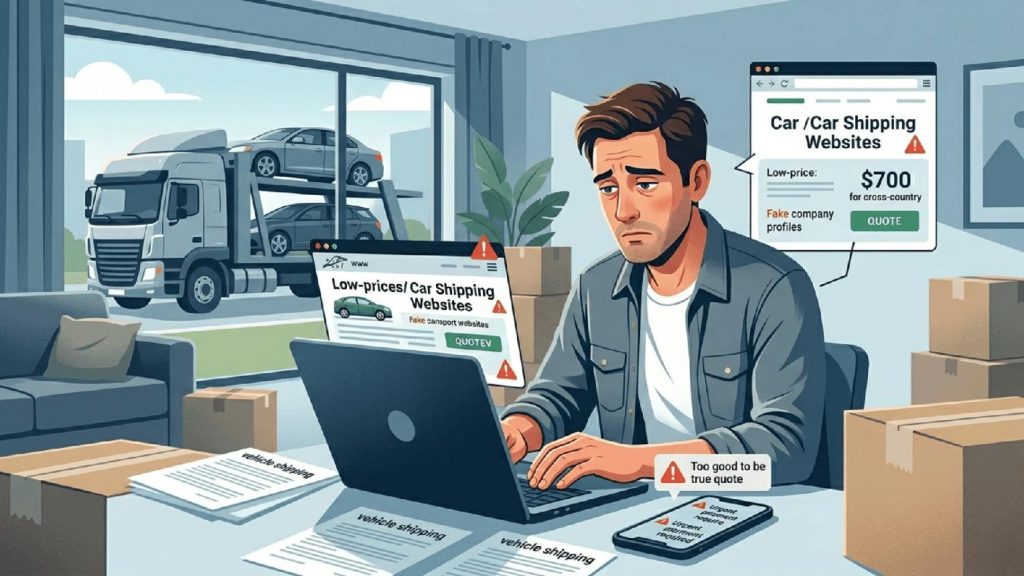
Be especially cautious if the seller says payment must be sent to a special holding account or claims that a well-known marketplace guarantees the transaction. Contact the platform directly through its official website to verify any buyer-protection arrangement. Never assume that an invoice carrying a familiar logo is authentic.
Before paying for delivery, verify the seller’s identity, inspect the vehicle through an independent professional, and confirm ownership documents. If transportation charges keep appearing after you have agreed on a price, stop the transaction rather than chasing the next payment demand.
4. Fake Escrow Services and False Buyer-Protection Programs
Escrow services are designed to hold money until agreed transaction conditions are met. That can sound reassuring when buying a vehicle from someone in another state. Unfortunately, scammers exploit the idea by creating fake escrow websites or sending counterfeit instructions that imitate a legitimate payment-protection service.
The seller may claim that the transaction is protected by a familiar marketplace, an online auction company, or an independent escrow provider. The buyer receives a professional-looking email explaining how to transfer funds.
Once the money reaches an account controlled by the criminal, the supposed protection disappears. The website may stop working, customer-service numbers may go unanswered, and the advertised vehicle may never arrive.
The FTC has documented online car-sale scams in which criminals falsely claim that a transaction is covered by a well-known retailer’s buyer-protection program. It warns consumers not to trust payment instructions simply because they appear to come from a recognizable company.
If you choose to use escrow, research the provider independently before sending money. Type its verified web address yourself rather than following a link supplied by the seller.
Contact the company using independently sourced details and ask whether it is handling that specific vehicle transaction. Confirm the legal business name, payment recipient, terms, refund conditions, and release requirements.
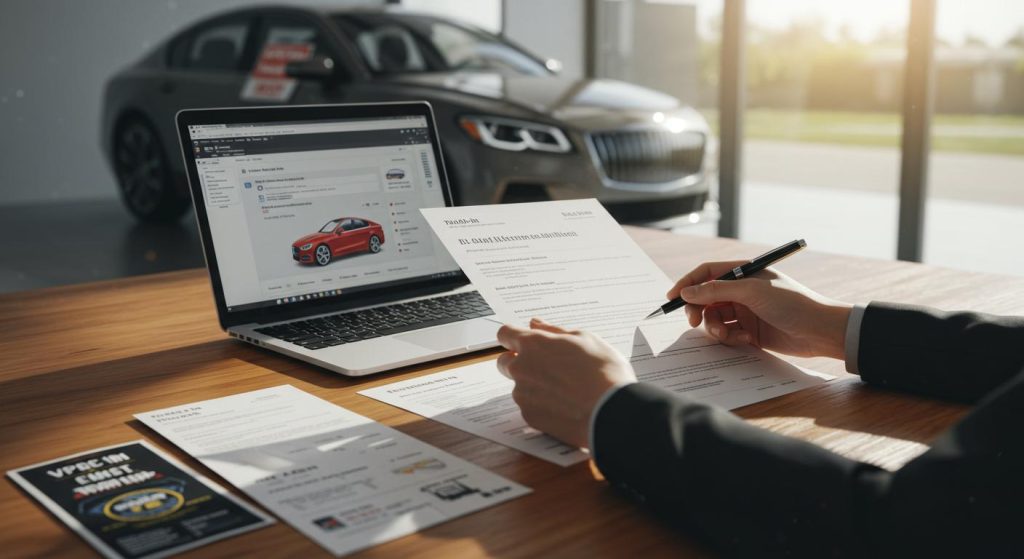
Do not treat a seller’s screenshot, email, or PDF as proof that an escrow account exists. Scammers can copy logos and create convincing documents. A legitimate service should be independently verifiable and should clearly explain how funds are protected.
If the seller insists that you use only a particular unfamiliar escrow website, refuses an in-person inspection, or pressures you to pay immediately, walk away. A genuine seller should not need to manufacture urgency or invent protection arrangements to complete a vehicle sale.
5. VIN Cloning and Stolen Vehicles With Fake Identity Numbers
A vehicle can look legitimate, have matching paperwork, and still be stolen. One reason is VIN cloning, a fraud in which criminals copy the Vehicle Identification Number from a legally registered vehicle and use it to disguise another vehicle, often one that has been stolen. The cloned car may then be advertised online with convincing photographs and documents.
The National Insurance Crime Bureau (NICB) explains that criminals can copy a legitimate VIN, create counterfeit identification labels and ownership documents, and attach them to a stolen vehicle of the same make and model. This can make the vehicle appear to have a legitimate identity during a casual inspection.
A documented warning sign is inconsistency between VIN locations. Check the number visible through the windshield against the VIN on the driver’s door jamb label, title, and registration documents.
Look for damaged labels, unusual fasteners, signs of tampering, or paperwork that appears altered. A mismatch is a reason to stop the transaction and contact the appropriate authorities.
NICB offers a free VINCheck service that can identify certain vehicles reported stolen but not recovered, as well as salvage or flood-damaged vehicles reported by participating insurance companies. However, it is not a complete vehicle-history database and cannot guarantee that a vehicle is legitimate.
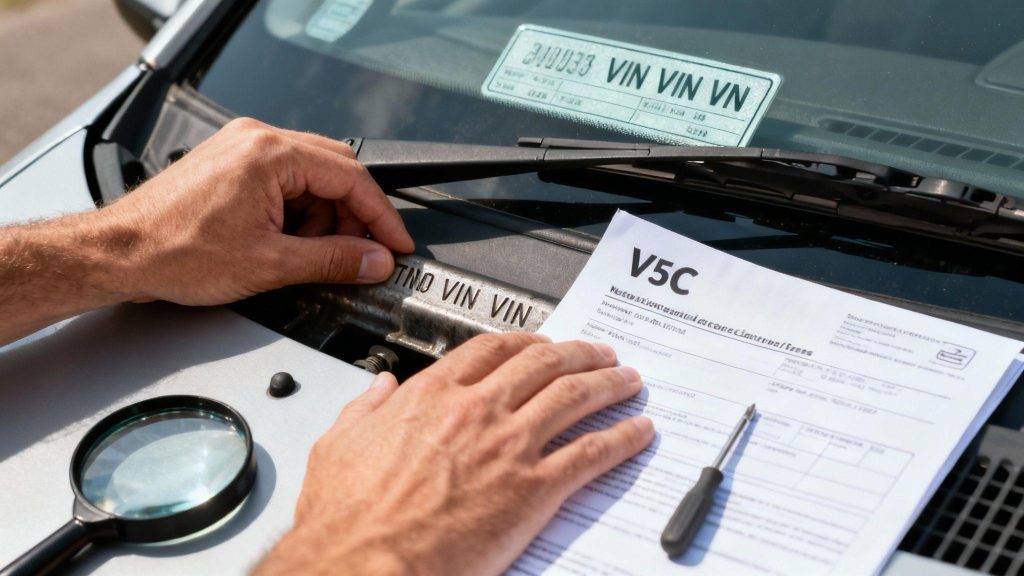
Do not rely on a single online report. Check the title with the relevant state motor vehicle agency, obtain a vehicle history report, and arrange an independent inspection. If ownership records or identification numbers raise questions, do not hand over money until the issue has been resolved through official channels.
A cloned vehicle can be confiscated and returned to its rightful owner or insurer if the fraud is discovered. That means an innocent buyer can lose both the car and the purchase money.
6. Odometer Rollback Hidden Behind an Attractive Listing
A used car advertised with unusually low mileage can attract attention immediately, particularly when its asking price is close to the market value of vehicles with much higher mileage. But an attractive odometer reading does not always tell the full story.
Some criminals alter mileage records to make a vehicle appear less used, potentially increasing its resale value.
The National Highway Traffic Safety Administration estimates that more than 450,000 vehicles are sold each year in the United States with false odometer readings. It also estimates that odometer fraud costs consumers approximately $1.06 billion annually.
These figures demonstrate that mileage manipulation is a significant consumer problem, not simply an occasional dishonest listing.
Before buying, compare the odometer reading with previous service invoices, inspection records, title documents, and available vehicle-history information.
Look for mileage entries that suddenly decrease or remain suspiciously unchanged over several years. Maintenance stickers inside the windshield or door frame can provide additional clues, although they should not replace official records.
Physical condition matters too. Heavy wear on the driver’s seat, steering wheel, brake pedal, and other frequently used controls may seem inconsistent with a very low mileage claim. These signs are not proof by themselves, since parts can be replaced, but they deserve further investigation.
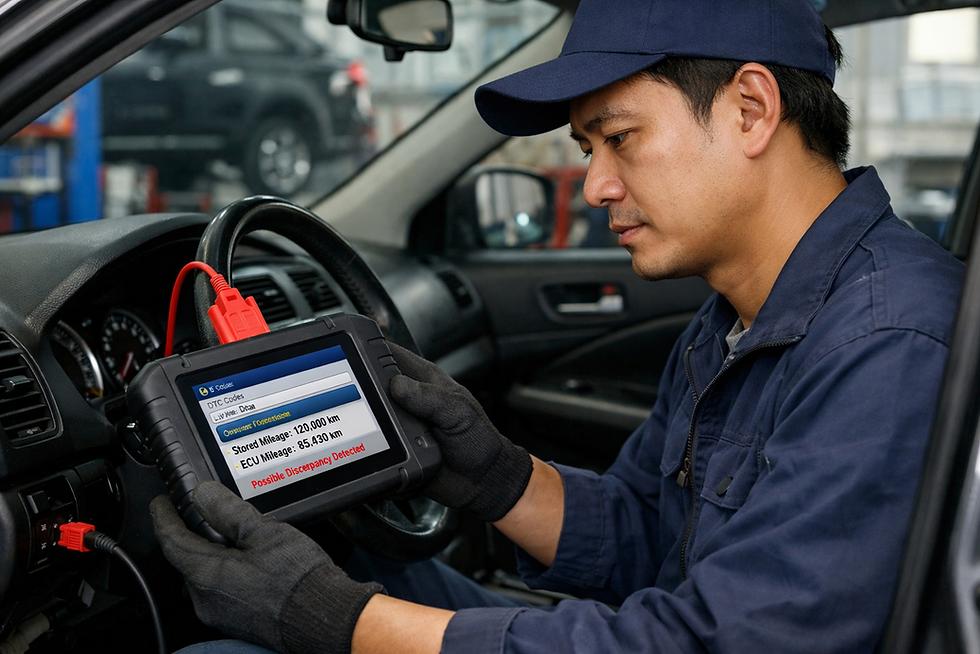
Digital odometers are not immune to manipulation. NHTSA notes that electronic mileage displays can be difficult to assess visually, making documentary checks particularly important.
Federal law generally requires mileage disclosure when ownership is transferred, with exemptions for certain older vehicles.
Ask the seller to complete the required disclosure accurately and never accept a title with unexplained mileage discrepancies. If the numbers do not add up, walk away rather than paying extra for a supposedly low-mileage car.
7. Overpayment Scams Using Fake Checks
Not every used-car listing scam targets the buyer. Private sellers are also targeted by criminals pretending to be interested in purchasing their vehicles.
One common trick involves sending a fake check for more than the agreed selling price, then asking the seller to refund the difference. The check may look convincing, and the money might even appear in the seller’s bank balance temporarily.
The Federal Trade Commission described this exact scheme in a February 2025 consumer alert about fake checks targeting people selling cars online. A supposed buyer claims to have accidentally overpaid and asks the seller to return the extra amount through a wire transfer, gift card, money order, or cryptocurrency.
Once the bank discovers that the check is fraudulent, it can reverse the deposit. The seller then loses the money sent back and may also owe the bank for the returned check.
Imagine advertising an older sedan for $8,000. A buyer sends a check for $10,000 and claims the additional $2,000 is intended for a transporter. They ask you to deposit the check and forward that amount to the shipping company.
The supposed buyer may sound cooperative, but the arrangement is designed to make you send real money against a worthless payment.
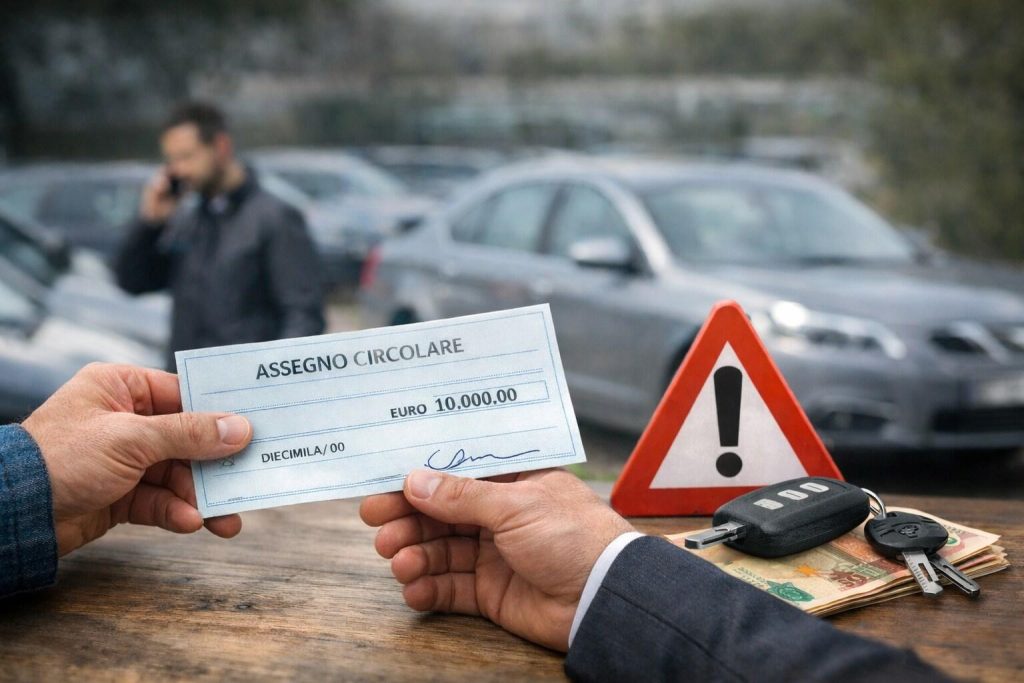
Never accept an amount higher than the agreed selling price. Do not refund an overpayment, even if the bank app shows that the funds are available. A deposited check can take time to be identified as counterfeit. Verify payment directly with your bank and wait until the funds are genuinely confirmed before releasing the vehicle or title.
The FTC advises reporting suspected fake-check schemes through ReportFraud.ftc.gov. A legitimate buyer has no reason to make you act as a payment intermediary for a stranger.
8. Requests for Deposits Through Gift Cards or Wire Transfers
A seller who insists on receiving a deposit through gift cards, cryptocurrency, or an irreversible wire transfer before allowing an inspection should immediately raise suspicion.
These payment methods are attractive to criminals because recovering the money can be difficult once it has been transferred.
The seller often creates urgency through a believable excuse, claiming that several other buyers are interested, the advertised price will expire within hours, or an advance deposit is necessary to secure the vehicle.
A genuine private seller may reasonably request a deposit under an agreed written arrangement, but the payment method, recipient, refund terms, and vehicle details should be transparent.
Be especially cautious when the seller refuses to meet, will not provide a verifiable address, or asks you to send money to an unrelated individual or company.
The FTC warns consumers that scammers often demand payment through gift cards or wire transfers because these methods can be difficult to reverse. It also advises buyers to avoid paying for a vehicle they have not seen and to be wary of sellers who create urgency or refuse normal inspection arrangements.
Do not mistake a professional-looking payment instruction for proof of legitimacy. Criminals can copy company logos, create fake invoices, and send messages that appear to come from a marketplace.
If a platform offers an official payment process, access it independently through the platform’s verified website or application rather than following a seller-provided link.
Before sending any deposit, confirm the seller’s identity, inspect the vehicle, verify the title, and put the terms in writing. If the seller says gift cards are required to hold the car, end the conversation. A real vehicle purchase should never require you to buy retail gift cards to prove that you are a serious buyer.
9. Selling a Car Without a Proper Title or With an Undisclosed Lien
A listing may show an attractive vehicle at a reasonable price, but problems with its title can turn the purchase into a legal and financial headache.
Some sellers claim the title is being mailed, misplaced, or held by a lender, while others offer excuses for why the paperwork cannot be completed immediately. These explanations should never replace proper ownership verification.
A vehicle may also have an outstanding loan. In that situation, the lender may hold a lien on the title until the debt is paid. If the seller cannot explain how the lien will be satisfied and how ownership will transfer, the buyer could end up paying for a vehicle without receiving clear title.
The Virginia DMV specifically warns online buyers about vehicles sold without titles, undisclosed liens, and promises to deliver title later.
The Texas Department of Insurance also recommends checking ownership documents and verifying the VIN before purchasing.
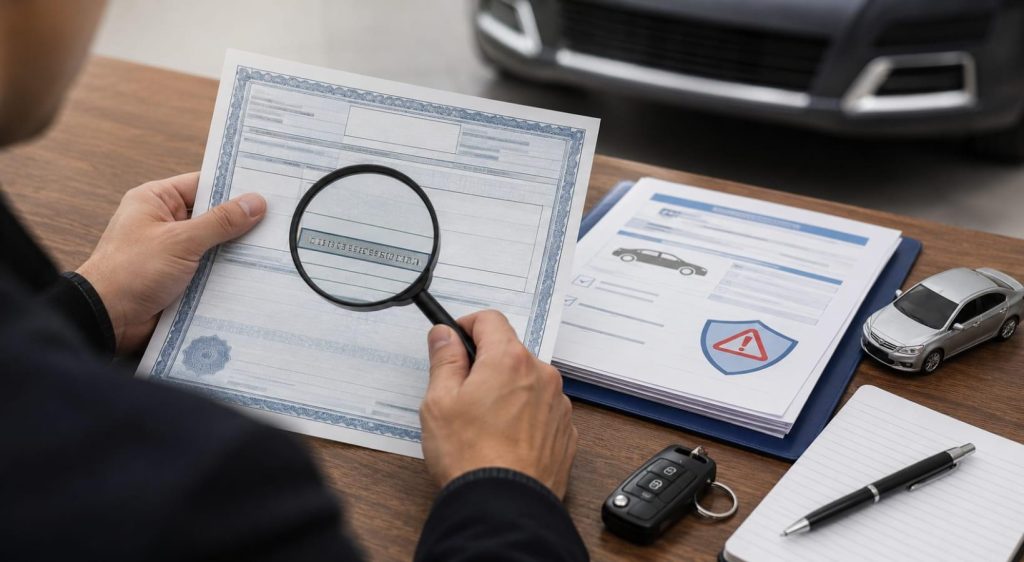
Ask to see the original title and compare its VIN with the vehicle. Confirm that the seller’s identity matches the ownership documentation and check with the relevant state motor vehicle agency about liens and transfer requirements. If a lender is involved, arrange payment and title release directly through the lender.
Do not hand over the full purchase price based on a photograph of a title or a promise that paperwork will arrive later. State procedures differ, so complete the transfer according to the rules where the vehicle is registered.
10. Fake Vehicle History Reports and Fraudulent Inspection Documents
A vehicle history report can help buyers identify accident records, title brands, mileage entries, and other reported events. Unfortunately, scammers sometimes exploit that trust by sending fake reports or directing shoppers to unfamiliar websites designed to collect personal and payment information.
The trick may begin with a seller asking you to purchase a report from a specific website before arranging a viewing. The site may resemble a legitimate vehicle-history provider, but its real purpose could be collecting your credit-card details or personal information.
In other cases, the seller supplies a fabricated report that hides theft, salvage history, or mileage discrepancies.
The FTC recommends obtaining a vehicle history report and arranging an independent mechanic’s inspection before purchasing a used car online.
NICB also provides VINCheck, which can identify certain vehicles reported stolen but not recovered or reported as salvage by participating insurers. It is useful, but it does not replace a full history report or inspection.
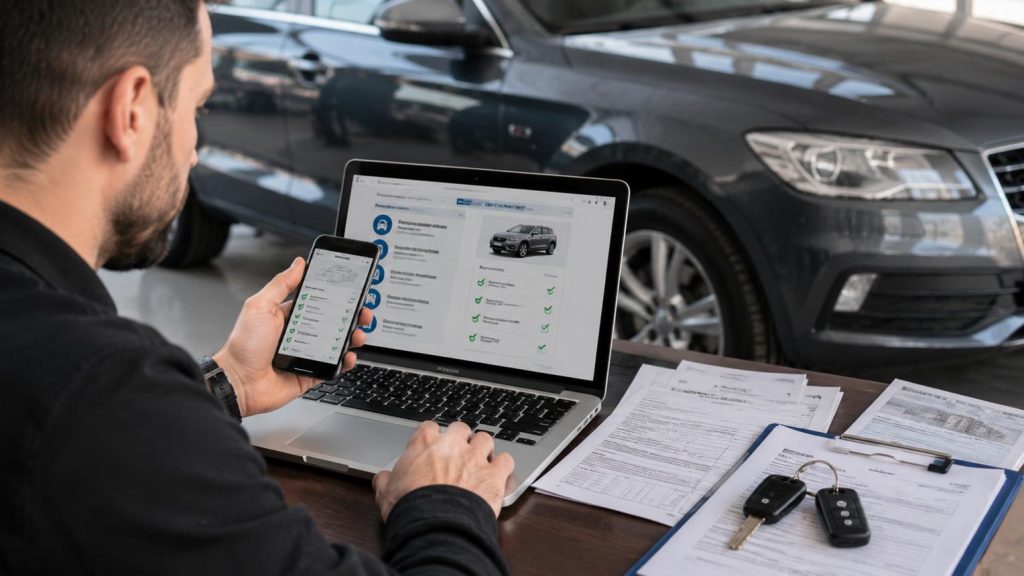
Choose the report provider yourself. Type its official website address directly rather than using a link supplied by the seller. Compare the VIN on the report with the windshield plate, door label, and title. If the report contains inconsistent mileage, ownership, or vehicle details, investigate before proceeding.
A clean report is not proof that a car has never been damaged or stolen. Some incidents are never reported to the databases used by history services. Combine documentary checks with a physical inspection and an independent mechanic’s assessment.
